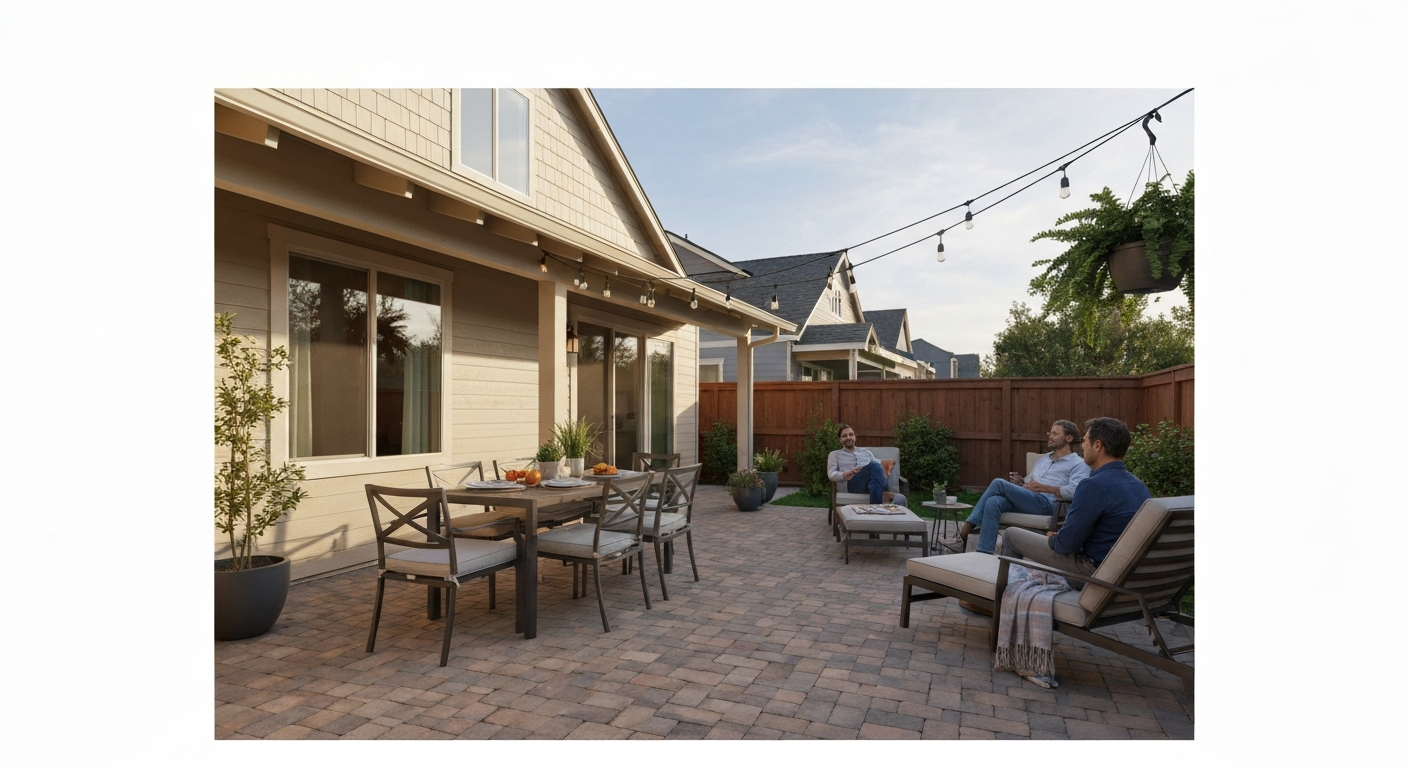
Most residential patios fall somewhere between 100 and 400 square feet, with 12×16 ft (192 sq ft) being one of the most commonly built sizes in North America. A 10×10 ft patio works for a bistro table and two chairs, a 12×14 or 12×16 ft patio comfortably seats four to six people for dining, and anything from 16×20 ft upward gives you room for a proper multi-zone layout with dining, lounging, and a grill or fire pit. Knowing those benchmarks, though, is only half the job. The other half is figuring out which size actually fits your space and what you plan to do in it.
Common Patio Sizes: Dimensions, Seating, and How to Choose

Ada Hollis
4 May 2026
What "patio size" actually means (and what it doesn't)
Before you get into square footage, it helps to be clear about what a patio is and isn't, because the sizing conventions differ depending on the type of outdoor space you're dealing with. A patio is a ground-level outdoor surface, usually paved with concrete, pavers, stone, or brick, and open to the sky. When you compare the different types of patios, the main differences come down to whether they are covered, freestanding, or configured for specific uses like dining or lounging type of outdoor space. It's not elevated like a deck (which is a raised platform, often wood or composite, built above grade with railings and empty space underneath). It's not a porch, which is attached near a home's entry and covered by a roof that typically extends from the house. And it's not a verandah or veranda, which is a roofed, gallery-style structure running along one or more exterior walls of the house. A covered patio can absolutely exist, but it's still defined by being ground-level, not by serving as a covered entry point the way a porch does.
In the UK and parts of Australia, what North Americans call a patio is sometimes described as a courtyard, especially when it's enclosed or semi-enclosed by walls or fencing. Across regions and property listings, "verandah" can sometimes be used to describe what is essentially a covered patio. Oxford's dictionary even notes that "veranda" overlaps with "porch" in North American usage, so the terminology is genuinely blurry in real estate contexts. All of this matters for sizing because a porch or verandah is often measured as a linear run along a house wall, while a patio is measured as a square or rectangular footprint of usable outdoor floor space. When this article talks about common patio sizes, it means that usable ground-level footprint.
Common patio sizes by how you plan to use the space
There's no single "standard" patio size that fits every home and every use, but there are well-established ranges that show up again and again in residential design. Here's how they break down by function.
| Patio Type | Typical US Dimensions | Approx. Sq Ft | Approx. Metric | Who It Fits |
|---|---|---|---|---|
| Small / bistro | 10×10 ft | 100 sq ft | ~9 m² | 2 people, bistro table and chairs |
| Small entertaining | 12×12 ft | 144 sq ft | ~13 m² | 4 people, compact dining or lounge |
| Mid-size dining | 12×14 ft | 168 sq ft | ~15–16 m² | 4–6 people, dining table + chairs |
| Mid-size combined | 12×16 ft | 192 sq ft | ~18 m² | 4–6 people, dining + small seating cluster |
| UK standard (table for 4–6) | ~10×10 ft | ~100 sq ft | 3×3 m (~9 m²) | 4–6 people, smaller UK gardens |
| Larger entertaining | 16×20 ft | 320 sq ft | ~30 m² | 8+ people, multiple zones |
| Multi-zone / outdoor room | 20×20 ft+ | 400+ sq ft | ~37 m²+ | Dining + lounge + grill or kitchen |
The 10×10 ft footprint is frequently cited as the entry point for a functional patio, but it's genuinely tight. You can fit a bistro table with two chairs, but there's not much room left over. The 12×16 ft size is where most people land when they want both a dining area and a couple of chairs or a small love seat. The UK equivalent rule of thumb, around 3×3 m (roughly 9–10 m²), is slightly smaller than the US norm, reflecting the reality that many British gardens have less square footage to work with. For a true multi-use patio with separate dining and lounge zones plus space for a grill or fire pit, you're looking at 300–400 sq ft minimum, and many landscape designers push toward 400–600 sq ft for comfortable, uncluttered entertaining.
Sizing for furniture: dining, lounging, and conversation areas
Outdoor dining areas
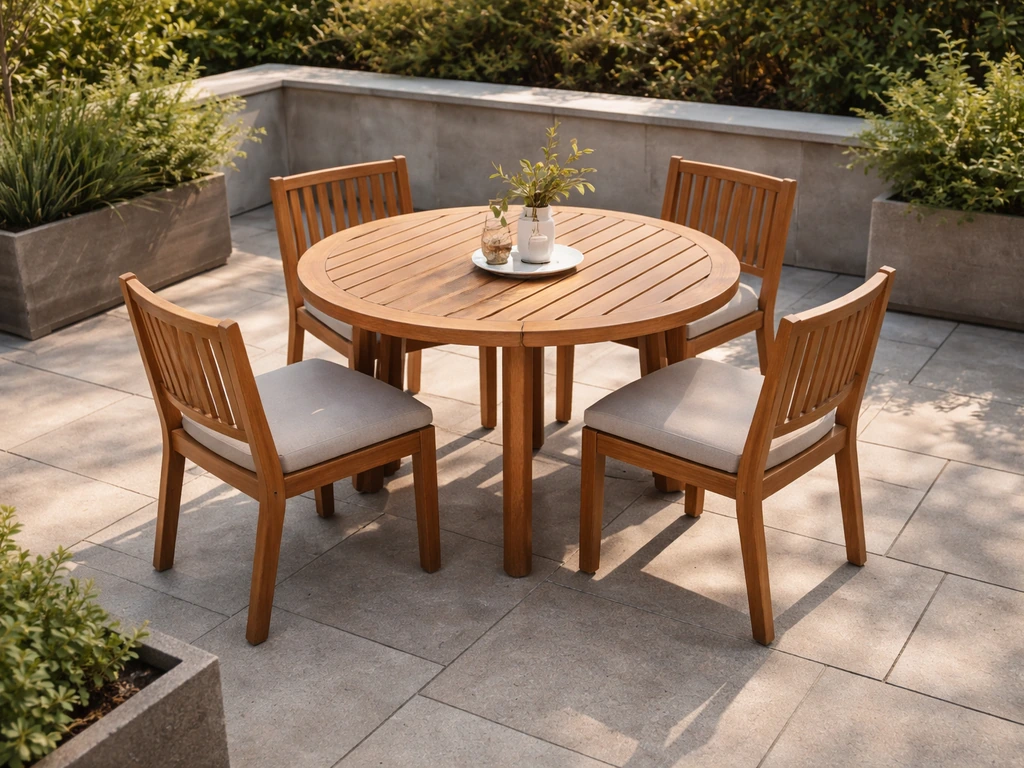
A 42–48 inch round table seats four people comfortably and is one of the most versatile starting points for outdoor dining. With 36 inches of clearance around all sides of the table so chairs can be pushed back and people can walk past, that single dining setup needs roughly a 10×10 ft zone just for the table and movement. A 60–72 inch rectangular table that seats six needs about a 10×14 ft zone using the same 36-inch clearance rule. If you're planning for eight seats, budget for at least a 10×18 ft dining zone. These numbers are just the dining area itself; they don't include space for other furniture or features.
Lounge and conversation areas
A typical outdoor lounge cluster, think a sofa, two chairs, and a coffee table, usually needs at least a 10×12 ft footprint to feel open rather than cramped. The standard guidance is 30–36 inches between seating pieces so people can get in and out without shuffling past each other. If you're combining a lounge cluster with a dining area on the same patio, plan each zone separately and then add a 36–48 inch buffer between them for circulation. That's why a 12×20 ft or 16×20 ft patio starts to feel genuinely comfortable for two-zone layouts.
Clearance and circulation: the rules that actually matter
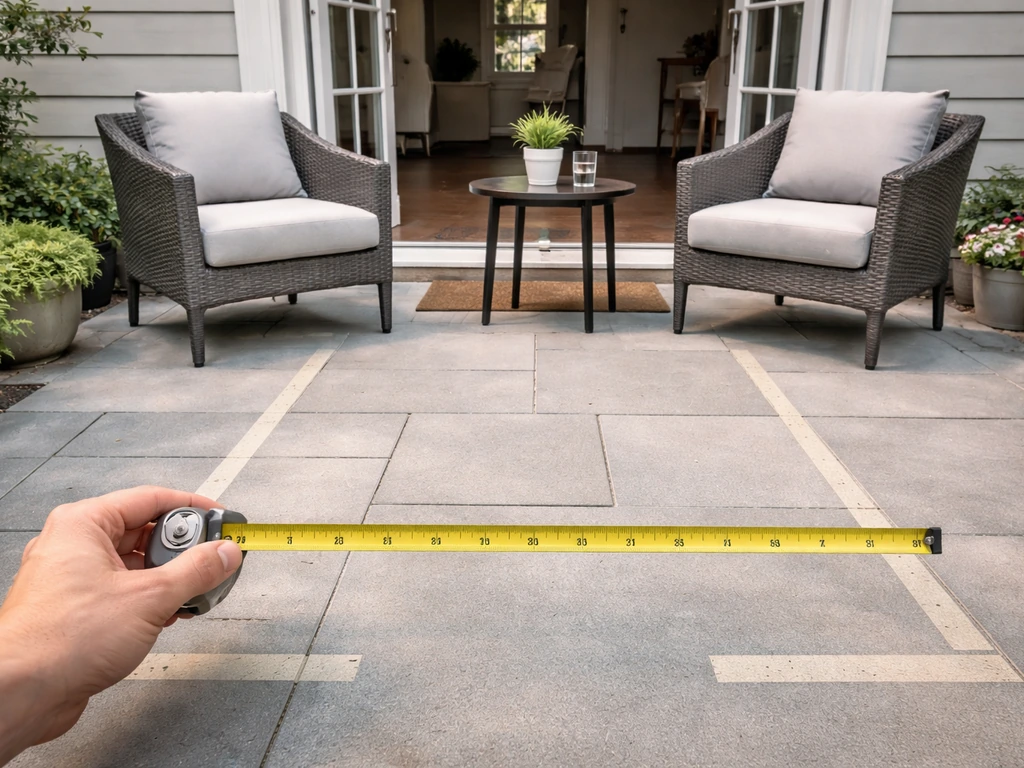
The most common mistake people make is sizing a patio to fit their furniture with zero room left over for movement. The general rule for comfortable walkway clearance around and through a patio is 36–48 inches. At 36 inches, two people can pass each other with some care. At 48 inches, movement feels natural. For spots where only one person will ever need to walk (like the path behind a row of chairs against a wall), you can drop to 32 inches, but that's the absolute minimum before things start to feel claustrophobic.
Pay particular attention to door clearances. If your patio is directly outside a sliding glass door or French doors, you need to keep at least 36–48 inches clear in front of the door swing or slide path. Furniture pushed right up against a door is one of those things that seems fine on paper and becomes annoying within a week. The same applies to the edges of the patio: if your patio edge drops to lawn or garden, leave at least 18–24 inches of clear space between furniture legs and the edge so chairs don't end up sitting in the grass when someone leans back.
For those planning an ADA-accessible layout (or just a comfortable one for older adults or anyone with mobility considerations), the reference standard is a minimum 36-inch clear access aisle between parallel table edges or between a table and a wall. That aligns with the 36-inch minimum cited in ADA design standards and is a good floor for general residential planning too.
Planning for features: grills, fire pits, outdoor kitchens, and planters
Adding a built-in grill or outdoor kitchen changes your size math considerably. The workspace around a grill or burner station should be at least 36 inches on working sides, both for safety and so the cook isn't being bumped into constantly. The landing area between a grill and a sink or prep counter should also be at least 36 inches. If you're adding an outdoor kitchen with a bar seating area, budget an additional 36–48 inches beyond the counter for bar stools and the people sitting in them to push back without blocking traffic flow.
A freestanding gas or charcoal grill needs about a 3×3 ft footprint plus a 36-inch clearance buffer on the cooking side and at least 24 inches on the sides and back. If you are planning to use patio gas for a grill, also confirm the grill type and fuel requirements first, since that will affect your setup. Realistically, a grill station takes up roughly a 6×6 ft zone when you factor in safe usage. A fire pit, especially a round one with seating arranged around it, typically needs a 12–15 ft diameter zone, including the pit itself (usually 36–48 inches across) and chairs pulled back from the heat. The City of Crowley, Texas advises that wood-burning fire pits keep a blank" rel="noopener noreferrer">15-foot clearance to combustibles, including structures and branches, and follow manufacturer instructions for operation.
Planters and built-in garden beds eat into usable square footage faster than people expect. A row of planters along one edge of a 12×16 ft patio can reduce the effective usable width by 18–24 inches. If landscaping and planters are part of your vision, add that square footage as a separate allowance rather than assuming you can just push furniture to the side. This is one reason the types of patios with multiple functions often need to be larger than they first appear.
How to choose the right patio size: measure, sketch, calculate
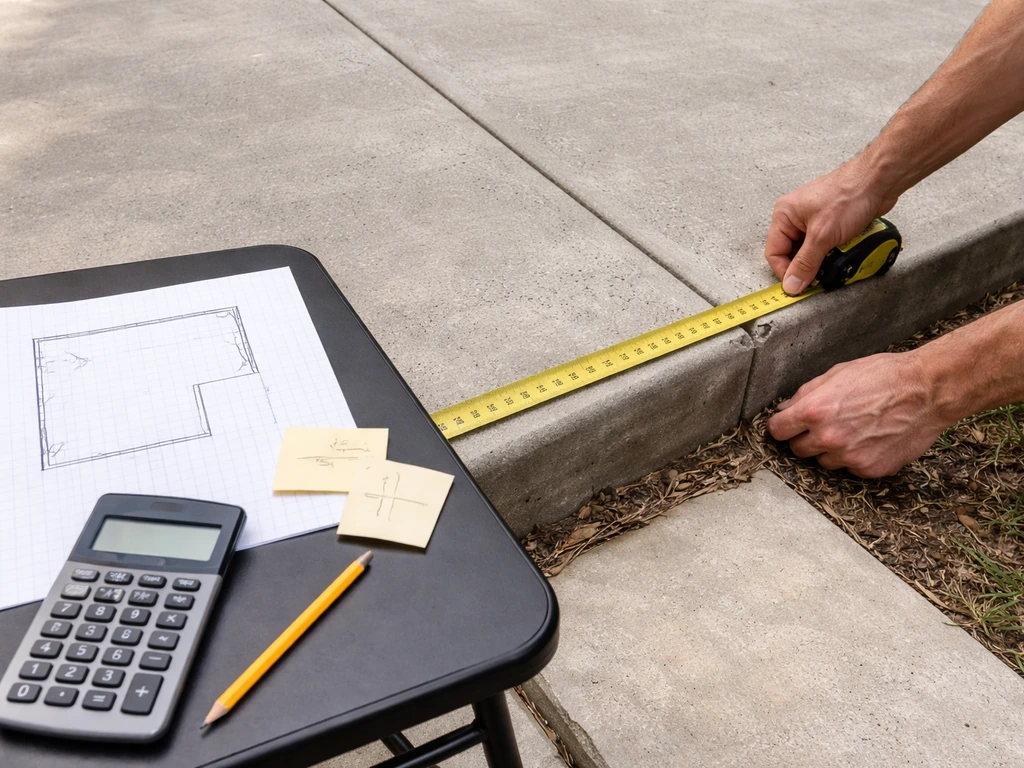
The most reliable way to nail your patio size is to work through a four-step process before you commit to any design, material, or contractor quote. A common question is who does patios, meaning who should you hire to design and build yours. You can also compare your measurements to examples of patios that use dining, lounge, and circulation space in practical ways. The decisions about what your patio is made of and what type of patio suits your home come later. Once you pick the right size, the next step is figuring out what the patio is made of so it matches your weather, maintenance needs, and use what are patios made of. Getting the size right first saves you from expensive revisions. In a scale drawing of a patio, you can place the furniture and features to confirm the footprint matches your plan a scale drawing of a patio is shown at right.
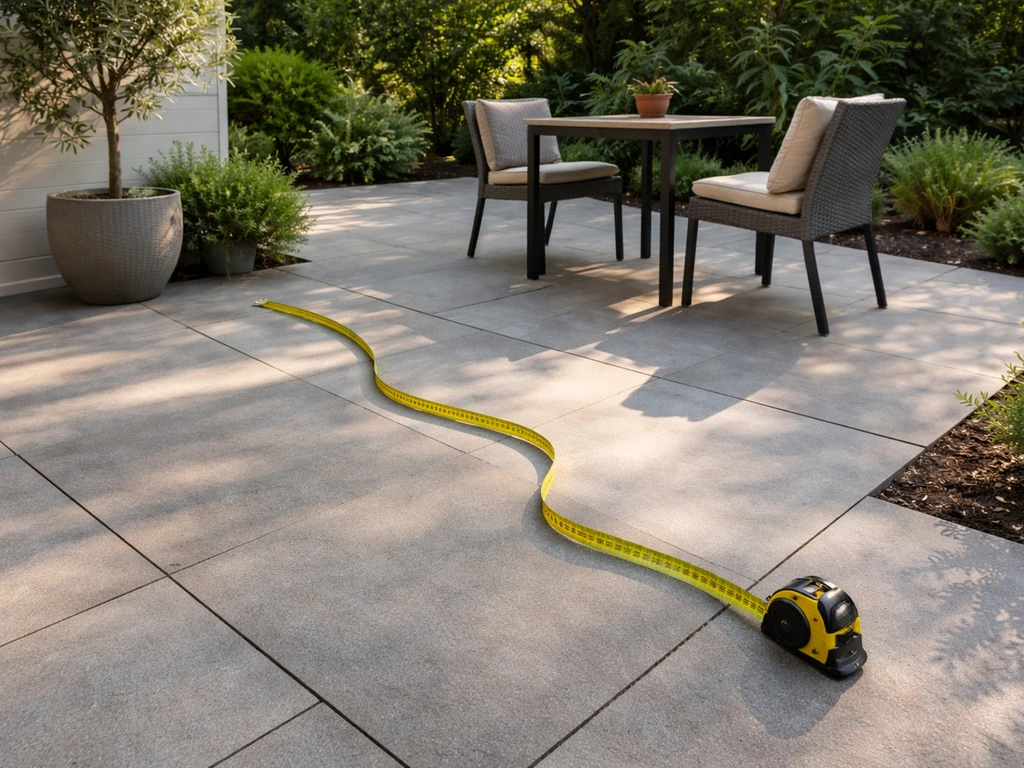
- Measure your available outdoor space. Use a tape measure and note the total length and width of the area where the patio could go. Note any fixed obstacles: trees, HVAC units, downspouts, doors, gates, or sloped ground. Write everything down with actual numbers, not estimates.
- Decide on your primary function. Are you mainly dining outside? Lounging? Entertaining groups? Grilling? Rank these in order of importance. Your top priority determines the core footprint you need, and secondary functions get added around it.
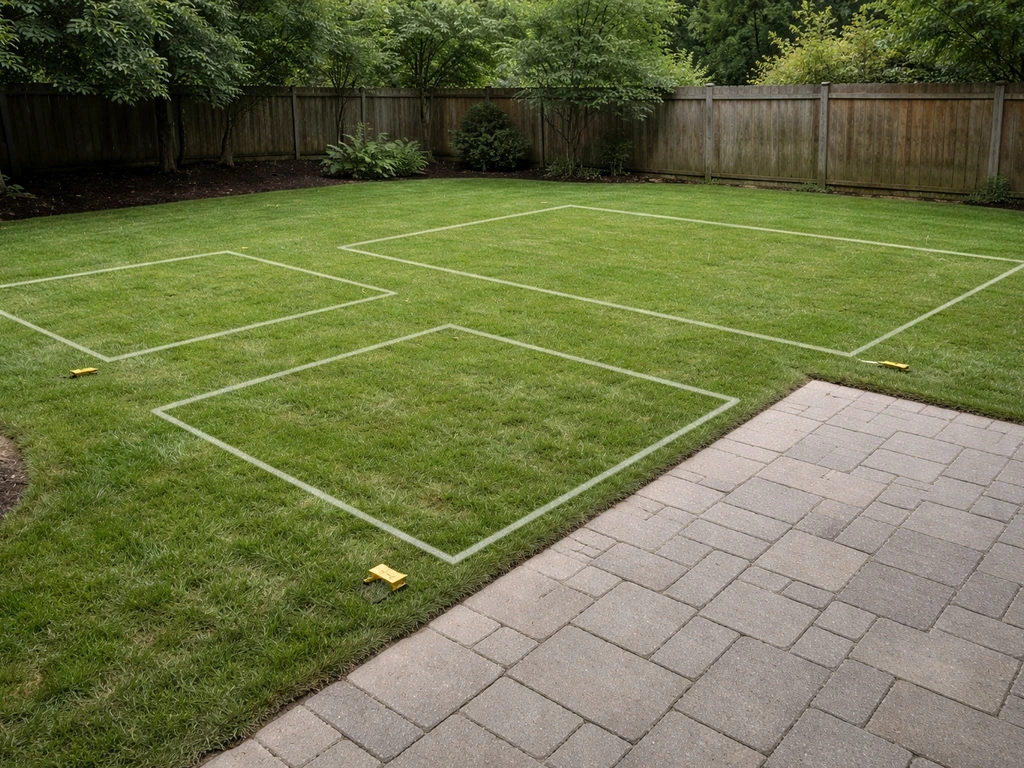
- Map your furniture to scale. On graph paper or a free online room planner, draw your patio space and place scaled furniture shapes in it. Alternatively, use painter's tape or chalk on your actual outdoor surface to mark out furniture positions before buying anything. This is the single most useful step and takes less than 30 minutes.
- Test your clearances. With your furniture mapped, check that you have at least 36 inches of clearance around dining chairs, at least 36–48 inches for main walkways, and at least 36 inches in front of any doors. If anything is tight, either rethink the furniture arrangement or adjust the patio dimensions before you build.
- Add square footage for features. If you want a grill, fire pit, outdoor kitchen, or planters, add those zones to your layout before finalizing dimensions. It's far easier to make the patio a foot wider during planning than to wish you had more room after the concrete is poured.
- Get a rough calculation. Multiply your planned length by width to get square footage. Compare that to the size benchmarks above. If you're under 150 sq ft, you're in small-patio territory. 150–250 sq ft is a solid mid-size patio for most households. 300–400 sq ft gives you genuine flexibility for multiple zones.
If your measurements reveal you're working with a tight footprint (say, under 120 sq ft), it's worth considering a narrower, longer layout rather than a square one. A 10×14 ft patio can feel more functional than a 12×12 ft patio of similar area, because the longer dimension gives you room to stage furniture end-to-end rather than clustering everything in the center.
When to bring in a designer or contractor
If your planned patio is over 300 sq ft, involves a built-in outdoor kitchen, requires grading or drainage work, or sits on a sloped site, it's worth getting a landscape designer or experienced hardscape contractor involved before you finalize dimensions. They'll catch drainage issues, local setback requirements, and structural considerations that don't show up in a tape-measure sketch. Many contractors offer free or low-cost consultations, and the layout conversation is much easier when you walk in already knowing your target footprint and functional priorities.
A note on regional and listing terminology
If you're reading a property listing that mentions a "patio," a "courtyard," or a "verandah," keep in mind that these terms aren't always used with precision. In some listings, especially UK or Australian ones, a patio might be described using metric dimensions (e.g., 3×4 m, which is roughly 10×13 ft). A "courtyard" in a UK or Spanish-influenced context might describe what is functionally a patio: a ground-level enclosed outdoor space. And a "covered patio" in a listing is still ground-level; it's not the same as a porch or verandah, even if it has a pergola or shade structure overhead. Always ask for the actual dimensions in square feet or square meters when size matters, because the label alone won't tell you what you need to know.
FAQ
When people say “common patio sizes,” do they mean the exact paver footprint or the usable space for furniture?
Yes. If your patio is already paved, the “size” to use is the usable ground footprint after subtracting any fixed elements like posts, planter edges, steps, or built-in benches. Measure the clear area you can actually place furniture on, not the lot-line dimensions or the total paver footprint if there are permanent obstructions.
What happens to sizing if part of my patio is under a pergola or near a wall with fixed built-ins?
Countertops, pergolas, and screens can reduce circulation even if square footage looks sufficient. A good rule is to account for furniture clearance plus a separate 36–48 inch circulation path between the seating/dining zones and any permanent structure, so you do not end up with tight turns or blocked doorways.
How do I size a patio if I want dining plus a grill without the space feeling cramped?
If you plan to eat outdoors with a grill nearby, treat the grill as a separate zone. Set the grill clearance first, then size the dining zone so the path from the house to the grill to the table stays open. Otherwise you may technically “fit” the table, but daily movement feels cramped when everyone walks past the grill and prep area.
Can I go below 36 inches for clearance if my patio is narrow?
It depends on traffic flow. If guests will walk behind seating clusters, keep closer to 36–48 inches. If only one person needs access in a narrow strip (for example, between a wall and a row of chairs), you can plan around 32 inches, but avoid placing the strip where people will repeatedly pass while carrying plates or drinks.
How do I measure clearance for a patio door if I have a swinging door or a French door?
Measure the door swing or slide track at the fully open position and leave that path unobstructed. A common mistake is using clearance at knee height but blocking the upper arc of swinging doors with a high-back chair or tall table edge.
My patio borders a garden bed, how should I account for planter spacing in the footprint math?
Planters and beds can create non-rectangular “dead zones.” Instead of subtracting a full strip, mark the actual usable width at the furniture placement height (chair legs and table overhang), then confirm with a scale layout. This helps avoid overestimating usable space when beds run at angles or step up/down.
What layout strategy works best if I must stay under a smaller common patio size like 100–120 sq ft?
A tight patio can still work with fewer, larger pieces, but avoid the temptation to center every item. For example, use a single larger dining table and one compact lounge cluster, then keep circulation as an intentional corridor from the house to the “primary” area.
I want an ADA-friendly patio, how should I translate the 36-inch aisle rule into a real layout?
For mobility considerations, prioritize continuous, unobstructed routes from the door to the main seating. Use the minimum 36-inch clear access aisle as a baseline, then widen near turns or where a wheelchair or walker would need to reposition. Also confirm that door thresholds and step heights do not break that clearance.
Should I size the patio to furniture dimensions, or furniture to patio dimensions?
If you’re buying furniture first, treat the “table zone” as a starting point and then add circulation and secondary seating allowance. For instance, a table that fits might still leave insufficient space for a second chair row or for people to stand and pass items, so always do a quick tape-measure simulation of chair pull-out.
Do wall-hugging seating layouts change the clearance rules?
Yes, but do not assume the same clearances as a free-standing lounge. If a wall or railing borders the seating, check chair arm clearance and consider leaving extra gap so people are not forced into single-file movement around the perimeter.
How do slope and drainage issues affect common patio size planning?
If the patio is on a slope, drainage and grading often govern the final shape more than seating plans. Get the direction of water flow, then position furniture and any outdoor kitchen so runoff does not wash across a walkway or pool near the grill or fire pit area.
What should I ask for during a patio consultation to avoid expensive redesign later?
Bring a sketch with your target footprint and room goals to a contractor consultation. Ask for a site-specific check on setbacks, drainage, and any structural needs for elements like outdoor kitchens. Having your function priorities defined (dining, lounge, grill, fire pit) usually speeds up the recommendations and reduces redesign.
Next Article
Patio Weather Meaning: What Patio, Area & View Mean
Clear patio definition: what a patio is, 'patio weather' meaning, and how it differs from decks or porches.