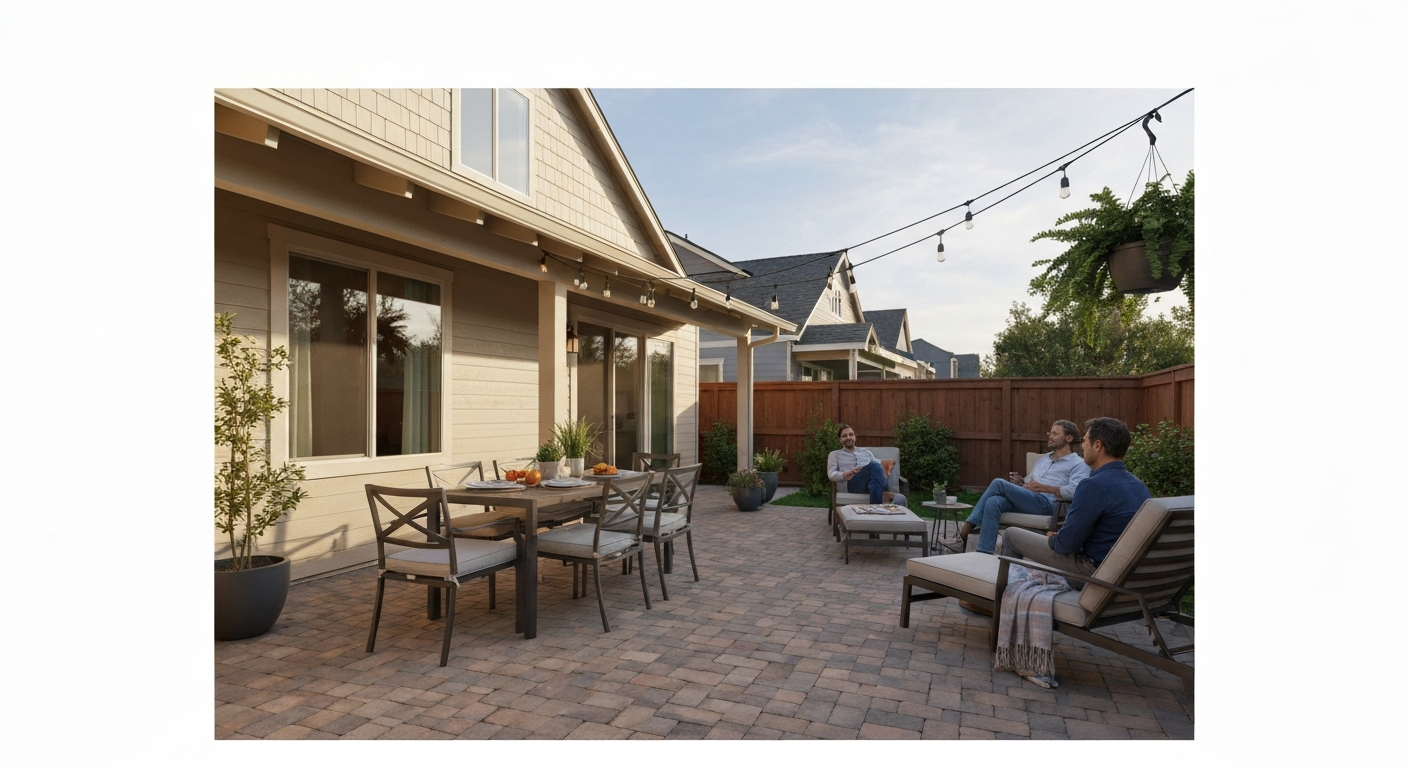
A patio is a ground-level outdoor area, usually paved, that sits directly adjacent to a home and is used for leisure activities like dining, relaxing, or entertaining. It sits flush with the surrounding ground rather than being raised above it, and it is typically open to the sky rather than covered by a roof. Those two features, ground-level and roofless, are what most clearly separate a patio from every other outdoor structure you'll encounter in a property listing or floor plan.
Definition of a Patio: What Counts and What Does Not

Ada Hollis
29 Apr 2026
What makes an outdoor space a patio
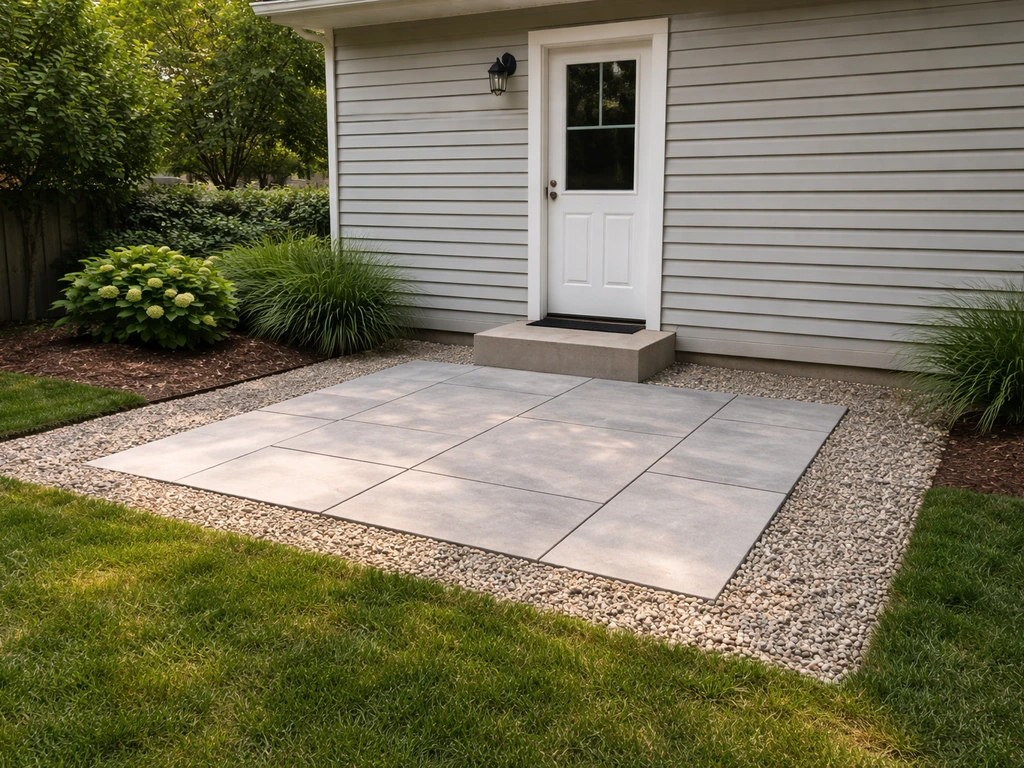
Merriam-Webster defines a patio as "a usually paved outdoor area adjoining a residence," and that compact definition actually captures the three things that matter most: it's outdoors, it's surfaced, and it's next to a dwelling. Collins English Dictionary similarly defines a patio as an area, usually paved, that adjoins a house and is used for outdoor lounging, dining, and related activities blank" rel="noopener noreferrer">an outdoor area adjoining a residence. Oxford Advanced Learner’s Dictionary defines patio as “blank" rel="noopener noreferrer">a flat hard area outside, and usually behind, a house where people can sit.”. If you just need the quick answer to what is a patio area, look for a usually paved outdoor area at ground level adjoining a residence. Oxford, Cambridge, and Britannica all echo the same core description, adding that people use it for sitting, relaxing, or eating. In practice, when you're standing on a patio, you're at ground level, on a hard or semi-hard surface (concrete, pavers, brick, stone, gravel, or tile are all common), and the sky is directly above you.
The surface matters because a patio is a constructed space, not just a patch of lawn or garden adjacent to the house. Even a simple gravel area can count, as long as it has been deliberately prepared as an outdoor living zone. The adjacency to the home also matters: a paved area at the far end of the yard with no clear connection to the house is more likely to be called a garden terrace or a seating area than a patio in any strict sense.
What counts and what doesn't: the physical criteria
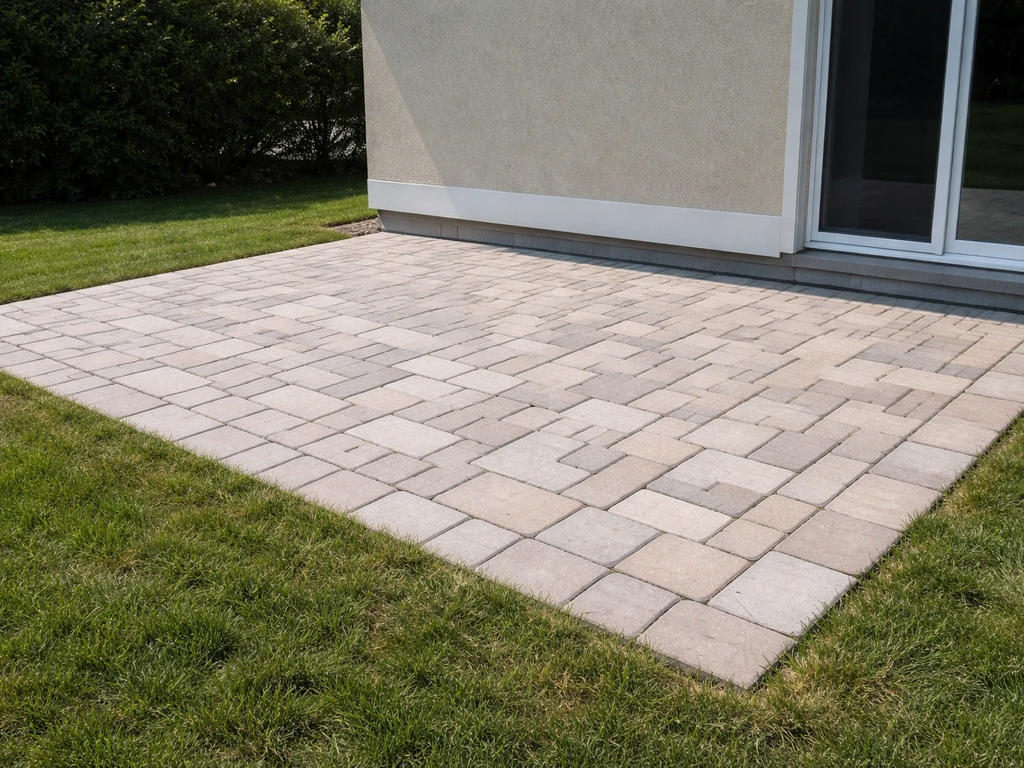
If you want a reliable checklist for deciding whether a space qualifies as a patio, these are the features that consistently appear across building codes, dictionaries, and home inspection standards:
- Ground-level: sits flush with the surrounding grade, not raised on posts or a platform
- Surfaced: has a paved, tiled, bricked, or otherwise prepared hard surface (not bare lawn or soil)
- Adjoining the residence: directly connected or immediately adjacent to the home
- Open to the sky: no permanent roof covering (a temporary umbrella or pergola does not disqualify it)
- Used for outdoor living: intended for relaxation, dining, or social use
A space stops being a standard patio when it gains a permanent roof structure, at which point it becomes what building codes typically call a "patio cover" or a covered patio, which is regulated differently in most jurisdictions including Los Angeles County and the City of San Diego. It also stops being a patio when it is raised above ground on a frame or posts (that's a deck), when it is elevated on an upper floor (that's a balcony or terrace), or when it is surrounded on multiple sides by walls or buildings (that leans toward being a courtyard).
Patio vs porch, balcony, veranda, and courtyard
This is where most confusion happens in real estate listings and everyday conversation, so it's worth being precise. Each of these spaces has at least one feature that clearly separates it from a patio.
| Space | Elevation | Roof/Cover | Attachment to home | Typical access |
|---|---|---|---|---|
| Patio | Ground level | Usually none (open sky) | Adjacent or connected | From interior room or yard |
| Porch | Ground level or slightly raised | Roofed (permanent) | Attached to facade, often at entrance | From front or rear door |
| Balcony | Upper floor, elevated | Usually none, open railed platform | Attached to upper exterior wall | From upper-floor interior room |
| Veranda / Verandah | Ground level or slightly raised | Roofed, open-sided | Attached, wraps along facade | From multiple rooms along facade |
| Courtyard | Ground level | Open to sky | Surrounded by building walls | From multiple entry points within building |
Patio vs porch
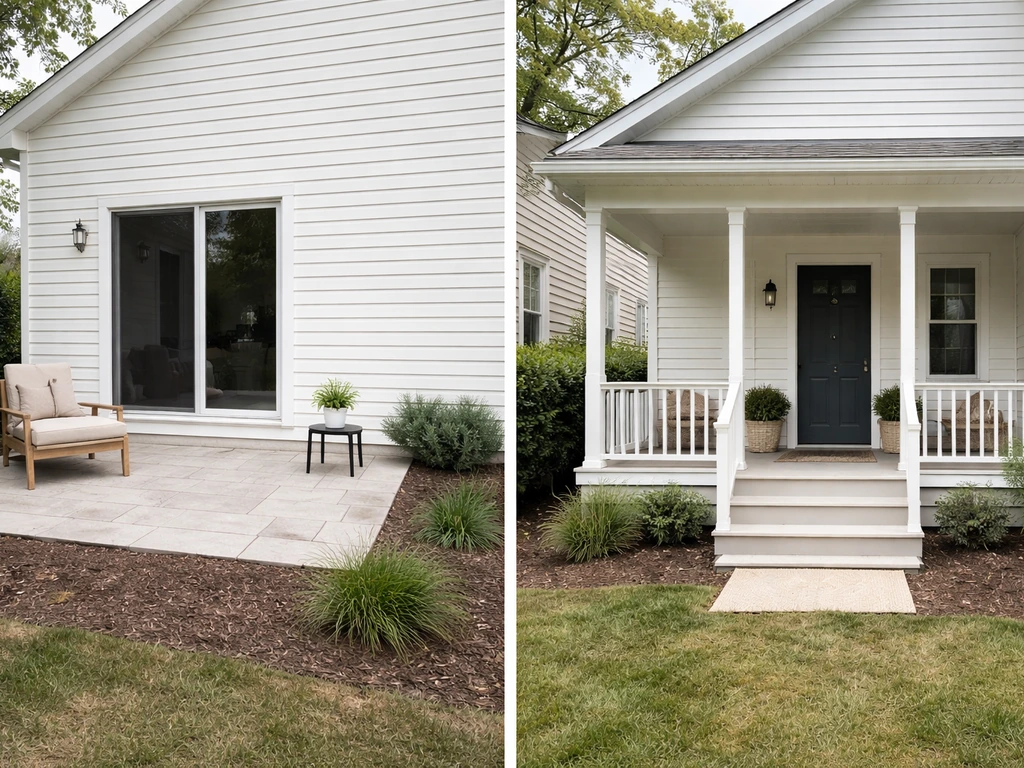
The clearest difference is the roof. A porch has one; a patio typically does not. A porch is also usually associated with the home's front or rear entrance and forms a structural part of the building's facade. A patio is a separate ground-level surface that happens to be adjacent to the home. If you're standing somewhere that is covered overhead and is clearly part of the house's exterior structure, it's almost certainly a porch, not a patio.
Patio vs balcony
Elevation is the instant giveaway here. A balcony projects outward from an upper-floor wall, is surrounded by a railing, and you access it through an upper-floor room. A patio is always at ground level. If a listing says "patio" but the photos show it accessed from the second floor through sliding glass doors, that space is technically a balcony, and it's worth clarifying before you sign anything.
Patio vs veranda
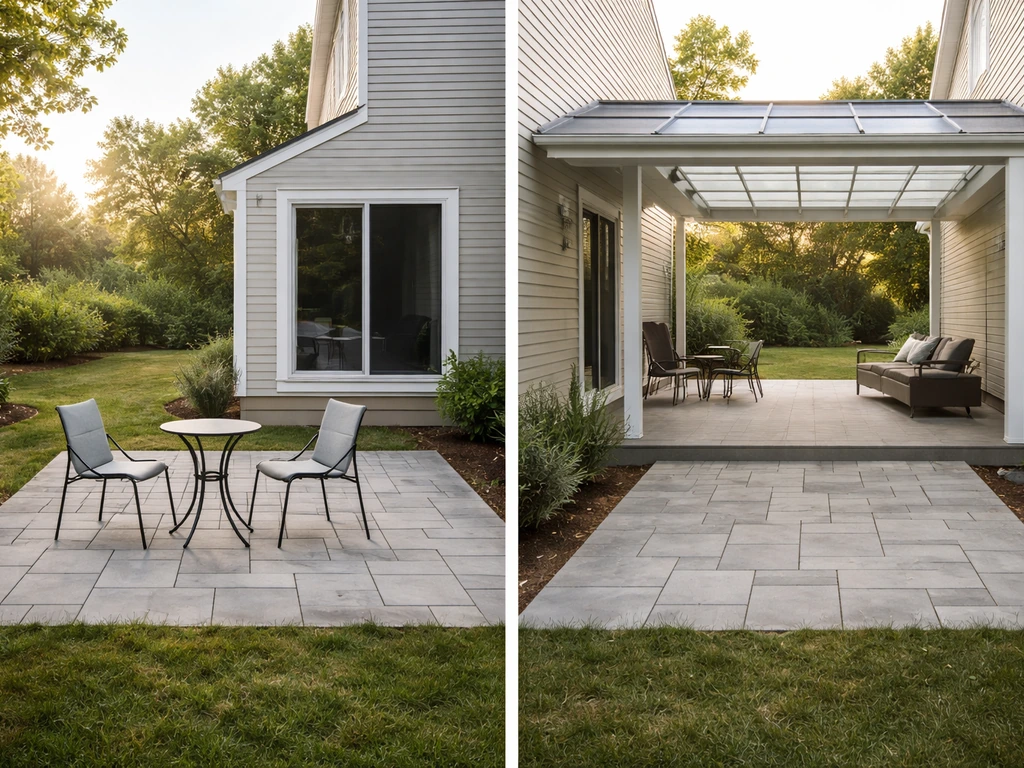
A veranda (also spelled verandah) is a roofed, open-sided structure that runs along one or more sides of a house at ground or slightly raised level. The roof is the key distinction: step onto a covered structure that wraps around the home and you're on a veranda, not a patio. In Australia, the term "patio" is sometimes used loosely to include roofed outdoor living structures that elsewhere would be called verandas, so regional usage does vary.
Patio vs courtyard
A courtyard is an outdoor space that is enclosed or at least partially surrounded by the walls of a building or by walls on multiple sides. Both patios and courtyards are typically at ground level and open to the sky, so their layouts can look similar. The difference is enclosure: a patio is beside a building, while a courtyard is within or between building structures. In townhouse and apartment listings especially, a small paved outdoor area described as a "courtyard" usually means walls on most sides.
Common patio types and layout variations
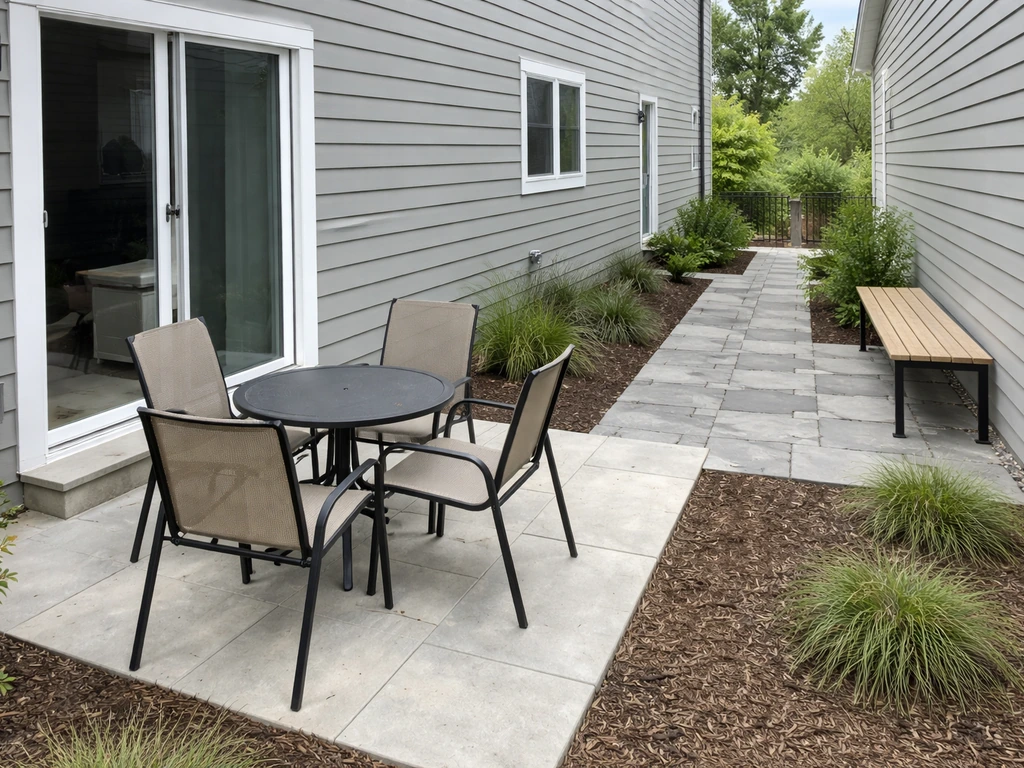
In practice, "patio" covers a fairly wide range of designs. Knowing the common types helps when you're reading a listing or talking to a contractor.
- Back patio: the most common type, located directly off the rear of the home, often accessed from the kitchen, dining room, or living room via a sliding door or French doors
- Front patio: a paved seating or entrance area at the front of the home, usually smaller and more decorative than a back patio
- Side patio: a narrower paved strip along the side of a home, often used in urban lots where rear space is limited
- Wraparound patio: a paved surface that extends around more than one side of the home, blending the functionality of a traditional patio with some characteristics of a veranda at ground level
- Courtyard-style patio: enclosed on two or three sides by the home's walls, creating a sheltered outdoor room feel
- Rooftop patio: technically a roof deck or terrace rather than a traditional patio, but frequently marketed as a "rooftop patio" in urban listings
- Covered patio: a patio fitted with a permanent roof structure, pergola, or shade sail, regulated as a separate structure in most building codes
The back patio connected to the kitchen is the most functional layout for everyday use, because foot traffic flows naturally between cooking and eating areas indoors and outdoors. Floor plan collections consistently show this as the dominant arrangement, and it's the one most buyers and renters picture when they read the word "patio" in a listing.
Patios in residential architecture: why they exist and where they sit
Patios exist because people want to extend their living space outdoors without the cost and complexity of a fully constructed room. From an architectural standpoint, a patio is the simplest way to create a designated outdoor living zone: pour or lay a surface, and you have a room with no walls and no roof. That simplicity is why patios appear in almost every residential context, from small urban terraces to large suburban backyards.
In residential design, patios are almost always positioned to maximize connection to the home's interior. The most practical placement is off the main living area or kitchen, so that moving food, furniture, or people between inside and outside is easy. Shaded aspects (north-facing in the southern hemisphere, south-facing in the northern hemisphere) are often preferred for dining patios, because direct summer sun makes prolonged outdoor sitting uncomfortable. In warmer climates, the patio effectively doubles as a second dining room for a large part of the year.
Patios also serve a structural buffering function: a paved surface around the base of the home reduces soil erosion, keeps mud from being tracked inside, and provides a stable surface for furniture and foot traffic year-round. This is part of why building codes in cities like Woodland, California include patios explicitly in their definition lists as constructed outdoor open spaces adjoining buildings.
How to identify a patio on a property listing or floor plan
When you're scanning a real estate listing or reviewing a floor plan, here's how to confirm whether a labeled outdoor space is genuinely a patio or something else being loosely described as one.
- Check the floor plan label: legitimate patio areas on architectural plans are shown as a defined, shaded or hatched outdoor zone directly adjacent to the main living area, usually with dimensions or square footage noted
- Look at the access point: a patio is typically accessed through a rear or side door, sliding glass door, or French doors at ground floor level, not from a staircase or upper floor
- Check the elevation in photos: if the surface in the photo appears to be at the same level as the surrounding yard or garden, it's patio-grade; if it's clearly raised on a platform with visible joists or posts underneath, it's a deck
- Look for a roof in the listing photos: an open-sky surface is a patio; a surface with a permanent overhead cover is a covered patio or porch, which has different value and regulatory implications
- Read the listing description carefully for ambiguous terms: "patio" and "deck" are frequently swapped in casual listings; "courtyard" usually signals enclosure on multiple sides; "terrace" can mean either a ground-level patio or an elevated outdoor space depending on the region
- Ask about square footage and surface material: a real patio has a measurable footprint and a defined surface material, whether that is concrete, pavers, brick, or tile; a vague reference to outdoor space without these details may mean a lawn area is being loosely described as a patio
One practical tip: if a listing uses the word "patio" but shows what appears to be an upper-floor outdoor space, ask the agent or landlord directly whether the space is at ground level and how it is accessed. In condo and apartment listings especially, outdoor spaces are routinely labeled "patio" when they are technically balconies, terraces, or even roof decks. The distinction matters for everything from furniture planning to building permit research.
If you're curious about the word itself, the origin of "patio" is Spanish, where it referred to an inner courtyard of a house, a meaning worth keeping in mind when you encounter the term in older architectural writing or in discussions of Mediterranean and Spanish Colonial home styles. If you are wondering whether “patio” is a language, the short answer is no, and the term instead comes from Spanish usage for a courtyard patio is a language. The modern English usage has broadened well beyond that original sense, but the courtyard roots explain why enclosed or semi-enclosed paved outdoor spaces are still sometimes called patios even when they technically fit the definition of a courtyard better than a traditional adjacent patio.
FAQ
Does a patio have to be concrete or pavers, or can it be gravel?
Usually, yes. If the area is ground-level, surfaced, and clearly adjacent to the residence with an intentional outdoor-living layout, a gravel, brick, or paver patio can still qualify even if it is not poured concrete.
If part of the patio is under a permanent roof, is it still considered a patio?
Often, it is better described as a patio cover. If you can see permanent roof structure overhead, most jurisdictions treat it differently than an open patio, and it may be listed under terms like “covered patio” rather than “patio.”
What should I call a long roofed outdoor area that connects to the side of a house?
In many listings, it is called a patio, but strictly speaking it can be a veranda or seating court depending on how it is attached and roofed. If it runs along multiple sides and has a continuous roof, it is more likely a veranda than a standard patio.
Can a small paved area next to the house be called a patio even if it feels more like a walkway?
Not necessarily. A small paved pad by itself can be labeled “patio” in conversation, but if it is actually raised, accessed like an upper-level space, or functionally a terrace, it may be misclassified. Confirm height and access, not just the word used in the listing.
If the outdoor surface is paved but raised on supports, is it still a patio?
If the outdoor area is elevated on posts or a frame, it generally is a deck, even if it is paved or has railings. A patio by definition sits flush with the surrounding grade and is not supported above ground.
How do I decide whether a paved yard space is a courtyard versus a patio?
Yes, enclosure matters more than furniture. If the space is mostly surrounded by walls or adjacent buildings so it feels “inside” a structure, it trends toward a courtyard. A patio is typically beside the home with more open perimeter.
Would an enclosed atrium-like outdoor space ever count as a patio?
Usually, no, because an atrium is typically a distinct architectural space defined by surrounding walls and sometimes a partially enclosed roof or opening. If it is open to the sky but fully enclosed by building walls, it will likely be treated closer to a courtyard/atrium concept than a simple patio.
Why do patio definitions seem different in other countries or regions?
Yes, the term can vary by country or region. In some places, “patio” is used loosely for roofed outdoor living structures that elsewhere would be called a veranda, so rely on roof and access to decide what it functionally is.
If a patio buffers soil and prevents mud tracking, does that mean it is always permitted or built with a slab?
A patio can be an effective erosion-control feature, but it is not automatically a permanent foundation element everywhere. If you are assessing permits, drainage, or insurance, ask whether the surface is a constructed slab, and whether any roof framing or retaining work was permitted.
Next Article
Patio Weather Meaning: What Patio, Area & View Mean
Clear patio definition: what a patio is, 'patio weather' meaning, and how it differs from decks or porches.