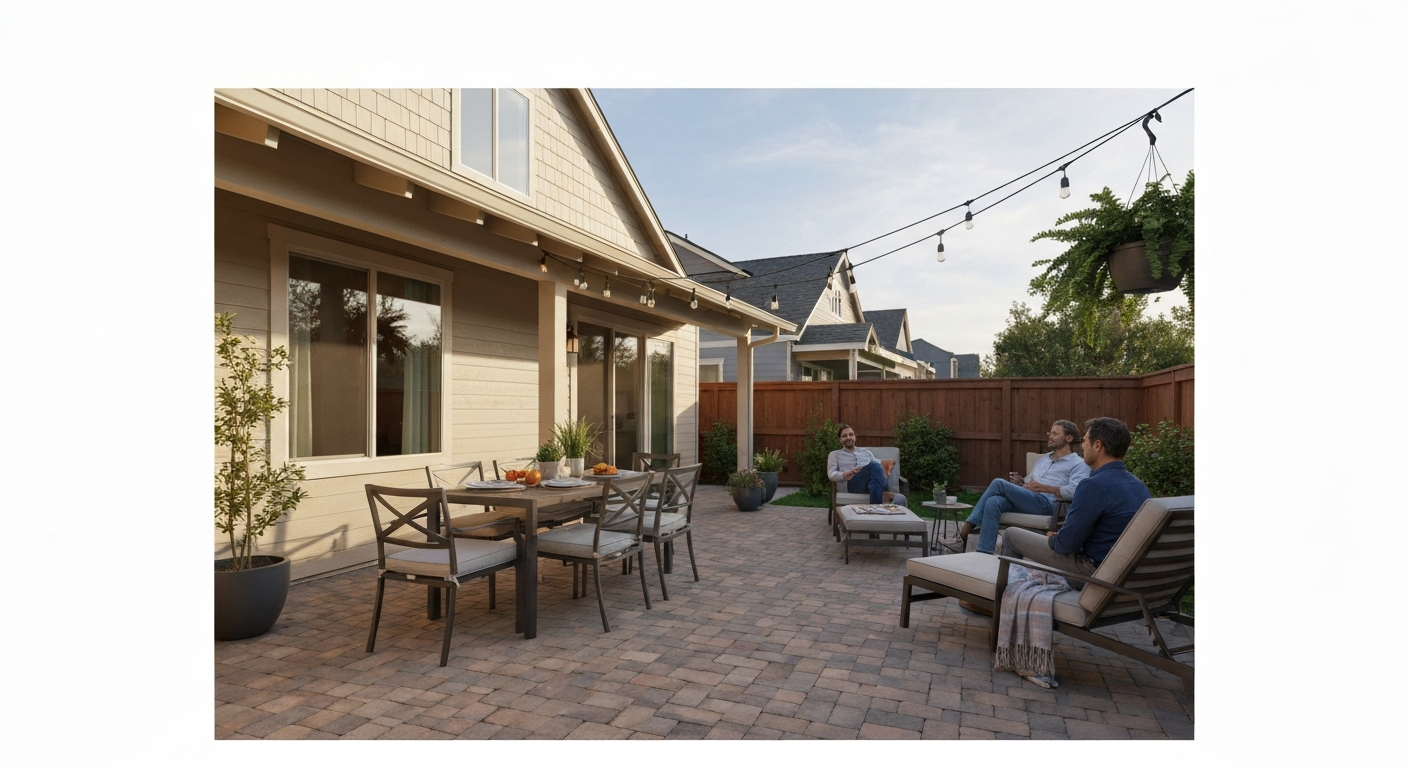
A patio is a paved outdoor area at ground level, sitting right next to your home. A balcony is an elevated platform that projects from the wall of a building, usually on an upper floor, enclosed by a railing or balustrade. The single most reliable test: if you step out onto it from a ground-floor door and your feet are basically at yard level, it's a patio. If you're above the ground floor and there's a railing keeping you from stepping off the edge, it's a balcony. That distinction matters whether you're reading a property listing, planning a renovation, or just trying to make sense of what you actually have.
Difference Between Balcony and Patio: Quick Guide

Ada Hollis
30 Apr 2026
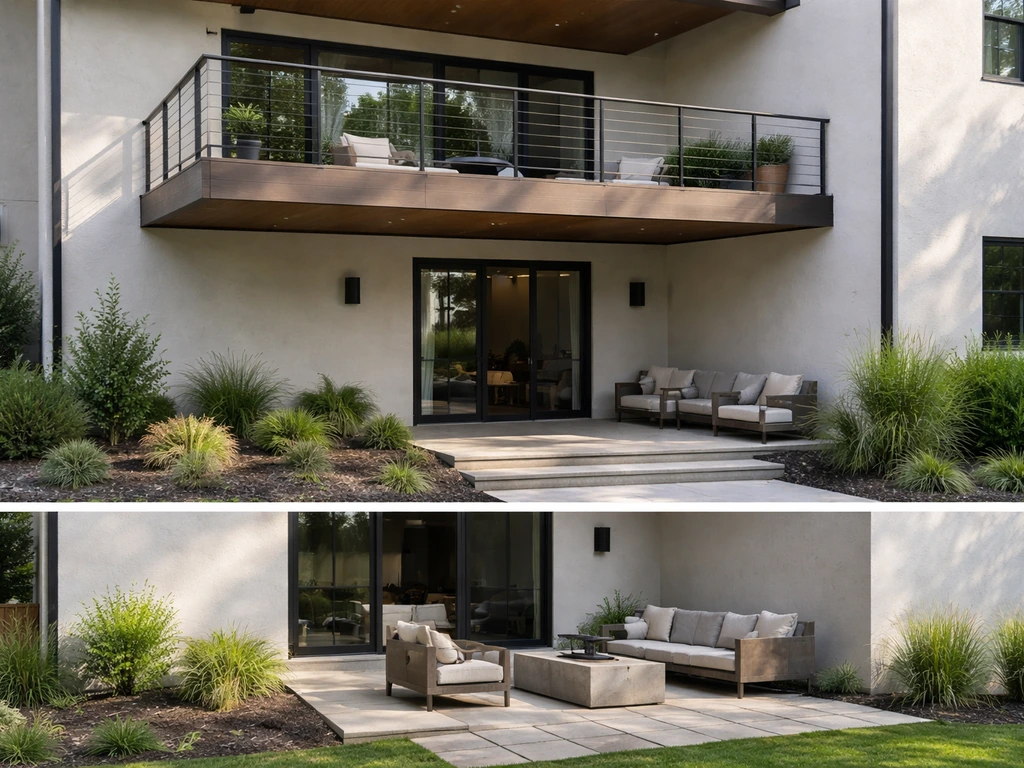
What each space actually is
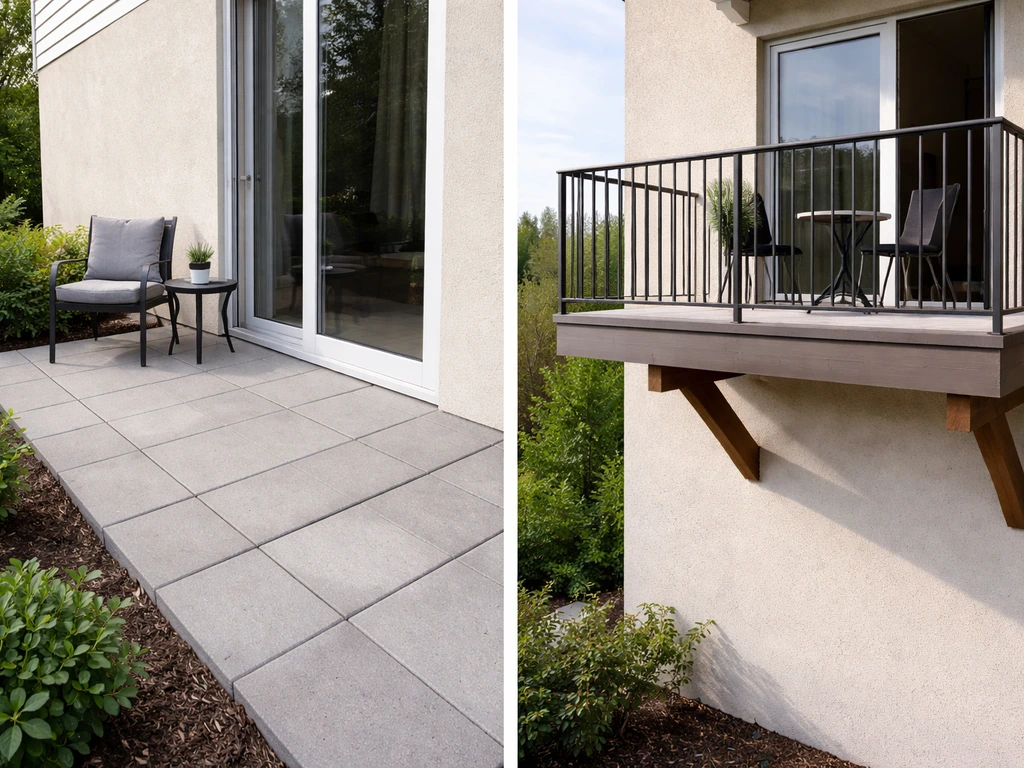
A patio is an outdoor space, generally paved with concrete, stone, brick, or pavers, that adjoins a structure and is designed for dining, relaxing, or socializing. It sits at or very close to grade (ground level). You walk out to it directly from the home, often through a sliding door or French doors, and it's essentially an extension of the yard rather than an extension of the building's structure. The MLS definition used by real estate professionals describes it simply as an outdoor area, usually paved or made with hard materials, designed for relaxation, dining, or social activities.
A balcony is a platform that projects outward from the exterior wall of a building and is supported by the building itself, either through columns, brackets, or the floor structure of the level below. It's almost always enclosed by a balustrade or railing and sits above the ground floor. The same MLS glossary defines it as an outdoor platform attached to the exterior of a building, usually on an upper floor. Balconies are most common in apartment buildings, condos, and multi-story homes where you'd step out from a bedroom or living room on the second floor or higher.
Level, placement, and how you get there
The clearest difference between a patio and a balcony comes down to where they sit relative to the ground and how you access them. A patio is always at or near ground level. You walk out to it from the main living area, and it's continuous with the surrounding yard or landscape. There are no steps required to reach it from inside, and there's no elevation concern because you're essentially standing on the ground.
A balcony, by definition, is elevated. It's accessed by stepping through a door on an upper floor, and once you're on it, you're suspended above the ground. This is why railings are mandatory: building codes, specifically the International Residential Code, require guards on any walking surface that is more than 30 inches above the floor or grade below. On a balcony, that threshold is almost always exceeded. On a standard ground-level patio, it never is.
| Feature | Patio | Balcony |
|---|---|---|
| Level | Ground level or near-grade | Upper floor, elevated |
| Access | From main living area, no steps | Through upper-floor door |
| Railing required? | Rarely (at grade) | Yes, per building code |
| Attached to building? | Adjacent but not structurally part of it | Structurally projects from building wall |
| Common in | Houses, ground-floor units | Apartments, condos, multi-story homes |
| Typical surface | Concrete, pavers, stone, brick | Concrete slab, wood, composite decking |
Structure, rails, and how they connect to the home
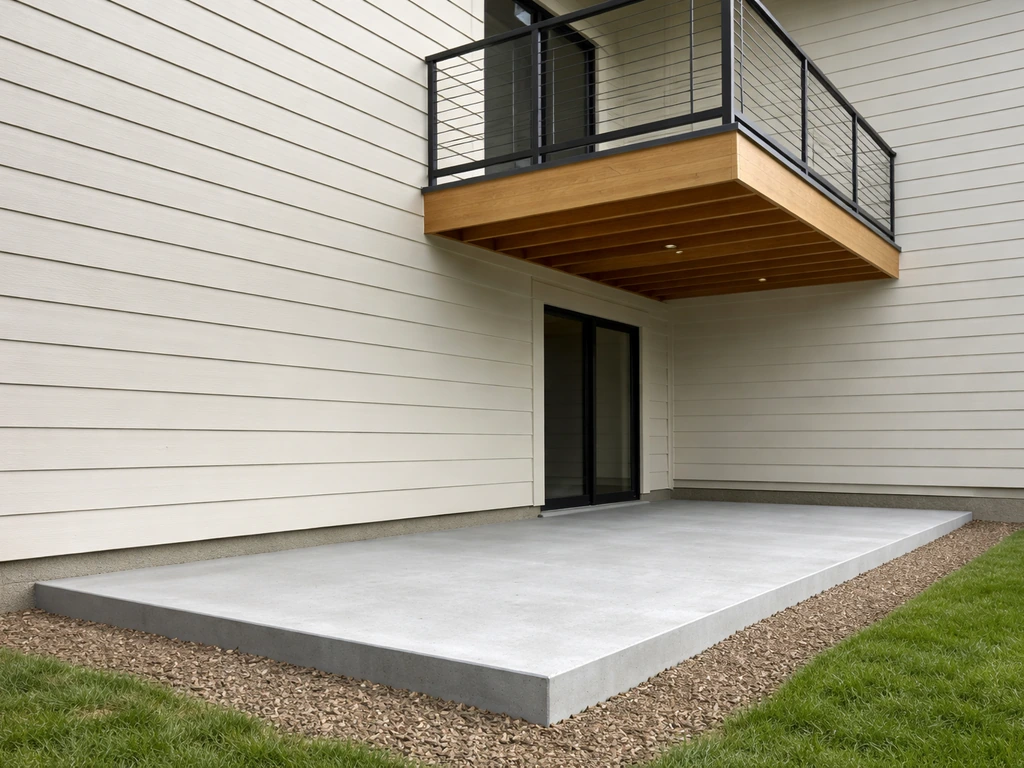
A patio has no structural relationship with the home's upper floors. It's essentially a paved slab on the ground that happens to sit next to the house. It might be attached at the foundation or simply abutting the exterior wall, but it's not load-bearing for the building itself. That's why patios are relatively simple to add, expand, or remove without engineering involvement. A standard patio permit application typically just requires a site plan showing the footprint, setbacks from property lines, and proximity to the structure.
A balcony is a different structural situation entirely. It's affixed to the building facade and must be engineered to carry the load of people standing on it while projecting outward, often without ground support directly beneath it. This is why balconies require guardrails or balustrades along their open edges, and why inspections focus on things like connection points to the building, waterproofing at the threshold where the door meets the balcony, and drainage to prevent water from pooling against the exterior wall. A clogged drain on a balcony can cause serious water damage to the building structure in a way that a backyard patio never would.
One thing worth knowing: insect screening, even when it completely encloses a balcony or porch-like space, does not count as a guard under building code. A screened-in balcony still needs a structural railing behind that screen. This comes up in listings where a space is described as 'screened balcony' and buyers assume the screening alone is the safety barrier.
How each space actually gets used day to day
Patios tend to be larger, more versatile outdoor living spaces. Because they're at grade, there are no size restrictions related to structural load. You can set up a full dining table with six chairs, add a fire pit, put out a grill, or plant container gardens around the perimeter. They connect naturally to the yard, so kids and pets can move between the patio and the lawn without navigating steps or doors. Privacy on a patio depends entirely on your fencing, landscaping, or how close your neighbors are.
Balconies tend to be smaller and more private by nature. Because they're elevated, you're naturally screened from street-level foot traffic, and you have a view that a ground-level patio can't offer. The tradeoff is size: most apartment and condo balconies are compact, often just large enough for two chairs and a small table. They're better suited for a morning coffee spot or an evening drink than for hosting a dinner party. That said, some larger homes have wide balconies that function more like outdoor rooms, complete with outdoor furniture and shade structures.
If you're comparing a ground-floor apartment or condo unit with a patio against an upper-floor unit with a balcony, think about how you actually use outdoor space. For gardening, grilling, and room to spread out, the patio wins. For quiet, elevated views, and a sense of separation from the street, the balcony is hard to beat.
Where decks and terraces fit in (and why listings get confusing)
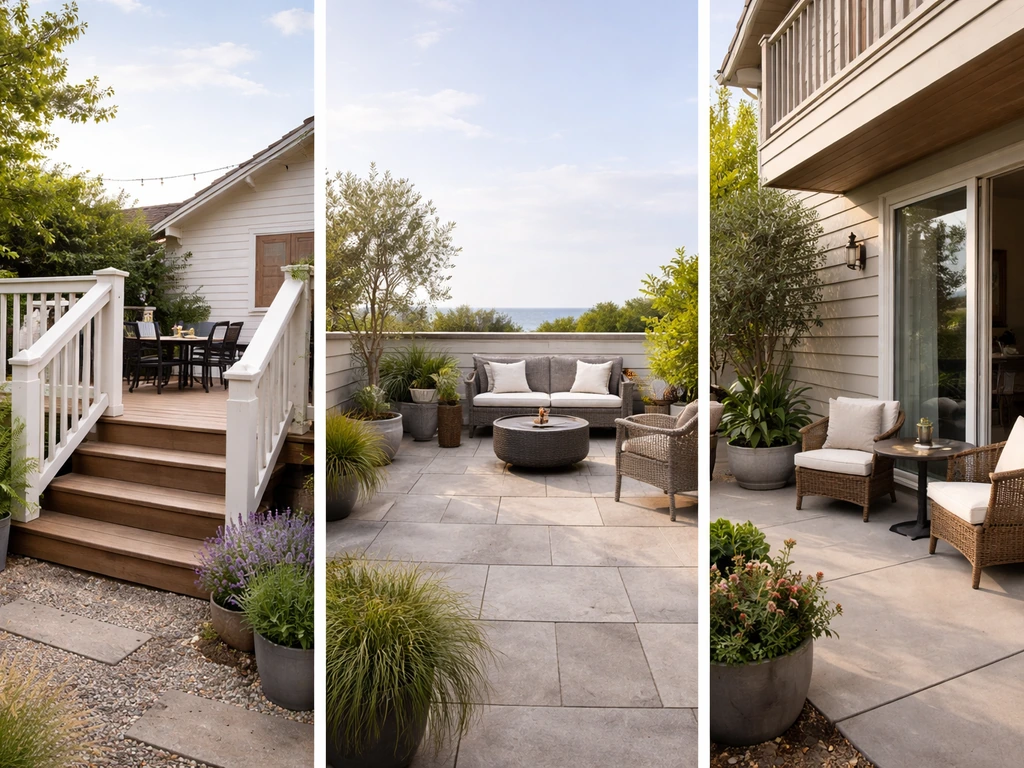
Decks and terraces show up constantly in property listings alongside patios and balconies, and the terms get blurred together all the time. A deck is a flat, usually wooden or composite outdoor platform that's elevated above the ground and attached to the house. The key difference from a patio: decks are typically elevated (even if only a few feet), made from wood or composite rather than masonry, and structurally attached to the home. A deck at the back of a house with stairs down to the yard is a deck, not a patio, even though both are used for the same things.
A terrace is where things get genuinely interesting. Terraces can appear in multiple locations: at grade (essentially a raised or formal patio), on an intermediate floor over a structural slab, or as a rooftop terrace. Unlike a balcony, a terrace doesn't have to project from the building wall. It can sit on a flat structural base, like a concrete podium or the roof of a lower floor, and be quite large. That's why some listings call a large rooftop outdoor space a 'terrace' while calling a small projecting platform on a bedroom floor a 'balcony.' Both are elevated, but the terrace sits on top of something rather than projecting outward from it.
The porch is another common mix-up. A porch is typically covered (it has a roof overhead, which is what distinguishes it from most patios) and is usually at the front or side of the home at ground or near-ground level. Unlike a porch, a patio is typically uncovered and open to the sky. If a ground-level outdoor space has a roof over it, many municipalities would classify it as a porch rather than a patio, even if it's paved and used identically. The presence of a roof is the practical dividing line in most building code interpretations.
How to identify patio vs balcony in a real listing
Listings don't always use precise terminology, and agents sometimes use 'balcony,' 'patio,' and 'terrace' interchangeably depending on what sounds better. Here's a quick checklist to figure out what you're actually looking at when you see one of these terms in a listing description or on a floor plan. In plain terms, the patio or balcony meaning comes down to whether the space is at ground level or elevated from the building.
- Check the floor level. If the outdoor space is accessed from the ground floor, it's almost certainly a patio (or possibly a porch or deck). If it's accessed from the second floor or higher, it's most likely a balcony or terrace.
- Look at the photos. Patios are at yard level with no railing (or only a low decorative one). Balconies have a visible railing or balustrade at the edge, and you can usually see the ground below them.
- Check the surface material. Concrete, stone, brick, and pavers suggest a patio. Wood or composite decking that's elevated suggests a deck or balcony.
- Notice the size. Balconies in apartments and condos are usually compact (often under 60 square feet). A large outdoor space described as a 'balcony' might actually be a terrace or a very generous apartment balcony.
- Look for the door it's accessed through. A bedroom or living room door on the second floor leading to an outdoor platform means balcony. A sliding glass door from a main-floor kitchen or dining room leading outside means patio.
- Watch for 'false balcony' language. Some listings use 'balcony' for a very shallow projecting platform that's barely usable. If the photos show a railing attached to the building wall with only a foot or two of depth, that's a false balcony: decorative more than functional.
- Ask about roof or cover. If the outdoor space has a roof overhead, ask whether it's classified as a covered patio, porch, or screened enclosure. This can affect permits, insurance, and what modifications require approval.
Choosing what to build or upgrade
If you're deciding whether to add or upgrade an outdoor space, the answer depends heavily on your home's structure, your lot, and how you actually use outdoor areas. For a single-story home or any property with yard access, a patio is almost always the most practical and cost-effective choice. It doesn't require structural engineering, the permit process is relatively straightforward, and you have full flexibility on size and materials. You can start with a basic poured concrete slab and upgrade to pavers or a more elaborate design later.
If you're in a multi-story home or condo and want to add or upgrade an elevated outdoor space, you're working with balcony or deck territory, and the questions get more technical. You'll need to think about load capacity, waterproofing at door thresholds, drainage so water doesn't pool against the building, and guardrails that meet current code (30 inches above grade is the trigger point, but your local jurisdiction may have updated to a more recent IRC edition with additional requirements). A Reddit thread about whether a guard or railing is required on a privately owned seawall discusses how people interpret that kind of 30-inch drop trigger and apply it to real-world situations local jurisdiction may have updated to a more recent IRC edition.
Before committing to any elevated outdoor space project, ask your contractor or architect these specific questions:
- Does this require a structural engineer to sign off on the connection to the building?
- What are the local guardrail height requirements, and does the current railing meet them?
- How is water managed at the door threshold and does the balcony have working drains?
- What permits are required, and will the project require a final inspection?
- If you're in a condo or HOA, what modifications to the balcony exterior are allowed under your governing documents?
For renters, the practical takeaway is simpler: know what you're renting before you sign. A ground-floor unit with a patio gives you yard-adjacent outdoor living. An upper-floor unit with a balcony gives you elevated privacy and a view but usually less space and more restrictions on what you can place out there (heavy planters, grills, and large furniture can all raise load and safety questions that some buildings actively regulate). Both are genuinely useful outdoor spaces; they're just useful in different ways.
FAQ
Does a concrete or stone surface automatically make it a patio, even if it’s raised?
In most situations, the material doesn’t decide the label, elevation does. A raised platform can still be called a patio in a listing if it sits at or near grade, but if the walking surface is clearly above ground with guardrails, buyers and codes will treat it like a balcony or terrace rather than a ground patio.
What if the yard slopes, does the patio vs balcony distinction change?
Yes. If the only reason it feels “high” is the slope of the yard, check the access point and the floor height relative to grade at the doorway. The practical test is still your feet height when you step out from the door compared with the surrounding ground.
If I have to use stairs from inside, is it automatically a balcony?
If you can reach the outdoor area only by going up or down interior stairs, that doesn’t automatically make it a balcony. What matters is where the exterior walking surface sits relative to grade. For example, an upper-level sunroom with a door to a level platform can be treated as an elevated exterior space, even if access feels “indirect.”
How can I confirm what a listing means if the agent uses balcony/patio loosely?
Many listings use “balcony” broadly, so ask for the floor plan label and the elevation. A common workaround is to look for “guards/guardrail” notes, or whether the door opens to an exterior suspended platform with railing requirements. If there’s a continuous railing to prevent falls, it is very likely not a ground-level patio.
If it’s enclosed with screens, does that mean I can treat a balcony like a patio for safety?
A screened enclosure changes comfort, not safety requirements. The screen itself usually does not count as a guard, so you should expect a structural railing or balustrade underneath or behind it, plus building approval for any added screening system.
What maintenance differences should I expect between patio and balcony owners?
Patio repairs are often mostly surface work, while balcony work commonly includes structural connections and waterproofing at the door threshold. Before signing, ask whether the building has documented waterproofing and drain maintenance, because failure there tends to show up as damage on the level below or inside around the door.
What are common landlord or HOA restrictions on what I can place on a balcony?
For rentals, rules vary by building. Many condo and apartment associations restrict or require approval for balcony items that add weight (large planters, grills, stone tables) or that alter drainage and waterproofing. Ask what’s allowed in writing before you move heavy furniture or install anything that penetrates the surface.
What’s the difference between a small balcony and a terrace when both are elevated?
If you see a small projecting platform from an upper bedroom door with railing, it’s typically a balcony, even if it’s very narrow. “Terrace” usually implies a larger elevated area that sits on a structural base (like a roof or podium) rather than projecting from a facade, but agents may still mix terms.
If part of the patio has a roof or pergola, will it be called a porch or still a patio?
A patio can be partly covered with an awning or pergola, but if there is a full roof and it creates a sheltered, front-or-side entrance space, it may be classified as a porch locally. If the roof is only a shade element and the space remains open to the sky on all sides, most interpretations will still lean patio.
If I want to add one to my home, what questions should I ask about structure and waterproofing?
For add-ons, patio projects are usually simpler because they typically don’t need to support people above grade. For balconies, confirm the building can handle structural load, and that waterproofing and drainage are designed for the specific door and wall conditions. A contractor should be able to point out the load path and how water is directed away from the exterior.
What’s a common mistake renters make when choosing between a balcony and a patio?
Yes, and it’s a common rental mistake. If you’re on an upper floor and assume it’s a patio because it has furniture or is enclosed, you might miss that it’s a suspended surface with strict guardrail and drainage considerations. Always verify the elevation and railing plan before treating it like yard-level outdoor space.
Next Article
Patio Weather Meaning: What Patio, Area & View Mean
Clear patio definition: what a patio is, 'patio weather' meaning, and how it differs from decks or porches.