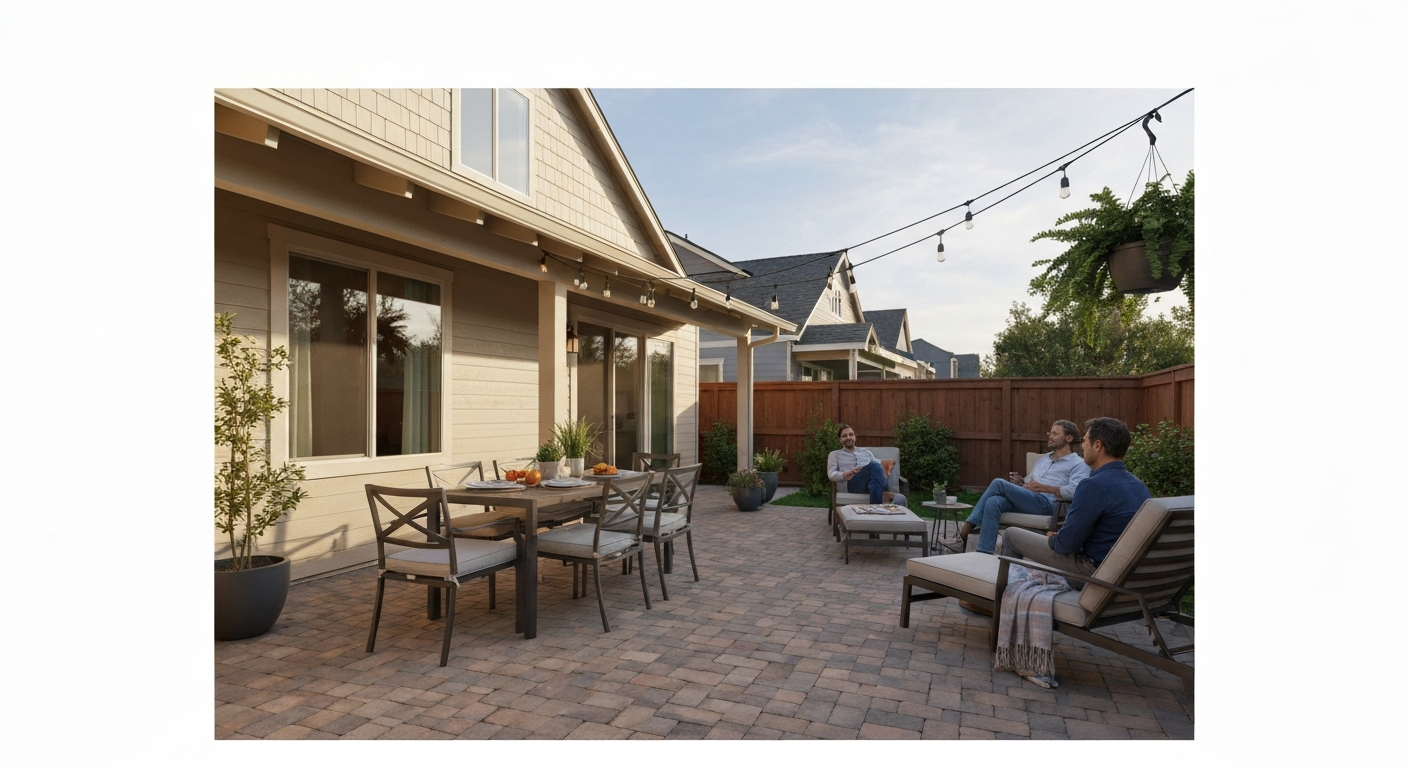
"El patio" is Spanish for "the patio" and refers to an open, unroofed area enclosed by the walls of a house or building. Think of it as an interior or attached courtyard: walls on the sides, open sky above, and no roof. In English, the closest translation is "courtyard" or simply "patio," depending on context. This is a masculine noun in Spanish, which is why it takes "el" and not "la" or any other article.
El Patio Meaning: What el patio Means in Spanish

Ada Hollis
12 May 2026
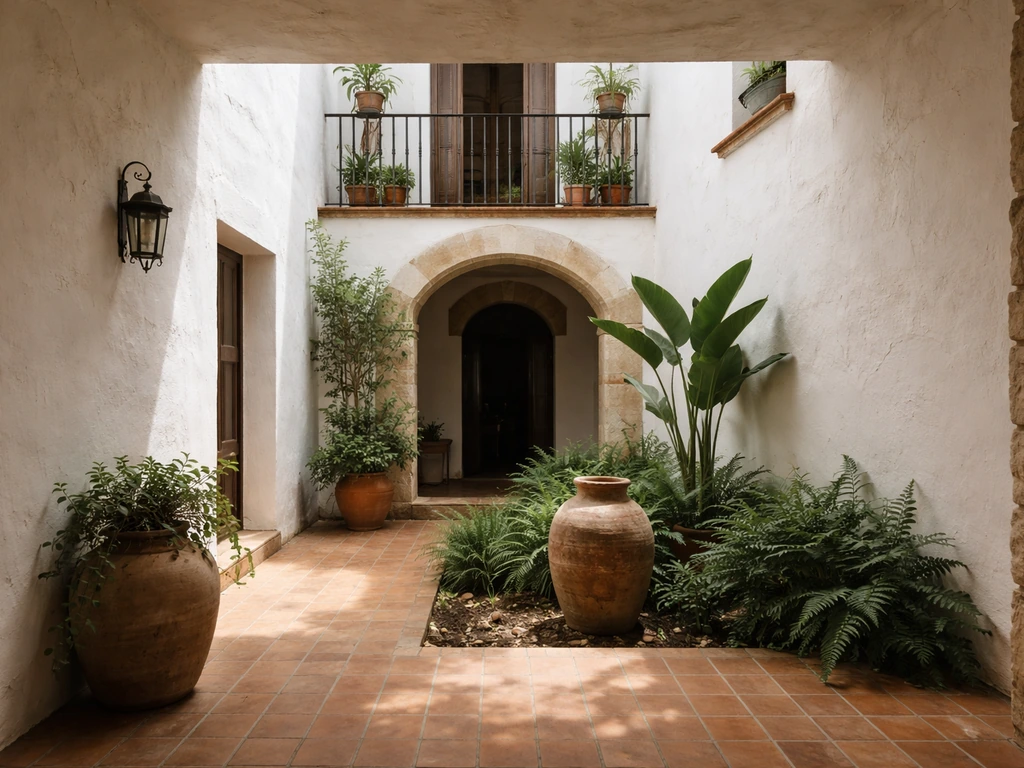
What "el patio" means in Spanish and English
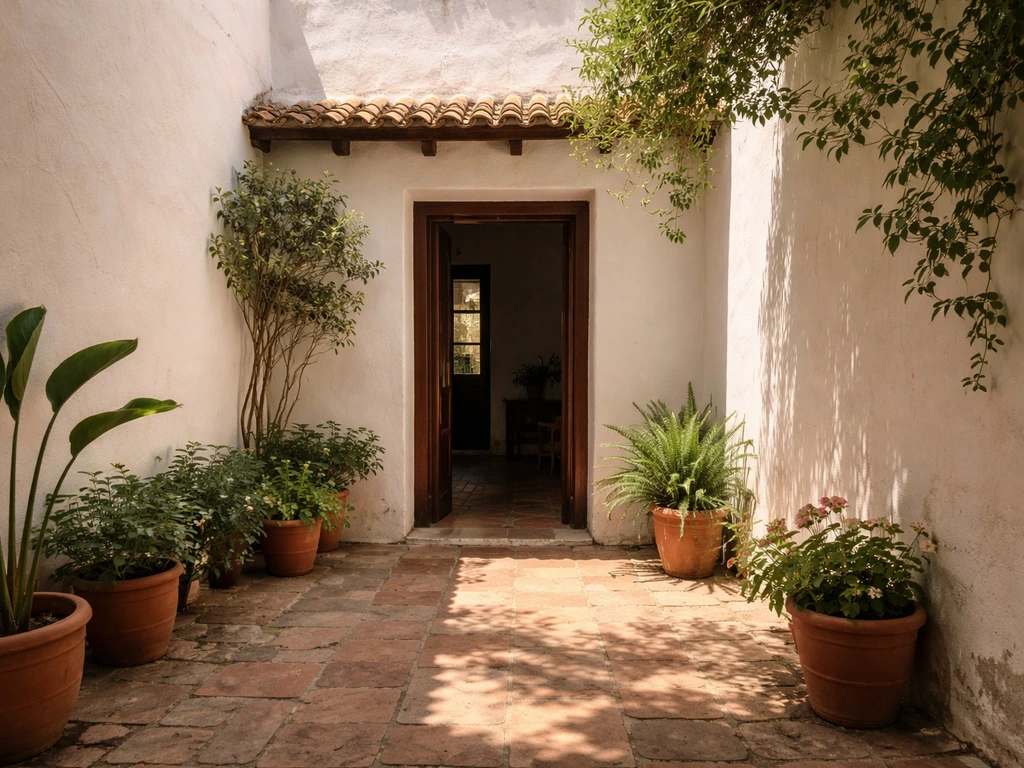
The Real Academia Española (RAE), the authority on standard Spanish, defines patio as a masculine noun meaning an open space within a house or building that is enclosed by walls but has no roof. Cambridge Dictionary translates it directly as "courtyard." WordReference goes a step further, describing it as an enclosed area bounded by walls or galleries, left uncovered and open to the sky.
So when a Spanish speaker says "el patio de la casa," they literally mean "the courtyard of the house" or "the open yard area of the house." In Latin American usage and in US English, the word "patio" has stretched a bit to also cover any outdoor living area attached to a home, like a backyard patio slab or a terrace. Collins English Dictionary captures that history well, defining patio in English as "an open inner courtyard, especially one in a Spanish or Spanish-American house." The Spanish origin is baked right into the English definition.
The practical takeaway: whether you see "el patio" in a Spanish text or just "patio" in an English real estate listing, you are looking at some kind of open-air outdoor area attached to or enclosed within a building. Oxford Learner’s Dictionaries defines “patio” as “a flat hard area outside, and usually behind, a house where people can sit,” and traces it back to Spanish, where it refers to an inner courtyard open-air outdoor area. The exact shape and style will vary, but the open-sky, no-roof part is the consistent thread.
Spanish grammar check: why "el" and not "la"
Spanish nouns have grammatical gender, either masculine or feminine, and that gender determines which article goes in front. Masculine nouns take "el" (definite) or "un" (indefinite). Feminine nouns take "la" or "una." The RAE learner's dictionary labels patio as "m." for masculine, so the rule is straightforward: el patio, not la patio.
There is one situation where a feminine noun can take "el" instead of "la," and that is when the noun begins with a stressed "a" sound, like "el agua" or "el águila." That phonological rule exists to avoid two "a" sounds bumping together. But patio does not trigger that rule because it is masculine to begin with, and it starts with a "p" anyway. The article "el" here is simply the standard masculine definite article, nothing unusual about it.
If you have seen "la patio" somewhere, that is a grammar error. It might appear in informal writing or from a non-native speaker treating patio as feminine by analogy with other words ending in "-io," but it is not standard Spanish. The correct form is always "el patio."
Why "le patio" is wrong, and what people usually mean by it
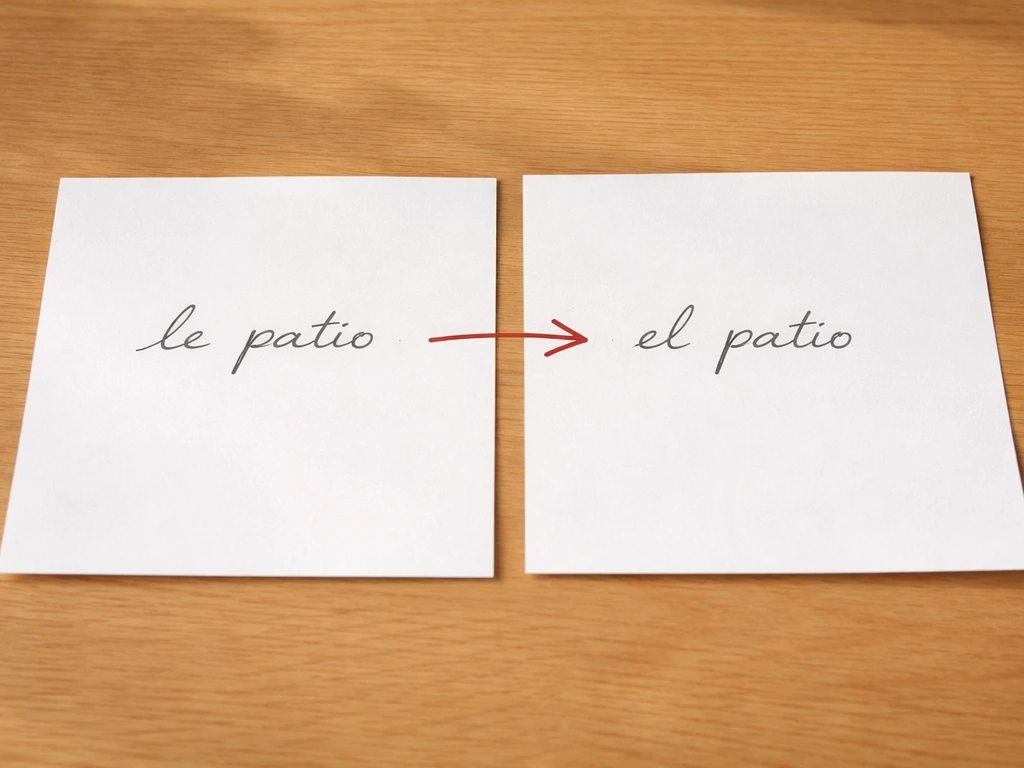
"Le" is not a Spanish article at all. In Spanish grammar, "le" is a clitic pronoun used for indirect objects. It means something like "to him," "to her," or "to you (usted)." For example: "Le di un libro" means "I gave him/her a book." "Le" cannot function as the definite article "the" in front of a noun.
So "le patio" does not mean "the patio" in Spanish. Grammatically, it reads more like a fragment where "le" is a pronoun dangling without a verb: something like "(to him/her) patio," which makes no sense on its own. If you write "le patio" in a sentence, a Spanish speaker will either be confused or assume it is a typo for "el patio."
People who search for "le patio meaning" are almost certainly looking for the same thing as someone searching for "el patio meaning. It’s usually the same as “el patio meaning,” just with the French article swapped in le patio meaning. In many searches, patio garden meaning is really about what counts as a patio space and what kind of outdoor plants or layout you might expect around it. " It is a common slip, especially for French speakers, because "le" is the masculine definite article in French. If you are coming from French, the Spanish equivalent of "le" as a definite article is "el." Different language, different system.
What a patio actually looks like in a real home
In traditional Spanish and Latin American architecture, the patio is the heart of the house. Picture an open courtyard in the center or rear of the home, surrounded by the building's walls or covered walkways (called arcades or galleries). There is no roof over the central space. It might have a fountain, potted plants, stone or tile flooring, and furniture for outdoor sitting. This design style goes back centuries in Andalusia and was carried over to Latin America and the American Southwest.
A specialized version worth knowing is the "patio de luces," which is an interior light well built into apartment buildings. In real estate and architecture discussions, you will also hear the patio interior meaning, which usually refers to an indoor light well or enclosed courtyard space patio de luces. It is a narrow open shaft surrounded by the building's walls, designed to channel indirect light and ventilation into interior rooms. You will not be sitting out there with a coffee, but it is still technically a patio in the architectural sense.
In modern North American homes, the word patio has evolved to mean almost any paved outdoor area adjacent to the house, usually at ground level. In a Reddit discussion about Spanish translations, people also note that “patio” in US English often does not line up with what an “open yard” would be called by native speakers patio often does not line up with what an “open yard” would be called by native speakers.
This could be a concrete slab off the back door, a flagstone terrace, or a tile area by a pool. It still carries the original idea of an open-air space meant for outdoor living, but it does not have to be enclosed by walls on all sides the way the classic Spanish courtyard does.
The patio meaning in architecture connects to these classical roots, and understanding that history helps explain why the word carries slightly different weight in a Spanish home description versus an American real estate listing. The patio origin and meaning explain why the word refers to an open-air space tied to a home, even as it became broader in English patio meaning. This patio meaning in architecture also explains why the space is often positioned as the social or functional heart of a building.
Patio vs. porch vs. balcony vs. verandah vs. courtyard
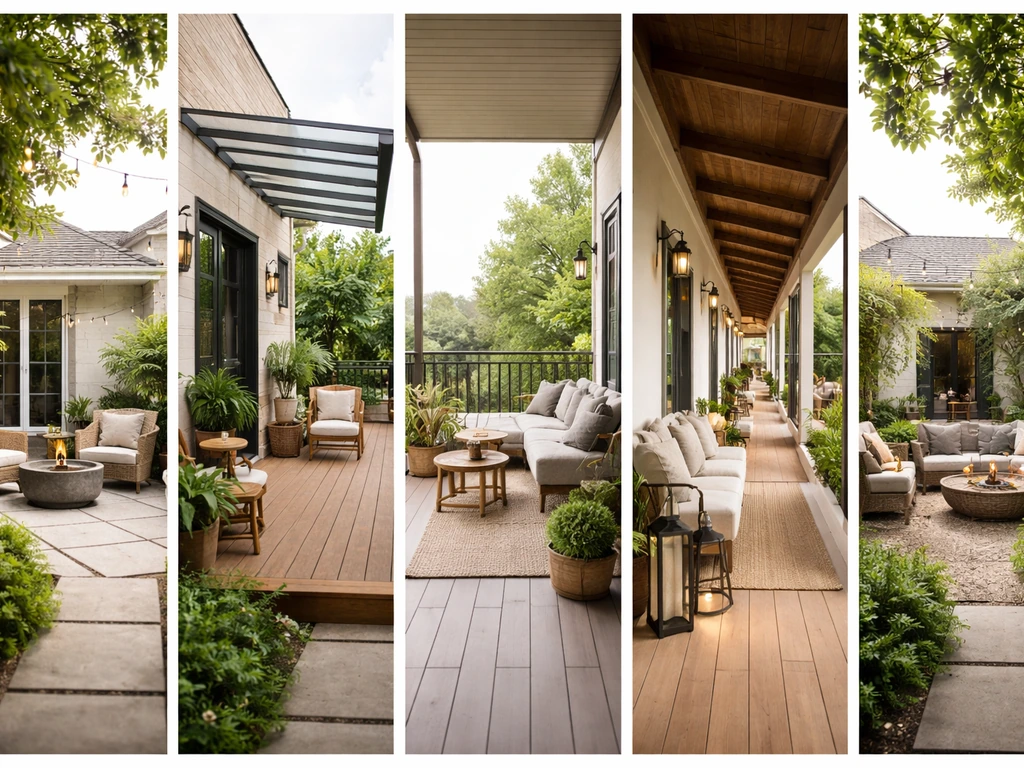
These terms get mixed up constantly, even among native English speakers. Here is how they actually break down.
| Space | Location | Roofed? | Level | Best English equivalent |
|---|---|---|---|---|
| Patio (el patio) | Ground level, attached to or within a building | No | Ground floor | Courtyard or outdoor terrace |
| Porch (porche) | Front or rear of building, near main entrance | Usually yes | Ground floor | Covered entrance platform |
| Balcony (balcón) | Exterior wall of upper floor | Sometimes | Upper floors | Balcony |
| Verandah (veranda) | Wraps around exterior of house | Yes | Ground floor | Covered wrap-around porch |
| Courtyard | Enclosed by walls or buildings | No | Ground level | Patio (the Spanish sense) |
The patio and courtyard are the closest to each other: both are ground-level, open-to-the-sky spaces enclosed at least partially by a building's structure. The main difference is that "courtyard" in English tends to suggest a more formal or architectural enclosure, while "patio" in North American use can simply mean a casual outdoor floor area.
A porch (porche in Spanish) is covered, which is the key distinction from a patio. RAE defines porche as a covered space, usually with columns or arches, near the main entrance of a building. A verandah goes further: it is a roofed structure that typically wraps around part or all of a house's exterior at ground level. A balcony is always elevated, projecting from an upper-floor wall, which immediately separates it from any ground-level patio or porch.
In everyday Spanish, people sometimes use "terraza" and "patio" interchangeably, but they are not the same thing. In real estate, this is why the patio terrace meaning can overlap in casual listings, even though the architectural roots differ terraza. RAE defines terraza as an open place in a house from which you can enjoy a wide view, closer to the English idea of a terrace or a rooftop area. If you see a Spanish listing mention both, the patio is likely the ground-level enclosed courtyard, while the terraza is more of an elevated or open-view space.
Reading "patio" in a real estate listing: what to actually look for
When a listing says a property has a patio, here is what to do to avoid surprises.
- Ask for photos specifically of the patio. The word covers everything from a tiny concrete slab to a full enclosed courtyard, and the size difference matters enormously for how you can use the space.
- Check whether it is covered or uncovered. If the listing says "covered patio," that is closer to a porch or veranda, which affects sun exposure, rain protection, and furniture choices.
- Find out if it is private or shared. In apartment buildings, a patio de luces or interior courtyard is often shared among units. A ground-floor condo listing might include access to a patio that other residents also use.
- Look at orientation. A south-facing patio in the Northern Hemisphere gets sun most of the day. A north-facing one stays shady. This is not always listed but worth asking about.
- Clarify surface material. Concrete, pavers, tile, gravel, and wood decking each carry different maintenance requirements and price tags for any future renovations.
- In Spanish-language listings, watch for "patio interior" or "patio de luces" as modifiers. These signal an architectural light well or interior courtyard rather than a backyard entertaining area. The distinction matters for outdoor living plans.
If you are reading a Spanish-language property description and it mentions "el patio," you are almost certainly looking at a traditional enclosed courtyard or a defined outdoor area. If it is an English listing using "patio," the space could range from a formal courtyard to a simple paved area. Either way, those six questions above will tell you what you are actually getting.
Understanding the patio in its full range, from the classic Spanish inner courtyard to the modern North American backyard slab, gives you a real edge when reading listings, touring homes, or talking to agents. The word has traveled far from its origins, but the core idea has stayed consistent: an outdoor living space, open to the sky, attached to your home.
FAQ
Is “el patio” always masculine in Spanish, even for a light well (patio de luces)?
In Spanish, “patio” is usually masculine, so the standard form is “el patio.” If you are writing for style, you still use “el” even when it is a small enclosed patio or a patio de luces in an apartment. The gender does not change by size or by whether it is residential.
What should I do if I encounter “la patio” in a Spanish text?
If you see “la patio” in Spanish, treat it as a mistake or a nonstandard regional usage. The only common “el + feminine” exception in Spanish involves stressed a sounds at the start of the word (like “el agua”), but “patio” starts with p, so it does not trigger that rule.
Does “le patio” ever mean “the patio” in Spanish?
“Le” means “to him/her/you (usted),” it is an indirect-object pronoun. “Le patio” does not mean “the patio,” it is usually a typo. A Spanish speaker would likely read it as part of a longer sentence, for example “Le quitó el patio” would still not be grammatically correct, but it would at least look like a sentence fragment someone started.
How can I tell whether a listing’s “patio” is a real courtyard or just an outdoor slab?
In listings, “patio” can be very broad. Before assuming it is a classic walled courtyard, check whether the description mentions enclosure (walls, galleries/arcades), rooflessness (open to the sky), and location (center courtyard versus attached backyard). If it only says “paved patio” or “patio slab,” it may simply be an uncovered ground-level terrace.
What is the practical difference between “patio” and “terraza” when reading Spanish real estate descriptions?
In Spanish, “terraza” points more toward an area where you can enjoy a view, and it is often elevated or designed for sightseeing. “Patio” more often implies an attached outdoor space connected to the interior layout of a home, typically at ground level and defined by surrounding building walls. If the listing highlights “views,” “rooftop,” or “scenery,” expect “terraza” rather than “patio.”
Is “patio de luces” the same as an outdoor patio you can use?
If a Spanish apartment description mentions “patio de luces,” it is typically not a seating area, it is a vertical interior opening meant for indirect light and ventilation. You should not expect outdoor furniture or direct access like a backyard patio. Still, it can affect how bright and ventilated the interior rooms feel.
How do I quickly distinguish a patio from a porch, balcony, or veranda in Spanish and English listings?
Spanish “porche” indicates a covered entry area, usually near the main door, so it is not open to the sky in the same way a patio is. “Balcony” is elevated and projects from an upper floor, and “veranda/verandah” is roofed and often wraps part of a house. If you are translating for a tour, confirm whether it is covered and at what height, because those details change what you can actually do there.
Why does the English word “patio” sometimes mean something different from the classic Spanish courtyard?
“Patio” in North American English can include places that would not qualify as a classic enclosed courtyard in Spanish architecture, like a backyard slab, poolside tile area, or a small ground-level terrace. When the advertisement is in English, it is smart to ask whether the patio is enclosed on multiple sides, whether it is fully uncovered, and what the surrounding walls or fencing look like.
Next Article
Patio Weather Meaning: What Patio, Area & View Mean
Clear patio definition: what a patio is, 'patio weather' meaning, and how it differs from decks or porches.