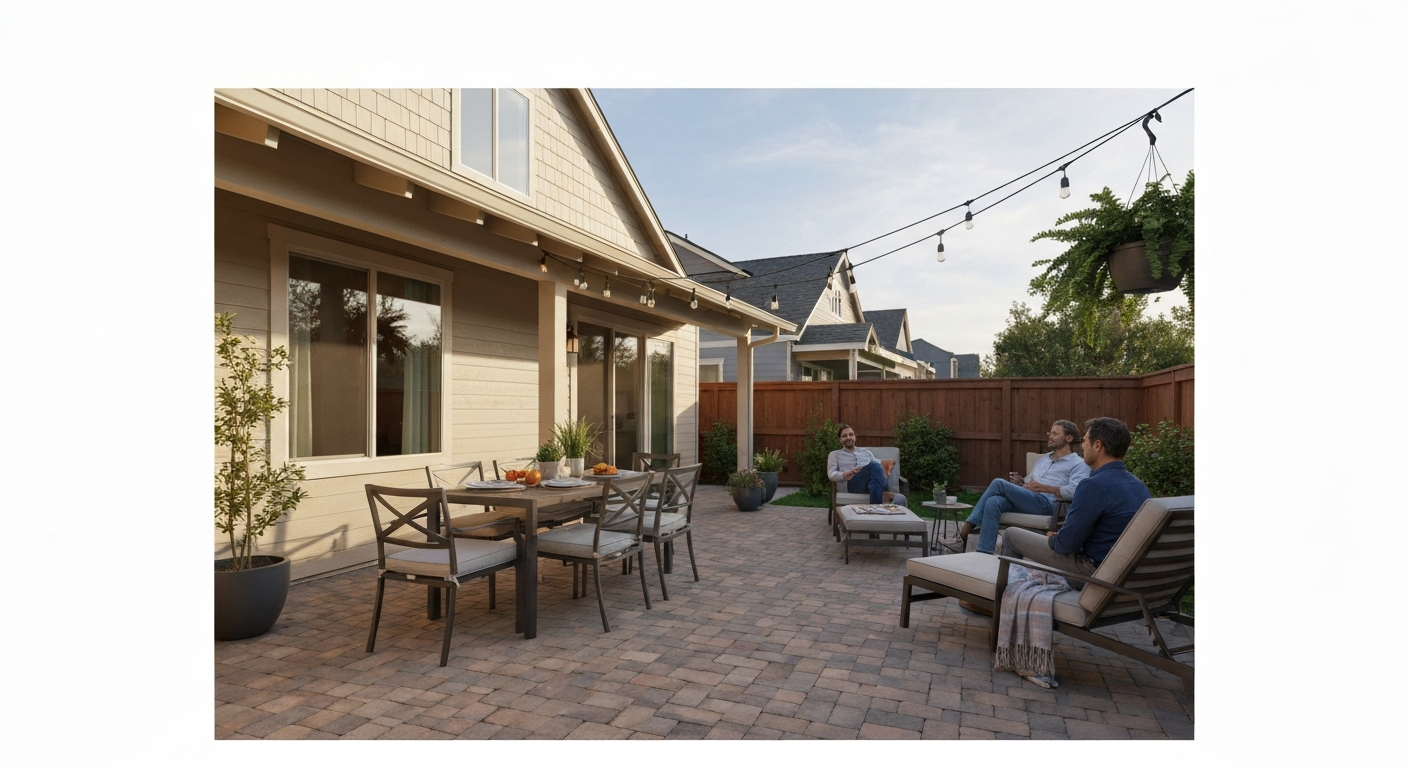
In Spanish, you say 'patio', exactly the same word. No translation needed. Spanish is actually where English borrowed the word from in the early 19th century, so when you say 'patio' in English, you're already using a Spanish word. The pronunciation is different, though, and the meaning in Spanish is a little broader than what most English speakers picture.
How to Say Patio in Spanish: Meaning, Pronunciation

Ada Hollis
4 May 2026
Is 'patio' already a Spanish word?
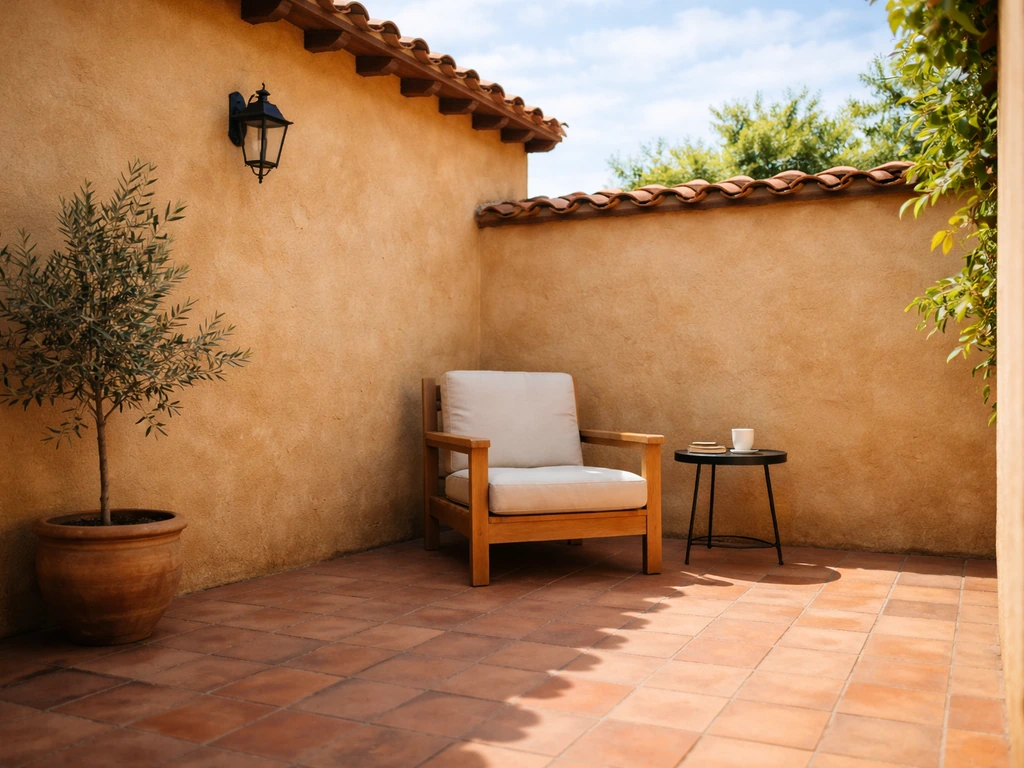
Yes, completely. 'Patio' is a native Spanish word, not a borrowed one. English is the borrower here. Oxford traces the English word 'patio' to early 19th century Spanish, where it originally denoted an inner courtyard. Cambridge's bilingual dictionary maps the English word 'patio' directly to the Spanish word 'patio' with no alternative translation, because none is needed. So if you're writing a property description in Spanish, filling out a rental form, or just asking a Spanish-speaking neighbor about their outdoor space, 'patio' is the right word.
That said, the word carries some nuances in Spanish that it's lost in everyday English use. Knowing those differences will help you read a Spanish real-estate listing without guessing.
What 'patio' actually means in Spanish
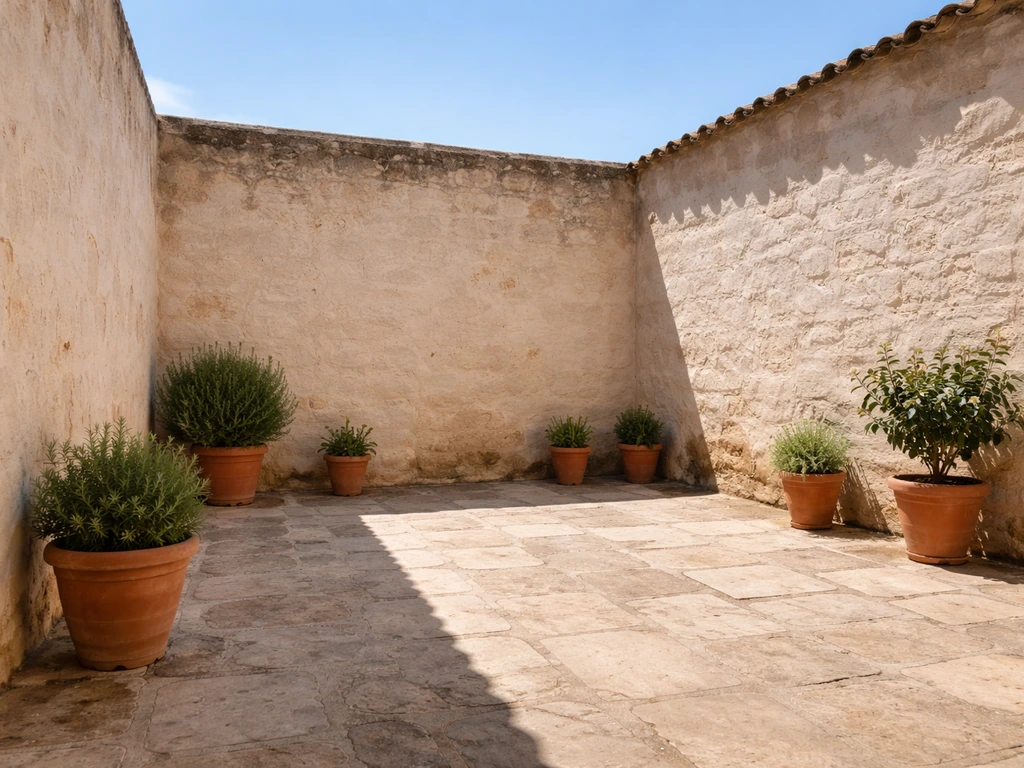
The Real Academia Española (RAE), which is essentially the official authority on Spanish, defines 'patio' as: an enclosed space bordered by walls, but without a roof or covering ('espacio delimitado por paredes, pero sin techo o cubierta'). It's a masculine noun, so it's 'el patio' in everyday speech and listings.
That 'without a roof' detail is the key. In Spanish, a patio is fundamentally an open-to-the-sky space. It's enclosed on the sides by walls or the structure of a building, but the top is open. Think of a classic Andalusian courtyard surrounded by the walls of a house, that's the archetypal Spanish patio. In English, we've stretched the word to include any outdoor seating area attached to a home, even a simple concrete slab next to the back door. Spanish is a bit more precise about the enclosed, roofless structure.
You'll also hear 'patio trasero' in listings and everyday conversation, which simply means 'back patio' or backyard area. If you mean a Mexican-style outdoor courtyard, you can also see related terms used in property listings, like patio trasero. 'Patio delantero' means front yard/patio. These compound forms are common in Spanish-language real-estate documents and property descriptions.
How to pronounce 'patio' in Spanish
This is where most English speakers trip up. In English, we say 'PAY-tee-oh' (three syllables, with a long 'ay' sound). In Spanish, it's closer to 'PAH-tyoh', two syllables, with a short, crisp 'a' sound as in 'father,' and the 't' and 'io' flow together quickly rather than separating into a distinct 'ee' sound.
Spanish phonetics follow a straightforward rule: words ending in a vowel, 'n,' or 's' get stress on the second-to-last syllable, and there's no accent mark on 'patio' to override that rule. So the stress lands on 'PA,' and the rest of the word is short and unstressed. The vowels are pure Spanish vowels: 'a' as in 'father,' 'i' as a quick glide, 'o' as in 'open.' There's no diphthong stretching like you'd hear in English.
If you want to hear it from a native speaker before using it in conversation, Forvo has free recordings from real Spanish speakers saying the word in context. Here’s how to say patio in Spanish Forvo. That's the fastest way to calibrate your ear before speaking.
Patio vs. porche, terraza, balcón: which word fits?
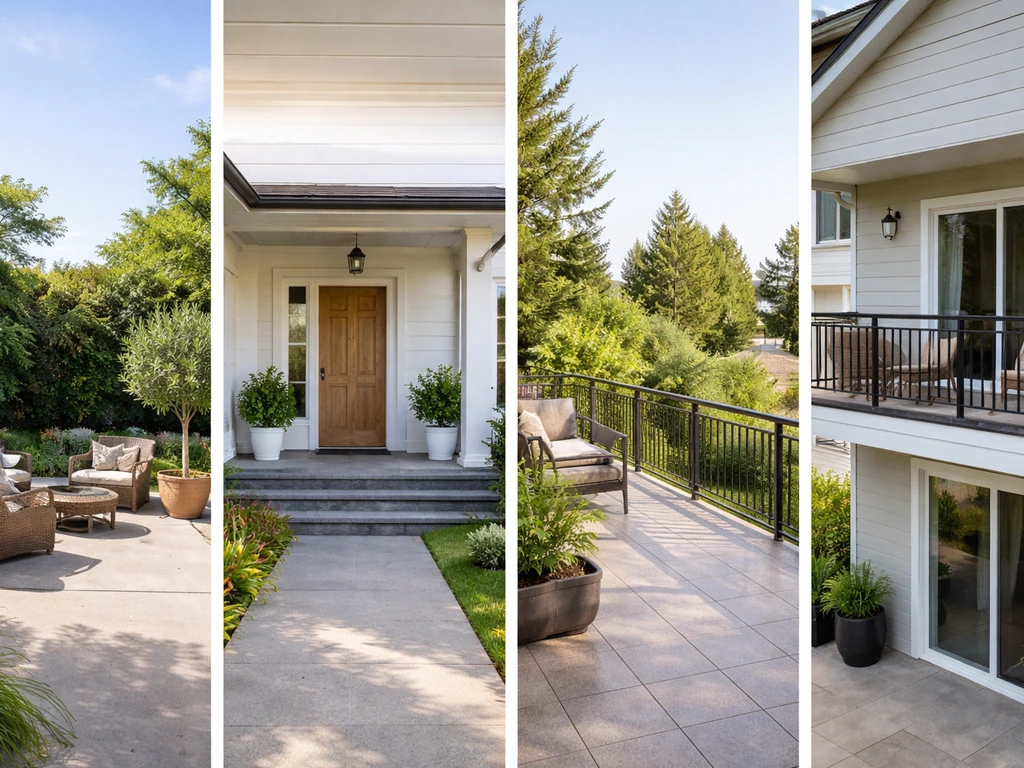
Spanish has several words for outdoor spaces attached to a home, and they're not interchangeable. Knowing which one to use (or how to read it in a listing) saves a lot of confusion when you're comparing properties.
| Spanish term | Closest English equivalent | Key feature | Roofed or open? |
|---|---|---|---|
| patio | courtyard / backyard | Walled, connected to the building, at ground level | Open to the sky |
| porche | porch / covered entry | Covered space preceding the entrance of a house | Roofed |
| terraza | terrace / rooftop terrace | Usable open platform, often elevated or on a rooftop | Usually open, sometimes partially covered |
| balcón | balcony | Platform attached to a façade, typically with a railing | Open, but elevated above ground |
| patio de luces | light well / air shaft courtyard | Interior courtyard inside a building for light and ventilation | Open to sky, but not a private outdoor seating area |
Porche: the covered porch
The RAE defines 'porche' as a covered space that precedes the entrance of some houses. The roofed quality is what sets it apart from a patio. If a Spanish listing says 'porche,' you're looking at a covered, entrance-adjacent outdoor area, the equivalent of a front porch with a roof overhead. A 'patio' should not have that roof. That's actually the fastest way to distinguish them when reading a property description.
Terraza: the terrace or rooftop platform
'Terraza' describes a usable outdoor platform, often elevated, like a rooftop space or a raised area behind a home with railings or walls. Where a patio is ground-level and enclosed by building walls, a terraza tends to be more open and platform-like. In English, another word for a patio is “courtyard.”. In apartment listings especially, 'terraza' often refers to an outdoor usable space on the roof or at a level above street grade.
Balcón: the balcony
'Balcón' is a platform attached to a building's façade, typically with a railing, and it's always elevated off the ground. If a listing mentions a 'balcón,' you're not getting a private ground-level outdoor area, you're getting an upper-floor ledge that opens off a room. Useful for fresh air and views, but not the same thing as an outdoor seating space where you'd put a table and chairs.
Patio de luces: the light-well courtyard
'Patio de luces' is a specific architectural term you'll see in apartment buildings and older urban properties. It refers to an interior courtyard shaft inside a building, open to the sky, designed to bring indirect light and ventilation to interior rooms. It's not a private outdoor space for sitting or entertaining. Collins treats it as its own distinct entry, separate from a standard 'patio.' If an apartment listing mentions a 'patio de luces,' don't interpret that as a private backyard or courtyard you can use.
How to read 'patio' in Spanish real-estate listings
When you see 'patio' in a Spanish property listing, here's the practical checklist I'd apply before getting excited (or disappointed):
- Check whether it says 'patio' or 'patio de luces.' A plain 'patio' is a private outdoor space. A 'patio de luces' is an architectural light shaft and is not your outdoor area to use.
- Look for 'trasero' (back), 'delantero' (front), or 'interior' to understand where the patio sits in relation to the property.
- Look for 'privado' (private) vs. any language suggesting 'comunal' or 'comunitario' (communal/shared). Spanish Wikipedia notes that a patio can be private (annexed to a ground-floor unit) or communal — listings should specify which.
- Check whether 'patio' appears alongside 'jardín' (garden). Some listings use 'patio/jardín' together to describe the full exterior land area, which typically signals a larger space than a compact walled courtyard.
- If you see 'porche,' mentally add a roof. If you see 'patio,' expect open sky. That single structural difference matters for how you'd actually use the space.
One common listing phrase you'll encounter is 'acceso a patio trasero,' meaning access to a back patio. In Spanish residential real estate, this phrasing signals that a unit has entry to a rear outdoor area, which is a meaningful selling point, especially for ground-floor apartments in urban buildings where outdoor space is scarce.
It's also worth knowing that 'patio' in Spanish real estate reflects the architectural tradition of the enclosed courtyard more than the English idea of an outdoor dining deck. In southern Spain especially, the patio as an interior courtyard is deeply cultural, the famous 'patio cordobés' tradition in Andalusia reflects just how central these enclosed, open-to-sky spaces are to Spanish domestic architecture. If you're exploring why patios were built the way they were, that cultural and historical context goes a lot deeper than just seating placement. Patios in Mexico developed from the same courtyard-building traditions that spread through Spanish colonial architecture, adapted to local climate and everyday family life why patios were built the way they were.
Quick grammar note for Spanish speakers and learners
'Patio' is masculine in Spanish, so always use 'el patio' (definite) or 'un patio' (indefinite), never 'la patio.' Adjectives and descriptors agree accordingly: 'el patio trasero,' 'un patio interior,' 'el patio privado.' If you're filling out a form or writing a property description in Spanish, getting the gender right marks you as someone who knows what they're doing.
FAQ
How do I say “patio” in Spanish if I want to sound like a native, for example in a rental listing or text message?
Use “el patio” for the specific patio (for example, “el patio trasero”) and “un patio” if you mean any patio in general. If you are texting informally, “patio” alone is usually understood, but the article is safer in formal writing.
In Spanish, is “patio” ever roofed like an enclosed sunroom?
Typically no. A patio is defined as roofless (open to the sky) even if it is enclosed by walls. If a listing describes a roofed area, look for terms like “porche,” and for apartments you might also see “terraza” for a usable outdoor platform.
What should I write if I mean “backyard” and I am not sure whether the property has a true patio?
In many Spanish listings, “patio trasero” maps closely to “back patio,” but “backyard” can also be expressed with other phrases depending on the layout (ground-level yard versus courtyard). If the ad mentions “acceso a patio trasero” and you are on the ground floor, that is usually the closest match to a backyard outdoor area.
How do I distinguish “patio” from “porche” quickly when reading listings?
Check whether the outdoor space is covered. “Porche” indicates a roof over the area near an entrance, while “patio” should be open to the sky. If the description emphasizes shelter from sun or rain, it is more likely “porche” or “terraza” than “patio.
What does “patio interior” mean, and is it the same as a private courtyard I can use?
“Patio interior” is an interior courtyard concept, and it may or may not be private. If it is tied to the building’s common architecture (especially in apartment blocks), it can be shared space. If the ad says “patio privado,” that is the cue you likely have exclusive use.
Can “patio” refer to a communal space in an apartment building?
Yes. Many “patios” in urban Spanish-speaking countries are shared courtyards for light and ventilation. If you want to know whether you can put furniture outside, look for wording like “uso exclusivo” or “patio privado,” rather than only “patio” by itself.
How do I correct myself if I accidentally say “la patio”?
In standard Spanish, “patio” is masculine, so the correct forms are “el patio” and “un patio.” If you hear yourself say “la patio,” stop and switch the article, then keep going with the rest of the phrase (for example, “el patio trasero”).
Is the pronunciation really “PAH-tyoh,” or do I need an accent mark?
No accent mark is used for “patio.” Stress naturally falls on the “PA” syllable (as a native stress pattern), and the last part flows quickly, closer to “tyoh” than a separate “ee” sound. If you are unsure, listen to recordings in context before speaking.
If I want to describe a “front patio” in Spanish, what exact phrase should I use?
Use “patio delantero” (or “el patio delantero” if you are referring to a specific patio). Avoid “front porch” wording, because Spanish “porche” is the covered version near the entrance.
Next Article
Patio Weather Meaning: What Patio, Area & View Mean
Clear patio definition: what a patio is, 'patio weather' meaning, and how it differs from decks or porches.