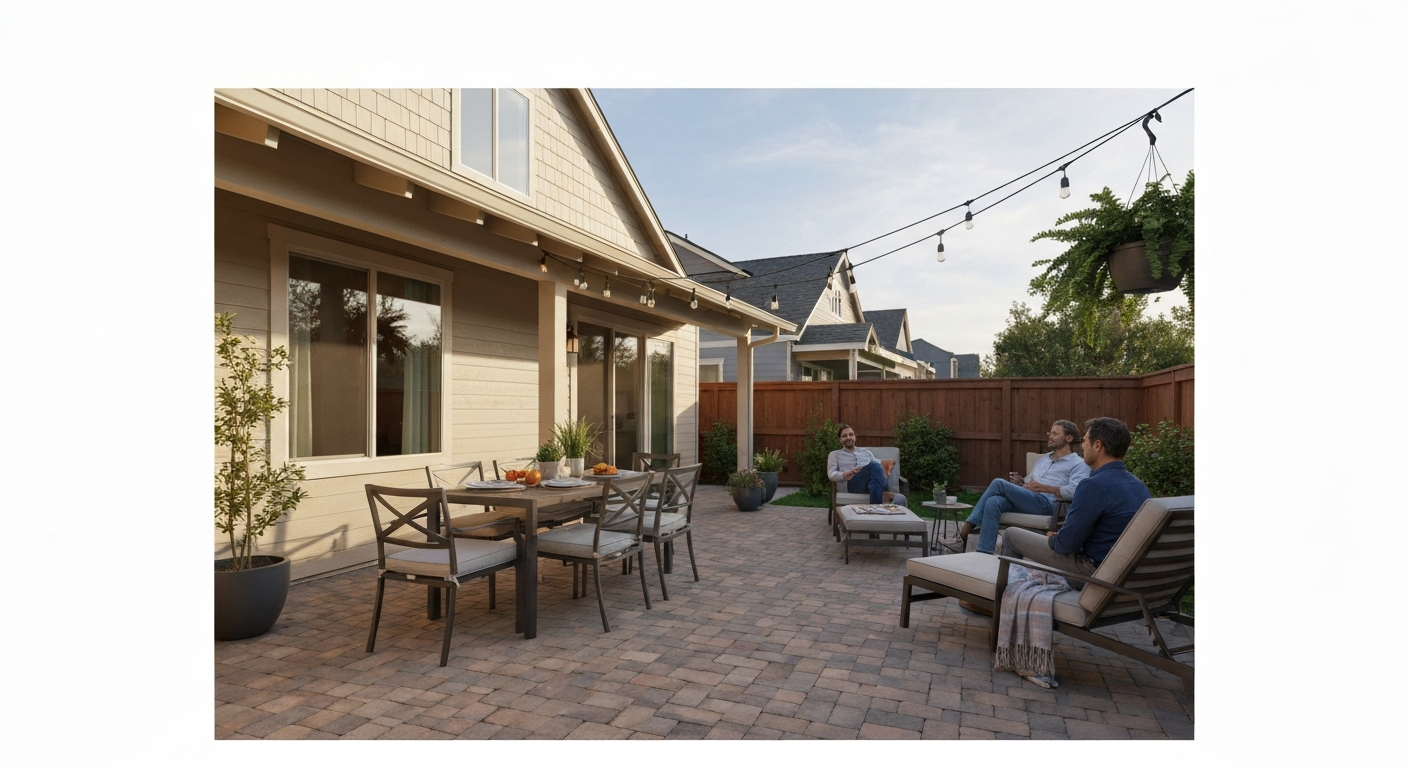
A patio home is a type of residential property, usually single-story or low-rise, built on a small lot where private outdoor living space replaces a traditional yard. That outdoor space, the actual patio, is typically a ground-level, open-to-the-sky area that is enclosed or semi-enclosed, often courtyard-style, and positioned right up against the home itself. The term has no single legal definition across the United States, so the same house might be marketed as a patio home, garden home, townhouse, twin home, or carriage home depending on the builder and the region. What stays consistent is the core idea: less lawn maintenance, more intentional private outdoor space, usually tied to a zero-lot-line or near-zero-lot-line layout.
Patio Homes Meaning: Definition, Differences, and How to Verify

Ada Hollis
1 May 2026
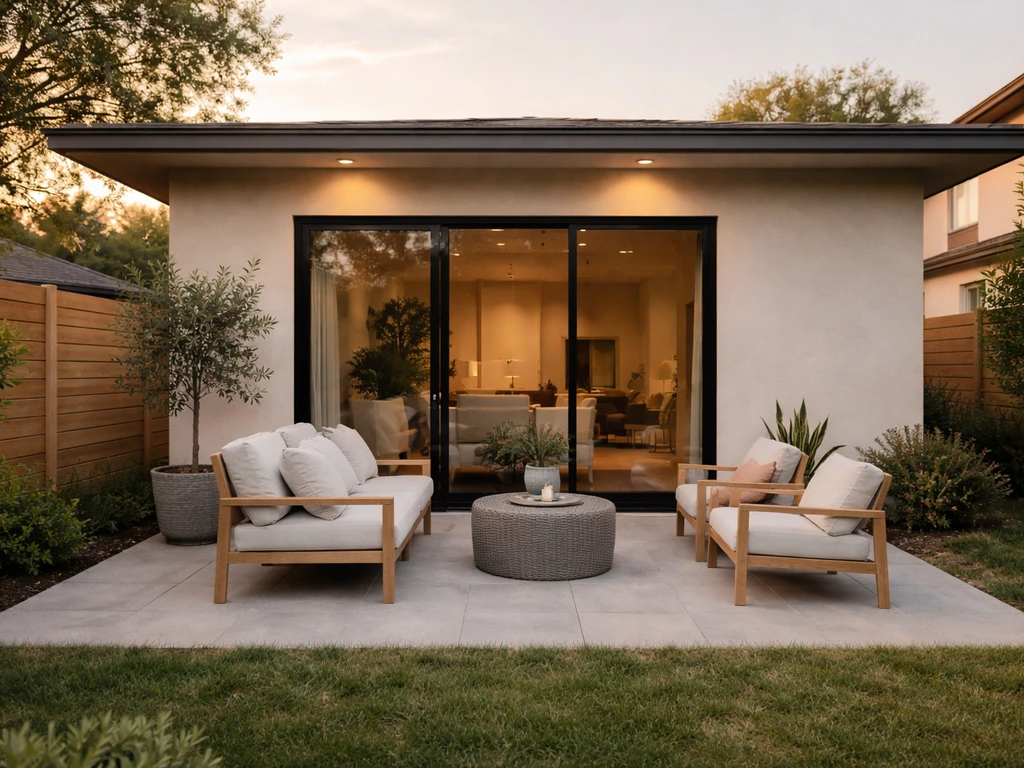
What exactly is a patio home?
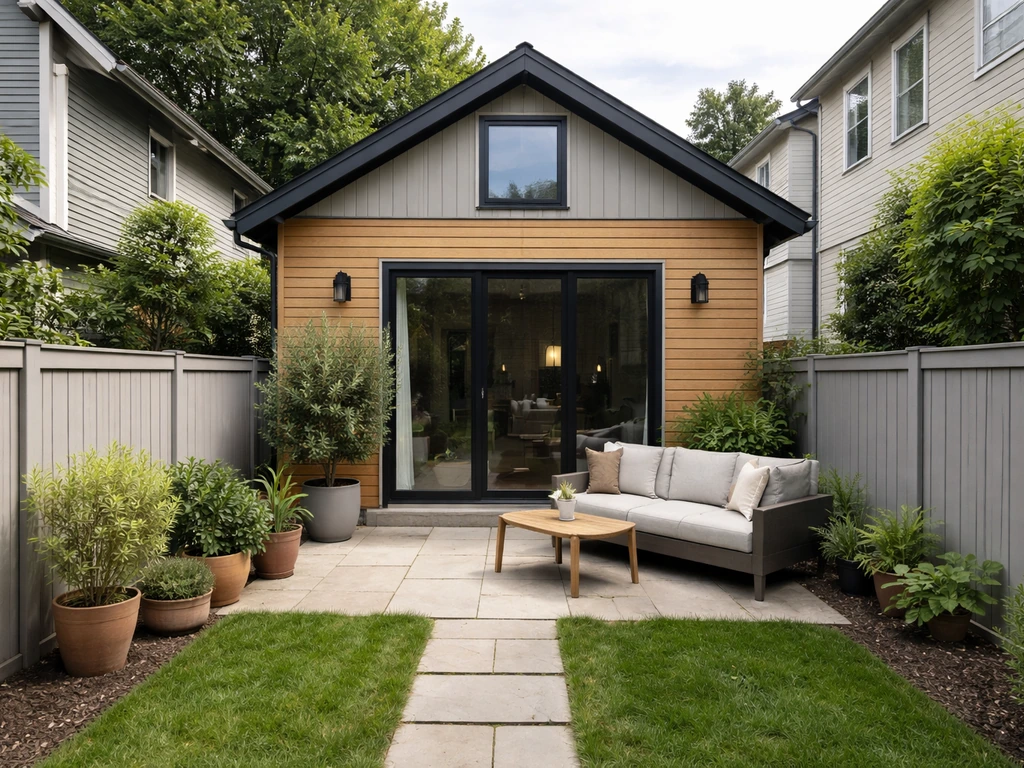
Strip away the marketing language and a patio home is defined by two things: a compact lot arrangement and a private patio that does the work a traditional backyard would. Merriam-Webster defines patio as "an often paved recreation area next to a dwelling" or, in older usage, simply a courtyard, especially one open to the sky. That second meaning is important because many patio homes are designed around a courtyard-style private outdoor space enclosed by solid walls, not just a concrete slab tacked onto the back of the house.
One of the clearest formal definitions, used in legal ordinances, describes a patio home as a unit that provides outdoor functions associated with a rear yard through a private interior courtyard that is open to the sky and defined by a solid, opaque wall where it meets the building. That is much more specific than a listing description will usually tell you, but it gives you a useful picture: think of the patio as a private walled garden that is architecturally integrated into the home rather than just adjacent to it.
On the zoning side, patio homes are almost always associated with zero-lot-line development, meaning the house is built right to one or more of the property boundaries. Some ordinances require a minimum of 800 square feet of living area, minimum usable open space, and specific separation distances between units. These details matter because they shape what the actual patio looks and feels like in practice.
How the patio relates to the house itself
In a patio home, the patio is not an afterthought. It is a core piece of the floor plan, functioning as the private outdoor room you would otherwise get from a yard. It is almost always ground-level, which is part of what separates it from a balcony or upper-story deck. It typically adjoins the living area, dining area, or bedroom wing directly, so there is easy indoor-outdoor flow. In courtyard-style layouts, the patio may be partially or fully surrounded by the home's walls on multiple sides, giving it a sheltered, private feel even in dense communities.
The patio is owned by the homeowner in most cases, not shared with neighbors. This is an important distinction from condo common areas. Even in communities with a homeowners association (HOA), the patio itself is typically deeded to the unit owner, while the HOA maintains shared perimeter walls, landscaping, or amenity areas beyond the private patio boundary.
Patio vs. porch, veranda, balcony, and courtyard
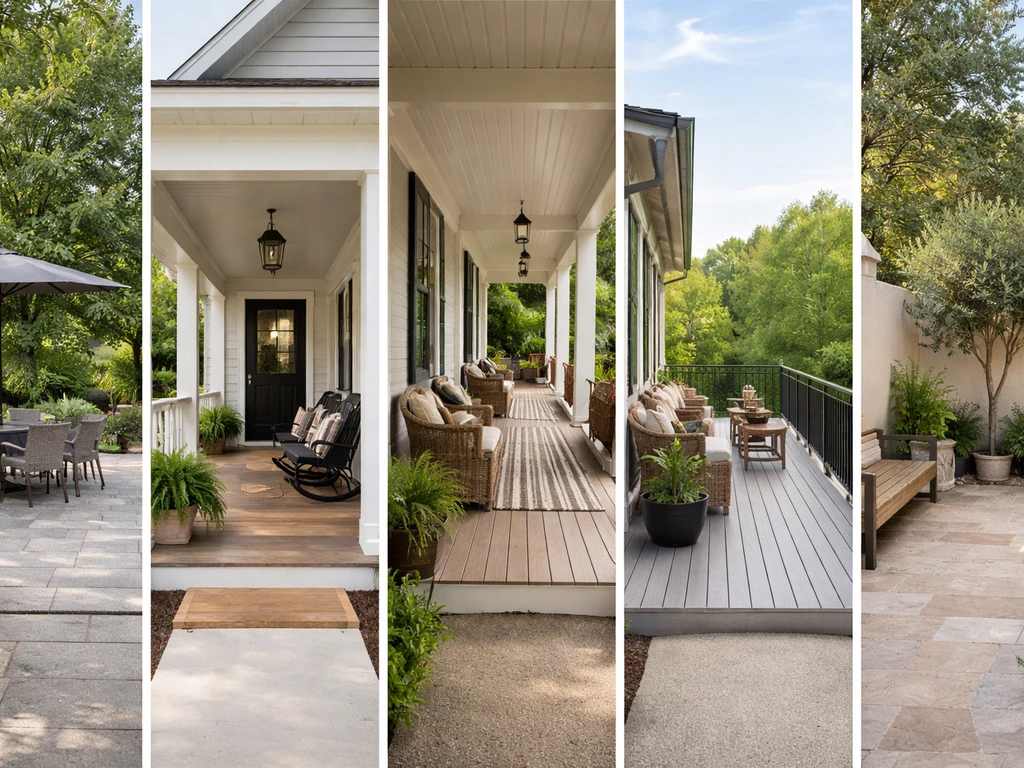
A lot of confusion around patio homes comes from mixing up the outdoor space types. Here is how each one actually differs, which matters when you are reading a listing or walking a property.
| Outdoor Space | Location | Covered? | Level | Enclosed? |
|---|---|---|---|---|
| Patio | Adjacent to or within the home's footprint | Usually no (open to sky) | Ground level | Partially or fully, by walls or fencing |
| Porch | Attached to front or rear of home | Yes, roofed | Ground level | Open or screened on sides |
| Veranda | Attached to exterior, wraps around the building | Yes, roofed | Ground level | Open on sides, sometimes railed |
| Balcony | Projecting from an upper-floor wall | Usually no | Above ground | Enclosed by railing or balustrade |
| Courtyard | Surrounded by building walls or structures | No (open to sky) | Ground level | Enclosed on multiple sides |
A porch is roofed and usually on the front of the home, designed for sitting and greeting. A veranda is also roofed but wraps around more of the building's perimeter, offering covered outdoor circulation. A balcony projects from an upper story and is defined by a railing rather than walls, so it is never ground-level. A courtyard is enclosed by the building or perimeter walls and open to the sky, which is actually the closest relative to a true patio home's outdoor space. The patio in a patio home often functions almost exactly like a private courtyard, which is why the Spanish architectural tradition of the casa patio (a home organized around a central private open court) is a useful reference point for the concept.
Types of patio homes and common layouts
Patio homes show up in several distinct configurations in real estate listings. Knowing which type you are looking at changes what daily life there actually looks like.
Single-story detached patio homes
This is the most common type. The home sits on its own lot but with minimal setbacks, so one or more sides of the house are at or near the lot line. The patio is typically in the rear or interior, walled off from neighbors for privacy. In some patio-on-top-of-house designs, the outdoor patio area sits above the main living level rather than at ground level The patio is typically in the rear. This style is popular with empty nesters and retirees because there are no stairs and yard maintenance is minimal. You own the land, just not very much of it.
Courtyard-style community patio homes
In this layout, clusters of patio homes surround a shared central green or amenity space, with each unit's private patio facing inward or backward into its own walled enclosure. Think of it as medium-density housing where the community courtyard is shared but each home has its own private outdoor pocket. This style borrows directly from courtyard housing typology and is common in Sun Belt states and warmer climates where outdoor living is year-round.
Attached or zero-lot-line patio homes
Some patio homes share a wall with a neighboring unit, similar to a townhouse arrangement, but typically remain single-story and are marketed as patio homes because of the private patio feature rather than any legal distinction. These often come with an HOA that handles exterior maintenance, meaning your private patio may have restrictions on what you can build or plant there. In governing documents for some HOA communities, limited common elements can include outdoor coverings or deck or patio elements, which is why you should check what your declaration and rules say about ownership and maintenance responsibilities blank" rel="noopener noreferrer">HOA that handles exterior maintenance. It is worth noting that the line between a patio home and a townhouse can be blurry, which is a comparison worth exploring in more depth if you are choosing between the two property types. This is why “patio home vs townhouse” comparisons often come down to whether the private outdoor patio is truly part of your unit and how much is shared versus deeded.
What to look for when buying or renting a patio home
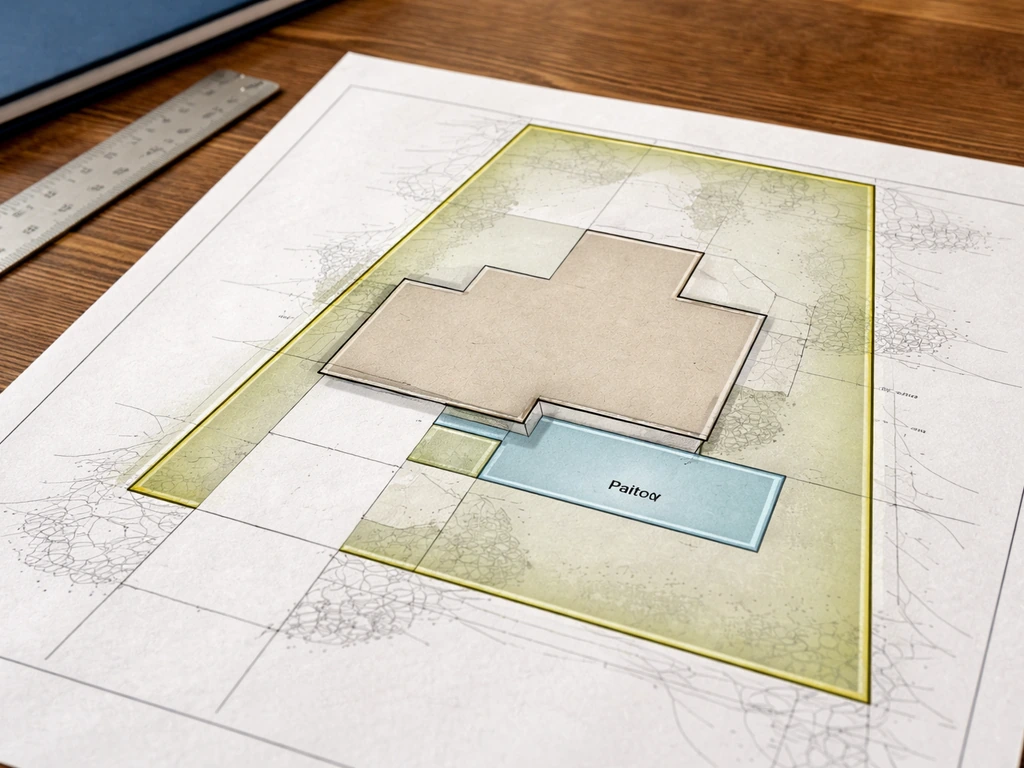
Because the term has no universal legal definition, you cannot take a listing's use of "patio home" at face value. Here is what to actually verify before you commit.
- Ask for the site plan or plat. This will show the actual lot boundaries, the footprint of the home, and the location and dimensions of the patio space. A patio labeled on a floor plan should show a specific square footage and whether it is enclosed by walls or just open to adjacent lots.
- Confirm zero-lot-line details. Find out which sides of the property sit at the lot line and what the setback rules are. This affects privacy, window placement, and whether you can add structures.
- Get the HOA documents before making an offer. If there is a homeowners association, the CC&Rs (covenants, conditions, and restrictions) will spell out exactly what you own versus what is shared, what modifications require approval, and who is responsible for maintaining the patio walls, paving, and landscaping.
- Check local zoning. If the listing is in a U.S. municipality, look up whether the property's zone has a formal patio home or garden home definition. Some cities codify specific minimum square footage, open space requirements, and wall height rules that tell you exactly what type of outdoor space you are buying.
- Look at listing photos critically. A patio open to the sky with surrounding walls is a true courtyard-style patio. A concrete pad next to a sliding door with no enclosure is more of a generic outdoor area. These are very different livability experiences.
- Ask about shared walls and neighbors. Even a single shared wall changes your noise, privacy, and renovation options significantly. Confirm whether the home is fully detached or attached on any side.
- Review any rental lease for patio use restrictions. In a rental context, the lease should specify whether the patio is included in your exclusive use area or is shared, and whether you can add furniture, plants, or structures.
One practical tip: search the property address or subdivision name alongside the word "ordinance" or "zoning" to find the local code that governs that community. If the city has defined patio homes in its zoning code, you will get the exact standards the builder had to follow, which tells you more than any listing description.
It is also worth thinking through some of the larger property questions before you buy, like whether patio homes in the community have basements, what the HOA covers for maintenance, and how the property compares to nearby condos or townhomes in terms of cost and ownership structure. The pros and cons of patio homes often come down to how the layout and maintenance responsibilities affect your day-to-day comfort and costs. Those are all decisions that flow directly from understanding what type of patio home you are actually looking at.
Cross-cultural and language nuances in the term
The word patio comes directly from Spanish, where it historically referred to an interior open-air court within or adjacent to a building. This is not just etymology trivia. It explains why the architectural concept of a patio home is deeply tied to courtyard-style living. In Spanish, the casa patio (courtyard house) is a recognized housing typology organized around a central private patio, which is essentially what better-designed U.S. patio homes are trying to replicate.
In Latin American and Spanish real estate listings, a patio typically means a private enclosed outdoor space within or directly attached to the home, often walled. This is closer to the formal ordinance definition of a U.S. patio home than the casual American use of "patio" to mean any outdoor slab or deck. If you are reading listings in Spanish or looking at properties in Spanish-speaking countries, the word patio carries more architectural weight than it might in a typical U.S. suburban listing.
In British and Australian English, the concept of a patio home exists but the marketing terminology differs. What Americans call a patio home might be described in the UK as a courtyard cottage, a mews house, or simply a low-maintenance home with a courtyard garden. In Australia, a similar property type might be called a villa or garden home. The physical characteristics, compact footprint, private enclosed outdoor space, and low-maintenance landscaping, remain consistent across these variations even when the label changes.
Within the U.S. itself, the term shifts by region. In Texas and the broader Sun Belt, patio home is a common and well-understood real estate category with some municipalities having formal zoning definitions for it. In the Northeast or Midwest, the same property might be listed as a garden home, twin home, or simply a zero-lot-line home. If you are searching across multiple markets, using multiple search terms will help you find comparable properties even when they carry different labels.
The bottom line is that "patio home" is a marketing and colloquial term far more than it is a legal one. Across cultures and regions, the underlying concept stays recognizable: a ground-level home with intentional private outdoor space integrated into the design, on a compact lot, with reduced maintenance responsibility. Understanding that core idea, rather than relying on the label, is the most reliable way to interpret any listing that uses the term.
FAQ
Is a patio home patio always deeded to me, or can the HOA control it?
In most cases, patio homes have an outdoor area that counts as your private space, but it may still be covered by HOA rules (especially if you share walls or are in a master-planned community). Ask for the deed language and the HOA governing documents, then confirm whether the patio is part of the deeded lot or treated as a limited common element with restrictions.
How can I confirm exactly where my patio property lines and easements are?
Because “patio home” can mean different things by market, the most reliable way to verify patio boundaries is to request a survey or plat and the legal description that matches the address. Look for notes about rear yard/area restrictions, easements, and whether any portion of the patio sits within a maintenance or utility easement.
What changes am I usually allowed to make to a patio home patio (fencing, landscaping, pavers)?
Your ability to make changes is often tied to whether the patio is on an exclusive-use area of the unit versus a shared courtyard. In HOA settings, there are frequently rules for hardscape changes (pavers, walls, fences), landscaping, and exterior lighting, even if the patio is private.
If my patio home shares a wall, what should I check about maintenance and repairs?
Even if the patio is private, shared walls can affect noise, plumbing, and future repairs. Before buying, ask what the HOA or developer is responsible for (exterior, roof, shared wall maintenance, landscaping) and whether you have any warranties or service contracts that will expire soon after closing.
Do patio homes always have basements?
Yes, some patio home designs include basements or partial crawl spaces, while others are slab-on-grade. Verify by checking the listing for foundation type, then confirm with the disclosure packet, inspection report, and any municipal records if available.
Are patio homes usually more accessible, and what should I check for accessibility?
Not necessarily. The ground-level patio may be ideal for accessibility, but entry steps, garage access, or interior thresholds can still create barriers. If mobility matters, ask about step counts at the primary door, door widths, bathroom layout, and whether the patio can serve as an accessible egress route.
What does “open to the sky” mean in real patio home designs, and how enclosed can it be?
The “open to the sky” idea can still mean different levels of enclosure. Confirm whether the patio is fully walled on multiple sides, partially covered by an overhang, or bordered by solid privacy walls, since that affects lighting, ventilation, and how the space feels in different seasons.
How do patio home ownership and insurance responsibilities compare to condos?
A key difference from condos is how insurance and ownership typically work. In a condo, the building often has condo-unit insurance responsibilities and you may pay assessments for building-wide systems. In a patio home with an HOA, you may still have shared perimeter walls or amenities, but the ownership and insurance responsibilities can shift. Ask your lender/insurance agent how your specific unit is classified (HOA property vs condo) for coverage and premiums.
If I buy a patio home, will I lose outdoor space for pets or gardening?
A “yard” style often means more outdoor upkeep and space for storage, but patio homes trade that for compact private outdoor living. If you want space for pets, gardening, or outdoor storage, ask about patio depth, whether there is a side yard, and whether there are rules restricting planters, grills, or sheds.
What common HOA restrictions affect day-to-day living on patio home patios?
The HOA and local code can create practical limits that listings do not highlight, such as landscaping minimums, exterior paint restrictions, and limitations on patio covers or pergolas. Request the specific patio-related section of the HOA rules and check if approvals are required before you add anything.
How do zoning rules show up in real life, like parking and outdoor space requirements?
It depends on the exact patio-home configuration and zoning. Ask your agent to confirm the unit type category used by the municipality and whether the unit meets minimum living-area and open-space requirements. Also verify parking requirements, because some zero-lot-line communities have tighter guest parking or different driveway rules.
Next Article
Patio Weather Meaning: What Patio, Area & View Mean
Clear patio definition: what a patio is, 'patio weather' meaning, and how it differs from decks or porches.