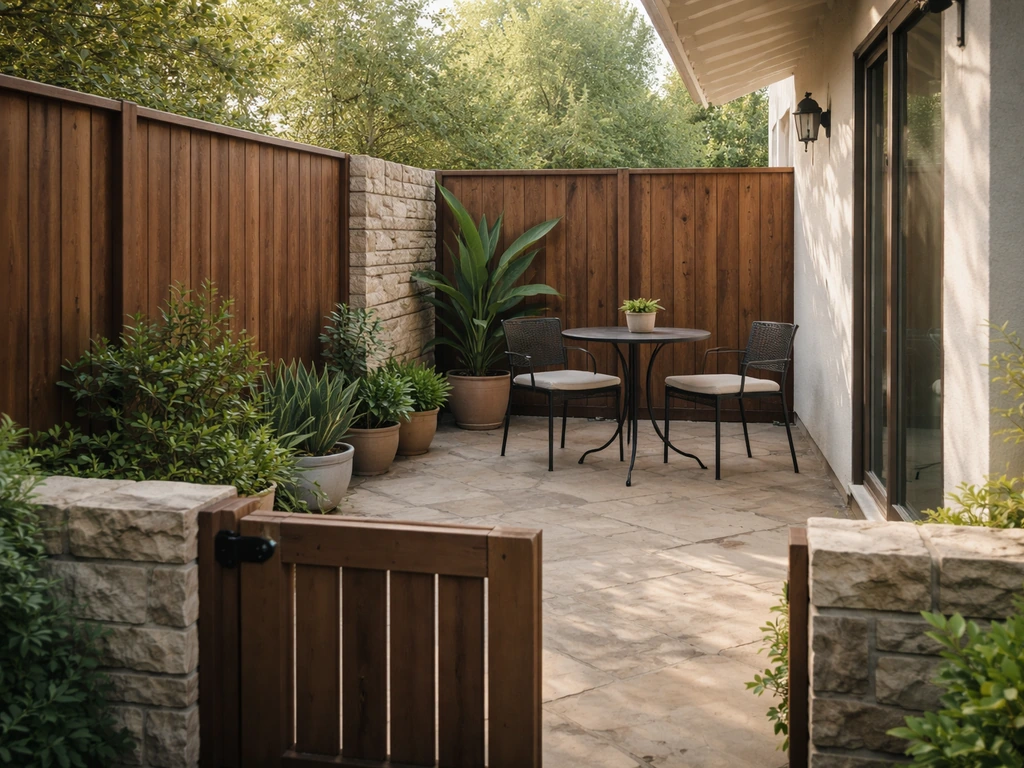
A private patio is an outdoor ground-level space that is exclusively assigned to one home or unit, meaning only the occupants of that specific property can use it. It is not shared with neighbors, not accessible to other residents in a building or complex, and is typically separated from surrounding areas by a fence, wall, gate, or landscaping. In a real estate listing, "private patio" is meant to tell you this outdoor area comes with the unit and is yours alone, not a shared amenity like a community courtyard or rooftop deck. A rooftop patio meaning is similar in that it describes an outdoor space tied to a specific home, but the main difference is elevation and the building design around it private patio.
Private Patio Meaning: How to Tell If It’s Truly Private

Ada Hollis
26 Jun 2026
What a private patio actually is
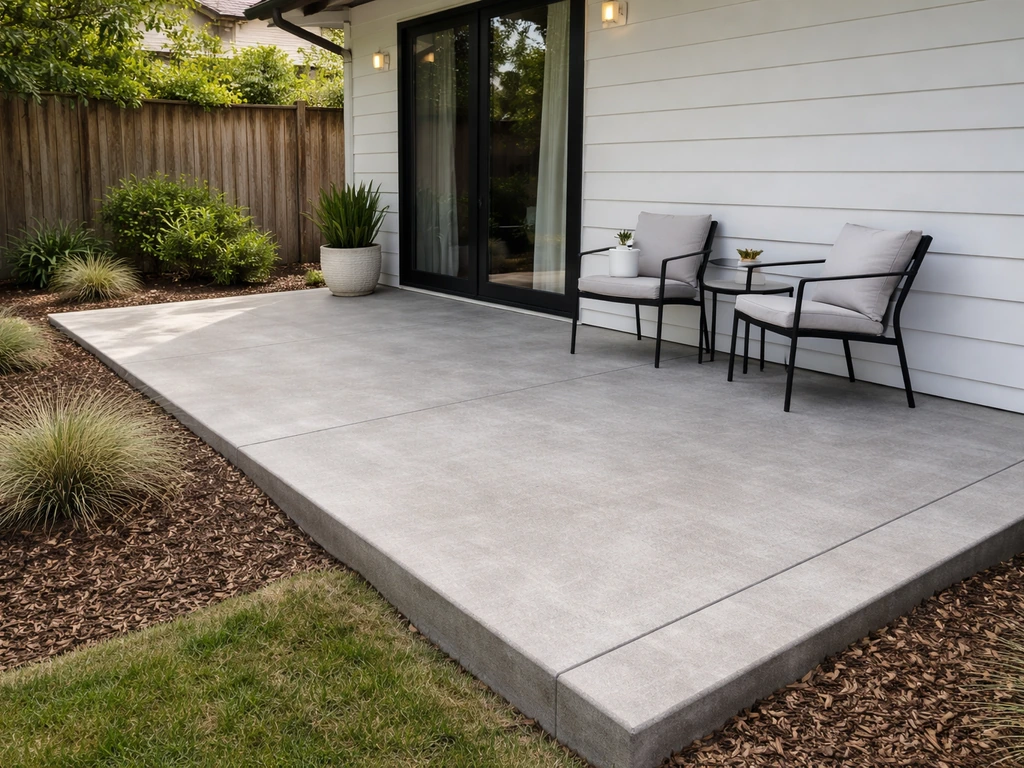
At its core, a private patio is a hard-surfaced outdoor area at ground level that is directly attached to or reserved for a single dwelling. The surface is typically concrete, pavers, brick, tile, or stone, and the space sits at or very near ground level rather than elevated above it. What makes it "private" is the combination of exclusive use and physical separation from neighboring spaces. You might step directly out of a sliding glass door or back door into it, or it might be accessible through a gate, but the key point is that nobody else has a right to be in that space unless you invite them.
Listing copy makes this distinction in pretty consistent ways. You will often see phrases like "fenced private patio," "direct access to a private patio," "walk-out to a private patio," or "step outside to the fenced private patio" on platforms like Zillow, Redfin, and blank" rel="noopener noreferrer">Realtor.com. That language is doing specific work: it signals the patio is tied to your unit, enclosed in some way, and not available to other residents in the building or complex. When a listing says "access to patio" without the word private, that is often a hint the space may be shared.
What "private" really means in practice
"Private" in this context covers a few overlapping ideas, and it helps to think about each one separately. The most important is exclusive use: you are the only one with the right to use and occupy that space. The second is controlled access: the patio should have some physical means of limiting who can enter, whether that is a fence with a latching gate, a wall, a locked door from a common hallway, or dense landscaping. The third is visual privacy: ideally the space is not fully overlooked by neighbors, upper-floor units, or passing pedestrians, though this depends heavily on the specific property.
Physical boundaries matter a lot here. A fenced patio, a walled patio, or one accessed only through a door directly from the unit itself offers much stronger privacy than a patio that is simply designated yours on paper but sits open next to a shared walkway. When listings mention a "gated backyard" or a "fenced private patio perfect for al fresco dining," the fencing detail is not just decorative marketing language. It is telling you something real about how separated the space actually is.
Private patio vs porch, balcony, courtyard, and terrace
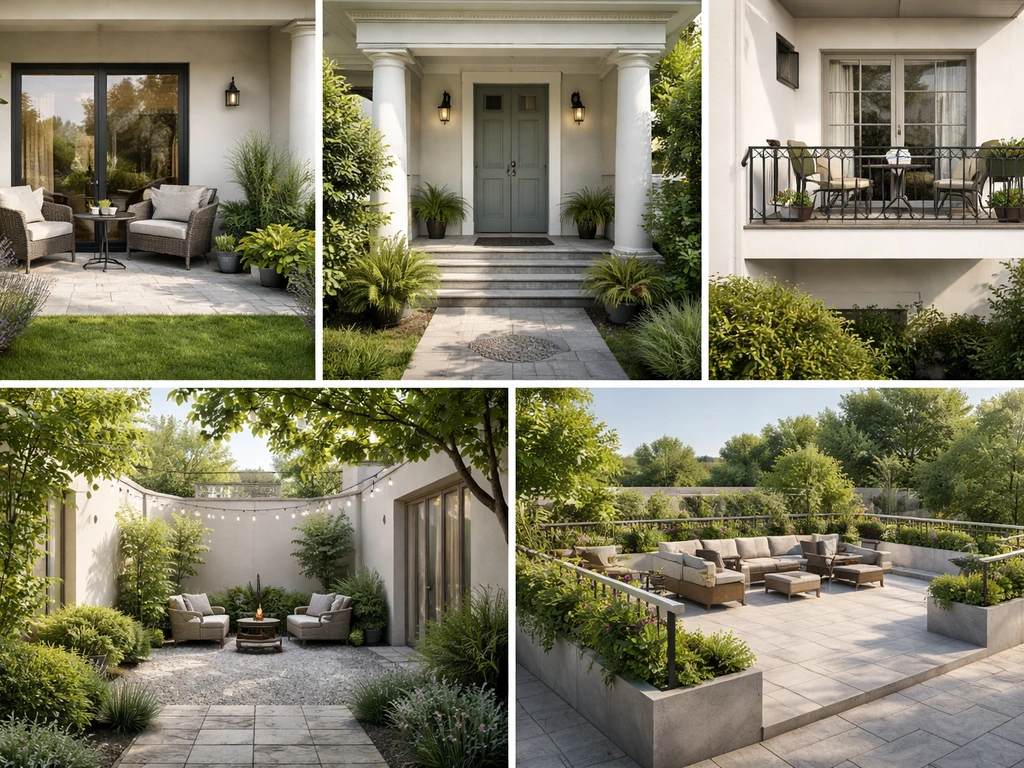
These terms get mixed up constantly in listings, so a quick comparison is genuinely useful here. The church patio meaning is similar: it refers to an outdoor area designated for worship events or church visitors, often set apart from surrounding public space private patio. Each one is a distinct thing, even though they are all outdoor spaces attached to a home.
| Space | Location | Level | Typically Private? | Surface Type |
|---|---|---|---|---|
| Private patio | Rear or side of home/unit | Ground level | Yes, exclusive use | Hard surface (concrete, pavers, tile) |
| Porch | Front or rear, attached to house facade | Ground level or slightly raised | Yes for single-family; varies for multi-unit | Wood, concrete, or composite decking |
| Balcony | Elevated, projecting from upper floor | Above ground | Usually yes, per unit | Concrete, tile, or metal grating |
| Courtyard | Enclosed central or side space | Ground level | Often shared; sometimes private | Hard surface or landscaped |
| Terrace | Ground level or rooftop, often larger | Ground or rooftop level | Can be private or shared | Hard surface, often landscaped |
A porch is structurally part of the building and typically covered by a roof overhang or roof extension. A private patio usually has no permanent roof, though it may have a pergola or awning. A balcony is elevated and projects outward from an upper floor, so if your outdoor space is on the second floor or higher, it is technically a balcony, not a patio. A courtyard is typically an enclosed outdoor space surrounded by walls or building wings, and it is often shared among multiple units rather than exclusive to one. A terrace can mean many things depending on the region: it is sometimes used interchangeably with patio, sometimes refers to a large rooftop space, and sometimes describes a raised outdoor area adjoining a house. The rooftop patio is its own distinct category and works quite differently from a ground-level private patio. A back patio and a private patio overlap heavily but are not identical: a back patio simply describes location, while "private" describes access and exclusivity.
How to verify a listing's "private patio" is actually exclusive
Here is the honest reality: listings use "private patio" loosely, and not every space labeled that way is genuinely exclusive. Before you sign a lease or make an offer, go through this checklist.
- Check the floor plan. Does the patio appear as a space attached directly to your specific unit, with its own door or slider? If it shows up as a common area on the building plan, it is not truly private.
- Read the lease or purchase agreement carefully. Look for language that explicitly lists the patio as an "exclusive use area," "appurtenant to the premises," or "assigned outdoor space." Vague phrases like "access to outdoor patio" without exclusive-use language are a red flag.
- Ask how you access it. Direct access through a door inside your unit is the strongest signal of a truly private patio. Access through a shared hallway, common stairwell, or unlocked exterior corridor is a weaker claim to exclusivity.
- Look for physical boundaries. Is there a fence, wall, hedge, or gate that separates this space from neighboring units or common walkways? Ask whether the gate has a lock and who holds a key.
- Ask who else has access. Property managers should be able to tell you directly whether maintenance staff, other residents, or the building has any right to access the space. If the answer is vague, push for written clarification.
- Check for signage or markings. In multi-unit buildings, patios are sometimes labeled with unit numbers on gates or fences. If there is no signage, ask how residents know which patio belongs to which unit.
- Ask about shared amenities nearby. If a shared pool, garden, or barbecue area is adjacent to your "private" patio, find out if other residents walk through your space to reach it.
- Request a site visit at different times of day. Walk the space during the morning and evening to see foot traffic, overlook from neighboring units, and noise levels before committing.
How listing language and lease wording varies by region and property type
The way "private patio" appears in listings and leases shifts depending on where you are and what kind of property you are dealing with. In U.S. apartment complexes, ground-floor units are often marketed with a private patio as a premium feature over upper-floor units, which get a balcony instead. The lease will usually describe it as an "exclusive use patio" or include it in the unit description as part of the premises. In HOA-governed condo communities, the patio may be listed as "limited common element" or "exclusive use common area," which means you have the exclusive right to use it but the HOA technically still owns and has authority over it.
In Canada, particularly in markets like Ontario and British Columbia, listing platforms use similar language: "walk-out to a private patio" is standard Redfin and MLS copy for ground-floor units with enclosed outdoor spaces. In a Redfin listing example for a Canadian home, the marketing copy describes the space as a “walk-out to a private patio,” indicating a directly connected outdoor area that is for the unit’s occupants. In the UK, what North Americans call a private patio is often called a private terrace or private courtyard, especially in converted flats and mews houses. In Spanish-speaking cultures, the concept overlaps with the patio interior (an enclosed inner courtyard typical of Mediterranean and Latin American architecture), which is closer in spirit to what North Americans mean but is usually fully enclosed by the building itself.
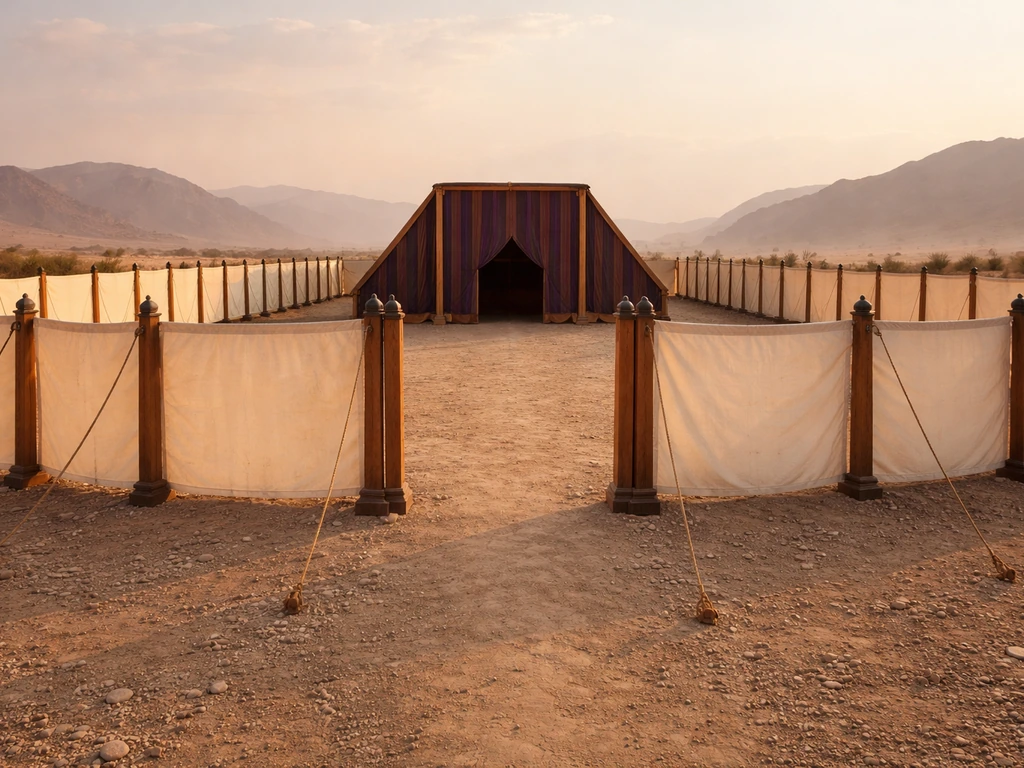
For single-family homes versus multi-unit buildings, the terminology works differently too. In a single-family home listing, a private patio almost always means the entire outdoor area is yours by default, so the word "private" functions more as a marketing descriptor emphasizing the space is yours and enclosed. In a townhouse, condo, or apartment complex, the word is doing heavier legal lifting, because there are other residents nearby and the designation of exclusivity is genuinely meaningful. No contexto bíblico, o o pátio do tabernáculo era uma área separada ligada ao serviço e à adoração o patio do tabernaculo.
What a private patio means for your day-to-day life and your lease or purchase
Privacy and overlook risk
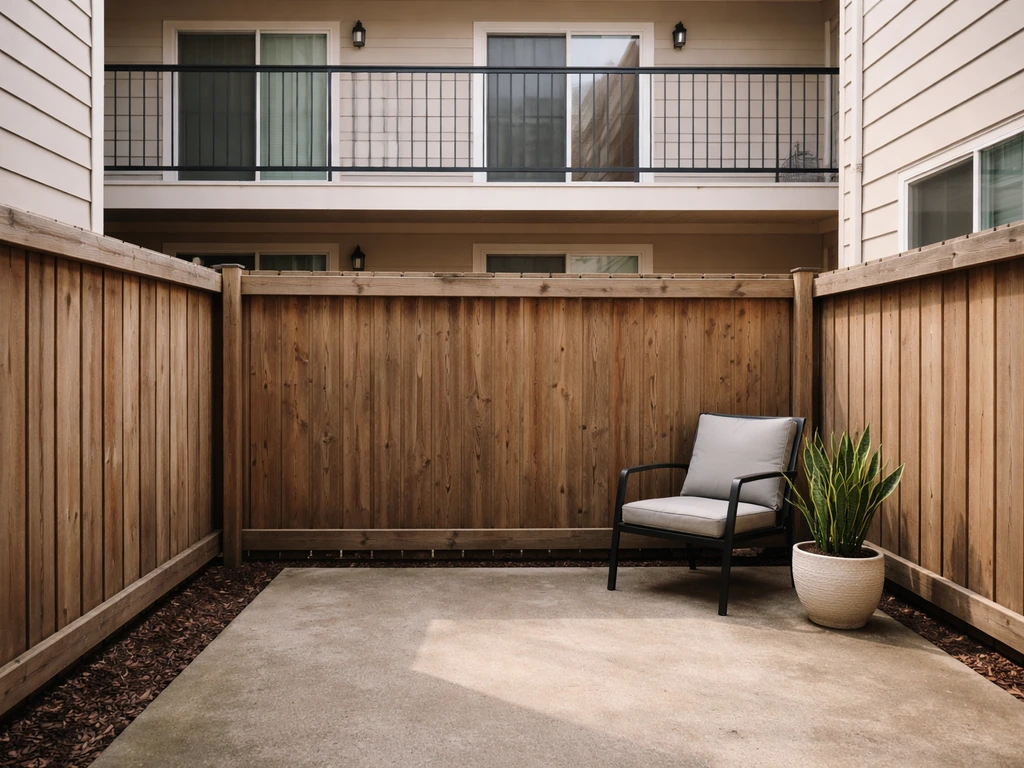
A private patio is only as private as its physical surroundings allow. If the patio is fully fenced but faces a second-floor walkway where all the upper-unit residents pass by, you will have noise and visual exposure regardless of the fence. Always look up as well as around when you visit the space. Upper-floor balconies, elevated walkways, and neighboring windows that face down into the patio can all undermine the sense of privacy, even if the space is legally exclusive to you.
Noise
Ground-level patios pick up ambient noise from neighboring units, shared spaces, streets, and mechanical equipment like HVAC units more readily than elevated balconies do. The physical barriers that create visual privacy (solid fences, masonry walls) also help reduce noise, which is one reason listings that emphasize a "walled" or "fenced" private patio are signaling something genuinely better than an open-plan ground-level space.
Maintenance responsibility
In most single-family homes, you own and maintain the patio surface and any enclosures entirely. In a condo or apartment complex, the breakdown gets more complicated. If the patio is classified as a limited common element or exclusive use area, the HOA or landlord often retains responsibility for structural maintenance of the patio surface, fencing, and walls, while the resident is responsible for keeping it clean and not making alterations. Check the lease or CC&Rs (Covenants, Conditions, and Restrictions) for the specific split before you assume you can add a pergola, lay down outdoor tiles, or install a hot tub.
HOA rules and restrictions
HOA-governed properties often have specific rules about what you can and cannot do on a private patio, even though it is exclusively yours to use. Common restrictions include limits on permanent structures, rules about outdoor furniture and storage, prohibitions on barbecues or fire pits, pet restrictions, and requirements about maintaining the area in a tidy condition visible to other residents. Some HOAs require approval for any modifications to the patio surface or fencing. If you are buying into an HOA community, request the complete CC&Rs and any patio-specific rules before closing, not after.
The bottom line is that a private patio is one of the most practical and genuinely valuable features a home or rental unit can have, but the word "private" earns its meaning only when the space has exclusive-use designation in writing, a clear physical boundary, and controlled access. Whether you are renting or buying, taking fifteen minutes to verify those three things before signing protects you from the fairly common frustration of discovering your "private" patio is shared more than you expected.
FAQ
What’s the fastest way to tell if a “private patio” is actually exclusive when touring?
Do a “right-to-be-there” check in person. Walk the path from the main entry and from any common walkway, then try to identify at least one physical boundary (latching gate, locked door, or enclosed layout). Also look above the patio for upper-unit sightlines, because visual privacy can fail even when access is controlled.
If the patio is fenced, does that automatically mean it is quiet?
Not automatically. A solid fence helps with both privacy and noise, but if the fence faces a second-floor walkway, balcony, or windows, you can still get frequent noise and visibility. For a better read, stand in the patio area at different times of day if possible (morning vs evening) and listen for HVAC vents, street noise, and nearby door traffic.
Can a listing call it “private” if it’s actually an HOA or landlord-managed area?
Yes. Many condo communities describe the patio as “exclusive use” or “limited common element,” which means you can occupy it but the association often retains ownership and control of structural elements. Confirm who is responsible for repairs to the slab, fencing, and any retaining walls before you budget for upgrades.
What should I look for in the lease to avoid a shared-patio surprise?
Search for terms like “exclusive use,” “limited common element,” “premises,” and “right of access.” If the lease only says “access to patio” or describes it as an amenity without exclusivity language, ask the landlord or read the exhibits for any rules that allow other residents or guests to use it.
Is it safe to assume I can add furniture, planters, or a grill to a private patio?
Usually furniture and small planters are fine, but grills and storage often trigger HOA or lease rules. Look specifically for restrictions on barbecues, fire pits, covers or gazebos, and whether any items must be kept a certain distance from fences or doors. When in doubt, ask for the written patio guidelines rather than relying on verbal assurances.
What if I want to install a pergola, outdoor tiles, or a hot tub on a private patio?
Treat that as a permit-level change in most HOA or apartment settings. Even if you have exclusive use, approvals are commonly required for structural additions, surface modifications, and anything that increases weight or changes drainage. Ask whether installation requires HOA written consent and whether there are engineering or contractor requirements.
How do “back patio” and “private patio” differ in meaning in listings?
“Back patio” usually only describes location relative to the home. “Private patio” is about exclusive-use rights and separation from shared areas. If a listing says “back patio” without exclusivity language, it may still be near shared paths or other residents’ access points.
What’s the most common mistake buyers make when evaluating a private patio?
Assuming the label equals legal exclusivity. The practical fix is to verify three things: exclusive right in writing, a boundary that prevents unintended access, and the real-world privacy factor (neighbors’ sightlines and noise). If those don’t all line up, treat “private” as marketing until proven otherwise.
If I’m in a ground-floor unit, how can neighbors upstairs affect my patio privacy?
Upper-floor balconies and elevated walkways can undermine privacy even with a ground-level fence. Check for windows, roof lines, and adjacent building openings that face into the patio. During the visit, pause near the fence and look upward, then simulate how someone would stand and talk from the walkway above.
Does “private terrace” or “private courtyard” mean the same thing as “private patio” in other regions?
Often it overlaps, but naming conventions vary. In some UK listings, “private terrace” or “private courtyard” may describe an enclosed ground-level area attached to a flat, which can be private in use but still governed by building or HOA rules. Always translate the term back into the substance, exclusive use, and physical boundaries.
Next Article
O pátio do tabernáculo: significado, localização e confusões
Entenda o pátio do tabernáculo, sua função e localização, e evite confusões com pátio átrio e outros espaços.