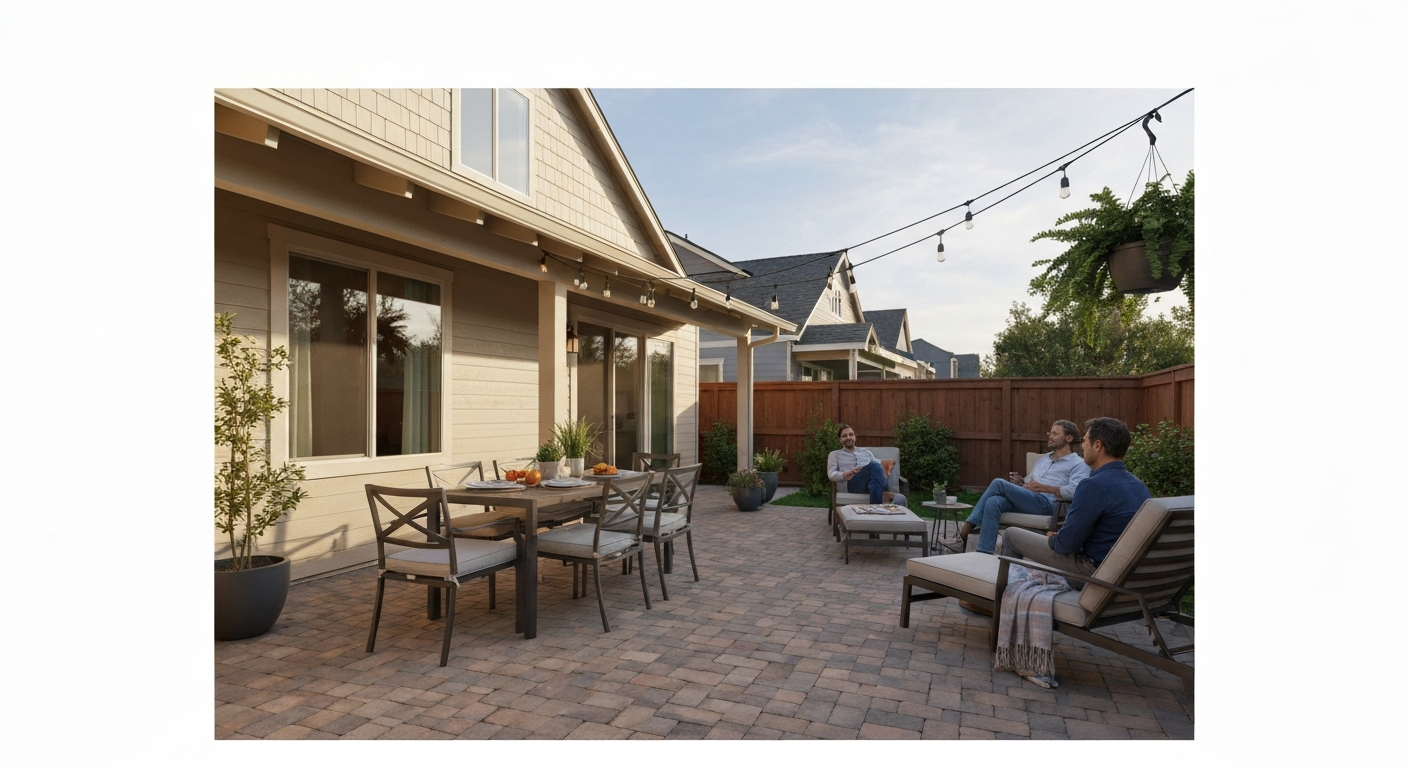
An enclosed patio is most commonly called a sunroom, screened-in porch, patio enclosure, or solarium, depending on how it's built and where you live. If it has glass walls and a glass or solid roof that lets in lots of light, most people (and real estate listings) will call it a sunroom or solarium. If it's wrapped in screens instead of glass, you'll hear screened-in porch or screened room.
What Is an Enclosed Patio Called? Common Names and How to Tell

Ada Hollis
15 May 2026
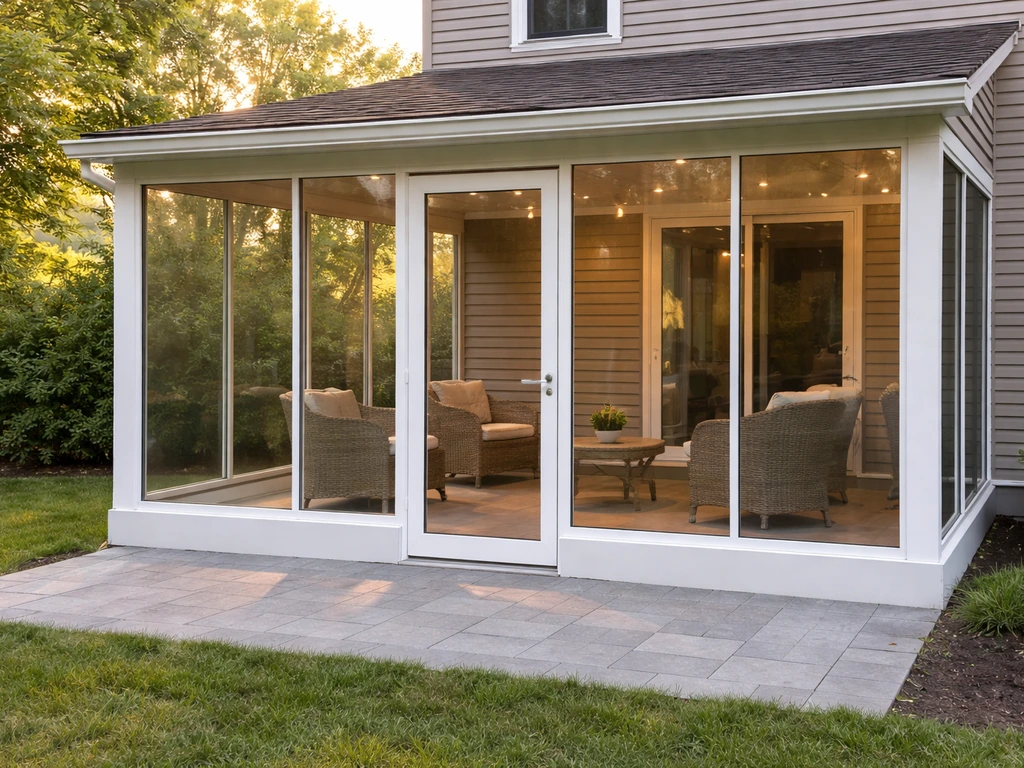
And if someone added walls or panels to an existing covered patio to close it off, the contractor term is almost always patio enclosure or patio conversion. None of these terms is universally standard, but knowing which one fits your space makes a real difference when you're searching listings, pulling permits, or describing the room to a contractor.
In other words, the enclosed patio meaning is tied to what materials and boundaries complete the space.
What an enclosed patio actually is
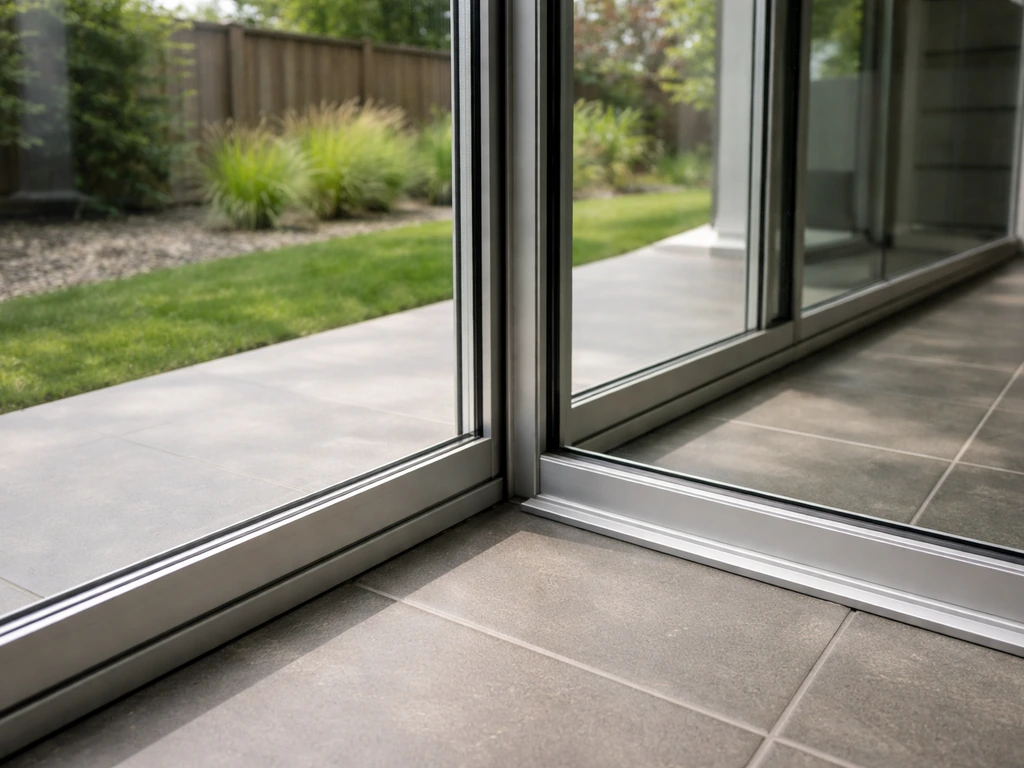
At its core, an enclosed patio is an outdoor patio space that's been closed off on some or all sides with walls, screens, glass panels, or a permanent roof. The result sits somewhere between fully outdoor and fully indoor. You're protected from wind, bugs, and rain, but the space still feels connected to the outside in a way a regular room doesn't. Think of it as a patio that grew walls.
The key feature that makes it an enclosed patio rather than just a covered patio is that closing. A covered patio has a roof but open sides. Once you add screens, glass, solid walls, or retractable panels to those sides, you've crossed into enclosed territory. How much of the perimeter is closed, and what material closes it, determines what most people end up calling the space.
The names people actually use, broken down by style and region
There's no single official name for an enclosed patio. The label that sticks depends on the materials used, the level of climate control, and what part of the country (or world) you're in. Here's how the most common names break down.
Patio enclosure
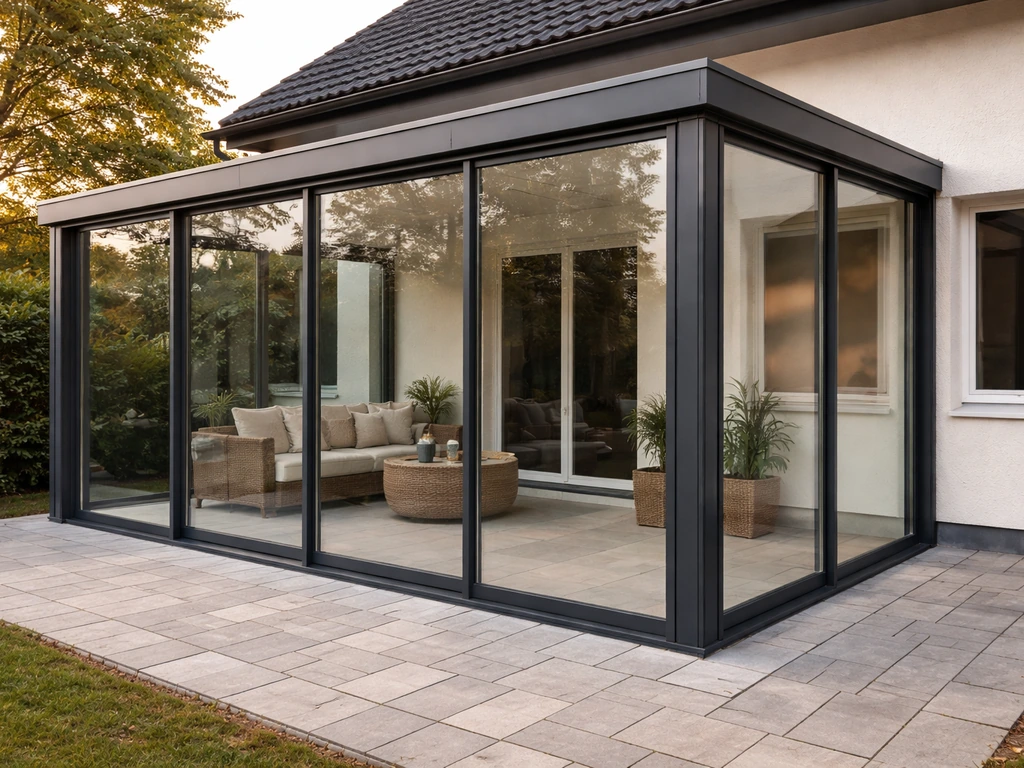
This is the contractor and building-permit term. A [patio enclosure](/what-is-a-patio-enclosure) typically means large glass walls and windows have been added to close off a standard patio, creating an indoor-outdoor feel. It's the phrase you'll see in contractor quotes, building-code documents (Los Angeles County's building materials, for instance, specifically categorize these as patio covers and enclosures), and home improvement guides. It implies the patio came first and the enclosure was added around it.
Sunroom
Sunroom is the most common real-estate and everyday name for a glass-enclosed patio or room addition. It's essentially a glass-walled room designed to let in maximum natural light. Sunrooms can be three-season (not insulated for winter) or four-season (fully climate controlled). When a patio enclosure is done well and looks like a finished room, listing agents almost always call it a sunroom because it reads as added living space.
Solarium
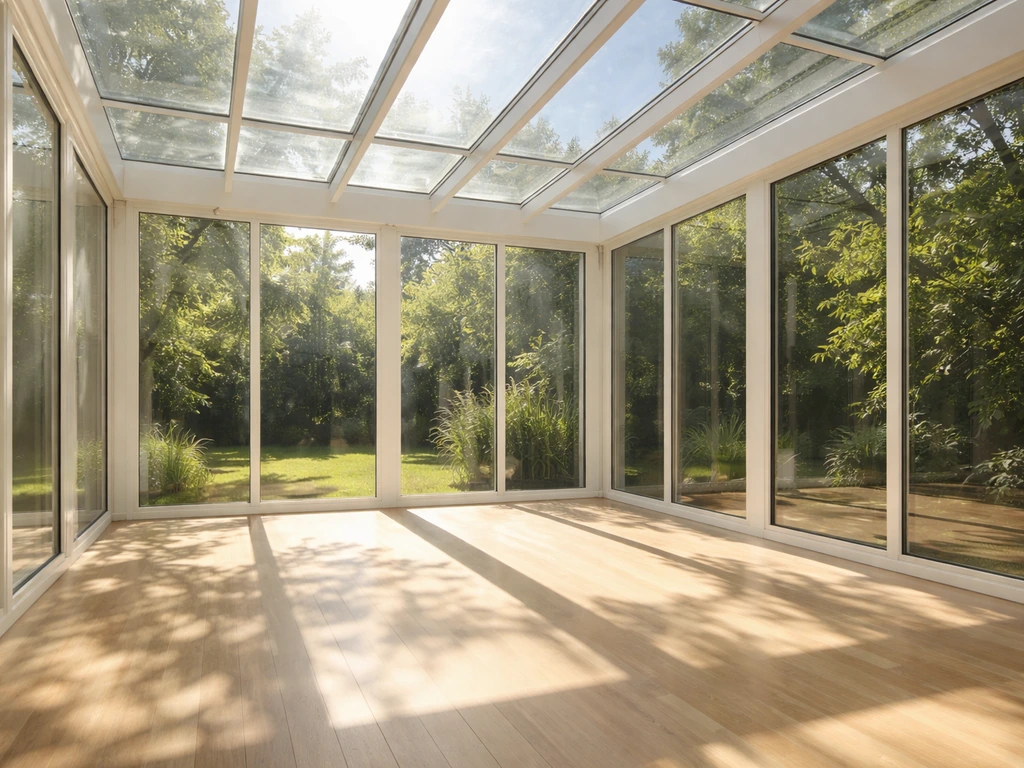
A solarium is essentially a sunroom with glass on the ceiling too. Merriam-Webster defines it as a glass-enclosed porch or room, and Britannica's dictionary describes it specifically as a room with walls and a ceiling made of glass to allow in sunlight. In everyday use, solarium implies a more dramatic, light-filled design with an all-glass or largely transparent roof, sometimes built as a freestanding greenhouse-style structure. The word is used more in formal listings and architecture than in casual conversation.
Screened-in porch or screened room
If the enclosure material is screen mesh rather than glass, the space becomes a screened-in porch, screened porch, or screened room. This is extremely common in the southeastern United States, where keeping insects out matters more than blocking cold air. The space stays fully ventilated, which is why people don't usually call it a sunroom. Screened-in porch is the most widely understood name for this style across the South and Midwest.
Three-season room or four-season room
These names are about function rather than construction. A three-season room is usable in spring, summer, and fall but isn't insulated for winter. A four-season room is fully climate controlled and functions like any other room in the house year-round. Contractors and real estate agents in colder climates (the Northeast, Midwest, Pacific Northwest) use these terms regularly because the insulation level directly affects how the space is valued and how it shows up on a floor plan.
Conservatory
Conservatory is the British and Australian term for what Americans typically call a sunroom or solarium. It describes a glass-and-steel or glass-and-uPVC room addition attached to the back of a house. If you're reading property listings in the UK, Ireland, or Australia, conservatory is the word to look for when you want an enclosed glass patio space. In the United States, the word exists but is used less frequently and tends to imply a more ornate or Victorian-style build.
Lanai
In Hawaii and Florida, an enclosed or screened outdoor living space attached to a house is often called a lanai. The word comes from the Hawaiian term for porch or veranda, but in Florida especially, it's used for screened, glass-enclosed, or partially open patio spaces. If you're shopping for a home in Florida and see lanai in a listing, expect something similar to what a Midwestern listing would call a screened porch or patio enclosure.
How to tell an enclosed patio apart from a porch, verandah, balcony, or courtyard
These terms get mixed up constantly, even in professional listings. The differences come down to location on the house, elevation, and structure.
| Space | Where it sits | Elevation | Enclosure | Key distinction |
|---|---|---|---|---|
| Enclosed patio | Ground level, often at rear | At grade | Screens, glass, or solid walls on some or all sides | A patio that's been closed off; may or may not be attached to the house |
| Porch | Front or rear, attached to house | Usually raised slightly | Often has a roof; sides may be open, screened, or glazed | Architecturally part of the house structure; often has its own roof framing |
| Verandah / Veranda | Wraps around one or more sides of the house | Raised, at house floor level | Roofed but typically open-sided | Defined by wrapping around the building; common in colonial and Southern architecture |
| Balcony | Upper floor, projects from exterior wall | Elevated above grade | Usually open railings; rarely enclosed | Must be off an upper floor; not at ground level |
| Courtyard | Surrounded by walls or the building itself | At grade | Open to sky, no roof | Defined by walls, not a roof; often interior-facing |
The simplest rule: if it's at ground level and was originally an open patio that now has walls or a roof closing it in, it's an enclosed patio. An outdoor patio is an open-air sitting area, and enclosing it with walls or a roof is what creates many of the “enclosed patio” names like sunrooms or solariums. If it's structurally part of the house and always had a roof as part of its original design, it's more accurately a porch. If it wraps around the house and is raised to the floor level of the main structure, it's a verandah or veranda. Balconies are always elevated. Courtyards are always open to the sky.
Sunroom vs screened-in patio vs patio enclosure vs solarium: quick comparison
These four terms are the ones you'll encounter most when shopping for a home or planning a project. They overlap, but they're not interchangeable.
| Term | Primary material | Climate control | Ceiling style | Best used when... |
|---|---|---|---|---|
| Sunroom | Glass walls, solid or glass roof | Three-season or four-season | Solid or partially glass | You want a bright, livable room addition with year-round potential |
| Screened-in patio / porch | Screen mesh on open frames | None (ventilated) | Solid or screened roof panel | You want bug protection while keeping airflow; common in warm climates |
| Patio enclosure | Glass panels or polycarbonate added to existing covered patio | Varies; often three-season | Existing patio cover roof | An existing covered patio is being closed off rather than a new room being built from scratch |
| Solarium | Glass walls and glass ceiling | Often climate controlled | Fully glass or transparent | You want maximum natural light, including overhead; more architectural and formal |
The practical takeaway: if a contractor adds glass panels to a covered patio you already have, the project is a patio enclosure. If the finished result looks and functions like a proper room, agents will list it as a sunroom. If the ceiling is glass too, it earns the name solarium. If it uses screens, it's a screened room or screened porch regardless of what else you call it.
How real estate listings label enclosed patios
Real estate listings are inconsistent with this terminology, and that's worth knowing before you search. Agents tend to use whatever label makes the space sound most valuable or most livable. Here's what you'll typically see and what it usually signals.
- Sunroom: the most common upgrade label; implies a finished, bright glass room that adds to the home's livable feel, even if it's not counted in heated square footage
- Bonus room or flex room: sometimes used when the enclosed patio has been fully converted to conditioned space but doesn't have a separate permit classification
- Screened porch or screened lanai: standard in Southeast and Florida listings; tells you it's not glass-enclosed but insect-protected
- Patio enclosure: shows up more in listings where the seller or agent is being technically precise, or in newer builds where the enclosure was a standard option
- Solarium: used for higher-end listings with dramatic glass-roof structures; implies a premium feature
- Conservatory: rare in US listings but standard in UK and Australian property descriptions
- Three-season room: honest signaling that the space isn't heated or cooled for winter; common in Midwest and Northeast listings
- Enclosed patio: plain and direct, used when no fancier label quite fits; you'll see this in MLS remarks and classified ads
One thing to watch: not every enclosed patio counts toward a home's official square footage. Whether it does depends on whether the space is heated, has proper permits, and meets local building-code definitions for habitable space. Some municipalities, like those using California's building codes as a model, draw a specific line between a patio enclosure and a patio conversion (which means the space has been converted into actual habitable square footage). Always ask whether an enclosed patio is included in the listed square footage when you're buying.
How to describe your space and what to ask a contractor
If you're trying to name a space you already have, or plan a project, start by answering three questions: Is it at ground level? Does it have a roof? And what material closes the sides? Your answers will point you to the right term.
- Ground level, roof already exists, open sides being closed with glass panels: this is a patio enclosure project. Ask a contractor for a quote on a patio enclosure or three-season room, and ask specifically whether the panels are insulated glass for year-round use.
- Ground level, being built from scratch with glass walls and a solid or glass roof: call it a sunroom addition. Ask the contractor whether they build three-season or four-season sunrooms, and get clarity on whether it will be permitted as conditioned living space.
- Ground level, sides being closed with screen mesh: screened porch or screened room. Ask about screen gauge (heavier screens last longer and block more), frame material (aluminum vs. wood), and whether the roof panel is solid or screened.
- Ground level, glass walls and fully glass ceiling planned: solarium. These require structural engineering for the roof glazing, so ask specifically about load ratings and UV-blocking glass options.
- Upper floor, projecting from the building: this is a balcony, not a patio. Enclosing a balcony is a different project with different structural requirements.
- Wrapping around the house at floor level: veranda or verandah. If you're enclosing it, the contractor will likely still call the finished project a sunroom or patio enclosure once walls go on.
When you talk to a contractor, use the phrase that best fits the construction method rather than worrying too much about getting the name perfect. Say: 'I have an existing covered patio and I want to enclose it with glass' or 'I want to add a glass room to the back of my house.' That gives them what they need to scope the project. The name they put on the contract, whether that's patio enclosure, sunroom addition, or three-season room, is the term you'll want to use when pulling permits and eventually describing the space in a listing.
If you want to go deeper on any of these distinctions, the differences between an enclosed patio and a patio enclosure as a specific product category, the full meaning of enclosed patio in architectural terms, and what separates an indoor patio from an outdoor patio are all worth exploring separately. The outdoor patio meaning is essentially about whether the space is treated as a semi-outdoor area or enclosed living space. Each of those concepts has its own nuances that affect how you describe, permit, and value the space.
FAQ
How can I tell if a listing’s “sunroom” is actually a patio enclosure conversion?
Check whether the space has its own heating or insulation and whether it’s described as enclosed on all sides with a permanent roof. If it’s built by converting an existing covered patio and adding windows and a ceiling, contractors may call it a conversion, even if the listing markets it as a sunroom.
Does “solarium” always mean the ceiling is glass?
In many real estate uses, solarium implies a largely transparent or glass roof, but naming can be loose. If the room description mentions “glass ceiling,” “skylights,” or “roof made of glass,” that’s the closest match; otherwise it may be a sunroom with a mostly solid roof.
What term should I use if the enclosure has removable panels or retractable walls?
Use “enclosed patio” or “patio enclosure” if the sides can be closed off, but look for how it functions seasonally. If the panels are designed to be fully closed year-round and have weatherproofing, “three-season room” or “sunroom” may fit, but if it’s only seasonal, “screened porch” or “seasonal enclosure” is often closer.
Will an enclosed patio be counted as living space for taxes or appraisals?
Not automatically. Square footage and valuation depend on local definitions for habitable space, whether it’s heated, and whether permits were pulled correctly. Ask the agent or assessor record if it’s classified as conditioned (heated) space or as accessory space.
If it has a roof but open sides most of the time, is it still an enclosed patio?
Usually no, unless the sides can be effectively closed with screens, glass, or walls. A covered patio becomes “enclosed” only when the perimeter is closed in a way that blocks rain, wind, or bugs, at least for the intended use.
What wording should I put in my permit application or contractor scope?
Describe the building work plainly, not just the nickname. For example, “enclose an existing covered patio with insulated glass panels and a weather-tight roof system,” and include whether you are adding HVAC, electrical, and any insulation to meet local code requirements.
How do I distinguish between an enclosed patio and a porch or verandah in a listing?
Enclosed patio terminology often implies ground-level attachment that was once an open-air patio, and may read like an indoor-outdoor extension. Porches and verandahs are typically treated as part of the house’s original exterior design or elevated walking spaces, so listings often use those terms when the structure reads as a front-facing or wraparound covered feature.
Are screen rooms fully enclosed in the same way as glass sunrooms?
They are enclosed against insects and light rain, but they typically remain more ventilated and less weather-sealed for cold or heat. Because they usually lack insulation and tight air sealing, they are commonly described as “screened porch” rather than “sunroom.”
What are common reasons listings confuse these terms?
Agents often match the label to market value, not construction details. Terminology also changes by region and sometimes by builder. That’s why two similar rooms can be listed differently, even if the construction is nearly the same.
What should I ask the seller or agent before assuming it’s the same as “square footage”?
Ask whether permits were approved for the enclosure, whether the room is heated, and whether it’s included in the reported total square footage. If possible, request the classification from the local building department or the appraisal language used in the listing package.
Next Article
Patio Weather Meaning: What Patio, Area & View Mean
Clear patio definition: what a patio is, 'patio weather' meaning, and how it differs from decks or porches.