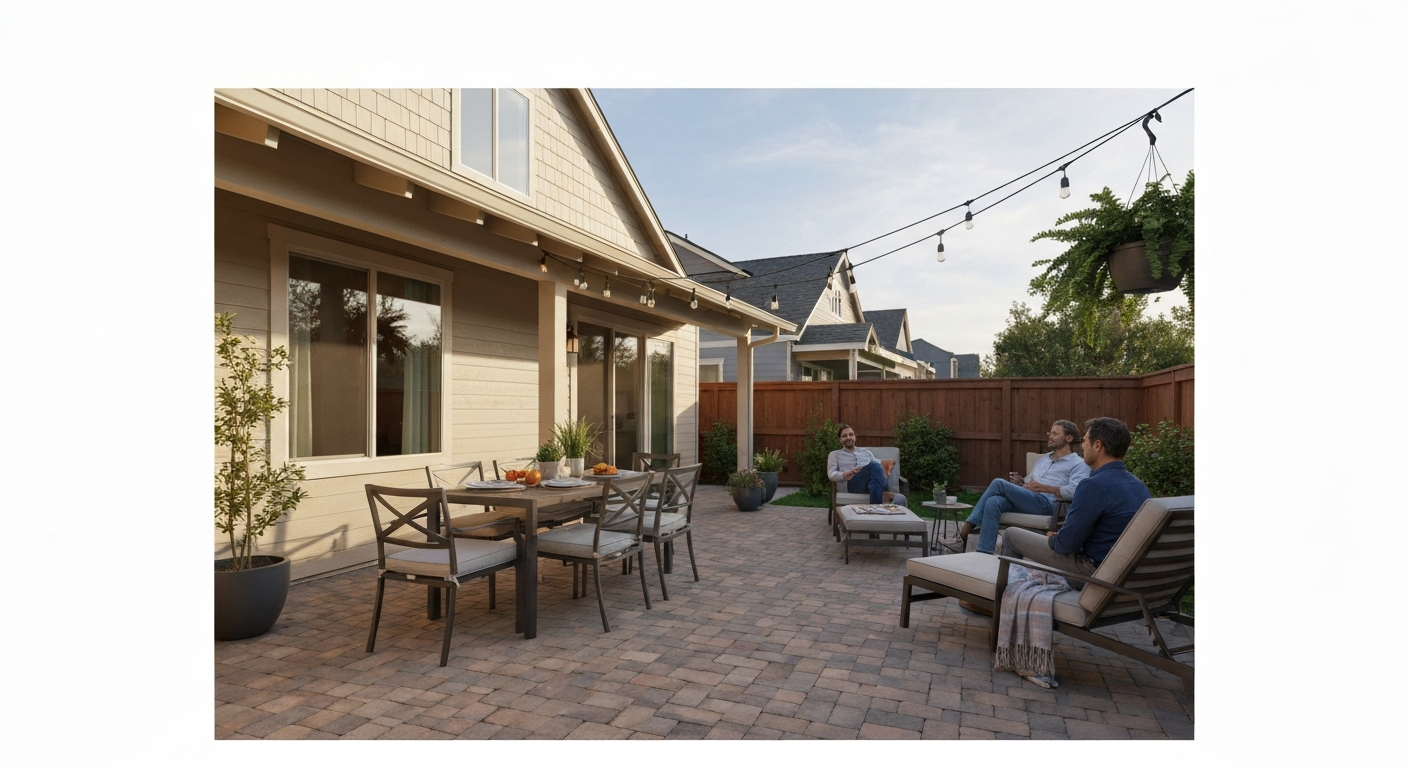
A patio cover is a roofed structure built over a patio to provide shade and protection from rain. It sits at ground level, attaches to or stands near the home, and is designed strictly for outdoor living and recreation. Nothing more complicated than that. Municipal codes in cities like San Diego and Chula Vista formally define it as a one-story structure no taller than 12 feet above grade, open on at least two sides, and not used as a garage, storage room, or habitable living space.
What Is a Patio Cover? Types, Names, and Differences

Ada Hollis
7 May 2026
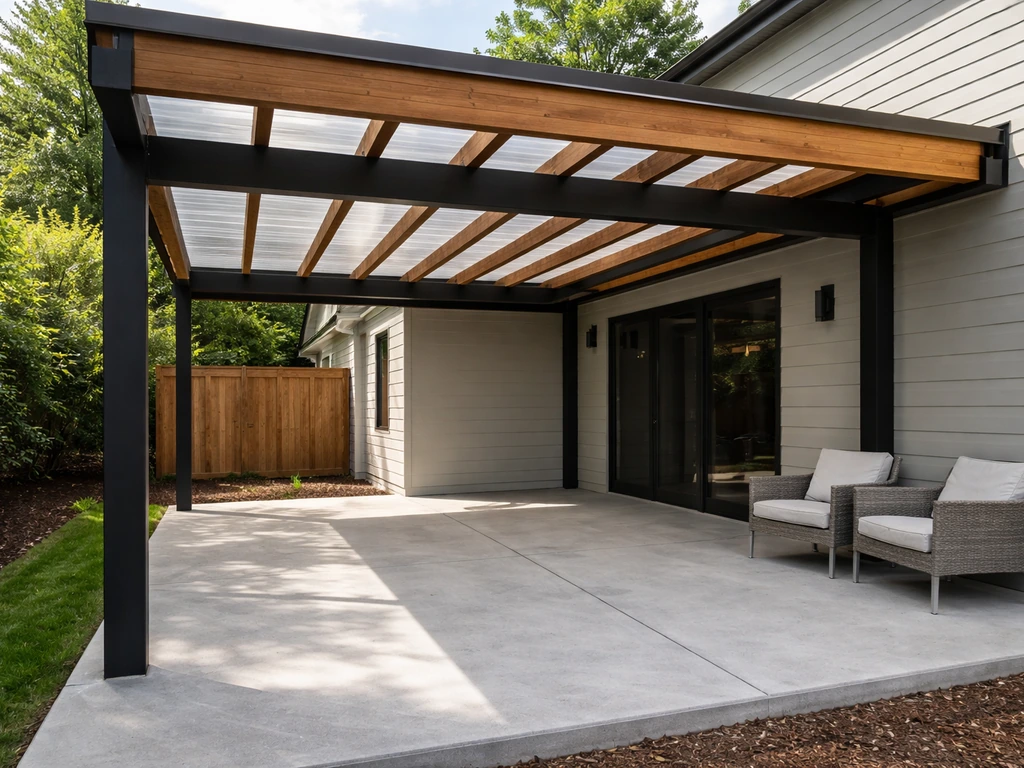
What a patio cover actually is
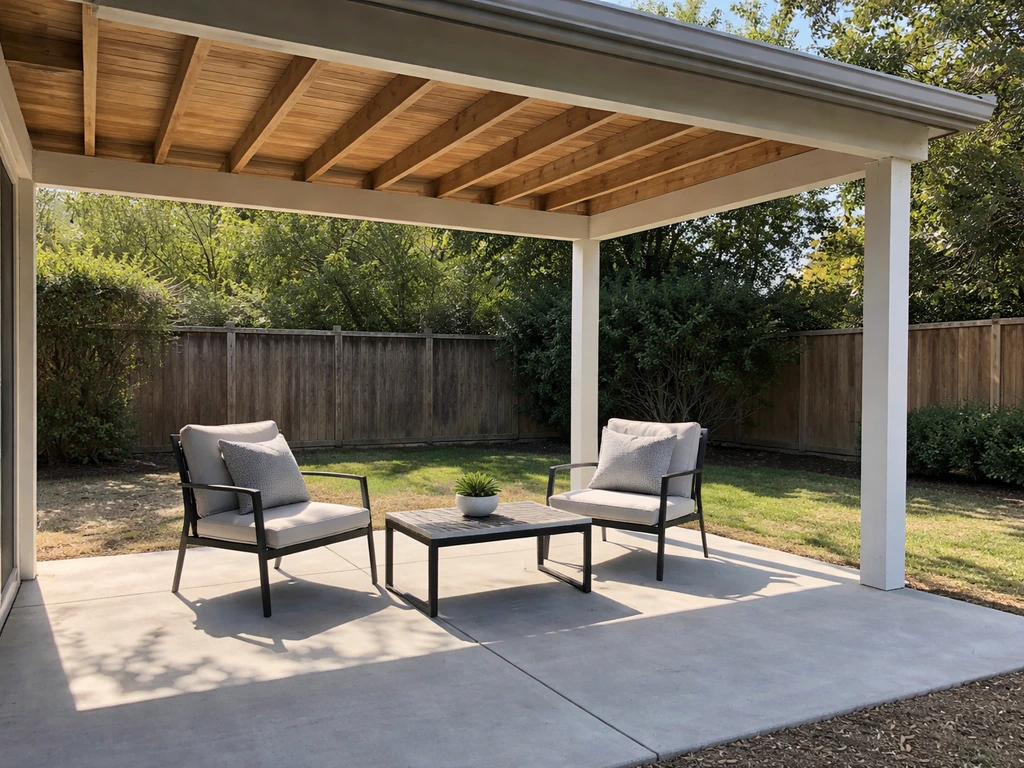
The simplest way to picture a patio cover is a roof without full walls placed over an outdoor slab or paved area. It keeps sun off your furniture, lets you sit outside during a light rain, and extends the time of year you can actually use your outdoor space. That roof can be solid, latticed, translucent, or made from fabric panels, but the defining feature is always the overhead structure that turns an exposed patio into a sheltered one.
Regulators care about patio covers mainly because they're structures attached to (or near) a house that need to be safe. The consistent rule across building departments is that a patio cover stays recreational only. The moment you enclose it with walls, run HVAC into it, and start using it as a sitting room year-round, it crosses into different permit territory entirely.
What people mean by a 'covered patio'
When you see 'covered patio' in a real estate listing or home description, it simply means the patio already has a permanent overhead structure in place. The word 'covered' is doing a lot of work in those two words. It signals you won't need to buy a separate umbrella or canopy, that the space is usable on sunny or mildly rainy days without much extra effort, and that the structure is typically fixed rather than temporary.
If you're not adding a permanent cover, a solar patio umbrella can provide portable shade and outdoor lighting powered by the sun. A half patio umbrella is a smaller, often cantilever-style patio shade that covers part of the seating area rather than enclosing the whole patio.
Agents and sellers use 'covered patio' as a selling point because it implies a ready-to-use outdoor living area. An uncovered patio is just a slab. A covered one is closer to a functional outdoor room, and buyers notice the difference when they're evaluating a home's livability.
What else patio covers get called
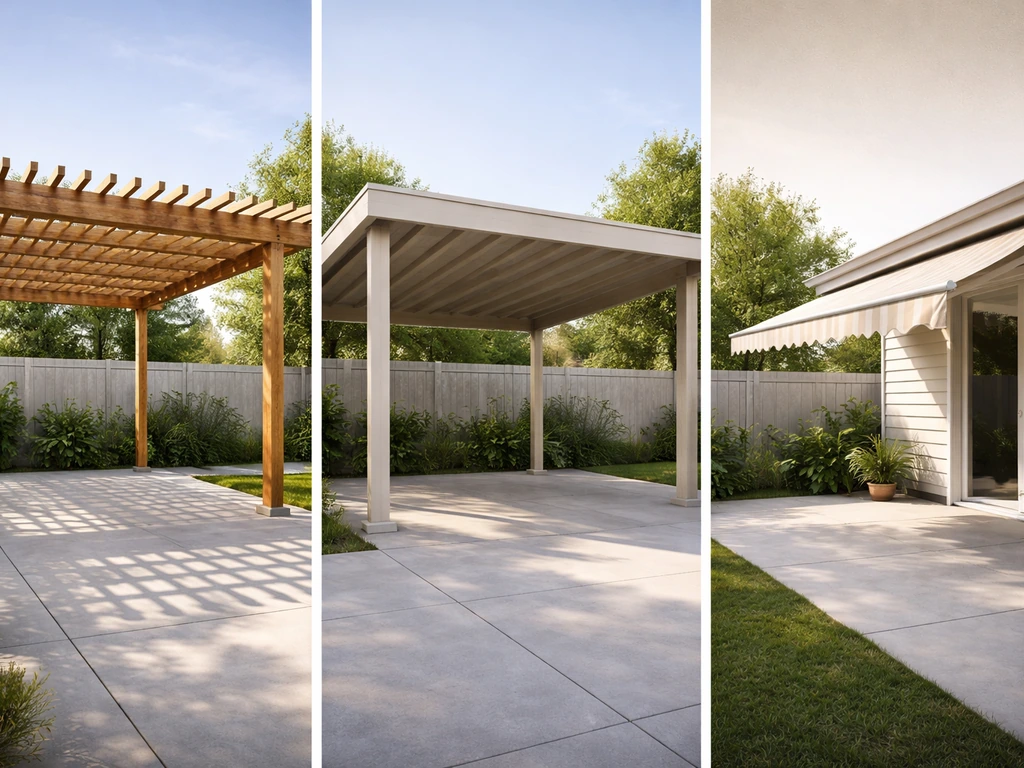
Patio covers go by a surprising number of names depending on the region, the material, and whether the structure is attached to the house or freestanding. You'll encounter most of these interchangeably in listings, contractor quotes, and home improvement stores.
- Pergola: An open-beam or latticed overhead structure, often freestanding. It filters light rather than blocking it completely. A pergola can function as a patio cover, though purists treat it as its own category.
- Awning: A fabric or metal canopy that extends from the wall of the house over the patio. Usually retractable and less permanent than a built cover.
- Shade structure or shade sail: Fabric panels tensioned overhead. Inexpensive and flexible, but not a permanent fixed roof.
- Ramada: Common in the Southwest US, a freestanding covered shelter over an outdoor space, essentially the same idea as a patio cover.
- Porch cover or lanai cover: Regional language. In Hawaii, 'lanai' is the standard word for what most of the country calls a covered patio or screened porch.
- Patio canopy: A general term for any overhead covering, from fabric pop-ups to permanent aluminum panel systems.
- Covered veranda or covered verandah: More common in Australian and South Asian English for a covered outdoor area attached to the home.
The terminology gets blurry fast, especially in listings. What one seller calls a pergola, another calls a patio cover. The practical test is always the same: is there a fixed overhead structure over the patio? If yes, it's functioning as a patio cover regardless of what it's labeled.
Patio covers vs. patios, porches, verandas, balconies, and courtyards
These terms all describe outdoor spaces connected to a home, but they're not interchangeable. The differences come down to location, elevation, and whether a roof is already included in the definition.
| Space | Ground level? | Roof included by definition? | Attached to house? |
|---|---|---|---|
| Patio | Yes | No | Usually, but can be freestanding |
| Patio cover | Yes (sits over the patio) | Yes, that's the whole point | Attached or freestanding |
| Porch | Yes (at entry level) | Yes, typically | Yes, usually at front or back entry |
| Veranda / verandah | Yes | Yes | Yes, wraps around one or more sides |
| Balcony | No (elevated) | Rarely | Yes, projects from upper floor |
| Courtyard | Yes | No | Enclosed by walls on multiple sides |
A porch already comes with a roof as part of its design. It's typically at the entry of the home and raised slightly from grade. A patio starts as an uncovered ground-level surface, and a patio cover is what you add (or find already added) to give it overhead protection. They're different things: the porch is an architectural feature of the house itself, while a covered patio is a patio that someone has put a roof structure over.
A veranda (or verandah) is similar to a covered patio but tends to wrap around the house and is more integrated into the original architecture. You see the term used more often in Australian, British, and South Asian English than in American English, where 'covered patio' or 'porch' handles most of the same meaning.
Balconies are elevated and attached to upper floors, so they're a completely different category from patio covers, which are ground-level. Courtyards are enclosed by walls rather than defined by a roof, often in the middle of or adjacent to a home, and they don't inherently have overhead covering at all.
The main types and materials
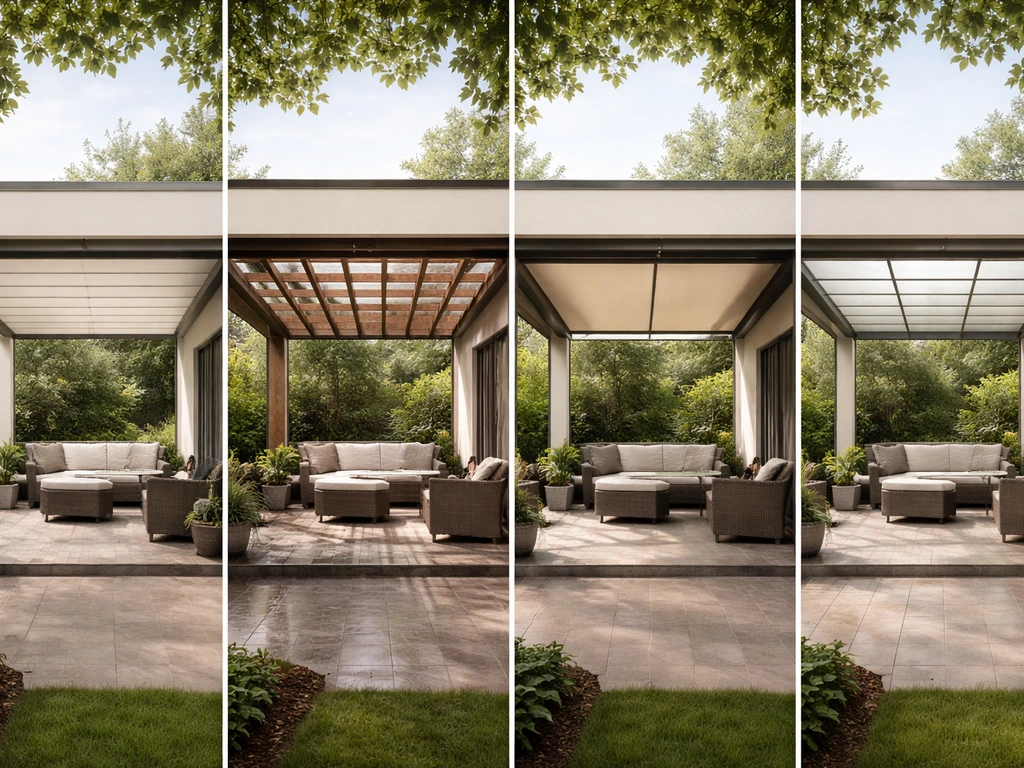
Patio covers fall into a few broad categories based on how much light they block and what they're made of. The right choice depends on your climate, how you want to use the space, and your budget.
Solid patio covers
Solid covers block all direct sunlight and keep rain out completely. Common materials include aluminum panel systems (the most popular for new installs because they're lightweight, maintenance-free, and come in various finishes), wood with a solid roof deck and shingles or corrugated metal, and insulated panel systems that also reduce heat transfer. These are the closest thing to a permanent outdoor room short of full enclosure.
Lattice and open-beam covers
Lattice covers (including most pergola-style structures) filter sunlight rather than block it entirely. They create dappled shade and let air circulate freely. Wood is traditional, but vinyl and aluminum versions are common because they don't rot or warp. These are ideal in mild climates where full rain protection isn't a priority but you still want shade. A pergola patio is a specific version of this style worth understanding on its own terms.
Fabric and retractable covers
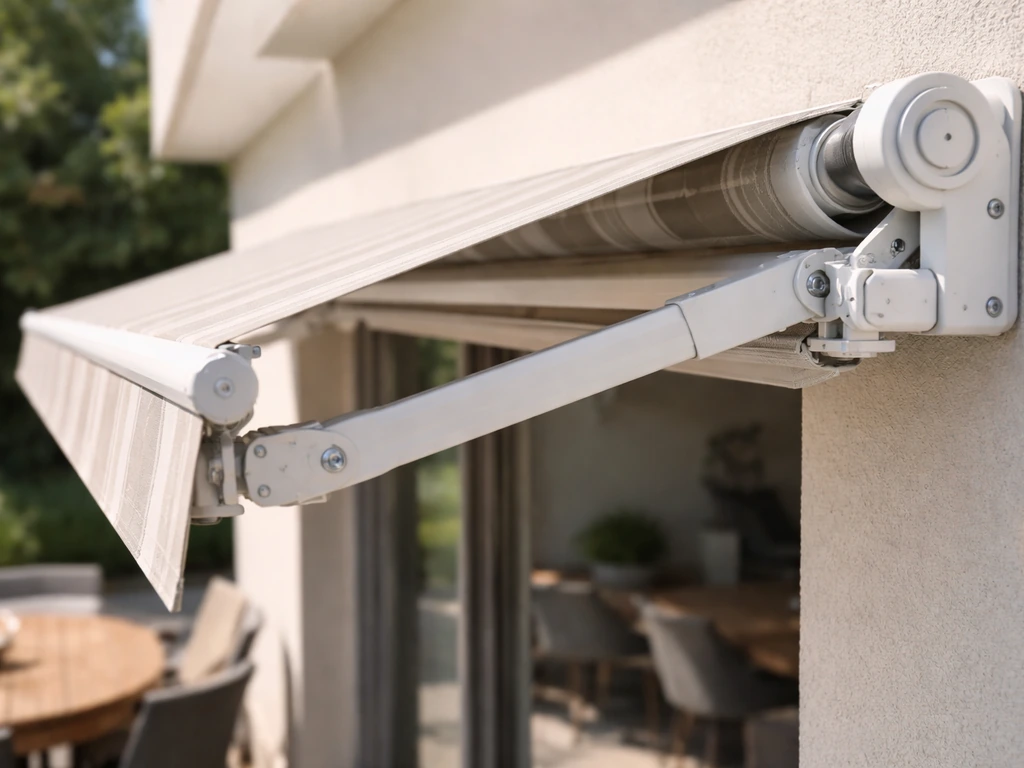
Awnings and shade sails fall into this category. Retractable awnings attach to the house wall and can be pulled in or extended as needed, which is useful if you want sun sometimes and shade other times. Patio umbrellas serve a similar purpose for smaller spaces and are the most flexible option since they require no permanent installation. A standard patio umbrella covers roughly a dining set, while larger market-style umbrellas can span up to 11 or 13 feet in diameter.
Polycarbonate and glass covers
Translucent polycarbonate panels let diffused natural light through while keeping rain out. They're popular for patios where you want brightness without harsh sun. Glass systems exist too but are more expensive and typically used for high-end enclosed patio designs.
Why a patio cover matters when evaluating a home
From a usability standpoint, a patio cover changes how much you actually get out of your outdoor space. An uncovered patio in a hot or rainy climate goes largely unused during peak summer hours or wet seasons. A covered patio becomes a usable outdoor room for a much larger portion of the year. That's a meaningful practical difference, not just a cosmetic one.
In real estate, a covered patio reads as an amenity. It signals livable outdoor square footage even though it doesn't count toward the home's official square footage (because it's not enclosed or heated). When you're evaluating a listing, ask whether the covering is permanent and permitted. An unpermitted patio cover could create complications during a sale or if the city requires inspection. A permitted, professionally built cover adds real value. A cheap tarp or an aging wood lattice that needs replacement is a cost you'll absorb.
Also pay attention to whether a covered patio is screened, partially enclosed, or open on the sides. Open on at least two sides is the standard definition under most building codes (and what keeps it classified as a recreational structure rather than living space). This is also why many retractable awnings and patio awning definitions focus on overhead coverage without fully enclosing the space open on at least two sides. A screened enclosure or one with sliding glass walls starts to blur the line into a sunroom or Florida room, which may have different permit requirements, different tax implications, and different expectations around year-round use.
If you're adding a patio cover to your own home, blank" rel="noopener noreferrer">most jurisdictions require a building permit for anything permanent and attached to the structure. The one-story, under-12-feet, open-on-two-sides formula is a useful shorthand for whether a structure qualifies as a standard patio cover in most US municipalities, but always check local requirements before starting construction. The blank" rel="noopener noreferrer">2015 International Residential Code (IRC) Appendix H limits patio covers to one-story structures not exceeding 12 feet in height.
FAQ
Is a retractable awning or canopy the same as a patio cover when it comes to permits?
A temporary canopy, umbrella, or fabric shade usually does not meet the same definition as a patio cover because it is not a fixed roof structure and often can be taken down seasonally. If it’s permanently mounted with posts or attached to the home and intended to stay year-round, it is more likely to be treated as a patio cover for permitting purposes.
How do I know if my “covered patio” is still considered recreational and not a living space?
The key boundary is whether it is fully enclosed and used like conditioned living space. If you add solid walls on more sides, install HVAC, or create a year-round sitting room that functions like indoor space, many jurisdictions will require a different permit category than a standard patio cover.
Does a covered patio add value to a home or increase square footage?
Covered patios are commonly counted as an amenity rather than official heated square footage, but the exact impact varies by local appraisal rules. When reviewing a listing, look for wording like “amenity” or “covered patio” and confirm whether it is open on multiple sides and not enclosed, since those factors affect how it is treated.
What risks come with an unpermitted patio cover during a home sale?
If the patio cover is permanently installed and attached near the home, it is typically expected to be permitted and inspected. During a sale, an unpermitted structure can trigger requirements for retroactive permits, inspections, or removal, so it’s smart to ask for permit paperwork or confirm status with the local building department.
If my patio cover is open on two sides, how do I avoid accidentally violating local rules?
Open-on-two-sides is the common regulatory shorthand, but your city’s rules can be more specific about openings, glazing, and how “partial enclosures” are treated. Before purchasing materials, verify what counts as an enclosure in your jurisdiction (for example, whether solid side panels change the classification).
What’s the difference between a pergola and a patio cover if listings use the terms loosely?
A pergola is usually a lattice or open-roof style that filters light rather than blocking all rain. It may still be called a patio cover in listings, but if you need true rain protection you should confirm the roof design (solid panels, sealed deck, or waterproofing) instead of relying on the label.
How do I choose the right patio cover material for my climate and how I use the space?
Your choice depends on whether you want summer shade only, rain protection, or both. In mild climates, a lattice-style cover can improve comfort without trapping heat, while in wet or high-sun areas, solid or insulated panels usually provide the better practical outcome and fewer usability gaps.
What construction details should I ask about to prevent leaks and water damage?
Even with an open design, wind and water management matter. Ask the contractor about roof slope, guttering or drainage planning, flashing where it attaches to the house, and beam spacing, since poor drainage can stain surfaces and accelerate wear.
If I plan to add screens or partial glass later, should I design it differently from day one?
Screened panels, sliding glass walls, or roof systems that effectively make the area enclosed can change the permit and compliance path toward sunroom or similar categories. If you think you might add screens later, ask upfront whether the current design will be considered a patio cover or already leaning toward an enclosed room.
How do I size a patio cover correctly so it actually covers the seating I care about?
A common mistake is buying a “patio cover” that is undersized for the way you position furniture, grill, or walkway. Measure your usable seating area and account for how much overhang you need to shade the far edges during the sunniest times, not just the patio footprint.
Next Article
Patio Weather Meaning: What Patio, Area & View Mean
Clear patio definition: what a patio is, 'patio weather' meaning, and how it differs from decks or porches.