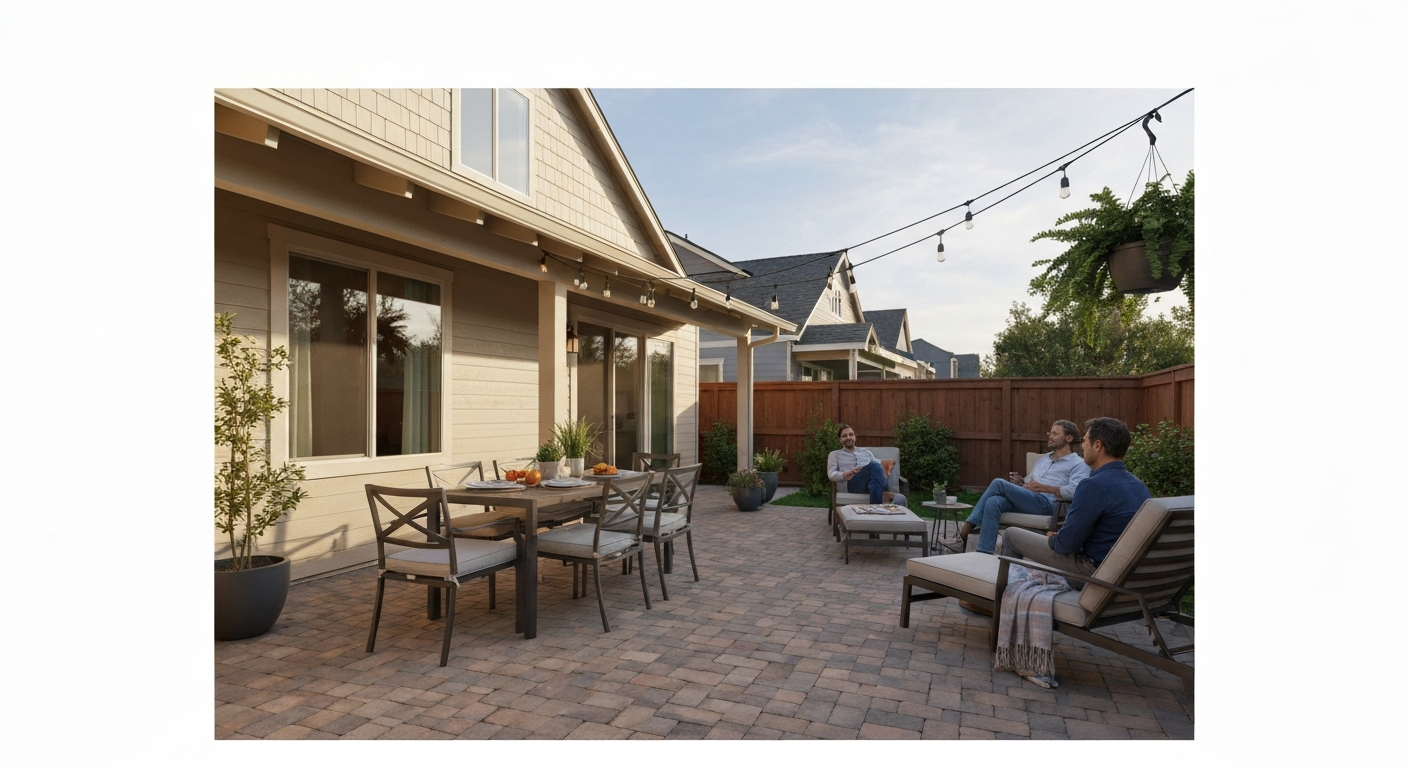
A patio is a flat, hard-surfaced outdoor area attached to or directly associated with a home, used for sitting, dining, and relaxing. It sits at ground level, has no roof (or only a partial one added later), and is typically paved with concrete, brick, stone, or tile. That's the core of it. Everything else, where it sits, what it's made of, whether it has shade, is just variation on that basic idea.
What Patio Means: Definition, Types, and How to Spot One

Ada Hollis
2 May 2026
What a patio actually is, in plain English
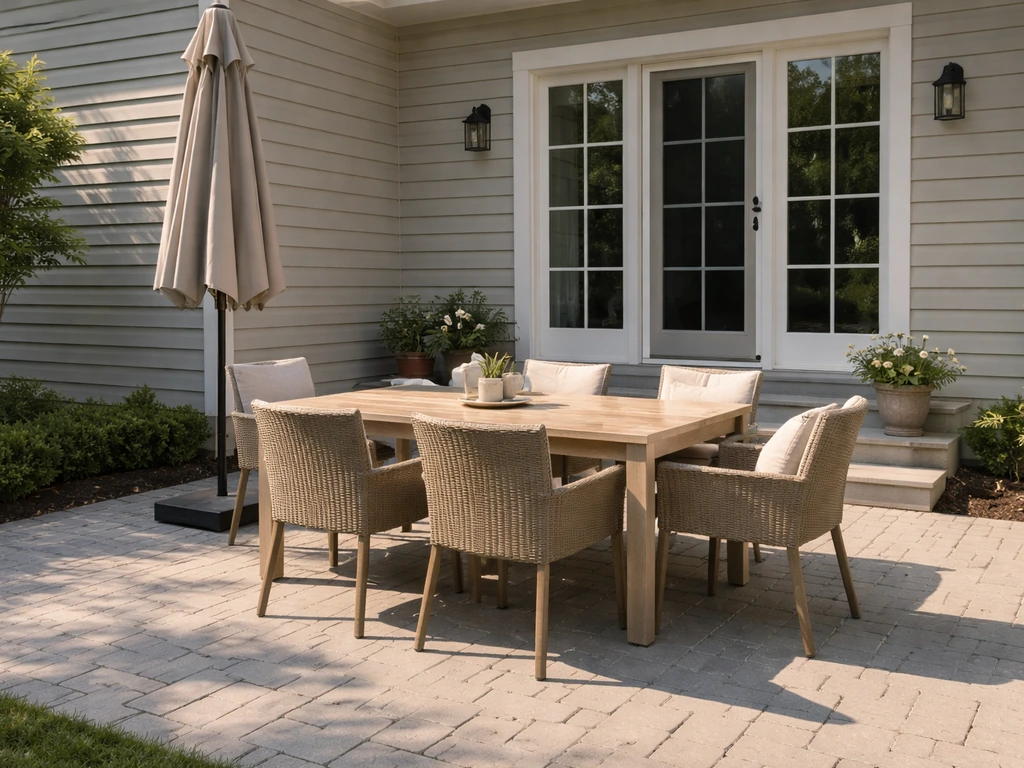
Merriam-Webster defines a patio as a recreation area that adjoins a dwelling, is often paved, and is adapted especially for outdoor dining. Britannica puts it simply: a flat area of hard material, usually behind a house, used for sitting and relaxing. Oxford lands in the same place. Three different dictionaries, essentially the same answer, and that consistency tells you something. There's very little ambiguity about what a patio is at its core. It's ground-level, it's hard-surfaced, it's connected to the home, and it's designed for people to spend time on.
What it is not: a room, a deck, a porch, or a balcony. Those distinctions matter a lot when you're shopping for a home or trying to understand what a listing is actually offering you. More on those in a moment.
Where patios are located and how people actually use them
Most patios are behind the house. That's the default, and most listings you'll see reflect it. Rear placement gives privacy, easy access from the kitchen or living room, and a natural connection to the backyard. But patios can appear on the side of a home or occasionally at the front, especially in townhomes, rowhouses, and certain contemporary designs. If you're curious specifically about whether patios are front or back features, that's a question worth asking when you tour, because the answer changes the space's usefulness significantly.
In terms of use, patios are genuinely versatile. The most common setups are outdoor dining areas, lounge zones with seating, and grilling spots. In warmer climates, a well-designed patio functions almost like an extra room from spring through fall. Homeowners add string lights, outdoor rugs, planters, and furniture that blurs the line between inside and outside. In apartments and condos, the patio (sometimes called a terrace or lanai depending on the region) takes on extra importance because it may be the only private outdoor space you have.
Patio vs. porch vs. veranda vs. balcony: here's the real difference
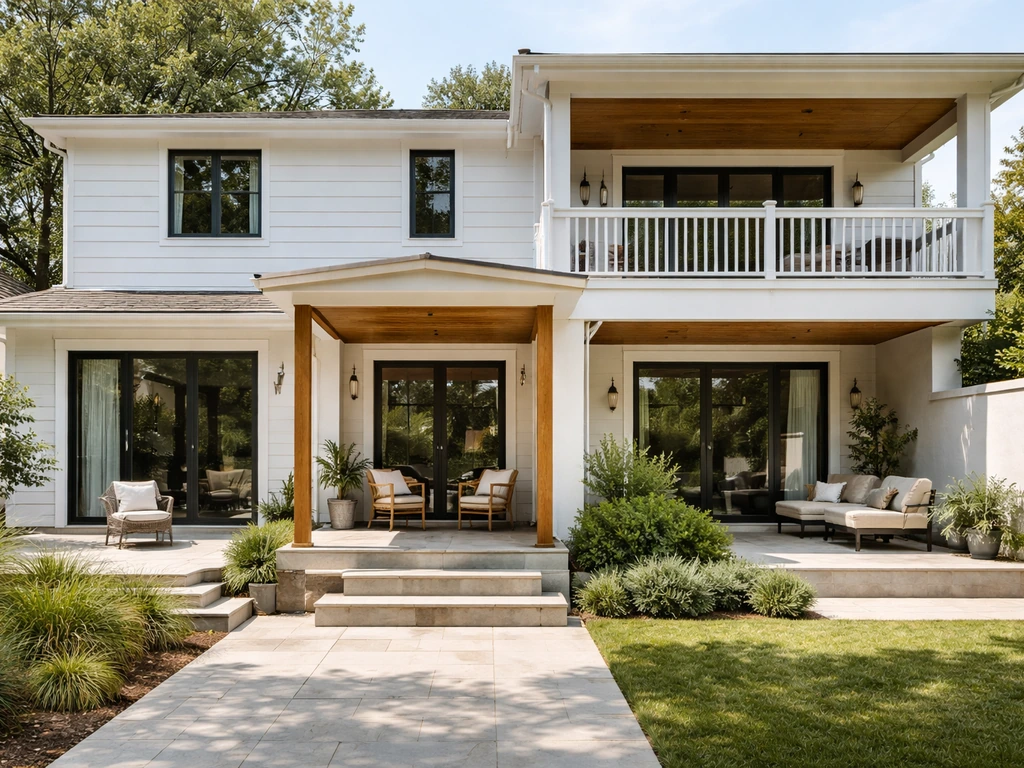
This is where most people get confused, especially when reading real estate listings. These terms get used loosely, and sometimes interchangeably, but they refer to genuinely different things.
| Space | Level | Roof | Attached to structure | Common location |
|---|---|---|---|---|
| Patio | Ground level | Usually none (sometimes added) | No — sits beside/behind home | Back or side of house |
| Porch | Ground level or slightly raised | Yes — has a roof | Yes — structurally part of home | Front of house, usually |
| Veranda | Ground level or raised | Yes — roofed and often railed | Yes — wraps around home | Front and/or sides |
| Balcony | Elevated (upper floor) | Usually none | Yes — projects from exterior wall | Any side of building |
| Deck | Raised or ground level | Usually none | Often attached to home | Back or side of house |
The single most useful rule: if it's covered by a permanent roof that's part of the home's original structure, it's probably a porch or veranda, not a patio. If it's elevated off the ground and attached to an upper floor, it's a balcony. If it's a raised wooden platform (even without a roof), it's most likely a deck. A patio is what's left: ground level, hard surface, open to the sky. HGTV’s raised vs. grade-level deck guide explains how elevation changes outdoor use and expectations, which helps clarify what a patio is compared with elevated deck options A patio is what's left: ground level, hard surface, open to the sky..
Porches are particularly easy to confuse with patios. The key tell is the roof. A porch has one built into the home's architecture. A patio might have a pergola or shade sail added by the owner, but that's an accessory, not the structure itself. Verandas are essentially wide, roofed porches that wrap around more of the home, more common in older Southern and colonial-style architecture. Balconies are only accessible from an upper floor and project outward from the building, which makes them structurally very different from a ground-level patio.
Patio vs. courtyard (and a few other spaces worth knowing)
A courtyard is an outdoor space that's enclosed, usually by walls, fences, or the walls of the building itself on multiple sides. Courtyards can be beautiful and private, but the enclosure is the defining feature. A patio, by contrast, is generally open on at least two or three sides. Some patios are partially enclosed (say, by a fence on one side and the house on another), but if walls surround it on all four sides, most people would call it a courtyard, not a patio.
A terrace is another term that overlaps with patio, especially in apartment and condo contexts. In practice, people use 'terrace' and 'patio' almost interchangeably, though 'terrace' sometimes implies a slightly more formal or elevated space. In high-rise buildings, what's marketed as a terrace is often just a large balcony. In single-family homes, a terrace usually means the same thing as a patio. In real estate listings, don't read too much into which word is used, look at the actual description of the space's size, surface, and location.
Lanais are worth mentioning too, especially if you're shopping in Hawaii or Florida. A lanai is typically a covered outdoor living space, often screened, that functions like a blend of a porch and a patio. If a listing in those states says 'lanai,' expect something more substantial than a bare concrete slab, usually a shaded, sometimes screened, outdoor room.
What patios are made of, and what to look for
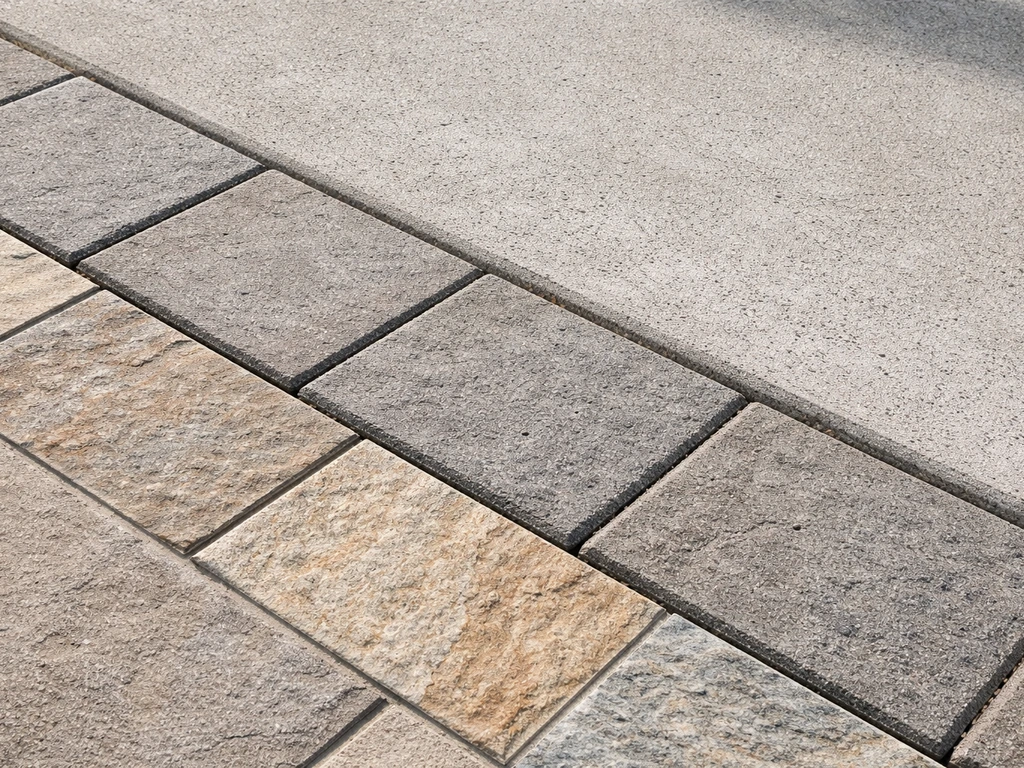
The surface material is one of the most practical things to evaluate when you're looking at a patio. In a Port Orchard, Washington director interpretation document for LU25-02, the term “patio” is singled out for further interpretation and the analysis quotes the definition of a recreation area that adjoins a dwelling “patio” for further interpretation. It affects durability, maintenance, appearance, and cost to repair or replace. Here are the most common materials you'll encounter:
- Concrete: the most common and affordable option. Can be plain (functional, utilitarian) or stamped and colored to mimic stone or tile. Plain concrete can crack over time, especially in freeze-thaw climates. Stamped concrete looks great but can chip or fade.
- Brick: classic, durable, and forgiving since individual bricks can be replaced. Tends to stay cooler underfoot than concrete in hot sun. Watch for uneven settling, which creates trip hazards.
- Natural stone (flagstone, slate, bluestone): high-end look and long lifespan, but expensive and requires level installation. Flagstone in particular can have uneven surfaces that aren't ideal for furniture placement.
- Pavers (concrete or clay): very popular in modern construction. Individual units can be removed and reset if the base shifts. Wide variety of colors, shapes, and finishes available.
- Tile: common in warmer climates and Spanish-style homes. Can be slippery when wet if not rated for exterior use — always check the slip rating.
- Gravel or decomposed granite: technically not a 'paved' patio in the traditional sense, but used in casual, low-budget, or drought-tolerant landscaping contexts. Requires edging to stay in place and isn't ideal for furniture.
When you're touring a home, get close and look at the condition of the surface. Cracks in concrete, loose pavers, or efflorescence (white mineral deposits) on brick are signs the patio may need attention. Also check the slope: a properly installed patio should pitch slightly away from the house, about a quarter inch per foot, to drain rainwater away from the foundation. If it slopes toward the house, you could be looking at future drainage headaches.
How the word 'patio' changes across regions and languages
The word 'patio' comes directly from Spanish. In Spanish-speaking countries, particularly Spain and Latin America, a patio traditionally refers to an interior courtyard, a walled outdoor space in the center or rear of a building, often with a fountain, garden, and decorative tile. Think of the classic Andalusian courtyard: shaded, enclosed, lush. That's very different from the open concrete slab behind a North American suburban home, but they share the same word. If you're researching Spanish colonial or Mediterranean-style architecture, keep in mind that 'patio' in that context carries a much richer, more enclosed meaning.
In British English, 'patio' is used much the same way as in American English, a paved area behind the house for sitting and dining. The term 'terrace' is also common in the UK for the same concept. In Indian real estate contexts (Hindi and Urdu), similar outdoor spaces may be called a 'verandah' or 'sit-out,' and the word 'patio' is sometimes used in urban listings targeting international buyers but isn't traditional terminology. In Australia, 'alfresco area' and 'entertaining area' are common alternatives, and in Hawaii, as mentioned, 'lanai' is the dominant term. None of these are wrong, they just reflect how the same basic concept gets named differently depending on where you are.
How to identify a patio on a listing or during a home tour
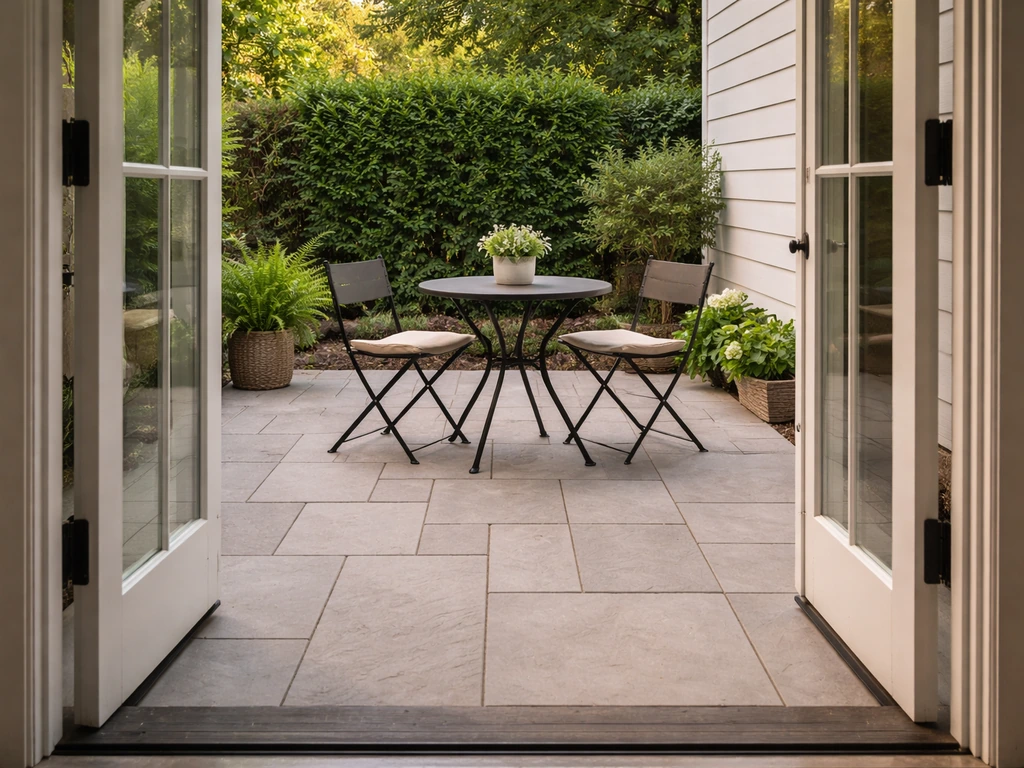
Real estate listings aren't always precise with terminology, so it helps to know what to look for beyond just the label. When a listing mentions a patio, here's what to verify:
- Check the photos for the surface material. A paved or hard-surfaced ground-level area behind or beside the house is a patio. If it looks like wood planks elevated off the ground, it's a deck.
- Look at whether it has a permanent roof. If the covering is clearly part of the home's roofline, it may be classified as a covered patio, porch, or lanai — which changes how it behaves in weather.
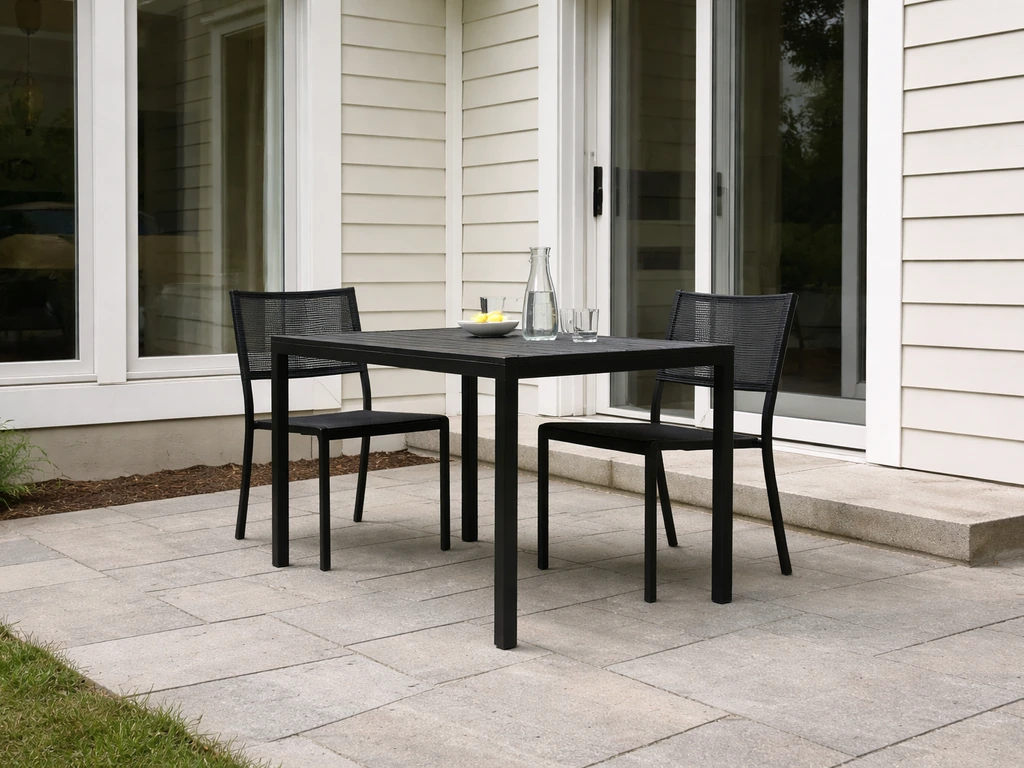
- Find the square footage if it's listed. Anything under about 100 square feet is a small patio, better suited to a bistro table than a full outdoor dining set. 150 to 300 square feet is a comfortable mid-size. Larger than that and you're looking at a genuinely spacious outdoor room.
- Ask about the access point. A patio that connects directly through sliding glass doors from the living room or kitchen is more functional day-to-day than one accessed through a garage or side gate.
- Ask about enclosures or screens. Some patios are partially or fully enclosed with screen panels or glass — these are sometimes called screened patios or Florida rooms. They offer bug protection and extend usability into shoulder seasons.
- If you're in an apartment or condo, ask whether the patio is private (exclusive to your unit) or shared. Some ground-floor units have what's marketed as a patio that's actually a semi-shared courtyard area.
On a home tour, walk out to the patio and stand on it. Check that the surface feels solid (no rocking pavers, no soft spots in concrete). Look at the gap between the patio surface and the home's exterior wall, there should be no pooling water there or signs of moisture damage. Look up: is there anything above it that could affect how you use it? A second-story balcony overhead, for example, acts as a partial shade structure. Finally, think about sun orientation. A west-facing patio is blazing hot on summer afternoons. A north-facing one stays cool but may feel gloomy. East-facing patios get morning sun and afternoon shade, often the most comfortable setup for warm climates.
Whether you're buying, renting, or just trying to understand a floor plan, knowing what a patio actually is, and what it isn't, saves you from listing confusion and helps you ask the right questions. A patio is one of the most valuable outdoor features a property can have, but only if it's sized, surfaced, and positioned in a way that actually fits how you live.
FAQ
If a listing says “patio” but it’s elevated a few steps above the yard, is that still a patio?
It might still be called a patio, but height changes the likely category. If the surface is raised like a platform, especially with wooden framing or consistent step risers, buyers often describe it as a deck or terrace. The most reliable check is construction, is it simply ground-level paving, or is it clearly built as a raised structure?
What’s the difference between a patio and a “sitting area” on a property listing?
A “sitting area” is a broader marketing term and may or may not be a distinct hard-surfaced space. Verify whether there is a defined, paved surface for chairs (concrete, pavers, tile) and whether it is connected to the dwelling at ground level. If it’s just landscaping or grass with furniture, it’s not functioning like a true patio.
Can a patio have a roof and still be considered a patio?
Yes, but it depends on what provides the cover. Accessories like a pergola, shade sail, or partial umbrellas typically keep it in patio territory because they do not constitute a permanent roof that’s part of the home’s original structure. If the cover is a full built-in roofline attached to the house like a porch, then it’s more likely a porch or veranda.
How can I tell during a tour whether a patio has drainage problems?
Look for water behavior and installation signs. Watch where rainwater runs after a wet day if possible, otherwise check for staining along the house wall, damp patches near exterior doors, soft or heaving areas in the surface, and a consistent pitch away from the home. Efflorescence on masonry can also suggest persistent moisture.
Are screened patios still “patios” or are they considered something else?
A screened patio is still usually a patio if it remains ground-level and the main surface is the outdoor paving area. The screening is an added enclosure element, similar to a partially covered or partially sheltered patio. If walls fully surround it on all sides, many people would classify it as a courtyard instead.
What should I ask about a “patio” if I care about privacy?
Ask about the actual sightlines, not just the label. For example, is it adjacent to a neighboring yard, visible from windows, or backed by a parking area? Also ask whether privacy fencing is allowed to be added or replaced, and whether there are existing shade structures or tall planters that can realistically stay in place under HOA or local rules.
How do HOA rules typically affect patios?
Patio rules often target changes that look like permanent construction. Common restrictions include what materials you can add, where pavers or hardscape can be installed, limits on pergolas or shade sails, and rules on screens, lighting, and furniture visibility. If you plan to grill, install heaters, or add a cover, confirm what’s allowed before you commit.
Is a “terrace” always the same as a patio in real estate listings?
Not always. “Terrace” can mean the same concept in single-family contexts, but in many condo or high-rise listings it may refer to a raised or balcony-like space. Use the same checks as for patios, ground level versus elevated platform, the presence of a full balcony structure, and the actual surface and location relative to the home.
What patio materials are most likely to need maintenance or replacement?
Concrete tends to be low-maintenance but can crack, and cracks may expand if drainage is poor. Brick and stone pavers can shift if the base is compromised, leading to uneven surfaces and weed growth between joints. Tile can be durable, but grout and crack movement matter, so look for cracked or loose tiles and check whether tiles sit on stable substrate.
If the patio is partially enclosed, how do I decide whether to call it a patio or courtyard?
Use the enclosure. A patio is generally open on at least two or three sides, even if one side is bordered by fencing or the house. If walls or fencing surround it on all four sides and it feels inward or boxed-in, buyers often classify it as a courtyard because the enclosure becomes the defining feature.
Next Article
Patio Weather Meaning: What Patio, Area & View Mean
Clear patio definition: what a patio is, 'patio weather' meaning, and how it differs from decks or porches.