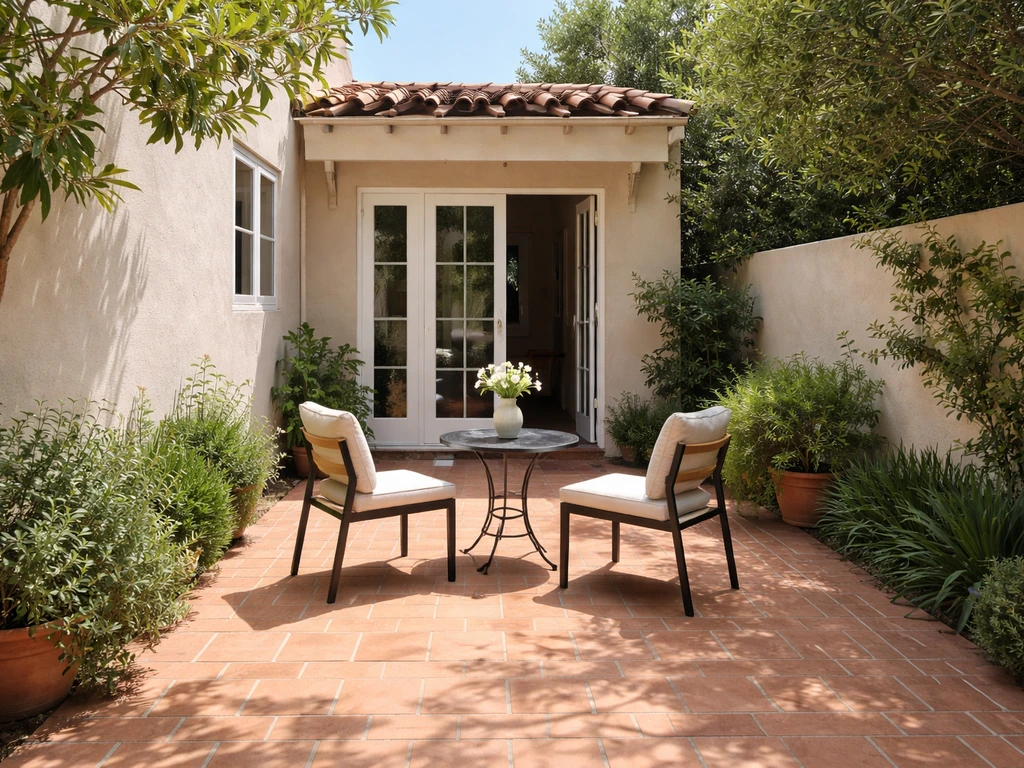
A double room with patio is a bedroom designed for two people that comes with direct access to a private or semi-private outdoor patio area, usually at ground level. The double room part tells you about occupancy and sleeping setup. The with patio part tells you there is an attached outdoor space you can actually use, whether that means a couple of chairs and a small table or a proper sitting area.
Double Room With Patio Meaning Explained in Listings

Ada Hollis
3 Jul 2026
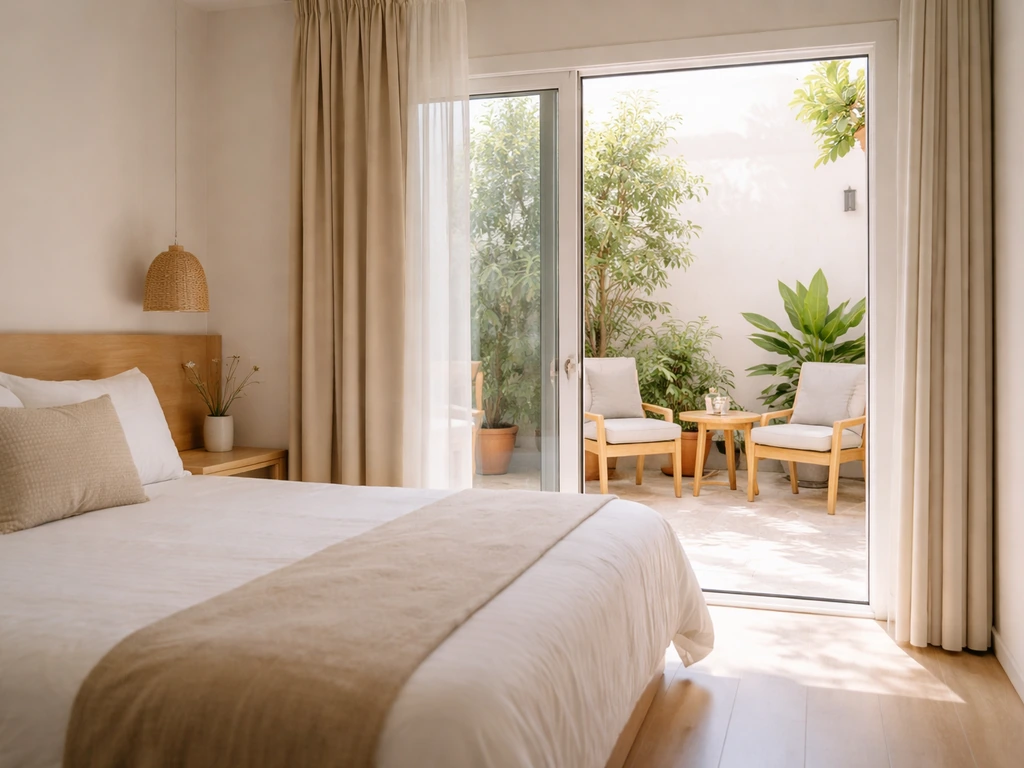
What the listing does not always tell you upfront is whether that patio is exclusively yours or shared with other guests, and that gap is exactly where confusion happens. Coast Hotels describes its “private patio” as a feature of the “Coast Premium King with Patio” for two guests.
What "double room" actually means
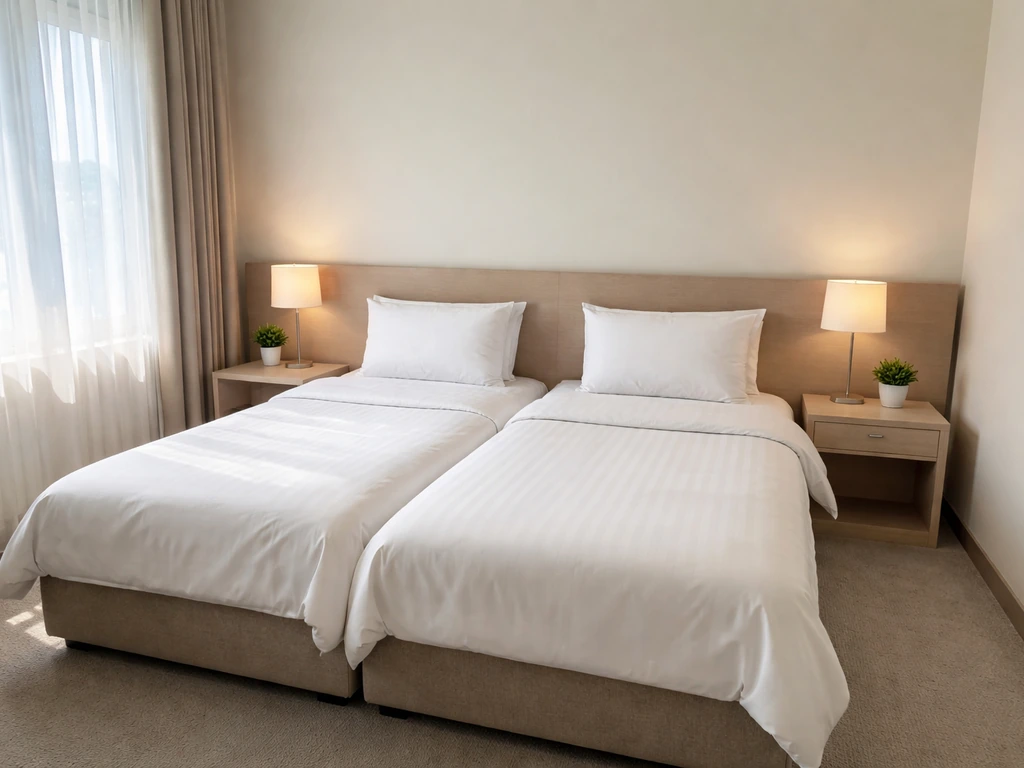
"Double room" is not a standardized term, which is the first thing worth knowing. Collins Dictionary defines it as a room with two beds, but in practice many hotels list a room with one double or king bed as a double room simply because it accommodates two guests. KAYAK describes a double room as designed for two guests while noting that bed configuration can vary by property. AltexSoft is even more direct: the term is not standardized, and you should contact the hotel to confirm whether it has one double bed or two separate beds.
For practical purposes, treat "double room" as meaning a room sized and priced for two people. One bed or two beds is a separate question, and the listing or a quick message to the host will clear that up. If you are a solo traveler, be aware that some properties price double rooms at a double occupancy rate regardless, so you may pay for two people even if you are travelling alone.
What "with patio" adds to the picture
When a listing says "with patio," it means the room has direct access to an outdoor patio area, usually through a sliding door or French doors that open straight from the room onto a paved or decked outdoor space. A patio room typically combines a room sized for two with direct access to an outdoor patio space right from the unit what is a patio room. That access is the key differentiator from a room that simply overlooks a garden or courtyard. A patio room means you can step outside from your own room rather than walking through a shared corridor or common area to reach any outdoor space.
Patios in hotel and rental listings are almost always at ground level or close to it. A real-world example: Hotel Eco Avenida in Benicasim lists a "Double room 18m2 with private interior patio," where the patio is explicitly attached to that specific room.
At Smart Hotel Napoli, the German-language listing describes "Zimmer mit privatem Patio" rooms as ground floor units of about 24m2 that include a named private patio, highlighting that outdoor privacy and ground-floor placement go together in this room type. The size and furniture setup vary widely, but the expectation is a usable outdoor area: somewhere to sit with a coffee, have a quiet drink, or just get some air without sharing a communal terrace with the rest of the property.
Patios are also closely related to other outdoor terms like porch, balcony, and terrace, so if you are wondering was ist patio in a practical way, compare those listing words too.
Patio vs porch vs balcony vs terrace vs courtyard
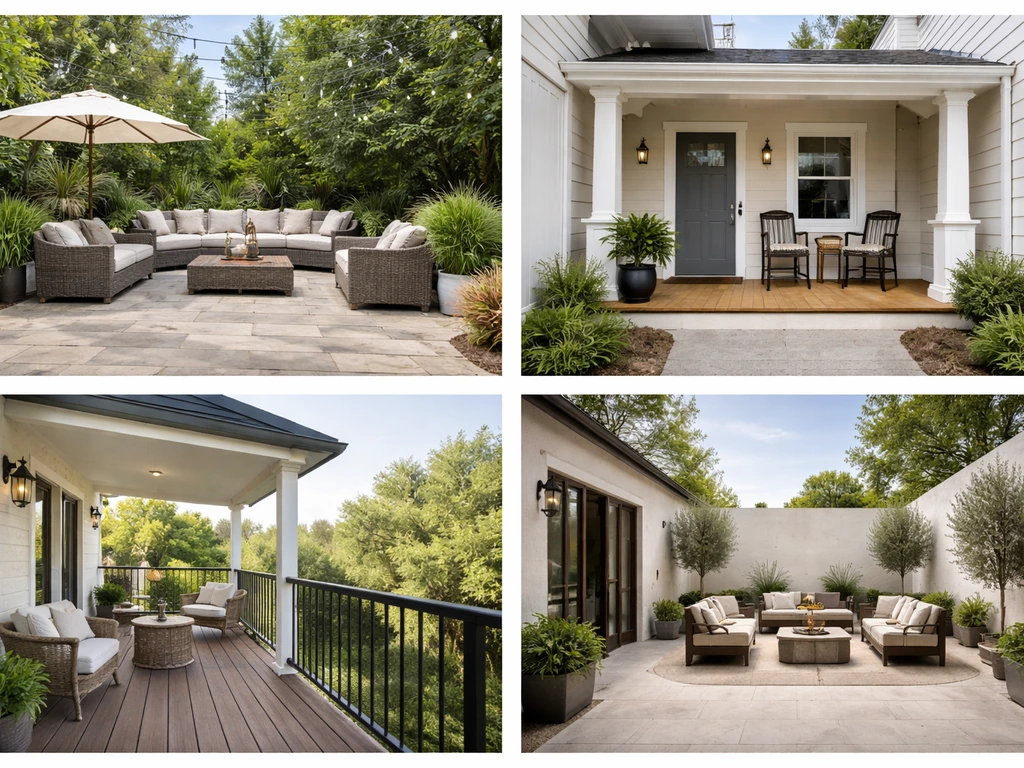
Listings mix these words loosely, so it helps to know what each one typically means before you book.
| Term | Typical location | Roofed? | Ground level? | Private or shared? |
|---|---|---|---|---|
| Patio | Attached to rear or side of room/property | Usually no | Yes, typically | Can be either — check the listing |
| Porch | Front or rear of building, often covered | Usually yes | Yes, ground floor | Typically shared or semi-private |
| Balcony | Upper floors, cantilevered from building | Usually no | No, elevated | Usually private to the room |
| Terrace | Rooftop or elevated flat area, can be large | No | Varies (roof or raised) | Can be private or shared |
| Verandah | Runs along one or more building facades | Yes, attached roof | Yes, ground floor | Often shared or semi-private |
| Courtyard | Enclosed outdoor space within building walls | No | Yes, ground level | Usually shared by multiple units |
A patio is typically a ground-level slab or paved area directly outside a room, without a roof. A balcony is elevated and attached to an upper floor. A veranda (or verandah) is roofed and runs along the building's facade, which Wikipedia distinguishes clearly from open patios or balconies. A terrace can be either a private outdoor space off a room or a large shared rooftop area. Pendry Baltimore, for example, describes "Terrace Courtyard King Rooms" as having a private terrace with views into an open-air courtyard, which shows how terrace and courtyard can appear in the same listing but refer to different things: the terrace is your private outdoor space, and the courtyard is what it looks out onto.
The short practical takeaway: if you want outdoor space that is yours alone and at ground level, patio is the word you want to see. If you see terrace, verify whether it is private or shared. If you see courtyard, that often describes a view or a communal area rather than your personal outdoor access.
Private patio or shared? This is the question that matters most
The biggest thing people miss when reading a listing is whether the patio is truly exclusive to their room or shared with other guests. Both situations exist in real listings, and the wording can be subtle.
Hotel Entraigues in France, for example, lists a room explicitly titled "Comfort double room on first floor with shared patio" for two persons. That is unusually transparent. More often you will see "with patio" and have to dig for the shared/private detail in the room description, photos, or amenity list. On the flip side, a Booking.com listing in Bordeaux uses the phrase "Double Room with Private Patio & Shared Bathroom" precisely to signal that the patio is yours alone, even though the bathroom is not. When a listing writer wants you to know the patio is private, they will usually say so directly. When they are vague, that vagueness is itself a signal worth questioning.
Reddit threads on resorts like Sandals show this plays out in real traveler experience too. Users note that some suite categories explicitly say "private patio" while neighboring garden suite types do not, and the difference in seclusion and perceived privacy is significant. Plants, fencing, and the layout between adjacent units all affect real-world privacy even when the listing technically says private. The practical rule: if the word private does not appear alongside patio in the listing, ask before you book.
Shared patio scenarios to watch for
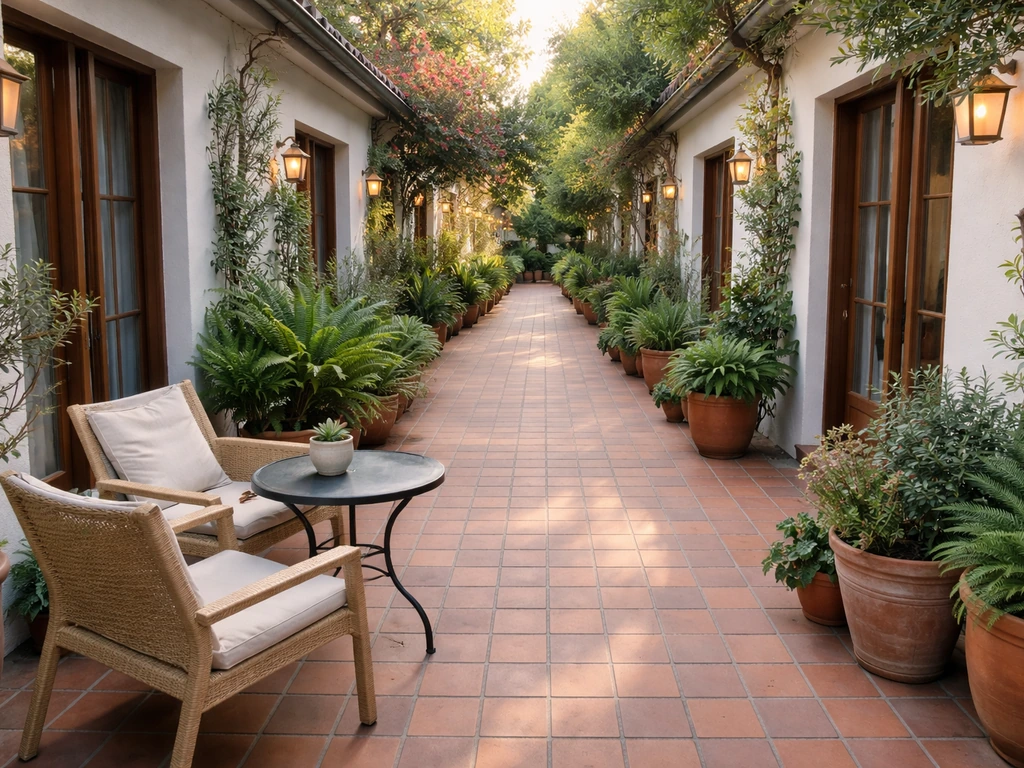
- A patio that runs the length of a building facade and is accessible from multiple ground-floor rooms (common in guesthouses and smaller boutique hotels)
- A courtyard-style layout where several rooms open onto the same central outdoor area
- A patio labeled as private but separated from a neighbor's patio only by a low hedge or planting, meaning you have visual exposure
- A rental apartment in a block where the patio is technically yours but adjoins a communal garden accessible to other residents
How the wording changes by country
If you are searching in a language other than English or booking a property in continental Europe, the phrasing shifts but the concept stays the same. Knowing the local terminology helps you read listings accurately.
In German listings, you will see phrases like "Zimmer mit Patio" or "Zimmer mit privatem Patio" (room with private patio). The word "Privatsphäre" signals the privacy angle, and German-language listings tend to specify ground floor placement (Erdgeschoss) as part of the room description, as Smart Hotel Napoli does in its German listing. For more on German-language patio terminology, the topic "was ist ein zimmer mit patio" covers that ground directly.
In Dutch, you will most often see "kamer met terras" or "tweepersoonskamer met terras" (two-person room with terrace) rather than the word patio. Het Vlielandhotel in the Netherlands labels its outdoor access as "Privéterras" (private terrace, 6m2) and explicitly notes ground floor placement. Floats Hotel Rotterdam uses "Tweepersoonskamer met terras" with private terrace wording in the room marketing. Dutch listings tend to be specific about size and privacy level, which makes them easier to interpret than some English-language equivalents.
In French, you may see "chambre double avec patio" or more specifically "patio privatif" to indicate a reserved, exclusive patio. Riad Eucalyptus uses "patio privatif" to describe a suite's dedicated outdoor space, including an outdoor shower on the patio. The word privatif in French is a strong signal of exclusivity and is commonly used in property listings to mean the space belongs solely to that unit.
The underlying concept across all these languages is the same: a double or two-person room with a ground-level outdoor space directly accessible from the room. The language differs but the questions you should ask do not.
What to check before you book or sign anything
Reading the listing carefully is only the first step. Here is what to actually verify before committing.
Questions to ask the host or agent
- Is the patio exclusively for our room, or is it shared with other guests or other rooms?
- How is the patio accessed from the room — sliding door, French doors, a separate exterior door?
- What furniture is included on the patio (table, chairs, sun loungers)?
- What is the approximate size of the patio?
- What does the patio face — another building, a garden, a courtyard, a road?
- Is the patio enclosed, fenced, or separated from neighbors in any way?
- Are there any smoking rules or noise restrictions for the patio?
- Is the patio accessible to people with mobility needs (step-free access, level threshold)?
What to look for in photos and floor plans
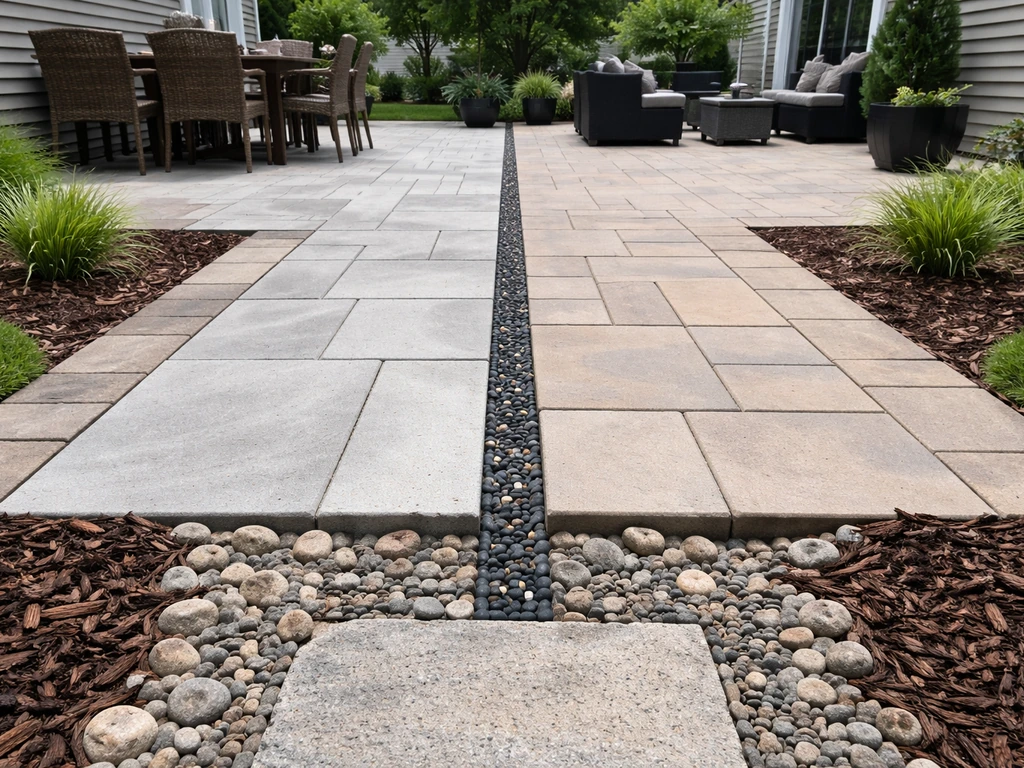
Photos are your best friend here, but only if you know what to look for. Check whether the patio photos show any visible boundaries between adjacent patios or gardens. Look for fencing, hedges, walls, or planters that indicate separation from neighboring spaces. A photo taken from inside the room looking out through the door gives you a better sense of privacy and size than a photo taken from the patio looking back at the room. If a floor plan is available, check whether the patio is shown as an integral part of the unit footprint or as a general shared outdoor area.
Also pay attention to what surrounds the patio at ground level. A patio facing a car park or a busy shared pathway will feel very different from one facing a walled garden. The listing at Safety Harbor Resort & Spa, for instance, describes its patio or balcony option as a private outdoor space, but occupancy goes up to five people in a multi-bed unit, which changes what ground-level outdoor comfort actually looks like. More people using the same patio means the size and layout matter more.
How a patio affects value and comfort
A genuinely private, well-sized patio adds real value to a double room, especially for a longer stay or a warmer climate. It gives you somewhere to eat breakfast outside, wind down in the evening without going to a shared bar or terrace, and have conversations without worrying about neighbours in the corridor. Trumbull and Porter Hotel and Coast Hotels both market their patio room types specifically around the private outdoor experience for two guests, which reflects how much a confirmed private patio can lift the appeal of a standard double room.
On the other hand, a shared patio in a busy guesthouse or a small patio facing a service lane can feel like a drawback rather than a feature. The word patio in the listing title is not a guarantee of quality or genuine outdoor living, so treat the verification steps above as non-negotiable before paying a premium for that access.
If you are comparing a double room with patio against other outdoor room types in a hotel, it is worth understanding how hotel listings use patio differently from terms like balcony, terrace, or courtyard view. The topic of patio meaning in hotel listings covers those distinctions in more depth, and the broader question of what a patio room means in a residential or architectural context is worth reading if you are making a longer-term rental or purchase decision rather than a short hotel stay. Patio meaning in a hotel listings context is mainly about having your own ground-level outdoor seating space attached to your room patio meaning in hotel listings.
FAQ
If the listing says “double room with patio,” how can I tell whether the patio is private or shared before I book?
Look for the words private, exclusif, privatif, or privéterras (depending on language). If those words are missing, treat it as potentially shared, then message the property with a direct question asking whether the patio is only accessible from your room and whether other guests can step onto it. Also confirm if it is fenced or separated from neighboring units.
What bed setup should I expect in a “double room with patio,” one bed or two beds?
There is no universal standard. Many properties use “double” to mean the room is priced for two guests, even if it has a king or double bed. The safest step is to check the bed details field in the listing, not just the room name, and request “one double/king bed” versus “two single beds” if you have a preference.
Is a patio room always on the ground floor?
Usually, but not always. Many listings imply ground level because a patio is typically accessed directly from the room without stairs, but some properties use patio-style terraces that are slightly raised. Verify by checking whether the listing mentions ground floor (for example, Erdgeschoss) or includes accessibility notes about steps or ramps.
What is the difference between “with patio” and “with terrace” when both are outdoor spaces?
“With patio” commonly indicates a ground-level, open outdoor slab directly outside the room, while “terrace” can be either private or shared and is sometimes elevated or rooftop. If you see terrace, confirm privacy (private vs shared) and whether it is off your room only, not a courtyard terrace that multiple units use.
If my patio is described as private, what privacy factors should I still check?
Even “private” patios can feel overlooked. Check photos for gaps in fencing, shared garden areas, and sightlines from adjacent rooms. If neighbors’ patios are close, ask whether plants, walls, or partitions are in place year-round (not just seasonal screening).
Can a “private patio” still be affected by a shared entrance or shared corridor?
Yes. A patio can be private while the path to your unit or the door access area is still shared. When messaging the hotel, ask whether your patio is the only shared element or whether entry to the room passes through common areas or shared exterior walkways.
Do patio rooms ever come with limits like shared bathroom, extra guests, or capacity rules?
Yes. A patio room often describes outdoor access only, not bathroom setup or occupancy. Check separately for bathroom sharing, bed type, and maximum occupancy, since some properties sell a multi-bed setup with a patio but allow more than two people, changing how usable and quiet the outdoor space will be.
What should I look for in photos to judge patio size and usability, not just attractiveness?
Use two angles: a photo taken from inside the room looking out (for door placement, direct access, and room-to-patio size) and a photo taken from the patio toward the room (for privacy and boundary clarity). Also check for usable seating space, lighting, and whether the patio surface is described as furnished or just open space.
What seating or amenities should I expect on a patio, is it guaranteed to be furnished?
Not always. Some listings imply outdoor livability but only provide minimal furniture, or they show a patio setup in marketing photos that is not always standard. If you plan to eat outside or work on the patio, ask whether chairs and a table are provided and whether there are any restrictions like no barbecues or limited evening access.
How do I ask the right question in a message to the host or hotel?
Send a short, specific question: ask whether the patio is private to your room, whether any other guests can access it, and whether it is fenced or separated. If you care about privacy, also ask about view direction (garden vs service lane) and approximate patio size (dimensions or square meters) if it is not listed.
If I’m traveling solo, should I worry about paying for two in a “double room with patio”?
It depends on the property’s pricing rules. Some charge the same rate regardless of number of guests, others apply a single supplement, and some “double room” categories require two-person occupancy. Check the total price breakdown for 1 adult, or message the property to confirm whether there is an extra charge when only one guest is booked.
In non-English listings, what words should I watch for that indicate patio privacy?
Common privacy signals include private, privatif, privaat, or privéterras, often paired with the local word for patio or terrace (for example, terras or patio). If the listing uses only the outdoor word without a privacy qualifier, confirm with the host. Also watch for ground-floor wording that indicates direct patio access.
Next Article
Wat is een patio? Uitleg, verschil met veranda en checklijst
Wat is een patio en hoe herken je het verschil met veranda, balkon en binnenhof. Met checklist bij bezichtiging.