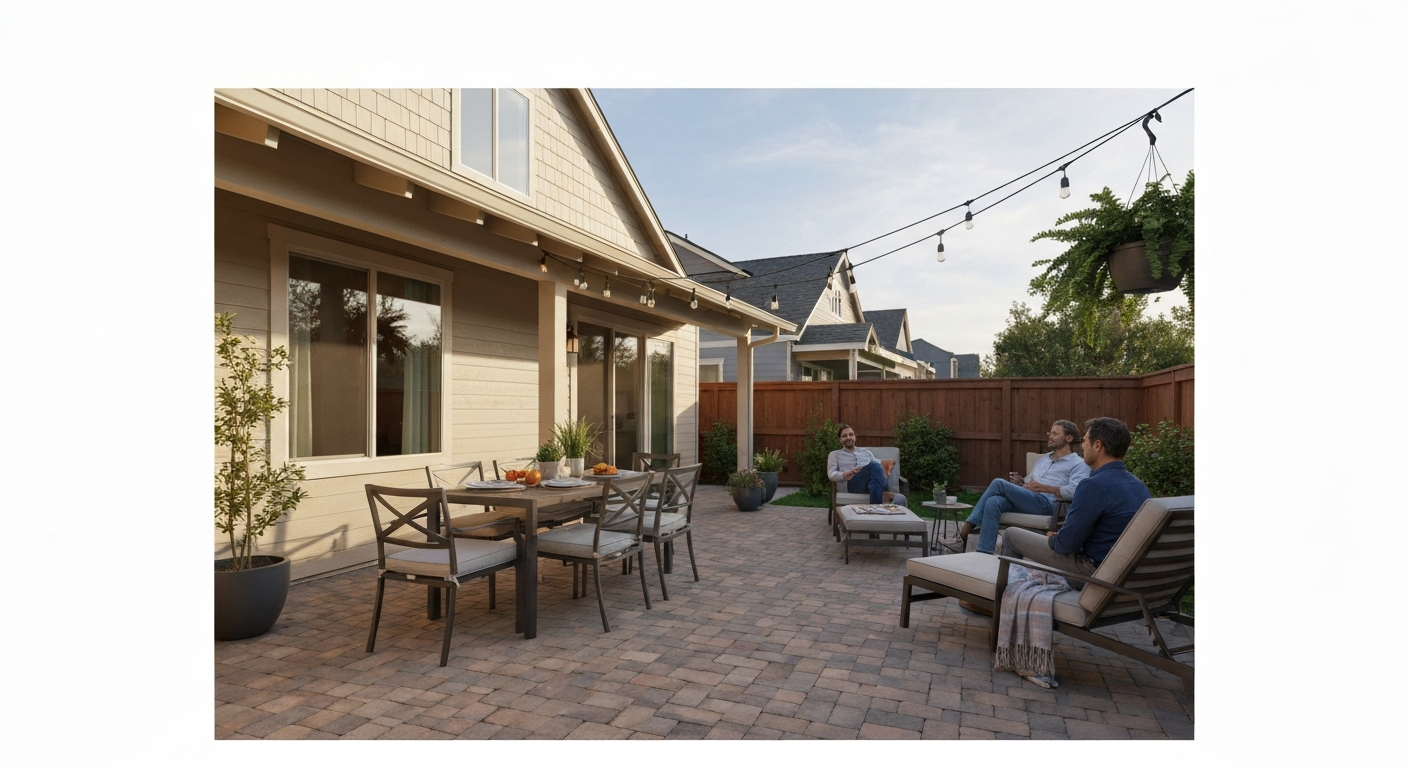
In a hotel listing, a patio is a ground-level, paved outdoor area that adjoins your room or a shared hotel space, giving you direct access to an outdoor spot for sitting, eating, or relaxing. Unlike a balcony, it sits at ground level. In general dictionary usage, a patio typically means an blank" rel="noopener noreferrer">outdoor area connected to a building where you can lounge or dine. Unlike a courtyard, it typically belongs to (or is directly accessible from) a specific room or dining area. When a hotel advertises a "patio room," you're usually getting a private outdoor space you step straight into from your room door, furnished with chairs and a table, paved underfoot, and set apart from the general public areas of the property.
What Is a Patio in a Hotel? Meaning and Differences

Ada Hollis
13 Jun 2026
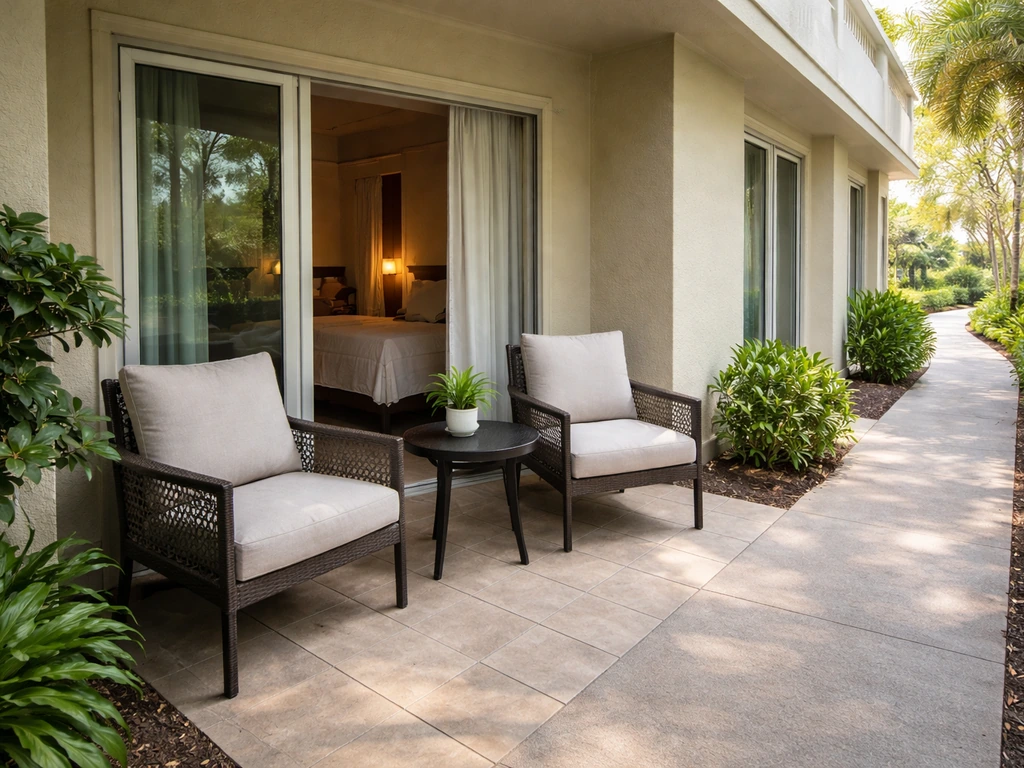
What a hotel patio actually means
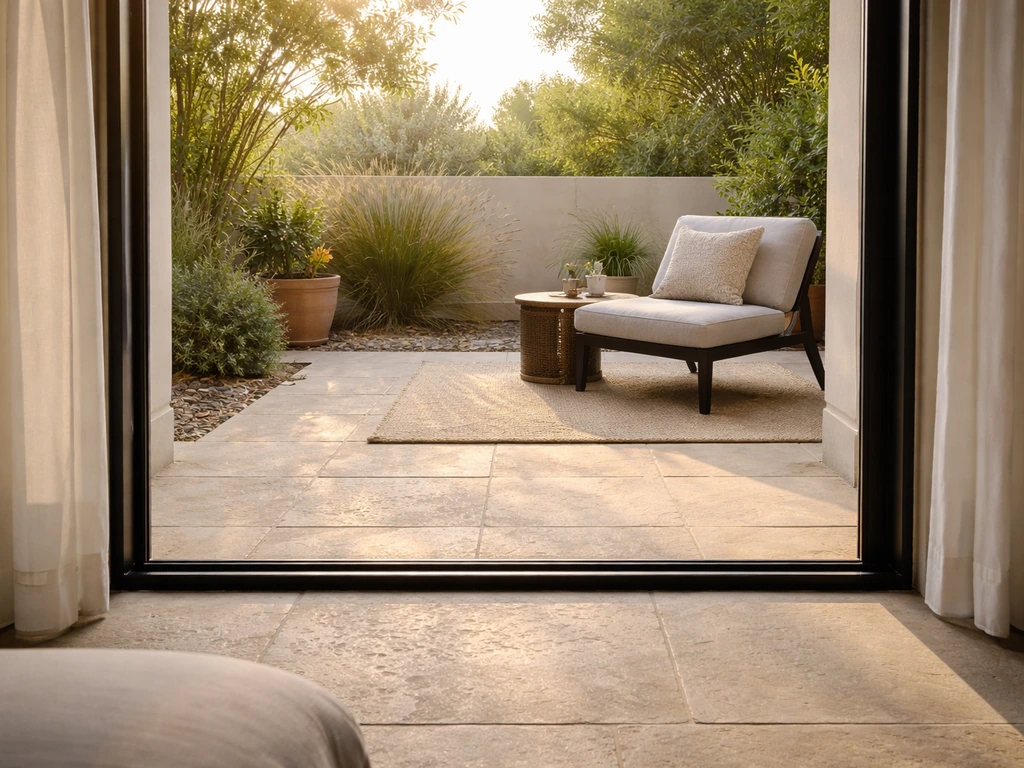
The word patio comes from Spanish, where it originally referred to an inner courtyard or open area of a house. In the hotel context, it has settled into a more specific meaning: a private or semi-private, ground-level outdoor area that's directly connected to a guest room or a hotel amenity space. Booking platforms like Expedia typically define a hotel patio as a "private, paved ground-level outdoor area," which is a useful working definition to keep in your head when scanning listings.
The key word is ground-level. That single detail separates a patio from almost every other outdoor space type you'll see in hotel listings. The patio sits on or very close to the ground, accessed through a sliding door or a standard door at floor level, and the surface underfoot is almost always paved, tiled, or made of stone or composite decking. You're not stepping up or out onto a raised structure; you're stepping directly outside.
Hotels use the term in two main ways. First, a room-specific patio: a private outdoor area that comes with a particular room category, accessible only by guests in that room. Second, a shared or common patio: a paved outdoor lounge or dining area that any guest can use, often near the lobby, pool, or restaurant. When a listing says "patio room," it almost always means the first type, which is the more desirable booking.
What you'll typically find on a hotel patio
Hotel patios vary a lot by property, but a standard furnished patio attached to a room usually includes a small table, two or more chairs or a loveseat, and sometimes a sun lounger. Higher-end properties add an outdoor dining set, a fire pit, a small plunge pool, or even an outdoor shower. The paving material is often slate, concrete, flagstone, or tile, which keeps the space low-maintenance and weather-resistant.
- Outdoor seating: chairs, loungers, or a small sofa
- A table suitable for alfresco dining or morning coffee
- Hard paving: stone, tile, concrete, or composite decking
- Partial privacy screening: hedging, a low wall, fencing, or lattice
- Sometimes an outdoor shower, especially at beach or pool-facing rooms
- Occasionally a barbecue grill or fire pit at resort properties
- Lighting for evening use, usually string lights or ground-level fixtures
The privacy setup is worth checking specifically. Some hotel patios open directly onto a garden or pool area where other guests walk past, giving you a lot of exposure. Others are enclosed on three sides with hedging or walls, making them genuinely private. The listing photos rarely tell the full story here, which is why it's worth calling the hotel ahead of booking.
Patio vs. porch, balcony, verandah, and courtyard
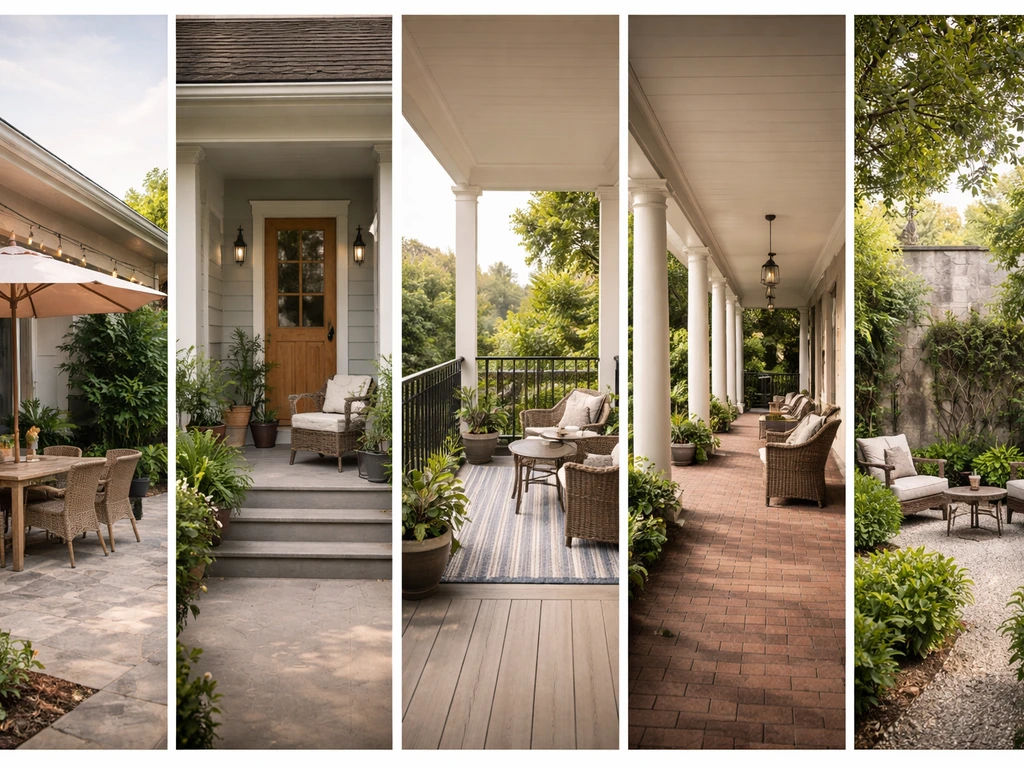
This is where most of the confusion lives. Als je je afvraagt wat een patio precies is en hoe het zich verhoudt tot andere buitenruimtes, helpt het om de definitie goed te kennen wat is een patio. Hotel listings throw around these terms interchangeably, but they describe genuinely different spaces. Getting this right helps you know exactly what outdoor experience you're paying for.
| Feature | Patio | Balcony | Porch | Verandah | Courtyard |
|---|---|---|---|---|---|
| Level | Ground level | Elevated (above ground) | Ground level or slightly raised | Ground level or slightly raised | Ground level |
| Structure | Paved slab, no roof | Raised platform projecting from building | Covered platform attached to entrance | Covered walkway along exterior | Open-air enclosed area within building |
| Roof/Cover | Usually none (open-air) | None (open sides) | Always has a roof | Always has a roof | Open to sky |
| Privacy | Varies: can be private or semi-shared | Usually private to the room | Usually private to entry | Often shared along building front | Usually shared by multiple rooms |
| Typical use in hotels | Outdoor lounge or dining off a room or restaurant | Private outdoor space elevated above ground | Seating area at hotel entrance or room entry | Sheltered walkway or lounge along building facade | Central shared garden or seating area inside building perimeter |
The patio and the balcony are the most commonly confused because both can be private to a room. The practical difference: a balcony is elevated, so you get more of a view but less of a sense of stepping into an outdoor space. A patio is at ground level, so it feels more like an extension of your room into a garden, which works better for families, people with mobility considerations, and anyone who wants to walk straight outside without a height difference.
A porch is always covered by a roof structure, and in hotels it's typically at the entrance of the property or a room, not a private lounging area. A verandah is a covered, roofed porch that runs along the exterior of a building, often wrapping around it, and in hotel settings it's frequently a shared sitting area for multiple rooms. A courtyard is a fully enclosed outdoor space within the hotel's building perimeter, open to sky, and almost always shared by all guests rather than private to one room.
Why hotels add patios in the first place
From the hotel's perspective, a patio room is a premium product that commands a higher nightly rate. Adding a private patio to ground-floor rooms converts what is often the least desirable room tier (ground floor, no elevated view) into a genuinely attractive option for guests who value outdoor access over a high-up view. It's a smart design move: hotels in warm climates especially use patios to blur the line between indoors and outdoors, which makes a room feel larger and more luxurious without adding square footage to the interior.
For guest experience, a private patio adds real value. Having somewhere to have breakfast outdoors, read in the afternoon, or have a drink in the evening without going to a public bar or restaurant is a tangible daily benefit. Hotels that serve guests with families, couples on romantic stays, or remote workers appreciate that patios give guests a private outdoor buffer from the rest of the property.
On the design side, hotels also use patios to create visual appeal and landscape continuity. A row of patio rooms with planted hedging, potted plants, and warm lighting looks attractive from other parts of the property and contributes to the overall resort atmosphere. The patio is doing double duty: it's a guest amenity and a design feature.
Where patios show up inside a hotel
Not all hotel patios are attached to guest rooms. Here are the most common places you'll encounter a patio within a hotel property:
- Room-adjacent patios: These are the private outdoor areas attached to specific room categories, typically ground-floor rooms. Access is directly from the room via a sliding glass door or a standard outward-opening door. This is what most travelers mean when they book a "patio room."
- Restaurant or bar patios: Many hotel restaurants extend into a paved outdoor dining area, especially in warmer climates. This is a shared space open to all guests and sometimes to outside diners. It's a patio in the architectural sense but not private to any individual guest.
- Lobby or lounge patios: Some hotels have a paved outdoor seating area directly off the lobby, used for check-in waiting, casual drinks, or relaxing. These are always shared, communal spaces.
- Pool-level patios: Paved areas around a pool that include lounge seating, often adjacent to pool-facing rooms whose patio doors open directly to the pool deck.
- Suite terraces labeled as patios: High-end suites sometimes label their large private outdoor terrace as a patio, even when it has some elevation. In these cases the hotel is using the term loosely to mean a private outdoor extension of the room.
The distinction matters when you're booking. A hotel that advertises "patio access" could mean your room has a private patio, or it could mean the property has a shared patio area. Ein Zimmer mit Patio ist in der Regel ein Zimmer im Erdgeschoss mit direktem Zugang zu einer privaten, gepflasterten Außenfläche patio access. Always read the room-specific description rather than the general property amenities list to know which one applies to your room type.
What to check before you book a hotel patio room
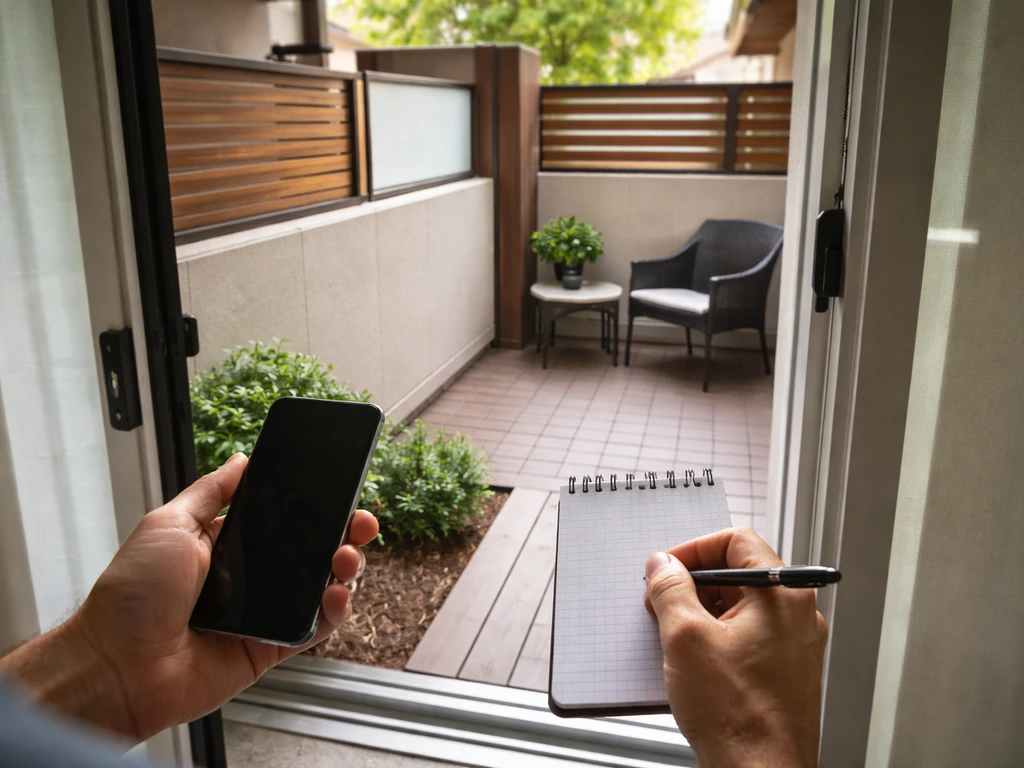
Hotel patio listings can be vague, and the experience you get depends heavily on details that photos and bullet-point amenity lists don't always capture. Here's what to verify before you commit:
- Private or shared? Ask directly whether the patio is exclusive to your room or accessible to other guests. A shared patio changes the whole experience.
- What's the view from the patio? Pool-facing patios get heavy foot traffic. Garden-facing ones are quieter. Ask what the patio looks out onto.
- How much privacy screening is there? Find out if there's a wall, hedge, or fence between your patio and the neighboring room or walkway. A fully open patio next to a busy path is very different from an enclosed one.
- What furniture is included? Confirm there's seating, a table, and lighting. Some budget properties include only a single chair.
- Is there noise from nearby areas? Ground-floor rooms near an outdoor restaurant patio or pool bar can be loud in the evenings. Ask about noise levels at the time of day you're most likely to use the patio.
- What are the access hours? Some hotel patios in shared areas have posted quiet hours or are locked at night. Room-adjacent private patios typically have no restrictions.
- Is the patio covered or open to weather? Most hotel patios are uncovered, which means rain makes them unusable. A covered patio or one with a retractable awning is a meaningfully different amenity.
- Are there any step-downs or barriers? If you're traveling with a stroller, wheelchair, or have mobility needs, confirm the patio is fully accessible from the room with no steps or raised thresholds.
If you're booking through a third-party platform, call the hotel directly with these questions rather than relying on the listing description. The people at the front desk know the exact layout and can tell you which room numbers have the best patio privacy and quietest location. It takes five minutes and can make the difference between getting the outdoor experience you wanted and ending up on a strip of concrete next to a service walkway.
One more thing worth knowing: what hotels call a patio in listings can sometimes overlap with what they call a terrace, a garden room, or even a "double room with patio." The terminology shifts across regions and property types, and in some European hotels a room with a patio may be described in the local language. If you're comparing a patio room against a balcony room or a standard room, the patio option is typically ground-floor, ground-access, and best suited to guests who prioritize outdoor space over elevated views. For guests who want views and elevation, a balcony room is the better pick; for guests who want a genuinely private outdoor living extension of their room, a patio room is usually the right call.
FAQ
How can I tell if a “patio room” is truly private or just near a shared outdoor area?
Check the room description for exclusivity wording like “private patio” or “steps from your room.” If it only says “patio access” or lists a patio under general amenities, assume it may be shared and ask the hotel which rooms have exclusive outdoor space and whether others can walk past.
Are hotel patios usually only available for ground-floor rooms?
Most patios are ground-level by definition, so they are commonly tied to lower-floor rooms. However, some hotels have unusual layouts where an upper-level outdoor area is still called a patio. If floor level matters to you, confirm the access point (door at floor level versus stairs or elevation).
What’s the difference between a patio and a terrace in hotel listings?
A terrace is often an outdoor surface at a higher elevation, sometimes on a higher floor, and it can be broader or more “roof-like.” Patios are typically at ground level and designed to feel like an extension of the room. When in doubt, ask whether the outdoor area requires stepping up or going down stairs.
Do patios get much sun or shade, and how can I verify before booking?
Photos rarely show the actual daily light pattern. Ask the hotel if the patio faces east, west, south, or north, and whether there are fixed covers or umbrellas. This matters for comfort, especially in hot climates or for morning breakfast outside.
Is a patio good for noise, or will I hear foot traffic from the hotel?
Noise risk varies by layout. If your patio opens toward pathways near the pool, lobby, or service entrances, you may hear people moving around. Ask for the room’s exact orientation and whether the patio backs onto gardens versus walkways, and request a “quiet room” note if available.
Can I smoke or vape on a hotel patio, and what are the rules?
Many hotels allow smoking only in designated outdoor areas, and some restrict it to specific patios or distances from doors and windows. Confirm the hotel’s smoking policy for room-specific patios versus common patios, since enforcement can differ between the two.
Are patios generally accessible for wheelchair users or people with mobility limitations?
Not automatically. Even at ground level, there can be thresholds at the door, uneven paving, or narrow gaps. Ask whether the patio door has a low threshold, whether the paving is flat and slip-resistant, and if there is step-free access from parking or elevators.
What should I expect in terms of furniture and usability?
Most room patios include at least a small table and seating, but the quality and number of chairs can differ. Ask whether there is a dedicated dining set, umbrella or shade option, and whether the space comfortably fits two people versus a larger group.
Do patios come with privacy features like walls, hedges, or screens?
Privacy varies widely. Some patios are bordered on multiple sides, while others sit beside gardens or lanes where other guests can see in. Ask whether there is partial or full visual screening and whether the patio faces other rooms.
What happens if it rains or the weather is bad on a patio room booking?
Patios are usually uncovered, so guests may need to rely on indoor space quickly. Confirm whether the patio has an awning, outdoor heater, or weather-resistant cover, and whether umbrellas are provided. If you travel seasonally, ask about wind exposure too.
If the listing says “patio access,” can I still use the space like a private patio?
Often not. “Access” can mean shared seating or an outdoor area that anyone can use, even if it is near your room. Clarify whether the patio is assigned to your room or first-come-first-served, and whether other guests have unrestricted movement through the area.
Can I request a specific patio location (end unit, garden side, away from elevator)?
Yes, but it depends on the hotel’s inventory. Ask for a room assignment preference such as garden-facing, courtyard-facing, or far from elevator and pool machinery, and mention that you want privacy and quiet. If the hotel can’t guarantee it, ask what floor plans are typically best.
Next Article
Patio Weather Meaning: What Patio, Area & View Mean
Clear patio definition: what a patio is, 'patio weather' meaning, and how it differs from decks or porches.