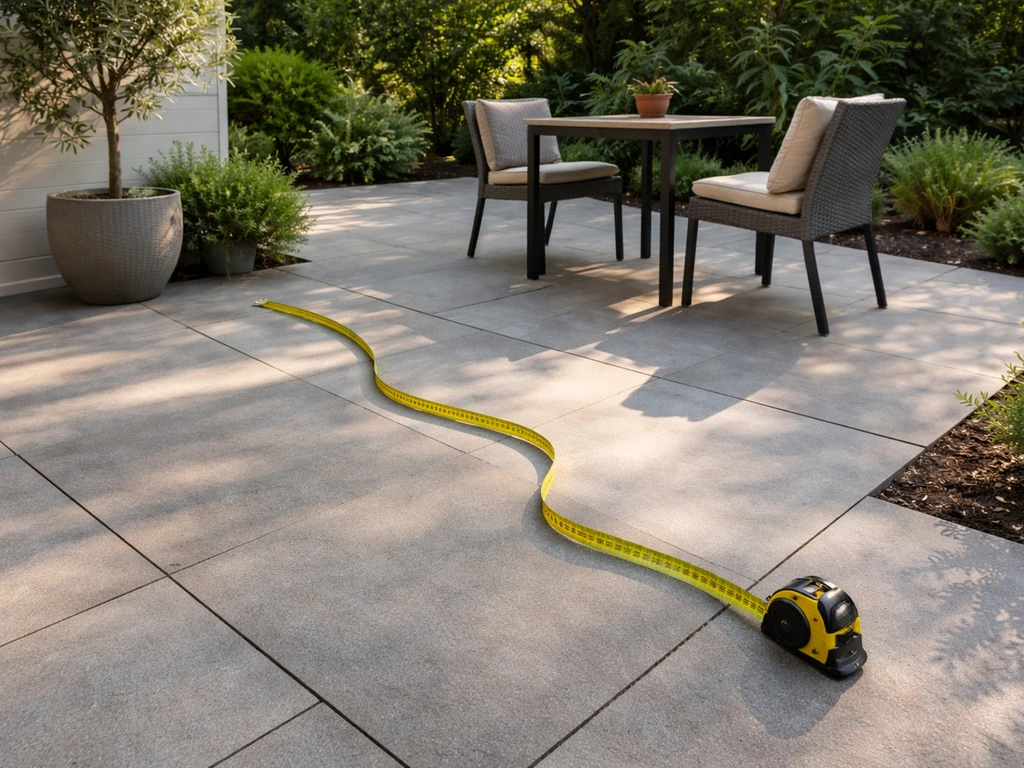
A patio is a ground-level, hard-surfaced outdoor area, typically behind or beside a house, open to the sky and designed for sitting, eating, or relaxing outside. Wikipedia’s Patio page summarizes patios as outdoor dining or recreation spaces that generally adjoin a structure and are typically paved, with regional expansion such as roofed variants in Australia.
Examples of Patios: Types, Layouts, and How to Spot One

Ada Hollis
5 May 2026
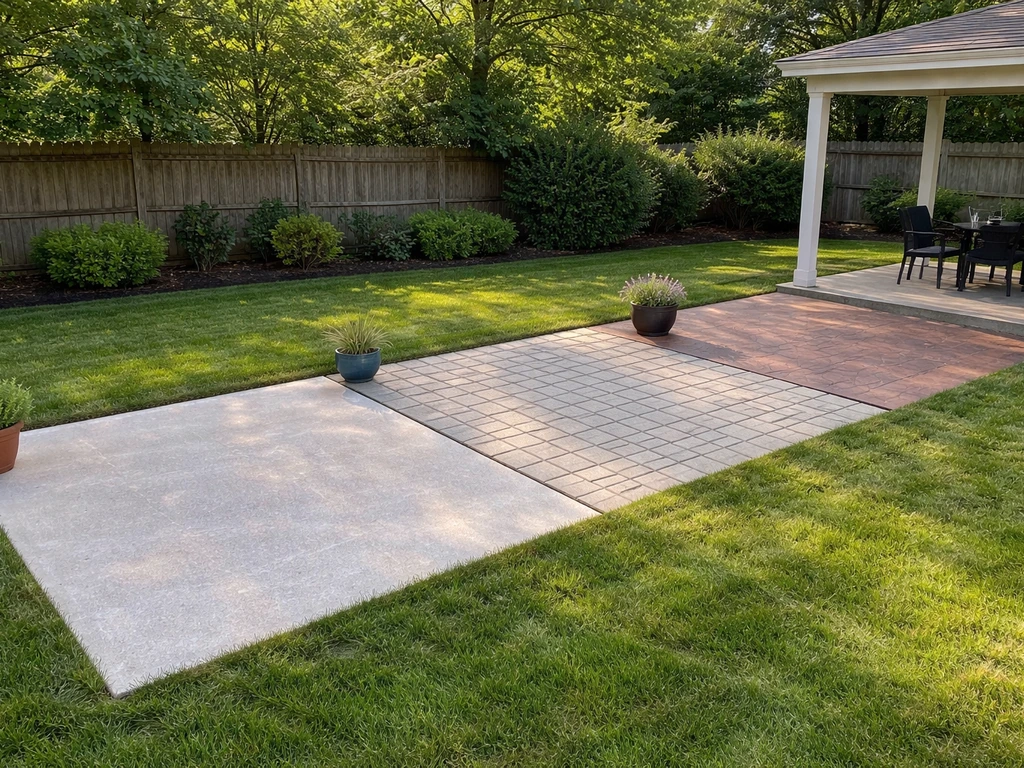
It has no roof and no walls, and it sits flush with or very close to the surrounding ground.
That simple definition is actually the key to recognizing a patio in a listing photo, on a property visit, or in your own backyard planning: if it's raised off the ground on posts, it's a deck; if it's enclosed or covered overhead, it may be a porch or veranda; if it's entirely surrounded by walls or buildings, it's closer to a courtyard. A true patio is a flat, open-air hardscape pad.
What a patio actually is (quick refresher)
Both the Cambridge and Britannica dictionaries describe a blank" rel="noopener noreferrer">patio as a flat, hard-surfaced area outside a house, without a roof, used in good weather for relaxing and eating. Municipal zoning codes add a few more useful specifics: Oshkosh, Wisconsin, for example, formally defines a patio as an open, level-surfaced area that is impervious, sits no more than 12 inches above grade, and has no walls or a roof. That 12-inch maximum elevation is a practical test you can apply when you're unsure whether something is a patio or a deck. If you can step off the edge without needing stairs, you're almost certainly looking at a patio.
The word itself comes from Spanish, where 'patio' originally referred to an inner court or open yard attached to a building. In modern residential use across North America and the UK, it has narrowed to mean that outdoor hardscape pad adjoining the house. It's worth keeping that origin in mind because it explains why patios feel like extensions of the interior, designed for the same everyday activities, just outdoors.
Patio examples by type and layout
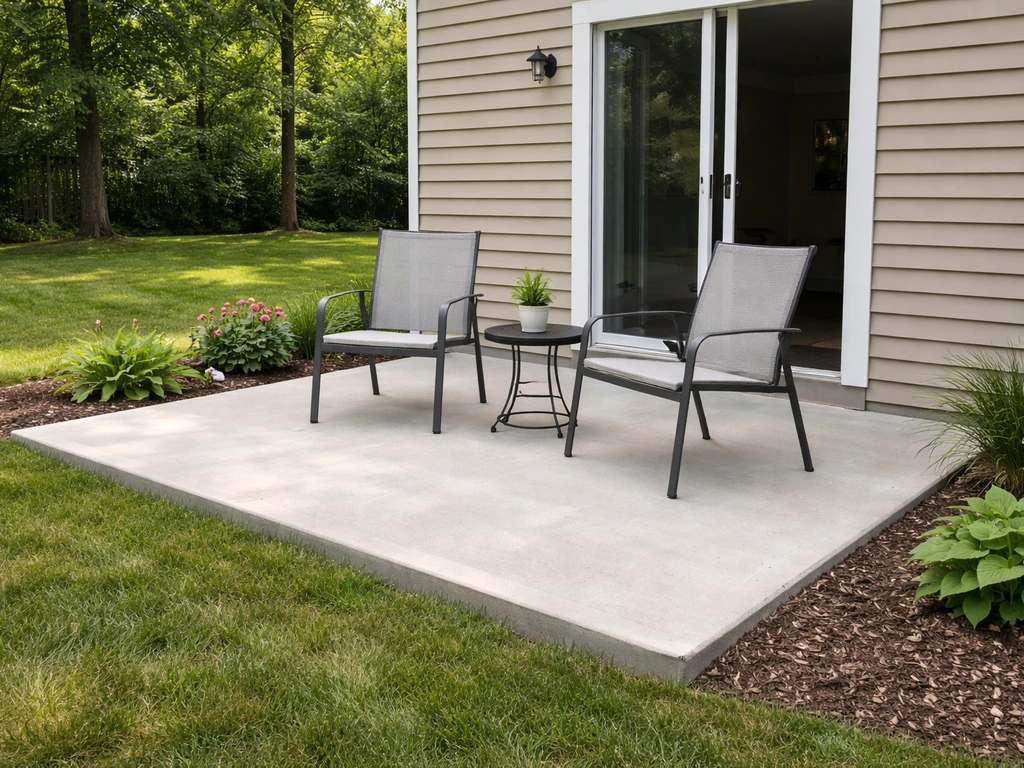
Once you know what a patio is, it helps to picture the most common versions you'll actually encounter. These are the archetypes that show up again and again in listings, home tours, and renovation plans.
The basic slab patio
This is the most common patio example in suburban homes: a poured concrete slab directly behind the back door, usually rectangular, typically 10 to 16 feet wide. It's ground-level, open to the sky, and connects directly to the house via a sliding glass door or French doors. You'll find a patio table and chairs on it, maybe a gas grill nearby. If your patio has a gas grill, you may also be curious about what patio gas is made of and how it’s commonly used as a fuel. Simple, functional, and instantly recognizable. The main visual cue is the solid monolithic surface, which tends to show expansion joints or control cuts if you look closely.
The paver patio
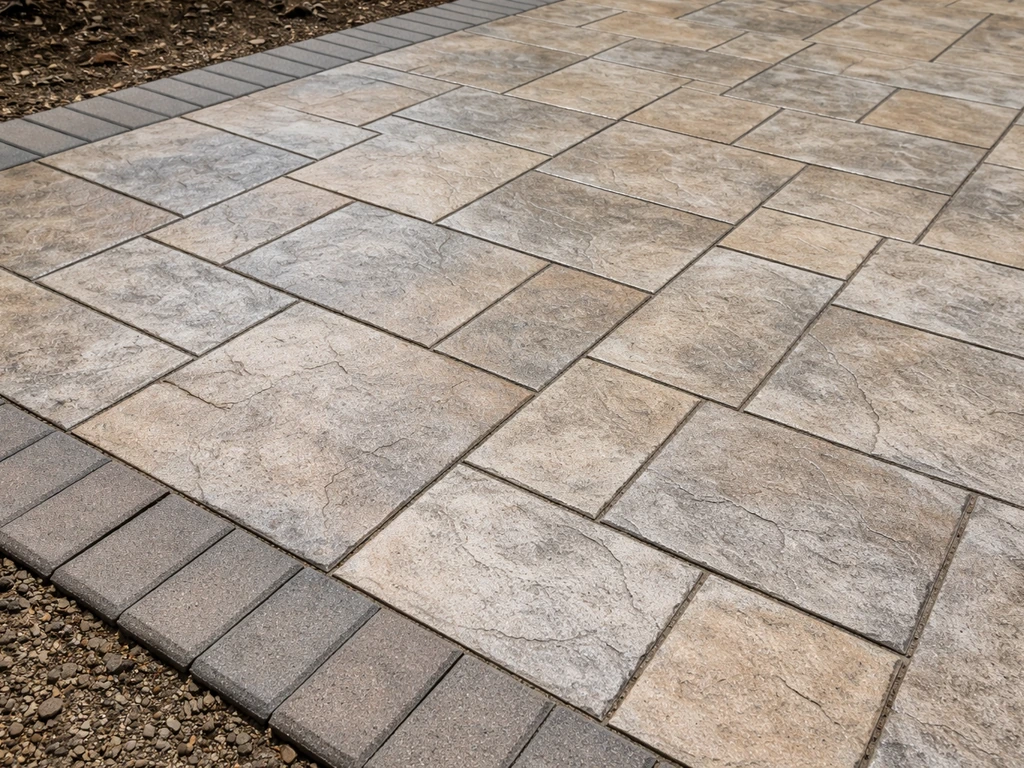
Instead of a single poured slab, paver patios use individual units, whether clay brick, concrete pavers, or natural stone, laid on a prepared base. The visual result looks more intentional and decorative than plain concrete. You can often spot a paver patio by the visible lines or joints between units and the variety of patterns, like herringbone or running bond. One practical advantage worth knowing if you're evaluating a home: individual pavers can be lifted and replaced if one cracks or settles, which is harder to do with a monolithic slab.
The stamped or decorative concrete patio
Stamped concrete patios look like stone, brick, or tile from a distance, but they're actually a single poured slab with texture and color pressed into the surface. They offer a lot of visual variety for the cost, but repairs are trickier because matching the pattern and color after a crack is difficult. If you're looking at a listing and the patio surface looks like flagstone but has no visible seams or grout lines, it's almost certainly stamped concrete.
The L-shaped or multi-zone patio
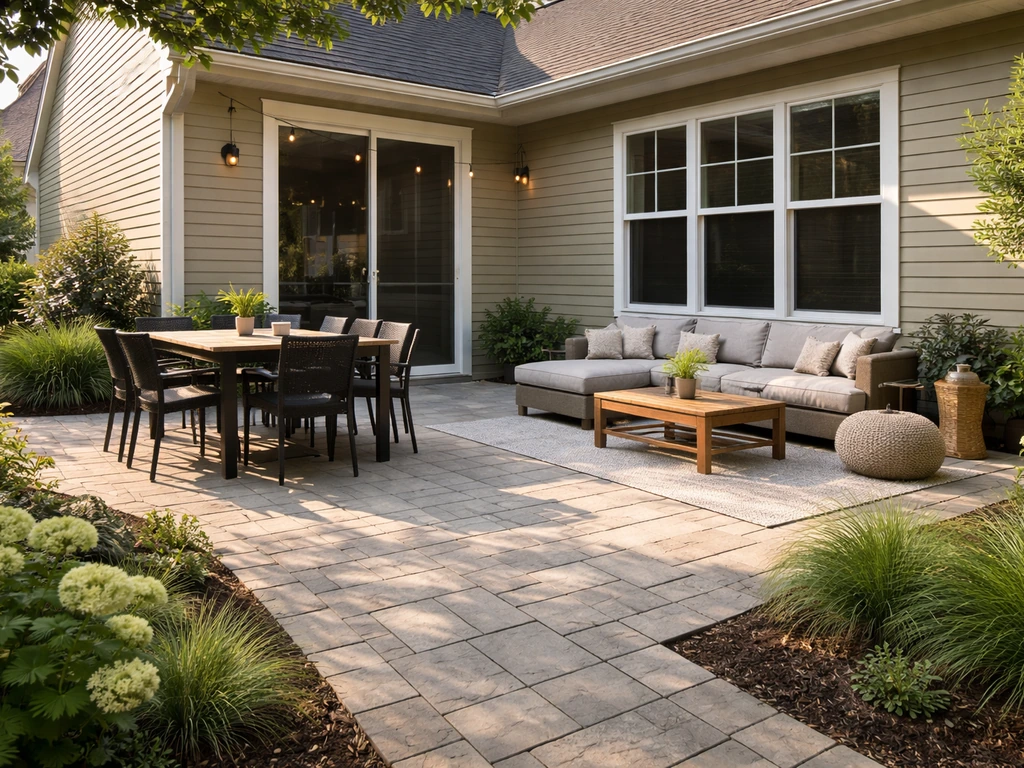
An L-shaped patio wraps around a corner of the house, creating a natural separation between different uses without needing a fence or wall. One arm of the L might hold the dining table (positioned near the kitchen door), while the other arm becomes a lounging or fire-pit area. This layout is popular because it gives you visual flow into the yard while keeping functional zones distinct. Planning guides suggest treating a patio like a series of outdoor rooms: a dining zone, a living zone, and sometimes a cooking or grill station zone, each defined by changes in paving material, planters, or low walls.
The detached or freestanding patio
Not all patios attach to the house. A detached patio sits further into the yard, often near a garden feature, a pool, or a boundary hedge. These are less common in small suburban lots but show up frequently in larger properties. They function the same way as an attached patio but require you to carry things (plates, drinks, grilling equipment) across the lawn, which affects daily convenience.
In listings, these are sometimes labeled as 'garden patios' or 'courtyard areas,' though strictly speaking a true courtyard is enclosed by walls on multiple sides. If your patio is fenced, the key is still that it stays an open-air hardscape surface rather than becoming a porch, veranda, or courtyard enclosed by walls a patio in the shape of a rectangle is fenced.
The covered patio (pergola or shade sail setup)
A covered patio has a pergola, shade sail, or lattice structure overhead, but it remains open-air because there is no solid, weatherproof roof. This matters for the definition: partial shade from an open lattice or a fabric sail does not make something a porch or veranda. The floor is still at ground level, the sides are open, and it's still technically a patio. A fully roofed version with a weatherproof ceiling (like a solid insulated panel or tiles) starts to blur the line toward a covered porch, especially if walls are added.
Materials and design styles: what to look for
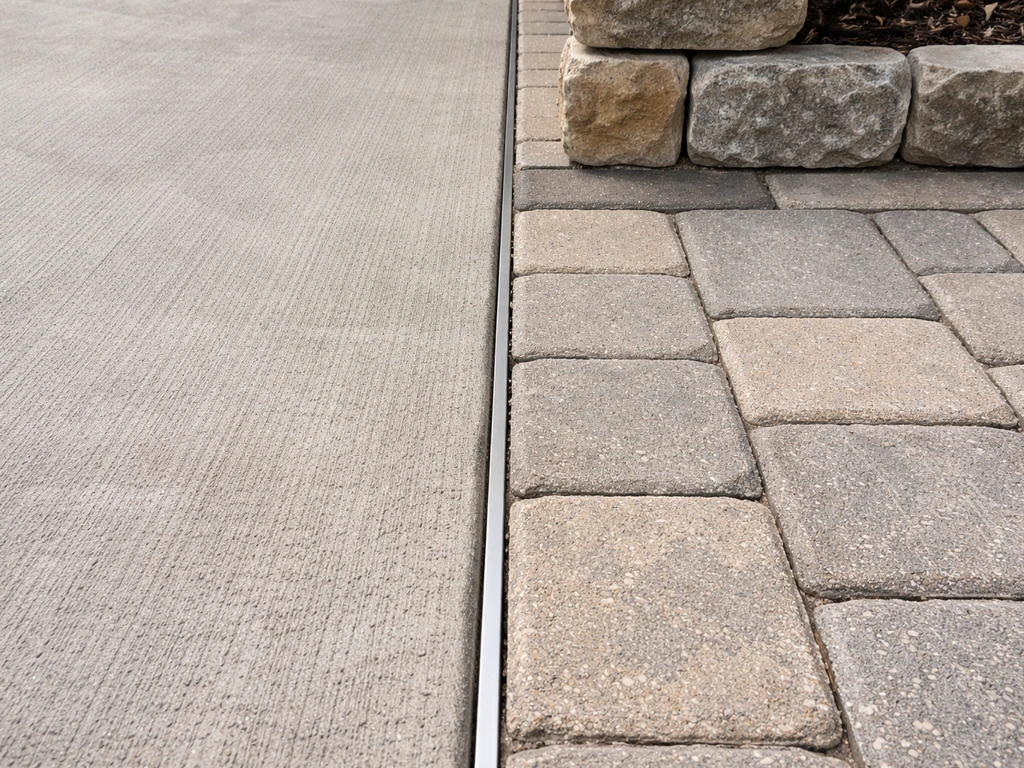
The surface material is often the first thing you notice about a patio, and it tells you a lot about maintenance expectations and property value. The most common categories are concrete slabs, concrete or clay brick pavers, and natural stone. Newer installations sometimes use porcelain or unglazed ceramic tile, particularly in warmer climates where frost heave isn't a concern. Some patios also use compacted gravel or decomposed granite as the surface, which is permeable but less 'polished' looking and not suitable for furniture with narrow legs.
| Material | Look | Repairability | Cost range | Notes |
|---|---|---|---|---|
| Poured concrete slab | Plain or colored, monolithic | Difficult (cracks need patching or full pour) | Low to moderate | Most common; shows expansion joints; can be stamped |
| Concrete pavers | Uniform units, many patterns | Easy (replace individual pavers) | Moderate | Manufactured stone/brick/cobble looks available |
| Clay brick pavers | Classic warm-toned, natural variation | Easy (replace individual units) | Moderate to high | May shift over time; very repairable |
| Natural stone (flagstone, slate, bluestone) | Irregular or cut slabs, high-end appearance | Moderate (stone can chip; reset if settled) | High | Best for premium look; heavy and durable |
| Stamped concrete | Mimics stone or brick, single surface | Hard (pattern/color matching is difficult) | Moderate | Low maintenance until cracked |
| Gravel or decomposed granite | Loose, casual, permeable | Very easy (top up material) | Low | Good for informal or garden patios; not for all furniture |
Permeable paver systems, where small gaps between units allow rainwater to drain through to a prepared gravel sub-base, are worth knowing about if you're in an area with stormwater runoff rules or if drainage is a concern. They look like standard pavers but help manage water on-site rather than sending it all to the street or foundation.
Attached vs. detached: location and what it means for the property
The vast majority of patios you'll see in residential listings are attached, meaning they sit directly against the house and are accessed from an interior door. This placement is convenient for everyday use and keeps the patio functionally connected to the kitchen or living room. From a property perspective, an attached patio also tends to add more perceived value than a detached one because it functions as a true extension of the interior living space.
Detached patios are less common but not unusual, especially in properties with large yards, pools, or garden layouts where placing a seating area mid-yard makes design sense. If you're evaluating a listing and the patio is detached, think about the daily walk distance and whether there's a clear, level path from the house. That path itself (typically a paved walk or stepping stones) is separate from the patio and may add to the overall hardscape area without qualifying as part of the patio itself.
One structural note that matters for both types: patio slabs installed within about 10 feet of the house foundation need to slope away from the house at a minimum of about 0.25 inches per foot to direct rainwater away from the foundation. A well-built attached patio will have this slope built in; a patio that has settled flat or toward the house is a maintenance flag worth noting on a property inspection.
How patios compare to similar spaces
This is where a lot of people get confused in listings, renovations, and real estate conversations. The terminology overlaps in everyday use, but the functional and structural differences are clear once you know what to look for.
| Space | Ground level? | Has a roof? | Attached to house? | Enclosed by walls? | Quick example |
|---|---|---|---|---|---|
| Patio | Yes (or within ~12 inches) | No (open sky, at most partial shade) | Usually, but not always | No | Concrete or paver pad behind the back door |
| Deck | No (raised on posts/joists) | Usually not | Usually | No | Elevated timber platform off a second-floor door or sloped yard |
| Porch | Ground level or slightly elevated | Yes (solid roof) | Yes | Partially (at least one open side) | Covered front entry with roof and columns |
| Veranda (verandah) | Ground level or slightly elevated | Yes (solid roof extending around house) | Yes (wraps the building) | Partially open | Wraparound covered walkway on a colonial or Queensland-style home |
| Balcony | Elevated (upper floor) | Usually not | Yes | Partially (railing) | Small platform off an upstairs bedroom or apartment unit |
| Courtyard | Ground level | No (open sky) | Yes (surrounded by building walls) | Yes (enclosed on most/all sides) | Inner walled garden court in a Spanish colonial or townhouse |
A useful real-world test: stand in the space and ask three questions. A practical Reddit discussion in r/Decks also emphasizes checking how your deck setup handles water and humidity when it sits over or near a concrete patio stand in the space and ask three questions.
Is it at ground level? Is the sky above you (or at most a partial shade structure rather than a solid roof)? Are the sides open rather than enclosed by walls? If all three are yes, you're almost certainly on a patio.
If it's raised, it's a deck. If there's a solid roof above you and at least one open side, it's a porch or veranda. If you're looking down from an upper floor, it's a balcony. If you're enclosed by the building's own walls, it's a courtyard.
This distinction matters practically when you're shopping for a rental or a home, because landlords and sellers sometimes use these terms loosely. A 'patio' listed in an apartment description often means a small ground-floor outdoor slab, but the same word in a high-rise listing might mean what is technically a balcony. Worth clarifying before you visit.
How to choose the right patio example for your home
The most useful question is: what will you actually do on the patio most often? That drives layout, size, and material choices more than aesthetics. If you're comparing options, reviewing the different types of patios can help you match the layout to how you plan to use the space. A common next step is clarifying who does patios, since installation and design responsibilities can vary by provider and region.
- Outdoor dining: You need at least a 12-by-12-foot area for a table seating six, with enough room to push chairs back without stepping off the edge. A bistro setup for two can work in a roughly 6-to-7-foot-diameter space.
- Outdoor cooking: If you want a dedicated grill station or outdoor kitchen zone, budget an additional area of roughly 6 by 10 feet separate from the dining zone.
- Lounging and entertaining: A living-room-style setup with a sofa and chairs needs more area than dining alone. L-shaped or multi-zone layouts work well here, using one section for dining and another for seating around a fire feature.
- Low-maintenance priority: Poured concrete is the simplest to maintain long-term. Paver patios look better but require occasional re-leveling of individual units that sink or heave.
- Drainage concerns: If your yard retains water or you're in a heavy-rain region, consider permeable pavers or a gravel patio, or ensure any slab has adequate slope and perimeter drainage.
Accessibility is worth planning early rather than retrofitting. If anyone in the household uses a wheelchair or mobility aid, patio pathways need a clear width of at least 36 inches between furniture, planters, or structural elements. Thresholds between the interior floor and the patio surface should be minimal, and the slope across the patio should be gentle enough not to cause tipping while still directing water away from the house.
Material choice also depends on climate. Natural stone and clay brick handle freeze-thaw cycles differently than poured concrete or concrete pavers. In regions with hard winters, unsealed concrete is vulnerable to surface spalling over time, and some natural stone types absorb water and crack. If you're planning a build in a cold climate, get specific advice on your chosen material's frost resistance before committing.
Sizing, zoning permits, and practical next steps
On size: a small patio for a bistro table starts at roughly 6 to 7 feet in diameter. A functional single-purpose dining patio is typically around 12 by 12 feet. A multi-zone patio that includes dining, lounging, and a grill area comfortably runs 16 by 20 feet or larger. These aren't rigid rules, but they're useful starting benchmarks when you're sketching a layout or evaluating whether an existing patio is actually usable for your needs.
A related topic worth looking into is common patio sizes, which goes deeper into square footage guidance for different household configurations. If you want specific guidance, review common patio sizes to understand how much space you need for different layouts. Common patio sizes go deeper into square footage guidance for different household configurations.
On permits: many municipalities do not require a building permit for a simple ground-level patio slab or paver installation below a certain size, precisely because the definition of a patio in local codes (like Oshkosh's 'no walls or roof, no more than 12 inches above grade') puts it in a lower-risk category than a deck or structure. However, this varies significantly by location. Some jurisdictions require permits for impervious surfaces above a certain square footage because of stormwater runoff calculations. Others have setback rules that determine how close to a property line you can install hardscape. Always check with your local planning or building department before starting any patio project, even a simple one.
If you're verifying a patio in a real estate listing, here's a practical checklist for your visit or virtual tour review: A scale drawing of a patio is shown at right to help you visualize layout and proportions.
- Confirm it's at ground level, not raised on a frame (which would make it a deck).
- Check whether there's a solid weatherproof roof above it (which would push it toward porch or covered veranda territory).
- Look at the surface material and condition: cracks in concrete, sunken or uneven pavers, or surface spalling are all maintenance items to factor into negotiation.
- Check the slope: the surface should visibly angle away from the house, not toward it.
- Measure or estimate the usable area relative to how you'd actually use it, using the rough sizing benchmarks above.
- Ask whether any permits were pulled for the installation, particularly for larger or newer patios, which matters for insurance and future modifications.
- If accessibility matters to you, walk or roll the path from the interior door to the patio and note any step, lip, or narrow passage.
If you're planning a new patio rather than evaluating an existing one, the material choice and overall layout are worth thinking through together, since they affect both cost and long-term maintenance. The topic of what patios are made of goes into more detail on specific material comparisons if you want to dig further into that decision. And if you're still clarifying what type of patio setup makes sense for your property, reviewing the different types of patios alongside these real-world examples will help you narrow down your options before talking to a contractor.
FAQ
If a listing calls it a patio, how can I tell if it is actually a low deck?
Measure from finished grade to the top surface. If the patio surface is more than about 12 inches above grade, it is often classified like a deck even if it looks “low.” Also look for whether it truly has no supporting posts, which is a common giveaway in photos.
Does a covered patio with a pergola or shade sail still count as a patio?
A pergola, shade sail, or open lattice can still count as a patio, but the key is that there is no solid, weatherproof roof. If you can see light through the overhead structure in multiple spots and the sides are open, it usually remains patio territory.
Can a patio be fenced and still be considered a patio?
Yes, a patio can be fenced and still qualify as an open-air hardscape area, as long as it is not enclosed by walls and not under a solid roof. In practice, what trips people up is “fenced courtyard” marketing, where walls on multiple sides turn it into a courtyard-like feature.
What accessibility details should I check on or leading to a patio?
For walking access, plan for a clear path width, not the patio area itself. Aim for at least 36 inches of usable width through the route to the seating zone, keep the slope gentle, and avoid tall edging at thresholds that could catch wheels or trip someone.
Which patio type is easiest to repair if a section cracks or settles?
Repairs are usually easier with pavers because one unit can be lifted and replaced without redoing the whole surface. With stamped or smooth poured concrete, matching a future patch to the original texture and color is typically harder and may be noticeable.
How can I tell whether an existing patio is sloped correctly away from the foundation?
If the patio sits near the foundation, check slope with a straight visual line from the house edge outward. A good target is about a quarter inch drop per foot away from the home, and you should not see standing water after rain.
What should I look for to confirm permeable pavers are actually draining properly?
Look for visible drainage elements rather than just the patio surface. Permeable paver systems should drain to a prepared base with gaps that allow infiltration, so check whether there is a realistic sub-base design and not just loose-looking joints.
In real estate photos, does the walkway or entry pad count as patio space?
A helpful rule is to treat “stays-on-the-pad” and “connected-but-not-part-of-it” differently. The patio pad is the hardscape area, but the separate walk from the door is usually not included as patio floor area, so listings may overstate usable patio space.
What practical downsides should I consider before choosing a detached patio?
Detached patios can feel less functional even if they are large, because carrying food, drinks, and grilling items across the yard becomes part of daily use. When evaluating, look for a level, weather-friendly route (not just stepping stones) and whether the patio is close enough to the kitchen for errands.
Are the common patio size guidelines accurate for small families or narrow yards?
Typical “single-purpose” bistro spaces can work around 6 to 7 feet in diameter for a small set, but the more useful check is circulation. If you cannot open chair legs and still walk without bumping, you may need a larger footprint than the rough size suggests.
Do “common patio size” ranges affect whether I need permits?
Yes, but treat the numbers as starting points for layout planning, not permit decisions. Setbacks, stormwater rules, and impervious-surface calculations can still apply, so the same-sized patio can be treated differently depending on local code thresholds.
What is the quickest way to estimate if a patio fits my furniture and grill setup?
Before visiting, ask for a simple measurement or scale reference, especially if you are deciding furniture fit. A patio table and grill should have enough clearance in practice, not just in the photo, so confirm width and usable open area.
How do I distinguish a patio from a balcony when the photo angle is misleading?
If the listing uses “balcony” or “deck,” confirm the elevation and support. Patios are ground-level, while balconies are typically accessed from an upper floor and decks are raised on framing, even if they look similar in images.
Next Article
Common Patio Sizes: Dimensions, Seating, and How to Choose
Common patio sizes with real dimension ranges, seating estimates, clearance rules, and step-by-step sizing guidance.