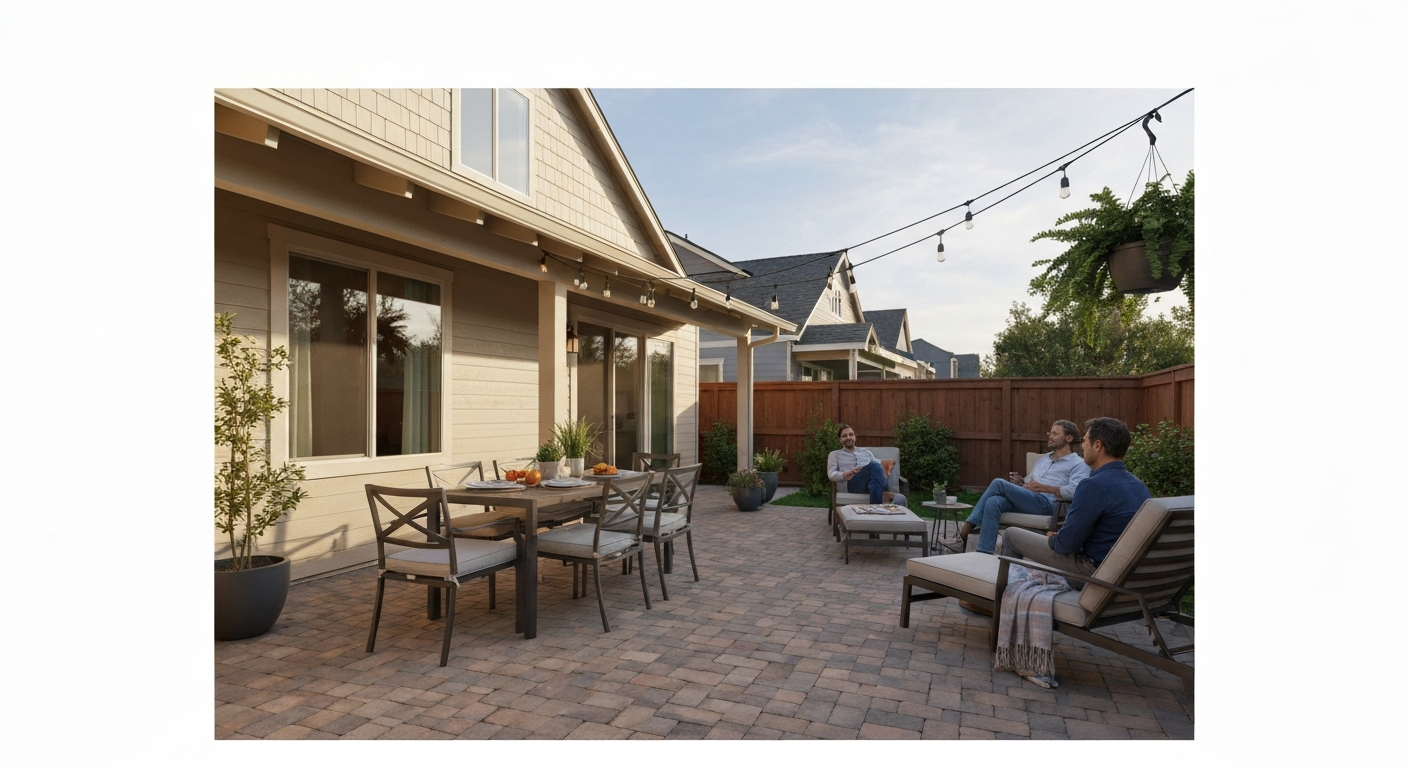
A loggia is a roofed, open-sided gallery built into the body of a building, held up by columns or arches. A patio is an unroofed, ground-level hardscape pad that sits beside a building. That is the core difference: a loggia is architectural and sheltered, a patio is open to the sky. Once you know what to look for, you can spot the distinction in a listing photo in about five seconds.
Loggia vs Patio: Key Differences, Features, and Choice

Ada Hollis
17 Jun 2026
What a loggia actually is
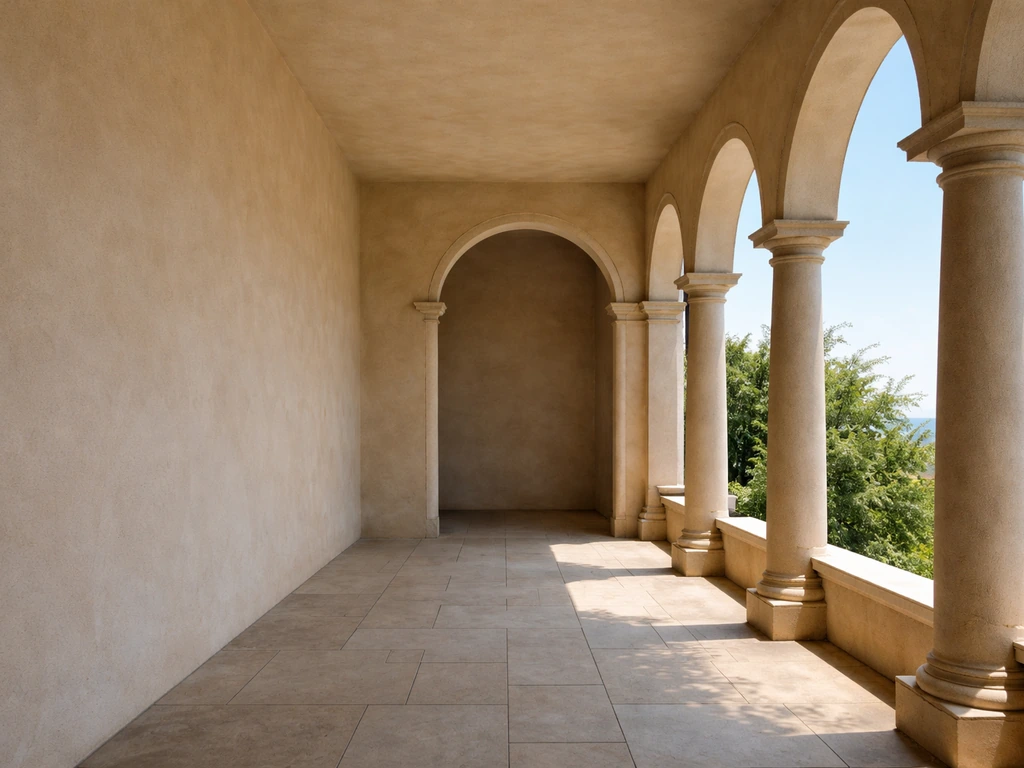
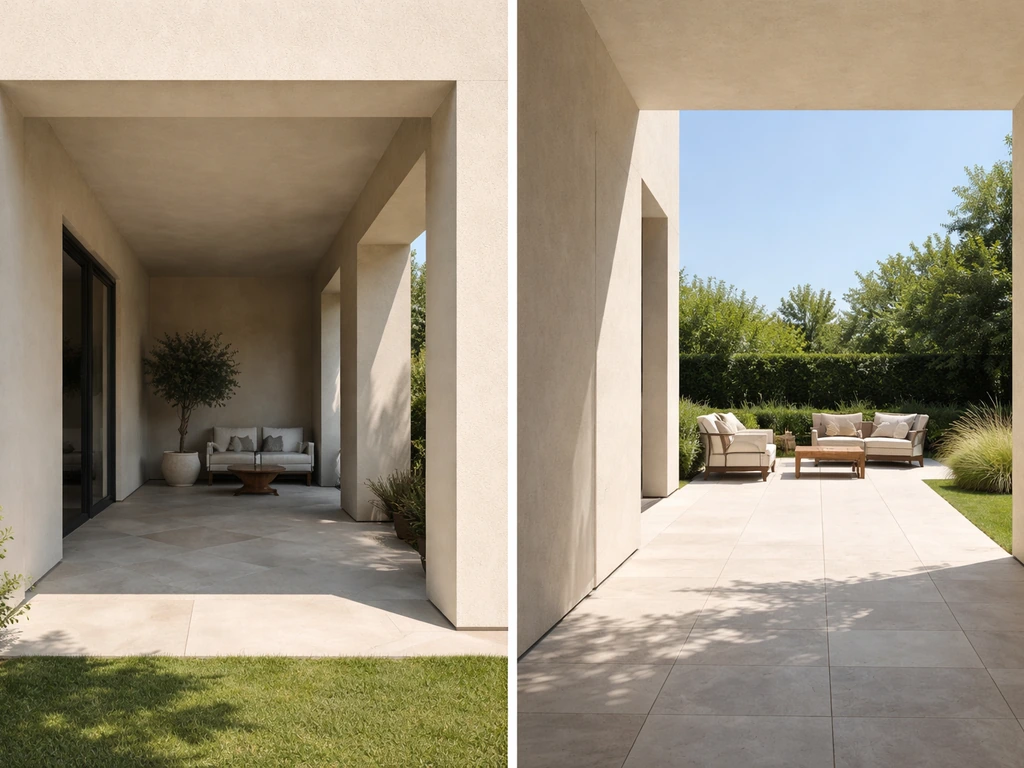
A loggia (pronounced LOH-juh or LOH-jee-uh) is a covered outdoor gallery that forms part of the main building structure. The key word there is 'part of.' It is not a freestanding addition bolted on after the fact. The loggia is carved out of or recessed into the building's massing, with the roof and at least one solid wall belonging to the main structure. The remaining side or sides are open to the exterior, typically framed by columns or arches rather than solid walls. That open colonnade is what lets in air, light, and views while the overhead structure keeps rain and direct sun off.
Historically, loggias are a feature of Italian and Mediterranean architecture, designed as shaded, ventilated sitting spaces that overlook a courtyard or garden. They can appear at ground level or on upper floors. In contemporary American residential design and real-estate listings, the term usually refers to a ground-floor covered outdoor room that feels more substantial and formal than a simple porch because of those architectural elements: the columns, the arches, the integration with the building's facade.
- Roofed overhead (shares the building's roof or has a dedicated vaulted ceiling)
- Open on at least one side, framed by columns or arches rather than solid walls
- Recessed into or carved from the main building massing, not a tacked-on structure
- Often overlooks a garden, courtyard, or open landscape
- Can appear at ground level or on an upper floor
- Typically feels more formal and architectural than a basic porch or patio
What a patio actually is
A patio is an outdoor area, almost always at ground level, that adjoins a residence and is used for relaxing, dining, or entertaining. The defining trait is that it has no roof. It is an open-to-the-sky hardscape surface, usually poured concrete, pavers, brick, or natural stone. Merriam-Webster actually gives two senses of the word: a paved recreation area next to a dwelling, and an inner courtyard open to the sky. In practice, the first sense is what most homeowners and renters are dealing with.
A patio does not need to be perfectly flat or uniform in material, but it is always ground-level and outdoors in the fullest sense. If it is raised on posts, it becomes a deck. If it has a permanent roof structure, it shifts toward porch or covered-patio territory. The moment someone adds columns and integrates it into the building structure, you are edging toward a loggia. The patio's simplicity is its whole point: it is just an outdoor floor that gives you a usable surface outside your door.
- Ground-level hardscape surface (concrete, pavers, brick, stone)
- No permanent overhead roof (open to the sky)
- Directly adjoins the main residence
- Used primarily for dining, relaxing, or entertaining outdoors
- Not structurally integrated into the building itself
- Can be any size or shape, from a small back-door pad to a sprawling entertaining area
Loggia vs patio: the real differences you can spot on a property
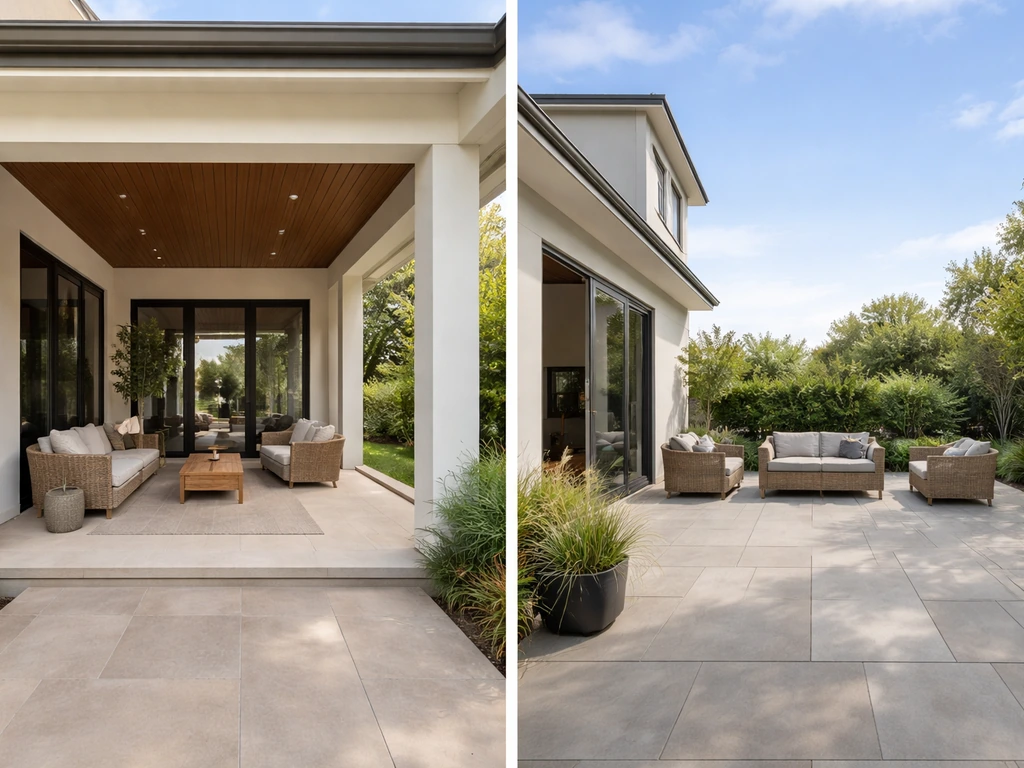
When you are scrolling through listings or standing on a property tour, there are a handful of visual and structural cues that tell you immediately which space you are looking at. The most reliable is the roof. If the space has a permanent, integrated overhead structure, look for whether it is recessed into the building or attached as an addition. A loggia sits inside the building's footprint; a patio sits outside it. On a floor plan, a loggia shows up as a notched or inset area within the building outline. A patio appears as an attached shape outside the building's walls.
| Feature | Loggia | Patio |
|---|---|---|
| Roof | Yes, permanent and integrated | No (open to the sky) |
| Position relative to building | Recessed into or carved from the main massing | Adjoins the building at ground level from outside |
| Structural elements | Columns, arches, or arcade framing the open side(s) | None required; just a paved surface |
| Level | Ground floor or upper floor | Always ground level |
| Enclosure | Partial (open on at least one side via colonnade) | Fully open overhead and on all sides |
| Weather protection | Yes, from rain and direct sun | None unless a separate shade structure is added |
| Formality / architectural presence | Higher; part of the building's architectural character | Lower; functional hardscape add-on |
| How it appears on a floor plan | Inset notch inside the building outline | Attached shape outside the building walls |
One practical note: listing agents and builders sometimes label spaces loosely. A covered patio with columns might be called a loggia (correctly) or a covered porch (also understandable). A loggia at ground level can be mistaken for a patio in a photo if the columns are not obvious. If you want a quick sanity check, compare the presence of a true roof and how the space sits inside versus outside the building loggia at ground level. Always look at the floor plan and ask whether the space is inside or outside the building's main structural envelope. That single question cuts through most of the labeling ambiguity.
Placement, enclosure, and roof: how these factors change daily use
The practical gap between a loggia and a patio comes down to three things: weather protection, privacy, and the feeling of being inside versus outside. A loggia gives you a genuinely sheltered outdoor room. You can sit in it during a light rain, eat lunch without squinting into direct sun, and use it more months of the year than a completely open patio. The roof and partial walls also create a sense of enclosure that many people experience as more private and intimate, even though the space is technically open to the outside.
A patio is fully exposed. That is a feature, not just a limitation. If you want maximum sun, open sky, and the flexibility to place furniture anywhere without worrying about column placement or ceiling height, a patio delivers that. It also tends to be easier and cheaper to expand, resurface, or reconfigure because it is not structurally tied to the building. The trade-off is that weather limits when you can use it, and without added shade structures or privacy screening, a patio can feel exposed on all sides.
Loggias that appear on upper floors add a vertical dimension. An upper-floor loggia functions a lot like a balcony in terms of views and elevation, but it is inset rather than projecting outward, which means it is usually better sheltered from wind and rain than a typical cantilevered balcony. If you are comparing a loggia to a balcony or an atrium-style space, the inset position is again the tell. That is also why people sometimes compare atrium-style spaces to an atrium vs patio setup when evaluating coverage and enclosure. Accessibility is also worth noting: a loggia that is recessed into the building may have a single threshold to step over, and under current ADA-aligned residential design standards, accessible doorway thresholds should not exceed half an inch in height, which is something to check on older properties where the loggia floor level may differ from the interior.
Common types and variations you will run into
Loggia variations
The classic loggia is single-story, ground-floor, and open on one long side via a series of arches or columns overlooking a garden or courtyard. But real-world examples vary considerably. Some loggias are fully open on two or three sides, which can make them feel more like a very large covered porch than a traditional inset gallery. In that case, the labeling genuinely gets ambiguous, and even architecture professionals debate the right term. The safest rule: if the space is meaningfully inset into the building's structural mass and has a permanent overhead covering that belongs to the main roof, it is functioning as a loggia regardless of what the listing calls it.
Some modern homes use loggias as semi-outdoor rooms with large sliding or folding glass doors on the open side. For threshold-height exceptions relevant to sliding doors in certain IBC Type B unit scenarios, the IBC source text includes numeric limits above an exterior deck, patio, or balcony. When those doors are closed, the loggia becomes an interior room. When open, it reads as an outdoor living space. This indoor-outdoor flexibility is one reason the loggia is popular in high-end residential design right now: it gives you a sheltered outdoor space that can be opened up completely or sealed off depending on the weather.
Patio variations
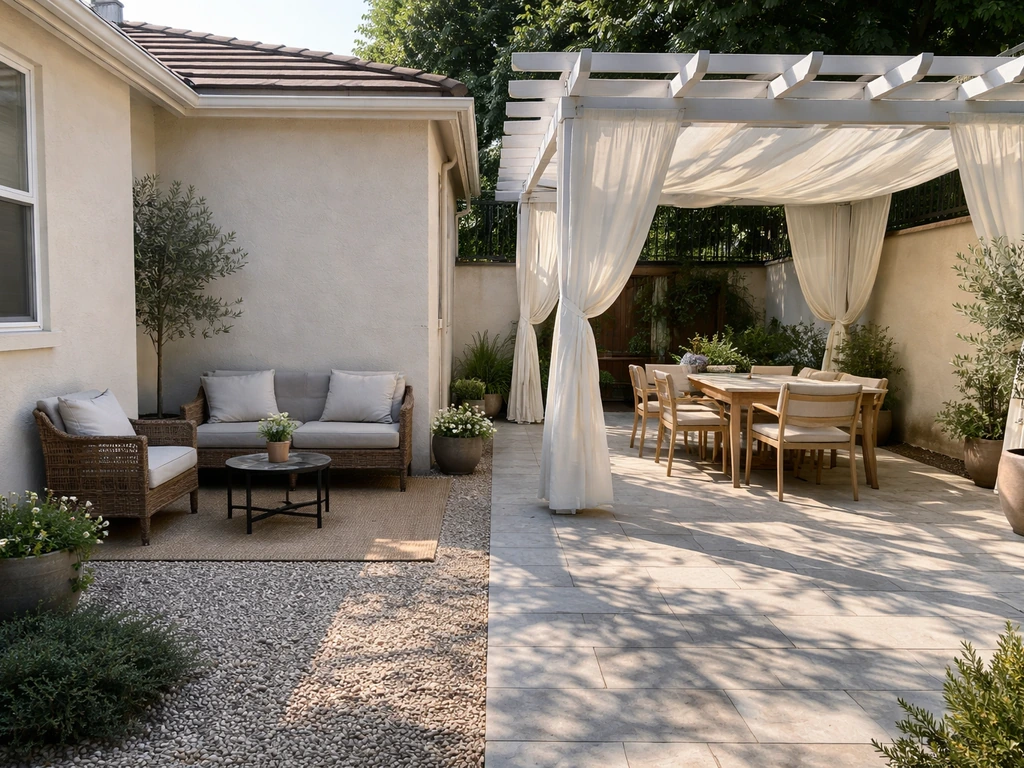
Patios come in a wider range of configurations than the simple back-door concrete slab most people picture. A courtyard-style patio is enclosed on multiple sides by the building's walls, creating the inner-court sense that Merriam-Webster describes. This type of patio can feel very private and sheltered even without a roof, and it is common in Spanish Colonial and Southwestern residential architecture. If you are comparing a loggia vs patio and the patio is courtyard-style, the key distinction is still the roof: the courtyard patio is open to the sky, the loggia is covered.
A covered patio sits in a gray zone. When someone adds a pergola, a shade sail, or even a solid-roof patio cover to a standard patio, it starts to resemble a loggia visually. The difference is still structural integration: a covered patio is an addition applied to an existing outdoor slab, while a loggia is built as part of the main structure from the ground up. That difference matters for permitting, for insurance, and for resale value. It also affects how weatherproof the space actually is, because a loggia's roof is typically continuous with the main building's roofing material, while a patio cover is often a lighter structure with more gaps.
How these relate to porches, balconies, and courtyards
It helps to place the loggia and patio on a broader map of outdoor spaces. A porch is covered and attached to the front or back of a building but typically projects outward rather than being inset. A balcony projects from an upper floor. A verandah wraps around one or more sides of a building at ground level, covered overhead, and tends to be more loosely integrated structurally than a loggia. A courtyard is an open-sky space enclosed by building walls on multiple sides, which overlaps with the inner-court definition of a patio. A loggia can overlook a courtyard or garden without being the same thing as one.
How to choose: what to do when buying, renting, or designing
If you are buying or renting and a listing mentions a loggia
Ask for the floor plan and find the space within the building outline. If it is shown as an inset notch inside the main walls, with a roof indicated, it is genuinely a loggia. If it appears as an attached pad outside the building, it may have been mislabeled. Ask the agent whether the space is included in the home's conditioned square footage or listed separately. A true loggia is usually counted in the building's gross floor area even though it is open-sided, which can affect how square footage is marketed.
Check listing photos for columns, arches, or a ceiling that matches the home's roofline. Those are the visual signatures. Also check the orientation: a loggia facing a garden or courtyard is the most functional configuration. If the 'loggia' in the listing photos just looks like a covered concrete slab with a lightweight shade structure and no columns, you are probably looking at a covered patio, which is still useful but is a different thing structurally and in terms of weather protection.
If you are buying or renting and a listing mentions a patio
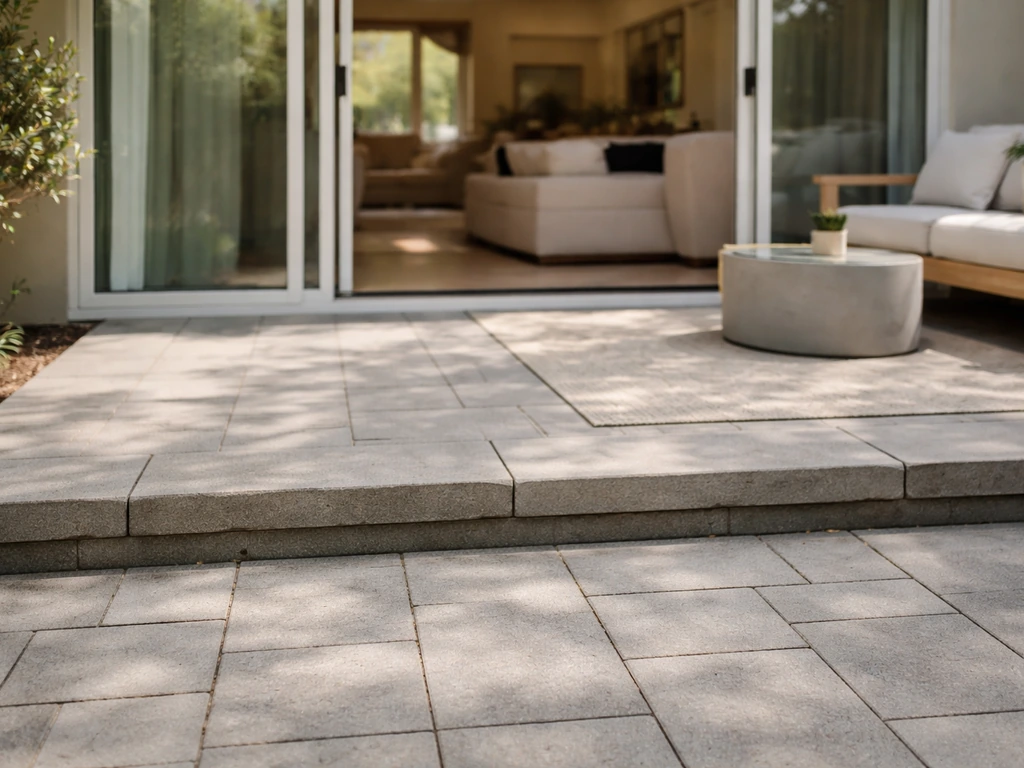
Confirm it is ground-level and directly accessible from the main living area. Note the surface material (pavers hold up better than poured concrete in freeze-thaw climates). Ask whether any shade structure comes with the property, because an open patio in a hot or rainy climate can be genuinely difficult to use without one. Also check privacy: a patio that backs up to a fence or garden hedge is a very different daily-use experience from one that sits exposed in a suburban backyard with neighbors on all sides.
If you are comparing a property with a patio to one with a loggia, think honestly about how you actually use outdoor space. If you want to sit outside on a rainy afternoon, eat dinner without sunscreen, or have a sheltered outdoor room year-round, the loggia wins. If you want maximum sun, flexibility to rearrange and expand, or a low-cost outdoor area you can personalize over time, a patio is easier and more adaptable.
If you are designing or renovating
Adding a true loggia to an existing home is a significant structural project because it requires integrating the space into the building's massing and roofline. It is not a weekend DIY job. If budget is a constraint, a well-designed covered patio with quality materials (stone or concrete pavers, a solid-roof pergola, ceiling fans for airflow) can get you most of the functional benefits of a loggia at a fraction of the cost. The main thing you will not replicate easily is the architectural integration and the formal feel that comes from columns and arches built as part of the original structure.
For material choices on a patio, natural stone and thick concrete pavers (at least 2 inches) hold up best for long-term durability. If you are in a climate with hard winters, avoid thin ceramic tile outdoors as it tends to crack with freeze-thaw cycling. For a loggia floor, you have more options since the space is protected from direct rain: polished concrete, tile, or even hardwood can work depending on how open the sides are and your climate.
- Pull the floor plan before trusting a listing label. Check whether the space is inside or outside the main building outline.
- Look for columns, arches, and an integrated roofline to confirm a true loggia versus a covered patio.
- Ask the agent whether the outdoor space is included in the listed square footage and how it is permitted.
- For patios, confirm the surface material, drainage slope, and whether any existing shade structure is included in the sale or lease.
- Think about your climate: a loggia pays off most in hot, sunny, or rainy climates where a covered outdoor room adds months of usability.
- If designing from scratch, budget realistically: a loggia is a structural project, a patio is a landscaping one.
- Do not let the label alone guide you. A space called a 'patio' with a permanent roof and columns is functionally a loggia, and vice versa.
FAQ
If a listing says “loggia” but the space looks like a covered porch, how can I confirm quickly?
Check whether the roof is the home’s main roofline or a separate added cover. Then confirm on the floor plan whether the area is inset inside the building envelope (loggia) or drawn as an exterior attachment (porch/covered patio).
Do loggias usually count in the home’s square footage, and does that affect appraisal value?
Often a true loggia is included in gross floor area calculations even though it is open to the exterior on one or more sides. Ask the agent for how the listing measures “interior vs exterior” area to understand what the appraiser may treat as conditioned or unconditioned space.
What should I verify about water drainage for a loggia versus a patio?
For loggias, look for roof overhang and how water runs off the main roof and down the open sides, since splash can land back onto the loggia floor. For patios, confirm the slab has proper slope away from the home and that paver joints or grout lines can handle rain and freeze-thaw.
Can a courtyard-style patio be more private than a loggia?
Yes. If the patio is enclosed on multiple sides by the building walls and positioned to block neighbor views, it can feel private even without a roof. The decisive difference remains roof coverage, but privacy depends heavily on side walls, fencing height, and sightlines.
How do I tell whether a “covered patio” with a pergola is closer to a loggia or not?
Look for structural integration. If the overhead is a freestanding shade structure on posts with gaps, it is usually a covered patio. If the overhead matches the building’s roofing material and ties into the main structure with architectural framing, it is more likely functioning as a loggia.
If the loggia has sliding or folding glass doors, does it become an interior room for use and comfort?
Often it does. With doors closed, the space can behave like a semi-conditioned room, but you should check for heating or cooling tie-in, weather stripping quality, and whether the doors seal well during wind-driven rain.
Is it safe to assume a loggia is always ground-level and a patio is always at grade?
Not always. Loggias can be on upper floors and work like inset, sheltered galleries rather than projecting balconies. Patios are almost always ground-level, but if you see a raised space on posts, it may be categorized as a deck or raised patio instead of a true patio.
What accessibility details should I look for when comparing a loggia and a patio?
Ask whether there is a threshold step at the opening from the interior to the loggia, and measure the height if possible. On older homes, even small level changes can affect mobility and wheelchairs, while a patio that is truly level to the interior can be easier to access.
Which is typically better in hot, sunny climates, a patio or a loggia?
A patio can be excellent if you want maximum sun, but you will usually need supplemental shade to make it comfortable at midday. A loggia naturally provides overhead cover and often reduces glare, but the open side exposure still matters, especially if it faces west.
Can I expand a patio more easily than a loggia?
Usually yes. Patios are commonly separate ground-level hardscape areas, so you can extend them by adding adjacent pavers, matching drainage, and keeping expansion joints consistent. Expanding a loggia usually requires structural work because it involves changes to the building massing and roof system.
What flooring material should I prioritize for each space in freeze-thaw climates?
For patios, favor thicker pavers (commonly at least 2 inches) or properly built concrete with good drainage, avoid thin outdoor tiles that can crack under freeze-thaw. For loggias, since the roof reduces direct rain, you may have more flexibility, but still verify that the floor surface tolerates moisture and that water does not pool near the threshold.
Next Article
Patio Weather Meaning: What Patio, Area & View Mean
Clear patio definition: what a patio is, 'patio weather' meaning, and how it differs from decks or porches.