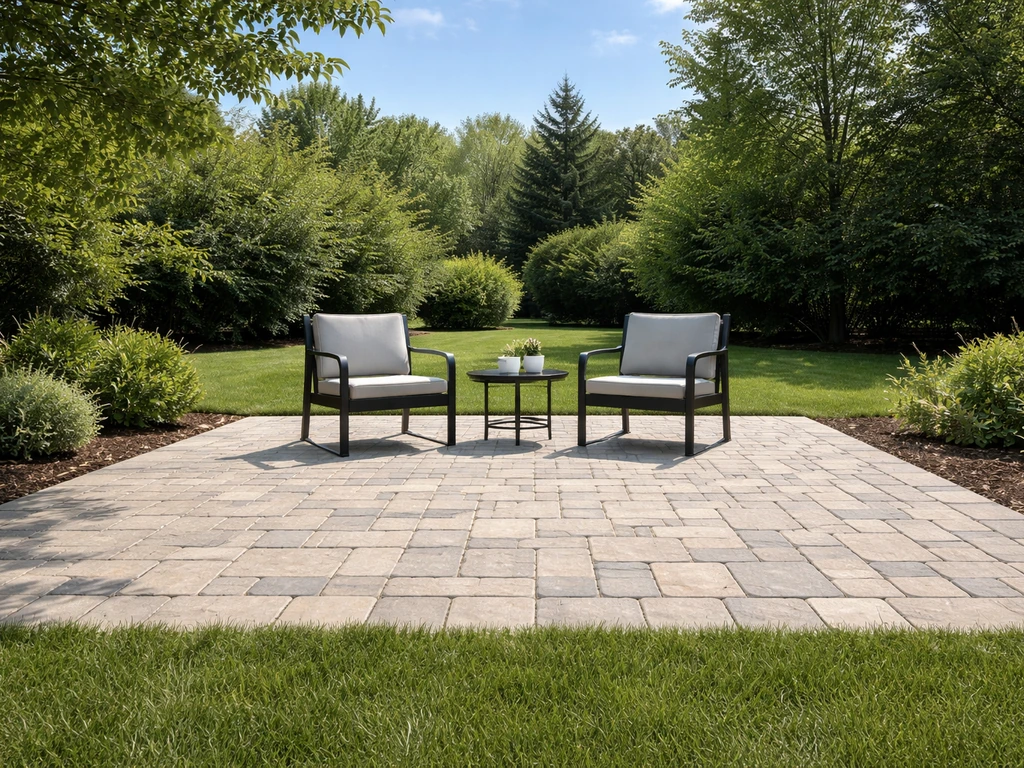
When a listing or lease says a unit has a 'patio view,' it almost always means one of two things: either the room or unit looks out onto a patio, courtyard, or garden area belonging to the property, or the outdoor space itself offers a particular sightline (toward a pool, landscaped garden, or common area). It is not usually a dramatic scenic view like ocean or mountain. Think of it as an interior-facing, property-level outlook rather than a grand exterior panorama.
Patio View Meaning: What It Really Means and Checklist

Ada Hollis
9 Jun 2026
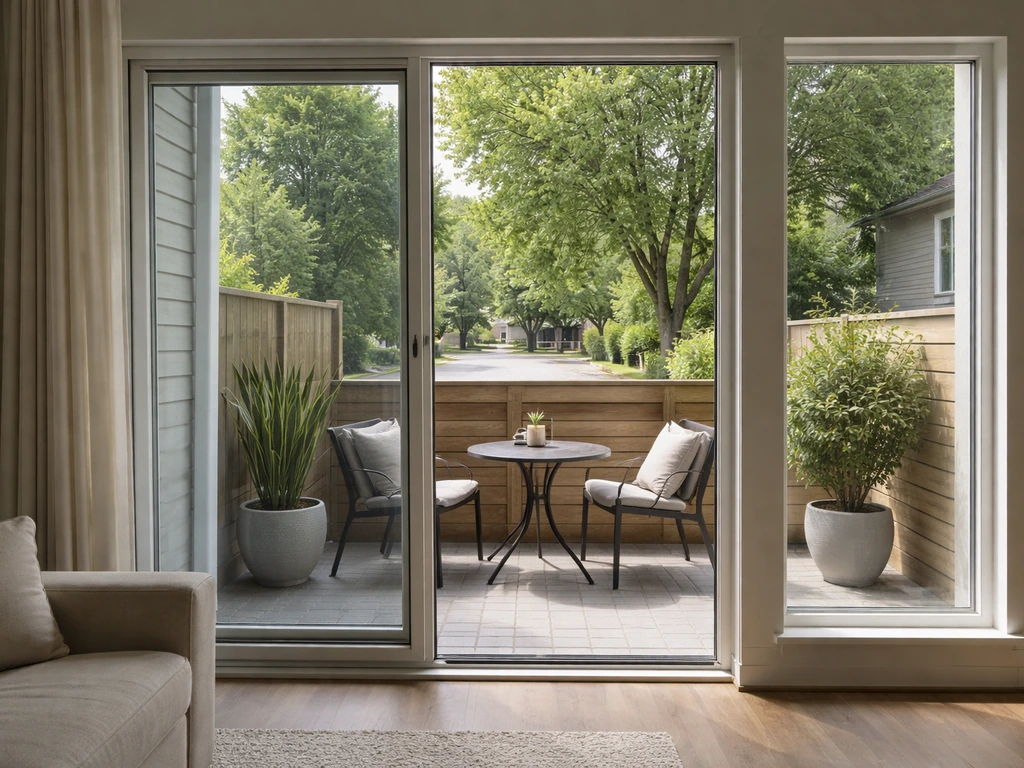
What 'patio view' typically means in real estate
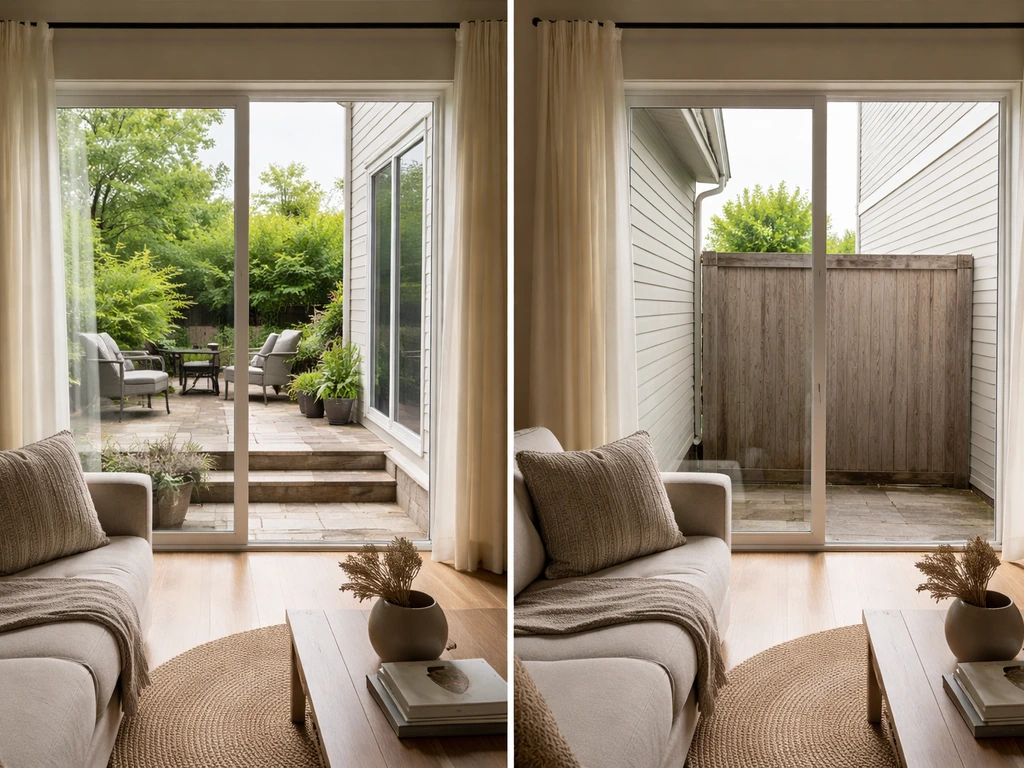
In residential listings, 'patio view' shows up in two slightly different ways. The first is directional: the unit's windows or sliding doors face the property's patio space, meaning your primary outlook from inside the home is the patio area rather than a street, parking lot, or exterior landscape. The second is experiential: when you're standing on or sitting in the patio itself, there's something worth looking at, whether that's a pool, a manicured garden, a salt-water courtyard, or lush landscaping.
What it rarely means is an expansive, unobstructed natural view. A real example from a Lutz, Florida listing describes a 'private screened patio' where the sightline faces a concrete wall. The property name included 'Patio View Court,' yet the actual view from the patio was a masonry barrier. That is not deceptive marketing so much as a reminder that 'patio view' is a category descriptor, not a quality guarantee.
In Spain, some listings on platforms like Idealista tag properties as 'patio view' alongside directional notes like 'south and east orientation,' treating patio view more as a light-and-exposure descriptor than a scenic one. Idealista’s Spain listings for the property show “Patio view” used alongside orientation notes like “South and East orientation,” reflecting how patio view can function as an inward-outlook and light/exposure descriptor in local marketing [Idealista tag properties as 'patio view' alongside directional notes like 'south and east orientation'](https://www.
idealista. com/en/venta-viviendas/alhaurin-el-grande/centro/con-balcon/).
In hotels, the meaning gets even more standardized. A 'Patio View' room category typically means your window or private patio area looks into the hotel's internal courtyard or garden space rather than outward toward a city street, sea, or mountain. Casa Polanco, for instance, lists 'Premier Patio View' as a distinct room tier, marketing it as the experience of having breakfast while overlooking the property's own patio. A boutique hotel in Seville describes its 'Patio view Double Room' as having a view onto a typical Andalusian courtyard. In both cases, the view is inward, toward the building's own curated outdoor space.
How a patio view differs from a porch, terrace, balcony, verandah, or courtyard view
The confusion between these terms is completely understandable because the outdoor spaces themselves overlap. Here is how the view language tends to break down in practice.
| Term | What the 'view' typically means | Key distinction |
|---|---|---|
| Patio view | Looking out at or from a ground-level, often hard-surfaced outdoor space (concrete, pavers, stone) | Ground-level, usually not elevated; may be walled or fenced |
| Balcony view | Sightline from an elevated, cantilevered platform attached to the building | Always elevated above ground; often an outward-facing, exterior view |
| Terrace view | View from a large, flat outdoor area, often on a rooftop or at ground level; more formal than a patio | Can be rooftop or podium level; tends to imply more open, expansive sightline |
| Porch view | Outlook from a covered, attached structure at the front or side of a home | Usually covered and attached to the home's facade; street-facing is common |
| Verandah view | View from a roofed, wrap-around open gallery attached to the exterior | Covered, often wraps the building; associated with older or colonial-style homes |
| Courtyard view | Sightline into an enclosed or semi-enclosed open space surrounded by building walls | The space is enclosed on multiple sides; very similar to 'patio view' in hotels |
| Lanai view | View from or toward a covered outdoor living space, especially in Hawaii and Florida | Roofed or screened; functions more like an enclosed room than an open patio |
In practice, 'patio view' and 'courtyard view' are the most interchangeable of these, especially in hotels and apartment complexes. If a hotel uses both terms, courtyard view usually implies a more architecturally enclosed space (surrounded on three or four sides), while patio view implies a somewhat more open, accessible outdoor area. But many properties use them interchangeably, so always look at the photos.
Where you'll actually see 'patio view' used
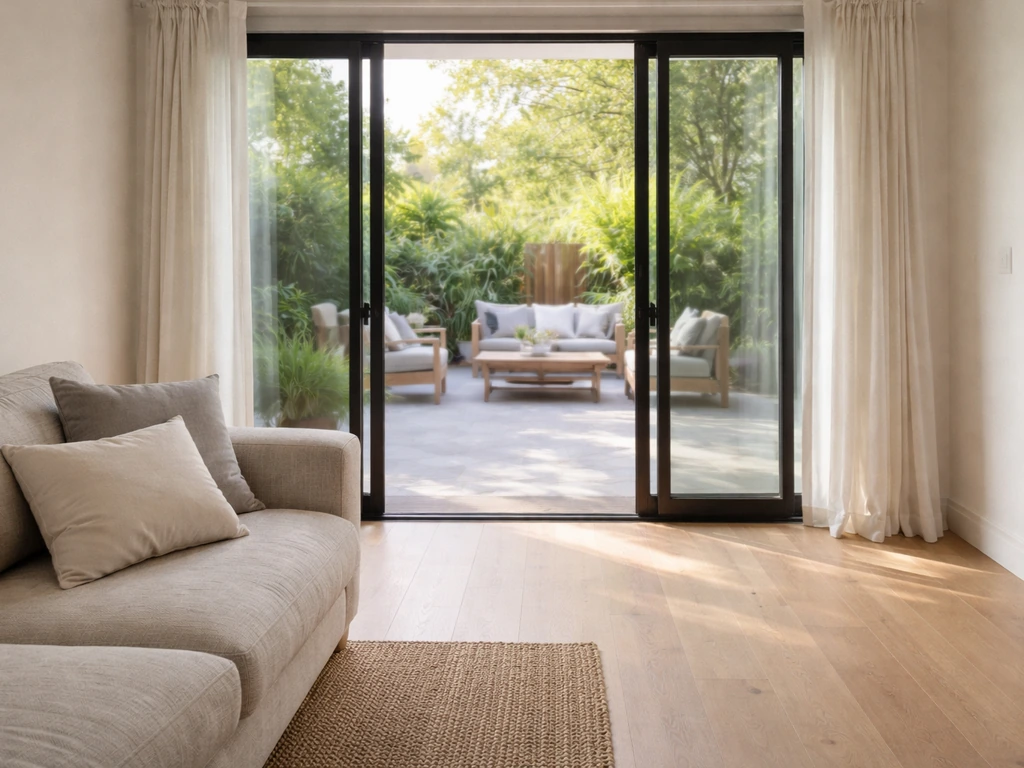
Understanding the context it appears in helps you decode what the phrase is really promising.
Real estate sale listings
In for-sale listings, 'patio view' usually describes what you see from inside the home through the main living area or bedroom windows, or it describes what the patio's own sightline is like once you're out there. If you want the full definition of what a patio is, see this guide on patio what is. A Fort Lauderdale listing on Compass, for example, describes entering a courtyard to experience a 'salt-water pool and patio view,' using the phrase to sell the overall outdoor visual package from the property's interior-facing spaces. A home in Fountain Hills, Arizona markets a 'pool and patio view' as part of a suite's selling points, bundling the patio into the broader backyard experience.
Rental listings and leases
In apartment and condo rentals, 'patio view' often appears in MLS-derived data under outdoor features. Trulia and similar platforms list attributes like 'Patio/Porch' and note enclosure details (fencing, masonry walls) that directly affect what the view actually is. Trulia’s listing data, which is MLS-derived, breaks down outdoor features like “[Patio/Porch](https://www. trulia.
com/home/21103-patio-view-ct-3105-lutz-fl-33558-55805869)” and notes details such as “Fencing: Masonry” that affect how much privacy or obstruction you actually get from the patio area. Here, 'patio view' in the listing description usually means the unit's interior windows face the complex's patio or courtyard common area rather than a parking structure or street. It can be a genuine selling point (green space, pool area) or a polite way of saying the outlook is internal rather than scenic.
Hotel room categories
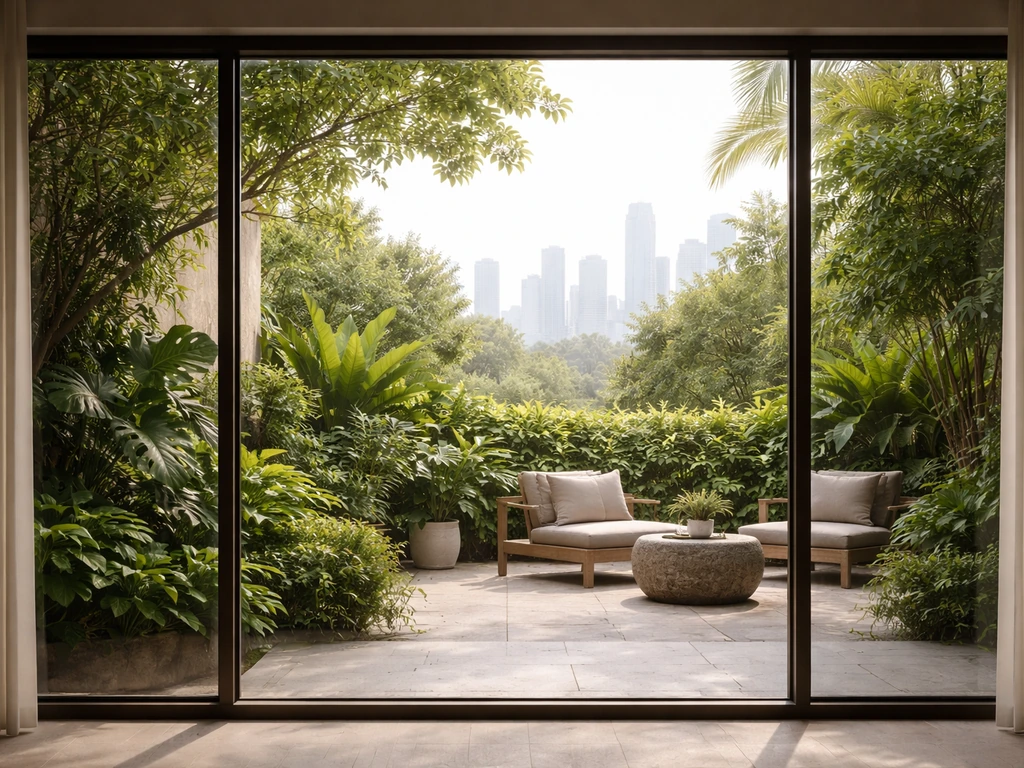
Hotels use 'patio view' as a standardized room tier. On Tripadvisor's Q&A pages, hotels clarify that 'Patio View' rooms overlook the garden, while city-view or sea-view rooms face outward. Elite Hotel Sitges labels its 'Premium Balcony Room, Patio view' as having a view onto the inner courtyard, even though the room itself has balcony access. The view descriptor tells you which direction the room faces, not how the room is structured. This matters when you're comparing room prices: patio-view rooms are typically priced below sea-view or city-view tiers, which reflects the more contained, inward-facing sightline.
Reading the view: direction, privacy, obstructions, and landscaping
A 'patio view' listing tells you the direction of your sightline but almost nothing about the quality of what you'll see. Here are the four variables that actually determine what you're living with every day.
- Direction and sun exposure: In the northern hemisphere, a south-facing patio view gets the most natural light. European listings (particularly in Spain) often call out orientation alongside patio view for exactly this reason. A north-facing patio view can mean a shaded, cooler outlook that feels dim in winter.
- Obstructions: Walls, fences, neighboring buildings, and HVAC units can completely block what you'd expect to see. The Lutz, Florida listing is a real example: the patio faced a concrete wall. Always ask what is directly in front of the patio.
- Privacy: A patio view into a shared courtyard or common area can mean other residents or hotel guests are also looking into that same space. A masonry wall or dense landscaping often provides better privacy than an open-plan inner courtyard.
- Landscaping quality and upkeep: A patio view in a well-maintained property with mature trees, a tended garden, or a clean pool area looks entirely different from the same layout with overgrown shrubs or aging pavers. Seasonal changes matter too: a leafy green view in summer can become a bare wall in winter.
Partial views are also common. The Pacific Terrace Hotel, for example, distinguishes between 'full' and 'partial' ocean views because room placement and building angles create varying degrees of sightline. The same applies to patio views: a room at the end of a wing may get a narrow slice of the courtyard, while a centrally placed room gets a full, panoramic look at the same space. Always confirm whether the view is full or partial.
What to verify before you book or sign

This is where a bit of diligence saves a lot of disappointment. Here is a practical checklist you can use whether you're buying a home, renting an apartment, or booking a hotel room.
- Look at every photo angle: Listing photos are chosen to flatter. Look for photos taken from inside the unit looking out, not just photos of the patio itself. If there are no interior-to-exterior shots, that's a flag worth following up on.
- Request a video walkthrough or video call: A short video from the agent or host walking from the main living area through the patio space will reveal obstructions, neighboring walls, and actual sightlines better than any static photo.
- Ask what is directly in front of the patio: Specifically ask: 'What does someone standing on the patio see when they look straight ahead?' Get a verbal or written answer, not just photos.
- Confirm full versus partial view: Ask if the patio view is unobstructed, partially blocked, or if it faces an enclosed area. Request confirmation in writing if this matters to you.
- Check orientation and sun direction: Ask which compass direction the patio faces. South and west-facing patios get afternoon light; north-facing ones are shadier. This matters for comfort, especially if you plan to use the space regularly.
- Visit at different times of day if buying or signing a long lease: Morning light and afternoon sun create very different impressions. A patio that feels serene at 10am can feel like an oven at 3pm, or vice versa.
- For hotels: check the room's floor number and wing location: An inner courtyard view from the third floor is very different from the same category on the ground floor where foot traffic passes directly outside your window.
- Read recent reviews that specifically mention the view: Tripadvisor and Google reviews from guests who mention the patio or courtyard sightline are more reliable than marketing copy.
Related terms you'll encounter and what they actually mean
A few phrases show up in the same context as 'patio view' and are worth knowing so you are not comparing apples to oranges when browsing listings.
Garden view
'Garden view' is probably the closest synonym to 'patio view' in real estate and hotel marketing. It specifically implies that green, planted landscaping is the primary visual. A patio view could include a garden, but it could equally be a pool area, a paved courtyard, or even a concrete wall with planters. If you see 'garden view,' expect more intentional greenery as the focal point of the sightline.
Courtyard view
'Courtyard view' is used almost identically to 'patio view' in many hotels, particularly in Europe and Latin America where the inner courtyard (called a 'patio' in Spanish) is a defining architectural feature. In Spanish architecture, a patio is literally the inner courtyard, so 'patio view' and 'courtyard view' can be the exact same thing depending on whether the property was originally described in English or Spanish. The H10 Corregidor Boutique Hotel's 'Patio view Double Room' in Spain, for example, describes a view onto a 'typical Andalusian courtyard,' which is architecturally the original meaning of the word patio itself.
Lanai
A lanai is a Hawaiian term for a covered outdoor living space, defined by Cambridge Dictionary and described by Angi as essentially a covered patio that functions as an additional room. In Florida and Hawaii especially, hotel and residential listings will use 'lanai' where another market might say 'patio.
' The key difference is the covering: a lanai is roofed or screened, which changes the view experience significantly because you're looking out through a screen or under a roof overhang rather than from an open space. Wikipedia notes that air-conditioned enclosed lanais exist in some hotels, making them functionally closer to an interior room than an outdoor one.
If a listing says 'lanai view,' the enclosure level matters and you should confirm whether the lanai is open, screened, or fully enclosed.
Terrace view and pool view
'Terrace view' usually implies a slightly more elevated or formal outdoor space than a patio, often with a broader sightline. 'Pool view' is more specific and usually more desirable as a marketing term, which is why listings that have both a patio and a pool tend to say 'pool and patio view' rather than just 'patio view.' If you see the two bundled together, the pool is typically the primary visual attraction and the patio is the usable surface surrounding it.
The broader patio terminology question (what a patio actually is, how it differs from a deck or courtyard, and what the word means across different languages and cultures) is worth understanding as background if you're doing serious property research. A patios definition is usually a ground-level outdoor area used for lounging or dining, often attached to a home or shared among units.
The short version: the word 'patio' comes from Spanish, where it means an inner courtyard open to the sky. In North America, it evolved to mean any ground-level hard-surfaced outdoor area adjacent to a home. Both meanings coexist in modern listings, which is exactly why 'patio view' can mean such different things depending on the country and property type.
FAQ
How can I tell if “patio view” is a full view or just a narrow slice of the courtyard?
Ask whether the view is “full” or “partial,” and where the room sits in relation to the patio (front-facing, end-of-wing, or corner placement). Photos often hide this, so request a screenshot of the room’s exact window or balcony angle, ideally taken from inside the unit.
What usually blocks or degrades a patio view, even if the listing says it’s a patio view?
Because “patio view” can be any inward-facing sightline, quality depends on obstructions. Look for nearby walls, service entrances, HVAC units, privacy fencing, and landscaping density, and confirm in writing whether there is an opposing building or walkway directly across from your windows.
Does patio view mean I will be overlooked by neighbors or hotel guests?
“Patio view” does not guarantee privacy. If your windows face a shared patio used by other units, you may have visibility into your space during the day or evening. Check for screening (privacy film, louvers, fencing height) and whether the patio is primarily for residents or for public hotel guests.
If I’m renting, how do I confirm patio view applies to my specific unit, not just the building in general?
In rentals, the most common mistake is assuming the outdoor space is “the same view” in every unit. Building orientation and window height change what you see. Use the floor plan to identify which side of the building faces the patio and compare it to review photos from the same facing or room tier.
What should I check if the listing mentions lanai, screened patio, or covered patio view instead of just patio view?
If the listing mentions “screened,” “covered,” or “lanai,” your view may be filtered through a screen or roof overhang. That can reduce glare but also narrow sightlines and change how clear the view is. For “lanai view,” confirm whether it is open-air, screened, or fully enclosed and air-conditioned.
Is patio view a reason to pay less, and are there hidden tradeoffs versus city or sea views?
If you’re comparing price tiers, treat patio view as an “inward-sightline” category, not a scenic downgrade by default. In hotels especially, patio-view rooms are often priced below city or sea tiers because the visual target is smaller and enclosed. Confirm whether patio-view rooms have extra noise exposure (pool, breakfast patio, housekeeping traffic).
If the listing only says “patio view,” how can I avoid ending up with a view of a wall or utility area?
Use wording clues carefully. “Pool and patio view” usually means the pool is the primary visual, while “patio view” alone might be garden, courtyard paving, or even a wall with planters. If you can, ask the agent or hotel for the exact subject of the view (pool, landscaped area, wall/parking) from your room number or unit number.
Are “patio view” and “courtyard view” always the same thing across regions and languages?
In multi-language listings, “patio” can literally refer to the inner courtyard concept, so “patio view” and “courtyard view” may be identical terms for the same inward space. Still, the enclosure and number of surrounding sides can vary, so verify whether the courtyard is open on multiple sides or tightly wrapped by wings.
Does the direction of the patio (morning sun vs afternoon sun) affect patio view, and should I ask for it?
Yes, and the direction matters. Even within an inward courtyard, morning vs afternoon light changes how pleasant it feels, especially for hot climates. Ask for the general orientation (east, west, etc.) and whether the sun hits your windows or the patio seating area.
Next Article
Patio What Is It: Definition and How to Identify One
Learn what a patio is, how to spot one on a property, and how it differs from porch, balcony, courtyard.