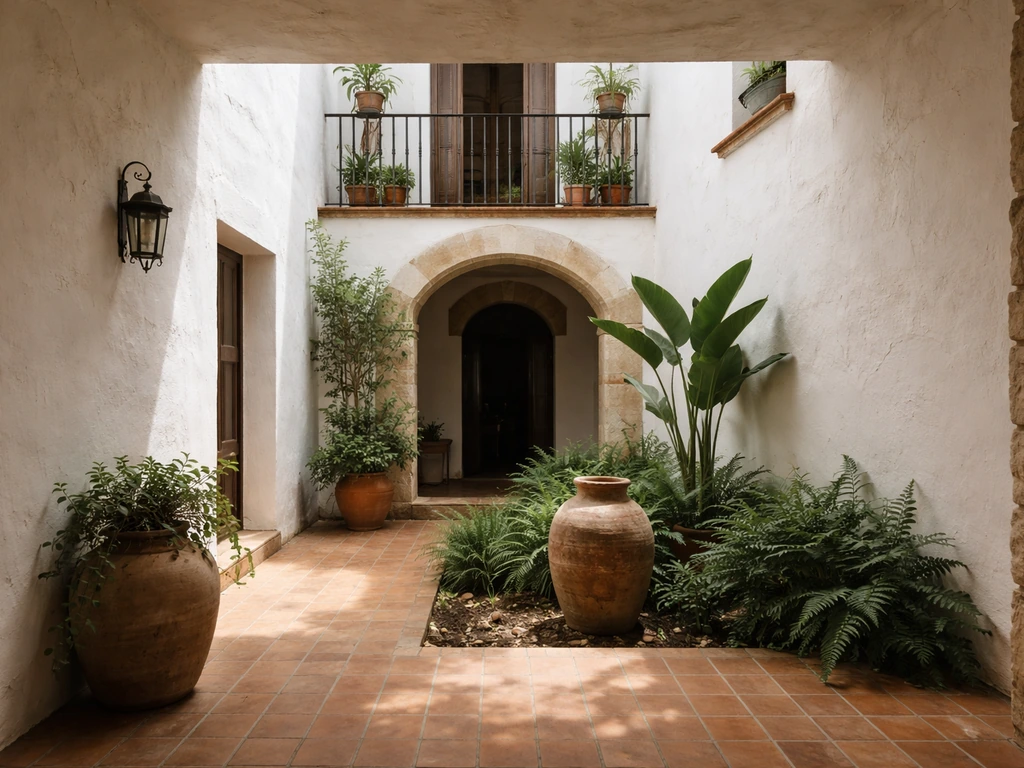
An 'interior patio' most commonly refers to one of three things: a patio that sits inside a building's footprint (essentially a courtyard open to the sky), a covered or enclosed patio that feels more 'inside' than a typical open slab, or a patio accessed directly from an interior room rather than a side yard or front of the house. The term isn't standardized in real estate, which is exactly why it causes confusion. Once you know which of those three versions a listing or floor plan is describing, you can judge the space accurately for comfort, maintenance, and value.
Patio Interior Meaning: Definition, Types, and Differences

Ada Hollis
17 Jun 2026
What 'patio' actually means, in plain English
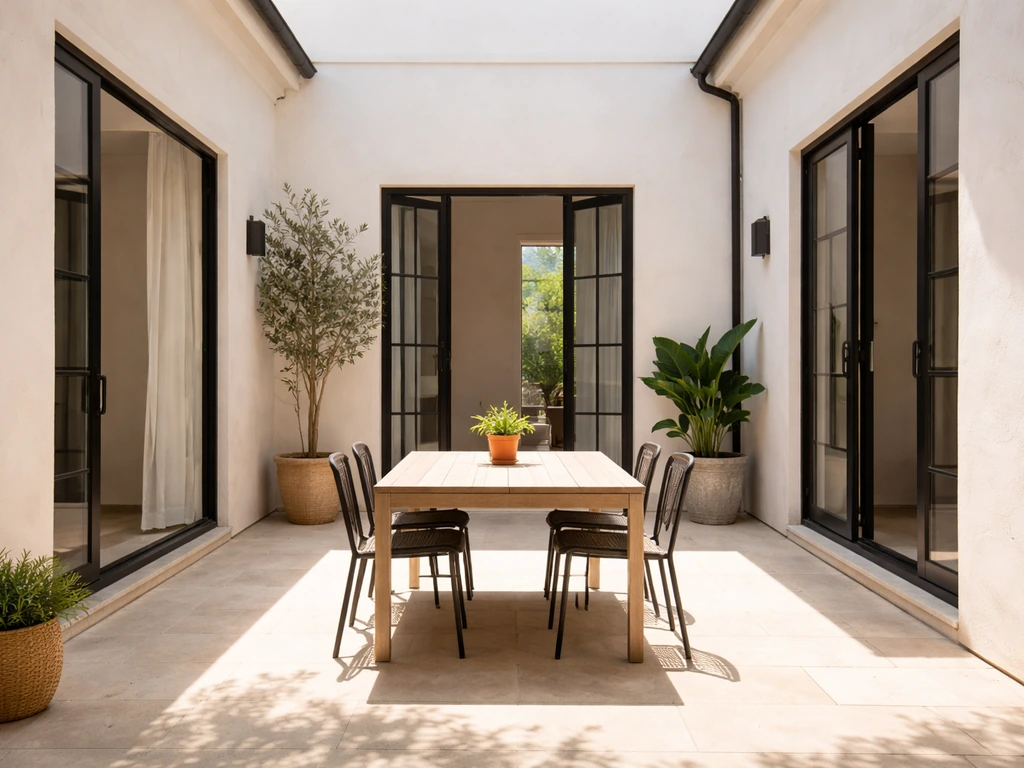
A patio is a hard-floored outdoor area adjoining a house, used for sitting, dining, or relaxing. That's essentially how Cambridge, Merriam-Webster, and most architectural references define it: a paved or solid-surfaced space next to a building, not elevated, not enclosed by a full roof and walls. Merriam-Webster blank" rel="noopener noreferrer">defines “patio” as an outdoor area, typically paved or solid-floored, for leisure that adjoins a house or building. The floor is the defining feature. Patios sit at or near ground level, typically on concrete, pavers, tile, stone, or brick. They don't float above a garage (that's a balcony or terrace), they don't have a permanent full enclosure (that moves them toward a sunroom), and they're not primarily an entryway (that's a porch).
There's a secondary definition worth knowing, especially if you're shopping for homes with Spanish-influenced architecture or reading older real estate descriptions: Dictionary.com notes that 'patio' can also mean a courtyard enclosed by low buildings or walls, especially as part of a house. This comes directly from the Spanish-origin word, where 'patio' historically described the inner courtyard of a home. That dual meaning is a big part of why 'interior patio' shows up in listings and confuses people.
What people actually mean by 'interior patio'
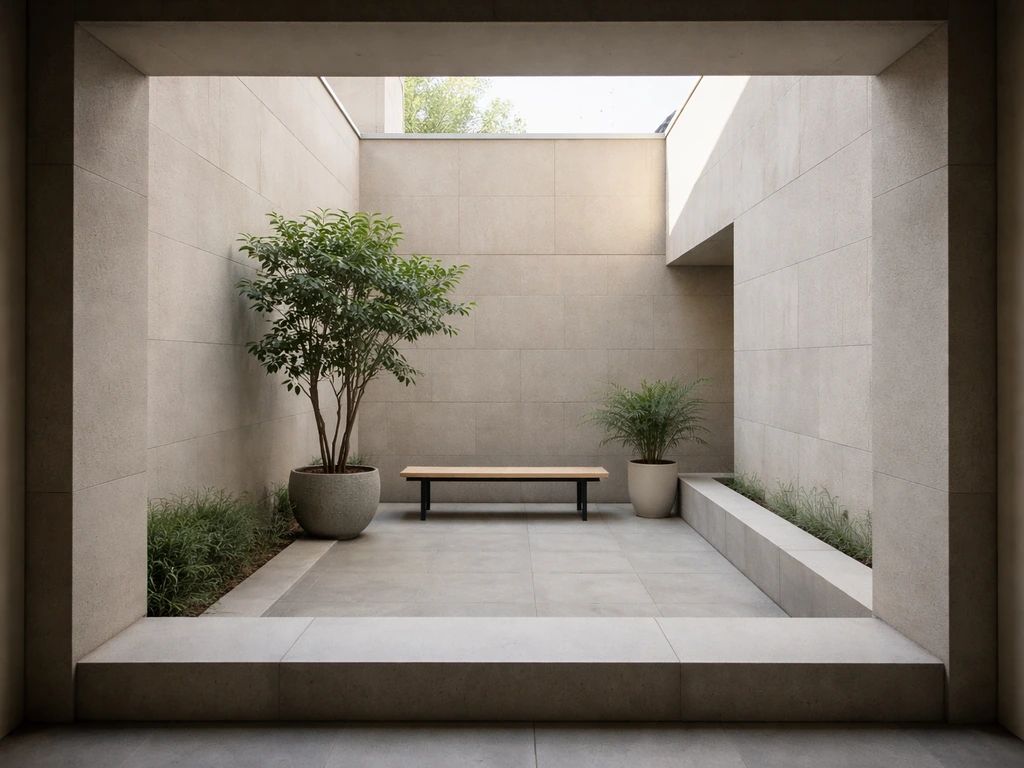
When you see 'interior patio' in a listing or on a floor plan, it's almost always describing one of these three setups. Knowing which one matters because each has very different implications for how you'll use it and what it costs to maintain.
1. A courtyard-style patio inside the building footprint
This is the most architecturally distinctive version. The patio is enclosed on multiple sides by the home's own walls, sitting inside the building's footprint or wrapped by the structure, open to the sky above. Think of a Spanish colonial-style home with a central open-air courtyard. You access it from interior rooms on two, three, or four sides. This is the 'patio' in its original sense. It's genuinely interior in that the house surrounds it, even though it's not covered or climate-controlled.
2. An enclosed patio (covered and walled on the sides)
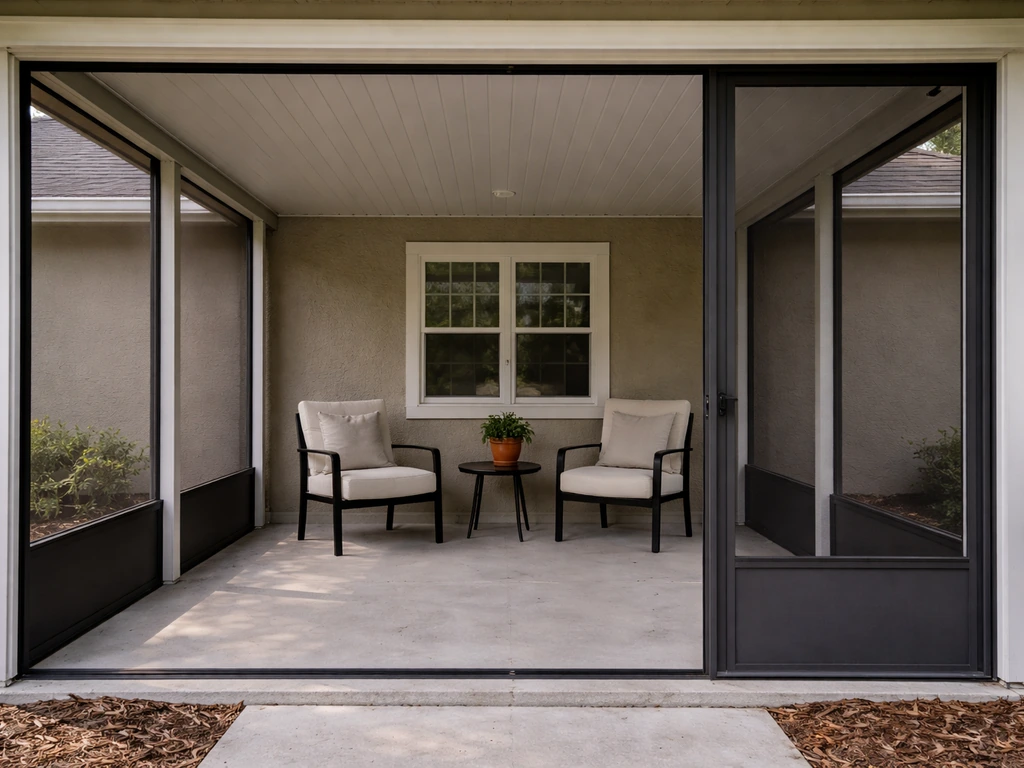
The NWAR MLS glossary specifically defines 'enclosed' as an outdoor patio area surrounded by walls, screens, or windows. This is probably the most common usage in modern listings. A builder adds a roof structure over an existing patio slab, then closes in the sides with screen panels, glass windows, or walls. The City of Tampa describes this as creating a habitable or non-habitable space by enclosing a covered patio under an existing roof. The result feels like an indoor-outdoor room: weather-protected, private, but still architecturally considered a patio in most jurisdictions. Listings might call it an 'enclosed patio,' 'screened patio,' or 'Florida room' depending on region.
3. A patio directly off an interior living space
Sometimes 'interior patio' just means the patio is accessed from inside the home through sliding glass doors or French doors, as opposed to being reached by walking around the outside of the building. This is the most casual use of the phrase, and the least precise. If you are trying to understand the patio origin and meaning, this helps explain why listings use “interior patio” so loosely. It's still a standard ground-level patio slab, but because you walk straight out from the living room or bedroom, the agent or seller describes it as 'interior.' Not particularly meaningful architecturally, but useful to know you won't be walking through the garage to reach it.
How to tell which type you're looking at on a listing or floor plan
Floor plans are your best tool here, and there are specific things to look for. The key is identifying walls, openings, and surface patterns.
- Walls on multiple sides: If the patio is shown with solid wall lines on two, three, or four sides, you're looking at a courtyard-style interior patio or an enclosed patio. Openings (door symbols, shown as gaps with an arc) indicate how you access it.
- Roof or cover notation: A covered patio will often be shown with a dashed line overhead (indicating the roof plane above), a 'covered patio' label, or a note like 'roof over.' No dashed line usually means it's open to the sky.
- Floor pattern symbols: Architectural plans often use hatch patterns or different fill textures to distinguish patio surfaces (pavers, concrete) from interior flooring (hardwood, tile). If the texture changes at a door threshold, that's the transition from inside to outside.
- Abbreviations: Look for 'CTYD' (courtyard), 'PAT' or 'PATIO' (patio), 'SCR PORCH' (screened porch), or 'ENC PATIO' (enclosed patio). These abbreviations differ from a plain outdoor slab labeled 'patio.'
- Access points: Count the doors into the space. A courtyard-style interior patio typically has multiple interior-facing doors. A backyard patio usually has one sliding door from the main living area.
- Position on the plan: If the labeled space sits inside the perimeter of the building's footprint rather than projecting out from the back or side, it's almost certainly a courtyard or interior patio in the architectural sense.
- Listing photos: Look for photos showing sky overhead vs. a ceiling, presence of screens or glass panels on the sides, flooring that continues from an interior room, and how naturally lit the space appears.
If the listing description is vague, ask the agent directly: Is the patio covered? Is it enclosed with screens or glass? Is it open to the sky? Does it sit inside the building footprint or outside it? Those four questions will pin down which type you're dealing with.
Patio vs. porch vs. balcony vs. verandah vs. courtyard vs. terrace vs. lanai
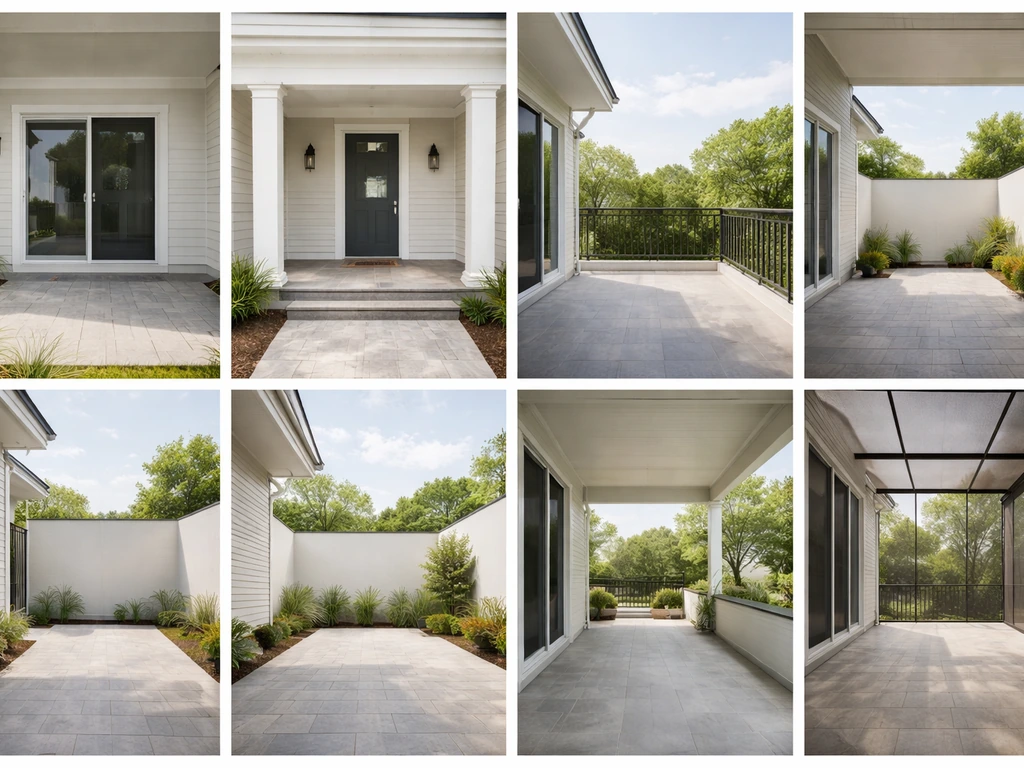
These terms overlap constantly, and regional language makes it worse. Here's a clean comparison to cut through it.
| Space type | Level | Roof/cover | Enclosure | Typical access | Key distinction |
|---|---|---|---|---|---|
| Patio | Ground | Usually none (may be added) | Open, screened, or enclosed | From interior room or side yard | Hard-floored, ground-level, adjoining the house |
| Porch | Ground or slightly raised | Always roofed | Open railings or partial walls | Front or back entry door | Entry-oriented, always has a roof overhead |
| Balcony | Upper floor | Sometimes partially roofed | Railing only | From upper-floor interior room | Elevated above grade, projects from facade |
| Verandah | Ground or raised | Always roofed | Open railings | Wraps around sides/front of building | Roofed walkway running along the building exterior |
| Courtyard | Ground | Open to sky (usually) | Fully or mostly enclosed by walls/building | Through interior rooms or a gate | Building or walls surround it on most sides |
| Terrace | Ground or rooftop | None typically | Open | From interior room or external stair | Can be at any level; often landscaped or at roof level |
| Lanai | Ground | Often roofed | Open or screened | From interior living area | Hawaiian/Florida regional term; blends patio and porch features |
| Sunroom/solarium | Ground | Fully roofed with glass | Fully enclosed with glass walls | From interior of the house | Interior-feeling, climate-controlled or near-conditioned space |
A few practical notes on these distinctions. Porches, as Cambridge defines them, are explicitly entrance-oriented structures with a roof and sometimes walls, which is why a porch at the back of a house sometimes gets called a patio instead, even if it has a roof. Verandahs (the preferred spelling in Australia and New Zealand) wrap along the building's exterior with a roof and open railings but no floor enclosure below.
In Hawaii and parts of Florida, 'lanai' describes an outdoor living area adjacent to an interior space, roofed or not, and the term is often used where someone else would say 'patio' or 'screened porch. ' Terrace can mean a ground-level paved area or a rooftop outdoor space, depending on context, and it's worth noting that the architectural meaning of terrace and patio overlap considerably.
In many listings, patio and terrace can be used interchangeably, so the context matters when interpreting the patio terrace meaning. The patio terrace distinction is genuinely blurry in residential real estate language.
How the layout and features affect how the space actually feels
The physical characteristics of an interior patio determine whether it's genuinely usable or just a footnote in the listing. These are the four factors that matter most.
Natural light
A courtyard-style interior patio with walls on three or four sides can be surprisingly dark, especially if the surrounding structure is tall or if neighboring buildings are close. North-facing courtyard patios in the northern hemisphere get minimal direct sun. South-facing interior patios can be very bright but also very hot in summer. Glass-enclosed patios (essentially sunrooms) behave differently again: Britannica defines a solarium as any room exposed to the sun, and Wikipedia notes that sunrooms are designed to permit abundant daylight while sheltering from adverse weather. A glass enclosure gives you light year-round but can overheat without proper ventilation.
Weather protection
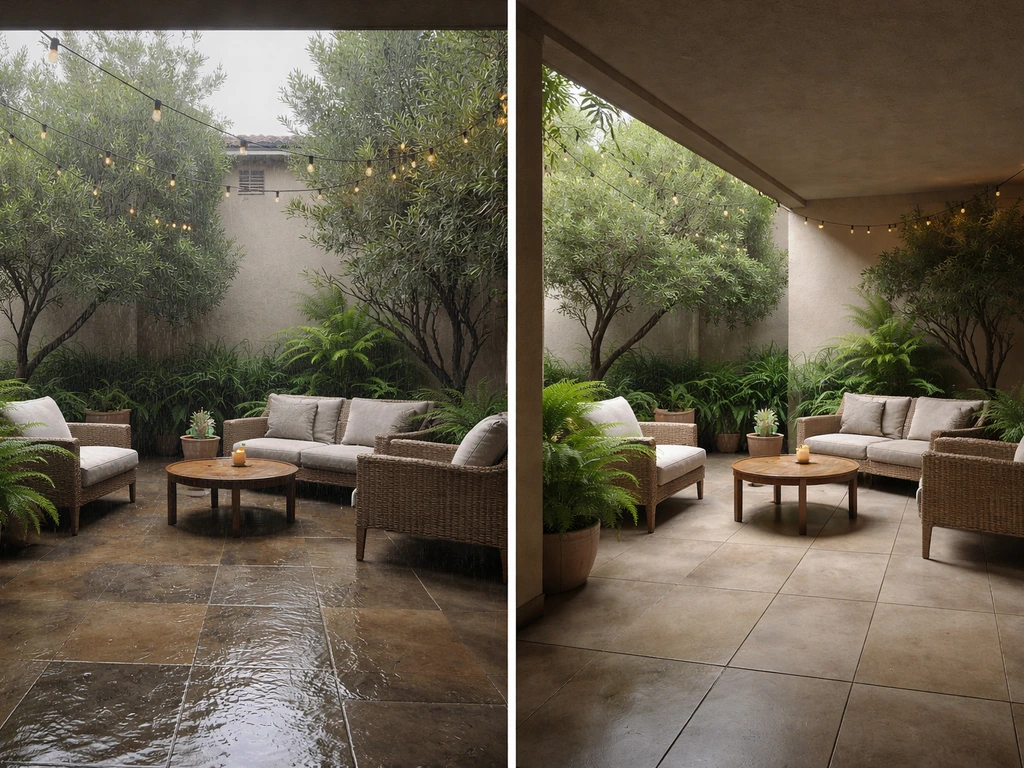
An open-sky courtyard patio offers zero weather protection. Rain falls straight in, wind channels through, and in winter it's simply cold. An enclosed patio with a solid roof and screen or glass sides is the opposite: it's usable in rain and wind, it reduces insect intrusion, and in mild climates it can function almost like a living room. San Diego's building guidance notes a minimum 7-foot ceiling height rule in patio covers where required openings (ventilation) open into the covered space, which tells you city codes often treat enclosed patios more like rooms than outdoor slabs.
Privacy
Interior courtyards are typically the most private outdoor spaces a home can have, since the building itself forms the enclosure. An enclosed screened patio at the back of a house depends on fencing, landscaping, or neighboring setbacks for privacy. An open ground-level patio is usually the least private, especially in subdivisions with close lot lines. If privacy is a priority, the courtyard-style interior patio wins almost every time.
Ventilation and air flow
Enclosed patios and courtyard spaces can trap heat without deliberate ventilation design. A courtyard surrounded by walls needs at least one open face or a breeze-catching orientation to feel comfortable in summer. Screened enclosures handle this well by nature of the screen mesh. Fully glassed-in patios need operable windows, vents, or a door to the outside to prevent overheating. Before you assume an enclosed interior patio is comfortable year-round, find out if it has operable openings, ceiling fans, or any connection to the home's HVAC system.
Practical considerations: value, maintenance, permits, and HOA rules
Property value
A well-designed interior courtyard patio or high-quality enclosed patio can add genuine appeal and value to a property, especially in climates where outdoor-indoor living is a year-round priority. However, a poorly maintained enclosed patio, a screen enclosure with damaged panels, or a covered patio built without permits can actually create problems at the time of sale. Buyers and appraisers look at condition and permitted status, not just the existence of the space.
Permits and building codes
If you're thinking about enclosing or covering an existing patio, permits are almost certainly required. Garland, Texas requires a building permit for any patio or porch cover, attached or freestanding. Herriman, Utah requires a permit for any roof projection over a patio that extends more than 54 inches from the external wall. Escondido, California specifies that the original patio cover must have its own valid permit before you can even apply to enclose it. Raleigh, North Carolina requires elevation drawings for screened porches and any roofed structure. The consistent message across jurisdictions: adding a roof or walls to a patio triggers a permit requirement almost everywhere. Unpermitted enclosures can create headaches when refinancing or selling.
HOA rules
In condos and HOA communities, patios and enclosed patios are frequently classified as 'limited common elements,' meaning the association may have maintenance responsibility for the structure but also control over what you can do with it. A Reddit discussion from a Florida HOA context reflects exactly this: homeowners who want to enclose a screened balcony or patio often need board or architectural review committee (ARC) approval, even if they're paying for the work themselves. HOA governance can extend to patio modifications, camera placement, furniture rules, and even whether portable heaters are permitted on enclosed patios. Before making any changes to an enclosed or interior patio in an HOA community, check the CC&Rs and architectural guidelines, and get approval in writing.
Maintenance responsibilities
Maintenance on an interior courtyard patio falls entirely to the homeowner in a single-family context: drainage, surface sealing, plant management, and structural upkeep of any covering. In a condo or HOA setting, the split between HOA responsibility and owner responsibility can be very specific. Some HOA maintenance charts identify things like trim and molding around patio doors as HOA-managed, while interior surface materials remain the owner's responsibility.
Courtyard at Redfields HOA's maintenance responsibilities chart treats trim, fences, and molding around patio areas and doors as HOA-defined items, illustrating how HOA versus homeowner duties can differ Some HOA maintenance charts identify things like trim and molding around patio doors as HOA-managed. In practice, this means the screen frame might be the HOA's problem, but the concrete slab is yours. Know the boundary before you sign.
The fastest way to get your answer on any specific listing
If you're looking at a specific listing or floor plan right now and trying to figure out what 'interior patio' means in that context, run through this checklist quickly. In particular, “patio room meaning” usually refers to how an interior patio can feel more like a room than a typical outdoor patio, thanks to its roof, walls, or direct access from the home.
- Find the space on the floor plan and check whether it sits inside the building footprint (courtyard) or projects outward from the back or side (standard patio).
- Look for a roof/cover symbol: dashed overhead lines, a 'covered' label, or a separate structure line. If there's no roof symbol, it's open to the sky.
- Check the sides: wall lines, screen hatching, or glass symbols on three or four sides mean it's enclosed. No side enclosure means it's open.
- Count access doors: multiple interior-facing doors suggest a courtyard-style space; a single sliding door suggests a backyard patio accessed from the living area.
- Look at listing photos for ceiling presence, sky visibility, screen or glass panels, and floor surface transitions.
- Ask the agent directly whether the space is permitted, whether it's on the tax record as living area or outdoor space, and whether HOA approval was obtained for any enclosure.
The term 'interior patio' doesn't have one universal meaning, but it always points to a space that's more enclosed, more private, or more architecturally integrated than a plain backyard slab. Understanding which version you're looking at takes about two minutes on a floor plan once you know what to look for, and it makes a real difference in how you evaluate the home's usability, its maintenance demands, and what you can and can't do with the space after you move in.
FAQ
If a listing says “interior patio,” does it always mean it is enclosed or climate-controlled?
No. In many listings it only means the patio is reached directly from interior rooms (typically through sliding or French doors). A courtyard patio can be surrounded by the home’s walls yet still open to the sky, so it may be private but not weather-protected or temperature-controlled.
How can I tell whether the patio is inside the building footprint or just next to it?
Look for the patio area on the floor plan relative to the exterior walls. If the surrounding walls of the home form multiple sides of the patio, it usually sits within the footprint like a courtyard. If the patio borders the exterior wall on one side and opens to the lot, it is more likely outside the footprint, even if it feels “interior” due to access.
When a patio is accessed from the living room, is it still considered a “patio room” or just a patio?
It depends on whether it has architectural room-like enclosure. Direct access alone usually makes it an “interior-access patio,” not a patio room. A patio room vibe generally comes from added roof, screened or glass sides, and consistent interior finish transitions (for example, ceiling height treatment, flooring continuity, or built-in electrical).
What’s the biggest “gotcha” with glass-enclosed interior patios (sunrooms)?
Ventilation and overheating risk. Even with year-round daylight, fully glassed spaces can become too hot in summer or too cold in winter if operable windows, vents, ceiling fans, or a dedicated HVAC strategy are not present. Check whether any windows are operable and whether the listing mentions fans, vents, or temperature control.
Do screened patios count as outdoor space or living space for appraisals and taxes?
Often they are treated differently than fully finished rooms. Many screened or partially enclosed patios remain “outdoor” areas in valuation, but they can still add functional value. The deciding factors are usually roof type, floor construction, whether the space is enclosed on all sides, and local appraisal practice, so it helps to ask the agent whether it is included in square footage calculations.
How do I verify what privacy level I will actually get with an enclosed patio?
Don’t rely only on walls or screen panels. Privacy depends on site factors like fence height, neighboring setbacks, landscaping maturity, and whether the enclosure has solid sections versus clear glass on the sides that face other properties. If you can, check the view from the patio at different times of day.
If I want to enclose an existing patio, what should I check besides permits?
Check structural and compliance details that affect feasibility. For example, roof load requirements, setbacks, whether the enclosure needs engineered drawings, and how utilities (HVAC vents, electrical, drainage) will be handled. Also confirm whether the existing patio cover has its own valid approval, since some jurisdictions require it before new enclosure work.
In an HOA or condo, can I expect the HOA to maintain the patio enclosure I paid for?
Not automatically. HOAs often split responsibility by components, for example frames and structural elements might be HOA-managed while the owner handles certain parts like interior flooring, sealing, or trim around openings. Ask for the maintenance responsibility chart or CC&R section that names specific components before you budget for repairs.
What should I look for on the floor plan to avoid misinterpreting an interior patio?
Confirm three things: the roof coverage (solid line or ceiling outline), the presence of surrounding walls/screens (thickness and boundaries), and door locations into the home (sliding or French door symbols). Surface pattern alone can be misleading if the listing uses “patio” broadly, so floor plan geometry matters more than wording.
Can “patio” and “terrace” be used interchangeably in my listing without changing what I’ll get?
Sometimes, but not always. Many listings blur the terms, yet “terrace” can refer to a rooftop outdoor space or a ground-level paved area depending on region and architecture. Check whether it is at ground level, and whether it is covered or enclosed, to know what “interior patio” likely parallels in that particular listing.
Next Article
El Patio Meaning: What el patio Means in Spanish
Learn el patio meaning in Spanish: correct article use, common definition as courtyard/terrace, and differences from por