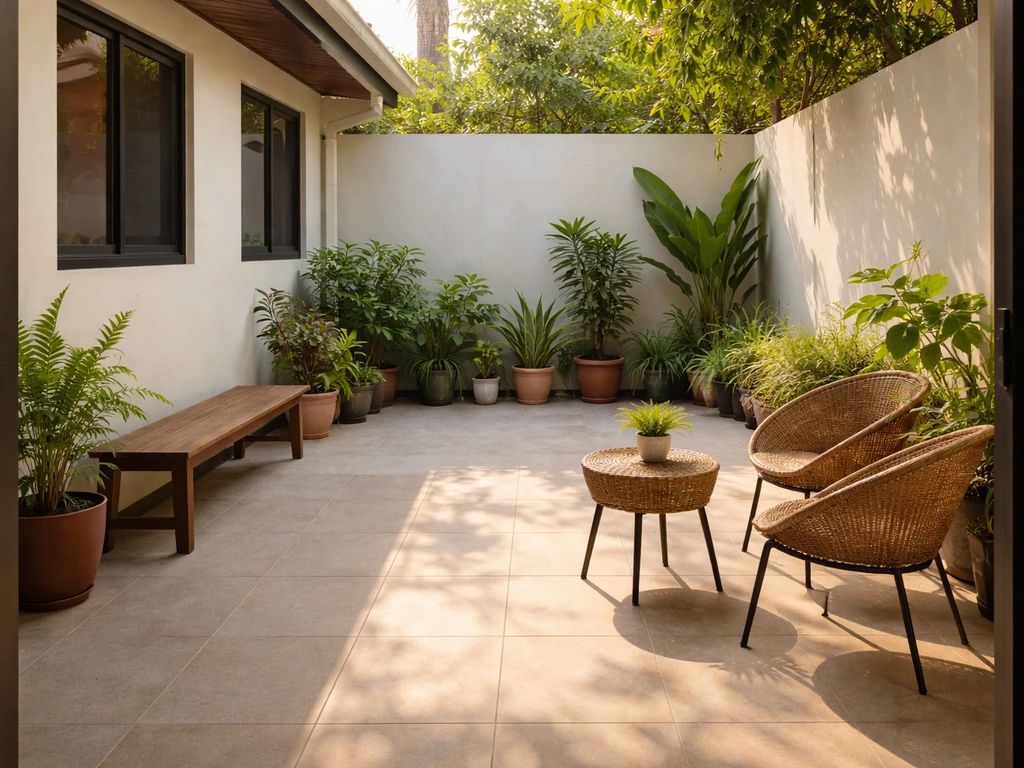
The most accurate Tamil word for 'patio' is உள் முற்றம் (uḷ muṟṟam), which literally means an inner or enclosed yard. You will also see பின் திண்ணை (pin thiṇṇai), which translates roughly as a back sitting platform or rear stoop. In everyday Tamil conversation and in home-related articles, உள் முற்றம் is the term most readers will recognize. If you are reading a property listing in Tamil Nadu, however, do not be surprised to see the English word 'Patio' used directly, sometimes written as 'PATIO/SITOUT' on floor plans, because developers in Chennai and other Tamil Nadu cities frequently borrow the English label rather than translate it.
Patio Meaning in Tamil: What It Is and How to Spot It

Ada Hollis
5 Jul 2026
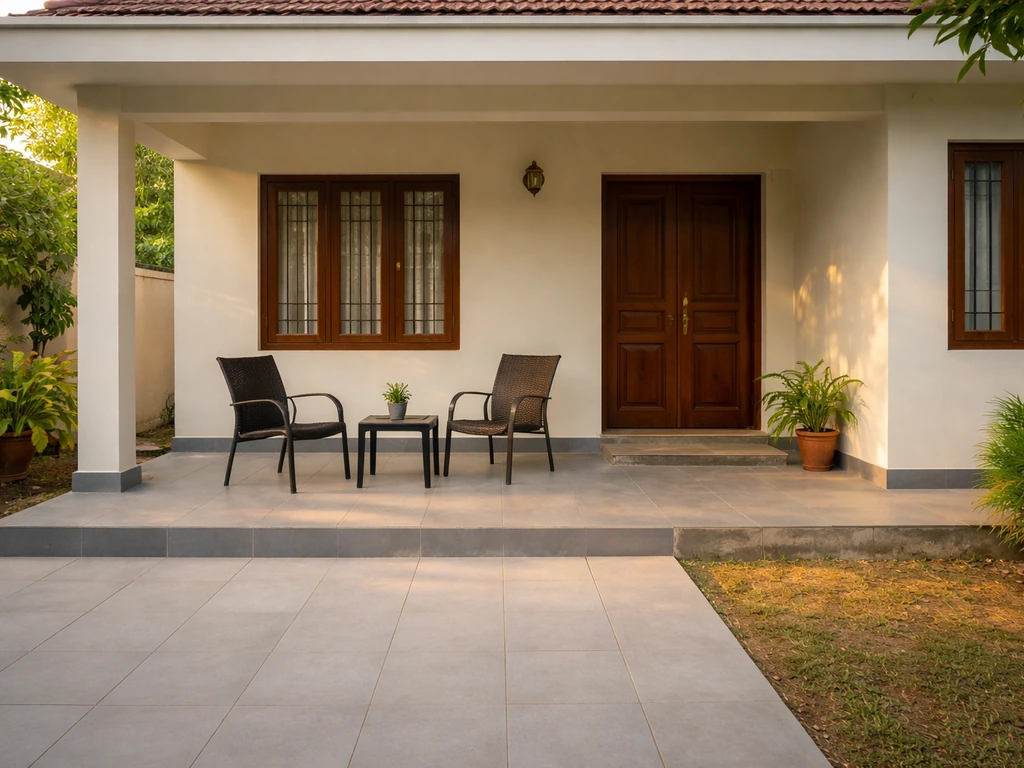
What a patio actually is
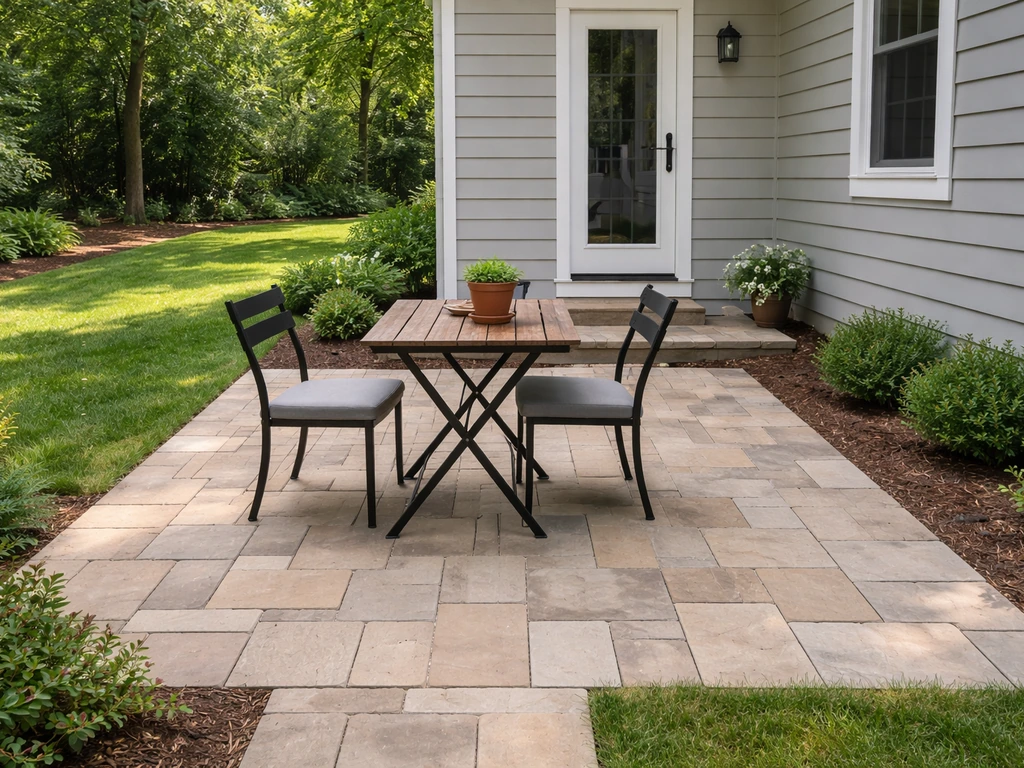
A patio is a paved or surfaced outdoor area attached to a house or apartment, usually at ground level, used for sitting, dining, or relaxing. It sits beside or behind the home, has no roof of its own (though you can add a pergola or shade structure later), and is typically made of concrete, stone, brick, or pavers. Think of it as an outdoor living room floor that flows from the house into the garden. Restaurants also use the word for their outdoor seating sections, but in residential property terms it always means that ground-level open-air zone right next to the building.
The concept has Spanish-language origins and is widely used across Western architecture, but it has found its way into Indian real estate, especially in urban developments targeting buyers familiar with international design trends. When Housing.com publishes Tamil-language articles on how to lay patio pavers (உள் முற்றம் பேவர்ஸ்), they are describing exactly this: a flat, surfaced outdoor patch you furnish with chairs and a table.
How to spot a patio in real homes and property listings
On a floor plan, a patio usually appears as an unlabelled or lightly shaded rectangle adjacent to the living room or dining area, often at the back or side of the unit. When a Tamil Nadu developer does label it, you will see 'PATIO' or 'PATIO/SITOUT' in English text. In photos, look for a flat, hard surface (tile, stone, or concrete) that continues from the back door outward, with outdoor furniture placed on it. It will not have a full structural roof, though it may have a slatted pergola or a partial shade canopy. It sits at the same level as the ground floor, not elevated like a deck.
- Ground level: flush with the garden or yard, not raised on posts
- Hard surface: paved with tile, stone, brick, concrete, or pavers
- No permanent roof: open to sky or covered only by a pergola or shade sail
- Adjacent to the house: connected directly to a back or side door
- Furnished for use: typically has outdoor chairs, a table, or a grill area
- Labeled on Indian floor plans as 'PATIO' or 'PATIO/SITOUT'
Patio vs porch vs verandah vs balcony vs courtyard
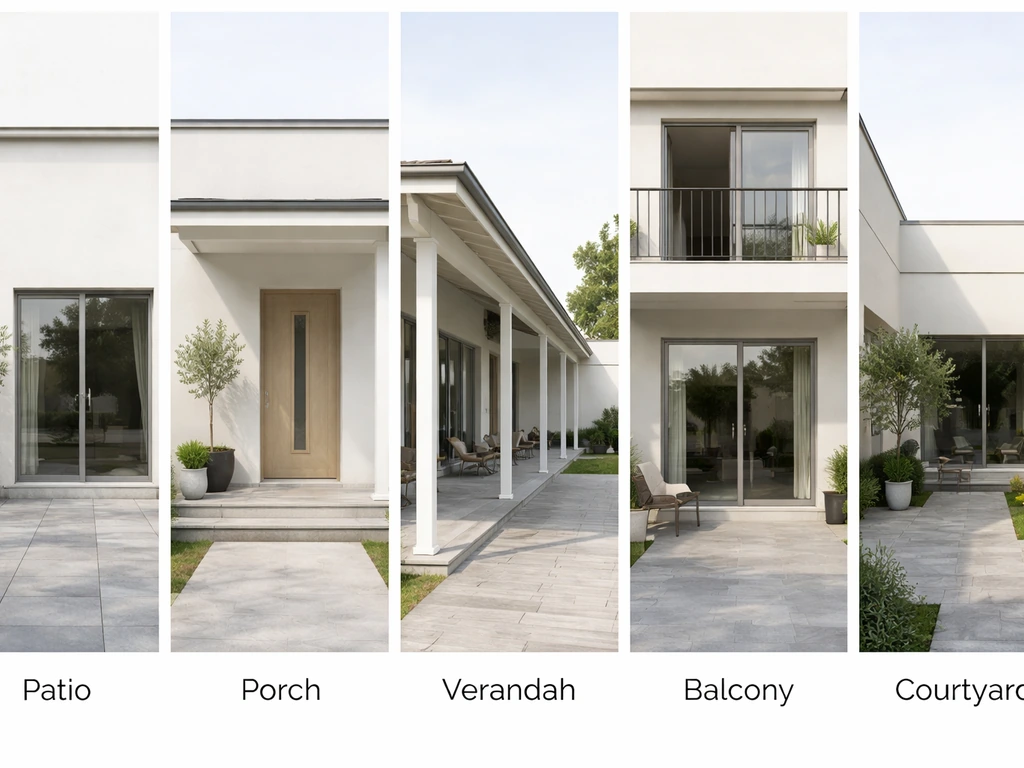
This is where most confusion happens, especially when you are comparing Tamil property terms or reading bilingual listings. Each of these spaces has a distinct layout, and knowing the differences helps you ask the right questions before you visit a property.
| Space | Tamil equivalent | Level | Roof | Attached to house | Typical use |
|---|---|---|---|---|---|
| Patio | உள் முற்றம் (uḷ muṟṟam) | Ground | None or pergola | Side or rear, ground floor | Outdoor dining, relaxing |
| Porch | திண்ணை (thiṇṇai) | Ground or slightly raised | Yes, full roof | Front of house | Greeting guests, sitting |
| Verandah | தாழ்வாரம் (tāḻvāram) | Ground, raised platform | Yes, full roof | Front or wrap-around | Sitting, social space |
| Balcony | மொட்டை மாடி / பால்கனி | Upper floor, elevated | None or partial | Projected from upper floor | Views, fresh air, drying |
| Courtyard | முற்றம் (muṟṟam) | Ground | None | Enclosed within or beside home | Light, ventilation, garden |
The clearest way to separate a patio from a verandah or porch is to check two things: roof and position. A verandah (தாழ்வாரம்) always has a permanent roof and usually runs along the front of the house. A porch (திண்ணை) also has a roof and is at the entry. A balcony is upstairs. A courtyard (முற்றம்) is enclosed by walls on multiple sides. A patio is none of those things: it is open to the sky, at the back or side, and at ground level. Cambridge English Dictionary defines a patio as an blank" rel="noopener noreferrer">outdoor area attached to a home, typically used for sitting or dining. The word முற்றம் on its own means courtyard or yard in Tamil, which is why உள் முற்றம் (inner yard) became the accepted Tamil stand-in for patio, even though a true patio is specifically paved and furnished rather than being a general open space.
Common Tamil phrases for describing a patio
Whether you are asking a property agent a question or reading a Tamil home-improvement article, these phrases will help you communicate clearly about patios. In Bengali, the common meaning of patio is an outdoor sitting or courtyard area attached to a home.
| Situation | Phrase to use | Transliteration |
|---|---|---|
| Asking if a property has a patio | இந்த வீட்டில் உள் முற்றம் இருக்கிறதா? | Inta vīṭṭil uḷ muṟṟam irukkiṟatā? |
| Asking about the patio surface/flooring | உள் முற்றத்தில் என்ன தரை இருக்கிறது? | Uḷ muṟṟattil eṉṉa tarai irukkiṟatu? |
| Describing a patio to someone | வீட்டின் பின்பக்கம் ஒரு உள் முற்றம் உள்ளது | Vīṭṭiṉ piṉpakkam oru uḷ muṟṟam uḷḷatu |
| Asking if the patio is covered | உள் முற்றத்திற்கு மேல் கூரை உள்ளதா? | Uḷ muṟṟattiṟku mēl kūrai uḷḷatā? |
| Reading a listing that says PATIO/SITOUT | இது உள் முற்றம் அல்லது சிட்-அவுட் பகுதி | Itu uḷ muṟṟam allatu siṭ-avuṭ pakuti |
In casual conversation, many Tamil speakers, especially younger urban homeowners in Chennai, will simply say 'பாட்டியோ' (pāṭṭiyō), using the borrowed English word. You will also hear 'சிட்-அவுட்' (sit-out), which is an informal Indian-English term widely used in Tamil Nadu for a small outdoor sitting area. Both are understood in context, but உள் முற்றம் is the more formal and universally recognized written equivalent.
Which term fits your space? A quick checklist
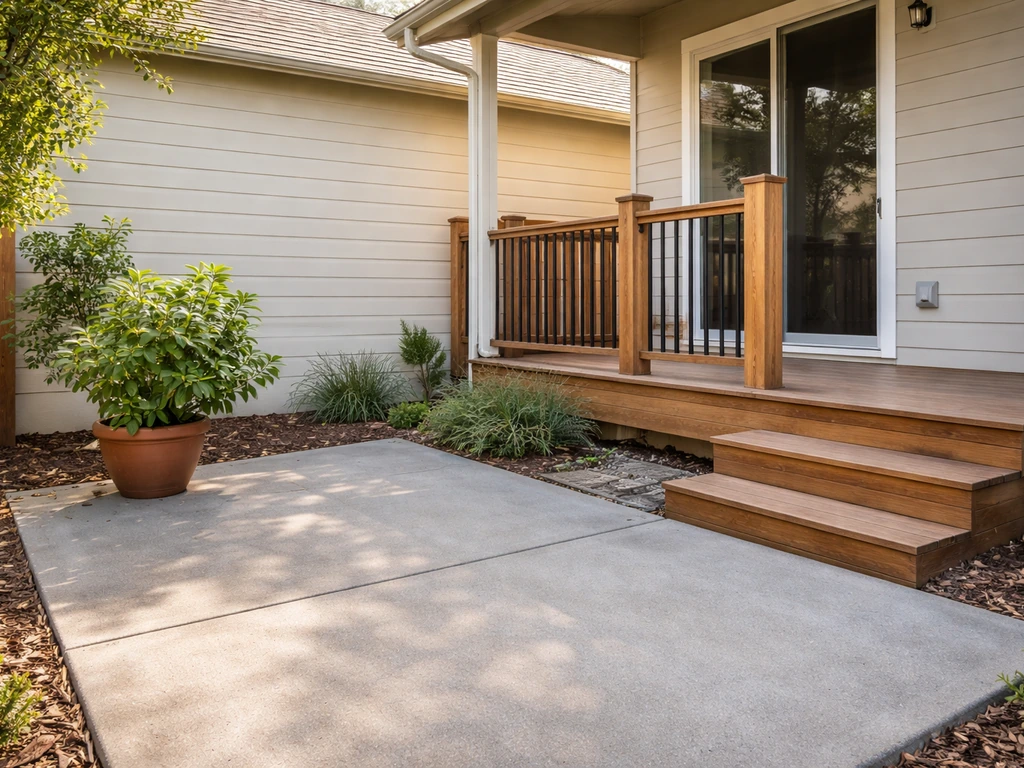
Use these checks to decide whether the space you are looking at is really a patio, or whether another word is more accurate. This matters especially when you are assessing a property listing or describing a space to someone else. . If you are searching in local-language terms, see patio meaning in kannada for a quick translation-style guide.
- Is it at ground level (not on an upper floor)? If no, it is a balcony, not a patio.
- Is it open to the sky, or covered only by a pergola or shade cloth? If it has a solid permanent roof, it is more likely a verandah or porch.
- Is it paved or surfaced with tile, stone, or concrete? A muddy or grassy patch is a yard, not a patio.
- Is it attached directly to the house, accessible through a back or side door? If it is enclosed by walls on all sides, it is a courtyard (முற்றம்).
- Is it at the front entry of the house with a roof? Then it is a porch (திண்ணை) or verandah (தாழ்வாரம்).
- Does the floor plan or listing say 'PATIO' or 'PATIO/SITOUT'? That confirms it regardless of what the agent calls it.
A typical patio scenario: you walk out of the dining room through a sliding glass door, step onto a tiled area roughly 8 to 15 feet wide, with a table and four chairs sitting on it, and the garden starts just beyond the edge of the tiles. That is a patio: உள் முற்றம் in Tamil, or just 'patio/sit-out' if you are reading a Chennai developer's floor plan. Uptoword also states that “Patio” in Tamil means “உள் முற்றம்” and illustrates this with related usage examples like “மேடையுடன் கூடிய மொட்டை மாடி.” blank" rel="noopener noreferrer">Uptoword gives “Patio” meaning in Tamil as “உள் முற்றம்”. In Tamil, you will often see the patio meaning expressed as உள் முற்றம் (inner yard).
If you are comparing property terminology across other South Indian languages, the same core concept applies in each. The specific vocabulary shifts from language to language, much the way it does between Tamil, Telugu, Malayalam, and Kannada, but the physical description of a ground-level paved outdoor sitting area remains the same. In Telugu, you will often see the patio meaning expressed as an open, ground-level outdoor sitting area near the house patio meaning in telugu. The challenge is always the same too: separating that space mentally from the roofed verandah or the upper-floor balcony when you are reading a listing or viewing a floor plan.
FAQ
When I ask a Tamil-speaking agent, what exact follow-up should I use to confirm it is a patio (உள் முற்றம்) and not a verandah or porch?
Use these words when asking in Tamil, “உள் முற்றமா, தாழ்வாரமா?” or “பாடியோ தாராளமா திறந்த வெளியா?” A real patio answer should match ground-level and open-to-sky, you should not accept a space that is fully roofed like a verandah (தாழ்வாரம்) or entry porch (திண்ணை).
If a listing uses “patio” but the photo shows mostly garden, does it still count as a patio?
Look for a hard, continuous surface and a furniture “placement” pattern. If the photos show only garden soil, lawn, or loose gravel with no paved area, it is usually described as open yard (முற்றம்/காம்பவுண்ட் style wording) rather than patio. A patio typically has tiles, stone, concrete, or pavers that you can step onto directly from inside.
How do I handle situations where there is a pergola or partial shade, is it still a patio?
A patio can be “open air” but still have shade added. If there is a pergola, partial canopy, or slatted shade, it can still be a patio as long as it is not a fully enclosed, permanently roofed structure spanning the entire area. If it is enclosed on sides like a room, then it is no longer functioning like a patio in common usage.
Is an elevated terrace ever called a patio in Tamil Nadu listings, and how can I tell during viewing?
Do a level check. Patios are typically at the same ground level as the unit, not raised. If the space requires steps up from the living area (like a deck or elevated terrace), it may be marketed differently even if people casually call it “sit-out.” Ask the agent how many steps down or up it is from the door.
On a bilingual floor plan, how can I interpret the label when it shows “PATIO/SITOUT” but not “உள் முற்றம்”?
Check the floor plan conventions. A patio is often unlabelled or shown as an adjacent rectangle next to the living or dining room, sometimes with “PATIO” or “PATIO/SITOUT” in English text. If the plan labels it clearly as “balcony,” “verandah,” or “sit-out,” use the roof and position logic again (open-to-sky, ground level).
Should I use “பாட்டியோ” or “சிட்-அவுட்” in my own Tamil conversation, or stick to “உள் முற்றம்”?
In many Chennai listings, “பாட்டியோ” (borrowed English) and “சிட்-அவுட்” are used informally for a small outdoor sitting zone. For clarity in writing and formal communication, stick to “உள் முற்றம்” when you explain its meaning, then use the other terms only to match what the seller wrote.
What practical questions should I ask about comfort and maintenance for a patio, especially for monsoon weather?
Ask about usability across seasons. Since patios are exposed to the sky, heavy rain and sun can affect comfort unless there is a shade structure. Before purchase, confirm whether the builder provides any fixed rain protection and where water drains from the paved surface.
What is the quickest way to distinguish a patio from a courtyard (முற்றம்) when both are outdoors?
A courtyard (முற்றம்) is generally enclosed by walls on multiple sides. If you see boundary walls all around or it feels like a walled interior yard, it trends toward courtyard language. A patio is usually a side or back open area next to the house with direct sky exposure, so confirm enclosure level and wall placement.
Next Article
Patio Meaning in Tagalog: Best Translations and Examples
Patio meaning in Tagalog with natural translations, examples, and how it differs from porch, veranda, balcony, and court