Patio seating means outdoor furniture arranged on a patio, specifically designed to support dining, lounging, or socializing in that open-to-sky, hardscaped area attached to or adjacent to a home. When you see it in a real-estate listing, it usually signals that the patio comes with (or is set up for) a coordinated furniture arrangement, whether that's a dining set with a table and chairs, a conversation set with a sofa and coffee table, or something in between. In everyday use, it's simply the outdoor seating that lives on your patio.
Patio Seating Meaning: What It Includes and How to Choose

Ada Hollis
21 Jun 2026
What 'Patio Seating' Actually Means in Plain English
blank" rel="noopener noreferrer">A patio is an outdoor hardscape surface, typically concrete, pavers, or stone, that extends the usable living area of a home. It sits open to the sky (no permanent roof overhead) and is meant for leisure and social activities, not just walking through. Patio seating is simply whatever furniture arrangement you put on that surface to make it functional and comfortable.
In real-estate listings, the phrase 'patio seating' usually means one of two things: either the patio is already furnished and the seating is included or shown in the photos, or the listing is describing the patio as a space with enough room to accommodate a meaningful seating arrangement. Either way, it's telling you this outdoor area is meant for sitting and socializing, not just storage or foot traffic.
In Canadian English and restaurant contexts, 'patio' is also widely used to describe any outdoor seating area at a cafe or restaurant. So if you hear 'grab a seat on the patio,' it carries the same core idea: an outdoor space set up for people to sit, eat, and talk. The residential meaning is consistent with that usage, just applied to a private home.
When retailers sell 'patio seating sets,' they're packaging the whole arrangement into one coordinated purchase, often labeled as a 4-piece deep-seating set (two chairs, a loveseat, and a coffee table), a dining set, or a conversation set. That product framing is useful to know because it reflects exactly how most homeowners think about and shop for patio seating.
Patio vs. Porch vs. Balcony vs. Veranda vs. Courtyard (and Why It Changes What Seating Means)
The outdoor space type matters a lot when you're interpreting what 'seating' implies. A patio, porch, balcony, veranda, and courtyard each have different characteristics in terms of coverage, privacy, access, and how they connect to the home. Those differences shape exactly what kind of seating works and what's expected.
| Space Type | Covered? | Level | Typical Access | Seating Expectation |
|---|---|---|---|---|
| Patio | No (open to sky) | Ground level | From interior or side gate | Full dining or lounge sets, fire pit arrangements, sectionals |
| Porch | Yes (roof overhead) | Ground level or raised | Front or back of home | Rocking chairs, benches, swing, smaller seating |
| Balcony | Usually no | Elevated, upper floor | From interior room | Compact bistro sets, a couple of chairs, limited furniture |
| Veranda | Yes (wraparound roof) | Ground level | Multiple sides of home | Relaxed lounge chairs, swings, casual seating along the rail |
| Courtyard | No (open to sky) | Ground level, enclosed | Surrounded by walls/wings of building | Intimate conversation sets, garden seating, fountain focal points |
In practical terms: if a listing says 'patio seating,' you can expect a fairly generous ground-level outdoor space where a full dining table or a sectional sofa set would fit comfortably. If it says 'balcony seating,' think much smaller, maybe a bistro table and two chairs. A veranda or porch seating area tends to be shaded and more casual, leaning toward rocking chairs and swings rather than dining furniture. And a courtyard seating area often feels more enclosed and intimate, with a garden-room atmosphere.
This distinction is especially important when shopping real estate. A property described as having 'patio seating' but shown with a tiny slab next to the door is technically accurate but misleading on space. Knowing what a real patio implies helps you ask the right questions and measure accurately before assuming you can fit a 6-person dining set.
Common Patio Seating Types and Styles
Patio seating broadly breaks into three functional categories: dining, lounging, and conversation. Each serves a different purpose and is set up differently, and most patios lean toward one style or blend two.
Dining Sets
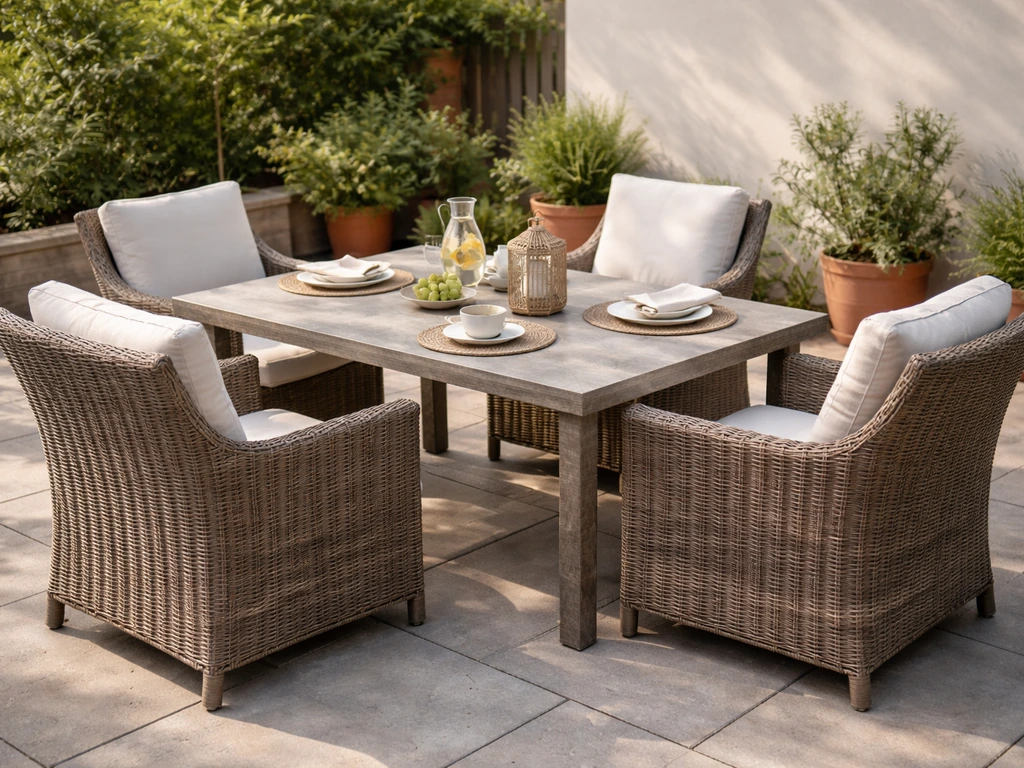
Outdoor dining sets are the most straightforward: a table plus matching chairs, sized for 4, 6, or 8 people. They're built for eating meals outdoors, so height and table surface matter. You'll often see these in listings where the patio extends off the kitchen or has a direct interior connection that makes outdoor dining practical.
Conversation Sets
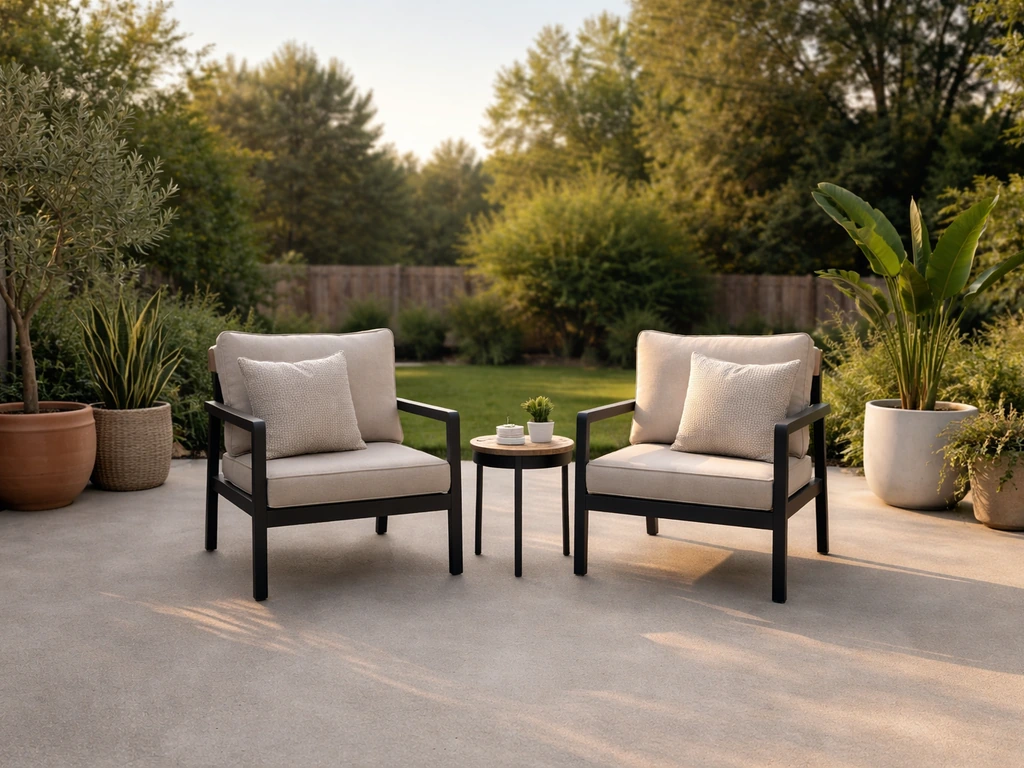
A conversation set is configured for relaxed socializing rather than eating, typically including an outdoor sofa or loveseat, a couple of chairs, and a low coffee table. These are sometimes called 'deep-seating sets' because the seats are wider and cushier than dining chairs. A classic 4-piece set might include two deep-seating chairs, a loveseat, and a coffee table. Retailers often sell these as labeled 'patio seating sets' specifically.
Bistro Sets
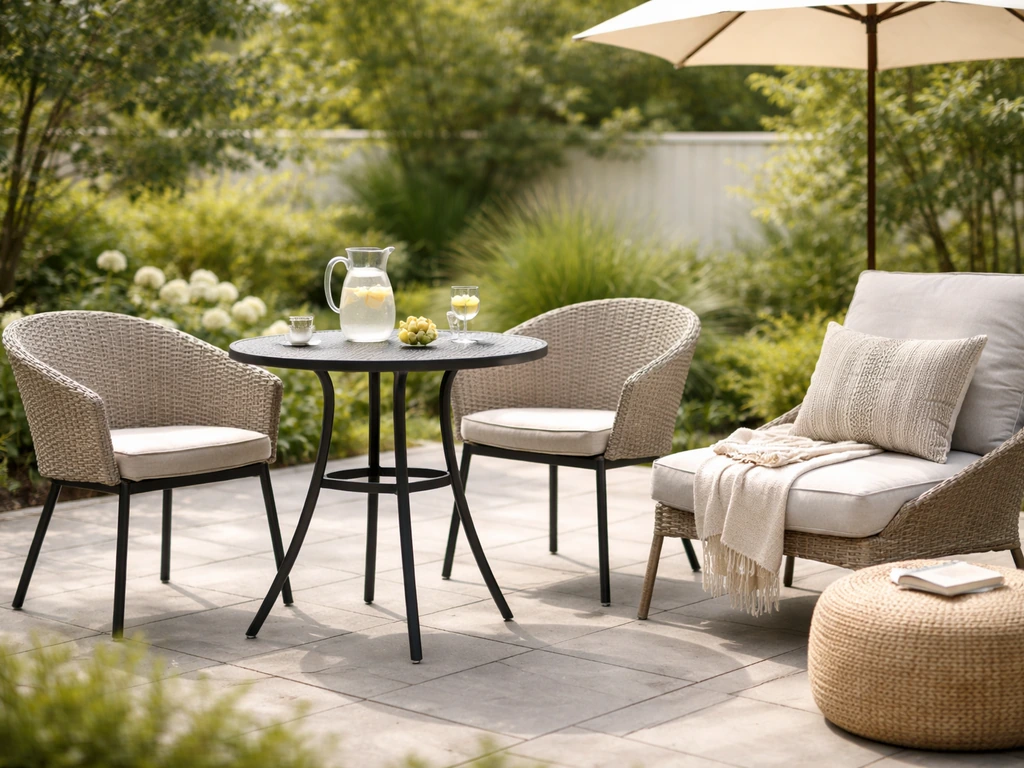
Bistro sets are small-scale outdoor dining setups, usually a round or square table with two chairs. They're ideal for compact patios, balconies, or a corner of a larger patio dedicated to morning coffee. The term comes from the casual French cafe format, and it's widely used in both residential furniture retail and restaurant outdoor seating contexts.
Sectionals and Outdoor Sofas
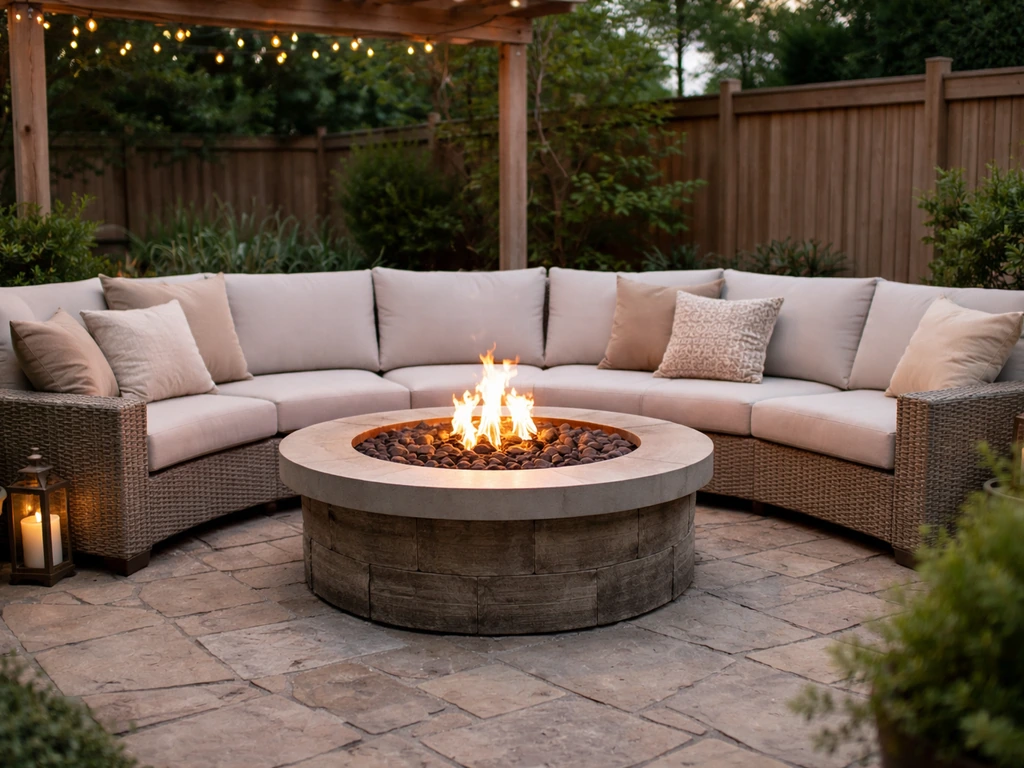
Larger patios often feature L-shaped or U-shaped sectional sofas designed for outdoor use. These work like a living room sofa arrangement but are built to handle weather. They're common on spacious back patios and are usually paired with a large coffee table or fire pit as the centerpiece.
Fire Pit and Mixed-Use Arrangements
Fire pit seating is a popular patio configuration where chairs or a sectional arc around a central fire pit or fire table. This blurs the line between conversation seating and dining because people often eat, drink, and socialize in the same arrangement over multiple hours. It's especially common on larger patios with a suburban backyard setting.
Materials and Comfort Factors for Patio Seating
The material your patio furniture is made from determines how long it lasts, how comfortable it stays through seasons, and how much maintenance you'll do. Here's how the most common options compare:
| Material | Durability | Comfort | Maintenance | Best For |
|---|---|---|---|---|
| Teak/Hardwood | Excellent (20+ years with care) | Very comfortable, warm feel | Annual oiling needed | Classic, long-term investment patios |
| Powder-coated aluminum | Excellent, rust-resistant | Moderate (pair with cushions) | Very low | Year-round outdoor use, coastal climates |
| Steel/Iron | Good but can rust | Moderate | Moderate (repaint every few years) | Decorative, shaded patios |
| All-weather wicker/rattan | Good (UV-treated resin) | Very comfortable | Low (wipe clean) | Casual lounge and conversation sets |
| Plastic/Resin | Good, lightweight | Basic | Very low | Budget-friendly, moveable setups |
| Teak-look eucalyptus | Good to excellent | Natural, comfortable | Low to moderate | Eco-friendly alternative to teak |
Cushions are almost always part of the comfort equation for lounge and conversation seating. Look for cushions with Sunbrella fabric or similar solution-dyed acrylic, which resists fading, mold, and moisture far better than standard polyester. For dining chairs, many people skip cushions entirely and rely on the chair's ergonomic shape, which is fine for shorter meals but less comfortable for long evenings.
Weather resistance is the non-negotiable factor for any patio seating. Unlike porch or veranda furniture that benefits from overhead cover, patio seating sits in full sun and rain. Aluminum frames with all-weather wicker or powder-coated steel are the most reliable low-maintenance choices. If you love wood, teak holds up outdoors remarkably well, but it requires annual treatment to maintain its color and strength.
How to Choose the Right Patio Seating for Your Space
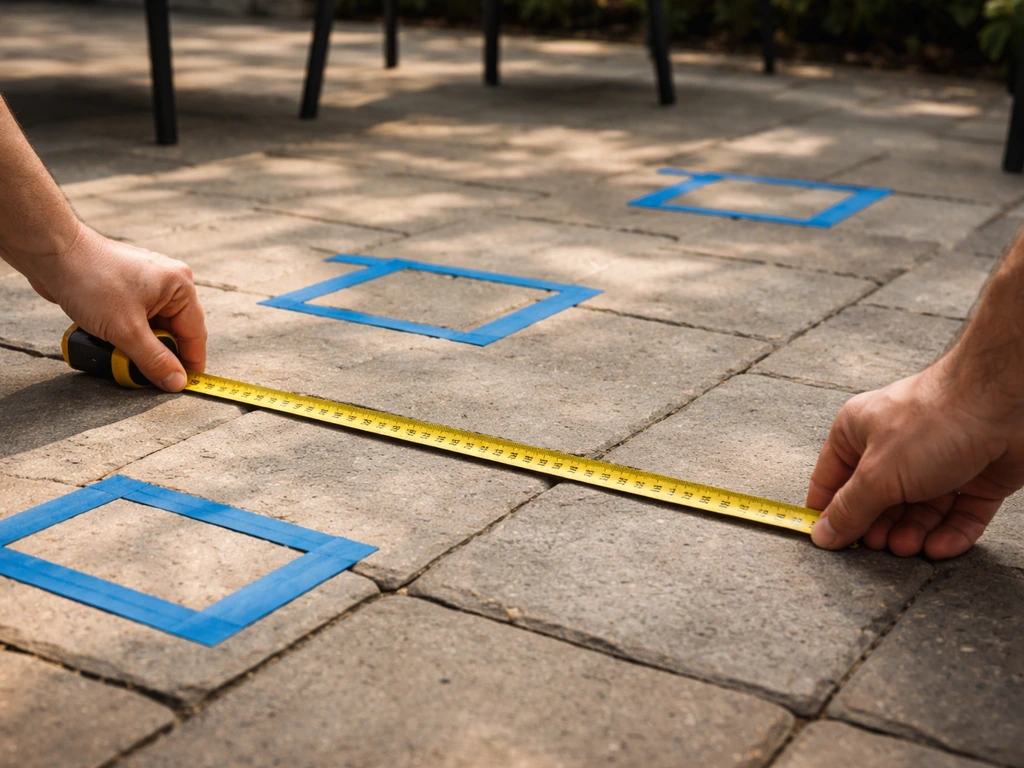
The single most useful thing you can do before buying patio seating is measure your patio and identify how you actually plan to use it. Those two factors alone will rule out most wrong choices.
Start with your primary use case. If you eat outdoors regularly, a dining set is your anchor piece. If you entertain in the evenings and spend hours sitting and talking rather than eating, a conversation or deep-seating set makes more sense. Many people do both, in which case a larger patio can support a dining area at one end and a lounge arrangement at the other. This mixed-use setup is also worth exploring if you're interested in what patio dining looks and functions like as a distinct concept. Patio dining is essentially an outdoor eating setup designed around a dining table and chairs, with comfort and weather-readiness in mind what patio dining looks and functions like.
Consider how many people you typically host. A 4-piece conversation set comfortably seats four adults. A 6-piece dining set handles six. If you regularly entertain eight or more, you're looking at a sectional plus extra chairs, or a large dining table. It's better to slightly undersize for daily use and bring out extra folding chairs occasionally than to fill your patio with furniture that crowds the space.
Think about exposure. A patio with full afternoon sun in a hot climate pushes you toward lighter-colored materials that don't heat up (aluminum over steel, light-colored resin wicker) and may benefit from a pergola, umbrella, or shade sail. A shaded or north-facing patio can handle darker materials without comfort issues.
- Full sun, hot climate: aluminum frames, light wicker, umbrella or shade structure, UV-rated cushions
- Rainy or humid climate: teak, powder-coated aluminum, or resin wicker with quick-dry cushions
- Cold winters: choose furniture you can store or cover, or invest in weatherproof resin and aluminum that stays out year-round
- Coastal/salt air: aluminum and teak outperform steel and iron in corrosion resistance
- Small patio: bistro set or compact 3-piece conversation set, avoid large sectionals
Practical Setup Tips: Layout, Sizing, and Placement
Good patio seating layout is about flow as much as furniture. You want to be able to move around chairs without squeezing, access the house door easily, and have the seating oriented toward the view or focal point (garden, fire pit, or pool) rather than facing a fence or wall.
As a starting point for sizing: a 4-person dining set typically needs about a 10x10 foot space to feel comfortable (table plus pull-out chairs plus walking room). A 4-piece conversation set with a loveseat and two chairs needs roughly the same footprint. A 6-seat dining set needs at least a 12x12 area. If your patio is 8x8 or smaller, stick to a bistro set or two chairs with a side table.
- Measure your patio first, then add 2 feet on each side of the furniture arrangement for comfortable movement around chairs.
- Place the main seating group so the back faces the house wall, opening the arrangement toward the yard or view.
- If you're adding an umbrella, center it on the table before buying, and confirm the base fits under or between chair legs.
- Keep at least 3 feet of clearance between the edge of any furniture and the patio's edge or a step, so no one trips.
- If the patio connects directly to an indoor dining area or kitchen, align the outdoor dining table with that interior sightline so the spaces feel connected.
- For fire pit seating, leave at least 3 feet between chair legs and the fire pit edge, and position the arrangement away from overhanging branches or a low pergola roof.
One thing worth noting if you're reading a real-estate listing: 'patio seating' doesn't always mean the furniture conveys with the property. People sometimes look up “was patio a real diet drink” out of curiosity about historical drink names, but it has little to do with what patio seating means in real estate listings. In many cases, sellers take their outdoor furniture with them. What the listing is really communicating is the space's capacity and intended use. So treat it as a signal about patio size and function, then plan your own seating purchase accordingly using the guidance above.
Finally, if you're renting, check your lease before buying large or heavy patio furniture, especially anything that involves drilling, anchoring, or permanent installation. Most patios in rental homes or apartments support freestanding furniture just fine, but it's always worth confirming. A good bistro set or a compact conversation set is the easiest, most portable starting point if you're not sure how long you'll be in a space.
FAQ
In a real-estate listing, does “patio seating” mean the furniture is included in the sale?
Not necessarily. It often signals the patio has been arranged for dining or lounging, but many sellers keep outdoor furniture. Treat it as a cue about patio size and intended use, then confirm in writing whether the seating set conveys.
What’s the difference between “patio seating” and “balcony seating” when choosing furniture?
“Balcony seating” usually implies a smaller footprint, often suited to a bistro set or a compact two-piece lounge. “Patio seating” more commonly means you can fit a full dining table or a deeper conversation arrangement with room to walk around.
If my listing shows “patio seating” next to a small slab, should I assume it can fit a 6-person dining set?
No. Listings can be technically vague, or the photos can focus on a corner. Measure usable surface area and account for chair pullout and traffic paths, then decide based on dimensions rather than the phrase alone.
Do patio dining sets and conversation sets have different chair heights and comfort needs?
Yes. Dining chairs are typically designed for eating at a table height and are often less cushioned for shorter stays, while lounge or deep-seating pieces are wider and cushier for sitting longer. If you plan all-evening use, prioritize deeper seating and weather-rated cushions.
How do I choose patio furniture if my patio has full afternoon sun?
Look for fabrics and frames that tolerate heat and fading, lighter colors that stay cooler, and consider shade options like a pergola, umbrella, or shade sail. Also confirm cushion material, solution-dyed acrylic, or similarly fade-resistant textiles if you’ll be outdoors daily.
What’s a common mistake when sizing patio seating?
Buying the set size only, not the movement space. Leave walking room between seating and doors or pathways, and ensure chairs can be pulled out fully. A set that “fits” on paper can feel cramped if clearance is too tight.
Can I mix dining and conversation seating on the same patio?
Yes, but plan it like two zones. Keep the dining area near the door or kitchen connection, and place the lounge farther from the walkway so people can sit without constantly being bypassed. Measure so the zones do not force people through the seating.
Is teak a good choice for patio seating, and how much maintenance is realistic?
Teak performs well outdoors, but it requires annual treatment to maintain color and structural strength. If you want low-maintenance, aluminum with all-weather wicker or powder-coated steel is usually the easier long-term option.
What should I check before buying patio seating for a rental?
Confirm whether the lease allows anchoring or drilling, especially for fire pits, pergola attachments, or furniture that needs to be secured. If unsure, choose freestanding pieces like a small bistro set or a compact conversation set that you can take with you.
What’s the fastest starting point for someone not sure how they’ll use the patio?
Start with a flexible compact conversation setup, such as a two-chair deep-seating set with a side or coffee table. It works for lounging, casual meals, and socializing, and it’s easier to move or adjust if your plans change.
Next Article
Was Patio a Real Diet Drink? Check the Brand and Evidence
Find out if Patio was a real diet drink by disambiguating patio and using label, archive, and registry checks.