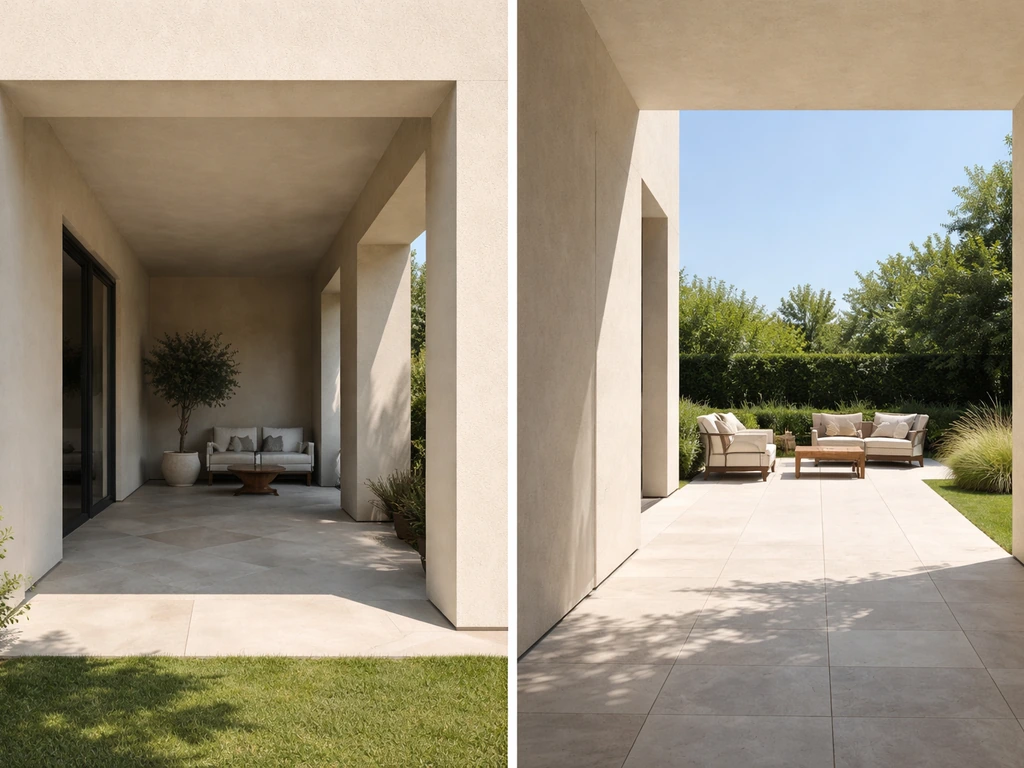
A patio is a hard-surfaced outdoor area directly attached to a house, built for sitting, eating, and entertaining. A garden is an outdoor area dedicated to growing and cultivating plants, flowers, or vegetables. They are fundamentally different things: one is construction, the other is horticulture. In practice, most residential properties have both, and the confusion usually comes from British English, where "garden" often refers to the whole backyard (patio included), while American English keeps the two terms fairly separate.
Patio vs Garden: Key Differences, Costs, and How to Choose

Ada Hollis
4 Jul 2026
Quick definitions and core differences
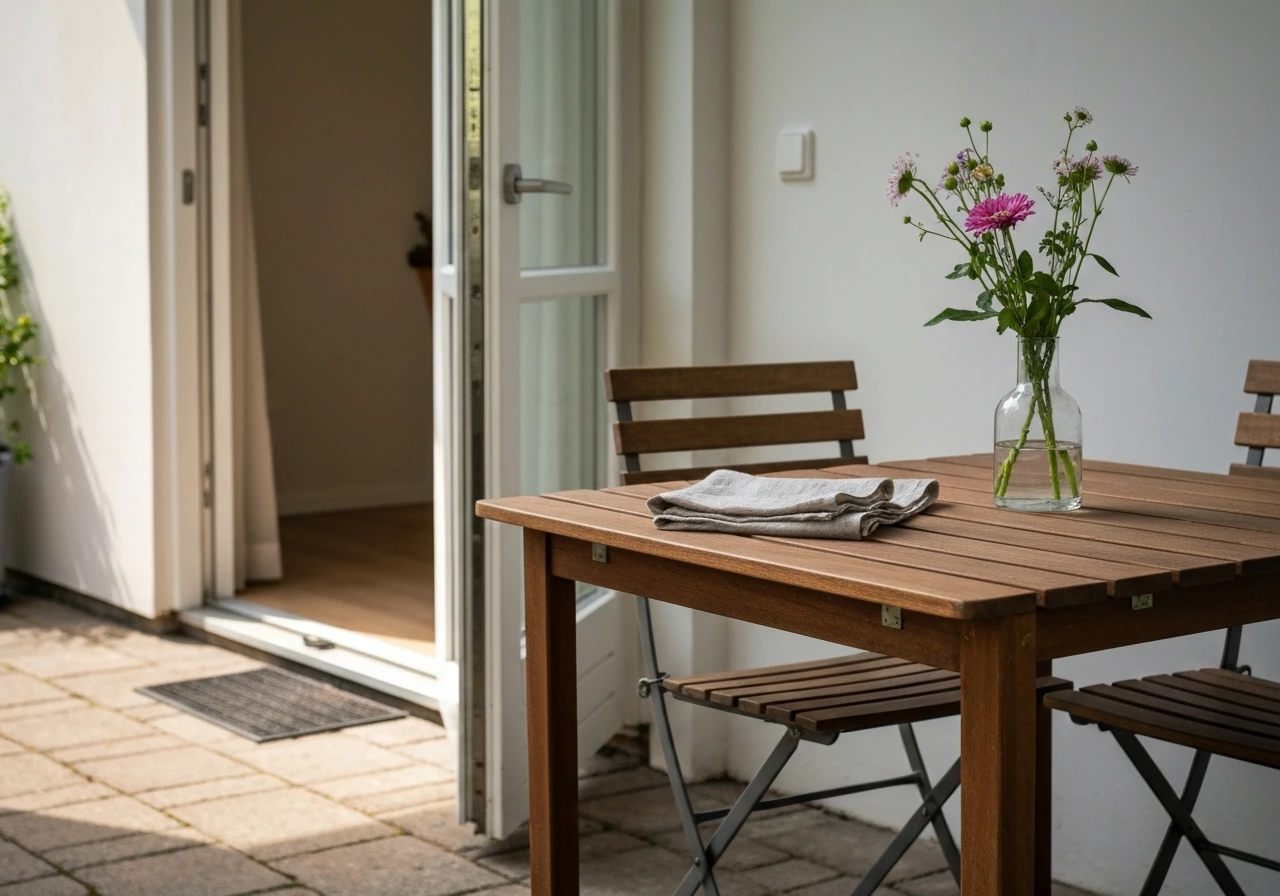
Merriam-Webster defines a patio as a recreation area that adjoins a dwelling, is often paved, and is adapted especially for outdoor dining. Cambridge Dictionary keeps it tight: an outdoor area outside a house with a solid floor but no roof, used for relaxing and eating in good weather. A garden, by contrast, is defined as an outdoor area dedicated to the cultivation of plants, flowers, or vegetables. The word itself comes from the concept of creating and tending planted spaces. One is about hard surfaces and furniture, the other is about living plants and soil.
The overlap in everyday speech mostly comes from British usage, where people routinely say "I'm going out into the garden" and mean the entire backyard, paved section and all. American homeowners tend to be more precise: the patio is the concrete or paver area by the back door, and the garden is the planted beds along the fence. Neither usage is wrong, but if you're reading a property listing or planning a renovation, knowing which meaning the writer intends matters a lot.
It's also worth quickly clearing up what a patio is not. A porch has a roof. A verandah is a long open porch, also usually roofed. A courtyard is enclosed by walls on multiple sides, and a loggia has at least one open-arched side with a roof overhead. Patios are open to the sky, attached to the dwelling, and paved. If you're sorting out the labels on a property, that distinction matters for insurance, planning permission, and resale descriptions.
| Feature | Patio | Garden |
|---|---|---|
| Primary purpose | Outdoor living, dining, entertaining | Growing plants, flowers, vegetables |
| Surface | Hard: concrete, pavers, stone, brick | Soft: soil, mulch, grass, gravel paths |
| Relationship to home | Directly adjoins the structure | Can be adjacent or further from the house |
| Maintenance type | Cleaning, sealing, occasional repair | Weeding, watering, pruning, seasonal planting |
| Weather usability | Year-round with furniture | Seasonal, climate-dependent |
| Construction required | Yes, always | Minimal to moderate (beds, edging, irrigation) |
Where patios vs gardens sit on a property
A patio almost always sits directly outside a rear or side door, usually the kitchen, dining room, or main living area. That placement isn't accidental: the patio is designed to extend your indoor living space outward. You step off a threshold and you're on it. It typically covers a defined footprint, anywhere from 100 square feet for a small urban backyard to 500+ square feet for a larger suburban home.
Gardens can sit anywhere on the property. Front gardens (or front yards with garden beds) frame the street-facing facade. Side gardens run along boundaries. Rear gardens occupy the space beyond the patio. Kitchen gardens are often placed near back doors for easy herb and vegetable access. The key point is that a garden doesn't have a fixed structural relationship to the house the way a patio does. It can be tucked into a corner, wrapped around a tree, or take up the entire rear yard.
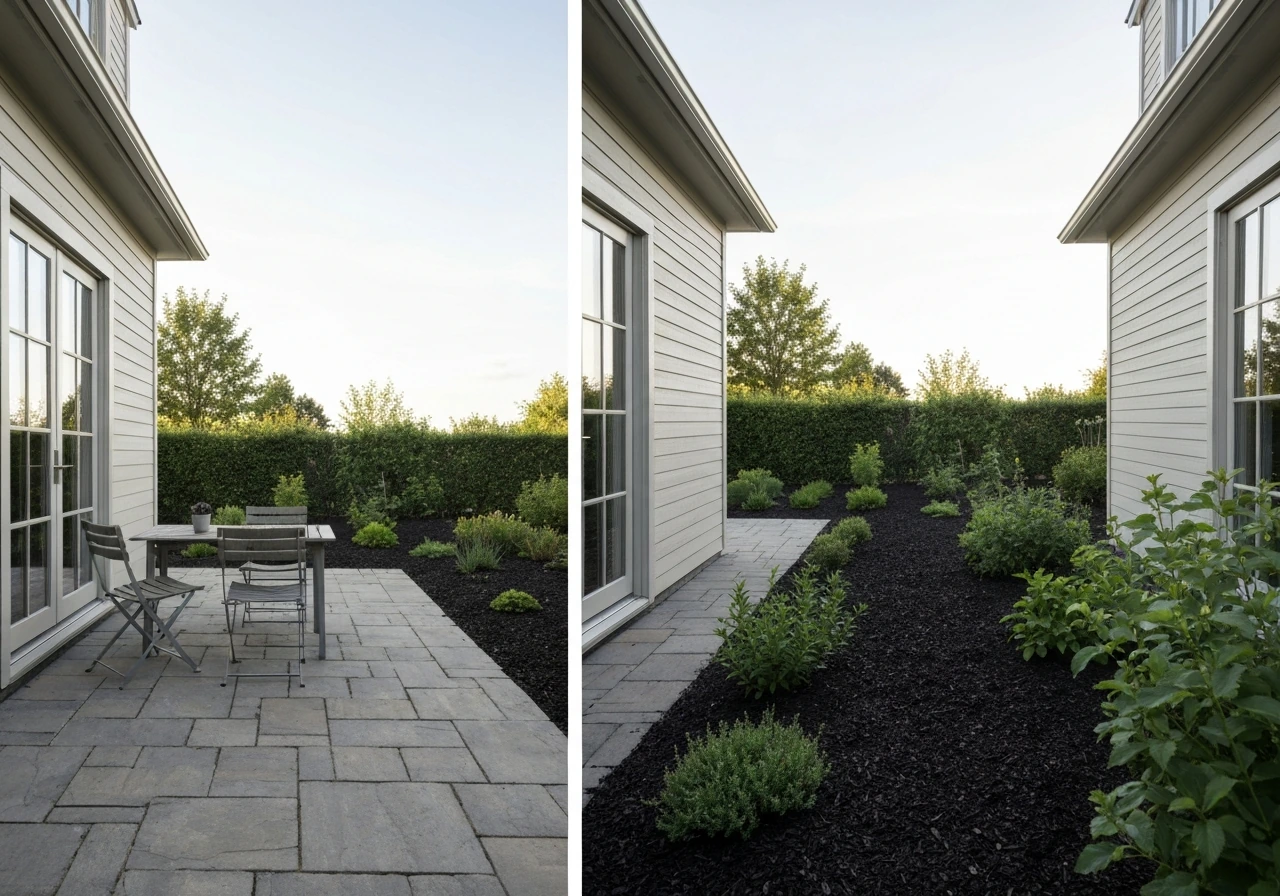
In smaller urban lots, the patio and garden often coexist in the same compact space: raised planters and border beds surround a central paved area. In this layout the patio is still the patio (the hard surface where you put furniture) and the garden is still the garden (the planted sections), even if they're only a few feet apart.
Design purpose: entertaining and access vs growing and relaxing
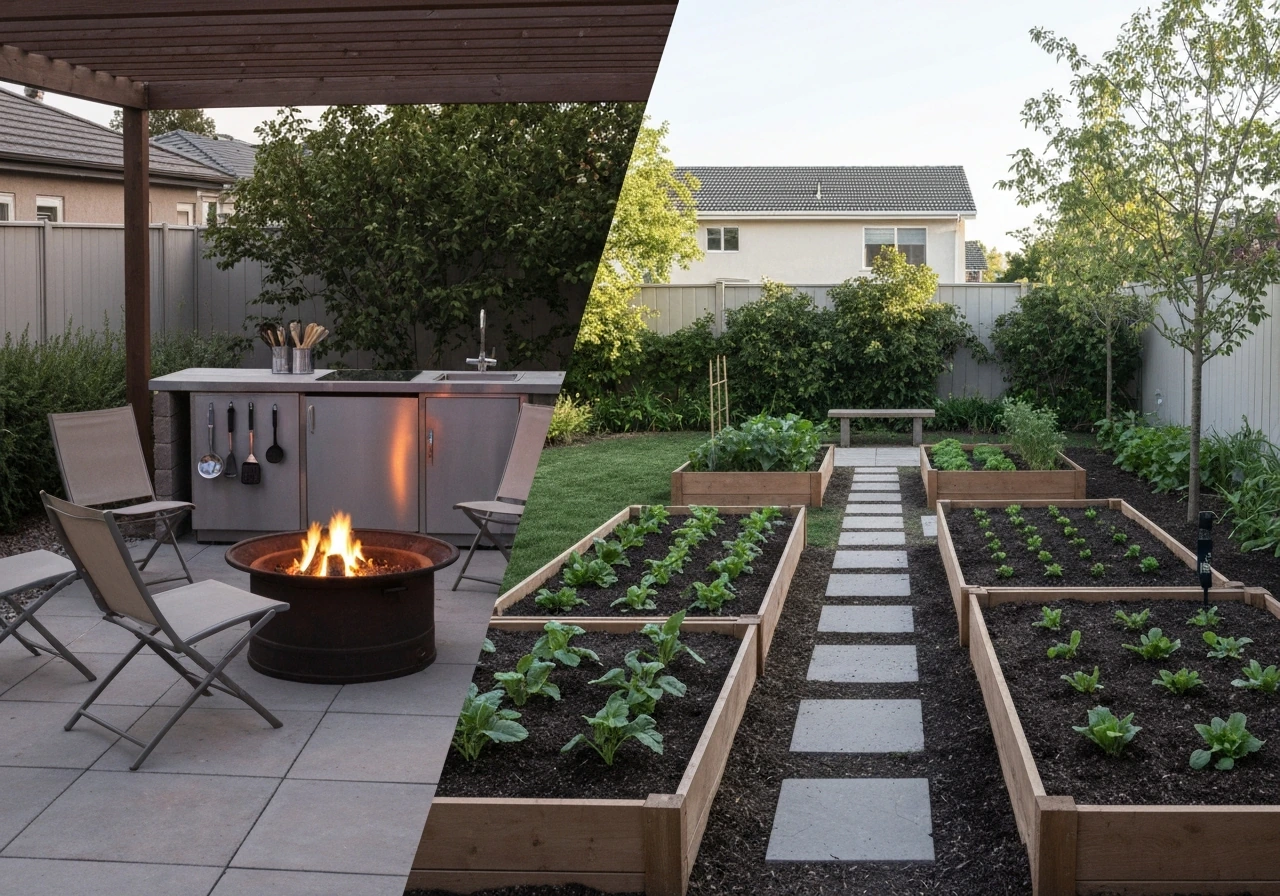
Patios are built around human activity. The design decisions: size, shape, how it connects to the interior, where the outdoor kitchen or fire pit sits, how traffic flows between door and seating area. Everything is oriented toward people using the space comfortably, hosting guests, eating meals, having a drink. It's hardscape thinking: surfaces, levels, transitions, drainage.
Gardens are built around plants. Design decisions involve soil type, sun exposure, water access, planting sequences, and seasonal color. A well-designed garden rewards you with changing textures and colors across the year, wildlife habitat, edible harvests, and a sense of natural calm that a hard surface simply cannot replicate. But the primary occupants are plants, not people. Humans are visitors to a garden in a way they aren't visitors to a patio.
That doesn't mean gardens are purely passive. A well-positioned garden bed along a patio edge softens the hardscape, adds privacy screening, reduces heat reflection from paving in summer, and makes the whole outdoor area feel more complete. The best outdoor spaces use both: patio for the activity, garden for the atmosphere. If you're also wondering how an atrium compares, the key differences come down to whether it's an interior-adjacent enclosed space versus a dedicated outdoor hardscape patio for the activity.
Materials and construction approach
Building a patio is a construction project. The most common materials are concrete (poured or stamped), concrete pavers, natural stone (flagstone, bluestone, travertine), brick, and porcelain tile. Each has its own cost range, maintenance requirement, and aesthetic. Concrete is the most affordable at roughly $6 to $15 per square foot installed. Natural stone runs $15 to $35+ per square foot depending on type and complexity. The work involves excavation, a compacted gravel base, edge restraints, and the surface material itself, plus sealing for most finishes.
Creating a garden requires far less heavy construction. You're working with soil amendment, raised bed framing (optional), edging to define the planting area, and an irrigation setup if you want one. The material costs are lower upfront, but the labor of ongoing planting, weeding, and seasonal management adds up over time. Installing a proper drip irrigation system adds $500 to $3,000 depending on size, but it pays off quickly in water efficiency and time saved.
One construction note: if you plan to have both a patio and garden beds in the same space, get the patio built first. Digging for a patio base after garden beds are established damages root systems and undoes planting work. Build hard surfaces, then design the planted areas around them.
Plants and maintenance expectations
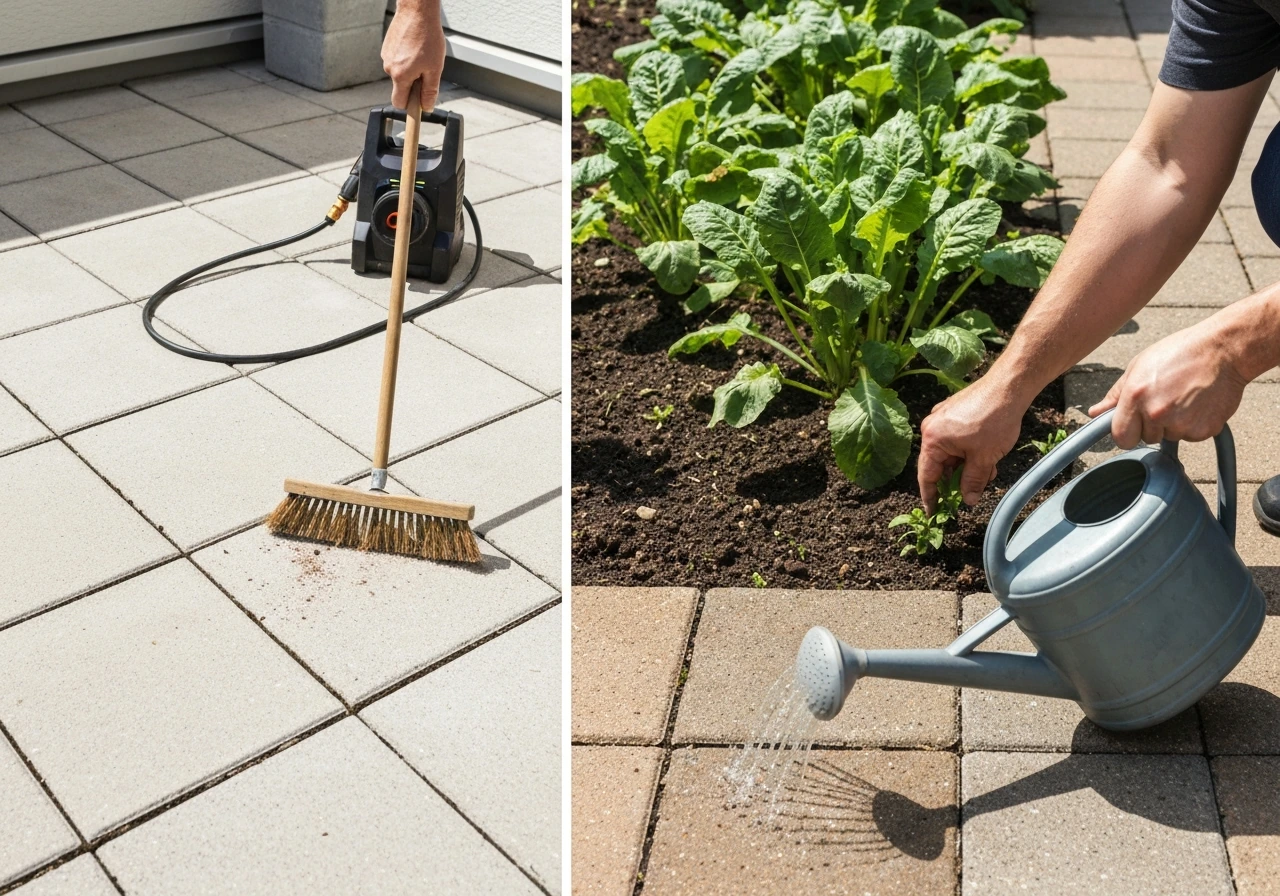
Patios need cleaning, not cultivation. Sweeping, occasional pressure washing, resealing stone or concrete every two to three years, pulling the odd weed from joints, and replacing a cracked paver now and then. It's maintenance, but it's not a weekly commitment. A well-built patio in good condition might need serious attention only once or twice a year.
Gardens are a different story. Even a low-maintenance garden requires regular weeding, watering (unless you've nailed a drought-tolerant planting scheme), deadheading spent blooms, seasonal cutbacks, mulch topping in spring, and replanting anything that doesn't survive winter. A productive vegetable garden adds fertilizing, pest management, and successive planting schedules on top of that. Realistically, a 200-square-foot garden bed takes one to three hours of maintenance per week during the growing season.
That time investment is genuinely enjoyable for people who love gardening. For people who want a beautiful outdoor space with minimal weekly effort, a patio-dominant layout with a few low-maintenance planted borders (ornamental grasses, native shrubs, drought-tolerant perennials) is a smarter design choice than a sprawling garden you'll resent by August.
Cost, property value, and real estate implications
A well-designed patio is one of the outdoor features with the clearest positive return in residential real estate. Buyers can immediately visualize using it. It photographs well, it extends usable square footage in listings, and it signals that outdoor living was taken seriously. Estimates on cost recovery vary, but a quality patio typically returns 50 to 80 percent of its installation cost in resale value, with premium finishes in desirable climates performing at the higher end.
Gardens are trickier from a pure resale standpoint. A mature, well-maintained garden with established trees and thoughtful landscaping adds meaningful curb appeal and perceived value. But an overgrown, high-maintenance garden can actually deter buyers who don't want the upkeep. The rule of thumb in real estate is that professionally landscaped front yards increase perceived value clearly, while complex rear gardens are appealing to some buyers and a burden to others.
If you're renovating with resale in mind, a clean, well-sized patio is almost always a safer investment than an elaborate garden. If you're staying long-term and love gardening, the garden delivers value through enjoyment and potentially through food production, which has its own economic logic as grocery costs climb.
One practical note for renters and property shoppers: listings that say "patio" in American English almost always mean a hard-surfaced outdoor space. Listings that say "garden" in British-influenced markets may mean the whole backyard. Check the photos before drawing conclusions.
How to choose (and mix) patio and garden layouts
Start by being honest about how you actually use your outdoor space. Do you regularly host people for meals outside? A patio is non-negotiable. Do you spend weekend mornings in the garden tending plants? Prioritize beds and borders. Most people fall somewhere in the middle, which is exactly where a combined layout works best.
A practical combined layout starts with a patio footprint large enough for your actual furniture: a dining table for six needs at least 12 by 12 feet, a lounging area adds another 8 by 10 feet. From there, use garden beds to frame the edges. Raised beds along a fence, a border of ornamental grasses between the patio and lawn, a small herb bed near the kitchen door. This gives you the utility of hard surface and the visual softness of planting without committing to either extreme.
- Define your primary use first: entertaining, growing, or both, then proportion your hard vs soft surface accordingly.
- Build the patio before establishing garden beds so excavation doesn't disturb planting.
- Choose low-maintenance plants for beds adjacent to the patio so the planting enhances the space without dominating your time.
- Include at least one transition element: a gravel path, stepping stones, or a border of edging that gives the patio a clear edge and the garden a clear beginning.
- Plan for irrigation if garden beds are extensive; drip systems pay back in time and water savings within one season.
- Consider your climate: in hot, dry regions a patio-heavy layout with drought-tolerant planting is more livable than a lawn-and-garden approach that demands constant water.
If you're still weighing the fundamental question of which to prioritize, the practical answer for most homeowners in 2026 is: get the patio right first. If you are comparing Lilia Piazza vs patio setups for your outdoor space, use these patio-versus-garden distinctions to decide what will fit how you live. It drives daily usability, adds clear resale value, and requires less ongoing effort. Then build your garden around it in phases, starting with the beds you'll actually tend and expanding as your time and interest allow. A patio with a few well-chosen plants will serve you better than an ambitious garden with nowhere comfortable to sit.
FAQ
If I want “outdoor living space,” should I prioritize a patio or a garden first?
Prioritize the patio if your goal is daily use and hosting, because you can plan clear pathways from your doors to seating right away. Then add garden in phases, starting with the beds closest to the patio edge for quick visual payoff and easier maintenance access.
What’s the biggest mistake people make when building both a patio and garden beds?
Building the patio excavation after the garden is established. Digging for the patio base can damage or sever roots, forcing you to replace plants and undo mulching, so schedule hardscape first, then beds and planting.
Do patios or gardens need more water in most climates?
It depends on plant choices, but patios typically do not need irrigation for the surface itself, while gardens can require regular watering, especially newly installed beds. If water is a constraint, choose drought-tolerant plants and use drip irrigation only where needed, like vegetable rows or high-sun beds.
How can I keep a garden “low-maintenance” without sacrificing curb appeal?
Use fewer plant types, focus on perennials and shrubs that fill in over time, and keep a consistent mulch layer to reduce weeds. Also plan the “hard edges” (edging or a defined border) so grass and weeds do not creep into planting areas.
Can a garden feel private if I do not add a tall fence?
Yes, but plan for growth time. Use staggered shrubs, ornamental grasses, or climbing plants with a framework (trellis or arbor) placed where mature height will create screening. Expect privacy to build gradually over seasons rather than immediately.
Are patios always the best choice for resale value?
In most markets a clean, well-sized patio is a safer bet because buyers can immediately picture how they will use it. However, a garden can improve perceived value if it looks curated, not overgrown, and if the landscaping is easy to maintain.
How do I interpret property listings that say “garden” in the UK vs “patio” in the US?
Assume “garden” may mean the entire outdoor area, including the paved portion and seating zones, while “patio” in US listings usually indicates a specific hard-surfaced area. Always cross-check photos for the presence of paving, furniture placement, and whether the landscaped beds are separate.
What patio size should I plan for if I’m adding a dining table and a grill?
Use the table footprint as a baseline, then add clearance for walking and cooking. A dining table for six needs more than the tabletop space, plan extra room on at least one side for chairs and allow clear traffic routes between the grill, door, and seating.
Is it possible to have a “patio” that is not open to the sky?
A classic patio is open-air with no roof, but you can still create similar use with shade structures like pergolas that leave the space mostly exposed. If the space has substantial roofing coverage, listings and permits may categorize it differently, so confirm with your local planning office.
What maintenance is reasonable to expect for a patio vs a garden?
For patios, expect periodic cleaning and joint weed-pulling, plus resealing stone or concrete finishes every few years depending on material. For gardens, even low-maintenance beds usually need ongoing weeding, seasonal pruning, and watering management, with vegetable gardens requiring fertilizing and pest control.
Next Article
Loggia vs Patio: Key Differences, Features, and Choice
Clear loggia vs patio guide: recessed vs ground-level, enclosure, privacy, weather, and how to spot terms in listings.