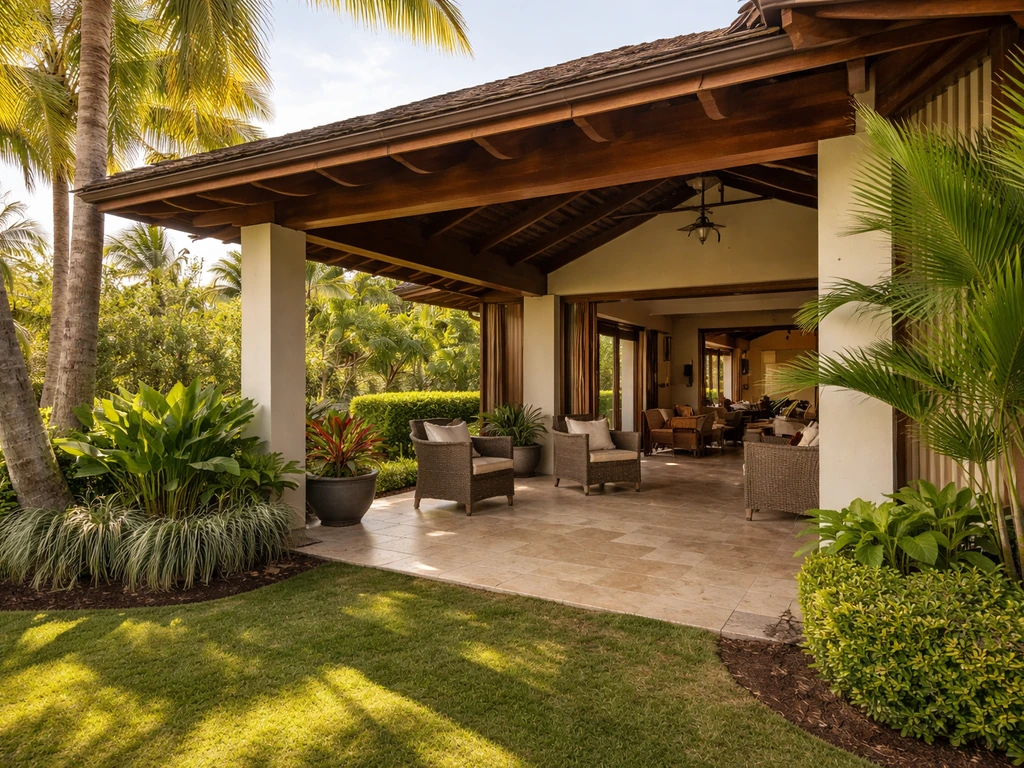
In Florida real estate listings, a 'patio home' typically means a smaller, lower-maintenance single-family home (either attached or detached) that's built around or adjacent to a dedicated outdoor patio area, usually on a reduced lot, and almost always inside an HOA community. The term is a marketing label, not a legal classification, so what it actually means depends on the specific development's governing documents. In some Florida communities, 'Patio Home Living Unit' is a formally defined legal term in the declaration documents. In others, it's just how the builder chose to brand the product. Either way, knowing what to look for before you sign anything makes a real difference.
What Is a Patio Home in Florida? Definition and Buying Tips

Ada Hollis
16 Jun 2026
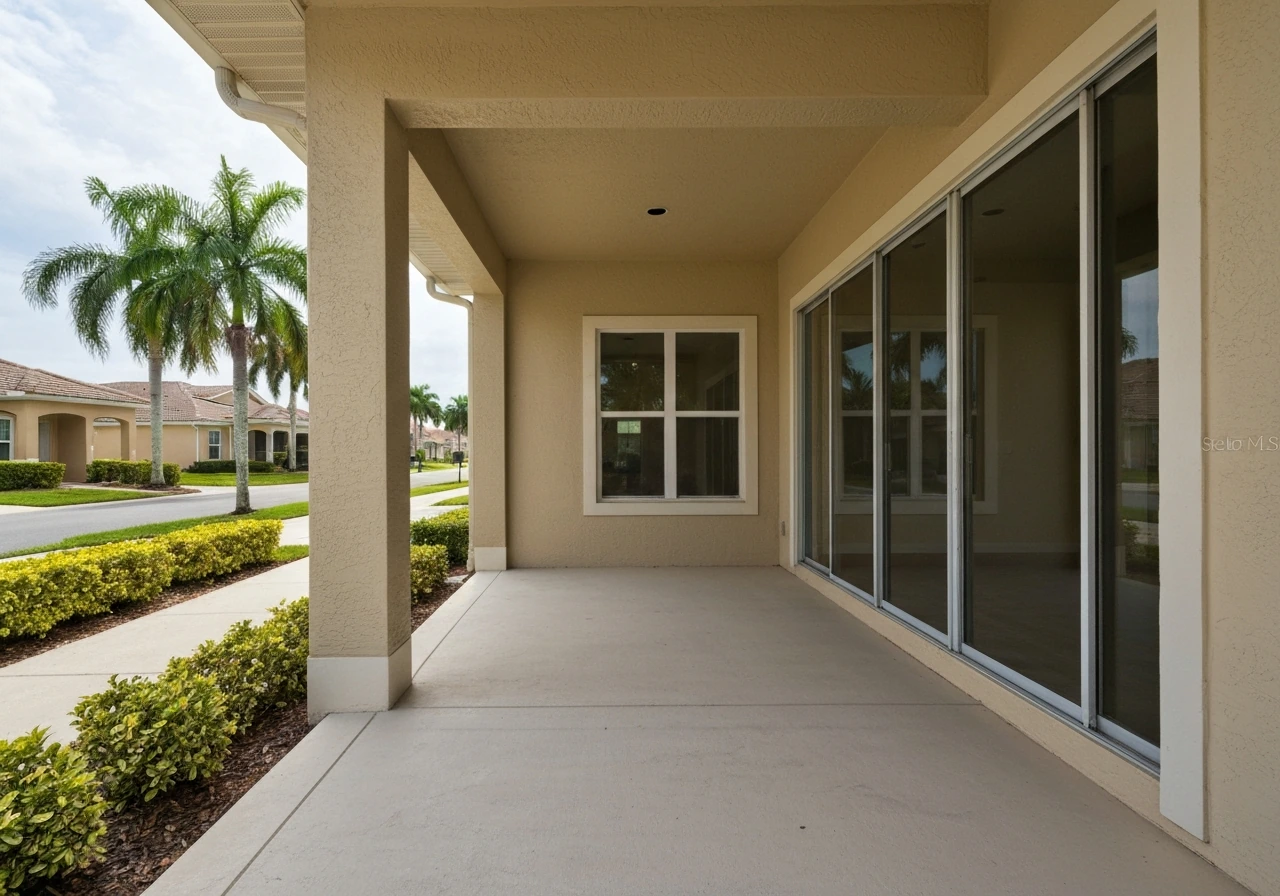
What a patio home actually is (the working definition)
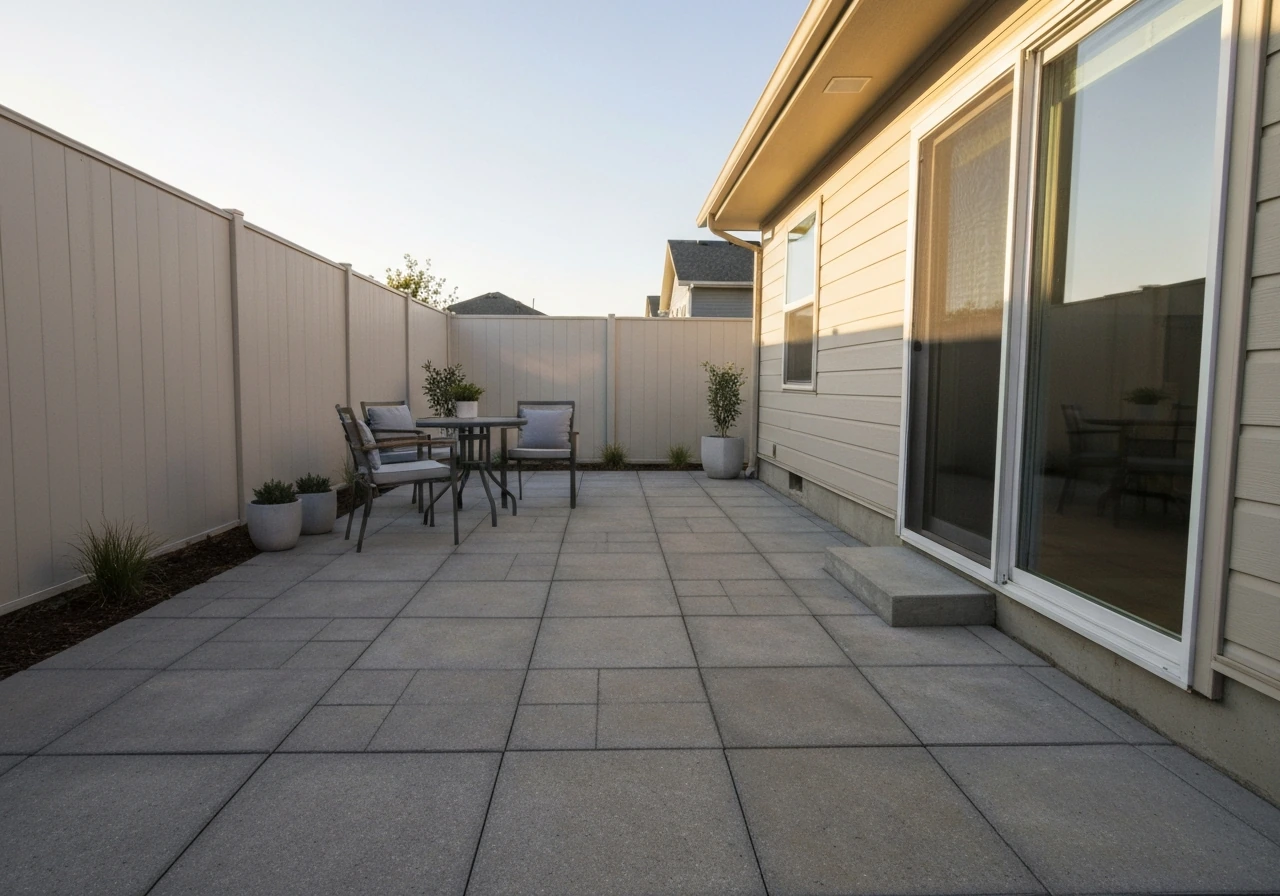
Start with the word 'patio' itself. In residential architecture, a patio is a flat, hard-surfaced outdoor area directly adjoining a home, used for sitting, dining, and relaxing. Think brick, concrete, or pavers at ground level, typically at the back or side of the house. That's the base definition from Merriam-Webster and Britannica, and it's the sense that matters here. (The 'patio' as restaurant outdoor seating is a separate Canadian/commercial usage that doesn't apply to property listings.)
A patio home takes that outdoor-patio concept and makes it central to how the property is designed and marketed. It's a residential home type, usually part of a planned community, where a private patio area is a defining feature of the unit. The home tends to have a smaller footprint than a conventional house, less lawn to manage, and outdoor living concentrated in one dedicated paved or hardscaped space rather than spread across a large yard. Florida builders lean into this format heavily because it suits both retirees and buyers who want the feel of a house without the weekend yard work.
The tricky part is that 'patio home' has no single legal definition anywhere in the U.S. The same property could be marketed as a patio home, a garden home, a carriage home, a twin home, or a townhome depending on the developer. In Florida specifically, some HOA declarations formally define a 'Patio Home Living Unit' as a completely detached residential building designed for single-family use, designated by the developer in a supplementary declaration tied to recorded plat information. Others use the term loosely. This is exactly why you can't just take the label at face value.
How it's different from a regular house that happens to have a patio
A conventional detached house might have a patio in the backyard, but that doesn't make it a patio home. The distinction is in the design philosophy, lot size, and community structure. A patio home is intentionally built on a smaller or zero-lot-line parcel, meaning the house is positioned very close to one or more property boundaries. The outdoor patio space is planned into the layout from the start, not just leftover yard that got paved over.
Zero-lot-line construction is a key signal. When a house sits right up to the lot line on one side, the builder often sets up a use easement so that maintenance workers or neighbors can access that side for upkeep. This is common in Florida patio home subdivisions, and it has real practical implications: you may own the lot, but there are rules about what you can build, plant, or fence along those boundaries. A regular house on a standard lot doesn't carry those easement complications.
The community context is the other major difference. A standalone house is just a house. A patio home is almost always part of a planned community with shared amenities, landscaping standards, exterior appearance rules, and an HOA collecting fees to maintain common areas. You're not just buying a home, you're buying into a set of rules and shared responsibilities.
Patio homes vs. other outdoor spaces you'll see in Florida listings
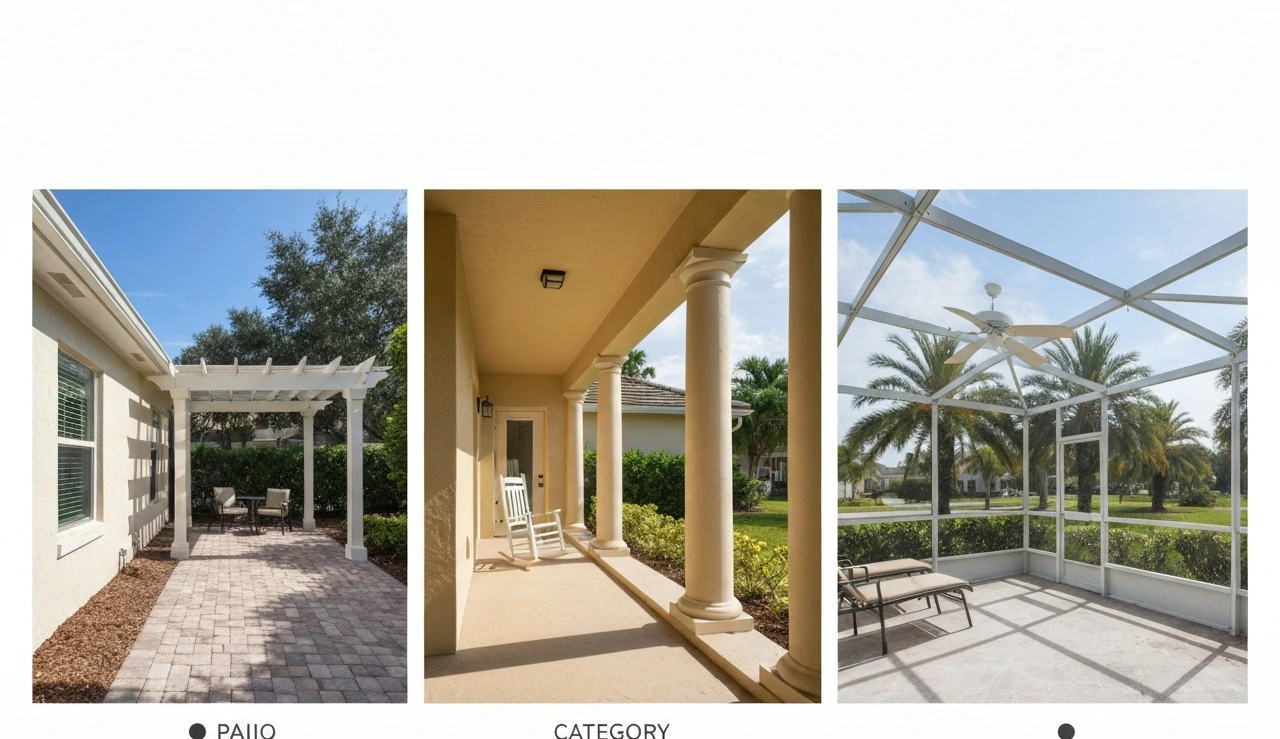
Florida listings throw around a lot of terms for outdoor spaces, and mixing them up can lead to real confusion when you're comparing properties. If you are wondering what a patio is called in Florida listings, this is the phrase you will see used most often when describing the outdoor living setup what is a patio called in Florida. Here's how the main ones break down.
| Term | What it is | Florida context |
|---|---|---|
| Patio | Flat, ground-level hardscaped area adjoining a home | The defining outdoor feature of a patio home; typically paved with concrete, brick, or pavers |
| Lanai | A covered, often screened outdoor living area integrated with the home's roofline | The most common term in Florida for a screened outdoor room; frequently found in patio homes and standard Florida homes alike |
| Porch | A covered entry or sitting area attached to the front or rear of the home | Typically smaller and more transitional than a lanai; often open-air at the front of the house |
| Balcony | An elevated platform projecting from an upper floor, enclosed by railings | Found in multi-story homes and condos; structurally very different from a ground-level patio |
| Verandah | A roofed open gallery running along the exterior of a home, often wrapping multiple sides | Less common in Florida new construction; more associated with older homes and Southern architecture |
| Courtyard | An enclosed outdoor space within or surrounded by the home's structure | Seen in Mediterranean-style Florida homes; more private than a standard rear patio, enclosed by walls |
The lanai comparison matters most in Florida. Many patio homes include a lanai, which is a screened or covered outdoor room that feels like an extension of the interior living space.
A lanai differs from a plain patio in that it has a roof and often screen enclosures, making it usable year-round despite Florida heat and bugs. A lanai patio is typically a roofed and screened outdoor room that works like an extension of your indoor living space what is a lanai patio.
If a listing says 'patio home with lanai,' you're typically looking at a paved outdoor area plus a separate covered screened space, which is a meaningful upgrade in livability. The site has more detail on what a lanai means specifically in Florida contexts, including how it compares to a screened porch.
How patio homes are laid out inside and outside
Florida patio homes are almost always single-story, which fits the low-maintenance and age-friendly appeal. The floor plan usually flows directly from the main living area (living room, family room, or kitchen) out to the rear patio or lanai through sliding glass doors or French doors. A lanai definition in real estate listings is essentially the same outdoor living idea, but the term is often used for covered patios attached to the home. That indoor-outdoor connection is part of the design intent. You're not walking through a mudroom or garage to get outside. The transition is direct and open.
The patio itself is typically at the rear of the home, sometimes enclosed by a privacy wall, fence, or landscaping on the sides. In zero-lot-line designs, one side of the house may sit within inches of the property line, with the patio and outdoor space concentrated on the opposite side or at the rear. Square footage of the patio varies widely, from a modest 10x12 slab to a more generous courtyard-style space, so always check the actual dimensions in the listing or floor plan, not just the label.
Parking is usually a one or two-car attached garage with a short driveway, sometimes shared with a neighboring unit in attached configurations. Landscaping in the front is typically minimal and often HOA-maintained, which is a major selling point for buyers who don't want yard work. The overall effect is a home that lives larger than its square footage suggests because the outdoor patio extends your usable space.
HOA, attached vs. detached, and how ownership actually works
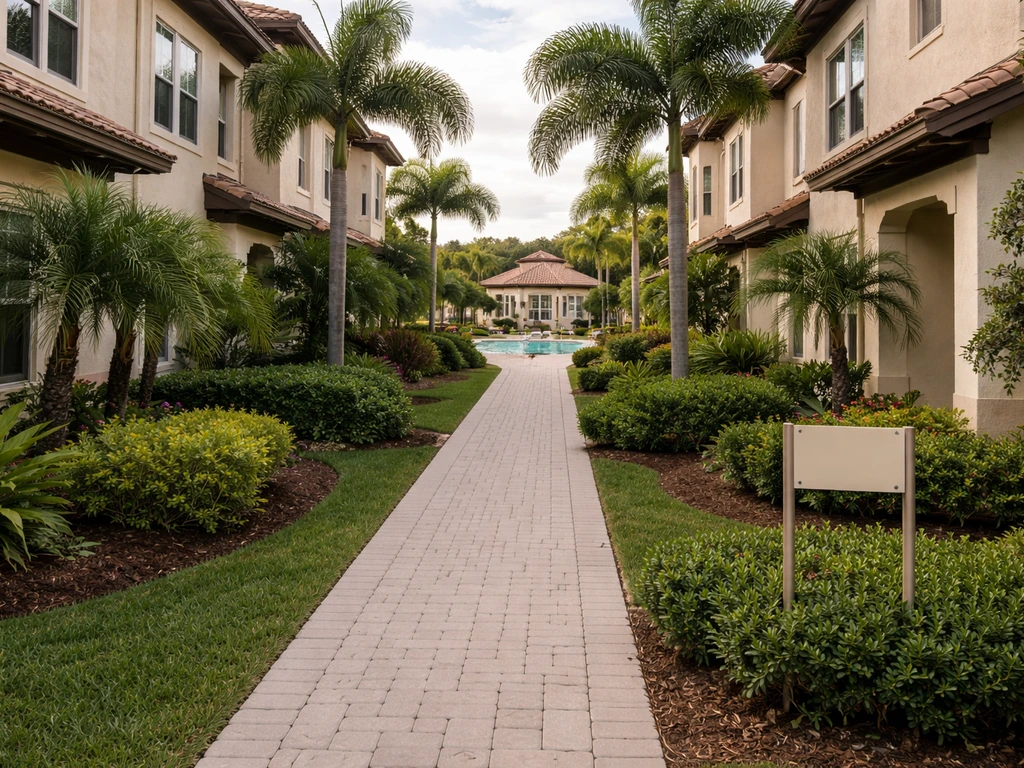
Most Florida patio homes sit inside HOA-governed communities. The HOA collects monthly or quarterly fees and typically handles shared amenities like pools, clubhouses, walking paths, and common-area landscaping. What it does or doesn't cover for your individual unit varies enormously, and this is where buyers get surprised.
On ownership structure: in most patio home setups, you own the lot and the building's exterior, unlike a condo where the association owns everything outside your walls. MLS classifications often label these as 'Patio Home Detached' or 'Patio Home Attached' to reflect whether your unit shares a wall with a neighbor.
In SDMLS Residential Styles, MLS categorization examples explain that a “Detached” classification includes zero lot-line properties, while “Townhome” is defined as horizontally attached units and typically provides yard or patio access at the rear or side MLS classifications often label these as 'Patio Home Detached' or 'Patio Home Attached' to reflect whether your unit shares a wall with a neighbor. .
A detached patio home sits independently on its lot with no shared walls. An attached patio home (sometimes called a twin home or villa) shares one wall with an adjacent unit, similar to a duplex setup. Both types are common in Florida, and the attached version tends to be less expensive.
HOA rules in patio home communities often include exterior appearance standards that directly affect your patio and outdoor areas. You may need HOA approval to add a screen enclosure, change your patio surface, install a fence, plant certain trees, or even paint your front door a different color. Some Florida HOA declarations include specific timelines for when owners must repaint, repair screens, and maintain landscaping, with the HOA retaining the right to step in and bill you if standards aren't met. These rules aren't suggestions. They're enforceable.
How to verify what you're actually buying
The label 'patio home' in a listing tells you something, but it doesn't tell you enough. Here's what to actually check before you commit.
- Pull the Declaration of Covenants, Conditions, and Restrictions (CC&Rs): Search for the phrase 'Patio Home Living Unit' or 'patio home' in the document. If it's defined, read that definition carefully. It tells you the legal structure of what you're buying.
- Check the recorded plat: The plat map shows actual lot boundaries, easements, and setbacks. This is critical in zero-lot-line designs where the house is built right up to one edge of the lot.
- Identify all easements: Look for use easements, maintenance easements, or access easements along the sides of the property. These affect what you can build and who has the right to access your lot.
- Confirm maintenance responsibilities in writing: Ask exactly which exterior elements the HOA maintains (roof, exterior paint, landscaping, irrigation, driveways) and which are yours. Don't assume. Get it from the governing documents, not the listing agent.
- Review architectural control or modification rules: These sections spell out what you need HOA approval for, including patio additions, screen enclosures, fences, pavers, and plantings.
- Check HOA financials and reserve funds: A community with an underfunded reserve may face special assessments. This matters particularly for exterior-heavy communities where shared maintenance costs are real.
- Inspect drainage and the patio surface: Florida rain is intense. Check whether the patio slopes away from the home properly, whether there's a drainage channel, and whether any attached or adjacent structures have water intrusion history.
- Confirm the legal property type in the MLS: Look at how the property is classified: detached, attached, townhome, condo. The marketing label 'patio home' may not match the legal classification, which affects financing and insurance.
What it's actually like to live in a Florida patio home
The low-maintenance appeal is real. If you're done with mowing half an acre or fixing fences after every hurricane, a patio home in an HOA community delivers on that promise. Front landscaping is usually handled for you, the community exterior maintains a consistent look, and the outdoor space you do have is manageable and private.
Privacy is the main tradeoff. Zero-lot-line designs mean neighbors are close. On one side, you may have only a few feet between your wall and the property line. At the rear, the patio gives you some buffer, but if the community is dense, you're looking at neighbors' lanais or back walls rather than open space. Privacy screens, strategic landscaping (within HOA rules), and pergola structures can help, but check approval requirements before buying anything.
Sun exposure on the patio matters more in Florida than almost anywhere else in the country. A west-facing rear patio gets brutal afternoon sun from spring through fall. An east-facing patio is pleasant in the morning but shaded by afternoon. Ask which direction the patio faces before you buy. If you want to use that space for morning coffee or evening dining year-round, orientation is not a small detail.
HOA exterior rules are where owners most often get caught off guard. Porch and patio screens must be kept free of holes. Exterior paint must match community standards. Approved plant lists govern what you can grow along the lot lines. These aren't bureaucratic annoyances. They're legal obligations that come with fines and enforcement. Before you fall in love with a patio home community, read the architectural guidelines. All of them.
If you're also comparing properties that feature lanais, screened rooms, or Florida rooms, it's worth understanding how those outdoor space types are named and defined in Florida specifically, since the terminology overlaps with patio home listings regularly. In Hawaii, you may see different wording for outdoor living spaces, so it helps to know what a patio is called there before comparing listings. What one community calls a 'patio' another may call a 'lanai,' and those words carry different expectations about coverage, screening, and HOA-maintained features.
FAQ
Does “patio home” in Florida guarantee no shared walls or shared exterior maintenance?
No. You need to look for the ownership label (detached versus attached) and confirm what the HOA covers. Some “detached” patio homes still have shared community walls or maintenance obligations along easements, while attached units can have different exterior responsibility rules than typical duplex setups.
What documents should I read to confirm what “Patio Home Living Unit” means in my specific community?
Request and review the HOA declaration, any recorded plat or supplemental declaration that defines the patio home unit type, and the architectural guidelines (often called Design Standards). These documents tell you whether the patio home definition is formal, what easements apply, and what approval you need for screens, fences, or patio-surface changes.
How do zero-lot-line easements affect my daily use and renovation plans?
Easements can restrict what you can build or block along the side yard, including fencing, landscaping, or structures near the property line. Even if you “own” the lot, you may still have to allow access for maintenance crews, so ask the seller what’s been approved historically and confirm the exact easement location on the survey.
Can a regular single-family detached house be marketed as a patio home in Florida?
Yes, sometimes the marketing label gets applied loosely, especially if a paved outdoor area is a key feature. To verify, compare the lot layout and closeness to boundaries, look for floor plans that place the outdoor living as a primary design element (not a backyard afterthought), and check whether the community uses formal patio home unit classifications.
What is the practical difference between a patio, a lanai, and a screened porch when buying?
A plain patio is typically an uncovered slab or pavers. A lanai usually implies a roofed structure, often screened, that is usable in more weather and bug seasons. A screened porch may or may not be roofed the same way, and HOA rules can treat them differently for materials, repairs, and screen condition, so confirm what the listing promises.
How should I evaluate HOA fees and what they cover for my unit?
Don’t focus only on the monthly price, confirm what’s included for roof, exterior paint, screen repairs, landscaping, and common-area maintenance. Ask whether there are special assessments planned and whether the HOA handles reserves for major items like roof replacements or community pools.
What HOA rules commonly impact patio privacy and outdoor comfort?
Restrictions often cover hedge height, approved fence styles, screen enclosure requirements, and where privacy walls can be placed. Even if you see privacy improvements in photos, they may be grandfathered, so you should ask what approval is needed for any change you want and whether there are strict setback rules.
Should I worry about patio orientation for resale value, not just comfort?
Yes. West-facing patios can be extremely hot, which may reduce buyer interest during hot seasons unless the home has strong shade, ceiling fans, or an effective lanai/screen enclosure. When comparing homes, check orientation and confirm whether existing shading or enclosure upgrades are HOA-approved and properly maintained.
What patio size details should I request beyond “10x12” style mentions?
Request the actual outdoor dimension from the floor plan and note the usable clear space after accounting for walls, privacy structures, and any screening frames. Also ask whether drainage slopes toward landscaping or toward the house, because patio drainage and humidity-related repairs can affect long-term maintenance costs.
Are there common mistakes buyers make when comparing patio homes to townhomes or villas?
The biggest mistake is assuming all “attached” homes behave the same. Confirm whether your unit is treated like a single-family building versus a shared-structure condo-style arrangement, check who owns and maintains the exterior, and verify if the HOA controls improvements inside your patio area and along property lines.
Next Article
What Is a Patio Called in Hawaii? Lanai and More
Learn Hawaii terms for a patio, like lanai, veranda, and courtyard, plus how to spot each on listings.