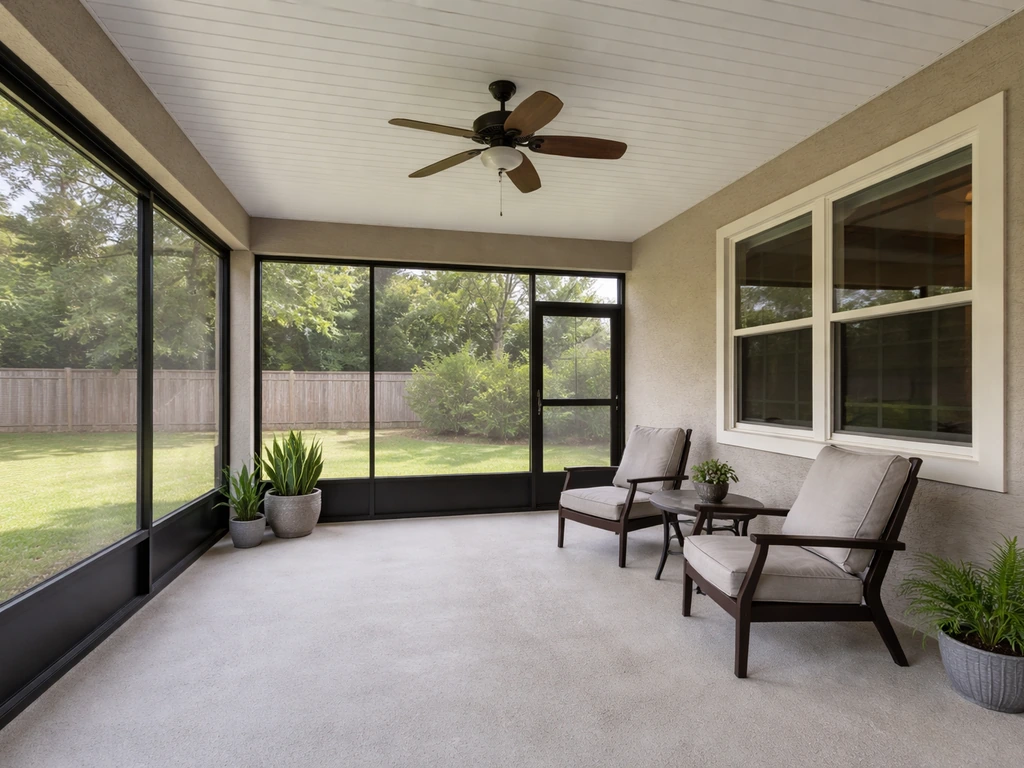
In Hawaii, a patio is almost always called a lanai. That single word does the heavy lifting that 'patio,' 'porch,' 'veranda,' and sometimes even 'balcony' do on the mainland. You will see it on MLS listings, in condo documents, in permit records, and in everyday conversation across every island. If you are looking at a Hawaii home and wondering what that outdoor living space is called, lanai is your answer in nearly every case.
What Is a Patio Called in Hawaii? Lanai and More

Ada Hollis
30 May 2026
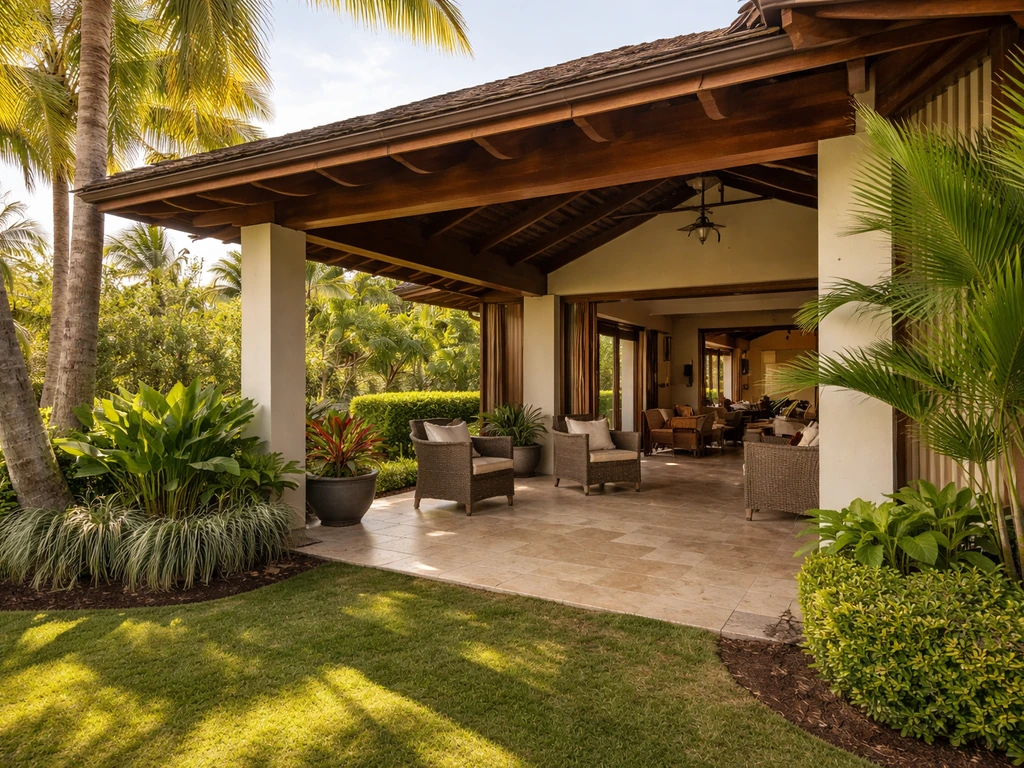
Hawaii terms that correspond to "patio"
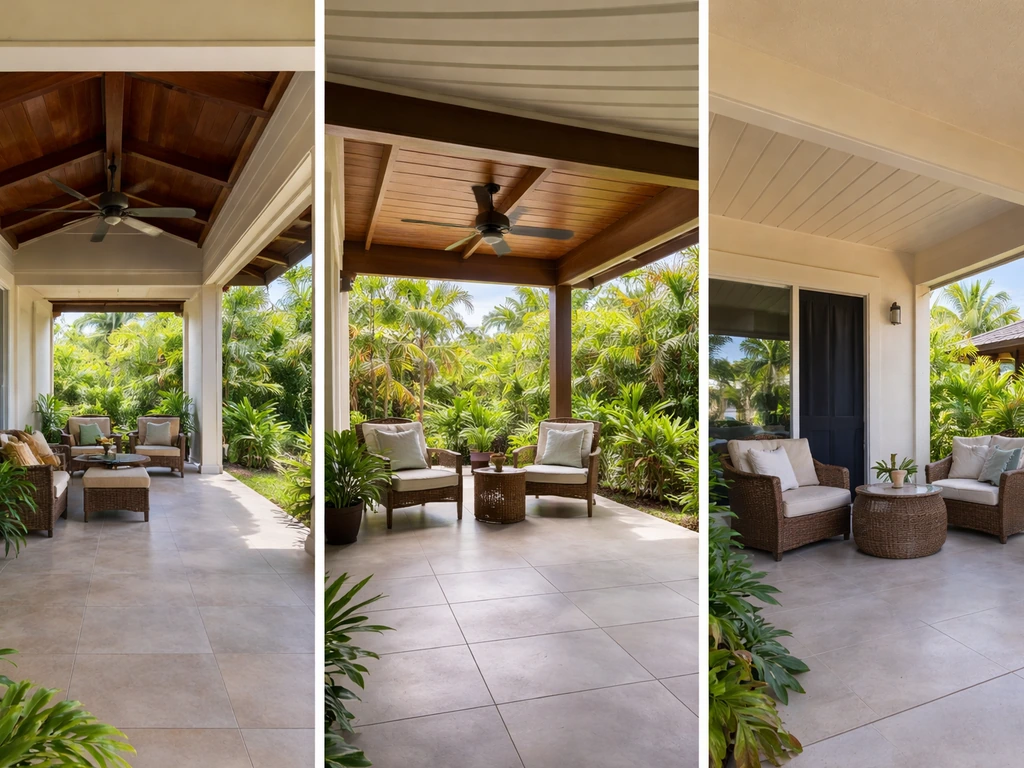
Lanai is the dominant term, but it covers a wider range of spaces than most people expect. The word originally described a roofed, open-sided veranda attached to a building, and that is still the classic image. Merriam-Webster defines it as a 'roofed porch' or veranda, and that definition holds up well for most traditional Hawaii homes. But Wikipedia's entry on lanai architecture notes that in current Hawaii usage the word can describe 'any sort of outdoor living area adjacent to an interior space, whether roofed or not,' which means you will encounter the term applied to uncovered ground-level slabs that would be called a plain patio anywhere else.
Hawaii's official documentation reflects this flexibility. The Hawaii Department of Commerce and Consumer Affairs (DCCA) uses the combined category 'Lanai/Patio (sf)' in some condo reporting forms, treating the two words as interchangeable for measurement purposes. That same agency also uses just 'Lanai Sq.' as a standalone field in other documents, with a footnote noting when the space is actually mapped as a balcony on the condominium plat instead. In short, the state itself acknowledges that these terms blur together in practice.
Outside of lanai, you may occasionally see 'deck' used for elevated wood-frame platforms, and 'courtyard' for enclosed ground-level outdoor areas surrounded by walls. Official Maui County and Hawaii Community Development Authority documents specifically distinguish courtyard configurations from lanai configurations and note that their sizes can vary by job site. Neither of those terms is as common as lanai in day-to-day use, but they do appear in listings and permit paperwork.
Lanai vs patio: what each one usually means
The clearest practical difference is coverage. A mainland patio is typically an open, uncovered ground-level surface, whether concrete, pavers, or stone, with no roof above it. A lanai, in its traditional Hawaii sense, has a roof or overhead structure and is open on the sides. Think of it as a sheltered outdoor room rather than an exposed slab. That roof matters a lot in Hawaii's climate, where afternoon rain showers are common and UV exposure is intense year-round.
Maui County's resident design guidelines put it plainly: a lanai that projects beyond the building facade 'should be open on three sides and have a roof.' That three-open-sides-plus-roof rule is a useful physical test you can apply when standing in front of a space and trying to figure out what it actually is. If it has a ceiling above and walls on only one side (typically the house wall it is attached to), you are almost certainly looking at a lanai in the Hawaii sense.
That said, Hawaii real estate listings add layers of nuance. You will see blank" rel="noopener noreferrer">'covered lanai,' 'enclosed lanai,' and 'screened-in lanai' all used on the same island, sometimes on the same property. 'Covered lanai' means roofed but open-sided, which is closest to the traditional definition. blank" rel="noopener noreferrer">'Enclosed lanai' means walls or glass panels have been added, making it function more like a sunroom. 'Screened lanai' sits in between: protected from insects and some weather, but still open to airflow. An uncovered lanai, when listed as such, is essentially what the rest of the country would simply call a patio.
Other Hawaii outdoor-space terms people might mean
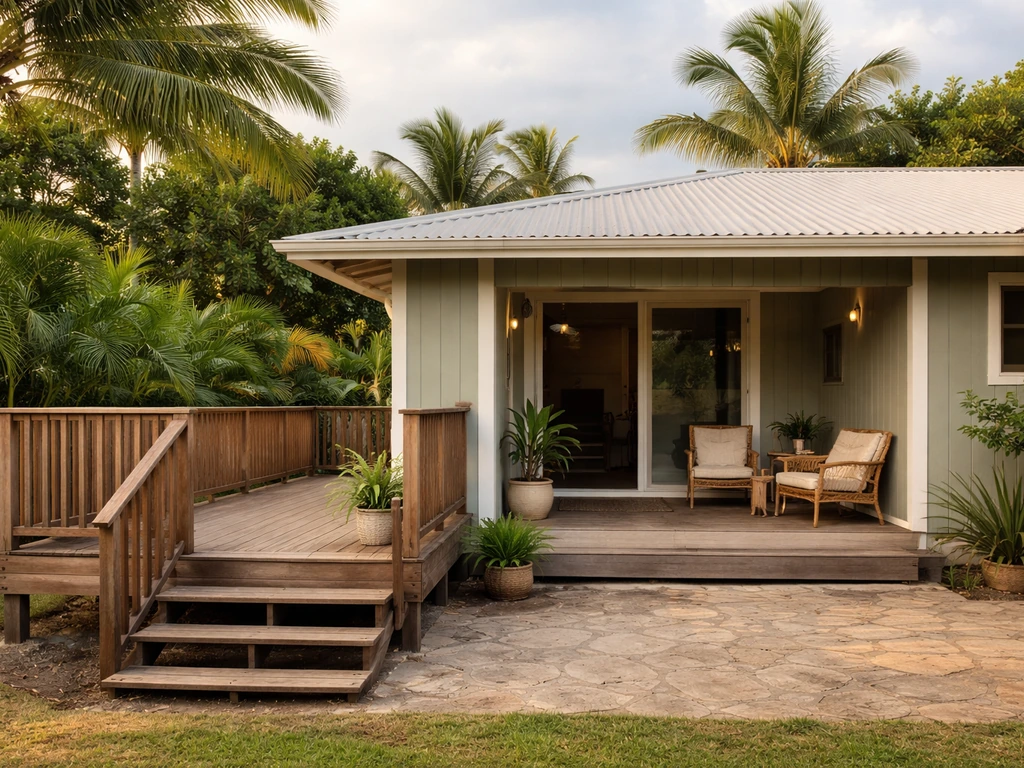
Even though lanai dominates, a few other terms show up regularly enough that you should know them. Here is what each one usually signals in a Hawaii context:
- Deck: An elevated, typically wood-framed platform, often at the back or side of a home. Less common in Hawaii than on the mainland but used for hillside or raised homes, particularly in areas like Nuuanu or Kailua where lots slope toward views.
- Courtyard: An enclosed outdoor area surrounded by building walls or fencing, open to the sky. DCCA condo documents treat courtyards as a distinct category from lanais, even though both are measured in square footage and noted in area disclosures.
- Balcony: An elevated, projecting platform accessed from an upper-floor interior space. In Hawaii condo plats, some spaces labeled 'lanai' in everyday listing copy are formally mapped as 'balcony' on the condominium map. The DCCA even includes a note flagging this discrepancy.
- Mauka lanai: A directional term used in some Hawaii government and permit documents, referring to a lanai facing inland (toward the mountains). You will not see this in typical listings, but it appears in building-area definitions and permit paperwork.
- Enclosed porch or Florida room equivalent: Mainland buyers sometimes look for a 'Florida room' style enclosed porch. In Hawaii, this is almost always called an 'enclosed lanai' in listing copy, not a sunroom or Florida room.
Patio vs porch vs veranda vs courtyard vs balcony: a quick comparison
These terms genuinely confuse people because they overlap, and Hawaii's heavy use of 'lanai' for all of them makes it worse. Here is how they stack up when used in their standard architectural sense:
| Term | Level | Roof/Cover | Attached to home? | Hawaii equivalent |
|---|---|---|---|---|
| Patio | Ground level | Usually open/none | Typically yes, but can be detached | Lanai (uncovered) or just 'lanai' |
| Porch | Ground level | Usually roofed | Yes, projects from facade | Lanai (covered) |
| Veranda | Ground level | Roofed, open-sided | Yes, wraps facade | Lanai (covered, wraparound) |
| Balcony | Upper floor | Usually open/none | Yes, projects from wall | Balcony or lanai (in condo listings) |
| Courtyard | Ground level | Open to sky | Surrounded by walls/building | Courtyard (distinct from lanai in official docs) |
| Lanai | Ground or upper | Often roofed, open-sided | Yes | The primary Hawaii term for all of the above |
The key takeaway from that comparison: lanai is Hawaii's catch-all for outdoor living spaces attached to a home, while on the mainland each of those terms describes a more specific configuration. When you see 'lanai' on a Hawaii listing, the modifier words around it ('covered,' 'enclosed,' 'wrap-around,' 'screened') tell you far more than the word lanai alone.
It is also worth noting that similar terminology questions come up in Florida, where 'lanai' is also widely used for screened or roofed outdoor rooms, and where the line between patio and lanai is equally blurry. In Florida, you can run into the same situation: a space listed as a lanai may line up with what many people would simply call a patio. In Florida, a patio home typically refers to a single-family or townhouse-style residence built around an outdoor living area, often with a covered, screened, or roofed lanai-like space patio home in Florida. The Hawaii usage is older and more deeply rooted in local architecture, but the Florida pattern is comparable.
How to identify the space from a home listing or in person
Reading a listing
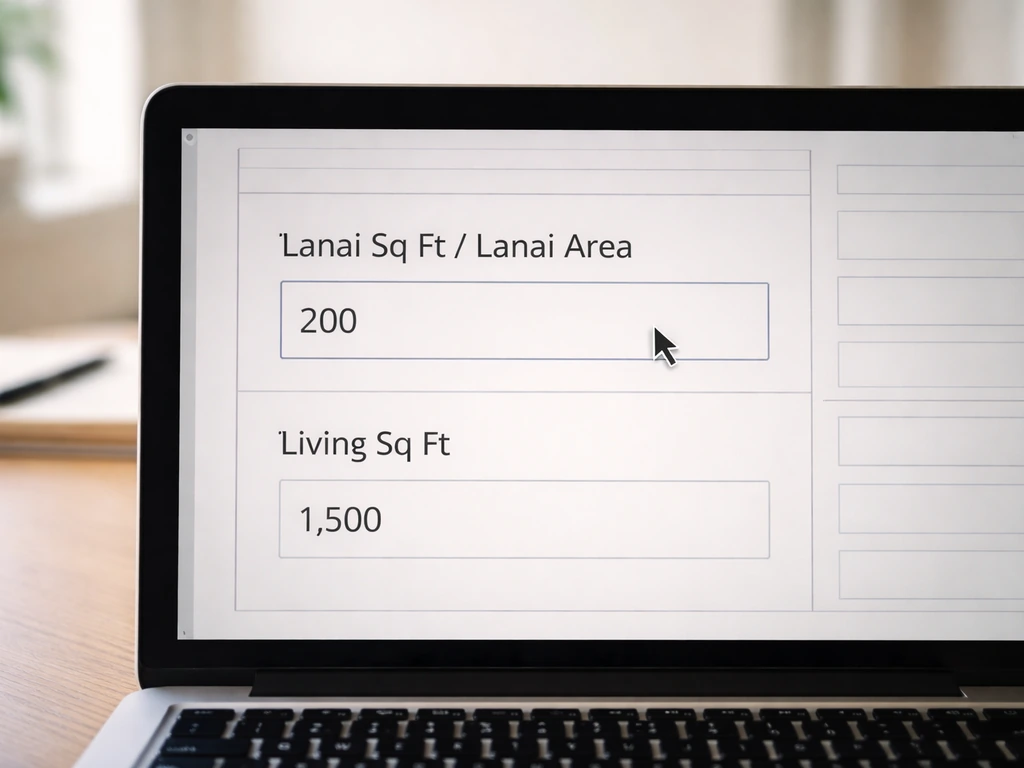
Start by looking for a dedicated 'Lanai Sq Ft' or 'Lanai Area' field in the MLS data. Hawaii MLS records typically separate this from 'Living Sq Ft,' so a listing might show 1,400 sq ft of living area plus 260 sq ft of lanai area as distinct line items. If you see a lanai square footage listed, the space is substantial enough to be measured and disclosed separately. Some listings show 'Lanai/Patio (sf)' as a combined category, which tells you the agent is treating them as equivalent outdoor-use areas.
Next, read the listing description for modifier words. 'Massive covered lanai,' 'wrap-around covered lanai,' and 'enclosed lanai' are all common phrases in Oahu and Maui listings. Each one signals something different about how the space functions. Covered means weatherproofed overhead but open-sided. Enclosed means walls have been added, often for air conditioning or added living space. Screened means insect protection with open airflow. No modifier at all can mean an uncovered slab, especially in condos where an upper-floor unit's outdoor area is technically a balcony.
Identifying the space in person
Use the Maui County three-sides test as a starting point: if the space has a roof or ceiling overhead and is open on three sides with the fourth side being the house wall, it fits the classic lanai definition. If there is no roof at all, it is functioning as a patio regardless of what the listing calls it.
If you are using the terms strictly, the lanai definition patio is best understood as a lanai that fits the Hawaii usage of an outdoor area, which may or may not be roofed depending on the exact space. If there are walls or glass panels added, it has been enclosed and is closer to a sunroom.
Check whether it is at ground level or elevated, since that determines access, privacy, and how the space relates to the yard or garden below.
Also check for utility connections. An enclosed lanai that has been converted to additional living space often has electrical outlets, ceiling fans, and sometimes mini-split AC units installed. A simple uncovered lanai will have none of that. These physical clues help you assess how the previous owner actually used the space and what you could do with it.
What to ask a realtor or homeowner when the terminology is unclear
Hawaii real estate professionals use lanai so habitually that they sometimes skip the details that matter most to buyers. These are the specific questions that cut through the ambiguity:
- Is the lanai roofed or open to the sky? Ask this first. The answer determines how much year-round use you will realistically get from the space.
- Is it enclosed with walls or glass, or open-sided? An enclosed lanai adds usable square footage that functions like an extra room. An open-sided covered lanai is outdoor living space. Those are very different things for how you furnish and use the home.
- Is it screened? Screening adds comfort in areas with mosquitoes or strong trade winds without making the space feel indoor.
- Does the lanai square footage appear as a separate field in the MLS data, and is it included in or excluded from the total living area? This has direct implications for appraisal and pricing comparisons.
- On the condominium map or building permit, is this space labeled as a lanai or as a balcony? The DCCA notes that some spaces sold as lanais are formally mapped as balconies, which can affect HOA rules and what you are allowed to modify.
- Has any enclosure work been permitted? Lanai enclosures require permits in Hawaii. Ask whether the current configuration matches the permitted square footage, because unpermitted enclosures can complicate financing and future resale.
- Which direction does the lanai face, and what is the typical wind and rain exposure? A makai (ocean-facing) lanai may get more wind and salt air than a mauka (mountain-facing) one, which affects maintenance and furniture choices.
Getting clear answers to those seven questions will tell you everything you need to know about a Hawaii outdoor space, regardless of whether the listing calls it a lanai, a patio, a covered area, or anything else. The terminology is genuinely inconsistent across listings, official documents, and everyday conversation in Hawaii, so the physical details are what actually matter when you are making a buying decision or trying to understand what you have.
FAQ
If a Hawaii listing says “balcony” instead of “lanai,” is it still basically a patio?
Not usually. A balcony is typically elevated and attached to an upper floor, while a lanai is commonly described as the outdoor area adjacent to a living space that can be ground level or roofed. Use the MLS notes or condo plat language, because the same outdoor footprint can be recorded differently for measurement and disclosure.
Does “enclosed lanai” always mean it is legally part of the indoor square footage?
No. It often feels like additional living space, but the legal treatment varies by condo or permitting history. Look for whether electrical, insulation, and permit/CO documents indicate a conversion, and compare living-area square footage versus separate lanai area fields in the listing.
How can I tell the difference between a covered lanai and a screened-in lanai quickly during a viewing?
Covered lanai has overhead protection but still open sides, so you will see no insect screening panels. Screened-in lanai includes mesh or screen panels that reduce insect entry while still allowing airflow. If the screens are only partial, the listing may still call it screened, so check coverage around the perimeter.
What if the outdoor space is uncovered but elevated, would Hawaii still call it a lanai?
It can. In some listings and condo contexts, an uncovered outdoor area can be labeled lanai even without a roof, especially when the space is adjacent to an interior room. The most reliable cue is the presence or absence of overhead structure and whether the area is ground level or elevated.
In condos, why do I see “Lanai/Patio (sf)” combined but sometimes “Lanai Sq Ft” separately?
Because the reporting method can differ by document type and by mapping to the condominium plat. Some forms treat outdoor-use areas as interchangeable for area calculations, while others flag when the footprint is actually categorized as a balcony. Always match the listing numbers to the exact field definitions shown in the disclosure package.
Is a rooftop or second-story “lanai” a thing in Hawaii?
Yes, but the term can be inconsistent. A roofed overhead area is not required for the word to appear, especially in MLS descriptions. Treat the label as a category name and confirm the physical setup (roof above, enclosure type, and elevation/access) before assuming it functions like a classic ground-level veranda.
Can I modify a lanai, for example close it in or add screens, without permits?
Usually you cannot assume that. Closing a lanai, adding glass, changing exterior openings, or changing electrical and HVAC tie-ins typically triggers permit requirements and sometimes HOA or condo review. Before making plans, ask the seller for permits and check whether the condo rules restrict exterior alterations.
When a listing doesn’t mention “covered” or “enclosed,” should I assume it is an uncovered patio?
Often yes, but confirm with photos and measurements. In Hawaii listings, “no modifier” commonly aligns with an uncovered surface, yet some condo layouts label the same outdoor area category as lanai. Use the three-sides-plus-roof test if there is a ceiling, and check whether the open area is at ground level or balcony level.
What square footage should I focus on if I want to compare value between homes?
Look at living-area square footage separately from lanai area, and pay attention to whether the outdoor area is covered, screened, or enclosed. Enclosed lanai spaces can become usable longer hours, but they may not increase “living” square footage depending on how the property was permitted. Comparing only total square footage without the classification can be misleading.
Does “lanai” mean the space is always attached to the house?
In typical Hawaii usage, yes, it is adjacent to an interior space, but real estate language can be broader in some listings. If the outdoor area is detached, or it feels like a separate yard feature, it may be described differently (such as courtyard). Verify adjacency, access points, and whether the area is part of the same exterior footprint as the main structure.
Next Article
What Is a Lanai Patio? Differences, Features, and How to Check
Plain-English guide to what a lanai patio is, how it differs from a patio, and what to check before buying or listing.