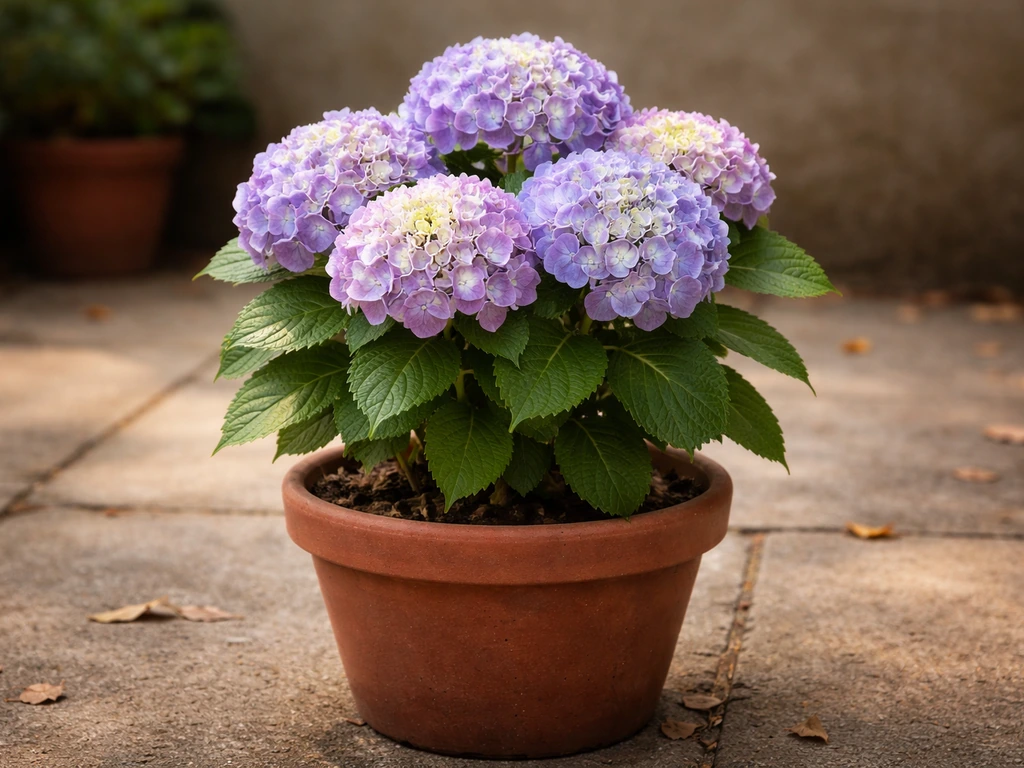
A patio hydrangea is usually one of two things: a specific compact cultivar bred and marketed for container growing on small patio spaces, or simply any hydrangea someone is growing in a pot or planter on their patio. Both uses are common, and the label shows up on retail plant tags, nursery websites, and garden center displays all the time. The most important thing to know is that the term is more of a practical descriptor than a strict botanical category, so you need to read the plant tag carefully to know exactly what you're buying. Patio rose is a related term people sometimes use, but it refers to roses grown for patio containers rather than hydrangeas.
What Is a Patio Hydrangea? Definition, Care, and Setup

Ada Hollis
10 Jul 2026
What 'patio hydrangea' actually means
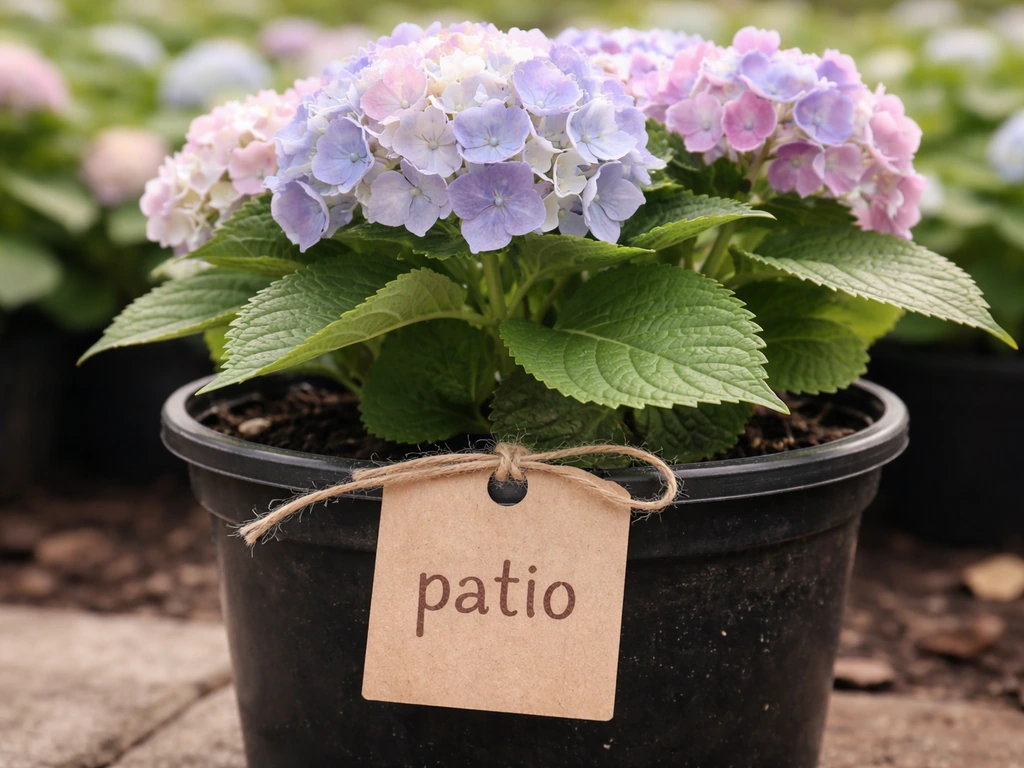
Retailers use 'patio' as a shorthand for small, container-friendly, and low-maintenance. When you see it on a tag, it signals that the plant was selected or bred to stay compact, fit in a decorative pot, and hold up on a sheltered patio without sprawling or demanding in-ground root space. This is a marketing qualifier as much as it is a plant description, which is why you'll see it applied to multiple species including bigleaf hydrangea (Hydrangea macrophylla), panicle hydrangea (Hydrangea paniculata), and others.
The intended use is straightforward: give homeowners and renters a showstopper flowering plant that works in a pot near a door, along a wall, or as a focal point on a small outdoor slab. It is container gardening made easy, with the 'patio' label doing the filtering work for you at the nursery. If you are wondering what is patio app, the short answer is that it describes a patio-friendly hydrangea grown specifically for containers container gardening made easy.
Is it a specific variety or a category?
Both, depending on who is using the term. Some patio hydrangeas are genuinely distinct cultivars bred specifically for compact container growth. Tabletensia (Hydrangea macrophylla 'Tabletensia'), for example, is marketed as 'specifically bred for container use and small patio spaces' and is described as low-growing and perfect for bowl planters. It's a real cultivar with documented compact growth behavior, not just a generic bigleaf hydrangea shoved into a pot.
At the same time, panicle types like Bobo (Hydrangea paniculata 'ILVOBO') are also called patio hydrangeas because their mature size of roughly 2.5 to 3 feet tall and 3 to 4 feet wide makes them genuinely container-suitable. So 'patio hydrangea' can refer to a purpose-bred dwarf cultivar, or it can be a descriptive shorthand for any compact, container-ready selection across species. The safest move is to check the full cultivar name on the tag and confirm the mature size before buying.
How to identify the right hydrangea for your patio
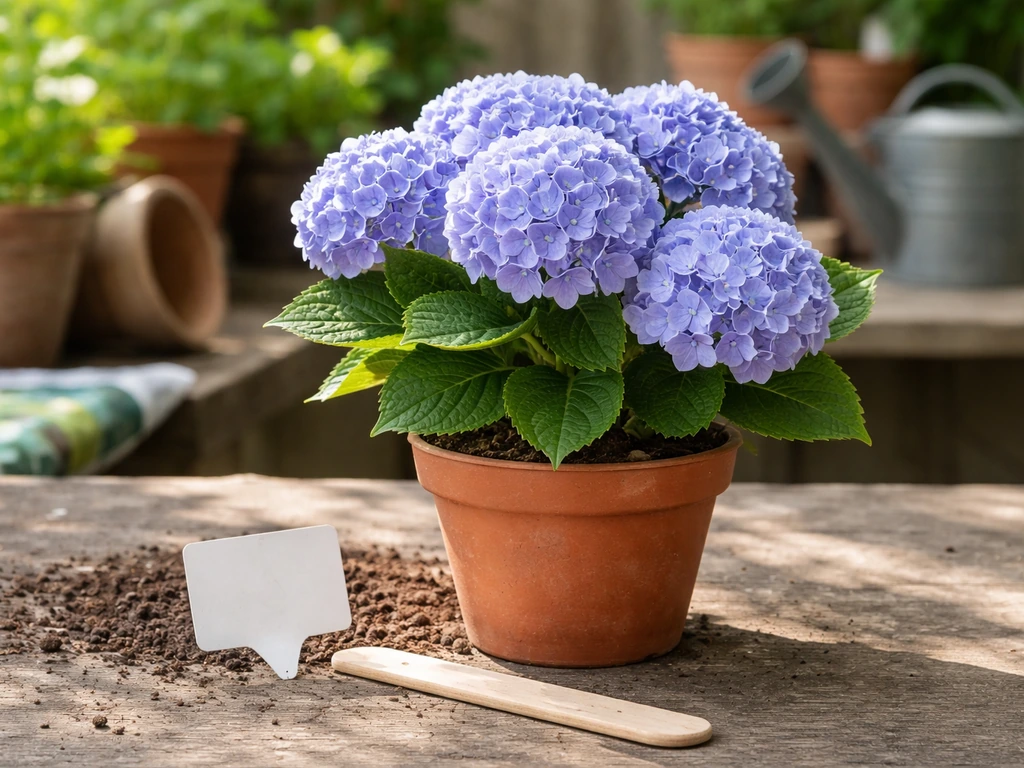
The key identification cues are size, flower form, and pruning behavior. Here is what to look for when shopping or identifying a plant you already own.
- Mature size on the tag should be 3 feet or under in height and width for true patio/container suitability. Larger cultivars can be used in big planters but dry out faster and are harder to overwinter.
- Flower form tells you the species. Mophead and lacecap flowers (round clusters or flat heads with tiny central flowers ringed by larger florets) indicate Hydrangea macrophylla (bigleaf). Cone-shaped or elongated flower clusters indicate Hydrangea paniculata (panicle).
- Look for words like 'compact,' 'dwarf,' 'container-bred,' or 'patio' on the tag alongside a specific cultivar name in single quotes or a trademarked symbol.
- Reblooming labels such as 'Endless Summer' type indicate the plant blooms on both old and new wood, which is a significant advantage for container growers who may accidentally prune at the wrong time.
- Leaf size and texture: bigleaf hydrangeas have large, broad, glossy leaves; panicle types have slightly smaller, matte leaves with a somewhat pointed tip.
Patio conditions that hydrangeas are sensitive to
Patios can be surprisingly harsh environments for hydrangeas. The combination of reflected heat from paving, exposure to wind, and the limited soil volume in a container creates stresses that in-ground plants rarely face. Understanding these conditions will save you from a lot of frustration.
Sunlight
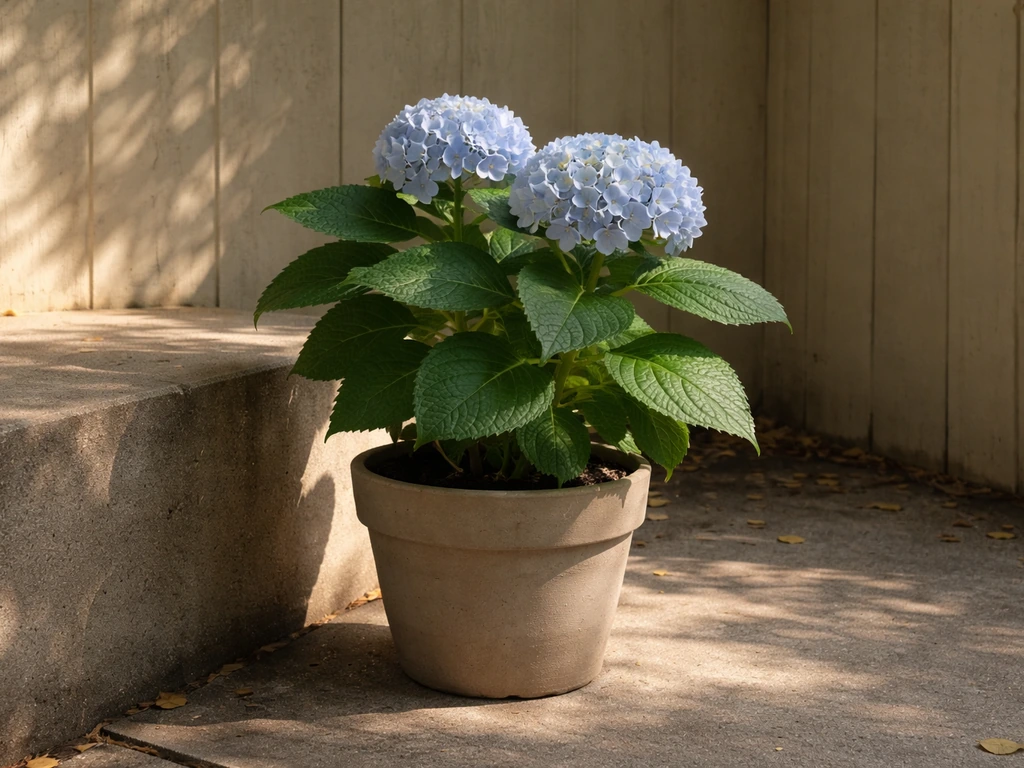
Bigleaf hydrangeas (the most common patio type) want morning sun and afternoon shade. Multiple university extension programs including Clemson, UGA, and UC ANR all land on the same recommendation: morning sun or filtered late afternoon light is ideal, and direct midday or afternoon sun in summer will stress the plant, cause wilting, and reduce blooms. Panicle hydrangeas tolerate more sun, but on a hot patio with reflected heat from concrete or pavers, even those benefit from some afternoon relief.
Wind and heat
Wind is a hidden problem. It desiccates the large leaves quickly, pulling moisture out faster than roots can replace it in a container. Placing your pot in a sheltered spot, such as near a wall or fence that blocks prevailing winds, makes a real difference. Heat radiating up from dark pavers or concrete acts like a second sun on the root zone, which is another reason to choose a pot with some insulating thickness and to avoid setting it directly on black asphalt or dark stone in peak summer.
Drainage
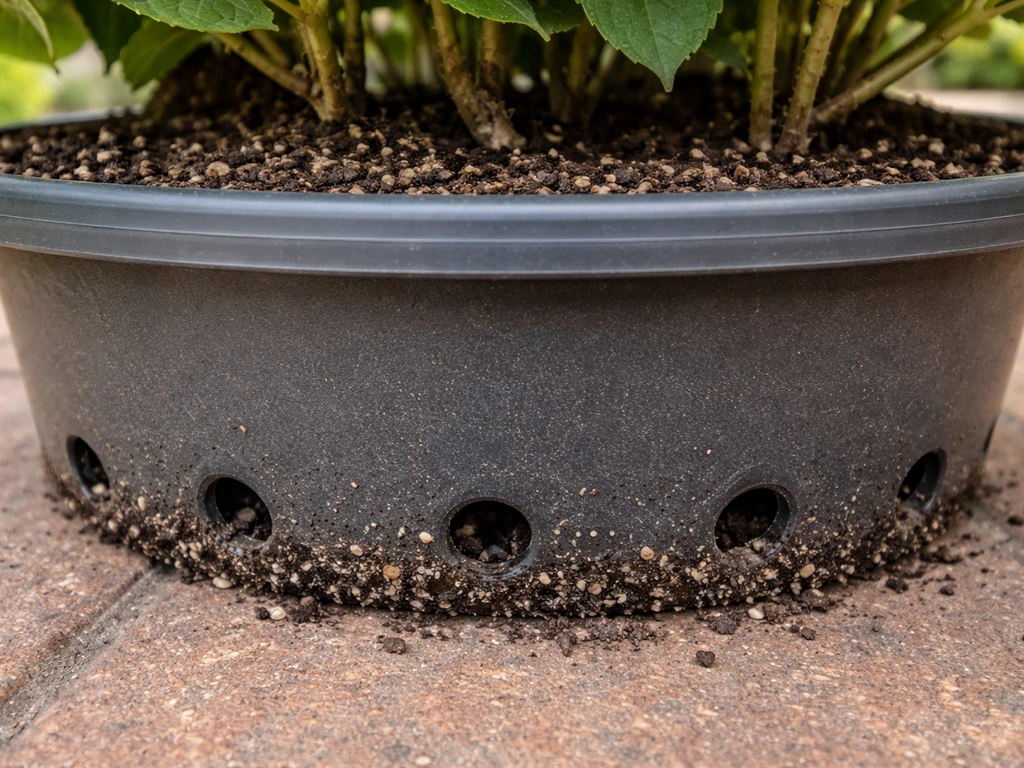
Hydrangeas need moist, well-drained soil. In a container that means drainage holes are non-negotiable. Sitting in soggy, waterlogged potting mix will rot the roots faster than almost any other mistake. If your decorative planter doesn't have holes, use a nursery pot with holes inside it and lift it out for watering, or drill holes yourself.
Watering, soil, and feeding your patio hydrangea
Containers dry out dramatically faster than garden beds. Iowa State Extension puts it plainly: container plants may need watering once or twice a day in hot, windy conditions, compared to once or twice a week in cool weather. The finger test works well here: push a finger an inch into the soil. Homes & Gardens hydrangea guidance similarly recommends checking the moisture level in the soil with a finger test and then checking container plants daily during hot spells The finger test works well here. If it is dry at that depth, water thoroughly until it runs from the drainage holes. During a summer heat spell, check the pot daily without exception.
For soil, use a quality potting mix rather than garden soil, which compacts badly in pots. A mix with some peat or compost helps retain moisture without staying waterlogged. One bonus with bigleaf hydrangeas: you can influence flower color through soil pH. Acidic soil (lower pH) makes aluminum more available to the plant, which shifts flowers toward blue. Alkaline soil limits aluminum availability and pushes flowers toward pink. UMass Amherst Extension and NC Cooperative Extension both confirm that this color shift is most predictable in Hydrangea macrophylla and is driven by pH manipulation rather than direct dye or pigment.
For feeding, a balanced slow-release fertilizer applied in spring works well for most container hydrangeas. Avoid heavy nitrogen feeds late in the season, which push leafy growth at the expense of flower buds. One mid-summer liquid feed with a bloom-promoting formula is reasonable if growth looks sluggish.
Pruning and getting your hydrangea to bloom
Pruning rules depend entirely on which type of hydrangea you have, and getting this wrong is the most common reason patio hydrangeas fail to flower the following season. The timing differs by species and bloom behavior.
| Hydrangea type | Blooms on | When to prune | Key risk |
|---|---|---|---|
| Bigleaf (H. macrophylla), standard | Old wood (buds set last season) | Immediately after flowering in summer | Pruning in fall or spring removes next year's buds |
| Bigleaf, reblooming (e.g., Endless Summer types) | Old and new wood | Light pruning anytime; harder cuts right after flowering | Lower risk of losing blooms but still avoid harsh late-season cuts |
| Panicle (H. paniculata, e.g., Bobo) | New wood (current season's growth) | Late winter or early spring before new growth | Minimal risk; very forgiving to prune |
| Smooth (H. arborescens) | New wood | Late winter or early spring | Minimal risk; can cut back hard |
If you have a standard bigleaf patio hydrangea and it is not blooming, the most likely culprit is pruning at the wrong time or cold damage to overwintered buds. UNH Extension specifically calls out cold winter temperatures and drying winds as causes of bud kill on bigleaf hydrangeas. The solution for containers is to protect the plant over winter, which leads directly to the next section.
If you are not sure what you have, wait. Skip pruning entirely for one season, let it bloom, and then prune immediately after flowering. That single strategy works safely across almost all hydrangea types and protects your flower buds while you figure out the plant's identity.
Container setup and overwintering on the patio
Choosing the right container
HGTV's guidance is to use a container at least 18 to 20 inches in diameter for a hydrangea grown in a pot. A patio mat can also be helpful around your potted plants by improving comfort and protecting the surface underneath a container at least 18 to 20 inches. Smaller containers dry out too fast, restrict root development, and stress the plant during summer heat. Choose a pot with drainage holes, some thermal mass (ceramic or thick resin beats thin plastic), and enough weight or stability to not tip in wind.
Overwintering your patio hydrangea
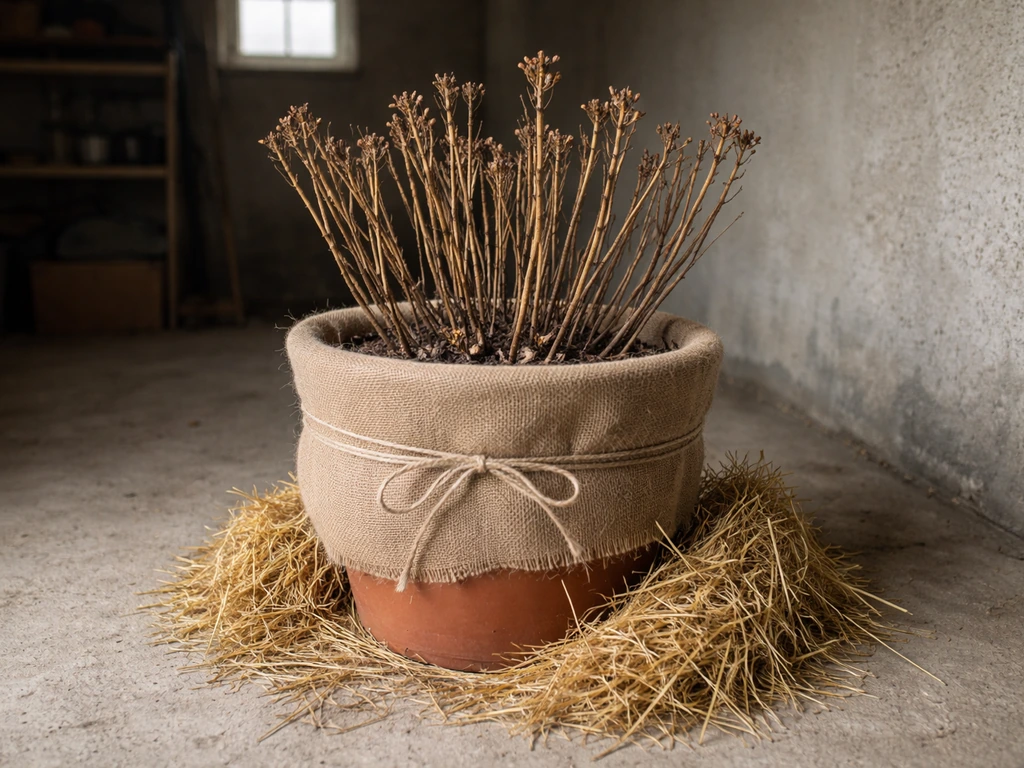
This is the single biggest challenge of growing hydrangeas in containers. Roots exposed above ground in a pot are far more vulnerable to freezing than in-ground roots. Ask Extension is direct about it: roots in an unprotected pot above ground generally will not survive hard freezing. You have a few options depending on how cold your winters get.
- Move the pot into an unheated but frost-protected space like a garage, shed, or basement for winter. The plant needs cold dormancy but not hard freeze. Check moisture occasionally and water lightly if the soil dries completely.
- If you cannot move it, wrap the pot itself in bubble wrap or burlap, then set it inside a larger container packed with mulch, straw, or evergreen branches for insulation. Both Ask Extension and OSU Extension specifically recommend bubble wrap for container insulation as a practical, effective method.
- In mild climates (USDA zones 7 and warmer for bigleaf types), the pot may survive outdoors in a sheltered spot against a south-facing wall with just some mulch over the soil surface.
Do not prune before overwintering a bigleaf hydrangea unless it has already finished blooming. The canes hold next year's buds, and cutting them off before storage means no flowers the following season.
Patio vs. porch, balcony, and courtyard: what changes for your hydrangea
Where you are growing the plant matters as much as which plant you choose, because the microclimate varies significantly across different outdoor spaces. A patio is typically an open, ground-level hard surface (concrete, pavers, stone, or similar) adjacent to the house. It is usually exposed to direct sun and open sky, which means full wind exposure and temperature swings. Raised patio areas are typically at a higher level than surrounding ground, which can affect airflow, sun exposure, and how you manage container and soil moisture. That open exposure is exactly why 'patio hydrangea' labels emphasize shelter and afternoon shade.
A covered porch or veranda changes things considerably. The overhead roof reduces direct rain (so you will water more manually), and depending on orientation, it can block a significant portion of sun. A hydrangea on a north-facing porch may get too little light to bloom well, while a south-facing one under a deep overhang might actually appreciate the shelter from harsh afternoon sun.
A balcony introduces height-related wind exposure that is often more intense than at ground level. Wind desiccation becomes a bigger problem, watering needs increase, and overwintering by moving pots indoors is actually easier since you are already in a multi-story building. A courtyard, particularly an enclosed one, can create a sheltered microclimate that is genuinely ideal for bigleaf hydrangeas: reduced wind, reflected warmth in cooler months, and diffused light. If you have a walled or semi-enclosed courtyard, that is often the best spot of all for a container hydrangea.
The takeaway is that 'patio hydrangea' describes the plant's size and container suitability, but the actual outdoor space you have, whether it is an open concrete slab, a covered porch, a balcony, or a walled courtyard, determines how you manage light, wind, and watering. Match the plant to the specific conditions of your space, not just to the label on the tag.
What to do right now
If you are shopping for a patio hydrangea today, read the full cultivar name on the tag, confirm the mature size is under 3 feet, and note whether it is a bigleaf or panicle type (this determines pruning rules and cold hardiness). If you already own one and it is currently in a pot, check the soil moisture today with a finger test and move it out of direct afternoon sun if it is wilting by midday.
If it is in the ground in a patio border rather than a container, the light and pruning rules still apply but overwintering concerns drop significantly. For container growers, start thinking about a winter plan now rather than in October: know whether you have a garage, shed, or basement that stays above freezing, and have bubble wrap or mulch ready for wrapping the pot if outdoor overwintering is your only option.
Get the light placement right first. Morning sun and afternoon shade is the single most impactful adjustment you can make for a bigleaf patio hydrangea. Everything else, watering, feeding, pruning, and overwintering, is easier once the plant is not fighting wrong-direction sun every afternoon.
FAQ
Can I keep a patio hydrangea indoors or on a covered porch year-round?
Yes, but only if it is a hydrangea you can keep cool and moist. In hot months, aim for morning light and afternoon shade, and do not let the pot sit in blazing sun right after watering. Indoors also changes humidity and watering frequency, so plan on checking the soil with the finger test daily for the first week.
How can I tell whether my “patio hydrangea” is bigleaf or panicle when the tag is confusing?
If the tag does not clearly state the type, look for clues on the label name. Bigleaf hydrangeas typically have cultivar names tied to Hydrangea macrophylla and form buds on old wood, while panicle types (Hydrangea paniculata) bloom on new growth and are usually more predictable. When in doubt, skip pruning for a season and prune right after the plant finishes flowering.
Which type of patio hydrangea is more likely to fail to bloom after winter in a pot, bigleaf or panicle?
Choose based on what you can protect in winter, not just on summer size. Bigleaf patio hydrangeas are the ones most likely to fail to bloom after a freeze because flower buds are formed on overwintered stems. Panicle hydrangeas are more forgiving because they bloom on new growth, but they still need protection in containers if winters are harsh.
My patio hydrangea wilts midday, but the soil feels dry. What should I check first?
Do not assume a hydrangea will “bounce back” if leaves wilt once. Wilting in containers is often heat and dryness related, but if the soil is wet and wilting continues, the issue may be poor drainage or root stress. Always check drainage and do a finger test before adding fertilizer or changing bloom-color pH products.
What’s the best way to avoid root rot in a decorative planter that has drainage issues?
For containers, the most reliable way to prevent soggy roots is to use a potting mix plus a container with drainage holes, then water slowly until you see runoff, and empty any saucer after watering. If your planter has holes but still stays wet for days, the pot may be too small or the mix may be too dense, so repot into a lighter potting mix.
How often should I fertilize my patio hydrangea in a container?
A patio hydrangea does not need constant fertilizer, and overfeeding is a common mistake because it can push leaf growth while reducing flower buds. A practical schedule is spring slow-release feeding, and if you use a liquid bloom booster, keep it to a single mid-summer application and stop well before late-season growth slows down.
Can I reliably change the flower color of any patio hydrangea with soil pH?
For color changes, pH adjustments work most consistently on Hydrangea macrophylla, and the plant needs time. Expect gradual shifts rather than instant color, and do not chase color by repeatedly changing soil additives. If you do not know your cultivar type, treat color outcomes as uncertain because panicle hydrangeas usually do not respond the same way.
Can I repot a patio hydrangea, and what’s the biggest mistake to avoid?
Yes, but only if you match the pot to the plant’s mature size and keep watering consistent. A container that is too small dries out too fast and overheats in summer, leading to poor flowering and winter damage. If you move up in pot size, repot in a season that gives the plant time to re-root without extreme heat or cold.
What’s a practical winter plan for overwintering a patio hydrangea in a pot when I do not have indoor space?
If you are overwintering outdoors, the pot is the weak point, so insulating the root ball is the goal. Use a method that covers the entire container, protects from wind-driven cold, and avoids crushing the stems, then keep the pot from sitting in water or thaw-refreeze cycles. Mulch can help the surface, but bubble wrap or an insulating sleeve is usually needed for hard-freeze areas.
Is it safe to prune my patio hydrangea now, or should I wait?
Not necessarily. A quick way to reduce failures is to use the right pruning window, because pruning at the wrong time can remove next year’s buds. If you do not know the type, a safe approach is to let it bloom, then prune right after flowering, and avoid any major pruning late in the season.
Next Article
What Is a Patio on a Pallet? Definition, Safety, Options
Learn what a pallet patio is, common DIY designs, and key safety, site prep, and property considerations.