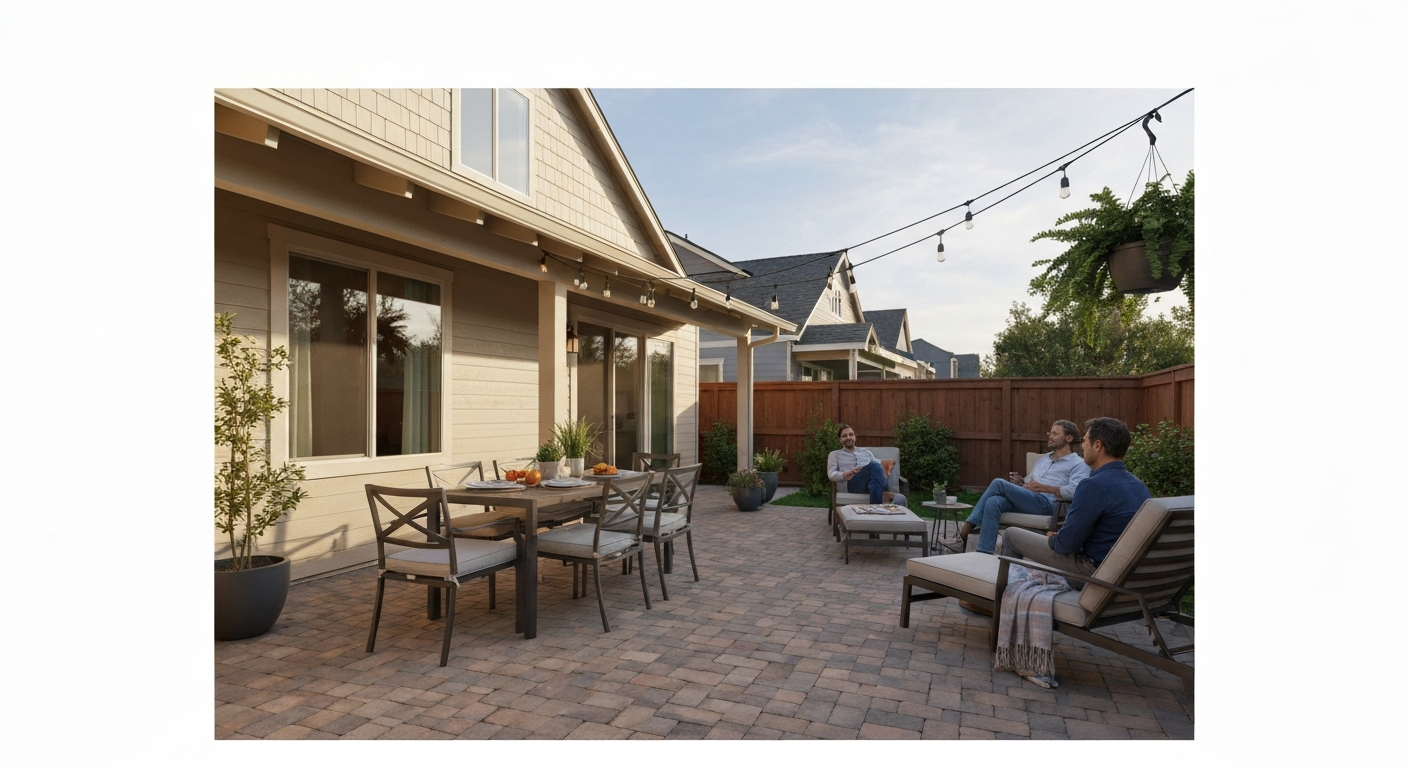
A patio on a pallet is a small outdoor platform or seating area built on top of wooden shipping pallets. A patio rose is a garden plant often grown for its attractive blooms and is different from a pallet patio used for outdoor seating. You place clean, heat-treated pallets on level ground, connect them into a flat surface, and finish them with decking boards, outdoor cushions, or whatever suits the space.
What Is a Patio on a Pallet? Definition, Safety, Options

Ada Hollis
7 Jul 2026
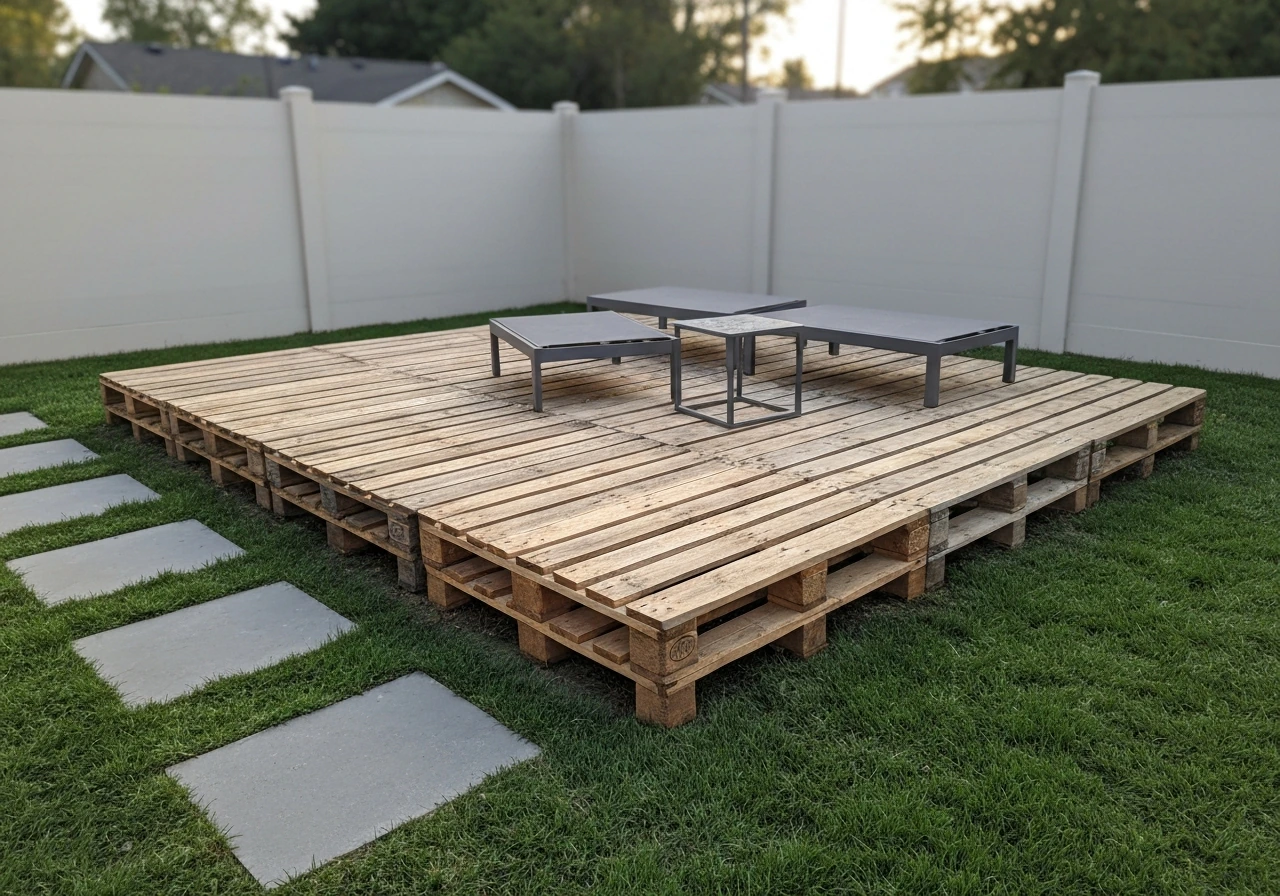
The result looks and functions like a low-budget ground-level patio or deck, and the whole thing can be assembled in a weekend with basic tools for under a few hundred dollars. It is not technically a patio in the architectural sense, but it fills the same need: a defined outdoor area where you sit, eat, or relax.
What 'patio on a pallet' actually means
The phrase is a DIY shorthand that shows up constantly in home improvement and outdoor living searches. If you are also wondering what is patio app, it can help you compare patio-style layouts and ideas for projects like these. It usually refers to one of two things: a floor platform built entirely from pallets laid flat on the ground, or a low raised deck where pallets act as structural base supports under a separate decking surface. Either way, the goal is a defined outdoor zone without the cost or permanence of concrete, pavers, or traditional decking.
In practice, a finished pallet patio often looks like a square or rectangular wooden platform sitting a few inches off the ground. Some people leave the pallet tops exposed and sand them smooth. Others lay composite or cedar deck boards over the top for a cleaner look. You can keep it small (two or three pallets for a bistro table setup) or tile multiple pallets together into a larger lounging area. Add string lights, outdoor rugs, and furniture and it passes visually as a proper outdoor room.
The appeal is straightforward: pallets are cheap or free, the build requires no concrete or permits in most cases, and the whole structure is technically portable. Renters especially gravitate toward this idea because they can take it with them when they move.
How this differs from a real patio, deck, porch, balcony, courtyard, and verandah
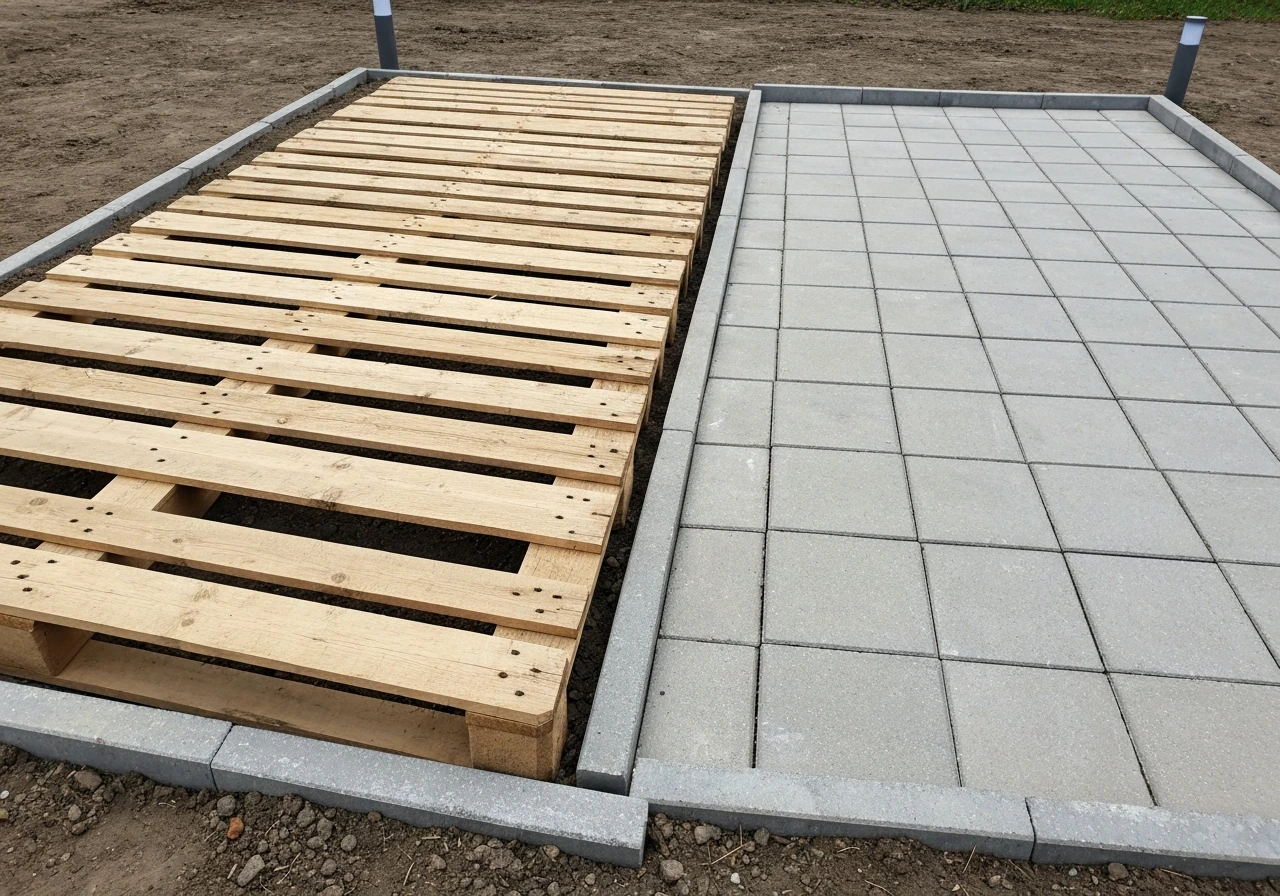
A true patio is a ground-level outdoor surface permanently attached or fixed to a home, typically made of concrete, pavers, stone, or tile. It is part of the property's architecture and shows up in real estate listings as a fixed feature. A pallet platform is none of those things. It sits on top of the ground rather than being set into it, it is made of wood rather than masonry, and it is not anchored to the house structure.
| Structure | Typical surface | Attached to home? | Permanent? | Needs permit? |
|---|---|---|---|---|
| True patio | Concrete, pavers, stone | Usually | Yes | Sometimes |
| Pallet platform | Wood (pallet/deck boards) | No | No | Rarely |
| Deck | Timber or composite boards | Usually | Yes | Usually |
| Porch | Wood or concrete | Yes, covered | Yes | Yes |
| Balcony | Wood or concrete, elevated | Yes, cantilevered | Yes | Yes |
| Courtyard | Paved or stone | Enclosed by walls | Yes | Sometimes |
| Verandah | Wood or tiled, roofed | Yes, wraparound | Yes | Yes |
A deck is the closest relative to a pallet platform. Both are raised timber surfaces, but a proper deck is framed with joists, beams, and footings designed to meet the International Residential Code's minimum live load of 40 pounds per square foot. A pallet platform has no engineered framing and no verified load rating for outdoor structural use. A porch is covered and attached to the home's entrance. A balcony is elevated and cantilevered off the building, which puts it in an entirely different structural and safety category. A courtyard is enclosed by walls or fencing. A verandah is a roofed wraparound structure. None of those descriptions fit a pallet platform, which is simply a freestanding, portable, ground-level wooden surface.
Common designs and sizes
Ground-level pallet platform
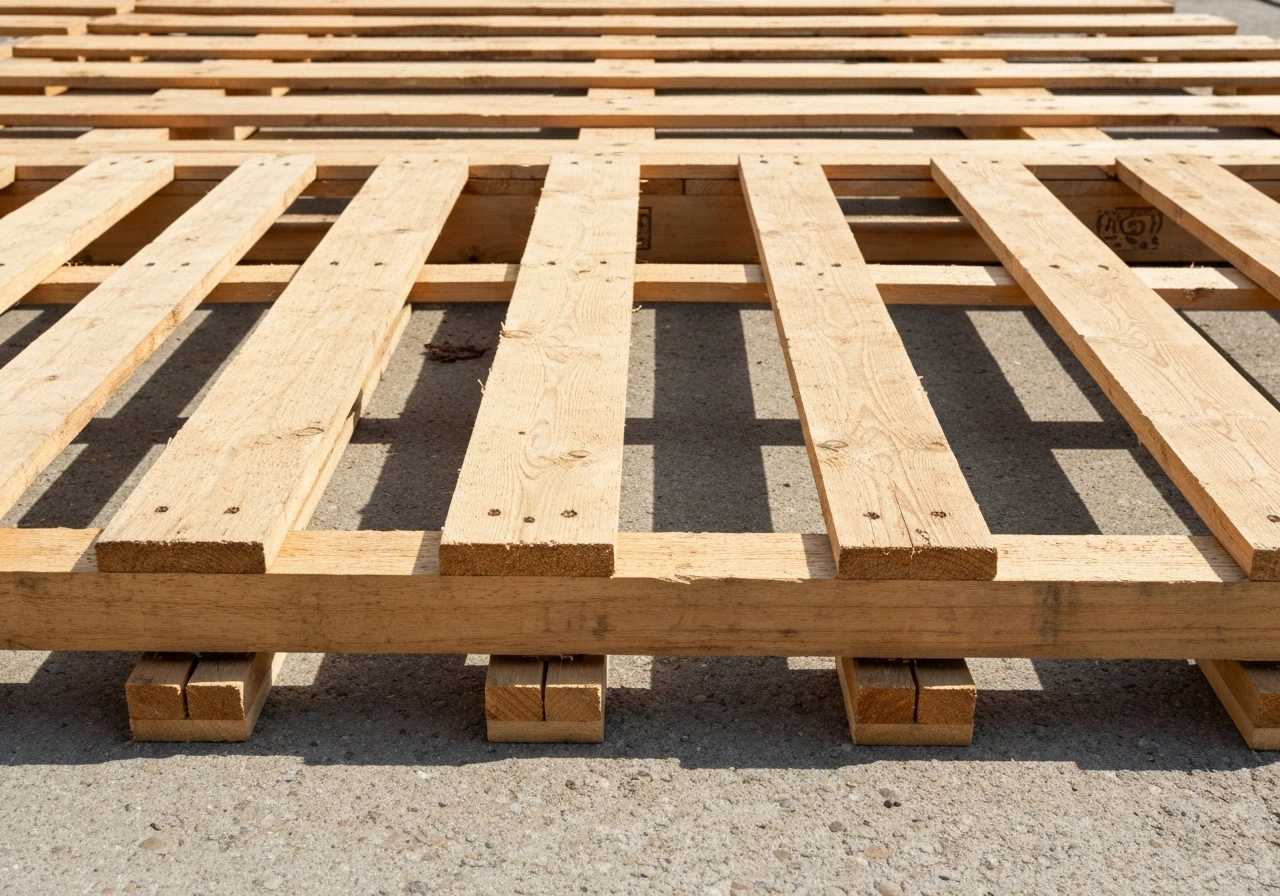
The most common design lays pallets flat on prepared ground and connects them side by side. A standard Euro pallet is 31.5 by 47.2 inches, and a standard North American pallet is 40 by 48 inches. Three to six pallets tiled together give you a platform somewhere between 40 and 80 square feet, enough for a small table and two chairs or a couple of loungers. This design sits roughly 4 to 6 inches off the ground, which is enough to improve drainage and air circulation without creating a trip hazard.
Raised pallet base
A slightly more involved version stacks pallets on deck blocks or concrete pavers to lift the platform 8 to 12 inches off the ground. A raised patio is typically built on some kind of base or framing so it sits above the surrounding ground, which can help with drainage and comfort what is a raised patio. This helps more with drainage and rot prevention, and gives the setup a more intentional, deck-like appearance. At this height you are still well under the 30-inch threshold that triggers structural engineering requirements in many jurisdictions, so it stays in the low-risk, often permit-exempt zone.
Modular and finished setups
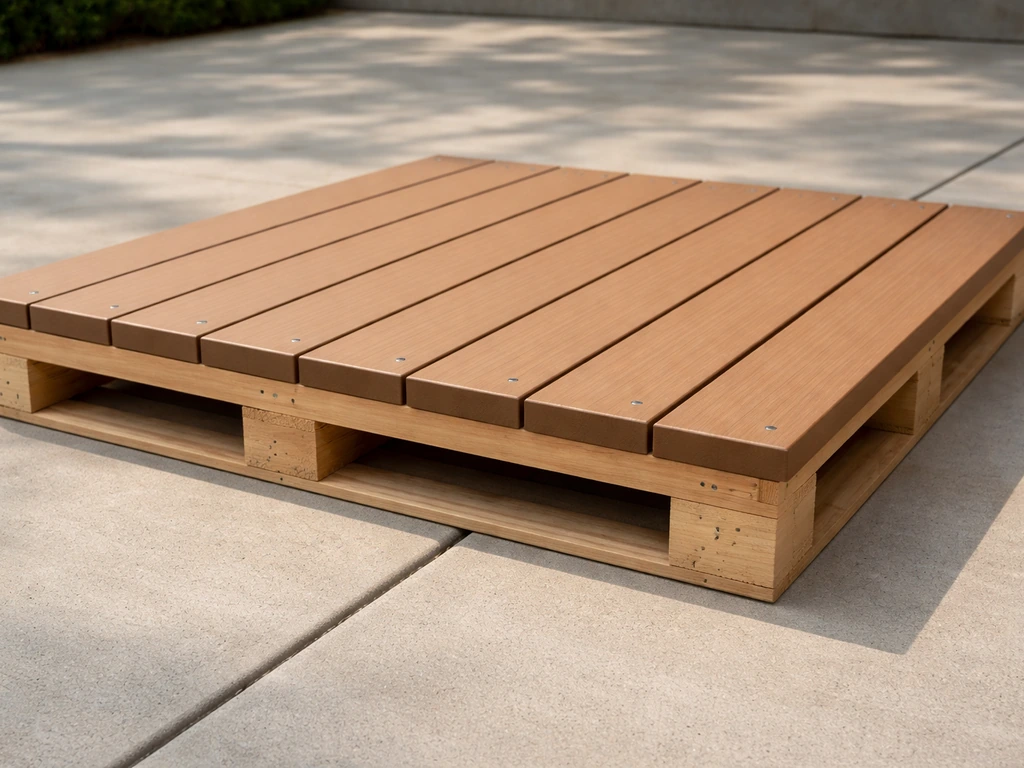
Some people use pallets purely as a base layer, then screw cedar or composite deck boards across the top to create a smooth, splinter-free surface. This modular approach lets you expand the platform one pallet at a time as your budget allows. Finished versions can look quite polished, especially with a coat of outdoor wood stain or sealant applied at the end. Pre-made pallet-style deck tile kits sold at big-box retailers take the same concept but use uniform interlocking tiles rather than raw pallets, giving you better dimensional consistency.
Site prep before you lay a single pallet
Skipping site prep is the most common reason pallet platforms fail. Wood sitting on uneven, wet, or weed-covered ground rots fast and shifts underfoot. Here is what to do before you start. Once it is built, adding a patio mat on top can make the surface more comfortable to walk on and easier to keep clean what is a patio mat.
- Clear the area of grass, weeds, and debris. Pull or kill vegetation rather than just cutting it.
- Level the ground. Use a long level and a rake to establish an even base. Even a slight slope causes pallets to shift over time.
- Lay a weed barrier membrane over the soil. This suppresses growth beneath the platform and reduces moisture wicking into the wood from below.
- Add a 2- to 3-inch layer of compacted gravel over the weed barrier. Gravel improves drainage significantly, and drainage is the single biggest factor in how long your platform lasts.
- Place deck blocks or concrete pavers at regular intervals as a foundation layer. Products like floating deck-block systems sit on soil or gravel and keep wood off direct ground contact, which is essential for reducing rot and mold.
- Recheck your level after placing the blocks. Blocks settle slightly and you want to catch any unevenness now, not after the pallets are loaded.
If your site has poor natural drainage, consider sloping your gravel base very slightly (about 1/8 inch per foot) away from your home to direct water away from the structure and the house foundation.
Build and assembly checklist
Choosing the right pallets
This part matters more than most people realize. Only use heat-treated (HT) pallets for any outdoor living surface. HT pallets are stamped with the ISPM 15 mark, which includes the letters 'HT' and a country code, typically near the outside face of the pallet stringer at the corners. These pallets have been treated with heat to a minimum internal temperature rather than with chemical fumigants. Avoid any pallet stamped 'MB,' which indicates methyl bromide fumigation, a toxic pesticide. Also reject pallets with staining, strong chemical odors, or any markings you cannot identify.
Even an HT pallet is not guaranteed to be free of contamination from whatever it previously carried, so inspect each one carefully. Pallets that carried food-grade products are generally safer choices than those from industrial or unknown sources.
Assembly steps
- Sand rough surfaces and edges on each pallet before assembling. A belt sander or orbital sander on the top deck boards makes a big difference in both safety and finished appearance.
- Position pallets on your prepared foundation blocks in your desired layout. Check level across the full assembly.
- Fasten pallets together using 3-inch exterior-grade screws or carriage bolts driven through adjacent stringers. This stops individual pallets from shifting apart under load.
- If adding a top deck layer, screw 1x6 or 5/4-inch deck boards across the pallet tops perpendicular to the pallet deck boards, using two exterior screws per board per pallet stringer.
- Trim any overhanging boards flush with the platform edge using a circular saw.
- Add optional fascia boards around the perimeter to close the gap and give a finished look.
- Apply an exterior wood sealant or stain once the surface is dry and clean. A product formulated for outdoor UV and moisture exposure will protect the wood significantly. Wait until the wood is fully dry before applying. Plan to reapply every 2 to 3 years depending on sun and rain exposure.
- If using the platform near a fire pit or grill, place a fire-safe pad or concrete tile section under the heat source. Raw pallet wood is not fire-resistant.
Safety, maintenance, and how long it will actually last
A pallet platform built with proper site prep and sealed regularly can last 5 to 10 years in moderate climates. Without prep and sealing, ground-contact wood rot can begin within a single wet season. The biggest enemies are moisture from below (hence the gravel and deck blocks), UV exposure from above (hence the sealant), and insects.
Load limits are a real concern. Shipping pallets are designed for static, evenly distributed loads, not the dynamic loads of people moving, jumping, or dancing. A standard pallet has a static capacity that sounds reassuring until you factor in bouncing loads, concentrated weight from furniture legs, and wood weakened by outdoor moisture cycles. The IRC sets 40 pounds per square foot as the minimum live load for engineered residential decks. A pallet platform has no equivalent engineering verification, so keep loads conservative: do not use it as a base for a hot tub, large water feature, or anything with concentrated point loads.
- Inspect the platform every spring for soft spots, loose boards, and signs of rot, especially around pallet stringers where moisture collects.
- Re-tighten or replace screws annually. Exterior screws work loose as wood expands and contracts seasonally.
- Check for wasp or hornet nests inside the pallet cavities in summer. The hollow channels are attractive nesting sites.
- Keep the platform clear of standing water after rain. If pooling occurs regularly, revisit your gravel drainage layer.
- Never place a BBQ grill directly on the pallet surface. Use a grill mat rated for outdoor heat or position the grill on a separate non-combustible surface alongside the platform.
- Replace individual pallets that show significant softness or discoloration rather than waiting for a complete failure.
DIY vs buying a kit: what makes sense today
Full DIY with free or cheap pallets is the most affordable path. You can source pallets from garden centers, hardware stores, small manufacturers, and local Facebook Marketplace listings, often at no cost. Budget roughly $50 to $150 for gravel, weed barrier, screws, deck blocks, and sealant for a small 6-pallet platform. Add $100 to $250 if you are buying cedar or composite boards for a finished top surface.
Pre-made modular deck tile kits from retailers like Home Depot or Lowe's are a middle path. These use pallet-inspired interlocking wood or composite tiles that click together on a flat surface. They are not free, but they are dimensionally consistent, splinter-free from day one, and easier to reconfigure or store. They also tend to look more polished with less finishing work. If you want the pallet aesthetic without sourcing and prepping raw pallets, a tile kit is worth considering.
Before committing to either approach, ask yourself these questions: Is the ground reasonably level or will I need significant prep work? Do I want something I can take with me if I move? Am I in a climate with significant freeze-thaw cycles that will stress wood joints? How much time am I genuinely willing to spend on finishing and annual maintenance? If the answers push toward minimal effort and maximum portability, a modular tile kit wins. If you want the most outdoor space for the least money and are happy to put in a weekend of work, DIY pallet construction still delivers good value.
Property rules, landlords, HOAs, and permits
Most pallet platforms fall under the category of temporary structures, which generally means they are portable, freestanding, and not permanently affixed to the ground or the home. Municipal definitions of a temporary structure often specify something not permanently anchored and under around 200 square feet. Municipal code defines a “temporary structure” as unoccupied and no more than 200 square feet and also allows it to be non-permanently affixed or anchored to retain structural integrity blank" rel="noopener noreferrer">Municipal definitions of a temporary structure often specify something not permanently anchored and under around 200 square feet.. A standard small pallet platform fits that description comfortably, which is why most jurisdictions do not require a building permit for one.
That said, the rules vary. Some municipalities require permits for any deck-like structure above a certain height above grade, with a common threshold being 30 inches. Others specify that floating decks above a certain height must rest on frost-protected footings. A pallet platform kept below 12 inches off the ground generally stays out of permit territory in most areas, but you should always confirm with your local building department before building. Lowe's and other major retailers consistently advise contacting local code enforcement to check footing, location, and permit requirements for any platform deck project.
If you rent, your landlord's consent matters regardless of permitting. A pallet platform is generally portable enough to be treated as personal property rather than a fixture, meaning you can take it with you when you leave. But modifying outdoor space, even temporarily, may violate lease terms. Get written approval before you build anything.
HOA rules are a separate concern entirely. Many HOAs regulate the appearance, materials, and placement of any outdoor structure visible from the street or neighboring lots. A raw pallet platform may violate aesthetic standards even if it is technically permitted by the city. Review your HOA covenants before building, and if in doubt, submit an architectural review request with a photo of a finished, sealed version to give the committee the best possible impression.
In real estate listings, a pallet platform would not be described as a patio. A patio implies a permanent, designed outdoor surface. A what is a patio hydrangea is a hardy, container-friendly hydrangea variety chosen for patio gardens and pots. If you are selling a home, do not include a pallet platform in listing descriptions as a patio feature. If you are buying and see a listing that mentions a patio, verify in person whether it is a fixed paved surface or a temporary wood structure, since the distinction affects both value and what stays with the property at sale.
FAQ
Can I use any shipping pallets for a pallet patio?
Yes, but only if it is truly heat-treated (HT). Look for the ISPM 15 stamp that includes “HT” plus a country code, usually near the pallet corners on the stringer. Avoid pallets marked “MB” (methyl bromide) and any with unknown staining, strong chemical odors, or markings you cannot identify.
Do I need to seal or stain pallets, or is sanding enough?
Pallets can leave the ground-contact wood exposed, so sealing is key. Use a quality outdoor sealer on the top and edges, and reapply on a schedule (often annually or at least every couple of years depending on sun and rain). Sealing helps UV breakdown from above, even when the pallet is elevated on blocks or gravel below.
How much weight is safe on a pallet patio?
Plan for conservative loads and avoid point loads. A table with evenly distributed seating is generally safer than heavy items concentrated on small pallet slats. Skip uses that create concentrated weight (hot tubs, large water features, smokers, or anything with legs that sit on a small area) because pallets are not engineered for dynamic, residential deck-like loading.
Will a pallet patio hold up in cold freeze-thaw winters?
Yes, but you need an intentional base and a top surface that won’t trap moisture. If you will be in a freeze-thaw climate, keep the platform low (often under about a foot), place it on properly leveled gravel, and consider raising it on deck blocks over a stable base. Also ensure water can drain away so ice formation doesn’t repeatedly lift and stress the wood.
What’s the most common reason pallet patios fail?
Most failures happen when weed growth and moisture get underneath. Before building, remove vegetation, level the area, add a compacted gravel base, and use weed barrier where appropriate. If you skip the site prep, expect shifting and faster rot within a short period.
Do pallet patios always require a permit?
A pallet patio usually sits as a freestanding platform, and that affects permits and how it is described in listings. “Temporary structure” rules vary, but many jurisdictions treat small floating platforms as non-permanent if they are not anchored. The safest move is to ask your building department whether your height and area trigger any deck-like rules.
What rules matter if I’m building in an HOA or renting?
Not always. Even if city permits are not required, you still must follow HOA and rental rules. In HOAs, appearance and visible materials can be the issue, so sealing, covering with deck boards, or using a pallet-tile kit may reduce complaints. For rentals, get written landlord approval because temporary structures can still violate lease terms.
Can I put a patio mat or deck tiles over my pallet patio?
You can, and it’s often a good way to make the surface more comfortable and easier to keep clean, but it depends on the system. Use an outdoor patio mat or interlocking outdoor tiles only on a stable, level base. Avoid anything that traps standing water where the pallets contact the covering.
Is a pallet patio something I can take with me if I move?
If you want it to be portable, avoid attaching boards or decking in a way that makes it effectively fixed. Also keep your platform design modular (for example, building in sections of a few pallets that can be lifted or disassembled). If you anticipate moving, plan your dimensions so the whole piece fits through doors and around obstacles.
How do I make my pallet patio safer for furniture and parties?
Treat it as non-engineered, so you should not rely on “pallet capacity” claims. Use conservative spacing for supports (gravel and blocks under the platform) and avoid concentrated weights. If you need seating for larger groups or heavier furniture, increase the number of pallets to spread the load rather than compacting everything onto the same few slats.
Next Article
Patio Weather Meaning: What Patio, Area & View Mean
Clear patio definition: what a patio is, 'patio weather' meaning, and how it differs from decks or porches.