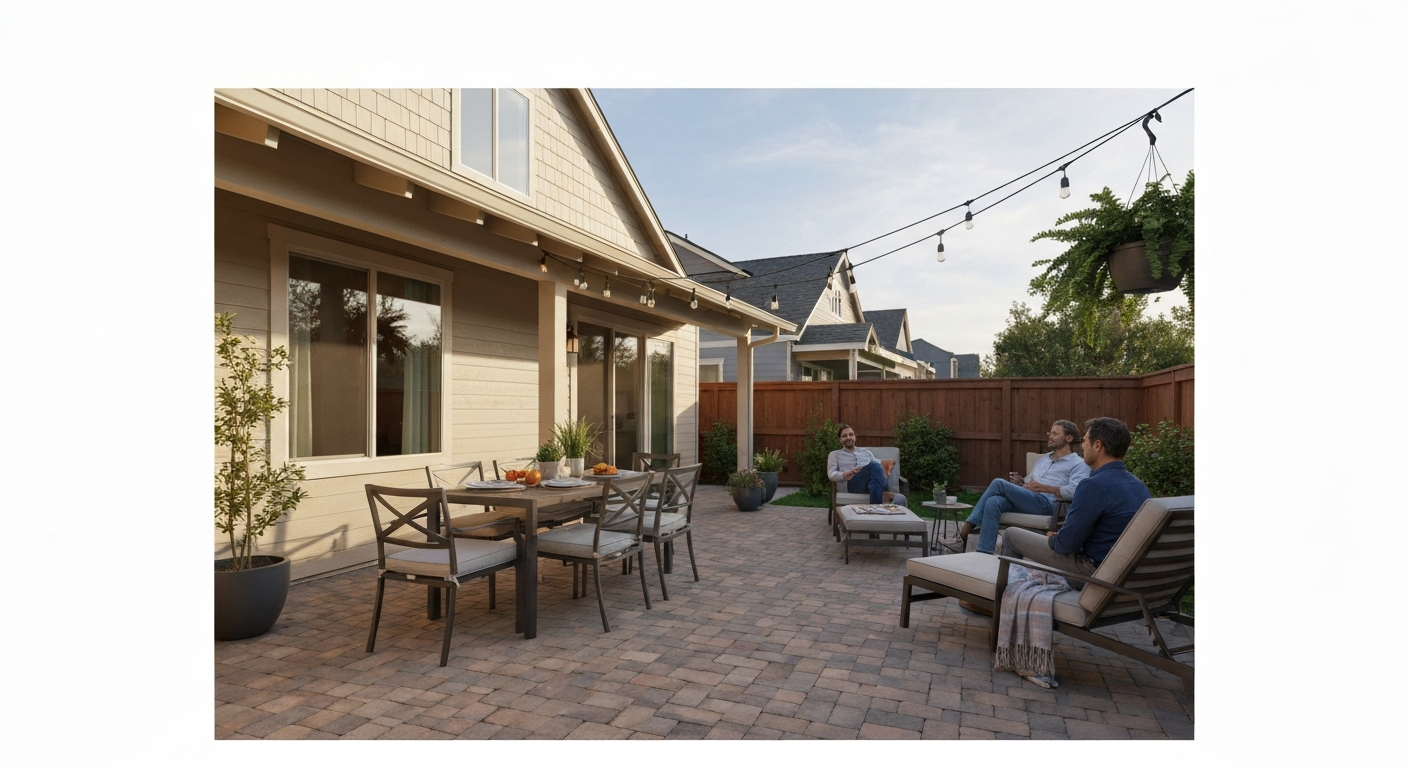
A patio rug is an outdoor rug specifically designed to be placed on a patio surface, whether that's concrete, stone, pavers, or composite decking. It's built to handle sun, rain, foot traffic, and the general abuse of outdoor life, while still doing what any rug does: adding comfort underfoot, defining a seating area, and pulling together the look of the space. The key distinction is construction. A patio rug isn't just a regular rug you've moved outside. It's made from materials and with a backing that can get wet, dry out, and do it again without rotting, warping, or growing mold.
What Is a Patio Rug? Materials, Sizing, and Care Guide

Ada Hollis
23 Jun 2026
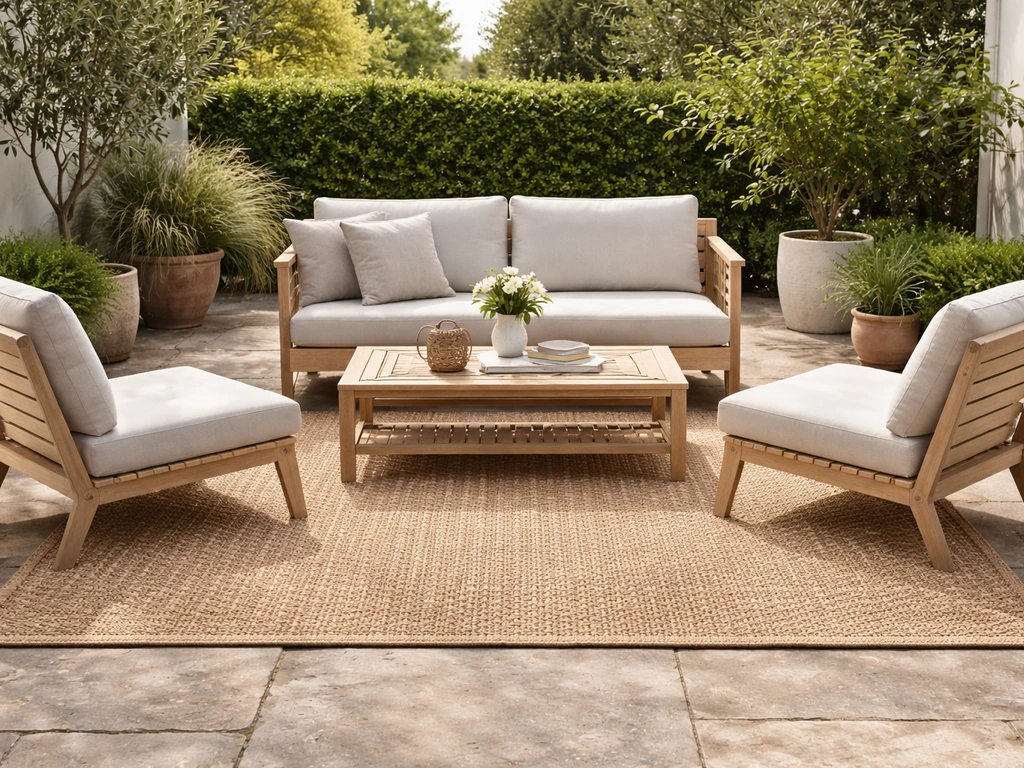
What exactly is a patio rug?
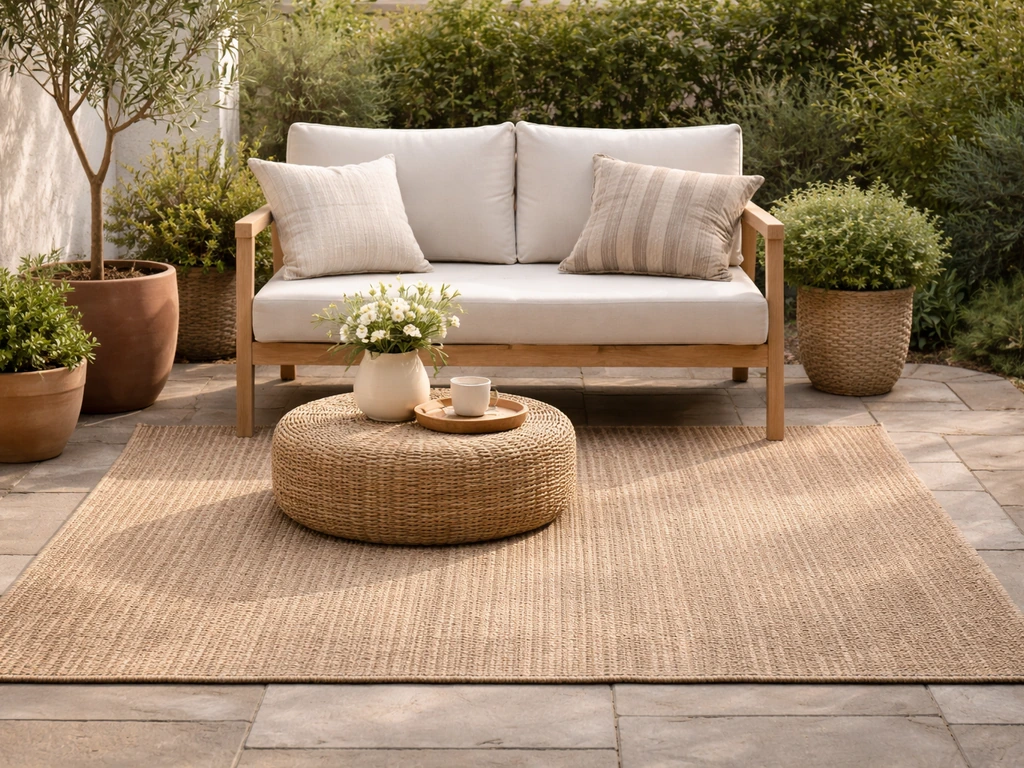
A patio rug sits at the intersection of function and style outdoors. It brings the same visual warmth and comfort you'd expect from an indoor area rug, but it's engineered for a space that faces UV rays, moisture, and temperature swings that would destroy a typical living room rug within a season. If you're also thinking about refreshing finishes, you might be interested in what is patio paint as a related option for updating outdoor surfaces. Retailers like Costco describe indoor/outdoor rugs as combining all the color and style of an ordinary rug with the high-level durability needed to withstand outdoor elements, which is a fair summary. West Elm positions them as low-maintenance, durable accessories that ground and define outdoor spaces, the same job an area rug does inside.
It helps to be clear about the space itself. A patio is a ground-level outdoor area, usually paved, attached to or near the home and used for relaxing, dining, or entertaining. If you came here looking for what patio pointing is, it refers to the small masonry jointing and gap-filling work around patio pavers or slabs to improve stability and drainage patio rug. It differs from a porch (which typically has a roof and railings), a balcony (an elevated, cantilevered platform), a verandah (a roofed wraparound structure), or a courtyard (an enclosed outdoor space often surrounded by walls or the structure itself). That distinction matters for rug choice. A covered porch or verandah offers some weather protection, so you have more material flexibility. An open patio gets full sun and full rain, which means your rug needs to be tougher. A balcony may have size and drainage constraints that a patio doesn't.
How patio rugs differ from indoor rugs
The differences go deeper than just being labeled 'outdoor.' Indoor rugs are typically made with natural fibers, soft synthetic piles, or woven constructions that prioritize softness and look great in controlled environments. Expose them to rain and they stay wet, the backing deteriorates, the fibers can rot, and mold sets in fast. Even materials like jute or sisal, which feel natural and earthy and might seem like a good outdoor choice, are genuinely poor performers outside. Jute absorbs moisture easily and mildews quickly in high humidity or rain.
Patio rugs, by contrast, are built around moisture management. If you’re trying to compare options, knowing what patio chips are can help you choose a product that fits your outdoor needs Patio rugs. Their fibers resist water absorption or release moisture quickly. Their backings allow airflow rather than trapping water against the surface beneath. They use UV-stabilized dyes so colors don't bleach out in a single summer. And they're designed to be hosed down for cleaning rather than treated with the delicacy of an indoor piece. That's a fundamentally different product, even if the two look similar on a showroom floor.
| Feature | Indoor Rug | Patio Rug |
|---|---|---|
| Primary fiber | Wool, cotton, jute, soft synthetics | Polypropylene, solution-dyed polyester |
| Moisture handling | Absorbs and retains moisture | Water-resistant; dries quickly |
| UV resistance | Dyes fade in direct sun | UV-stabilized or solution-dyed colors |
| Backing | Latex or felt; can degrade outside | Open-weave or synthetic outdoor backing |
| Cleaning method | Spot clean or professional clean | Hose down and air dry |
| Mold/mildew risk | High when wet | Low if dried properly |
| Lifespan outdoors | Season or less | Several years with care |
Common patio rug materials and how they're built
Polypropylene (also called olefin) is the most widely recommended material for patio rugs, and for good reason. It's strong, resilient, resistant to wear, and naturally hydrophobic, meaning it doesn't absorb water the way natural fibers do. When UV-treated or solution-dyed during manufacturing, polypropylene yarns hold color well even under direct sun. Consumer Reports and Rugs Direct both flag UV-stabilized polypropylene as one of the best choices for outdoor use, particularly in sunny climates.
Solution-dyed polyester is the other top performer. In solution dyeing, color is added to the fiber before it's extruded, meaning the dye goes all the way through the strand rather than sitting on the surface. That makes it far more fade-resistant than surface-dyed alternatives. It also handles moisture well and cleans easily. If you're choosing between the two, polypropylene tends to be more affordable and widely available, while solution-dyed polyester often offers richer color depth.
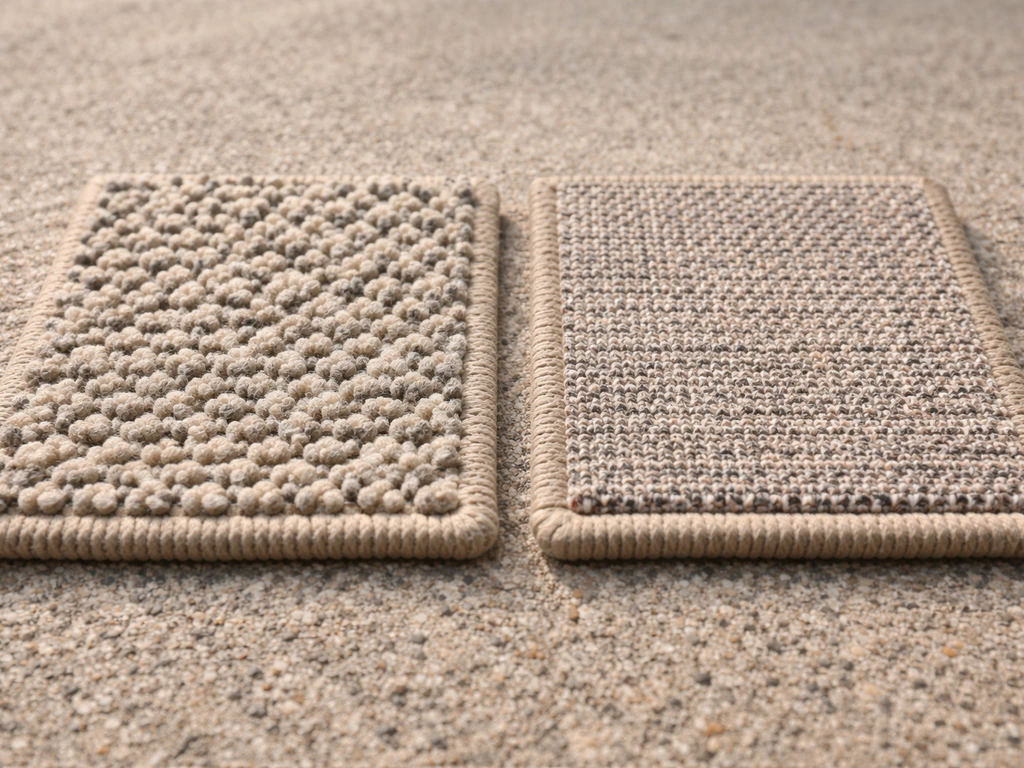
Construction matters as much as fiber. Flat-weave and low-pile constructions are generally better for outdoor use because they dry faster, trap less debris, and are less likely to develop the mildew that higher-pile rugs can hide in their depths. A rug with an open or loosely woven structure allows more airflow underneath, which is critical for mold prevention. Avoid thick, plush constructions for fully exposed patios. They feel great initially but stay damp for long periods after rain, and damp for long periods is exactly the condition that breeds mildew.
Sizing, placement, and styling your patio
Getting the size right makes a bigger difference than most people expect. A rug that's too small looks like an afterthought and doesn't do the job of grounding the seating area. The standard guidance from Lowe's sizing resources is that the front legs of chairs and tables should rest on the rug, not just sit adjacent to it. This keeps furniture stable, reduces edge-lift (where feet catch the rug's edge and create a trip hazard), and gives the arrangement a cohesive look. For a typical patio dining set with four chairs, that usually means a minimum of 8 by 10 feet, and 9 by 12 feet is often better.
For a smaller seating vignette, like two chairs and a side table, a 5 by 7 or 6 by 9 often works well. The practical approach: measure your furniture arrangement first, then add at least 18 to 24 inches on each side to give the rug enough room to anchor the grouping without the edges creeping under chair legs at an awkward angle.
Shape-wise, rectangle is the most versatile for dining and seating areas. Round rugs work nicely under a bistro table or to define a conversation corner. Runner rugs suit narrow side patios or pathways between a door and a seating zone. Resist the temptation to fill the entire patio surface with one rug. Leaving some of the patio surface visible, especially with attractive pavers or stone, is often more appealing than wall-to-wall coverage outdoors.
Weather, drainage, and keeping things dry
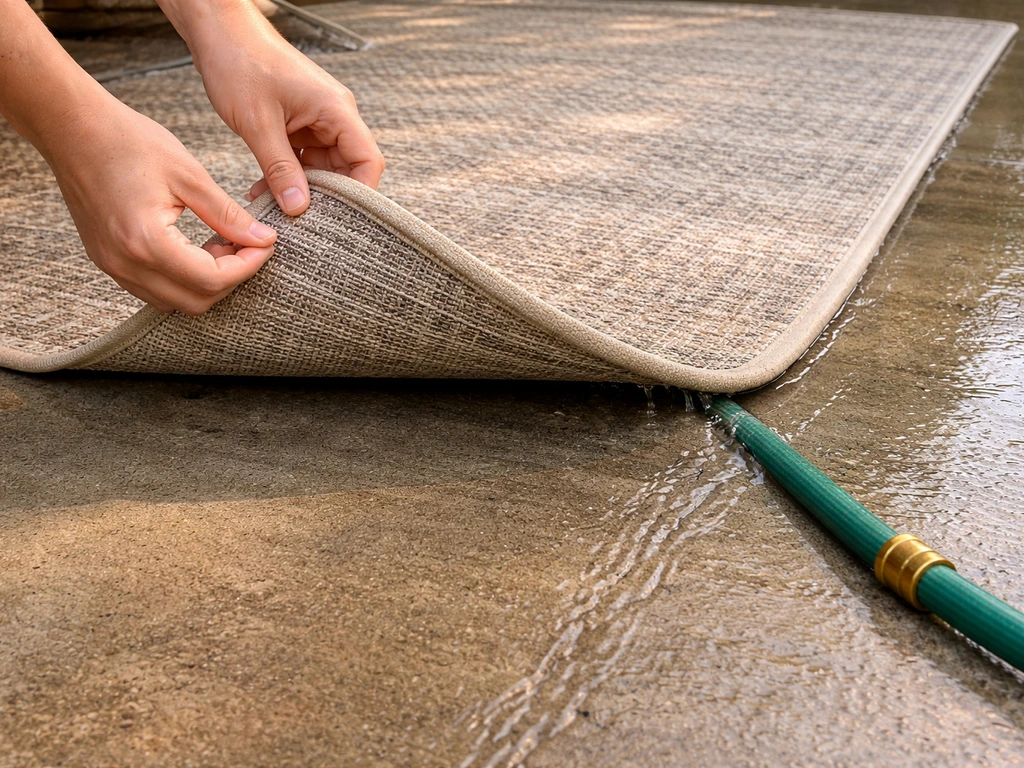
No outdoor rug is truly weatherproof, and the labeling can be confusing. Nourison makes a useful distinction: 'waterproof' in rug marketing generally refers to how quickly a rug releases moisture rather than whether water can penetrate at all. Even rugs labeled water-resistant can trap moisture in inner layers or between the rug and the surface it sits on. That's why drainage and drying are as important as the rug's material rating.
Drainage starts with your patio surface. If your patio is slightly sloped for runoff, moisture will clear faster. If water pools on your patio, it pools under your rug. Rugs Direct points out that frequent rain, high humidity, and coastal salty air are all conditions that accelerate mildew when materials retain water. After heavy rain, it's worth rolling the rug back for an hour or two to let both the rug backing and the patio surface dry out.
Lowe's rug care guidance is direct on this point: leaving an outdoor rug in rain or persistently humid weather will cause rapid deterioration and mold, and when a rug won't see use for extended periods (like winter), storing it in a dry space is the right move. If your climate has harsh winters or a prolonged wet season, seasonal storage is one of the best ways to extend a rug's life. Roll it (don't fold it), make sure it's completely dry first, and store it flat or rolled in a dry location.
Cleaning a patio rug properly
The cleaning process for most patio rugs is genuinely simple. Home Depot's guidance covers the basics: shake or sweep off loose debris, hose the rug down, scrub with a mild soap solution if needed, rinse thoroughly, and then let it air dry fully in the sun before putting furniture back on it or rolling it up. The drying step is where most people go wrong. Love-Rugs' outdoor care guidance is emphatic that you should not fold, roll, or place furniture on a rug while it's still damp. Even slight remaining moisture can create musty odors, mildew in the backing, and residue issues on the patio surface below.
Home Depot also notes that getting any rug excessively wet repeatedly can weaken fibers over time, so a quick hose rinse is preferable to soaking. One practical tip: after washing, stand the rug on its side or prop it against a fence so air circulates on both faces. Flat drying on the ground takes much longer and leaves the backing sitting on a wet surface.
For day-to-day maintenance, a Reddit thread surfaces a real and common issue: wet leaves sitting on a rug for days act like compost and accelerate mold and staining. Sweeping or shaking the rug after leaf fall or storms takes two minutes and makes a meaningful difference across a season.
Non-slip, fade resistance, and mold prevention
Keeping the rug in place
Outdoor rugs on smooth surfaces like concrete or stone can slide, and a sliding rug on a hard surface is a fall risk. An outdoor rug pad is the right fix. RugPadUSA specifically addresses keeping outdoor rugs in place on concrete, recommending a pad designed for outdoor use on hard surfaces. Options include natural rubber plus felt hybrid pads or natural rubber plus jute constructions, which provide grip without adhesive. Avoid rug pads with PVC or plastic film backings outdoors, as Ahmadi Rug's rug pad guidance warns they can permanently discolor certain patio finishes. For rug pads to work reliably, Ruggable notes the surface needs to be clean, dry, and free of debris before the pad goes down.
Fade resistance
UV exposure is the other big outdoor threat. Consumer Reports links fade resistance directly to UV-treated polypropylene yarns and solution-dyed fibers. If you're in a south-facing patio that gets full afternoon sun, these fiber choices aren't optional, they're necessary. IKEA's outdoor rug guidance also calls out fade resistance as a priority selection factor for sunny climates. A rug that fades badly by mid-summer isn't decorative anymore, it's an eyesore.
Mold and mildew prevention
Mold and mildew grow when moisture, warmth, and organic material (debris, dirt) combine and sit long enough for spores to establish. Consumer Reports ties mildew risk directly to airflow: if a rug's construction doesn't allow air to pass through, mildew is more likely. That's why flat-weave constructions outperform thick pile outdoors in humid environments. Consumer Reports also notes that even synthetic rugs with water-resistant outer surfaces can trap moisture in inner layers depending on how they're constructed, which is worth checking for before you buy. In subtropical or coastal climates, Consumer Reports observes that outdoor rug lifespan is shorter due to sustained mold pressure, making material choice and maintenance habits even more critical.
What to look for when buying and mistakes to avoid
Before you buy anything, measure your furniture footprint. Know the length and width of your seating or dining arrangement, add at least 18 inches on each side, and write that number down. Then look at labels with that number in hand, not the other way around. The most common sizing mistake is buying a rug that looks fine in a photo but is actually a 5 by 7 going under a 6-person dining set.
When you're evaluating a specific rug, here's what to check:
- Fiber: look for polypropylene, olefin, or solution-dyed polyester. Avoid jute, sisal, or untreated cotton for any fully exposed outdoor space.
- UV rating: look for 'UV-stabilized,' 'UV-resistant,' or 'solution-dyed' in the product description. If it doesn't mention UV protection, assume it will fade.
- Pile height: choose flat-weave or low-pile for faster drying and easier cleaning. Thicker pile feels good but stays wet longer.
- Backing: look for an open-weave or drainage-friendly backing. Avoid rubber or latex backings designed for indoor use, they can trap moisture and degrade outdoors.
- Water resistance labeling: understand that 'water-resistant' and 'waterproof' are not the same. Even highly rated rugs should not sit in standing water for extended periods.
- Rug pad compatibility: plan for a pad from the start, especially on smooth concrete or stone.
- Size: confirm actual dimensions on the product page, not just the size label (a '5x7' can vary slightly by manufacturer).
Common mistakes worth avoiding: using an indoor rug outside because it matches your cushions (it won't last a season), choosing a rug that's too small because it was the right price (it will look wrong and won't function), and skipping the rug pad because it's an extra purchase (your rug will shift, wrinkle, and become a trip hazard). One other failure mode flagged in real-world use: heavy furniture left on a rug for years can create permanent indentations, especially in softer pile constructions. Lifting and rotating furniture periodically helps.
A note for those shopping for covered spaces: if your patio is attached to a roofed porch or verandah, you have a bit more flexibility on materials since direct rain exposure is reduced. But if the space is partially covered or the rug extends into an uncovered zone, treat it as a fully outdoor rug selection. The same is broadly true for a covered balcony. Rain still blows in, humidity is still present, and the stakes of getting it wrong are higher when the space is elevated and drainage is limited.
Patio rugs sit alongside other patio finishing decisions, choosing the right patio paint for your surface, the right pointing material to keep pavers stable, and the right furniture arrangements to suit the space. To choose the right patio steak, you should know which cut cooks best for quick, high-heat grilling what cut of meat is a patio steak. Each of those choices involves the same basic logic: match the product to the outdoor exposure it will actually face, and maintain it accordingly. A patio rug done right makes the space noticeably better. Done wrong, it becomes a soggy, faded, sliding mess before summer ends.
FAQ
Can I use an indoor rug on my patio if it matches the décor?
Yes, as long as it is truly an outdoor-rated rug. Some indoor rugs marketed as “indoor/outdoor” still fail because their backing traps moisture or they lack UV-stabilized fibers. If you cannot find explicit info about the backing’s drainage or the material’s UV resistance, treat it as an indoor rug and expect a shortened lifespan.
How can I tell if a patio rug will dry fast enough to prevent mildew?
A key sign is how the rug behaves after drying. If the backing stays damp for a long time or the rug smells musty even after a dry day, the construction is likely trapping moisture. Also look for flat-weave or low-pile with breathable backing, and avoid plush pile if your patio gets frequent rain.
Do I need UV-resistant patio rugs even if my patio is shaded most of the day?
If you have a lot of shade and only occasional wet weather, the rug still needs moisture management, but you can be slightly less strict about UV performance. In near-constant sun, prioritize UV-stabilized polypropylene or solution-dyed polyester, because those lose color much more slowly under repeated UV exposure.
What kind of rug pad should I use with a patio rug on concrete or pavers?
Don’t use a typical carpet pad. Many indoor pads compress, trap water, or degrade outdoors. Choose an outdoor rug pad designed for hard surfaces like concrete or stone, and make sure it does not use PVC or plastic-film backing that can discolor patio finishes.
How often should I hose down my patio rug, and is soaking harmful?
For most patio rugs, hose cleaning is fine occasionally, but avoid soaking sessions. Repeated soaking can weaken fibers over time, especially if the rug takes days to fully dry. Use a quick rinse, spot-scrub with mild soap if needed, then rinse thoroughly and dry completely.
What’s the correct way to store a patio rug for winter or long periods of nonuse?
Let it dry fully before you store it or cover it. If a rug goes into storage with even slight moisture, odors and mildew can start in the backing. Roll it only when completely dry, and store in a dry, ventilated area (not a sealed damp shed or basement).
Is it okay to dry my patio rug by standing it on its side or propping it up?
Yes, but only if your patio rug is compatible with being stood on or propped safely. After washing, stand the rug on its side or prop it so air reaches both faces and the backing, then confirm it is dry throughout before furniture contact. Flat drying on the ground often keeps the underside damp longer.
Will a patio rug last the same length of time in coastal or very humid climates?
Use it, but expect more stains and faster fading in salt-air or high-pollen climates. In coastal or subtropical regions, mildew pressure is higher, so regular leaf and debris removal plus faster drying after rain becomes even more important for longevity.
Where should I place a patio rug to reduce edge curling and slipping?
If you get heavy foot traffic from the same direction, place the rug so seams and the shortest edge do not become a constant “drag line” for shoes. If the rug tends to shift, a properly matched outdoor pad is safer than constantly readjusting it, and it reduces trip risk at the edges.
What should I do immediately after a spill on a patio rug?
It can. Food and drink spills often stain if left to dry in place, and sticky residues can attract dirt that darkens over time. Blot first, rinse with clean water promptly, then use a mild soap solution only if needed, and rinse thoroughly before drying.
What if my patio rug seems “almost big enough” for my dining set?
If the rug is smaller than the seating footprint, it can look unfinished and furniture may wobble. Follow the rule of thumb of having the front legs of chairs and tables sit on the rug when possible, and add extra margin around smaller groupings so chair legs do not land near an edge.
Can I put chairs back on the rug right after hosing it?
Avoid stacking furniture directly on a still-damp rug. Even brief contact while damp can leave musty odors and residue on the patio surface below, and it increases the chance of mildew in inner layers.
Next Article
Patio Weather Meaning: What Patio, Area & View Mean
Clear patio definition: what a patio is, 'patio weather' meaning, and how it differs from decks or porches.