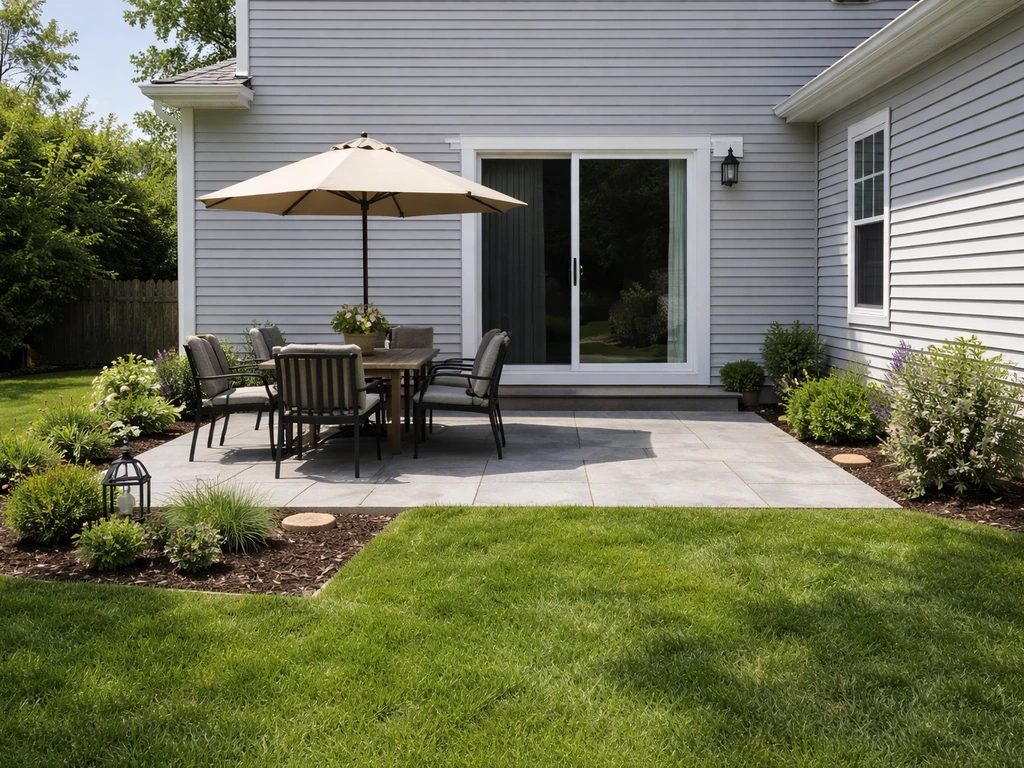
When you see 'patio' on a floor plan or site plan, it means an outdoor, typically paved, ground-level area adjoining the house, usually used for sitting, dining, or entertaining. It's not enclosed, it's not elevated like a balcony, and it generally doesn't have a roof (though some do). Think of it as an extension of your indoor living space that happens to be outside and sitting right on or very close to the ground.
What Is Patio in Floor Plan? Meaning and Differences

Ada Hollis
4 Jun 2026
What 'patio' actually means on a floor plan
In residential architecture, a patio is consistently defined as an at-grade paved outdoor area adjoining a house. 'At grade' just means it sits at ground level, or very close to it, rather than being elevated on a structure. It's typically surfaced with concrete, pavers, stone, tile, or brick, and it connects to the home, usually through a sliding door, French doors, or a back door leading from a kitchen or living room.
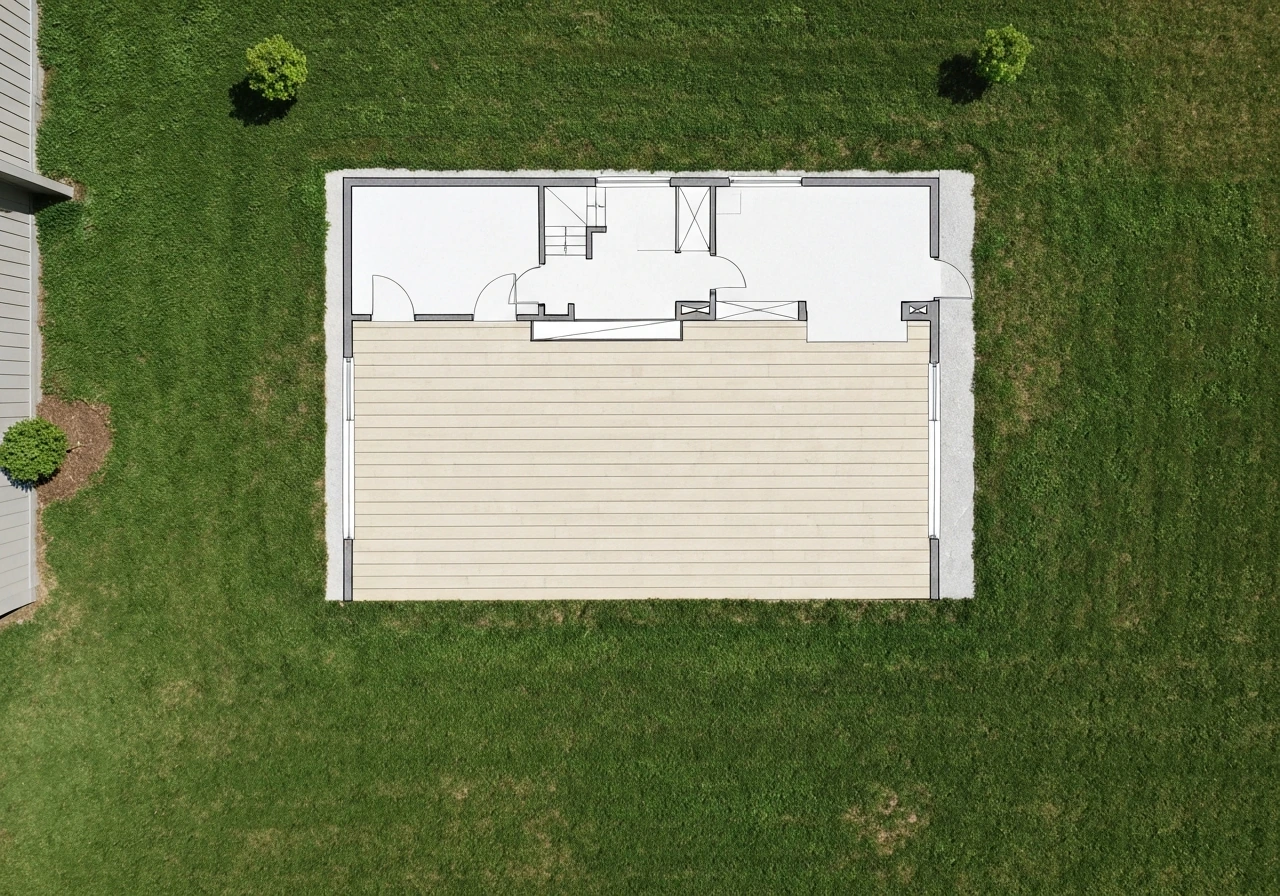
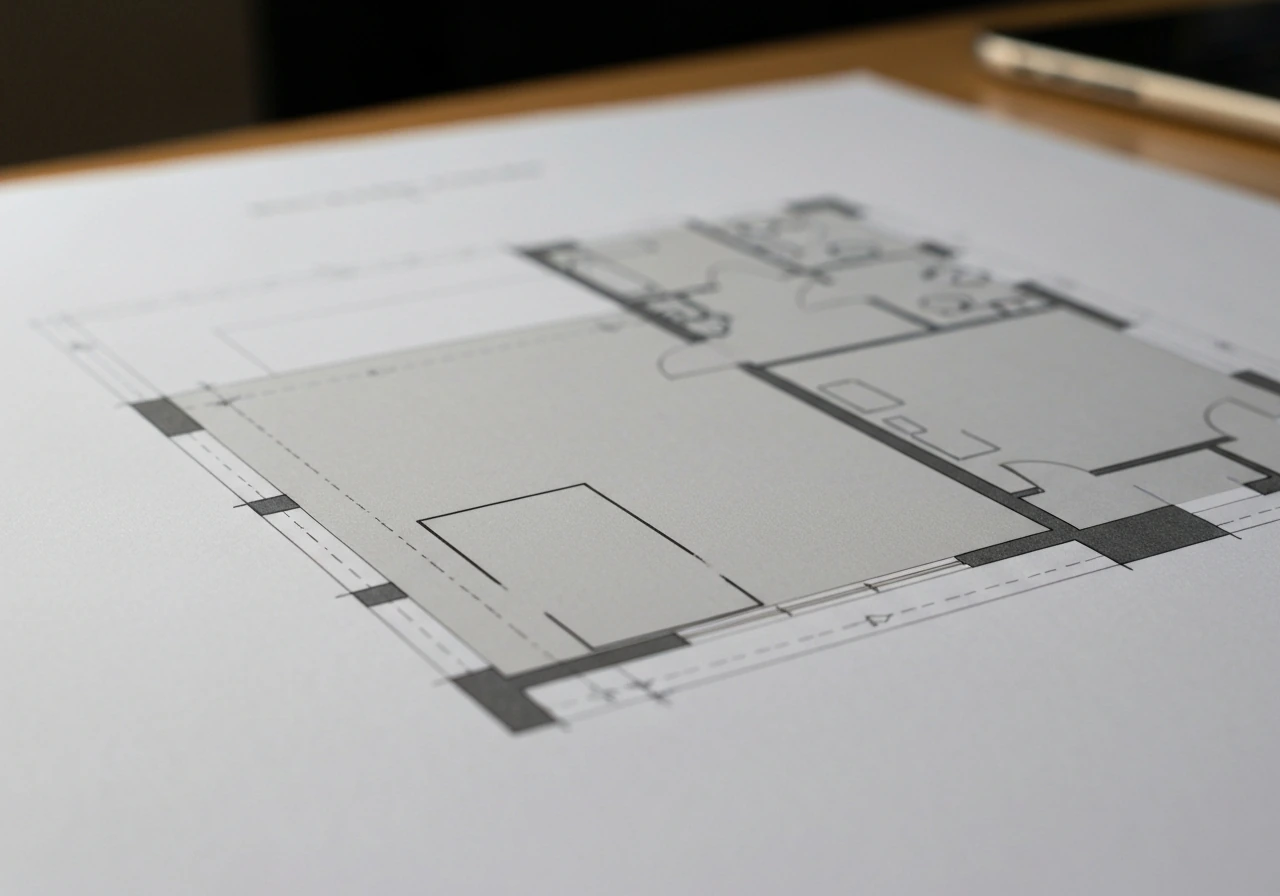
On a floor plan, the patio is almost always shown outside the main building footprint. You'll see it labeled directly on the drawing, often with the word 'PATIO' printed in the space, sometimes with a hatched or patterned fill to indicate a paved surface. The boundary between the patio and the house is usually shown with a wall line and a door opening. The patio area itself may be outlined with a lighter line weight than the house walls, since it's a landscape/hardscape element rather than an enclosed structure.
One thing worth knowing: the term 'patio' isn't rigorously standardized across all architectural drawings the way structural elements are. Different architects, builders, and municipalities use it slightly differently. That's why context matters, and why checking the drawing's legend is important.
How patios are shown and labeled on plan drawings
Most residential floor plans label the patio with text directly in the space, just like rooms inside the house are labeled. On a site plan (the bird's-eye view showing the whole lot), the patio will typically appear as a defined hardscape area adjacent to the building, sometimes with a paving pattern drawn in, sometimes just as a plain outlined rectangle or irregular shape with a text label.
Line types matter here. Solid lines generally show edges you'd see if you were standing at that level. Dashed lines can indicate features above the plan cut (like an overhead trellis or roof cover above a patio), but the exact convention depends on the drawing set. Always check the legend, which should include a scale, north arrow, and a key explaining what line types and symbols mean. Some plan sets will label the space 'ROOM PATIO,' 'REAR PATIO,' or just 'PATIO' in their legend entries.
If the plan shows a roof or cover over the patio area, it may be indicated with dashed lines overhead and a note like 'patio cover' or 'pergola.' A fully covered patio starts to overlap with what many people call a porch or lanai, so the label the architect chose tells you something about how they're treating it structurally and legally.
Patio vs porch vs balcony vs verandah vs terrace vs deck
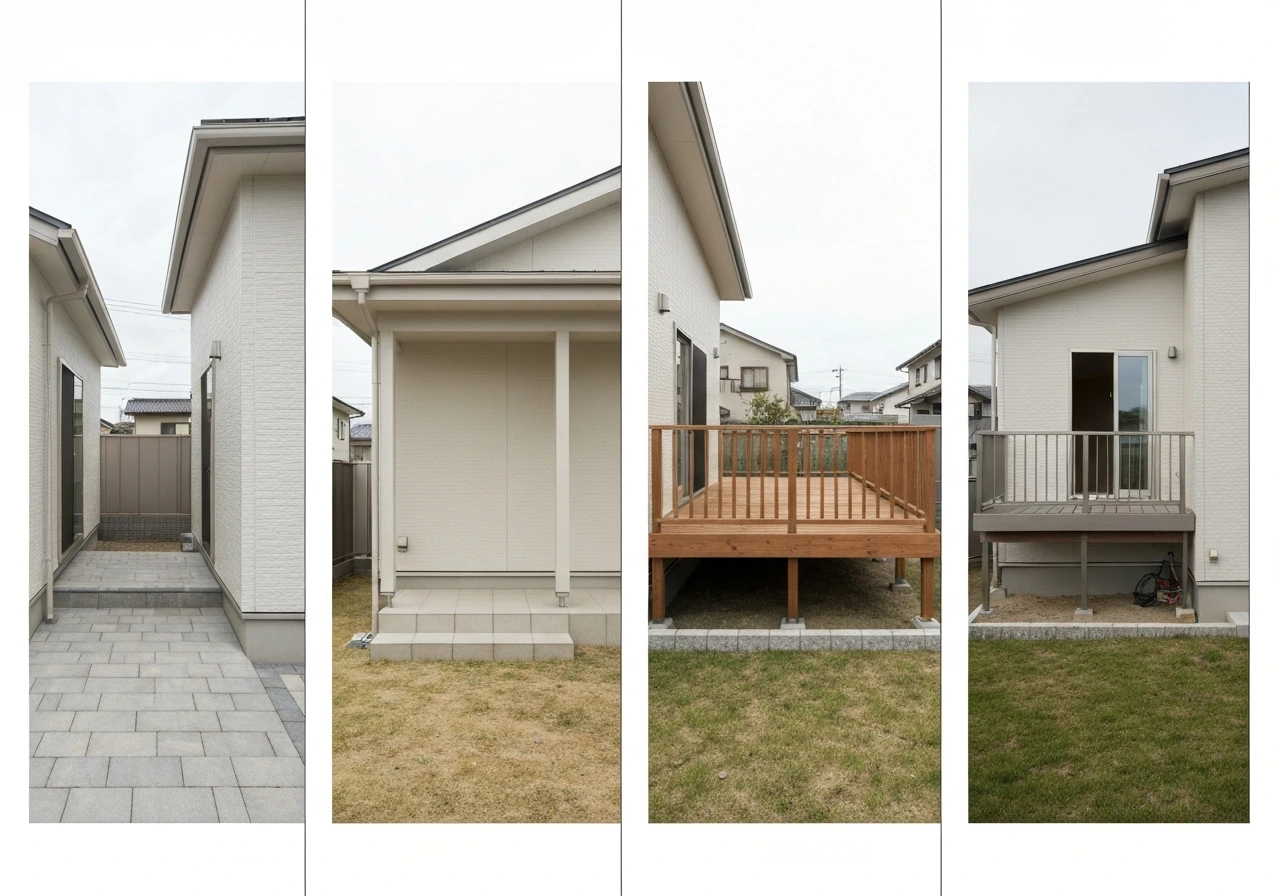
These terms get mixed up constantly in listings and plan drawings, and the confusion is understandable because they all refer to outdoor spaces attached to or near a home. Here's how they actually differ:
| Space | Level | Roof/Cover | Key Feature |
|---|---|---|---|
| Patio | At grade (ground level) | Usually open/uncovered | Paved surface, adjoins house, no structural elevation required |
| Porch | At grade or slightly raised | Typically covered, often roofed | Attached to entry, architectural roof, part of building structure |
| Deck | Raised above grade | Usually open/uncovered | Built on framing/posts, wood or composite surface, not at ground level |
| Balcony | Elevated (upper floor) | Usually open | Projects from wall, has railing/balustrade, always above ground floor |
| Terrace | At grade or raised (including rooftop) | Usually open | Paved platform, can be at grade or elevated, sometimes used interchangeably with patio |
| Verandah | At grade or slightly raised | Always covered/roofed | Roofed gallery wrapping part or all of house, open sides, typically with columns |
| Lanai | At grade or slightly raised | Often roofed, open-sided | Hawaiian origin, roofed open-sided structure, may have screens or partial enclosure |
The most practically useful distinctions: a patio is at ground level and usually open to the sky. A deck is raised off the ground on framing. A porch is architecturally attached to the house entry with a roof. A balcony projects from an upper floor wall and always has a railing. A terrace can be at grade or raised (including rooftop), and in many places the word is used almost interchangeably with patio. A verandah is always covered and wraps around the building. A lanai, common in Hawaii and Florida listings, typically means a roofed, open-sided structure that could otherwise be called a covered patio or porch.
If a listing or plan says 'terrace' and the home is a single-story ground-floor unit, it almost certainly means the same thing as a patio. If you're on an upper floor and the plan says 'terrace,' it likely means a rooftop or elevated outdoor platform. The elevation shown on the plan is your best clue.
Patio vs courtyard and other enclosed outdoor areas
A courtyard is different from a patio in one important way: it's enclosed, or at least substantially surrounded by walls, fences, or the building itself. A patio can sit on the open side of a house with no walls around it at all. A courtyard is typically walled on most or all sides, creating a more private, contained outdoor room. Some courtyard-style homes have a central patio, which is essentially a paved ground-level outdoor area that happens to be enclosed by the building on multiple sides.
In planning and zoning contexts, courtyards sometimes have specific legal definitions, including rules about wall heights and whether the enclosed space counts toward floor area ratio (FAR) calculations. This can matter if you're buying a property and considering modifications. If a plan shows what looks like a patio but it's fully enclosed by walls or building wings, check whether the listing or local code refers to it as a courtyard, because different rules may apply.
In some urban design and HOA documents, a patio is also referred to as a 'dooryard,' an older US planning term for a small at-grade outdoor area directly adjoining a residence. You won't see this on most residential plans, but it comes up in HOA design standards and multi-family developments, so it's worth knowing the two terms can describe the same physical space.
Regional and language differences in patio terminology
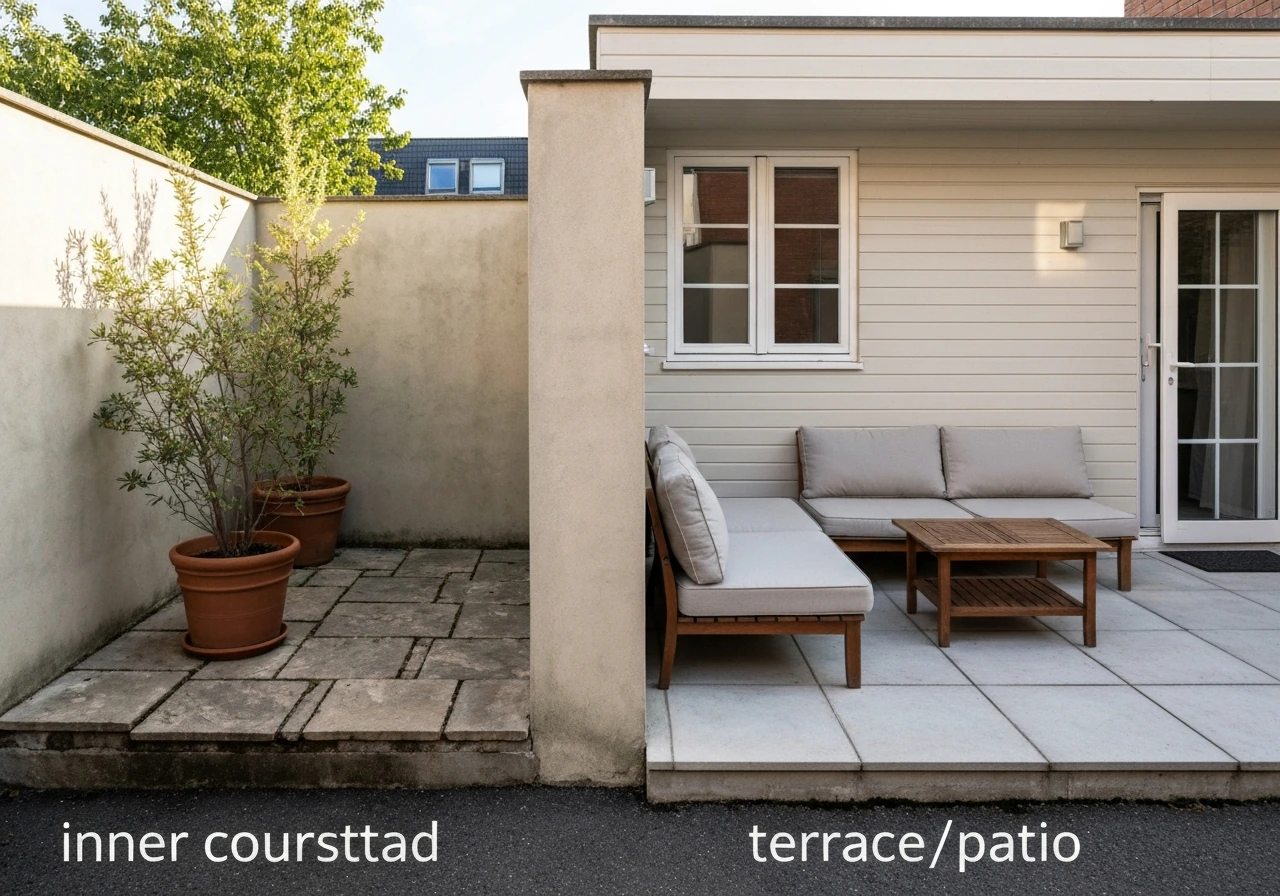
The word 'patio' itself comes from Spanish, where it originally referred to an inner courtyard of a house, usually enclosed by the building on multiple sides. In Spanish-speaking countries, a 'patio' is much more likely to mean what English speakers would call a courtyard than an open backyard slab. This distinction matters if you're reading plans or listings for properties in Latin America, Spain, or US markets with strong Spanish architectural influence, like the Southwest or California.
In the UK and Australia, 'patio' is used much the same way as in the US, meaning an outdoor paved area. However, 'terrace' is used more broadly in British English, including for what Americans would call a patio, and in London real estate specifically, 'terrace' often appears where a US listing would say 'patio.' 'Verandah' is the more common term in Australia and parts of South Asia for a covered outdoor space that Americans might call a porch or covered patio.
In Hawaiian and Florida real estate, 'lanai' frequently replaces 'patio' or 'porch' for any roofed, open-sided outdoor living area. In multi-family listings across the country, 'balcony' and 'terrace' sometimes get used for ground-floor private outdoor spaces that are technically patios by definition. The safest approach: look at the plan, note the floor level, check whether it's covered, and use that information rather than relying solely on the label.
In Hindi and Urdu contexts, 'patio' as a borrowed English term typically refers to the same paved outdoor sitting area, but traditional architectural vocabulary uses 'aangan' for a central courtyard or open inner space, which maps more closely to the original Spanish 'patio' than to the modern English use of the word.
Practical implications: access, privacy, drainage, maintenance, and property value
Access and daily use
Where the patio sits on the plan directly affects how useful it is. A patio accessed through the kitchen or dining room is ideal for outdoor entertaining. One accessed only through a bedroom is more private but less practical for guests. If the plan shows the patio tucked behind a garage or accessible only through a long path, that affects daily flow significantly. Look at which door connects to the patio and which room that door leads from.
Privacy
Patio location matters for privacy too. On a plan, the patio is usually shown outside the main building footprint, and this helps you figure out where the patio is located in a house where is the patio located in a house. A front patio is more exposed to street traffic than a rear or side patio.
Yes, a patio can be placed in the front of the house, but it may be more exposed than a rear patio and you should check how it’s accessed and labeled on the plan can a patio be in the front of the house. If you are wondering what a front patio is called on a floor plan, look for labels like patio or front patio near the main entry area.
Some plans show patios on the side of the house, which can be quite private depending on the lot. Questions about where a patio sits relative to neighbors and the street are worth thinking through early, particularly for condos or townhomes where patios may be limited common areas with HOA rules about what you can do with them.
Drainage
Drainage is one of the most practically important things to check for any at-grade patio. Building performance guidance recommends that patio slabs, walks, and driveways slope away from the house by at least 0.25 inch per foot. If the patio slopes toward the house instead, water pools against the foundation, which can cause moisture intrusion, mold, and long-term structural issues. When viewing a property, look at how the patio drains, especially near the door threshold. A plan alone won't show you actual slope, so a physical inspection or asking the builder about drainage is important.
Maintenance and permits
Patios are generally low-maintenance compared to decks, which need regular sealing or staining. Concrete and paver patios mainly need cleaning and occasional re-sanding of joints. However, if the patio has a cover or roof structure, that cover may have required a permit. Adding electrical, fans, or lighting to a patio cover typically requires a separate permit too. If you're buying an existing home, it's worth checking whether any patio cover was permitted, because unpermitted structures can create complications during sale or refinancing.
Property value and HOA considerations
A well-designed patio adds real value to a home, both for daily enjoyment and on resale. In condos and planned communities, the patio shown on a floor plan may be classified as an 'exclusive use' area, meaning you have the right to use it but the HOA technically owns or manages it. This affects what you can modify, what you can plant, and who is responsible for maintenance. Some HOA rules are very specific, prohibiting vegetation that extends beyond the patio boundary or restricting what structures can be added. Before assuming you can build a pergola or add string lights, check the HOA documents against what the plan shows.
What to check next when you see a patio on a listing
Once you've spotted a patio on a floor plan, here's the practical checklist to work through before you make any decisions:
- Confirm the floor level: Is the patio at grade (ground level), or is it on an upper floor? If it's elevated, the listing may be mislabeling it as a patio when it's technically a terrace or balcony.
- Check for a roof or cover: Is the patio open to the sky, or does the plan show a cover, pergola, or roof structure? A covered patio functions differently and may be subject to permit requirements.
- Identify which room it connects to: Which door accesses the patio, and where does that door lead? Kitchen/dining access is most practical for entertaining; bedroom access is more private.
- Look at drainage slope direction: If you can inspect the property, check that the patio surface slopes away from the house. Standing water near the foundation is a red flag.
- Ask about permit history: If there's any structure on or over the patio (cover, pergola, screen enclosure), ask whether it was permitted and inspected, especially if electrical is involved.
- In a condo or HOA community: Find out whether the patio is exclusive use or common area, what modification rules apply, and who handles maintenance and liability.
- Compare the label to what the plan actually shows: If it says 'patio' but it's enclosed on three sides by walls, it may function as a courtyard, which could carry different zoning or HOA implications.
- Note the patio's location relative to the front, rear, or side of the house: This affects privacy, noise exposure, and sun orientation throughout the day.
Reading a floor plan confidently means knowing that labels like 'patio,' 'terrace,' 'deck,' or 'balcony' are not always used with precision. The plan's actual geometry, the floor level it sits on, and whether there's a roof overhead will tell you more than the word alone. Use the label as a starting point, then verify with the drawings, the listing details, and if possible, a walk-through of the space itself.
FAQ
If a patio is labeled on the floor plan, does it automatically mean it is part of the property I will own?
Not always. In condos and many planned communities, the patio may be an “exclusive use” or similarly limited area, meaning you can use it but the HOA or common areas management may own it. Check the HOA master deed or CC&Rs for who is responsible for repairs and whether improvements (pergola, flooring, planters) need approval.
How can I tell on a drawing whether the “patio” is fully open or has a roof cover?
Look for overhead dashed lines or a specific label like “patio cover,” “pergola,” or “lanai,” and then cross-check the door and wall notation. If the plan shows the outdoor space under an extension of roof structure, treat it as potentially “covered” for permitting and resale documentation, even if it is still called a patio.
What if the plan shows a patio next to a bedroom, but the patio is the only outdoor exit from that room?
Then daily flow and resale appeal can differ from an entertainment-oriented patio accessed from kitchen or living areas. Consider whether you would want guests to pass through a private bedroom space, and confirm there is another practical outdoor route (for example from the living room) if you plan to host frequently.
Can “terrace” on a single-story plan mean the same thing as a patio?
Yes, often. If the labeled “terrace” sits at the same floor level as the interior rooms and appears at grade with no evidence of an elevated platform, it is frequently a patio using different terminology. If it looks elevated or is clearly above ground level, it may instead be a rooftop or platform terrace.
How do I confirm the patio is truly at-grade and not a deck disguised by labeling?
Use the section or elevation views (if included) to check the relative height to the surrounding grade. If you cannot find those views, compare the door sill height, typical outdoor elevation callouts, and any notes about framing or joists. A deck usually implies structural framing rather than simple paving at grade.
Does drainage guidance (slope away from the house) apply to patios the same way as driveways?
Generally yes, because water behavior at the foundation edge matters for any at-grade slab. The common recommendation is to slope away from the house by at least about 1/4 inch per foot, then pay attention to water near door thresholds since poor grading can create moisture issues even if the rest of the yard looks fine.
What common patio issues should I inspect during a showing that a plan cannot reveal?
Check for standing water after rain, cracks that suggest settlement, loose or missing paver joints, and whether the patio edge creates a gap that lets water run toward the foundation. Also look at door transitions (thresholds and weatherstripping) because patio water often becomes a problem at that boundary.
If a plan indicates a patio cover, should I assume it was permitted?
No. A drawing may show the cover, but it does not guarantee it was approved for the exact as-built structure. Ask for permits or at least confirm whether the permit package exists, especially if you see electrical (outlets, lighting) or fans, since those typically require additional approvals.
In multilingual or region-specific listings, how do I avoid confusing patio with courtyard or balcony?
Do not rely only on the translated label. Use what the plan shows: open-to-sky and at-grade points to patio, walls surrounding most sides indicates courtyard, and an elevated area with railing suggests balcony. If you see “patio” in Spanish-influenced markets, it can correspond more closely to an enclosed courtyard concept than to an open backyard slab.
If I want to add furniture, a small pergola, or string lights, what should I check first?
Start with (1) HOA or local rules tied to any “exclusive use” designation, (2) whether the plan already counts a cover structure, and (3) whether electrical work is permitted. Even small additions can require approval if they change the roofline, alter setbacks, or extend beyond the patio boundary shown on the drawing.
Next Article
Where Is the Patio Located? How to Identify It
Learn how to spot where a patio is on your property, distinguish it from porch balcony courtyard, and use a quick checkl