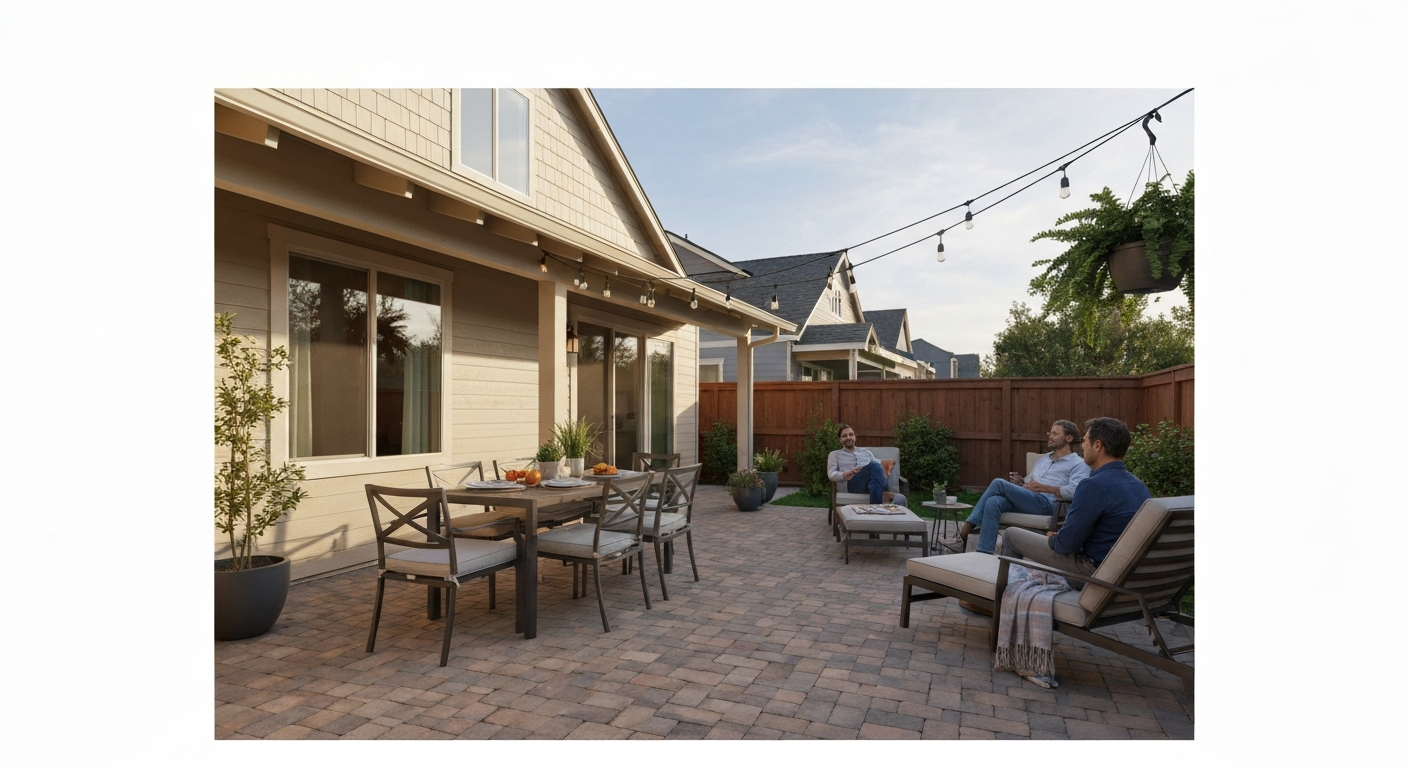
A patio is almost always at the back of the house, sitting at ground level, directly accessible from a door (usually a sliding glass door or French doors), and without a roof over it. That's the most common configuration in the U.S., and if you're scanning a listing or walking a property, that's where to look first. Of course, patios can also appear on the side of a house, in a front courtyard, or as a detached pad further out in the yard. But if you're hunting for it, start at the back door.
Where Is the Patio Located? How to Identify It

Ada Hollis
3 Jun 2026
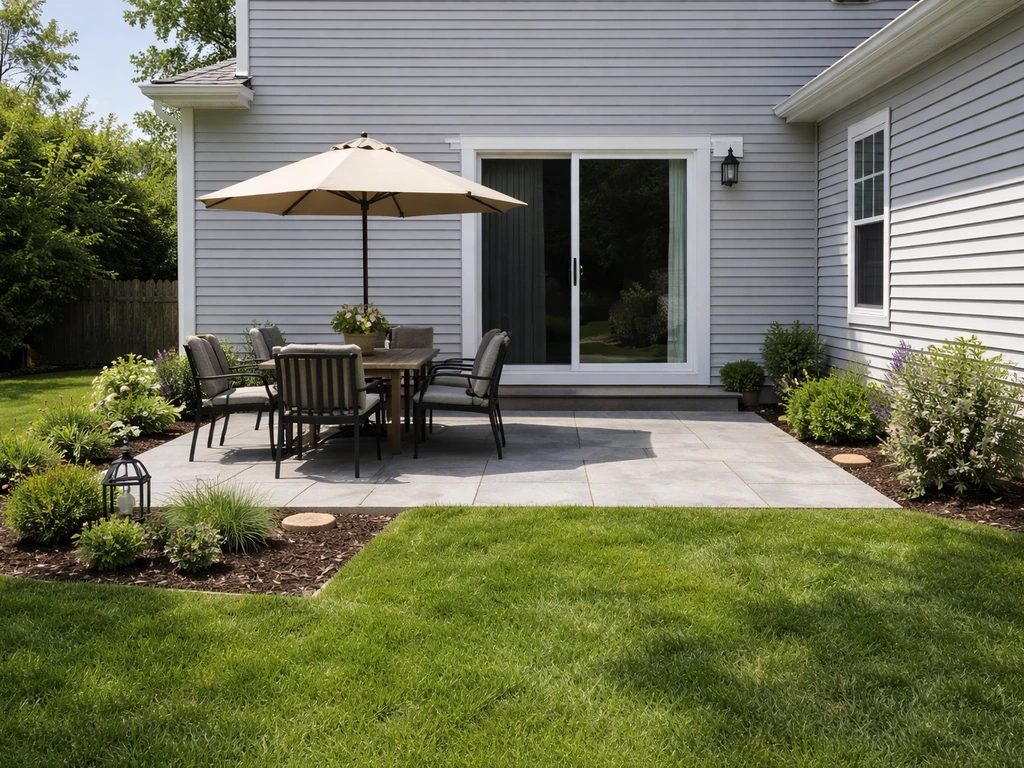
First, make sure you're looking at an actual patio
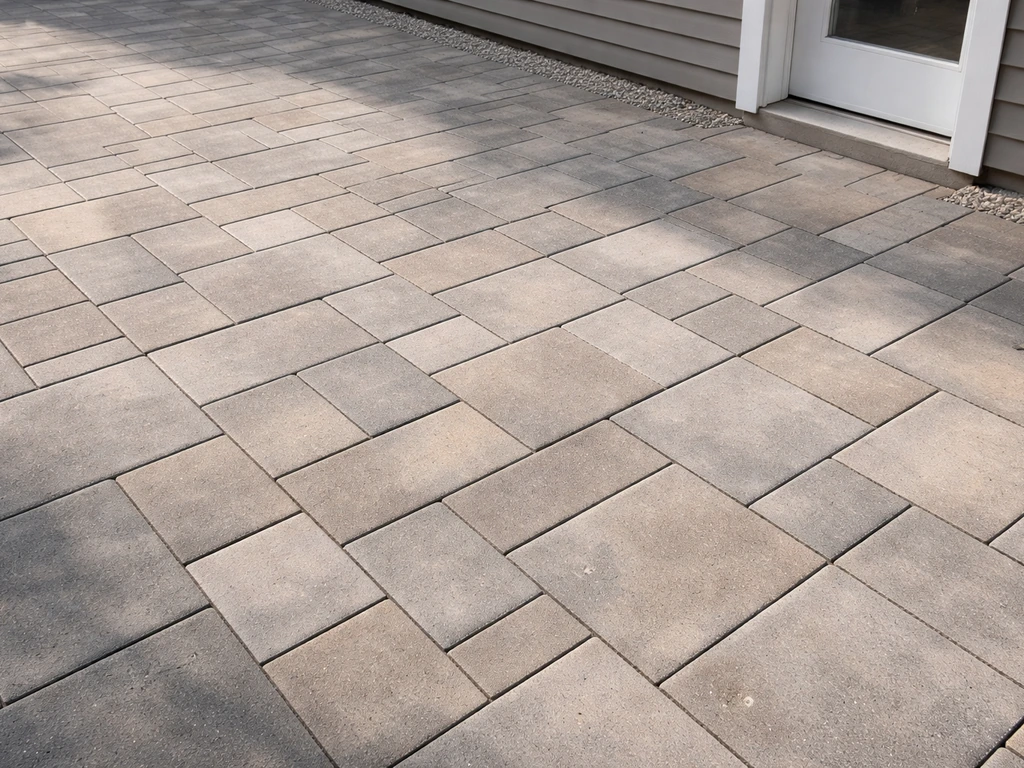
Before you locate the patio, it helps to know exactly what you're looking for. Merriam-Webster defines a patio as a recreation area that adjoins a dwelling, often paved, and adapted especially for outdoor dining. Cambridge Dictionary adds the key detail: no roof. That distinction matters a lot when you're comparing spaces on a listing or floor plan.
From a zoning standpoint, one Ohio municipality formally defines a patio as a hard exterior floor installed at ground level or less than six inches above it, which may abut or sit close to a residential structure. That's a useful working definition: hard surface, ground-level (or nearly so), open to the sky. If the space has a roof, it's likely a porch or covered veranda. If it's elevated, you might be looking at a deck or balcony. The patio is the flat, ground-hugging, open-air one.
Where patios typically sit on a property
Most residential patios fall into a predictable pattern, driven by how people actually use outdoor space. Here's how placement usually breaks down:
Attached vs. detached
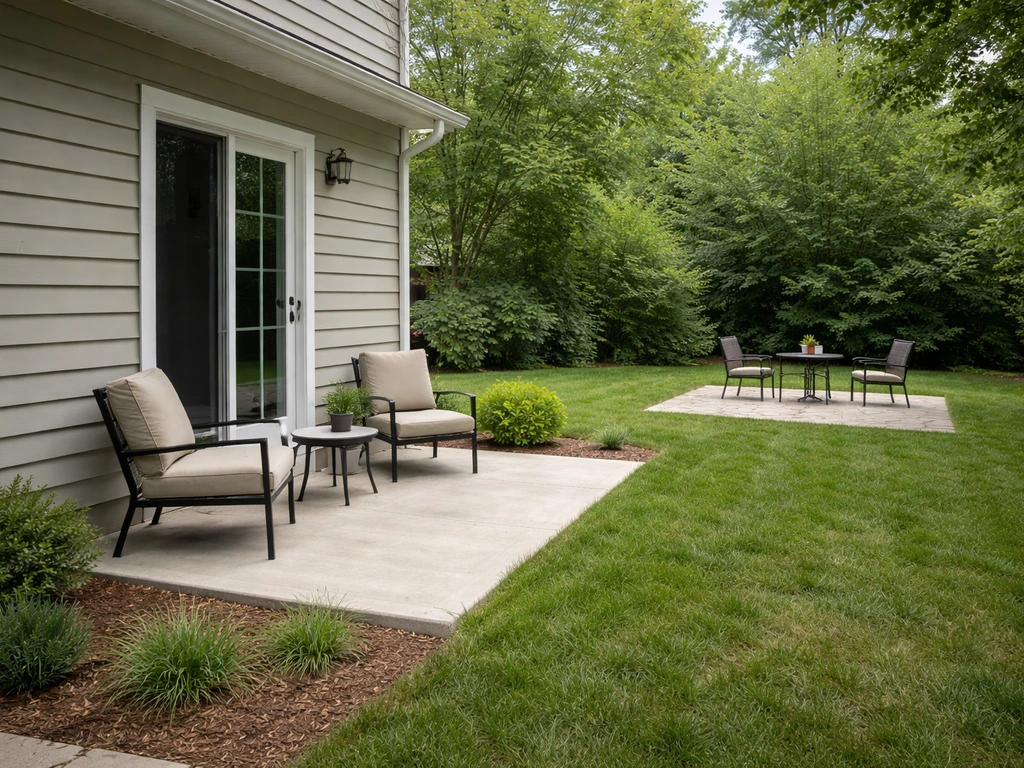
An attached patio shares a wall or edge with the house and connects directly to an interior room, usually a kitchen, dining area, or living room. This is by far the most common setup because it creates a seamless flow from inside to outside. A detached patio sits further out in the yard, separated from the house by lawn or landscaping. You'll often see detached patios used as fire pit areas, pool surrounds, or garden retreats. Both count as patios, but they serve different purposes.
Front, back, or side?
Back-of-house is the dominant location for patios in North American residential design. Privacy is the main reason: the backyard is screened from street traffic, which makes it comfortable for lounging, dining, and entertaining. Side patios do appear, particularly on corner lots or homes with a garage taking up one side. Front patios are less common in the U.
While front patios are less common, they can be real patios when they're ground-level, open to the sky, and not covered like a porch. S. but are more typical in Spanish-style homes, Mediterranean designs, and neighborhoods where the street scene is pedestrian-friendly. If a listing describes a front patio, it's worth confirming whether it's truly a patio (open, ground-level, hard surface) or actually a covered front porch.
Which door leads to it?
An attached patio almost always connects to a specific door. In most homes, this is a sliding glass door or French doors off the kitchen or main living area. In some designs, a back door from a mudroom or hallway leads out to it. Knowing which room connects to the patio tells you a lot about how it's meant to be used and how it fits into the home's daily flow.
How to find the patio in listings, floor plans, and photos
Real estate listings can be vague, and photos don't always show outdoor spaces clearly. Here's how to track down the patio's location using the tools you already have.
Reading a floor plan
On a floor plan, look for a labeled area just outside the main living space, often hatched, dotted, or shaded differently from the interior rooms. It's usually labeled "patio," "terrace," or sometimes just "outdoor area." The patio will appear at the same level as the first floor and connect to a door opening. If it's at the back of the plan, it's almost certainly accessible from the kitchen or living room. A good floor plan article elsewhere on this site digs into how patio labels specifically appear in architectural drawings, which is worth checking if the plan you're reading is ambiguous.
Reading listing photos
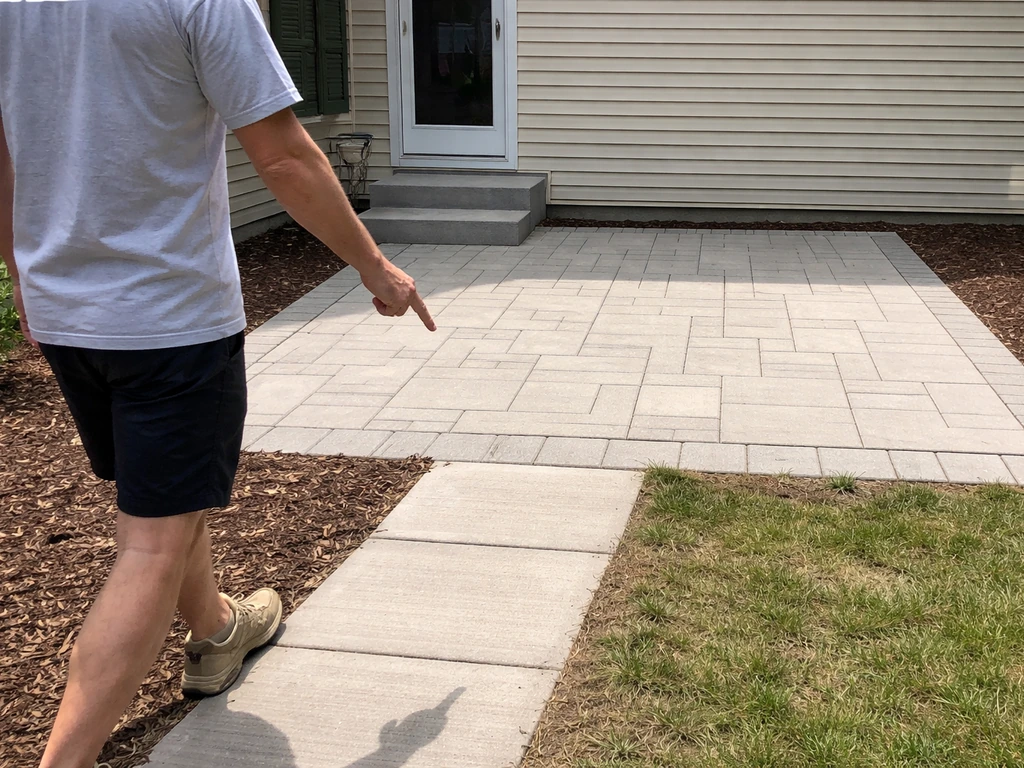
In listing photos, scan for a hard-surfaced area (concrete, pavers, flagstone, brick) that sits flush with or just slightly above the ground and has no overhead structure. The City of Alameda notes that uncovered porches, terraces, balconies, and patios are treated as decks under its municipal code no overhead structure. If there's a roof or pergola over it, the listing may still call it a patio, but technically it's moving toward a covered porch or lanai category. The tell-tale signs: you can see sky above it, and it connects directly to a door visible in the photo.
Reading listing descriptions
Listing copy often says things like "private rear patio," "patio off the kitchen," or "covered patio." That first word (rear, front, side) tells you the location. "Off the kitchen" tells you which interior room connects to it. Watch for "covered patio" specifically, because in many regions that term is used loosely to describe what is functionally a porch. If you're unsure, compare the description to the photos and floor plan.
Patio vs. porch vs. balcony vs. verandah vs. courtyard: how location differs
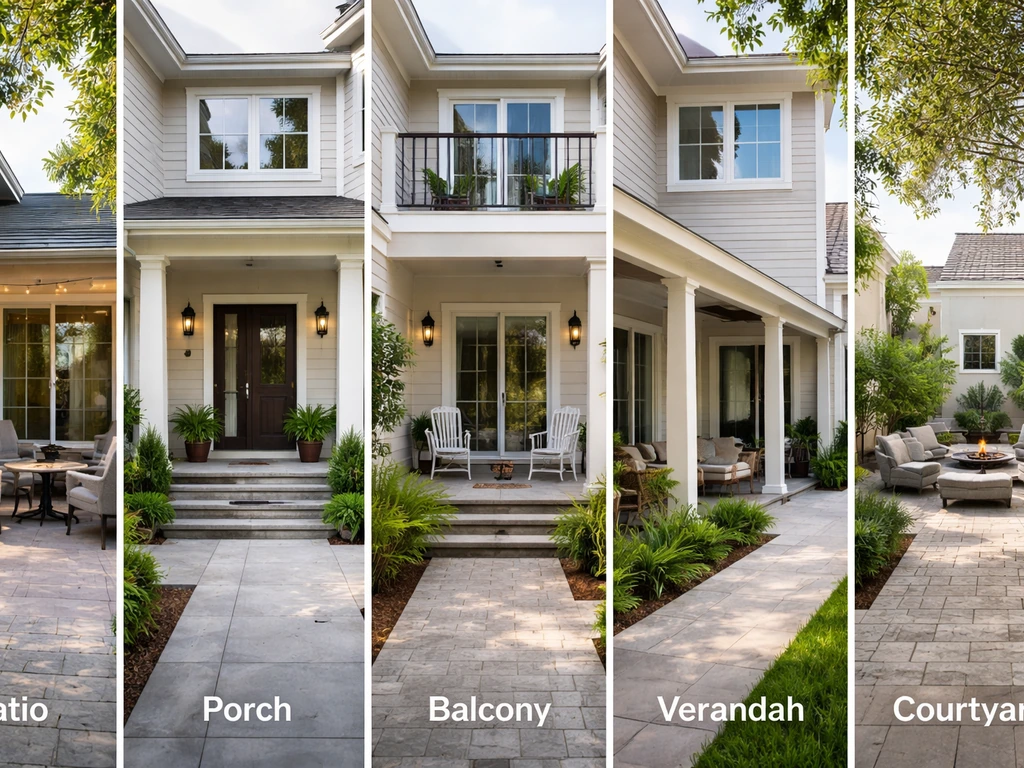
These five outdoor spaces get confused constantly, partly because regional names vary and partly because builders sometimes use the terms interchangeably in listings. Location and structure are the clearest ways to tell them apart.
| Space | Typical Location | Level | Roof? | Key Trait |
|---|---|---|---|---|
| Patio | Back or side of house, occasionally front | Ground level | No | Open, hard surface, adjoins the home |
| Porch | Front of house (most common), sometimes rear | Ground level, may have steps | Yes | Roofed, entry-adjacent |
| Balcony | Upper floors, any side of the house | Elevated | Usually no | Extends from upper floor, no ground access from below |
| Verandah | Wraps around front and/or sides | Ground level | Yes | Roofed, often wraps the exterior |
| Courtyard | Interior of home footprint or shared exterior | Ground level | No | Enclosed on multiple sides by walls or wings |
The patio's defining location trait is that it's ground-level and open. A porch shares the ground level but gains a roof and is typically at the entry. A balcony is elevated, which makes it impossible to confuse once you know to check the floor level. A verandah is roofed and wraps the building, often seen in colonial or Australian-style architecture. A courtyard is enclosed by walls or building wings on multiple sides, giving it a very different character even when it's also ground-level and unroofed.
If you're looking at a front outdoor space and wondering whether it's a patio or a porch, the roof is the deciding factor. No roof means patio. A roof (even a partial one) almost always means porch or covered entry. There's a full breakdown of what front patios are actually called elsewhere on this site, which is worth reading if you're specifically dealing with a front-facing outdoor space.
Common patio layouts and why they end up where they do
Patio placement isn't random. Designers and homeowners choose locations based on three practical factors: privacy, sun and shade exposure, and circulation (how you move between the patio and the house).
The classic rear attached patio
This is the most common layout: a rectangular or square paved area directly behind the house, accessed from sliding glass doors off the kitchen or living room. It works well because it's private from the street, close to food prep, and easy to integrate with the rest of the yard. Sun exposure varies by which direction the back of the house faces. A south-facing rear patio in the northern hemisphere gets plenty of afternoon sun, which is great for winter but can be brutal in summer without shade.
Wraparound and L-shaped patios
Some homes extend the patio around a corner of the house, creating an L-shape or partial wrap. This is useful when the home has doors on two adjacent walls, or when the owners want a shaded zone on one side and a sunny zone on another. These are more common on larger lots and higher-end homes.
Side patios
A side patio is often a practical solution on narrow lots or in urban rowhouses where there's no usable backyard. They're also common as secondary spaces, like a small seating area near a side entrance or gate. Side patios tend to be shadier (one side of the house blocks morning or afternoon sun), which can be a feature or a downside depending on your climate.
Detached patios and pool surrounds
When a patio sits away from the house, it's usually anchored to something else: a pool, a fire pit, a garden structure, or a view. These detached spaces often have a more destination feel. They're less about circulation and more about creating a distinct outdoor room. On floor plans, you'll sometimes see them labeled separately from the main patio, or just shown as a paved area at the rear of the lot.
How to confirm where the patio is right now
Whether you're walking a property in person or reviewing a listing remotely, run through these questions to pin down the patio's exact location:
- Start at the back door. Go to the rear of the house and look for any door that opens to a hard-surfaced, open-air area at ground level. That's almost certainly the patio.
- Check the floor plan. Find the label nearest a door on the exterior wall. If it says patio, terrace, or outdoor area and sits at the same elevation as the first floor, you've found it.
- Look at listing photos in order. Agents usually photograph outdoor spaces after interior rooms. Look for the photo showing a paved surface with no roof, sky visible above, and a door or sliding panel behind it.
- Read the listing description for directional words. "Rear patio," "side patio," or "patio off the kitchen" tells you both location and which room it connects to.
- Ask which door leads to it. If you're doing a walkthrough, ask the agent or owner which interior room connects to the patio. Then stand in that room and look outward.
- Confirm it's not a porch or balcony. Check: is there a roof over it? If yes, it's more likely a covered porch. Is it elevated above the ground floor? Then it's a balcony or deck, not a patio.
- Check the lot orientation. If you know which direction the back of the house faces, you'll know roughly how much sun the patio gets and at what time of day, which matters for usability.
If you're trying to confirm patio placement specifically within the context of a floor plan or architectural drawing, there's a more detailed breakdown of how patios appear in floor plan notation on this site. If you want a quick definition, search for what is patio in floor plan and you'll see how it shows up in drawings floor plan notation.
And if the space in question is on the front of the house and you're unsure what to call it, the article on front patio terminology covers the naming conventions clearly. Either way, the core answer doesn't change: ground level, hard surface, open to the sky, connected to a door. Find those four things together and you've found the patio.
FAQ
If the listing says “patio” but there are steps or a raised edge, is it still a patio?
In most listings, a patio will be the ground-level paved area with an open view of the sky, and it will line up with a door you can identify in photos (often sliding glass or French doors). If the paving is there but the space is elevated or clearly reached by steps, it is more likely a deck or a balcony, even if the listing calls it a patio.
How do I tell the difference between a patio and a covered patio or lanai when the roof is partial?
Check whether the surface is continuous and hard (pavers, concrete, brick, flagstone) at roughly the same grade as the door threshold. If the outdoor area is level but has a roof, posts, or a defined overhead structure, it is usually categorized as a porch, veranda, or lanai depending on region. A pergola can be tricky because it may have partial cover, so confirm whether there are gaps that still leave the space open to sky.
Can a space still count as a patio if it has an umbrella, canopy, or retractable shade?
Yes. Some patios include shade elements like a freestanding umbrella, retractable awning, or sail that can be moved. Those do not automatically make it a porch as long as there is no fixed overhead structure permanently defining a roofed area.
What if the floor plan doesn’t label the area “patio,” or uses a different term like “terrace”?
On some floor plans, the outdoor space is shown as “terrace,” “outdoor living,” or “patio” and may be hatched differently from interior rooms. The quickest test is alignment: the marked outdoor area should sit at the same floor level as the room it connects to, and it should attach to an exterior door symbol.
What should I look for if I can’t find the exterior door connection in the listing photos?
If photos show a paved area but the door isn’t visible, look for a second clue in the house plan or exterior images: the patio will be directly outside an exterior opening that connects the indoors to that paved space. If the paved area is only accessible from a gate, yard path, or stairs from another level, it may be a walkway area rather than the main patio.
How can I tell whether the ground-level unroofed space is a courtyard instead of a patio?
If the outdoor space is fenced or surrounded by walls on multiple sides, it may be a courtyard. Courtyards can be ground-level and unroofed, so use the “enclosure” clue as the deciding factor, not just whether there is a roof.
What does “off the kitchen” vs “off the living room” usually indicate about patio location?
If the listing mentions “rear,” “front,” or “side” along with “off the kitchen” or “off the living room,” use both parts together. “Off the kitchen” tells you which interior room it serves, and “rear/front/side” tells you where it sits on the property relative to the street and main house facade.
Can there be multiple patios on the same property, and how do I identify the main one?
Sometimes a property has more than one patio-like space, such as a primary attached patio plus a detached fire-pit pad. In that case, floor plans may show them separately or label only the main one, while photos may focus on one feature. Decide first which one connects to the main door, that is typically the primary patio.
How accurate are floor plans for patio location compared with what I’ll see during a walkthrough?
If you’re relying on an old or simplified floor plan, outdoor areas can be misdrawn in exact size or shape. Use the photo and the described access door as the reality check. In person, confirm by tracing from the door directly to the paved surface and noting whether the surface is at ground level and open to sky.
Next Article
Patio Weather Meaning: What Patio, Area & View Mean
Clear patio definition: what a patio is, 'patio weather' meaning, and how it differs from decks or porches.