A deck is an elevated, framed platform built with wood or composite boards, typically attached to the house and sitting above ground level. A patio is a ground-level outdoor surface made from hardscape materials like concrete, pavers, brick, or stone. That elevation difference is the single clearest way to tell them apart: if you can see posts, a frame, or a support structure underneath, it's almost certainly a deck. If the surface sits flush with (or just barely above) the surrounding yard, it's a patio.
Deck vs Patio Definition: Differences, Materials, and IDs

Ada Hollis
26 Jun 2026
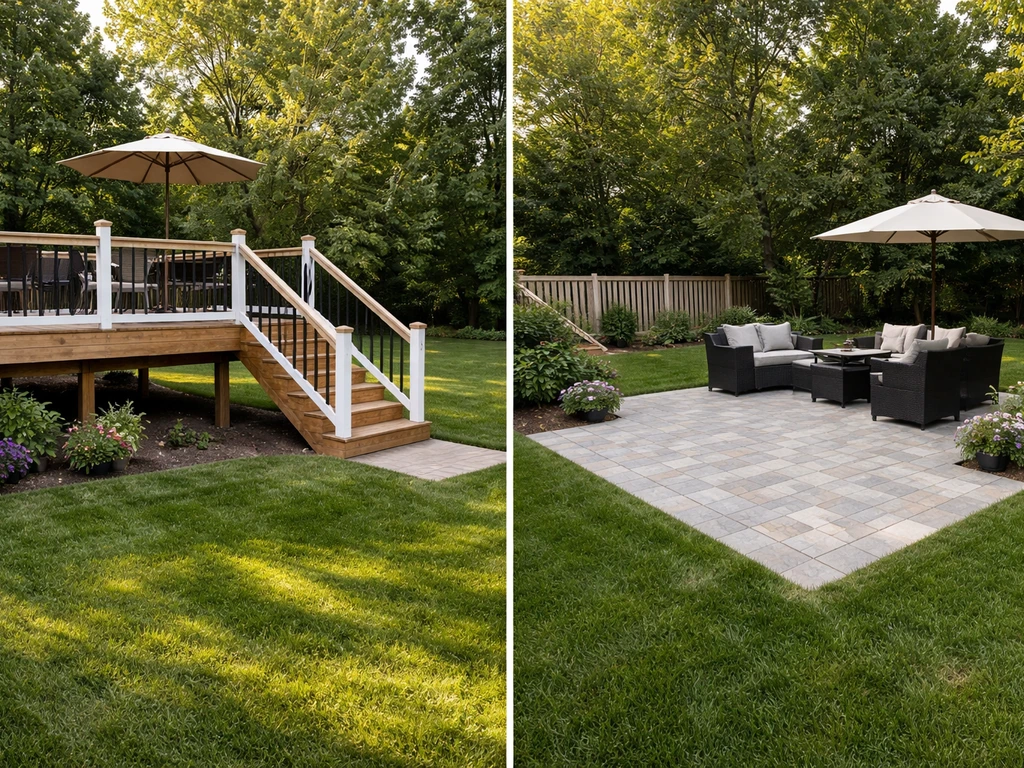
Deck vs patio: simple definitions
A deck is a flat, load-bearing outdoor surface constructed on a raised framework, typically attached to an exterior wall of the house. The structure underneath does the heavy lifting: posts anchor into footings below grade, beams span between them, and joists support the surface you walk on. The walking surface itself is almost always decking boards, either pressure-treated wood, natural hardwood, or composite (wood-fiber and plastic blended material). Decks are elevated by definition. Building codes like the International Residential Code (IRC) treat decks as elevated walking surfaces, and once a deck sits more than 30 inches above grade, guardrails become a code requirement.
A patio is a ground-level outdoor area surfaced with hardscape materials. If you want the quick definition of a patio pool, it is a patio-style pool built at ground level that blends with the hardscape around it A patio is a ground-level outdoor area surfaced with hardscape materials.. The Cambridge Dictionary defines it as a usually paved outdoor area used for sitting and relaxing, and that captures the common reality: patios are laid directly on or very close to the ground, not framed and elevated. The material palette for patios is wider than most people realize: poured concrete, concrete pavers, natural stone, brick, flagstone, and even gravel all qualify. What they share is that they sit on a prepared base (compacted gravel, sand, or concrete slab) at roughly the same level as the surrounding landscape.
The term 'patio deck' sometimes appears in listings and marketing, which can blur these definitions. That phrasing usually refers to a deck designed to look and feel like a patio, or a low-profile deck built very close to ground level. But structurally and terminologically, the two are still distinct things.
How to tell them apart on a property
When you're scrolling through listing photos or walking a property, a few quick cues make it easy to identify which is which.
Signs you're looking at a deck
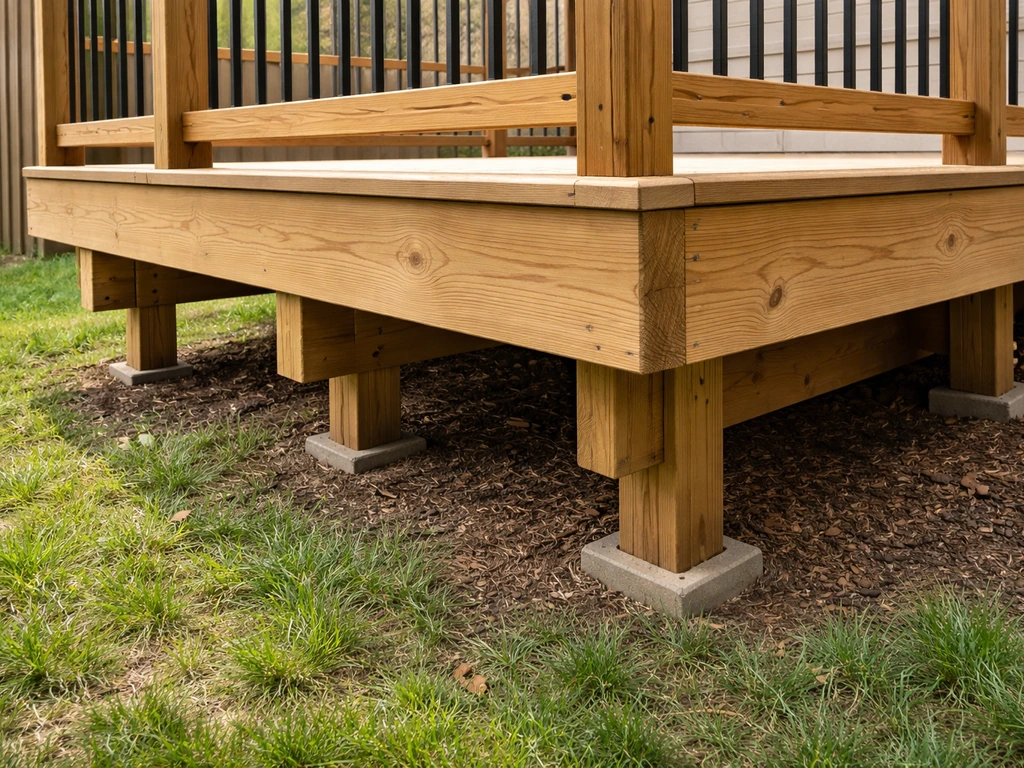
- The surface is elevated off the ground, even by just a foot or two
- You can see support posts, beams, or framing underneath
- There are railings or guardrails around the perimeter (required by code once the deck is more than 30 inches above grade)
- The walking surface is made of boards with visible gaps between them
- There's a door from the house that opens directly onto the surface at that same height
- Steps lead down from the structure to the yard below
Signs you're looking at a patio
- The surface sits at or very near ground level, flush with the surrounding lawn or garden
- The material is solid: concrete slab, stone, brick, or interlocking pavers
- There are no railings (because the surface isn't elevated enough to need them)
- The edges typically meet grass, garden beds, or other landscaping at nearly the same height
- You might see a subtle slope away from the house for drainage (typically around 1/8 to 1/4 inch per foot)
One practical note for property hunters: listing descriptions sometimes use 'deck' and 'patio' interchangeably, which is frustrating and inaccurate. Always look at the photos and apply these cues rather than relying on the label in the text.
Materials and construction: what each one is actually built from
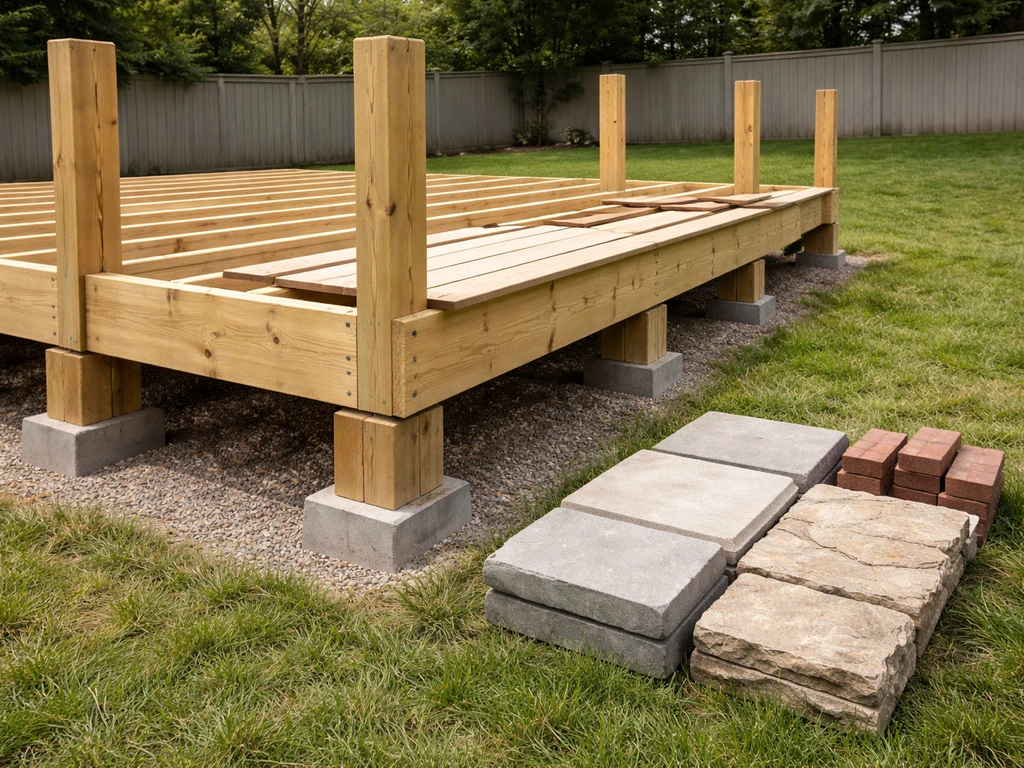
Decks are framed structures. The bones of a deck include concrete footings (poured below the frost line in cold climates), posts, beams, joists, and then the decking boards on top. The wood used for structural parts is almost always pressure-treated lumber, selected for its resistance to rot and insects. The surface boards can be pressure-treated wood, a natural hardwood like ipe or cedar, or composite decking. Composite boards (brands like Trex and TimberTech are the most recognized) are engineered to resist rot, warping, and splintering, and many come with fade and stain warranties. They cost more upfront than basic pressure-treated wood but typically need less ongoing maintenance.
Patios don't have a structural frame above ground. Instead, everything happens at grade. A properly built patio starts with blank" rel="noopener noreferrer">excavation, then a compacted gravel sub-base (roughly 3 to 4 inches is typical), sometimes a sand setting bed on top of that, and then the surface material. For poured concrete, the slab is formed and poured in one go. For pavers, individual units are laid and then typically finished with polymeric sand swept into the joints to limit weed growth. The material choice affects look, cost, durability, and maintenance: concrete is economical but can crack; natural stone looks beautiful but costs more; pavers are repairable and permeable options exist for better drainage.
| Feature | Deck | Patio |
|---|---|---|
| Elevation | Raised above grade on a frame | At or near ground level |
| Primary surface material | Wood or composite boards | Concrete, pavers, stone, or brick |
| Structural system | Posts, beams, joists, footings | Compacted base, sub-base, surface layer |
| Railings required? | Yes, typically over 30 inches above grade | Rarely, only if elevated |
| Permit requirements | Usually required (elevated structure) | Often required for larger slabs |
| Typical lifespan | 15-30+ years depending on material | 25-50+ years for concrete/stone |
| Drainage approach | Water falls through board gaps | Surface must be sloped for runoff |
Pros, cons, and what they mean for real homeowners
Deck pros and cons
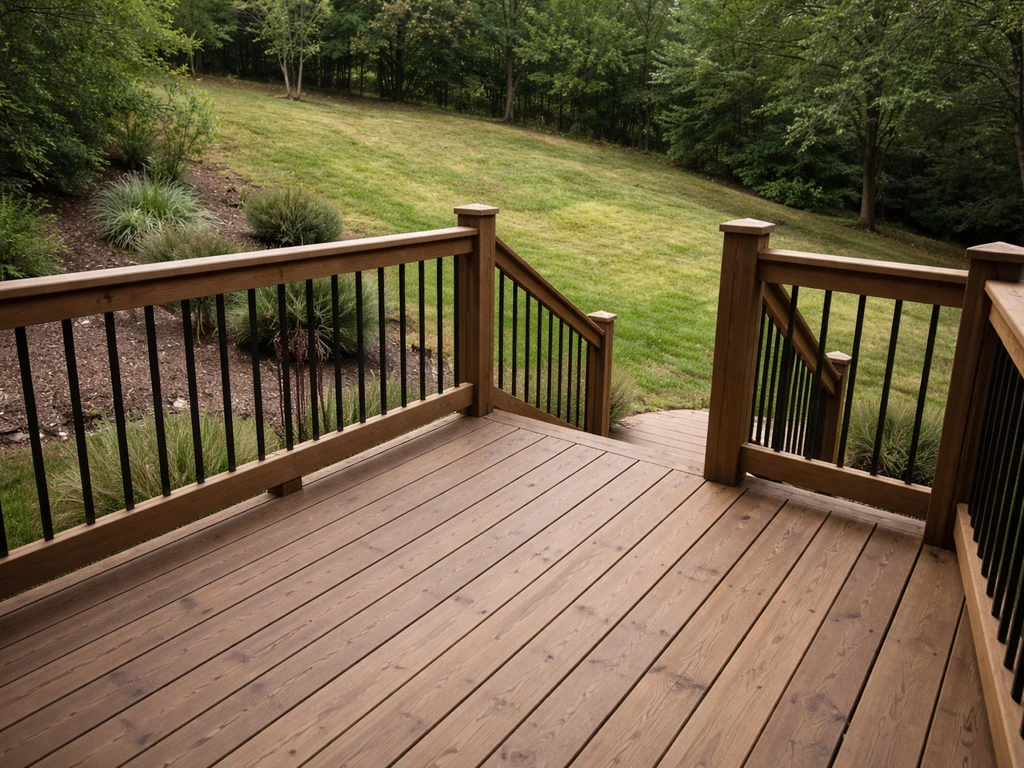
Decks are the right answer when your yard has a slope or uneven terrain, because building a deck lets you create a level surface without extensive grading or excavation. They also work well when you want a seamless transition from the interior floor level of the house out to the outdoors. On the downside, wood decks demand consistent maintenance: sealing, staining, or painting every few years, plus periodic inspection of the structural framing. Composite decks cut that maintenance burden significantly but cost more to build. From a safety standpoint, elevated decks also need more attention during a home inspection: check railings, ledger board connections, post footings, and board condition.
Patio pros and cons
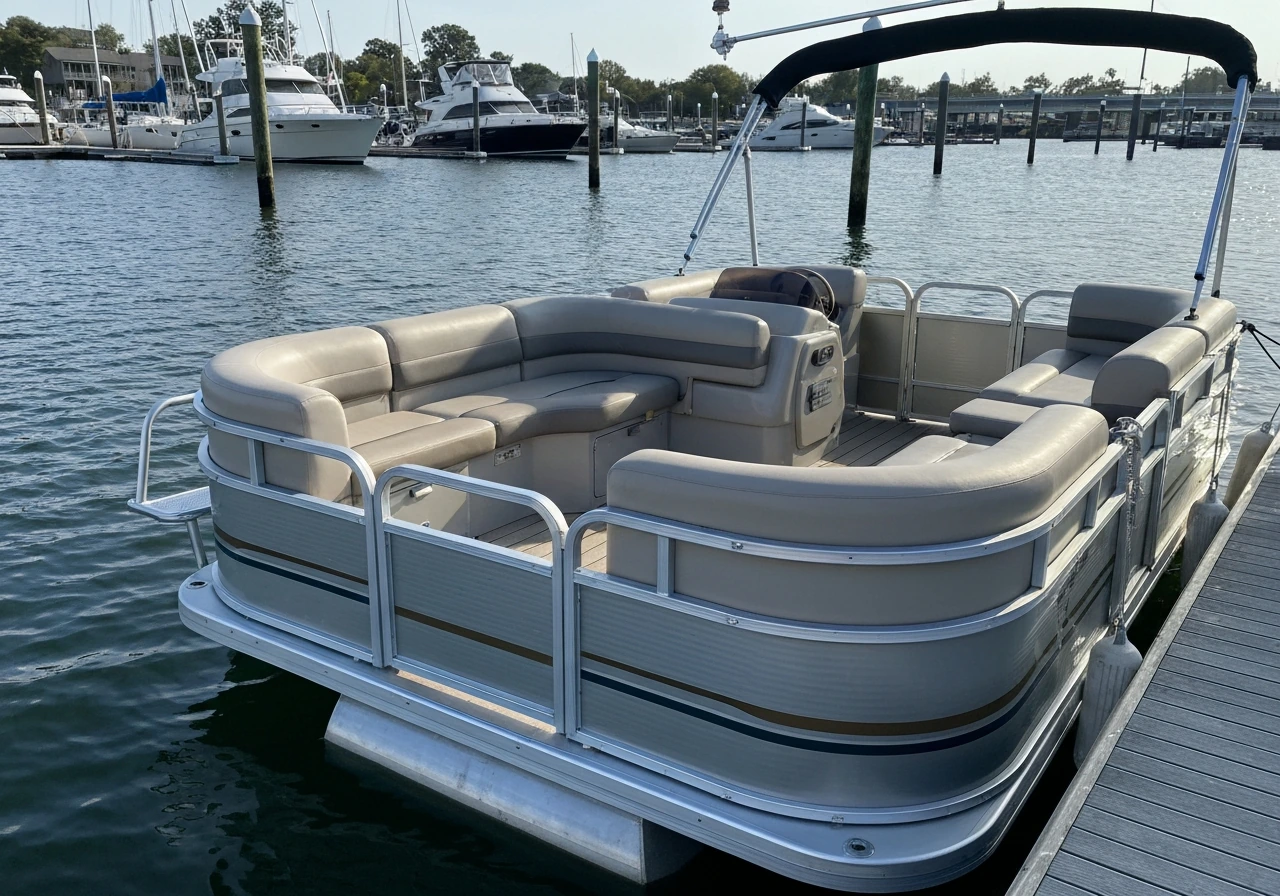
Patios are generally lower maintenance than wood decks and more durable over a long time horizon, particularly if they're well-built from stone or quality pavers. What is a patio boat? It is a type of watercraft designed to combine the comfort of a patio layout with the mobility of a boat. The common issues homeowners run into are concrete cracking over time (especially in freeze-thaw climates), weeds pushing up between paver joints, and drainage problems if the surface was laid without enough slope. The LSU AgCenter notes that more permeable paving or surface approaches can help avoid drainage and ponding problems that occur with more impermeable patio or parking surfaces blank" rel="noopener noreferrer">Landscape Ornamental Series. Patios are also inherently more accessible: there's no step up or down, which matters if you have mobility concerns or want a space that's usable for everyone. The main limitation is terrain: patios don't make sense on a steeply sloped lot unless you're willing to do significant retaining and grading work first.
Patio vs porch vs verandah vs balcony vs courtyard
These terms all describe outdoor living spaces attached to or adjacent to a home, but each has a distinct meaning. Here's how to keep them straight.
A porch is a covered structure attached to the entrance or exterior of a home. The defining feature is the roof: porches are sheltered, which is what separates them from open patios and most decks. A porch can sit at ground level (making it feel patio-like) or be elevated (making it feel deck-like). Either way, if it has a roof that's structurally part of the home's architecture, it's a porch.
A verandah (also spelled veranda) is a roofed, open-air porch or gallery that wraps along one or more sides of a building. Merriam-Webster defines it as a long open porch usually with a roof, and Wikipedia reinforces that it's attached to the outside of the building. The practical difference from a standard porch is mostly scale and wrapping configuration: a verandah typically runs longer and is more architecturally integrated. It's common in colonial-era homes, tropical climates, and Australian and South Asian residential architecture.
A balcony is elevated and projects from an exterior wall of the building, enclosed by a parapet or railing. It's not a ground-level feature at all: balconies are upper-floor elements, typically too small to serve as entertaining spaces, and they don't involve a separate structural frame anchored in the ground the way decks do. If you're looking at a second-floor outdoor space attached to the building wall with a railing, that's a balcony.
A courtyard is an open space that is surrounded completely or partly by buildings or walls. Unlike patios and decks, which are attached to the exterior of a house and face outward into the yard, a courtyard is enclosed or semi-enclosed. Many courtyards have a patio-style hardscape surface at their floor, but the defining characteristic is that enclosed spatial relationship: you're inside the building perimeter, not outside it.
| Space | Roofed? | Elevation | Key defining feature |
|---|---|---|---|
| Deck | No (usually) | Elevated above grade | Framed wood/composite structure on posts |
| Patio | No | Ground level | Hardscape surface (concrete, pavers, stone) |
| Porch | Yes | Ground level or elevated | Roof is structurally part of the home |
| Verandah | Yes | Ground level or slightly raised | Roofed, open-air, wraps along the building |
| Balcony | No (usually) | Upper floor, elevated | Projects from exterior wall, upper floor only |
| Courtyard | No | Ground level | Enclosed or semi-enclosed by walls or buildings |
Which one is right for your situation
The honest answer is that neither decks nor patios are universally better. The right choice depends on your lot, your budget, how you plan to use the space, and how much maintenance you want to take on.
- Sloped or uneven yard? Go with a deck. You can build a level surface over difficult terrain without the cost of major grading. A landscape architect has made this point directly: decking suits sloped or uneven sites where a level surface is needed without extensive excavation.
- Flat yard and want something durable for the long term? A patio is usually the smarter call. Concrete and stone patios last decades with minimal attention and no structural inspections needed.
- Accessibility is a priority? A patio wins outright. Ground-level surfaces with no steps are easier for everyone, including people with mobility challenges, children, and older family members.
- Budget is tight? A basic concrete patio is typically one of the least expensive outdoor surfaces you can install. Decks cost more due to the structural components, and elevated decks almost always require a building permit.
- You want low maintenance? Composite decking is better than wood decking, but a quality stone or paver patio still demands the least ongoing effort overall, weeds and occasional resealing aside.
- You want weather protection? Consider adding a porch or verandah to whichever hardscape you choose. An open deck or patio offers no shelter. If shade and rain coverage matter, a roofed structure is the answer, not a different surface material.
- You're buying or renting and just need to understand what you're getting? Use the spotting cues above. Elevation plus board surface equals deck. Ground-level hardscape equals patio. Roofed and attached equals porch or verandah.
If you're still sorting out related terminology, it helps to know that the line between a 'patio deck' and a standard deck or standard patio is genuinely blurry in the marketplace. Understanding the deck and patio meaning helps you interpret listings correctly and make better decisions about layout, materials, and maintenance patio deck. Some hybrid structures sit low enough to look like patios but are framed like decks. When in doubt, look underneath: if there's a frame and posts, it's a deck regardless of what the listing calls it. Understanding these distinctions upfront makes every conversation with a contractor, real estate agent, or property inspector go smoother from the start.
FAQ
How can I tell a deck vs patio when a listing uses “patio deck” or a photo angle hides the underside?
Use the “support clue” first. If you can find posts, beams, or ledger attachments into the house, you are looking at a deck even if the walking boards are low to the ground. If the surface sits directly on a slab or compacted base and there is no structural frame above grade, it is a patio even if it uses wood-like boards on top.
Do deck vs patio definitions affect permits or inspections?
City and county rules often treat decks as elevated walking surfaces and patio as a paved hardscape, which can change permitting, inspections, and setbacks. If a project will be above grade, add railings, or connect to the house ledger, ask the contractor for the applicable permit category before buying materials.
If a surface is made of composite decking or wood-look materials, is it automatically a deck or patio?
Composite boards, even though they are more durable than wood, do not make something a patio by themselves. If the composite boards are laid on a framed structure with joists and posts, it is still a deck. Conversely, stone or pavers laid on a prepared base at grade are still a patio.
What counts as “ground level” for a patio, and how much height difference is still considered a patio?
A patio can be built with steps or a slight rise, but the key is that it is not framed and supported by posts and beams out of the ground. If you see a step-down that is created by the hardscape height change, that is still patio-like. If you see a framed platform at the top with supporting structure beneath, that is deck behavior.
Which one needs railings, guardrails, or extra safety features first?
Decks usually need guardrails once they exceed the height threshold you mentioned (commonly 30 inches above grade), and they also require attention to rail height, spacing, and secure connections at the ledger. Patios generally do not require guardrails unless there is a drop-off or retaining wall scenario that creates a hazard beyond typical grade-level conditions.
How do drainage and water pooling issues differ between decks and patios?
Patios can have excellent drainage if built with slope and correct base layers, for example a compacted sub-base plus either a setting sand layer for pavers or an appropriate concrete thickness and finishing. If you get standing water, washout, or weeds returning quickly, it often points to insufficient slope, settling base, or clogged joints, regardless of whether the surface is concrete or pavers.
When would a sloped yard push me toward a deck instead of a patio?
If you need to span a wide yard slope without moving soil, a deck is often used because it can be supported with posts and footings while reducing grading. Patios can work on gentle grades, but on steep slopes you typically need retaining walls and more earthwork, which can erase the cost and simplicity advantage.
Which option is more accessible, and what details matter beyond the word “patio”?
If you are mobility-focused, the absence of a step can matter more than the material. Even a “patio” can become difficult if it is built too high compared with doors, has uneven settlement, or contains raised paver edges. For accessibility, ask the builder about transitions at doors, surface flatness goals, and how they will address slope without creating a lip.
If something fails (boards, cracking, weeds), which is usually easier to repair: deck or patio?
A patio is typically repaired by removing individual pavers or sections of slab and resetting them, and polymeric sand helps keep joint material in place. A deck repair often requires addressing hidden structural components such as joists, ledger connections, and rot at fasteners, not just replacing surface boards.
What quick checklist should I use when viewing homes to confirm deck vs patio meaning?
For property evaluation, treat the label as a clue, not proof. Compare photos to the definitions: look for a framed underside with posts and joists (deck) versus a continuous ground-level surface on a base (patio). Then confirm with any visible grade transitions or nearby retaining walls, since those can mimic the look of the other type.
Next Article
What Is a Patio Boat? Meaning, Types, and How to Spot One
Define what a patio boat means, types, how to spot it in listings, and how it differs from porches and patios.