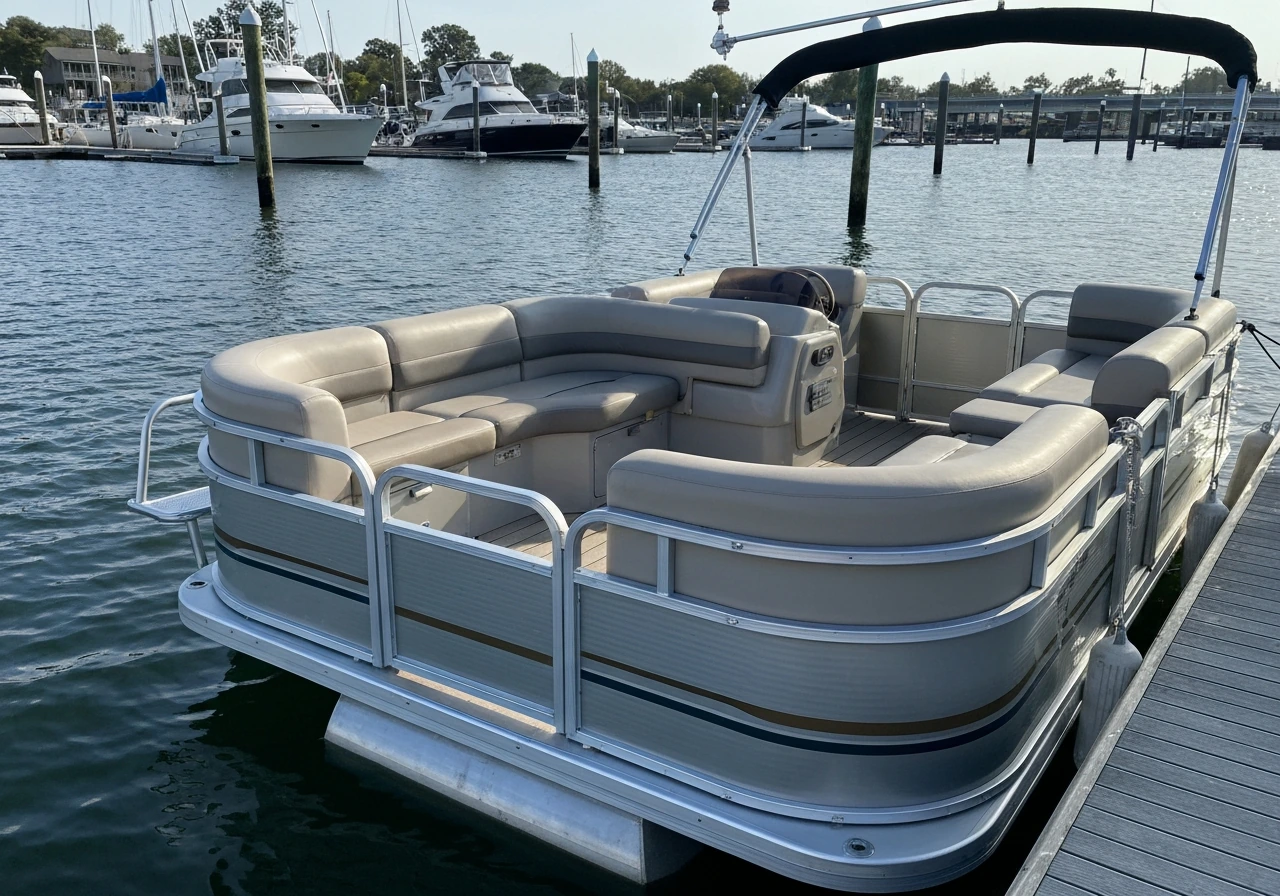
A patio boat is a pontoon boat, plain and simple. It has nothing to do with residential patios or outdoor living spaces. In the boating world, pontoon boats are routinely called patio boats (or party barges) because their wide, flat decks feel like a floating patio, with open seating, shade canopies, and room to entertain on calm water. If you came here expecting a patio product shaped like a boat, or a nautical-themed outdoor design trend, that's not what this term means in practice.
What Is a Patio Boat? Meaning, Types, and How to Spot One

Ada Hollis
29 May 2026
What 'patio boat' actually means
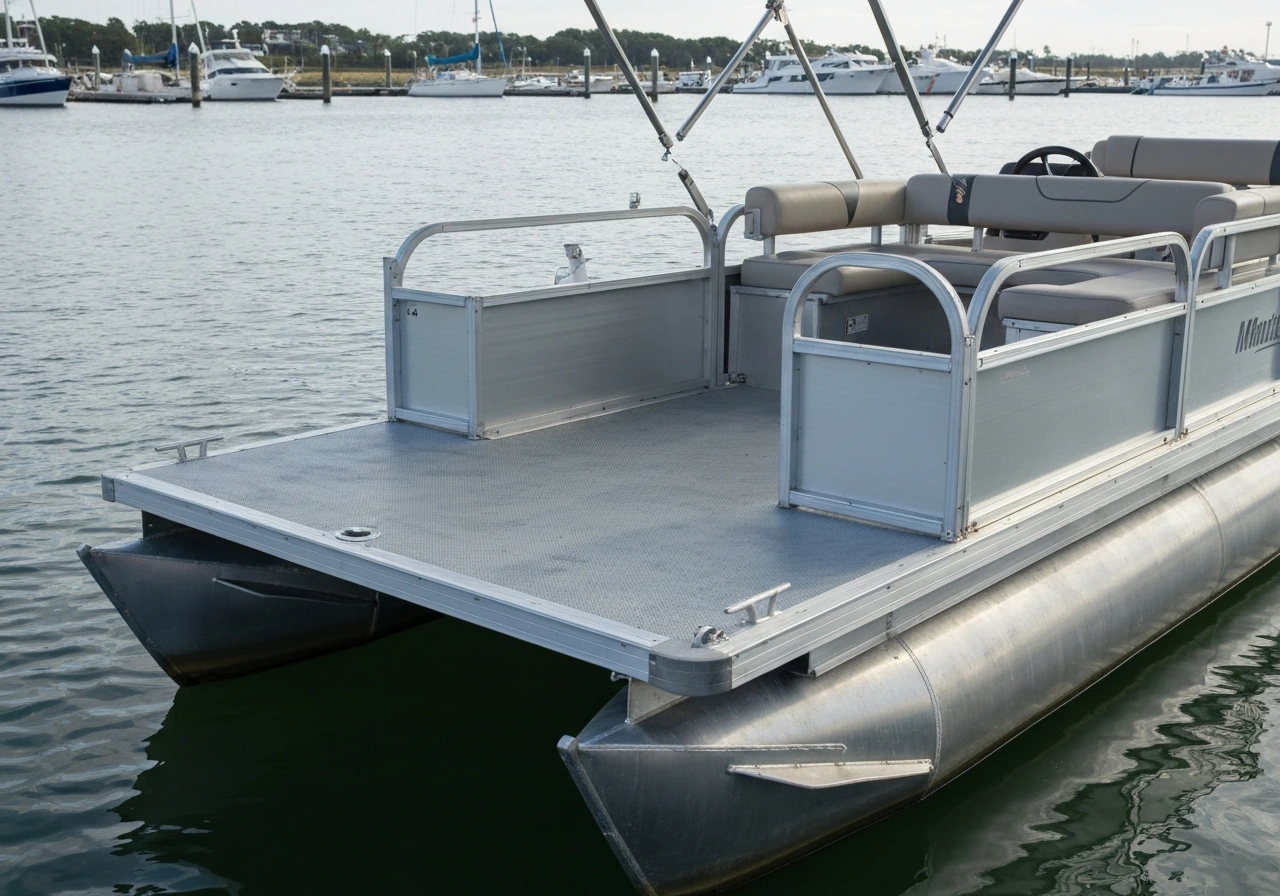
The term is used almost exclusively in the boating and marina rental world. A patio boat sits on two or three metal pontoons (hollow tubes that provide buoyancy), with a flat open deck on top. That deck is where the patio comparison comes from: you get lounge seating, a Bimini shade cover, maybe an ice chest, and a wide-open layout that feels more like a backyard hangout than a traditional boat. Marinas use 'patio boat' as a rental category the same way they'd list kayaks or ski boats.
Some official sources treat it as a formal classification. Boating regulations in certain jurisdictions use language like 'any motorized vessel classified as a pontoon boat or patio boat,' putting both terms on equal legal footing. The USDA Forest Service has referenced 'blank" rel="noopener noreferrer">patio boats' in management guides alongside houseboats as distinct vessel categories. So this isn't just casual slang, it's a recognized boat type in the rental, commercial, and regulatory space.
Is it a real boat or a patio product?
It's a real boat. Every verified use of the phrase 'patio boat' in listings, rental pages, and official documents points to an actual watercraft, not a patio accessory, furniture style, or architectural feature. A 24-foot Princecraft pontoon has been described as a 'patio boat.' Marinas at Shasta Lake, Success Lake, and Lake Berryessa advertise 'patio boat rentals' with specs like 40hp outboard motors, 9 to 20 person capacities, and dimensions up to 10 feet wide by 30 feet long. For example, Kaweah Marina advertises patio boats, including Wooden Patio Boat Rentals with 5 size options and notes wooden roofs and cover for most of the boat Marinas at Shasta Lake, Success Lake, and Lake Berryessa advertise 'patio boat rentals' with specs like 40hp outboard motors, 9 to 20 person capacities, and dimensions up to 10 feet wide by 30 feet long.. One custom boat builder even markets their pontoon design as a 'floating patio' with 30 feet of length and 8.5 feet of width.
The only potential confusion is the word 'patio' itself, which this site covers in depth as a residential outdoor surface. But when 'patio' is combined with 'boat,' the entire meaning shifts to the marine category. There is no mainstream product called a 'patio boat' in the outdoor living or home improvement market. If you saw the term in a home listing or outdoor design context, someone is either using it loosely, or there's a misread somewhere.
Reading context clues from listings and photos
The surrounding context will tell you everything. Here's what to look for:
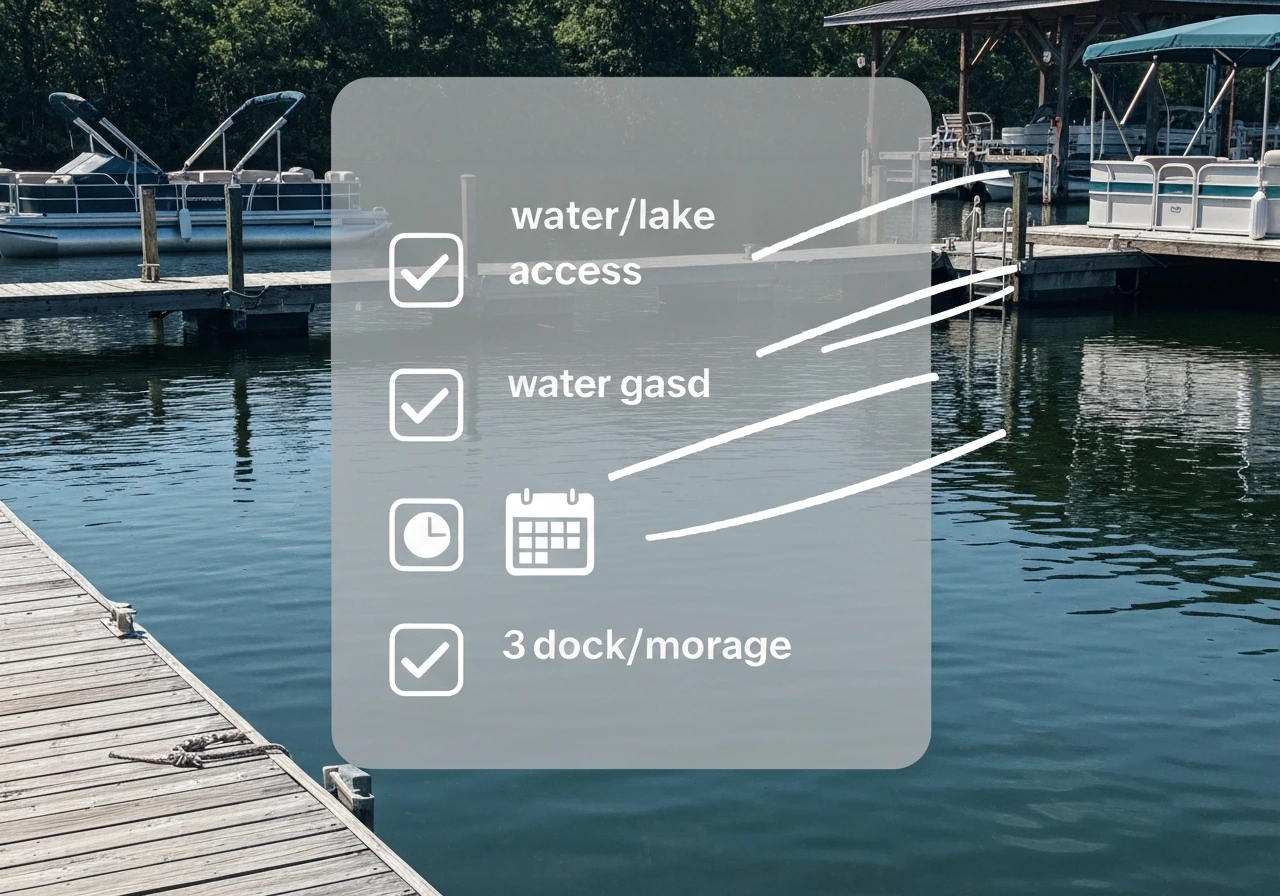
- Marina or lake rental context: If the listing appears on a marina website or mentions water access, 'patio boat' means a pontoon rental. Look for pricing by half-day or full-day, passenger capacity (commonly 8, 10, 12, 14, or 20 people), and horsepower specs.
- Property listing context: If 'patio boat' appears in a real estate listing alongside mentions of a dock, lake access, or slip, the seller likely owns a pontoon boat that conveys (or doesn't) with the property. Ask the agent whether the boat is included.
- Vacation rental or resort context: Resorts sometimes include patio boat access as an amenity. This means pontoon boat use is part of the package, not a feature of the outdoor living space.
- Home improvement or backyard context: If someone uses 'patio boat' in a landscaping, deck, or outdoor design conversation, ask them to clarify. It's almost certainly a miscommunication or a creative metaphor for a boat-shaped planter or water feature, not a recognized product category.
- Photos: A patio boat looks exactly like a pontoon. You'll see a flat rectangular deck, two or three metal tubes underneath, railings around the edge, a canopy or Bimini top, and outboard motors at the back. There are no legs, no concrete, no pavers.
Does it connect to patio architecture at all?
Functionally, not really. The only genuine connection is that both a residential patio and a patio boat share a flat, open, social layout designed for relaxing and entertaining. A patio is a ground-level hard surface (concrete, pavers, stone, or brick) attached to or near the home with no roof required. A patio boat replicates that relaxed, open feel on water. The naming is metaphorical, not architectural.
The patio boat doesn't factor into property layout, square footage, or outdoor living calculations the way a residential patio does. It's personal property (a vessel), not real property (a structure). A home described as having 'a patio and patio boat access' has two entirely separate things: an outdoor hardscape surface near the house, and a pontoon boat moored somewhere nearby.
Related terms like patio deck, patio pool, and decorative patio all describe genuine residential outdoor spaces or features built as part of a home's layout. If you are looking for a home feature instead, a decorative patio refers to a designed residential outdoor area with added aesthetic elements. If you're seeing the phrase "patio pool" in a listing, that's typically a residential swimming pool built into or near a backyard patio layout, not a boat-related term. If you meant a residential patio deck, that term refers to an outdoor deck area built for using and entertaining near a home. A patio boat sits outside that category entirely. A common point of confusion is the deck vs patio definition, because “patio” can sound like a home feature even when it is used as a boating metaphor. If you're trying to understand outdoor space terminology for a property search, focus on those residential terms rather than this one.
Patio vs. porch vs. balcony vs. courtyard
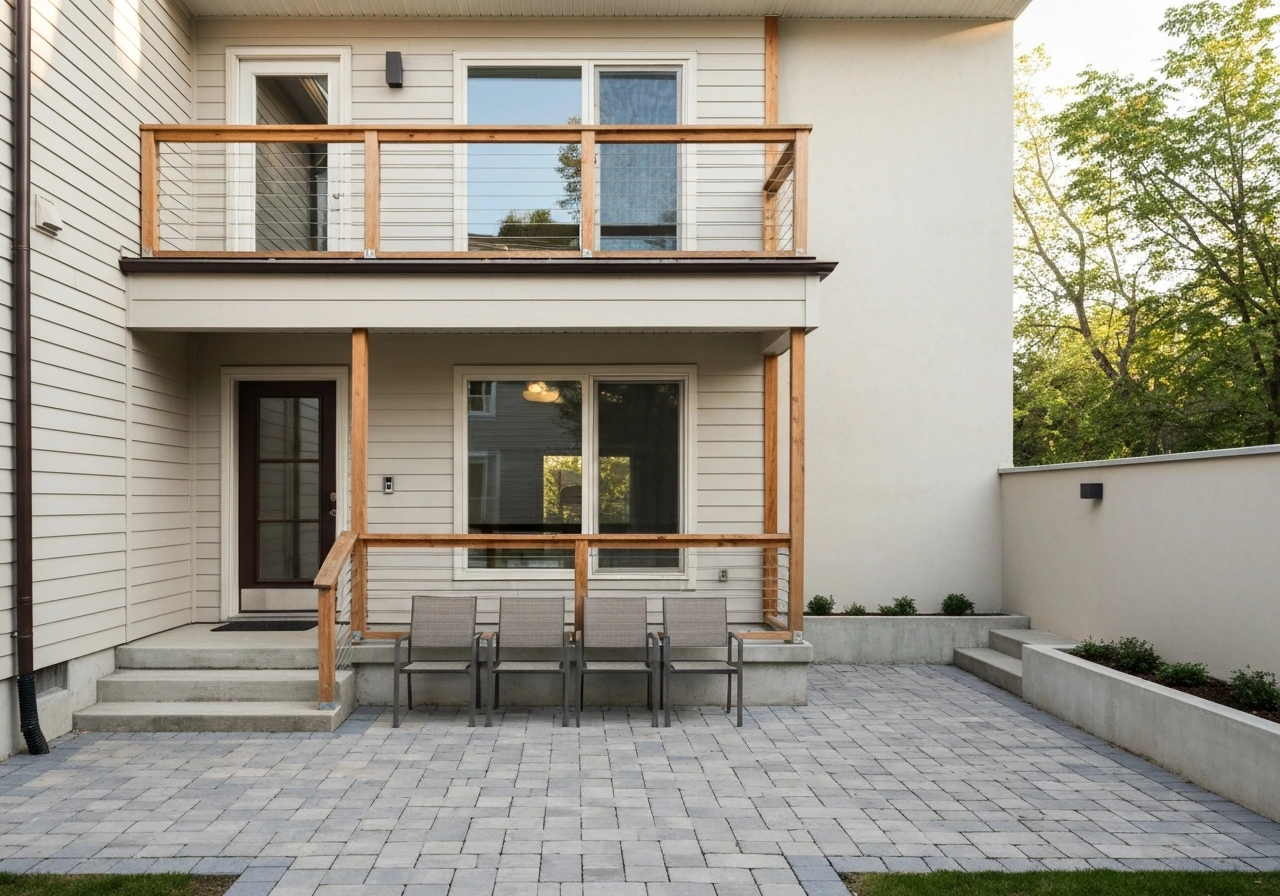
Since we're on the subject of outdoor terminology, it's worth grounding this for anyone who landed here while sorting out property descriptions. These four terms get mixed up constantly in listings.
| Feature | Patio | Porch | Balcony | Courtyard |
|---|---|---|---|---|
| Level | Ground level | Ground level (usually) | Elevated (above ground floor) | Ground level |
| Attached to house? | Yes, adjacent | Yes, structurally attached | Yes, extends from upper floor | Surrounded by building/walls |
| Roof? | Usually none | Yes, typically covered | Sometimes railing only | Open to sky |
| Typical location | Back or side yard | Front entryway or wraparound | Upper floor exterior | Interior or semi-interior |
| Surface type | Hard: concrete, pavers, brick | Hard or composite with framing | Hard surface, often concrete or tile | Hard: stone, tile, pavers |
| Privacy level | Moderate | Low (near entry) | Moderate to high | High (enclosed) |
A porch is attached to the house near an entry point and almost always has a roof, often with open sides. A patio is a ground-level hard surface with no structural requirement for a roof or walls. A balcony projects from an upper floor and is accessed through an interior room, not from the ground. A courtyard is enclosed on most sides by walls or building structure, making it the most private of the four. All of these are real property features that affect usable space, and none of them are boats.
It's also worth noting that terminology shifts by region. In Australia, 'patio' often refers to what Americans would call a veranda or covered outdoor area. In real estate listings across different countries, the same physical space might be labeled differently depending on local convention. That's a separate layer of complexity from the patio boat question, but it's a useful reminder to always check what the actual space looks like rather than relying on the label alone.
What to do when you see 'patio boat' in a property listing
If a property listing mentions a patio boat, here's a practical sequence to follow before making any assumptions about what's included or what the space offers.
- Confirm it's a vessel, not a space. Ask the agent or seller directly: 'Is this a pontoon boat, and does it convey with the property?' Most of the time the answer will clarify everything.
- Check for water access. A patio boat only makes sense if the property has lake, river, or marina access. If there's no water nearby, the term is being used incorrectly or creatively.
- Ask about slip or storage fees. If the boat does convey, find out if there's an active marina slip lease, storage arrangement, or HOA rule about where it's kept. These costs add up.
- Separate the boat value from the property value. A pontoon boat is personal property. Its value doesn't roll into the home's appraised value the way a built patio or deck does. Verify what's included in the purchase price.
- Look at the actual outdoor space separately. If the listing also mentions a patio, deck, or porch, evaluate those as distinct features with their own impact on the home's usable outdoor square footage and livability.
- If the term appears in a non-water context, ask for clarification. Someone describing their backyard setup as a 'patio boat area' might mean a boat-themed decorative space, a floating dock, or simply a pontoon parked in the yard. Always ask rather than assume.
The bottom line: 'patio boat' is a boating term that belongs in a marina catalog, not a home improvement guide. If you are trying to interpret a patio or deck listing, use a patio or deck definition that matches residential hardscape features rather than a marina rental term. When you see it, think pontoon first. If you want the deck and patio meaning, look at how the wide, flat pontoon deck is compared to a floating patio for relaxing and entertaining patio boat. If the context is purely residential and land-based, someone has either used the wrong term or is describing something unusual enough to warrant a direct question before you move forward.
FAQ
If I see “patio boat” in a listing, how can I tell it is actually a pontoon boat and not a land-based “outdoor” feature?
In most listings, it means a pontoon-style boat offered for rental or marina use. To confirm, look for details like motor horsepower (often an outboard), passenger capacity, and dimensions, those typically appear together when the term is used correctly.
What amenities should I expect on a patio boat rental?
Because it is treated like a rental category, amenities vary a lot by operator. Don’t assume the deck includes shade, speakers, or built-in coolers, confirm what’s included in the rental package and what you must bring (life jackets, towels, food, or rentals).
Are patio boats suitable for rough water or windy conditions?
Plan for weather and water conditions, patio boats are most comfortable on calm water due to their open deck layout. Many marinas also enforce travel or operating rules, so check whether you are limited to certain zones or time windows.
Is a patio boat always motorized, or can it be non-motorized?
The term typically implies motorized pontoon construction, so it is not the same as a standard non-motorized pontoon or floating dock. If the listing is unclear, verify whether it has an outboard motor and whether it is registered and insured like a motorized vessel.
How should I interpret the passenger capacity listed for a patio boat?
Yes, capacity can be misleading if it only lists a maximum number. Check the layout for seating versus standing space, and consider that comfort drops quickly when everyone is crowded on a wide-open deck.
What is the seating and comfort experience like compared with a traditional boat?
Expect simple, open deck space rather than enclosed seating. If you are prone to motion discomfort, bring sunglasses and consider that open decks can mean more sun and wind exposure than a traditional cabin boat.
What if a real estate listing says “patio boat access,” does that mean the home includes a boat?
If you see patio boat used in a home listing, treat it as a red flag for mislabeling or a nonstandard situation. Ask for the exact description (where it is moored, whether it comes with the property, and if ownership or access is separate from the land).
How can I avoid confusing “patio boat” with “patio deck,” “porch,” or “balcony” when searching properties?
“Patio deck” or “balcony” are land-based features on a property, while patio boat refers to a vessel category. If you are screening listings, use keywords like “pontoon,” “moored,” “rental,” or “marina” to separate boating terms from home hardscape terms.
Does the meaning of “patio boat” change by country or region?
Regional usage can vary, and some areas use “patio” for covered outdoor spaces. Always rely on what is pictured and what specifications are listed, if the listing includes boat measurements, docks, or rental terms, it is almost certainly referring to a pontoon patio boat.
Next Article
What Is a Patio Deck? Definition, Types, and Differences
Plain definition of a patio deck, key types and materials, plus how it differs from patios and porches for listings.