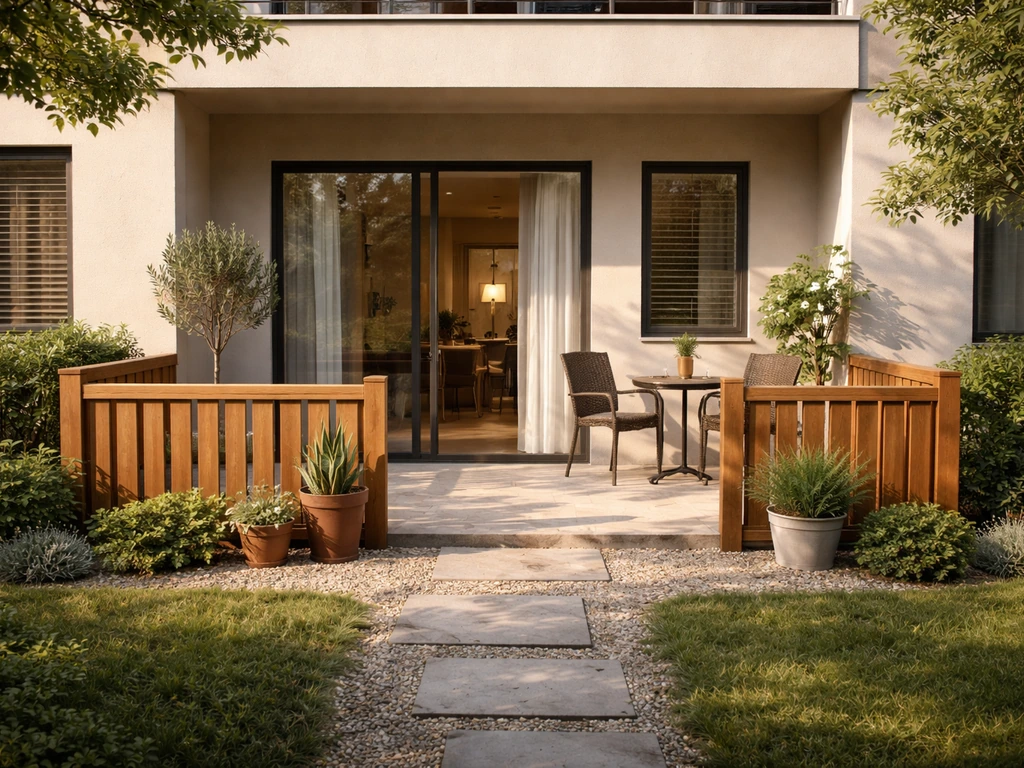
Yes, patios can add real value to a house, but the honest answer is: it depends on how good the patio is, where you live, and what buyers in your market actually want. A well-built, attractive patio in a sun-friendly climate can boost a home's sale price and help it sell faster. A cracked concrete slab with poor drainage in a rainy market? Not so much.
Do Patios Add Value to a House? Real ROI Factors

Ada Hollis
20 Jun 2026
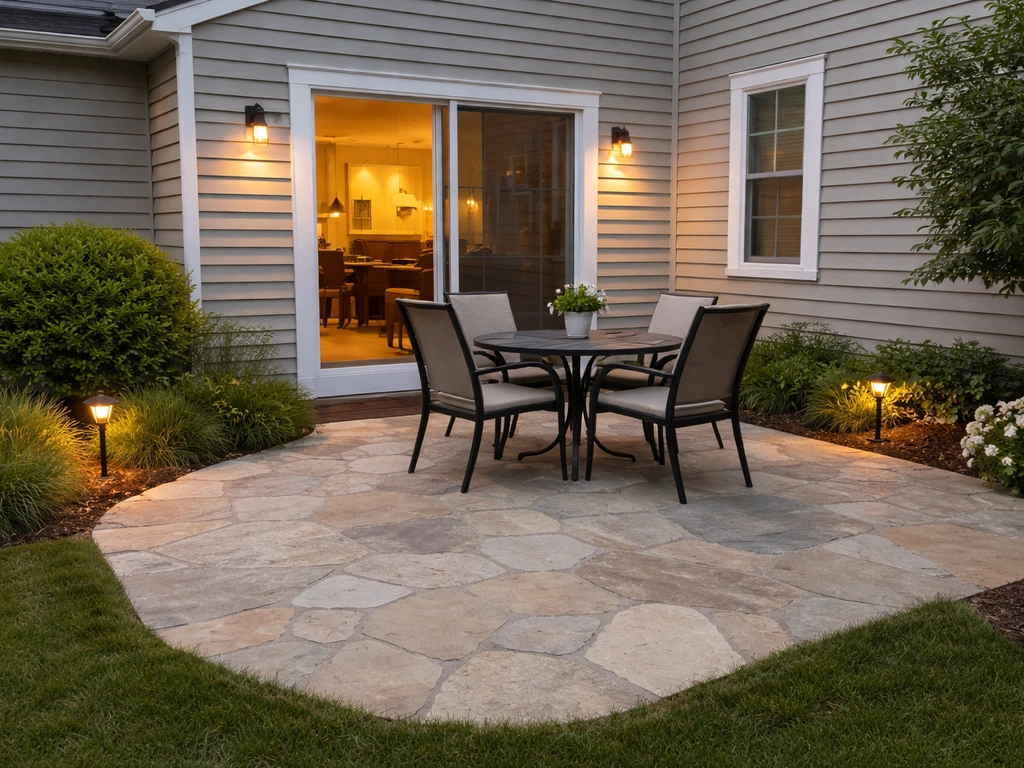
Most homeowners recoup somewhere between 50% and 80% of a patio's construction cost in added home value, though a patio that dramatically improves outdoor living in the right neighborhood can push toward full or near-full cost recovery. The key is understanding the conditions that make a patio a genuine asset versus a neutral feature buyers barely notice.
What actually counts as a patio (and how it differs from a deck, porch, or courtyard)
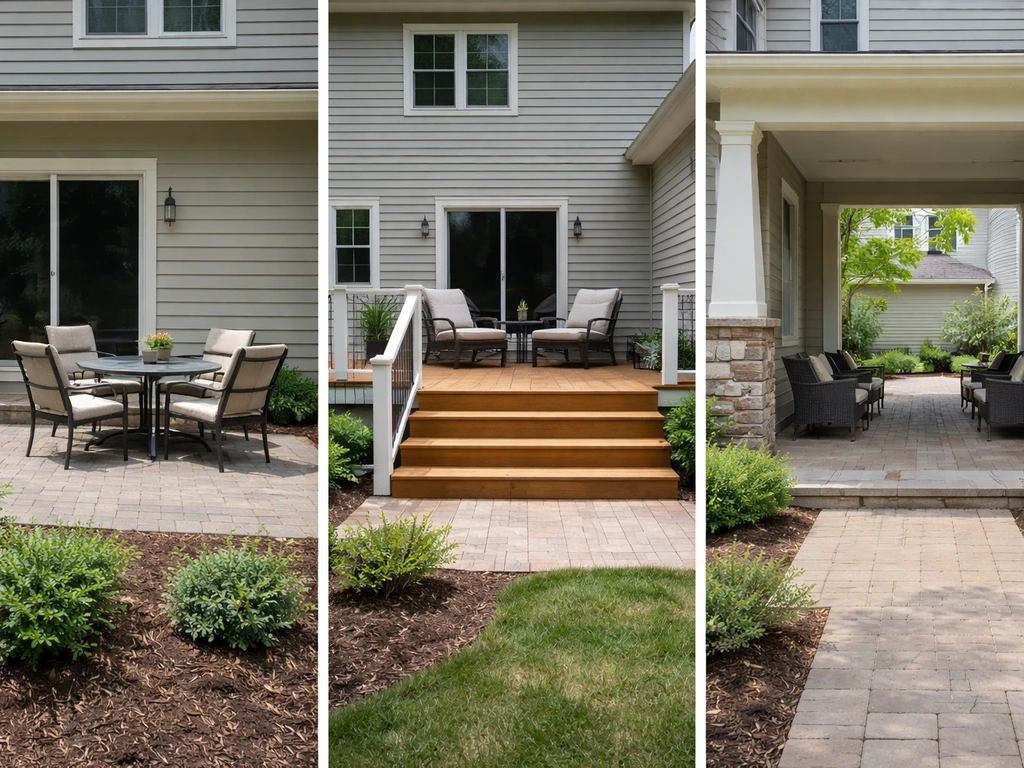
A patio, in real estate and architecture terms, is a paved outdoor area at or near ground level, adjoining the home, used for seating, dining, or relaxing. That's the core definition. It's typically surfaced with concrete, pavers, brick, flagstone, or tile, and it sits directly on the ground rather than being elevated above it. It usually has no roof, though a covered patio (sometimes called a patio cover or pergola) adds overhead structure without fully enclosing the space.
People often mix up patios with similar outdoor features, and those mix-ups can cause real confusion when evaluating property listings. Here's how the main ones differ:
| Feature | Location/Structure | Roofed? | Elevation | Typical Surface |
|---|---|---|---|---|
| Patio | Adjoins home, usually rear or side | No (unless covered patio) | Ground level | Concrete, pavers, brick, tile |
| Deck | Attached or freestanding | Usually no | Raised/elevated | Wood, composite, PVC |
| Porch | Near entrance, facade-facing | Yes (almost always) | At door threshold | Wood, concrete, tile |
| Courtyard | Enclosed by walls/wings of home | Open sky (typically) | Ground level | Pavers, stone, gravel |
| Veranda/Verandah | Along facade or wraparound | Yes (roofed) | At home level | Wood, tile, concrete |
| Lanai | Attached, often rear (Hawaiian origin) | Yes (roofed/open-sided) | Ground or slightly raised | Concrete, tile, pavers |
| Terrace | Often upper-level or hillside | No | Elevated or stepped | Stone, concrete, tile |
The porch vs. patio distinction is probably the most commonly confused. A porch is roofed, typically near the front or back door, and is part of the home's architectural envelope. A patio is open-air, sits on the ground, and is more of an extension of the yard than the house itself.
Decks, by contrast, are raised off the ground, usually built from wood or composite, and require railings if they exceed a certain height. In appraisal forms, decks and patios are each treated as distinct exterior amenities, not interior living space, which matters when you're thinking about how they affect appraised value. Residential appraisal form mappings from the GSEs treat deck/patio elements as [distinct exterior amenities](https://singlefamily. fanniemae.
com/media/document/pdf/uad-specification-appendix-gse-appraisal-forms-mapping) and support external amenity descriptions rather than counting them as interior living space.
A courtyard is a patio that's enclosed, usually by walls, fencing, or the home's own wings wrapping around it. This enclosed feel can actually command a premium in certain markets, especially in warmer climates with Spanish or Mediterranean architecture. A lanai, common in Hawaii and Florida, is essentially a covered outdoor room, and it blurs the line between patio and enclosed porch. These regional variations matter when you're comparing your home's outdoor space to neighborhood comps.
How patios improve buyer appeal and perceived value
Patios work on buyers emotionally before they ever work on appraisers mathematically. When a buyer walks through a back door and sees a clean, well-finished patio with clear space for furniture and a sense of privacy, they're mentally placing themselves there on a Saturday morning with coffee. That emotional response translates into stronger offers, faster sales, and less negotiating room for the buyer. A thoughtfully designed patio communicates that the home has been cared for and that outdoor living was taken seriously.
The practical appeal breaks down into a few clear areas:
- Usable outdoor square footage: Buyers in most markets are actively looking for functional outdoor space. A patio gives them a defined, ready-to-use area that feels like a room, not just a lawn.
- Indoor-outdoor flow: Patios that connect directly to the kitchen, living room, or dining area through sliding or French doors dramatically increase the perceived size of the home's entertaining space.
- Low maintenance vs. lawn: Paved patios appeal to buyers who want outdoor space without constant grass maintenance, especially in urban or suburban settings.
- Listing photography: A well-staged patio photographs beautifully and gives listings a lifestyle hook that bare lawns can't match.
- Entertainment potential: Even modest patios signal that the home supports hosting, which resonates strongly with buyers in the 35-55 age bracket.
It's worth distinguishing patio value from the broader category of patio home benefits. A standalone patio added to a traditional house is an improvement to an existing property. A patio home (a specific housing style with shared walls and individual outdoor patios) is a different product type with its own buyer appeal. The benefits of a patio home can be different from the return you see with a standalone patio, because the product type and shared-living expectations also shape buyer appeal. The value logic is related but not identical.
When a patio adds real resale value (and when it doesn't)
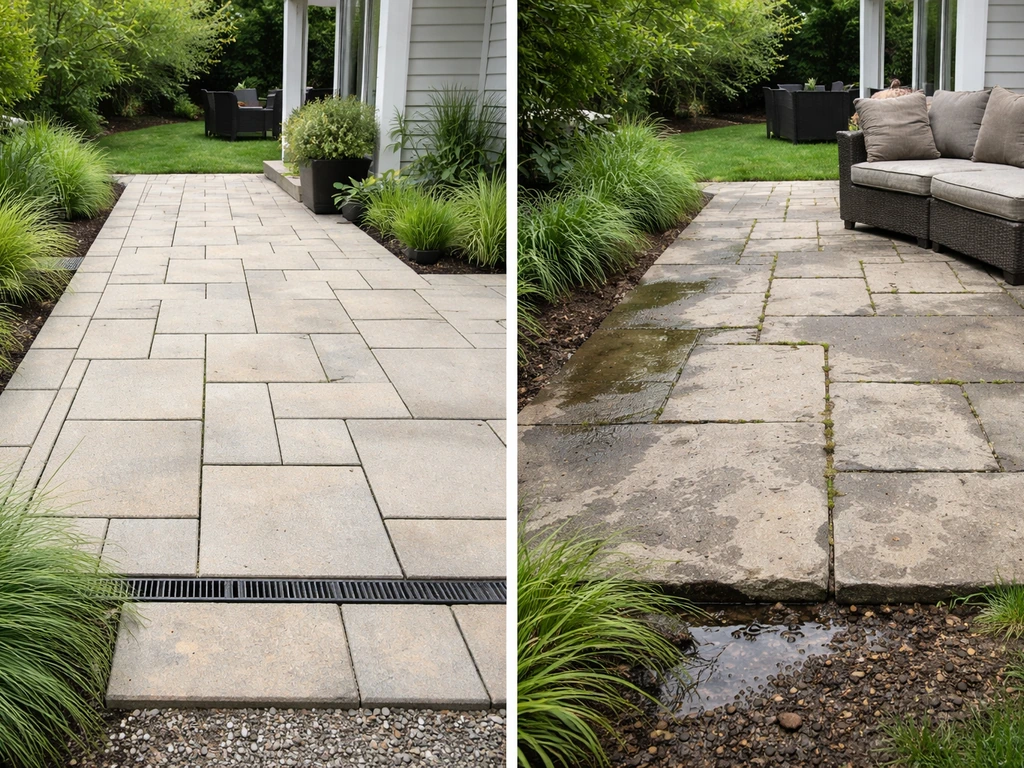
This is the section most homeowners actually need to read carefully, because the optimistic headlines about patio ROI usually skip the nuances. Here are the conditions that determine whether your patio adds genuine resale value or just sits there looking fine without moving the needle.
Conditions that increase patio value
- Climate and outdoor living culture: In warm, dry climates like the Southwest, Southeast, and California, outdoor living is a major selling point. Buyers expect and pay for it. In colder northern markets, a patio is still a plus, but it carries less weight.
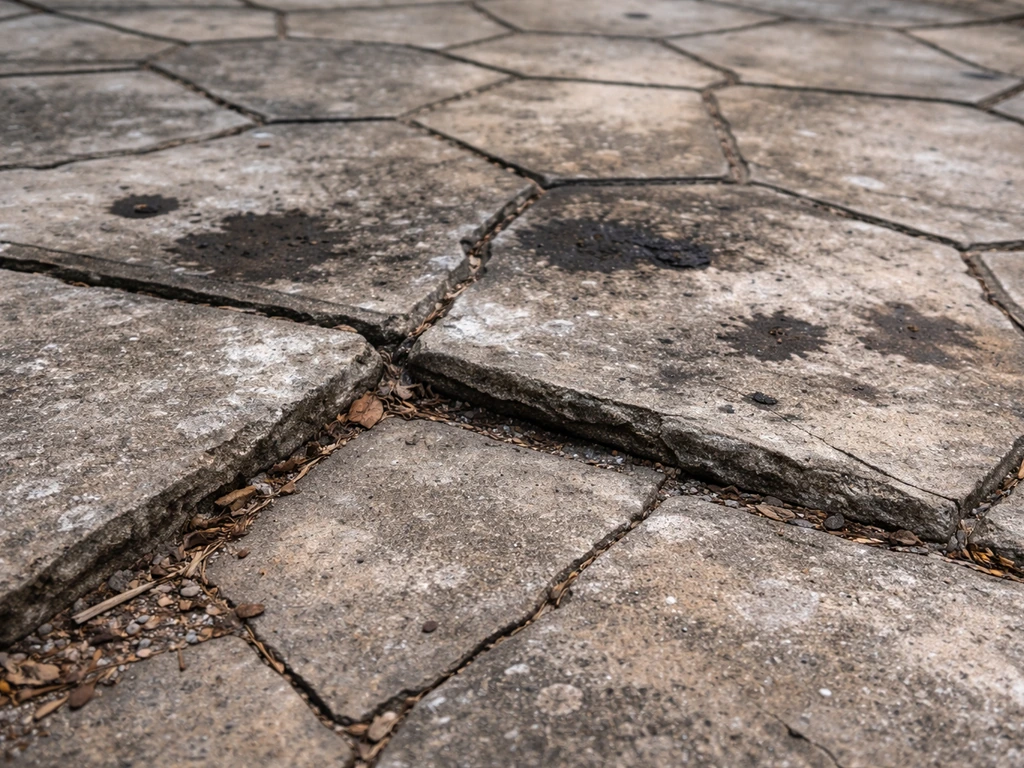
- Quality of materials and construction: A patio built with quality pavers, proper base prep, and good drainage holds its value and requires less maintenance. A cheap poured concrete slab that's cracking after five years is a liability, not an asset.
- Size and proportion: A patio that's large enough to actually use, typically at least 10x12 feet for seating, and proportional to the home and yard, adds clear value. Tiny patios that can barely fit two chairs don't register as a meaningful upgrade.
- Neighborhood comparables: If similar homes on your street have patios and yours doesn't, adding one brings you to market standard. If you're already at or above the neighborhood average, you'll recover less.
- Seamless integration with the home: Patios that flow naturally from the home's interior, matching the architectural style and using materials consistent with the home's exterior, feel like part of the property rather than an afterthought.
- Good drainage and code compliance: A patio with drainage problems or one built without permits is a red flag in inspections and can actually reduce value by creating liability concerns.
Conditions that limit patio value
- Cold or wet climates where outdoor use is limited to 3-4 months per year
- Patios that are poorly maintained, cracked, stained, or visually unappealing
- Patios that were added without permits, especially if there are drainage or grading issues
- Patios that feel disconnected from the home or are awkwardly positioned
- Markets where buyers strongly prefer decks, screened porches, or other outdoor formats
- Over-improving beyond what neighborhood comps support (spending $30k on a patio in a neighborhood where homes sell for $200k)
Patios vs. other outdoor upgrades: where to spend for the best payoff
If you're choosing where to put outdoor improvement dollars, it helps to understand how patios stack up against alternatives. No outdoor upgrade reliably returns 100% of its cost in appraisal value, but some are consistently better investments than others in most markets.
| Outdoor Upgrade | Typical Cost Range | Estimated ROI | Best For | Watch Out For |
|---|---|---|---|---|
| Basic concrete patio | $2,000 - $7,000 | 50-70% | Budget-conscious sellers, cold climates | Cracking over time without proper base |
| Paver or stone patio | $8,000 - $25,000 | 60-80% | Warm climates, higher-end markets | Cost can outpace comp values in modest neighborhoods |
| Covered patio/pergola | $10,000 - $40,000 | 50-70% | Sun-heavy climates, entertaining-focused buyers | Permit requirements, wind/snow loads in some climates |
| Wood or composite deck | $10,000 - $30,000 | 60-75% | Markets where decks are neighborhood standard | Maintenance costs, moisture damage potential |
| Outdoor kitchen | $15,000 - $80,000+ | 50-70% | Luxury markets, warm climates with strong comp support | Very market-dependent, over-improvement risk |
| Landscaping/lawn improvements | $3,000 - $15,000 | 100-200% (curb appeal) | Any market, especially curb appeal and first impressions | Buyer taste variation, maintenance expectations |
| Fire pit (built-in) | $3,000 - $10,000 | 50-75% | Buyers who entertain, cooler climates | Safety concerns, HOA restrictions |
Basic landscaping consistently delivers the highest return on investment because it affects curb appeal directly. But landscaping doesn't create a usable outdoor room the way a patio does. If your yard already looks good and you want to add functional space, a well-built paver patio is generally the most reliable middle-ground investment. Decks are strong alternatives in markets where they're the neighborhood norm, especially in regions where raised outdoor spaces are preferred over ground-level options. Covered patios and pergolas are increasingly popular, and they do extend the usability of the space in both hot and wet climates, but their cost can be harder to fully recoup.
Outdoor kitchens and elaborate fire pit setups are the riskiest in terms of recouping cost. They're lifestyle upgrades first and value adds second. They appeal strongly to a subset of buyers but can actually put off buyers who don't want to maintain them. If you're adding an outdoor kitchen to enjoy for the next decade before selling, great. If you're doing it specifically to increase resale value, be cautious.
ROI and appraisal realities: what the numbers actually mean
Here's something most patio articles gloss over: appraisers don't give you dollar-for-dollar credit for outdoor improvements the way you might expect. In formal appraisal terms, a patio is an exterior amenity, not livable square footage. An appraiser will note the patio's presence, condition, and quality, and may compare it to similar homes that have (or don't have) comparable outdoor spaces. If you're looking into patio apartments, compare how they balance outdoor seating space with private entrances, shared amenities, and overall layout comparable outdoor spaces. But they're constrained by what comparable sales in your market actually reflect. If no recent comparable sale shows a meaningful price premium for patios, the appraiser can't just invent one.
This is why buyer desirability and appraised value are two different things. A beautiful patio can help your home sell faster and generate competing offers, which can push the final sale price above appraised value in a strong market. That's a real financial win even if the patio doesn't technically increase the appraised number. In a slow market, however, a patio doesn't save you if the fundamentals aren't there.
The practical ROI range for patios in most U.S. markets runs between 50% and 80% of construction cost recovered in sale price. A $15,000 patio might add $8,000 to $12,000 in effective sale price. That's not a profit, but it's not nothing either. In hot markets with strong buyer competition and a cultural emphasis on outdoor living, the recovery rate climbs. In slower, colder, or more price-sensitive markets, it tends to stay on the lower end. The best way to calibrate this for your specific situation is to ask a local real estate agent to pull comps for homes with and without patios in your immediate neighborhood. That data tells you more than any national average.
If you're also weighing the broader question of whether patios are a good investment as a long-term home feature (not just at resale), the daily-use value is real and measurable. A patio you enjoy for 10 years before selling has already paid dividends in lifestyle, even if the dollar return at sale is partial.
How to evaluate an existing patio or plan a smart upgrade
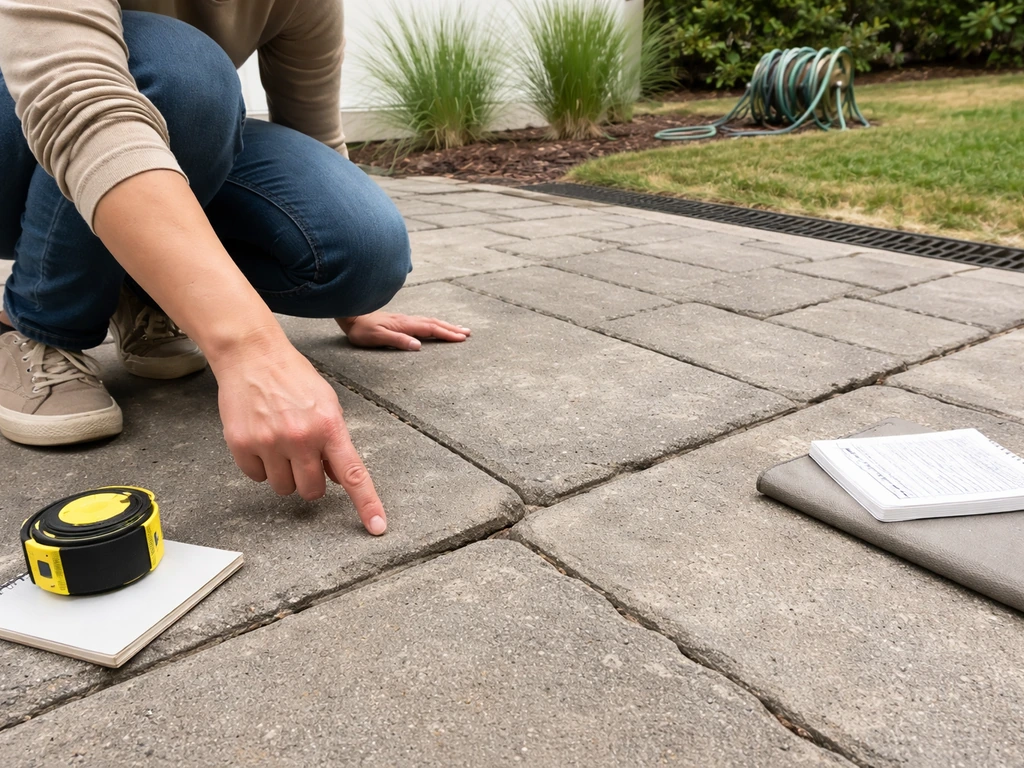
Whether you're buying a home with a patio, selling one, or planning a new build, the following checklist gives you a practical way to assess what you've got or what you're planning.
Evaluating an existing patio
- Check condition and surface integrity: Look for cracks, lifting pavers, efflorescence (white mineral staining), or sunken sections. These signal drainage or base problems that need fixing before listing.
- Assess drainage: Does water pool on or near the patio after rain? Poor drainage is both a functional problem and a red flag for buyers and inspectors.
- Measure usable space: Is it actually big enough to function as an outdoor room? If it's under 100 square feet, it may not register as a value driver.
- Verify permits: If the patio was added by a previous owner, check whether it was permitted. Unpermitted hardscaping near the home can complicate appraisals and inspections.
- Evaluate the connection to the home: Does it flow naturally from a main living area? Is access easy, or does it feel like an afterthought tucked in a corner?
- Compare to neighborhood: Walk or drive comparable streets. Are patios standard? Are they larger, better-finished, or covered? Knowing where you stand relative to comps tells you whether improvement spending is warranted.
- Consider the climate context: Is this a space that buyers in your market will actually use year-round? A beautiful patio in a market where outdoor living is rare adds less leverage than the same patio in Arizona or Florida.
Planning a new patio for ROI
- Set a budget based on neighborhood comps: Get a local agent's opinion on what outdoor improvements are returning in your specific market before you spend anything.
- Choose materials with longevity: Concrete pavers and natural stone hold up better over time than poured concrete alone. Quality materials signal quality to buyers.
- Prioritize drainage in the design: Make sure your contractor grades the surface away from the home and plans for water runoff. This is not a place to cut corners.
- Design for indoor-outdoor flow: Place the patio where it connects to a main living or kitchen area. A back-door connection matters enormously for buyer perception.
- Get the right permits: Pull permits for any work that requires them. This protects you at sale and prevents inspection surprises.
- Keep style consistent with the home: A modern concrete patio on a traditional brick Colonial can look mismatched. Match materials and style to what the home already does.
- Avoid over-improving: Stay within 10-15% of what comparable properties offer in outdoor amenities. Spending $40k on a patio when neighborhood comps don't support it means you're spending for yourself, not for resale.
- Talk to a local contractor and agent before breaking ground: A good contractor tells you what's structurally sound; a good agent tells you what the market will actually reward.
What to avoid
- Cheap finishes that look dated quickly (basic stamped concrete patterns can polarize buyers)
- Adding a patio without addressing drainage, especially near the home's foundation
- Building without permits in jurisdictions that require them
- Ignoring maintenance: a neglected patio looks worse than no patio at all
- Spending heavily on features like outdoor kitchens or elaborate water features without verifying local buyer demand
- Mismatching the patio style to the home's architecture, which signals a disconnected renovation rather than a thoughtful one
The bottom line is straightforward: patios add value when they're well-built, appropriately sized, properly maintained, and suited to the climate and neighborhood. They're one of the more reliable outdoor investments you can make, but they work best when you treat them as a functional improvement first and a financial strategy second. Get the design right, match it to your market, and a patio will pull its weight both while you're living there and when it's time to sell.
FAQ
Will a patio increase my home’s appraisal value, or is it mostly a sales-speed benefit?
It can do both, but appraisal credit is typically limited because a patio is treated as an exterior amenity rather than livable square footage. In many cases the patio mainly helps with buyer perception and competitiveness, which can lead to a higher contract price even if the formal appraisal number barely moves.
What patio mistakes most often reduce resale value?
Poor drainage, visible cracking or settling, and low-finish work (uneven pavers, weak edging, or sloppy transitions from the patio to the home) are common value killers. A patio that invites water pooling near doors or causes landscaping to erode around it tends to hurt buyer confidence and will likely show up in inspection negotiations.
Does the type of patio material change ROI a lot?
Yes. Materials that look consistent over time and handle local weather well usually recoup better. For example, in freeze-thaw climates, selecting products rated for that environment (and using proper base prep) matters more than the surface appearance alone.
How should I size a patio to avoid wasting money?
Aim for a layout that supports common use, not just “more square footage.” A patio that fits a small dining set and clear walking paths near the door usually feels practical, while oversized patios can look unfinished or redundant if the yard has limited usable space.
Will adding a covered patio or pergola help more than an uncovered patio?
Often it increases usability in hot or wet seasons, which can boost buyer appeal. However, cost recovery can be harder because the added structure is more expensive, and in some markets buyers may view a cover as optional rather than essential. Your local comps for covered outdoor spaces are the best reality check.
How do I know whether my patio will match what buyers want in my area?
Use neighborhood comps as a filter, not national averages. Ask your agent to review recent sales and specifically note patio presence, condition, and layout. If homes with similar outdoor features did not sell at a premium, expect a more modest return and focus on quality and maintenance.
Does privacy (fencing, landscaping, screen panels) change the value of a patio?
It can, especially if it makes the space feel like an actual “place to sit,” not just an open slab in view of neighbors. Privacy improvements can also reduce buyer objections, but you still want to keep sight lines and local style in mind so it looks cohesive rather than isolating.
If my patio is old, should I repair it or replace it before selling?
Usually repair is worth it when the structure is sound and the issue is cosmetic (surface wear, stained concrete, loose pavers). If the patio is failing (significant cracking, movement, chronic drainage problems), replacement tends to be safer because buyers and appraisers react strongly to visible deterioration and ongoing maintenance concerns.
Can outdoor kitchens or fire pits boost patio value, or do they hurt ROI?
They can boost appeal for some buyers, but they are higher-risk for ROI because they are more personalized and add maintenance expectations. In price-sensitive or trend-shift markets, these add-ons can deter buyers who do not want the specific features, so keep the design durable and broadly appealing.
How does a patio compare to a deck in terms of buyer value?
Both are exterior amenities, but buyer expectations vary by region. In markets where raised outdoor spaces are common, decks may feel more “normal” and can be easier for buyers to envision. Where ground-level patios are the norm, a properly built patio often reads as a cleaner, more usable extension of the yard.
What’s the fastest way to estimate my expected return on a new patio?
Ask for comps that include outdoor patios and outdoor-entertainment features, then separate “presence” from “quality.” A patio may speed up sales or support a higher offer, but the most actionable number is how similar homes actually closed in your immediate area with patios versus without.
Next Article
Patio Apartments Are Similar To: Key Differences Explained
Side by side guide to what patio apartments are like versus porches, balconies, courtyards, and patio units.