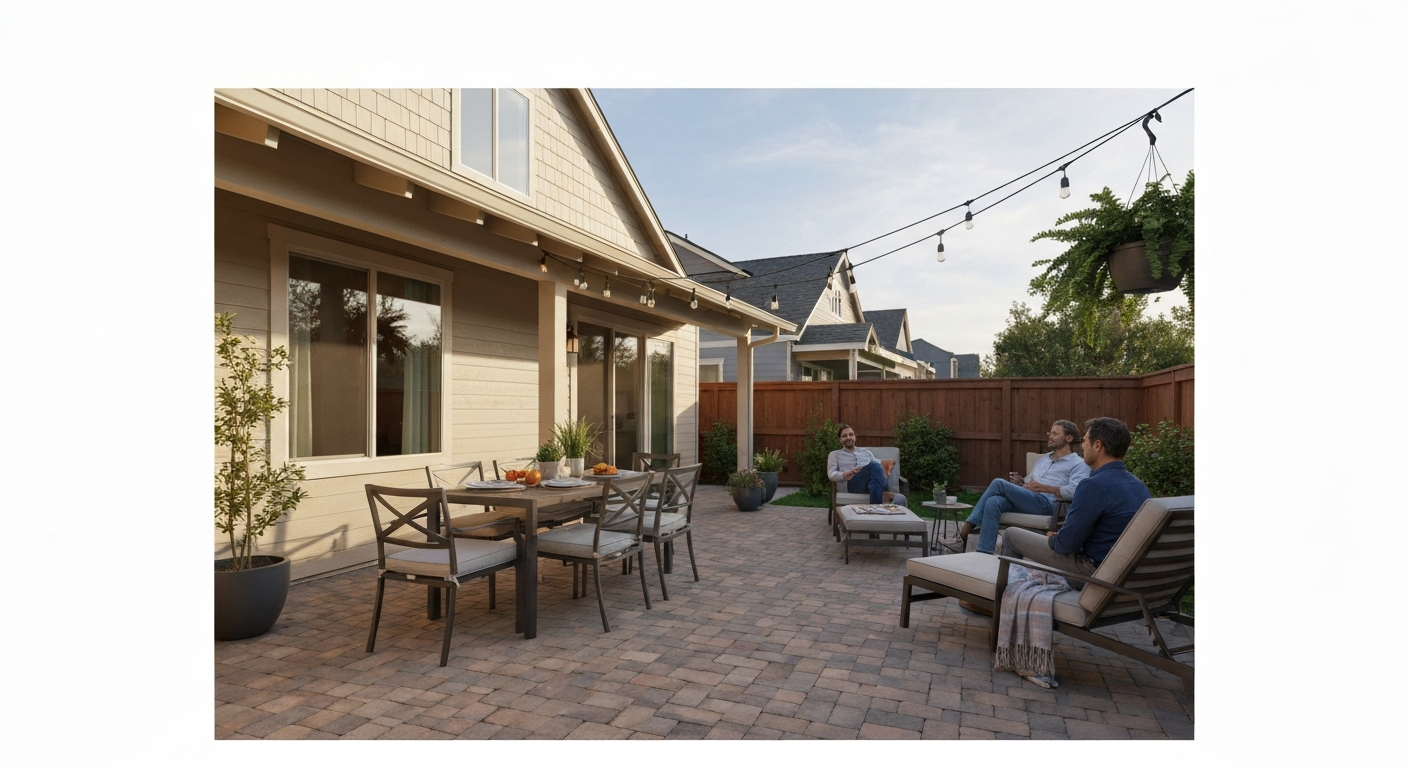
A patio is sometimes considered a structure and sometimes not, and the honest answer is: it depends on where you live, what your patio is made of, how it was built, and whether it has any roofing or attached elements. A basic ground-level concrete slab or paver patio is often treated as a site improvement or impervious surface rather than a "structure" in the strict building-code sense. But add a roof, walls, an outdoor kitchen, or a significant elevation change, and most municipalities will absolutely call it a structure and require a permit. Knowing which category your patio falls into matters for permits, setbacks, insurance claims, and what shows up on an appraisal.
Is a Patio Considered a Structure Yes or It Depends

Ada Hollis
22 May 2026
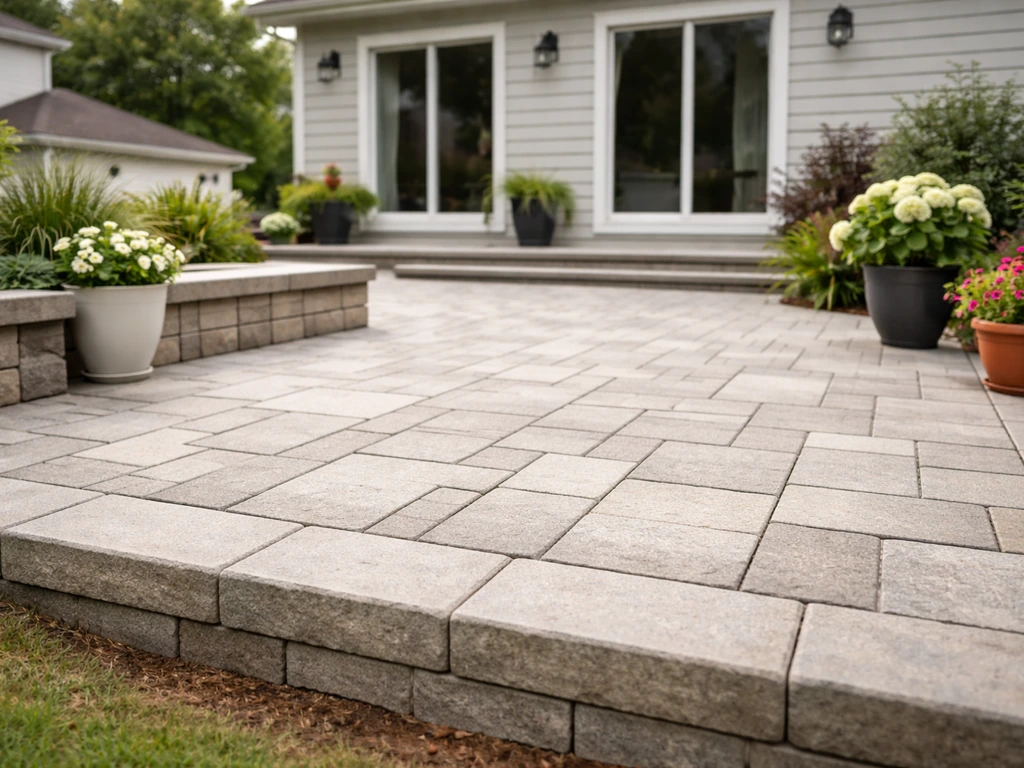
What a patio actually is (and how it differs from nearby terms)
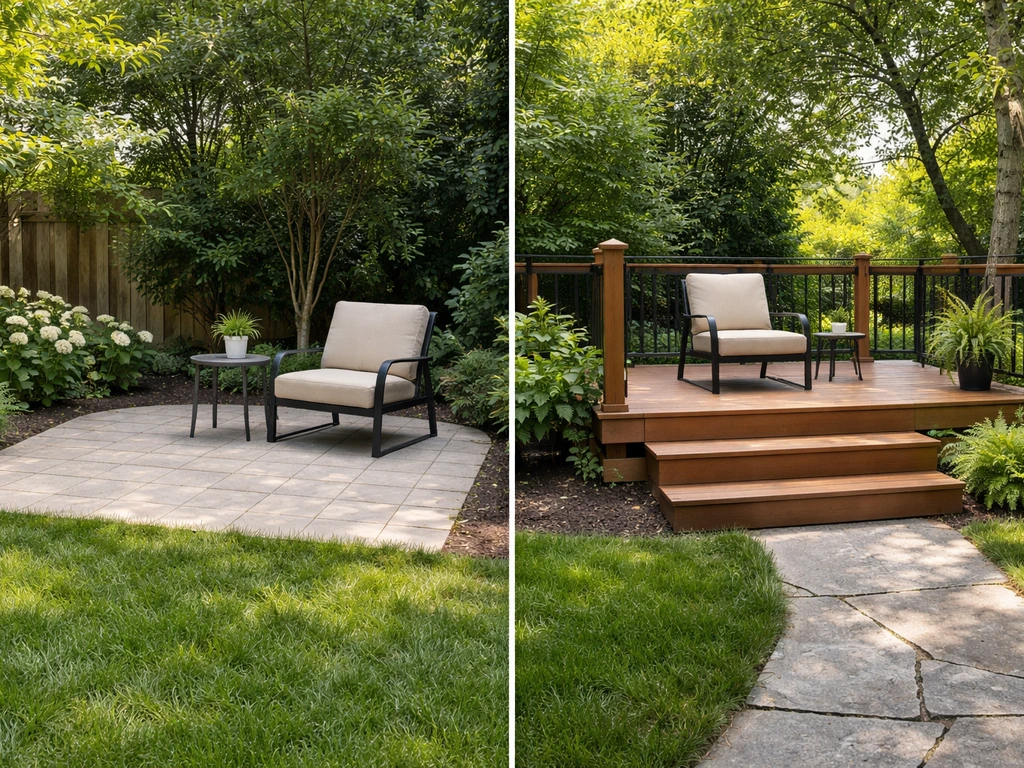
A patio is a ground-level outdoor surface, typically paved or hardscaped, that sits directly on or just above grade. It is not elevated on a frame (that would be a deck), not roofed by default (that would lean toward a porch or verandah), and not enclosed. The word comes from Spanish, where "patio" literally refers to an inner courtyard, which is why traditional patios were often surrounded by the home on multiple sides. In American residential use today, a patio is simply any flat outdoor living area attached to or near the home that sits on the ground.
The reason the "structure" question gets complicated is that people use these terms loosely and interchangeably, but local codes do not. A porch, a deck, a verandah, a balcony, and a courtyard all have distinct definitions in most building codes, and each gets treated differently. If your city's permit office hears "patio," they picture one thing. If you say "covered patio with a concrete slab and posts," they picture something else entirely, and that second version is almost certainly a permitted structure.
Is a patio considered a structure: the practical legal and real-estate answer
Under federal regulatory definitions, patios can explicitly be listed as structures. Cornell Law School's Legal Information Institute notes that 36 CFR § 28.2 includes "patio" in its definition of accessory structures. FEMA defines an accessory structure as any structure on the same parcel as a principal structure whose use is incidental to the principal use, and patios can fit that description. The Oshkosh, Wisconsin zoning guide goes further, stating that patios located five feet or more from the principal structure are "considered recreational accessory structures" subject to bulk regulations, meaning setback and size rules apply.
At the local level, whether a patio requires a building permit usually hinges on size and imperviousness rather than whether it meets a formal "structure" definition. Hercules, California requires a city-issued permit for any paving or hardscape over 120 square feet, including concrete, pavers, and semi-permeable surfaces. Lancaster, Pennsylvania requires a stormwater management permit any time impervious surface is added, and explicitly lists patio and deck areas in that definition. Woodinville, Washington triggers site development permits for most land-disturbing activities that add impervious surfaces. The takeaway: even an open, unroofed patio can require a permit in many jurisdictions, even if the city would not technically call it a "structure" in the building-code sense.
For real estate and appraisal purposes, patios are treated as amenities rather than living space or primary structure. Fannie Mae's standardized appraisal reporting (UAD) includes a specific data field for "Amenities Deck/Patio" with an indicator for whether the amenity exists. So an appraiser will note your patio, and it can influence the home's value, but it will not be counted as conditioned living area. If a patio was added without the required local permits, appraisers are expected to flag that, and it can create complications for financing.
Permanent vs. temporary patios: why this changes everything
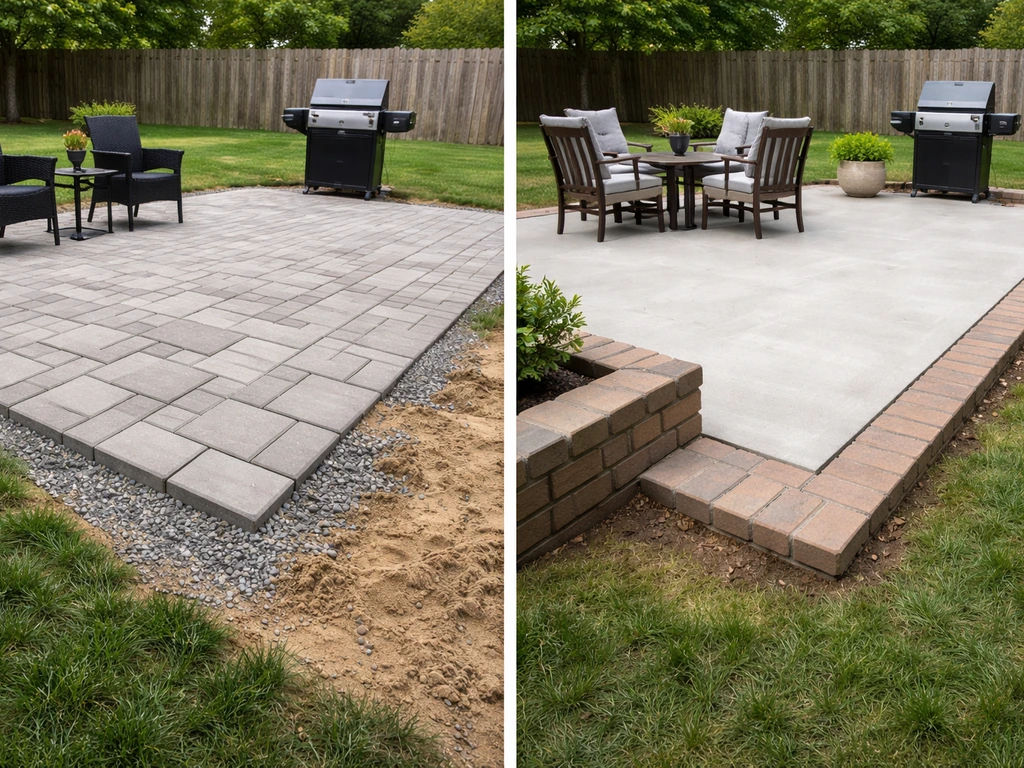
The single biggest factor in whether a patio gets treated as a structure is permanence. A temporary patio, think modular pavers laid directly on sand or gravel with no footings and no attachment to the home, is unlikely to trigger a building permit in most places. It looks and functions like a patio, but it can be picked up and moved, which codes tend to treat very differently than something poured in place.
A permanent patio is a different story. Poured concrete, mortared stone, or pavers set on a concrete base are not going anywhere. These materials change the drainage characteristics of the site, which is exactly why cities like Lancaster and Woodinville have stormwater permitting requirements tied to impervious surface additions. The permanence also matters because once footing or a ledger board connecting the patio to the house is involved, the project starts to look a lot more like an addition in the eyes of a building inspector.
Patio types and materials that push it toward "structure" status
Not all patios are treated the same, even within the same city. Here is how construction choices shift the classification:
| Patio Type / Feature | Likely Permit/Structure Status | Key Trigger |
|---|---|---|
| Gravel or loose stone on grade | Usually no permit needed | Not impervious, not permanent |
| Modular pavers on sand (no mortar) | May not need permit; check local size thresholds | Removable, limited imperviousness |
| Poured concrete slab on grade | Often needs stormwater or paving permit above size threshold | Permanent impervious surface |
| Mortared pavers or stone on concrete base | Usually needs permit above local size threshold | Permanent impervious surface |
| Open patio with footings or ledger attached to house | Likely needs building permit | Structural attachment to dwelling |
| Covered patio (roof/shade structure with posts) | Almost always needs building permit; treated as structure | Roofed structure with structural elements |
| Patio with walls, outdoor kitchen fixtures, or utilities | Needs permit; may require electrical/plumbing sub-permits | Built-in structural and utility elements |
Chula Vista, California makes this progression explicit. The city's building code defines a "patio cover" as a one-story, roofed structure, and requires a permit for it. An open slab at grade is one thing; the moment you add a roof on posts, you have a defined structure in the eyes of the California Building Code. The International Code Council's model residential code similarly draws a specific line between a patio and a deck, because each triggers different structural support and inspection requirements.
How patios compare to porches, decks, verandahs, balconies, and courtyards
Understanding where a patio sits relative to other outdoor spaces is not just a terminology exercise. It directly affects what rules apply. Orland Park, Illinois defines a porch as "a roofed over deck or patio attached to the dwelling," which means the moment you cover your patio and attach it to the house, it legally becomes a porch under that code. In most building-code conversations, a porch is essentially a covered deck or patio attached to the dwelling porch as "a roofed over deck or patio attached to the dwelling". That distinction matters for setbacks, permits, and what an appraiser reports.
| Feature | Patio | Porch | Deck | Verandah | Balcony | Courtyard |
|---|---|---|---|---|---|---|
| Elevation | At grade | At or above grade | Elevated on frame | At grade or raised | Elevated, upper story | At grade, enclosed |
| Roof | None (open) | Yes, always | Usually none | Yes, always | May have railing only | Open to sky |
| Attachment to house | Optional | Usually attached | Usually attached | Attached along facade | Always attached | Surrounded by building |
| Typical materials | Concrete, pavers, stone | Wood, composite, concrete | Wood, composite | Wood, tile, stone | Concrete, steel, tile | Stone, tile, concrete |
| Structure classification likelihood | Varies by permanence/cover | Yes, almost always | Yes, almost always | Yes, almost always | Yes, always | Varies; often yes |
The patio-versus-porch question and whether a patio and porch are the same thing are genuinely common points of confusion, and local codes handle them differently. The same applies to whether a patio is considered living space, which is a separate question from whether it is a structure. A patio can be a structure (or a permitted site improvement) without ever counting as living space, because living space in appraisal and zoning terms requires conditioning (heating/cooling) and enclosure.
What this means for permits, setbacks, insurance, resale, and inspections
Permits and zoning setbacks
Even if your patio is not formally a "structure" in your city's building code, it may still require a permit. Check for two separate triggers: a stormwater or paving permit based on square footage and imperviousness, and a building permit if the patio has a roof, is elevated, or connects structurally to the house. Setback rules (the required distance from property lines) can apply even to open patios in many jurisdictions, particularly if the patio is classified as an blank" rel="noopener noreferrer">accessory structure. Oshkosh's rule, that patios five feet or more from the principal structure are recreational accessory structures subject to bulk regulations, is a good example of how even a simple slab can land in a regulatory category with real consequences.
Insurance coverage
For homeowners insurance, a patio typically falls under "other structures" coverage, which is the portion of your policy that covers structures other than the main dwelling. Allstate describes other structures coverage as protection for structures other than the home itself, with fences as a common example. State Farm notes that detached structures on the property, separated by clear space from the dwelling, may be covered under this portion of the policy.
Progressive has noted that hardscape like a driveway can be covered under other structures coverage when damaged by a covered peril, which gives you a sense of how broadly insurers can apply the concept. If your patio is attached directly to the house, coverage may fall under the dwelling section instead.
Ask your insurer directly how they classify it, because it affects claim limits.
Appraisals and resale value
Appraisers report patios as amenities on standardized forms, and a well-built patio can contribute to a home's market value, even though it does not count as living space. The risk at resale is an unpermitted patio. If your city required a permit and you did not get one, an appraiser or buyer's inspector may flag it. AXIS AMC guidance explicitly tells appraisers to determine whether additions and conversions are permitted, and that obligation extends to significant hardscape improvements in practice. An unpermitted covered patio with an outdoor kitchen is much more likely to cause a financing problem than an unpermitted basic concrete slab, but neither is a comfortable situation at closing.
Home inspections
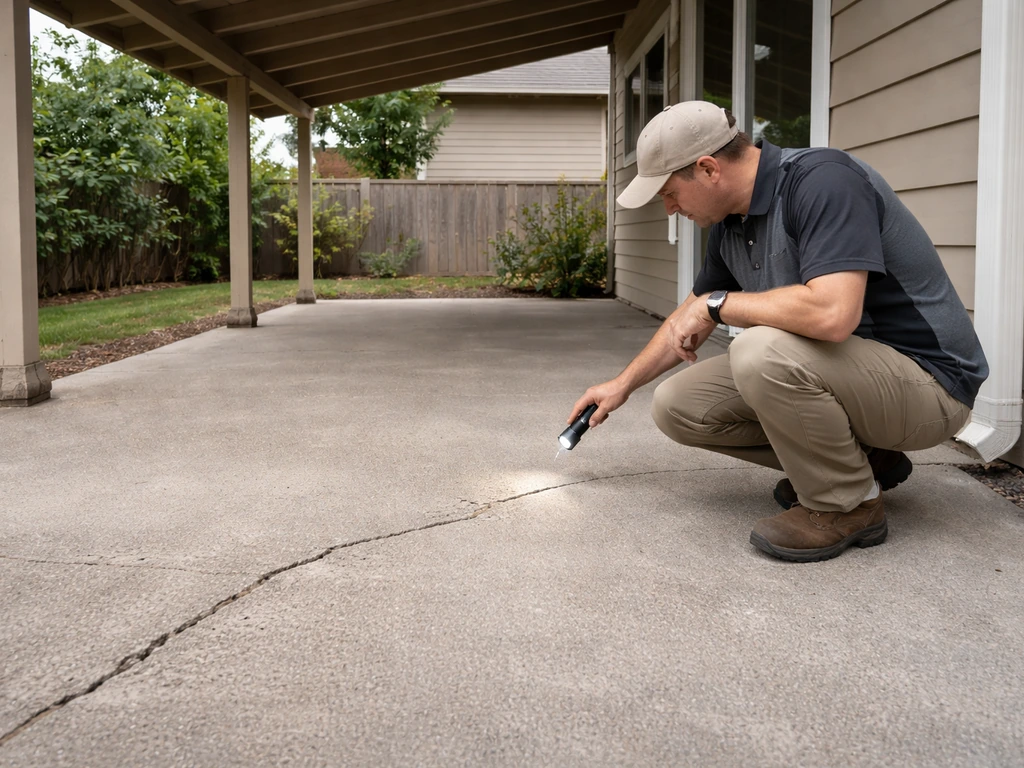
A home inspector will look at a patio for drainage slope (water should run away from the house), cracks or heaving in the slab, condition of any attached cover or posts, and whether the patio connection to the house could be causing moisture intrusion. They are not typically going to pull permit records, but a buyer's agent or the buyer themselves might. If you are buying, it is worth asking whether any patio covers or built-in features were permitted. If you are selling, checking your permit history before listing removes a potential negotiating chip from a buyer's hands.
Your practical next steps to get a clear answer
- Identify what you actually have: note the square footage, material (concrete, pavers, gravel), whether it has a roof or cover, whether it is attached to the house with a ledger or posts, and whether it has any built-in features like an outdoor kitchen or utilities.
- Check your property documents: look at your survey, plot plan, or any existing permit records. Many county assessor websites let you search permits by address for free.
- Look up your local zoning and building code: search your city or county name plus "patio permit" or "accessory structure permit." Many municipalities post their thresholds online. Look specifically for impervious surface limits, accessory structure definitions, and setback requirements.
- Call or email your local permit office: describe the patio in plain terms (size, materials, cover, attachment). Ask whether it needs a permit, whether it is classified as a structure, and what setbacks apply. Get the answer in writing if possible.
- Talk to your insurer: ask whether your patio is covered under the dwelling portion or the other structures portion of your homeowners policy, and confirm the coverage limit applies to the replacement cost.
- If you are buying or selling, ask about permits early: request permit history for any covered patio, outdoor kitchen, or elevated patio area before the inspection contingency deadline so there is time to resolve it.
FAQ
If my patio is uncovered but has a pergola, does that make it a structure?
Often it does, or at least triggers structural review. A pergola that is freestanding may be treated as an accessory structure, while posts that are anchored with footings or connected to the house can push it into “covered/attached” territory for permit and inspection purposes. Even if there is no full roof, the number of posts, whether there are ledger attachments, and local definitions for patio covers matter.
Does “structure” depend on whether the patio is attached to the house?
Attachment is a major practical factor, but not the only one. A detached slab can still be an accessory structure under zoning rules, and an attached patio can be treated as part of a porch or deck category. Inspectors and zoning offices usually care about both permanence (footings, base, anchorage) and functional relationship to the dwelling (attachment points and how it changes site drainage).
Are pavers placed over compacted gravel always considered temporary?
Not necessarily. If the pavers are installed as a stable, permanent surface (for example, excavated base, compacted layers, edging that locks the area, and no ability to lift without reconstruction), many jurisdictions will treat it like an impervious improvement for permit and stormwater purposes. True “temporary” setups usually look relocatable, with minimal excavation, no footings, and no hard edging system.
What if my patio is small, like under 120 square feet, but adds a lot of water runoff?
Size thresholds are common, but stormwater rules often also consider runoff behavior, slope changes, and whether the patio converts permeable ground to impervious surface. A small patio can still require review if it changes drainage direction toward the house or toward protected areas. A site plan or drainage check may be requested even when the square footage is below the paving threshold.
How do setback rules apply if my patio is open and at ground level?
Setbacks can still apply, especially if your local code classifies the patio area as an accessory structure or a regulated improvement. Even an uncovered slab can be affected by side and rear yard minimums, along with any easements (utility, drainage, or HOA common-area rules). The safer approach is to ask whether your patio falls under “accessory structure,” “impervious surface,” or “recreational accessory structure” in your specific zone.
If I build a covered patio roof over an existing slab, do I need separate permits for the slab and the roof?
Many cities treat the roofed enclosure as the main permitted work, but they may still require documentation for the underlying slab if it was built without a compliant base, drainage plan, or anchorage. When you add posts or a ledger board, the structural foundation details become relevant, and that can trigger a permit even if the original patio was “existing” and grandfathered.
Does an unpermitted open patio always cause financing problems at resale?
Not always, but it can. Some transactions proceed if the improvement is minor and does not violate current setbacks or stormwater rules, while others flag the work because permit requirements are clear. The risk is higher when the patio includes a cover, an outdoor kitchen, electrical/plumbing tie-ins, or structural attachment, because those are more likely to be regulated and inspected.
How should I prepare for an insurer question about patio coverage?
Ask how they classify it, “other structures” versus part of the dwelling. Classification affects the coverage limit and what perils are covered. Also confirm whether the patio cover, posts, and any attached built-in features are treated separately, and whether water damage from drainage issues would be handled under your policy rather than excluded as maintenance or surface water.
If I am buying a home, what should I ask about patios beyond permits?
Ask for drainage evidence and photos, not just paperwork. Specifically, request details on the slope away from the foundation, whether there are moisture intrusion signs near any attached areas, and whether electrical hookups (if any) were permitted. If the patio is covered, ask who installed it and whether wind-rated anchorage and post foundations were engineered.
Does a patio count as living space for appraisal if it is covered?
Usually it still will not count as conditioned living space unless it is enclosed and has heating or cooling. Covered but open or partially open areas are commonly treated as amenities (similar to decks or patios), even when the cover creates usable outdoor space. Appraisers typically look for enclosure, conditioning, and whether the space functions as part of the home’s interior.
Next Article
Patio Weather Meaning: What Patio, Area & View Mean
Clear patio definition: what a patio is, 'patio weather' meaning, and how it differs from decks or porches.