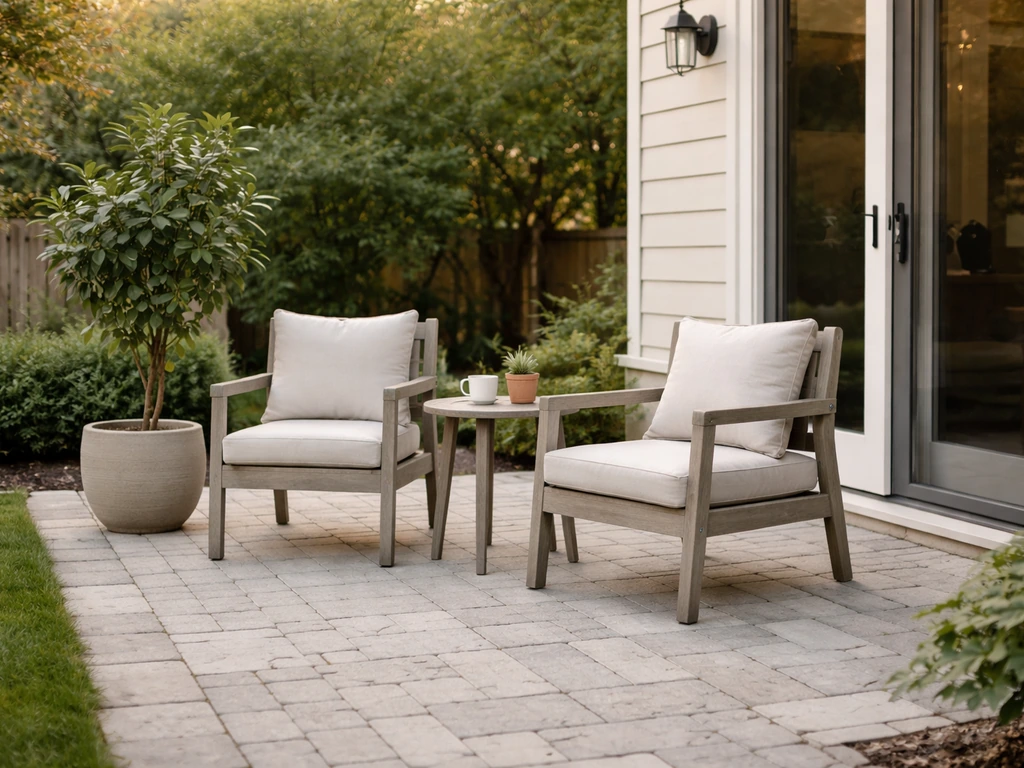
A patio area is a ground-level outdoor space, usually paved or hardscaped, that sits directly adjacent to a house and is used for dining, relaxing, or entertaining. When someone says "patio area" or "patio space," they mean the same thing as patio: a flat, open-to-the-sky (or lightly covered) surface right outside the home that functions as an extension of indoor living. It's not elevated like a deck, not enclosed like a sunroom, and not surrounded by walls like a courtyard. It's simply a usable outdoor floor at ground level, next to the house.
Patio Area Meaning: What a Patio Space Is and How to Spot It

Ada Hollis
28 Apr 2026
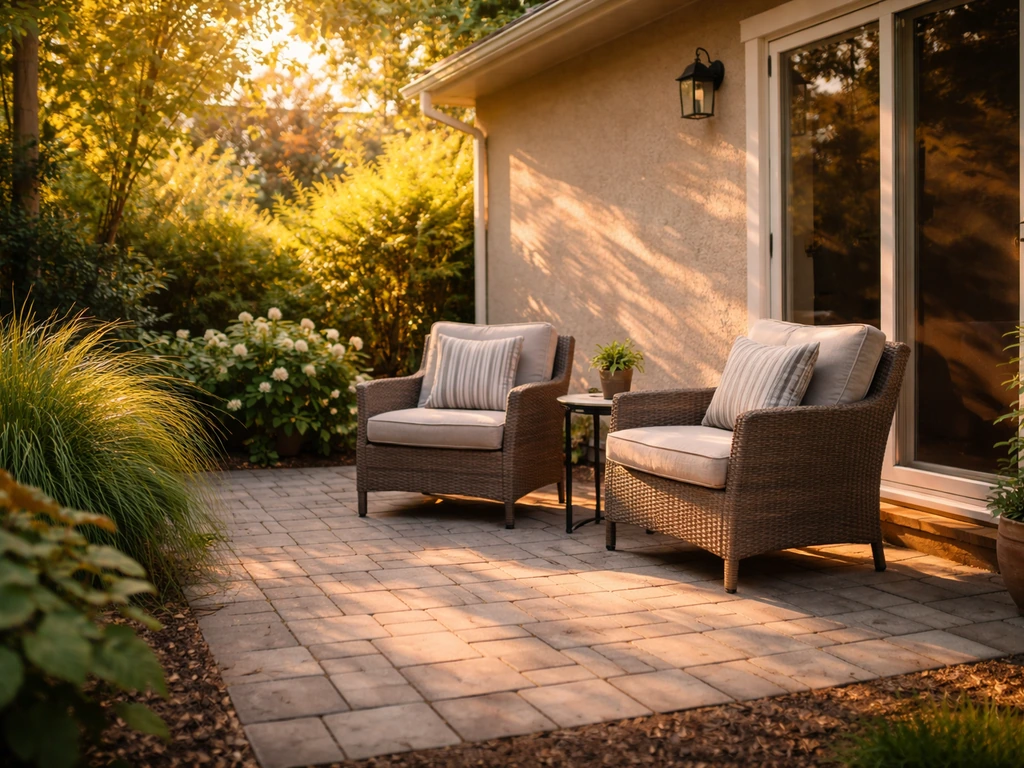
What a patio actually is (simple definition)
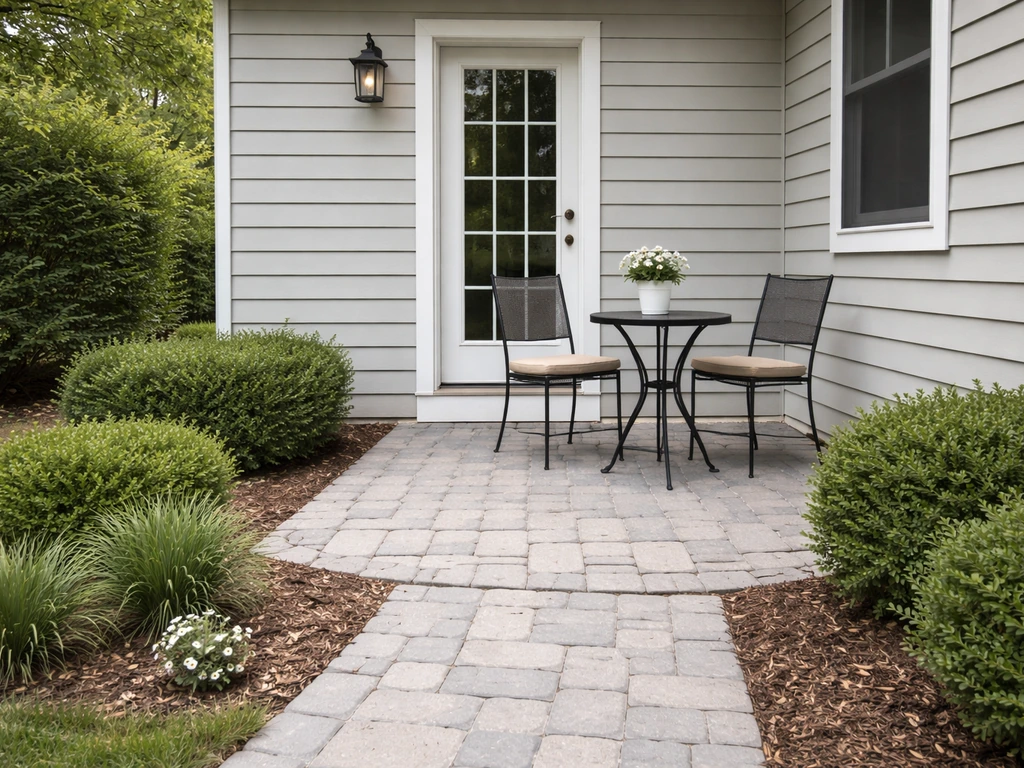
At its core, a patio is a paved or surfaced outdoor area adjoining a structure, designed for sitting and outdoor activities. In a <a data-article-id="EF4E0C20-8413-4003-AF8B-98BB6DEE20B9">patio definition</a>, the key idea is an outdoor sitting area at ground level, usually paved or hardscaped. Dictionary.com keeps it simple: "a space for sitting outside that's usually paved." Wikipedia adds that it adjoins a structure and is typically used for dining or recreation. Local permitting codes (like The Colony, TX) define it as a "level, landscaped, and/or surfaced area," which captures the ground-level, hardscaped reality well.
The word patio itself comes from Spanish, where it originally referred to an inner courtyard of a house. Over time, in English-speaking countries, it shifted to mean any outdoor sitting area at the back or side of a home, usually at ground level. If you're exploring <a data-article-id="12DAAE0F-7473-45F3-A8EA-8FDC03781969">patio meaning</a> or patio define as broader topics, that Spanish-origin nuance matters, but in everyday use today, it just means your outdoor ground-level sitting space.
"Patio area" vs "patio": is there actually a difference?
Not really, but the phrasing "patio area" or "patio space" tends to show up in two specific contexts. First, in real estate listings and MLS fields, agents write "patio area" to describe the square footage or zone of a property designated as the patio, especially when they want to distinguish it from the yard or lawn around it. Second, in local zoning and permitting documents (like the Edinburg, TX code), "patio" is defined as a specific outdoor ground area between the house and a wall, where placement rules and setbacks apply.
So if you see "patio area" in a listing, it typically means the defined, usable hardscaped portion of the outdoor space, as opposed to the grassed or landscaped yard surrounding it. "Patio space" is even more informal and usually just means the same thing said differently. Neither phrase adds a meaningful layer of complexity on top of the core term.
Where patios sit on a property
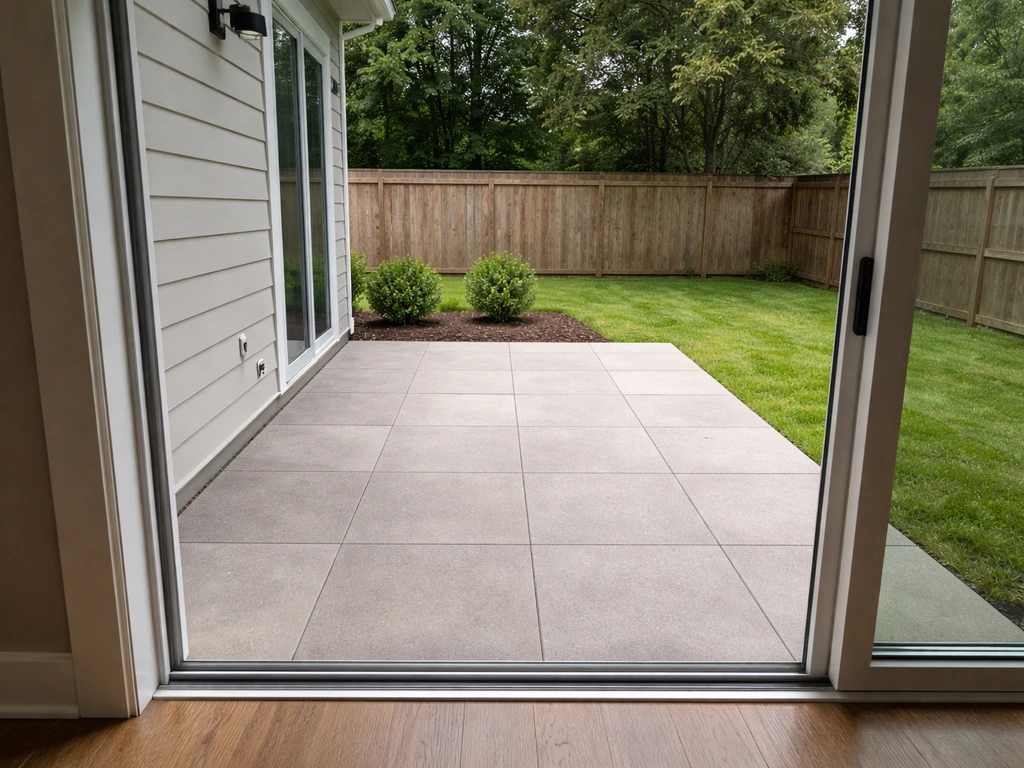
The most common location for a patio is directly adjacent to the house, at the back or side, accessible via a sliding glass door, French doors, or a back door. This placement makes it practical for daily use: you can carry food out for a barbecue, step outside with coffee in the morning, or set up outdoor seating for guests without walking across a lawn to get there.
In terms of layout, a patio typically sits flush with or just slightly below the interior floor level, connected directly to the home's exterior wall. It's at grade, meaning it's level with the surrounding ground. Some patios wrap around a corner of the house, others are freestanding in the yard (sometimes called garden patios or detached patios), but the adjoining-the-home placement is by far the most standard.
Patios are also used to solve practical problems on flat terrain. On sloped lots where a raised deck would be needed to maintain level footing, a patio is less feasible unless the ground is graded first. This is one reason This Old House notes that decks tend to be favored on challenging terrain while patios suit flatter ground, because a patio is fundamentally a surface sitting on (and shaped by) the existing grade.
Patio vs porch vs verandah vs balcony vs courtyard
These terms get mixed up constantly, especially in real estate listings. Here's how they actually differ from each other.
| Feature | Patio | Porch | Verandah | Balcony | Courtyard |
|---|---|---|---|---|---|
| Level | Ground level | Ground level | Ground level | Elevated (upper floor) | Ground level |
| Roof/Cover | Usually open, sometimes partially covered | Always covered (roofed) | Always roofed | Sometimes covered | Open to sky |
| Attachment | Adjoins the home | Attached to front/back/side | Attached, wraps around | Attached (structural) | Enclosed by walls/buildings |
| Typical Location | Back or side of home | Front or back entrance | Wraps front or sides | Upper floor exterior | Interior of building or complex |
| Primary Use | Dining, relaxing, entertaining | Sitting, greeting, transitional | Sitting, transitional | Outdoor air, small seating | Private outdoor living, communal |
| Enclosed? | No (usually open or screened) | No (open-air under roof) | No (open-air under roof) | No | Yes (surrounded by walls) |
The porch distinction is worth focusing on because it trips people up most often. Per MLS glossary definitions, a porch is a covered area attached to the front, back, or side of a house, usually at the main entrance. The key difference from a patio is the roof: a porch always has one, a patio typically doesn't (though it may have a pergola or partial shade structure added later). A verandah (or veranda) is essentially a roofed, open-air hallway or porch that wraps around a building, common in older architecture and tropical climates.
A balcony is easy to separate out: if you're on an upper floor and there's a small outdoor platform off a bedroom or living room, that's a balcony, not a patio. It's structurally attached to the building above ground level. A courtyard, on the other hand, is an outdoor space that is partly or completely surrounded by the walls of a building, often found in apartment complexes, townhomes, or Spanish-style homes. The surrounding-walls element is what distinguishes it from a patio that simply sits next to a wall or fence on one side.
Types of patios and what they're made of
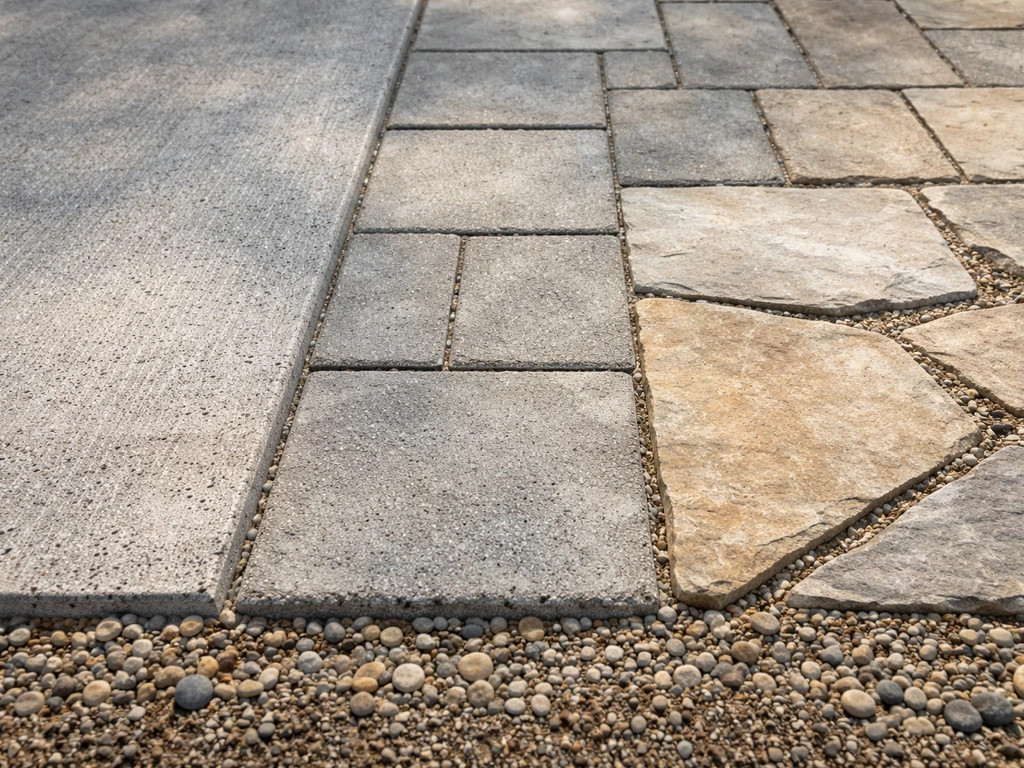
In practice, when someone says "patio," they could be referring to several different styles. The material and construction type affect how a patio looks, costs, and holds up over time, so it's useful to recognize the main categories.
By construction type
- Concrete patio: poured concrete slab, the most common and affordable option, durable but can crack over time
- Paver patio: individual concrete, brick, or natural stone pavers laid in a pattern, easier to repair and visually flexible
- Flagstone or natural stone patio: irregular or cut stone (slate, bluestone, travertine), upscale look, higher cost
- Tile patio: porcelain or ceramic tile on a concrete base, clean modern appearance, common in warmer climates
- Gravel or crushed stone patio: lower cost, good drainage, more informal feel
- Brick patio: classic look, traditional in older homes and New England styles
By coverage and enclosure
MLS listing systems (like NWA Realtors' MLS glossary) explicitly recognize patio subtypes: an enclosed patio is surrounded by walls, screens, or windows; a partial patio is only partially constructed or covered. This matters when reading listings because an "enclosed patio" can feel almost like an interior room, with climate control potential, while an open patio is simply an outdoor slab. A pergola-covered patio or a screened patio falls somewhere in between.
Wikipedia also notes that modern patio cover materials include alumawood, aluminum, and acrylic and glass panels, so patios can range from a bare concrete slab to a nearly fully covered outdoor room depending on what's been added after initial construction.
How patios show up in real estate listings
When you see "patio area" in a listing description or MLS field, there are a few things worth checking. Listing systems like Canopy MLS and NWA Realtors MLS treat "patio" as a structured feature field, not just free-text, which means agents are selecting from defined options (open, enclosed, partial). The problem is that listing remarks don't always match the MLS fields precisely, so a description saying "large patio area" might refer to anything from a 10x10 concrete slab to a fully screened outdoor room.
Here's what to look for specifically when evaluating a listed patio area:
- Ask for the dimensions or square footage: "patio area" tells you nothing about size without numbers, and a functional dining patio typically needs at least 12x12 feet
- Check whether it's open, partial, or enclosed: this affects year-round usability and how it's taxed or permitted in some areas
- Confirm it's at ground level: if it's elevated with a railing, it may actually be a deck (which has different maintenance and inspection requirements)
- Look at the surface material in photos: concrete, pavers, tile, and stone each have different maintenance profiles and lifespans
- Verify access from the interior: a patio accessible only from the yard (rather than from a door) is far less practical for daily use
- Check for drainage: a ground-level patio should slope slightly away from the home; pooling water is a red flag visible in person or sometimes in listing photos
- Ask about permits: in many jurisdictions (like The Colony, TX), patios require permits and must meet setback rules, especially if they have cover structures attached
One practical tip: if a listing says "patio" but the photos show a raised wooden platform with railings, that's a deck being labeled as a patio. Decks are raised, framed wooden structures, as NACHI's inspection guidance makes clear. They're not the same thing and they don't have the same inspection, maintenance, or permitting requirements. It's worth clarifying before you visit or make an offer.
Quick checklist: is it actually a patio?
If you're standing in front of a space (or looking at listing photos) and want to confirm you're looking at a patio, run through these points:
- Is it at ground level, not raised above grade? (If it's elevated on a frame or posts, it's a deck)
- Is it hardscaped with concrete, pavers, stone, tile, or brick? (If it's wooden planks, it's a deck)
- Does it adjoin the house or sit in the yard nearby? (If it's completely surrounded by walls on all sides, it may be a courtyard)
- Is it primarily open to the sky, even if partially covered? (If it has a full permanent roof and walls, it may be classified as an enclosed porch or sunroom)
- Is it on the same level as the rest of the property grade, not cantilevered off an upper floor? (If it's off an upstairs bedroom, it's a balcony)
If you answered yes to the first two and the space checks out otherwise, you're looking at a patio. The rest of the evaluation comes down to size, condition, materials, and how well it connects to the interior of the home, all of which directly affect how useful the patio area will be in day-to-day life. “Patio weather meaning” often refers to how conditions like sun, shade, wind, and rain affect comfort and usability on that outdoor space patio area. “Patio weather meaning” often refers to how conditions like sun, shade, wind, and rain affect comfort and usability on that outdoor space, and it pairs naturally with the patios definition for the exact ground-level, outdoor-sitting idea patio definition. If you're still wondering <a data-article-id="12DAAE0F-7473-45F3-A8EA-8FDC03781969">patio what is</a> in plain terms, it basically means that ground-level outdoor sitting area attached to a home.
FAQ
Does “patio area” include a walkway, or is it only the seating slab?
In most listings, “patio area” refers to the usable ground-level outdoor floor where you’d place furniture. Walkways that connect the house to the yard or garage are often listed separately, so check the listing layout and photo angles to see what’s counted as patio versus paths.
Can a patio be covered, and is it still a patio?
Yes. A patio can have partial shade structures, a pergola, or an awning and still be considered a patio as long as it remains primarily at ground level and not fully enclosed like a sunroom. If it has operable windows and climate control, it may be described as enclosed instead of open.
Is a screened patio the same as an enclosed patio?
Not always. “Screened” usually means insect screening with open sides, while “enclosed” typically implies walls or windows that create more room-like separation from the outdoors. When evaluating “patio area,” confirm whether the sides are open for airflow or sealed for weather protection.
What’s the difference between patio area and “covered porch” in real estate listings?
A porch is generally defined by the presence of a roof and is often tied to an entry. If it’s roofed and primarily functions as a transition at the door, listings may call it a porch, even if it’s adjacent to the patio. Look for whether the feature is roofed and where access points are located.
Can “patio” be on a slope, or does it have to be level?
A true patio is typically at grade, but the ground can be graded or leveled to create the patio surface. If a listing is on a sloped lot, ask whether the patio is built after grading (more common) or if it transitions unevenly from the yard (less comfortable for furniture).
Does a patio need to be attached to the house wall?
Many patios are adjacent to the home, but some listings describe “detached” or “garden” patios that are in the yard. If you’re trying to use it like an extension of indoor living, attached patios usually offer more convenient access, so ask whether there’s a door connection or it requires walking from the house.
If a listing says “large patio area,” how do I estimate the size realistically?
Don’t rely only on adjectives. Look for dimensions, number of seating zones, or visible furniture scale, and compare it to nearby structures like the garage. If no measurements are provided, request the patio footprint from the agent, since “large” can range from small slabs to fully screened outdoor rooms.
Why do some listings label a deck as a patio?
Because they’re both outdoor seating areas, agents sometimes use “patio” loosely. A deck is typically elevated with railings and a framing system, while a patio is at grade. Use the photo clues, check for stairs height changes, and, if unclear, ask whether permits were for a deck versus a patio build.
What should I check about patio weather meaning for comfort?
Ask how it handles sun exposure and wind. For example, north-facing patios may be cooler and shadier, while west-facing patios can get intense afternoon sun. Also ask whether there’s drainage slope toward the house or away from it, since poor runoff can affect usability after rain.
Does an “enclosed patio” count as additional living space for appraisal or taxes?
Often it does not automatically count the same way as finished interior square footage, especially if it lacks heating, cooling, and insulation. If the listing uses terms like enclosed or sunroom-adjacent, confirm whether it’s permitted and whether it has HVAC or is treated as a seasonal space.
Next Article
Patio Meaning in English: Definition, Pronunciation, and Examples
Get patio meaning in English: definition, pronunciation, examples like on the patio, and how it differs from porch, balc