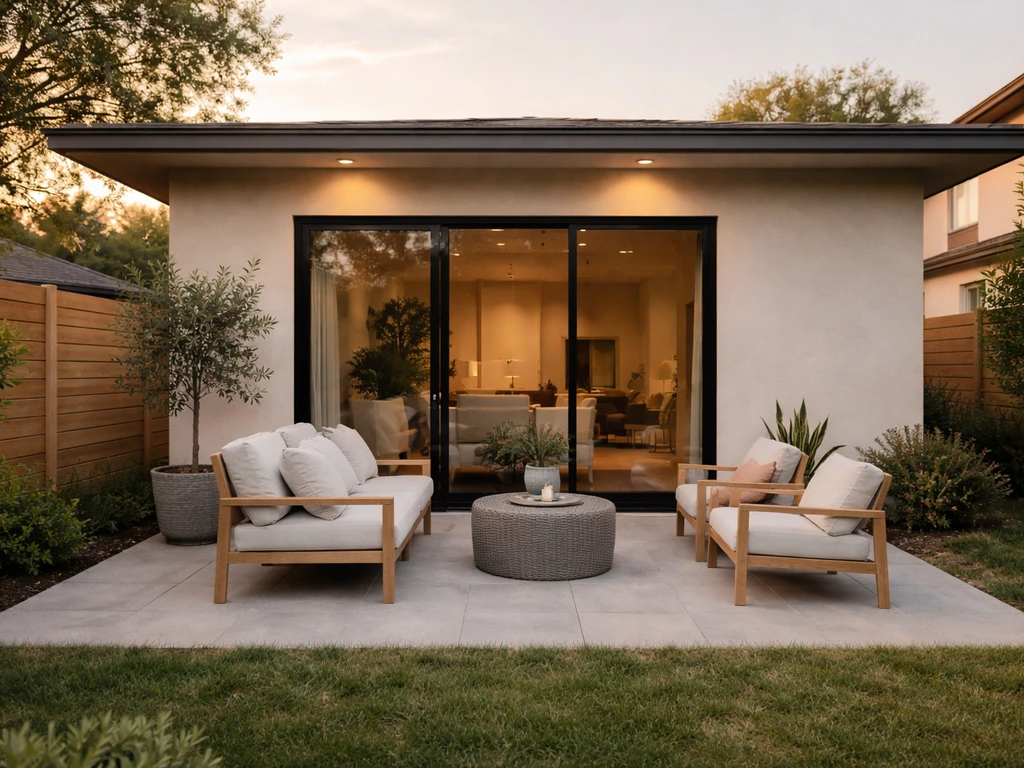
A patio home is a low-maintenance attached or detached dwelling, usually single-story, that sits on a small lot and often shares at least one wall with a neighbor. A townhouse is a multistory attached home that shares at least one wall (sometimes called a party wall) and gives you ownership of the unit from floor to roof. They look similar on paper, but in practice they serve very different buyers. If you want one level and a manageable outdoor space, a patio home usually wins. If you need more square footage spread across multiple floors and don't mind stairs, a townhouse makes more sense.
Patio Home vs Townhouse: Differences, Costs, and HOA Rules

Ada Hollis
7 May 2026
What a patio home actually means
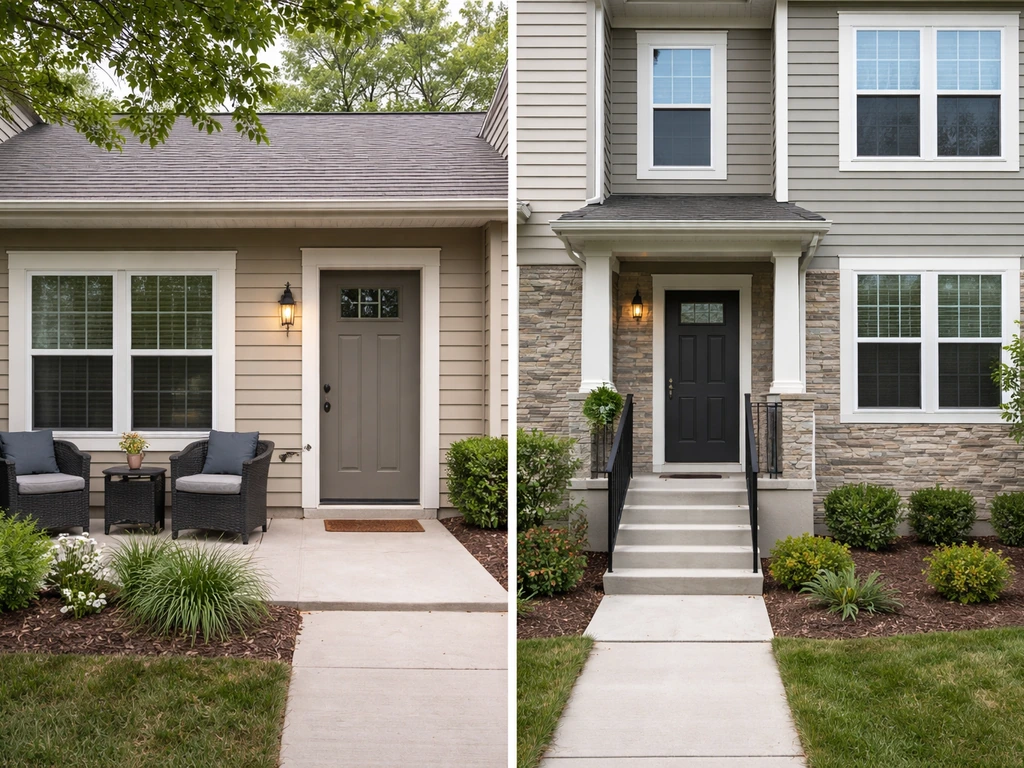
"Patio home" is a marketing label, not a legal category. There is no single legal definition that applies everywhere, which is why the same property might be listed as a patio home in one market and called a garden home, twin home, carriage home, or even a townhouse in another. What ties them together is a consistent set of physical traits: they tend to be single-story or low-profile, they sit on a small footprint, and they often use a zero-lot-line configuration where the structure is built very close (or right up) to one side of the lot line.
The "patio" in patio home refers to the private outdoor space, usually a small rear or side patio, that comes with the unit. It is also commonly used to describe the meaning of a patio home as a low-maintenance attached or detached dwelling with a private outdoor patio space patio homes meaning. This is distinct from a porch (which faces the street and is typically covered), a balcony (elevated, attached to a wall), or a courtyard (an enclosed outdoor space shared or private). In patio home communities, the outdoor space is ground-level, private, and attached directly to the unit, which is exactly how the term connects back to the core meaning of a patio in residential design.
Ownership in patio homes can be structured a couple of different ways. Some patio homes give you direct title to the land under the unit, similar to a townhouse. Others are titled more like a condo, where you own a fractional interest in the land and the HOA manages the common areas. Always check the deed and ask your agent which structure applies, because it affects your maintenance responsibilities, your insurance needs, and how the property is assessed.
What a townhouse actually means
A townhouse (also spelled town house, and often called a townhome) is a multistory dwelling attached to at least one neighboring unit by a shared wall. Merriam-Webster defines it as a house with two or three levels attached to a similar house by a shared wall, and that's a solid working definition. You own your unit from floor to ceiling across all floors, and in most cases you also own the land directly beneath it. The shared wall, sometimes called a party wall in architectural and legal documents, is the structural dividing line between your home and your neighbor's.
MLS systems like CRMLS formally define a townhome as three or more units attached horizontally, which helps distinguish it from a duplex (two units). In practice though, a two-unit attached home that looks and functions like a townhouse may still be marketed as one. The key physical indicators are multiple floors, a private entrance at street level, and at least one shared wall running the full height of the building. Townhouses often have a small rear patio, a balcony off an upper floor, or a small front stoop, but the defining outdoor space is rarely as prominent as it is in a patio home.
Patio home vs townhouse: layout, ownership, and day-to-day life
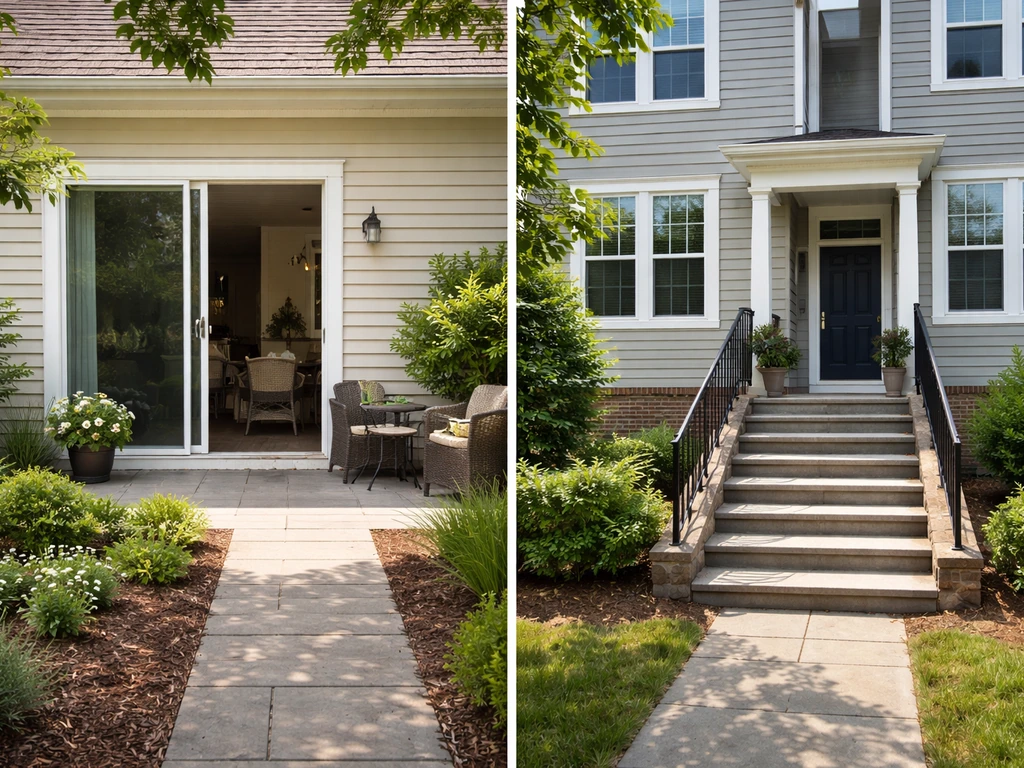
The most practical way to compare these two is to look at what they actually feel like to own and live in. Here is a direct side-by-side breakdown across the factors that matter most to buyers.
| Factor | Patio Home | Townhouse |
|---|---|---|
| Stories | Usually single-story | Typically 2–3 stories |
| Shared walls | Often one shared wall (zero-lot-line) | At least one party wall, often two |
| Land ownership | Direct title or condo-style fractional interest | Usually direct title to land under the unit |
| Outdoor space | Private ground-level patio, small yard | Small rear patio or balcony; less yard |
| Noise/privacy | Lower risk from neighbors above/below; side-wall noise possible | Noise from shared walls and sometimes above/below (stacked units) |
| HOA involvement | Common; often covers exterior/landscaping | Common; often covers exterior surfaces and roof |
| Maintenance | Typically minimal (small lot, HOA handles exterior) | HOA often handles exterior; owner handles interior across all floors |
| Parking | Usually a garage or driveway; sometimes shared lot | Often a garage on the ground floor or dedicated spot; less often a full driveway |
| Resale appeal | Strong with downsizers, retirees, empty nesters | Broader appeal; popular with urban buyers and first-time buyers |
On a daily basis, the biggest differences come down to stairs and noise. Patio homes eliminate stairs entirely for most residents, which is a genuine quality-of-life advantage if you have mobility concerns or simply prefer single-level living. Townhouses pack more square footage into a vertical space, which can feel cramped or feel like a smart use of a small footprint depending on your lifestyle. For noise, both types involve shared walls, but townhouses in larger complexes can also involve shared floors and ceilings if units are stacked or if the construction uses a hybrid layout.
HOA rules in both types of communities can cover a lot of ground: exterior paint colors, landscaping standards, fence heights, and what you can store on your patio or balcony. Before you close on either one, pull the CC&Rs (the community's declaration of covenants, conditions, and restrictions) and read the section on outdoor spaces carefully. Some HOAs treat the patio or courtyard area as a limited common element, meaning you use it exclusively but the HOA retains maintenance responsibility. Others put all patio maintenance squarely on the homeowner.
Patio home vs duplex: similarities and key differences
A duplex is a single building divided into two separate units, each with its own entrance and typically its own utilities. The key difference from a patio home is ownership: a duplex is usually owned as a single property by one person or entity, with both units on the same deed. One owner can live in one unit and rent the other, or rent both. A patio home, by contrast, is almost always sold as an individual unit with its own deed, title, and (usually) its own HOA affiliation.
Structurally, a duplex and a patio home can look nearly identical from the street. Both are low-profile, both share one wall, and both may sit on small lots. The difference shows up in how the property is titled and who controls the other unit. In a duplex, you typically have no HOA and no shared governance structure unless one is set up voluntarily. In a patio home community, the HOA is almost always part of the deal. Duplex owners also tend to have more control over exterior decisions (paint, roofing, landscaping) because there is no association to answer to, though that also means more direct maintenance responsibility.
If you are comparing a patio home to a duplex as a buyer-occupant (not an investor), the practical question is: do you want to share your building with a tenant you did not choose, or a fellow homeowner in the same HOA? Patio home communities tend to have more consistent owner-occupancy rates, which can support property values and neighborhood stability. Duplexes vary widely depending on whether the other unit is owner-occupied or rented.
Patio home vs single-family: density, privacy, and responsibilities
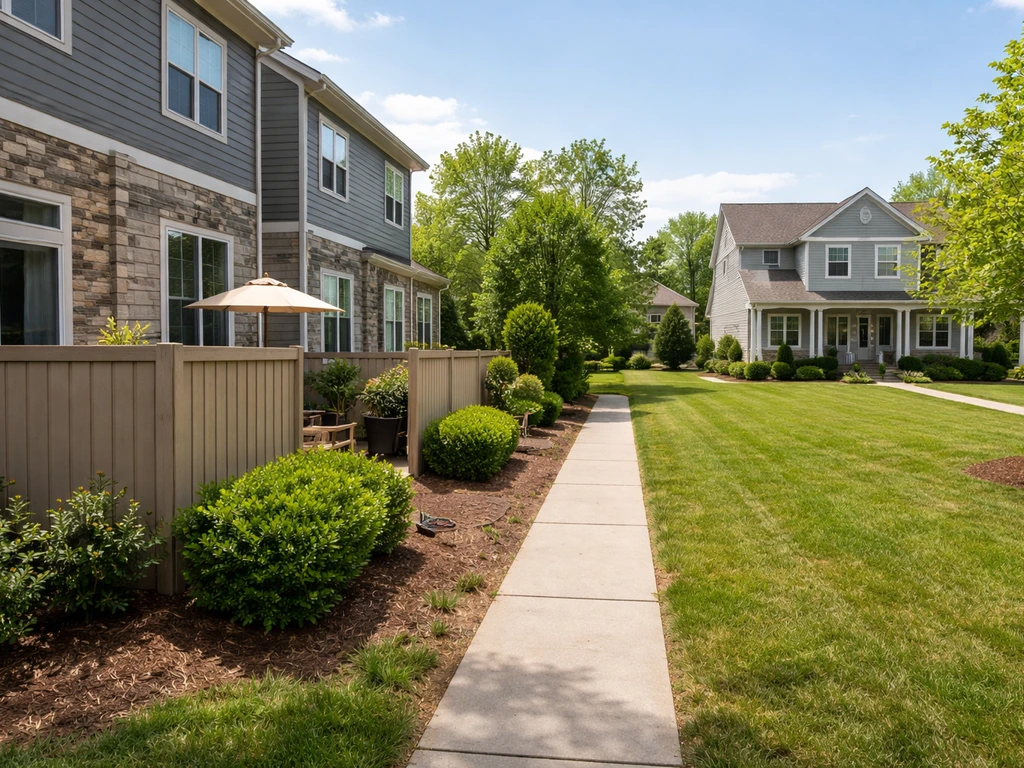
A single-family detached home is a freestanding structure that shares no walls, rooflines, or structural systems with any other residence. You own the structure and the land, you are responsible for all maintenance, and you have the highest degree of privacy and autonomy of any residential property type. A patio home trades some of that autonomy for reduced maintenance obligations and often a lower price point in the same neighborhood.
The density difference is significant. Patio home communities cluster units on smaller individual lots, which means more neighbors in closer proximity. The upside is that the community often feels cohesive and managed, with consistent landscaping and exteriors. The downside is that you will hear your neighbors more and have less buffer between your outdoor space and theirs. Single-family homes give you yard space on all sides (or at least most sides), which provides acoustic and visual separation that no patio home community fully replicates.
Maintenance responsibilities are where patio homes make the strongest case against single-family homes. With a patio home HOA, the association typically handles exterior painting, roof maintenance, and landscaping of common areas, sometimes even your front lawn. On a single-family home, every one of those costs falls entirely on you. For buyers who want the feel of homeownership without the full burden of upkeep, a patio home is genuinely a middle ground between a condo and a traditional house. A condo can feel similar in terms of shared responsibilities, but the ownership and maintenance setup usually differs from a patio home middle ground between a condo.
Patio homes vs townhomes: common naming confusion and how to verify
"Patio homes vs townhomes" is one of the most frequently searched comparisons in this space, and a lot of the confusion comes from the fact that the terms are genuinely interchangeable in some markets. A listing agent in Texas might call a single-story attached unit a patio home. The same unit in Georgia might be listed as a townhome. In some MLS systems, the two categories are distinct fields; in others, agents use them loosely.
blank" rel="noopener noreferrer">Wikipedia explicitly notes that homes marketed as patio homes may alternatively be marketed as townhouses, garden homes, twin homes, or carriage homes, depending on the region and the marketing strategy.
Wikipedia notes that there is not usually a legal definition of a “patio home,” and that homes marketed as patio homes may be marketed as townhouses, garden homes, twin homes, or carriage homes depending on the region Wikipedia explicitly notes that homes marketed as patio homes may alternatively be marketed as townhouses, garden homes, twin homes, or carriage homes, depending on the region and the marketing strategy. .
The best way to verify what you are actually buying is to ignore the label and look at the physical characteristics and legal documents. Ask three specific questions: How many stories is the unit? Does the unit share a wall, and if so, which wall and with how many neighbors? And how is the land titled, as a direct-deed parcel or as a fractional/condo-style interest? The answers will tell you more about what you are buying than any marketing term on the listing.
It is also worth checking the MLS property type field against the physical description. If a listing says "townhome" but the unit is single-story and sits on a zero-lot-line parcel, it may actually be functioning as a patio home regardless of how it is labeled. This matters for financing (some loan programs treat condos differently from single-family attached homes), insurance, and how you compare the price per square foot against true comps.
If you are exploring the broader world of attached housing, the patio home category also overlaps with garden homes and cluster homes, which have their own naming nuances. If you are seeing similar single-story attached listings, garden home vs patio home naming can overlap, so verify the physical traits and the legal documents before you decide garden homes.
The question of whether patio homes have basements, for instance, comes up frequently and the answer depends on the region and how the unit is built, not on the label itself. Similarly, the pros and cons of patio homes relative to condos and other attached housing types is a comparison worth understanding before you commit to any specific property type.
This is why the pros and cons of patio homes relative to condos and other attached housing types is worth understanding before you commit.
How to decide: questions to ask, what to inspect, and which fits your needs
Start by being honest about two things: how much maintenance you want to handle yourself, and how many floors you are willing to live across. If the answer is "as little maintenance as possible" and "just one floor," a patio home is your best fit. If you need more square footage and can handle stairs, a townhouse gives you more room in a similar price bracket. If you want full control over your property and outdoor space without HOA restrictions, a single-family home is the right move even if it costs more.
Questions to ask before you sign anything

- What does the HOA cover, and what are the current monthly dues? Ask for the last two years of meeting minutes to see if any special assessments were levied.
- Who is responsible for the roof, exterior walls, and shared-wall maintenance? Get this in writing from the CC&Rs, not just verbally from the agent.
- Is the outdoor patio or yard space deeded to my unit, or is it a limited common element controlled by the HOA?
- What are the rules on modifications to the patio, fencing, or landscaping? Some HOAs prohibit any alterations without board approval.
- How is parking assigned, and are there guest parking rules? Some patio home and townhouse communities have strict limits.
- What is the owner-occupancy rate in the community? A high percentage of rentals can affect your financing options and the feel of the neighborhood.
- Has the HOA completed a reserve fund study recently? An underfunded reserve is a red flag for future special assessments.
What to inspect before closing
For any attached home, your inspection needs to go beyond the four walls of your unit. Shared walls are a common source of water intrusion, noise transmission, and deferred maintenance headaches. Ask your inspector to pay specific attention to the condition of any shared wall (look for moisture, cracks, or evidence of past repairs), the roof and whether it is shared or independent, and the condition of exterior surfaces like siding and trim that the HOA may or may not be maintaining. If the HOA conducts annual exterior inspections, ask for the most recent report.
For the outdoor space specifically, check whether the patio surface, fencing, and any gates or drainage are in good condition and who is responsible for repairing them. Make sure to also inspect any patio on top of the house for waterproofing, drainage, and structural condition patio on top of house. Some HOA documents are explicit about this; others are vague. If the CC&Rs are ambiguous, ask the HOA management company directly and get the answer in writing before closing. A patio that floods after rain or a fence that violates HOA rules can become your problem fast if you did not verify ownership and maintenance responsibility up front.
The bottom line on which to choose
Choose a patio home if you want single-level living, minimal yard work, a private ground-level outdoor space, and a community where exterior upkeep is largely handled for you. It is an especially strong fit for retirees, downsizers, and anyone with mobility considerations. Choose a townhouse if you need more square footage, are comfortable with stairs, and want a home that feels more like a traditional house in an urban or suburban setting.
Choose a single-family detached home if privacy, full outdoor space control, and freedom from HOA governance matter more to you than reduced maintenance. And if you are still unsure whether a listing is really what it claims to be, use the physical checklist above and the legal documents to verify before you commit.
FAQ
If a listing says “patio home,” how can I tell quickly whether I’m buying something that acts like a townhouse (or vice versa)?
Check the number of stories and whether the unit sits on a zero-lot-line parcel. Then look for a shared wall that runs full height. Finally, confirm land ownership in the deed or preliminary title report, because the “patio home” label alone does not guarantee condo-style land ownership or townhouse-like legal treatment.
Do patio homes and townhouses usually have different financing treatment?
They can. Even when a structure looks similar, loan programs may treat attached HOA-managed properties differently from single-family or from true townhome/condo structures. Ask your lender to confirm how the property type is coded in the MLS and how the HOA dues and insurance are handled for the specific deed structure.
Who typically pays for repairs to the shared wall and roof in these communities?
Your responsibility can depend on whether the wall and roof components are considered part of the unit, limited common element, or common element. In practice, the HOA often covers roofing and exterior systems but not always interior or ductwork. Ask for the exact allocation in the CC&Rs and operating rules, and request the HOA budget line items for exterior/roof reserve funding.
Are the patios or outdoor areas always “mine,” or can the HOA control them like a shared amenity?
Not always. Some HOAs treat outdoor areas as limited common elements, meaning you have exclusive use but the HOA controls maintenance and sometimes design approvals. Look for wording that defines the patio as limited common area versus solely your private property, and confirm who handles drainage repairs and fence replacement.
Can I install a patio cover, pergola, or change fencing height without approval?
Usually not without written HOA review. Many CC&Rs require prior approval for exterior modifications (even if you own the patio or fence). Check whether the HOA uses an architectural review committee and whether approvals are subject to style guidelines, setbacks, or height limits.
What should I ask about noise if I’m deciding between a one-story patio home and a multistory townhouse?
Ask whether units share only a wall or also floors and ceilings, and whether the complex is stacked vertically or side-by-side. Also ask for information on construction type (for example, whether there is a floating floor or insulation) because townhouse noise issues can come from both shared vertical surfaces and vibrations between levels.
Do patio homes ever have basements, and does that affect the “patio home vs townhouse” decision?
Yes, in some regions patio homes can include basements or crawlspaces, but it is not guaranteed by the marketing label. If you care about storage, moisture risk, or accessibility, inspect the foundation type during the tour and confirm whether any portion of the exterior grading and drainage is HOA-controlled or homeowner-controlled.
How can I tell if a patio floods or drains poorly before I buy?
Bring up drainage in the CC&Rs and ask for past maintenance records, especially complaints about pooling, standing water, or repeated landscaping corrections. During inspection, observe the grading direction, downspout discharge points, patio slope, and the condition of any sump systems or French drains, and confirm who maintains them.
What outdoor items are commonly disallowed that surprise first-time buyers?
Examples include storage bins, certain types of grills or seasonal decorations, improperly placed planters, or anything that blocks walkway access. Ask the HOA for the specific outdoor storage or patio rules, because “limited common element” language can be stricter than homeowners expect.
If the HOA covers exterior painting, will it still be your problem when color approvals change or damage occurs?
Often the HOA handles maintenance, but you can still be responsible for the deductible on claims or for damage caused by homeowner neglect. Also, color palettes can be limited, so if you want custom exterior changes, you may face approval delays. Confirm the HOA’s responsibilities and your responsibilities for “like-kind” replacement after damage.
Should I treat duplex comparisons differently than patio home vs townhouse comparisons?
Yes. A duplex may look similar but often lacks the same HOA-style governance, which changes both decision-making and costs. Before deciding, confirm whether the neighboring unit is on a separate deed with separate rules, and verify whether any shared services like landscaping, utilities, or exterior upkeep are governed by an HOA or by an owner-to-owner arrangement.
What documents should I request from the HOA before closing to avoid surprises?
Request the CC&Rs, bylaws, rules and regulations, the current HOA budget, the most recent reserve study (if available), and the last few years of meeting minutes if disputes about exterior or patio enforcement exist. Also ask for the most recent exterior inspection report if the HOA conducts one, and get clarity in writing on patio, drainage, and fencing responsibilities.
Next Article
Patio Homes Meaning: Definition, Differences, and How to Verify
Get the patio homes meaning: what patio means in housing, how patio homes differ from patios, and how to verify.