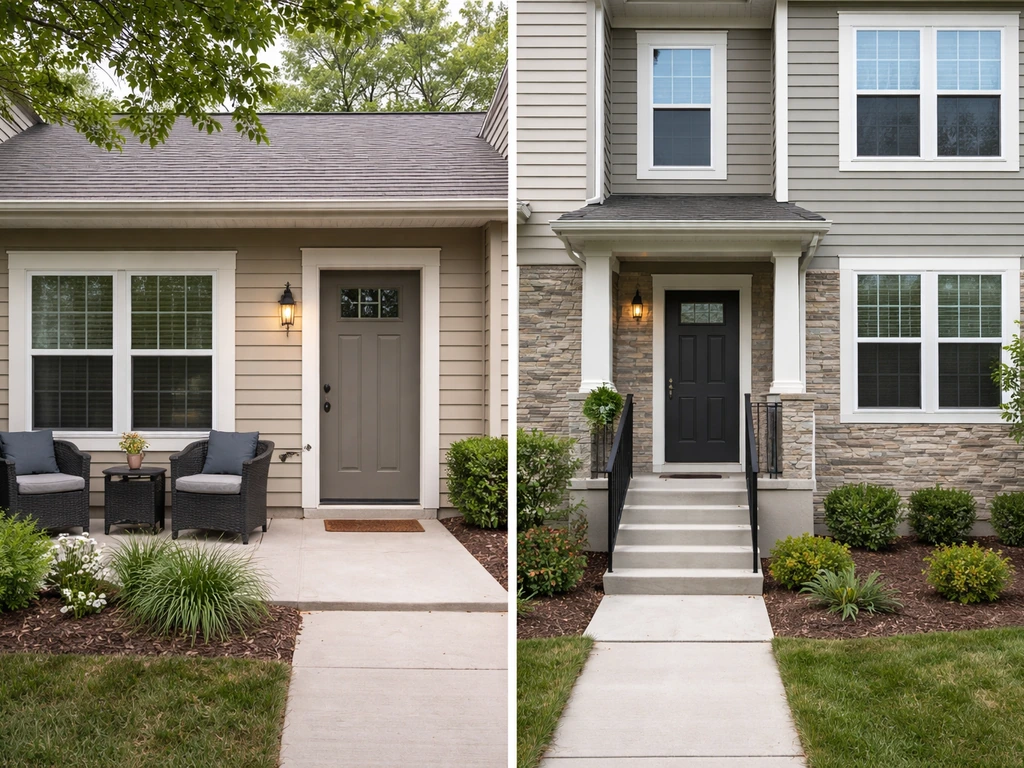
Patio homes offer a real middle ground between a condo and a traditional detached house: you typically own the land your unit sits on, you get an outdoor space (often a private patio or courtyard), and the layout is almost always single-story or 1½ stories at most. That sounds appealing, and for many buyers it genuinely is. But the trade-offs are real too: shared walls, HOA rules that can limit what you do with your own exterior, less privacy than a detached home, and resale quirks that vary by market. Whether patio homes are right for you depends on your lifestyle, your tolerance for community-living rules, and how carefully you vet what a specific listing actually includes.
Pros and Cons of Patio Homes: Costs, Privacy, and Checklist

Ada Hollis
13 May 2026
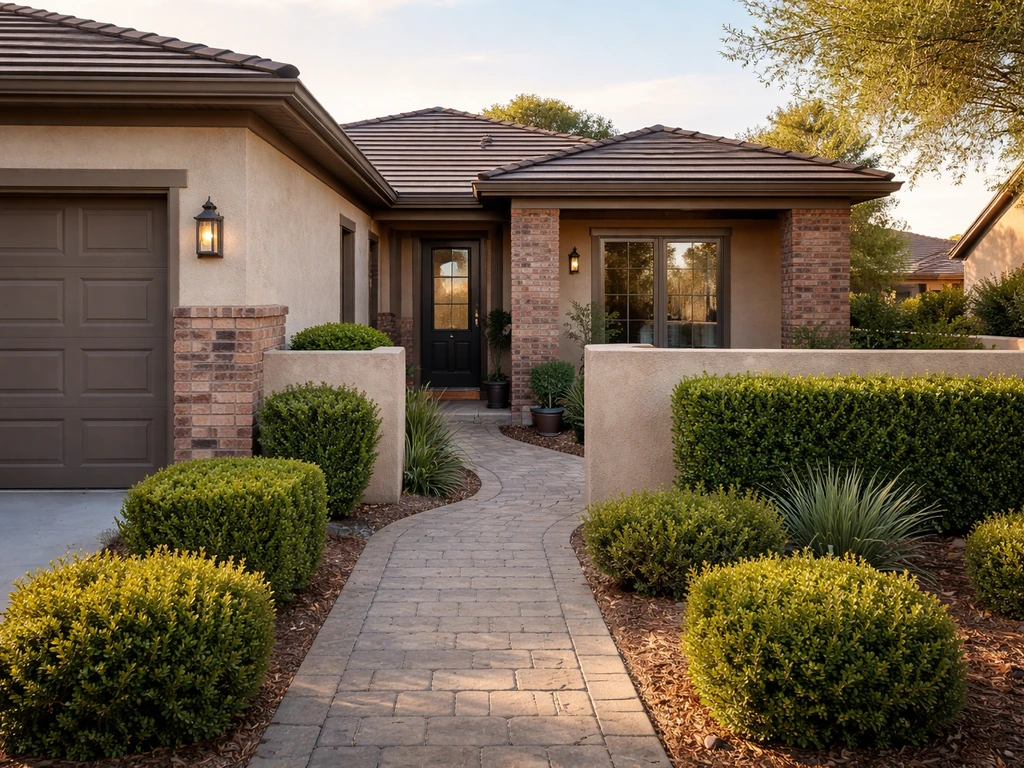
What a patio home actually is in real estate
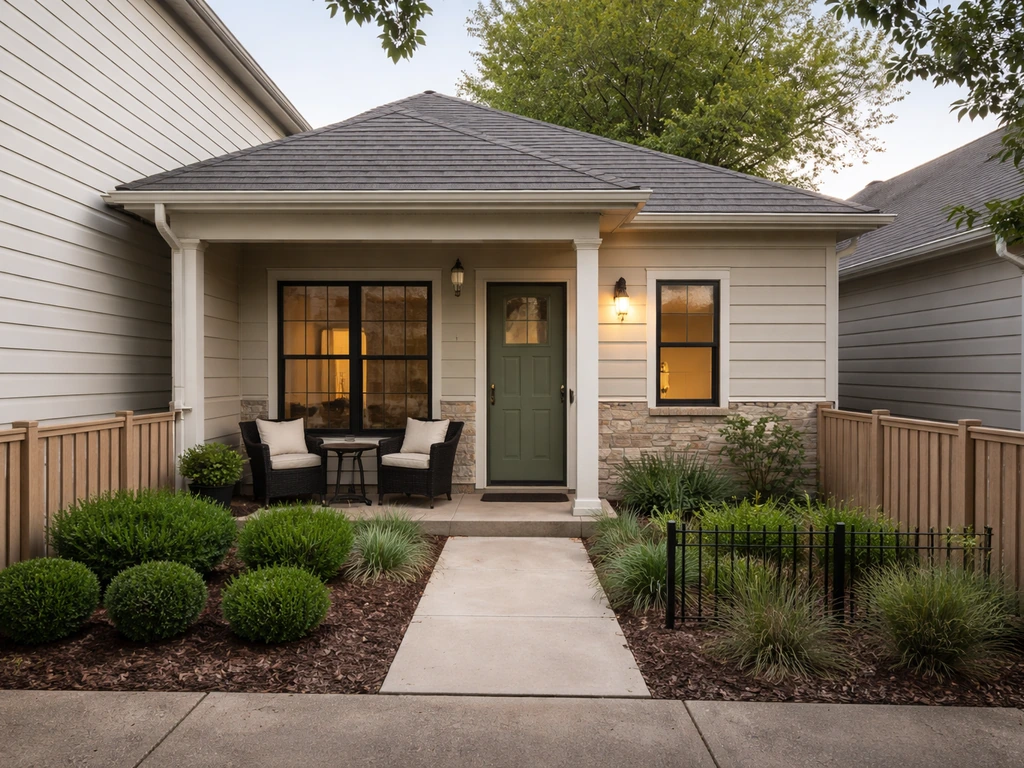
The term 'patio home' is used loosely in real estate marketing, which is worth knowing upfront. There is no single legal definition that applies everywhere. Wikipedia explicitly notes that the same property might be marketed as a patio home, townhouse, garden home, twin home, or carriage home depending on the builder and the market. A Texas zoning ordinance might define a patio home as a detached single-family dwelling on a zero-lot-line lot, while a Colorado new-build community uses the same label for attached units with finished basements.
Despite the variation, a few features show up consistently. Patio homes are almost always one story, occasionally 1½ with a loft space. They are often attached to a neighboring unit via a shared (party) wall, though some are technically detached on very small lots. Crucially, the owner typically holds title to the land the unit sits on, plus the building exterior, walkways, fencing, and the immediate yard. That is different from a condo, where common elements and the building shell are collectively owned. Many patio-home communities also have an HOA that manages common areas, landscaping, and sometimes exterior upkeep, depending on how the development is structured.
Because the term is a marketing label more than a legal category, the governing documents matter far more than what the listing calls the property. The plat, deed, and CC&Rs will tell you exactly what you own, what the HOA controls, and what your responsibilities are. Keep that in mind every time you see 'patio home' in a listing.
The real benefits of patio home living
Lower day-to-day maintenance
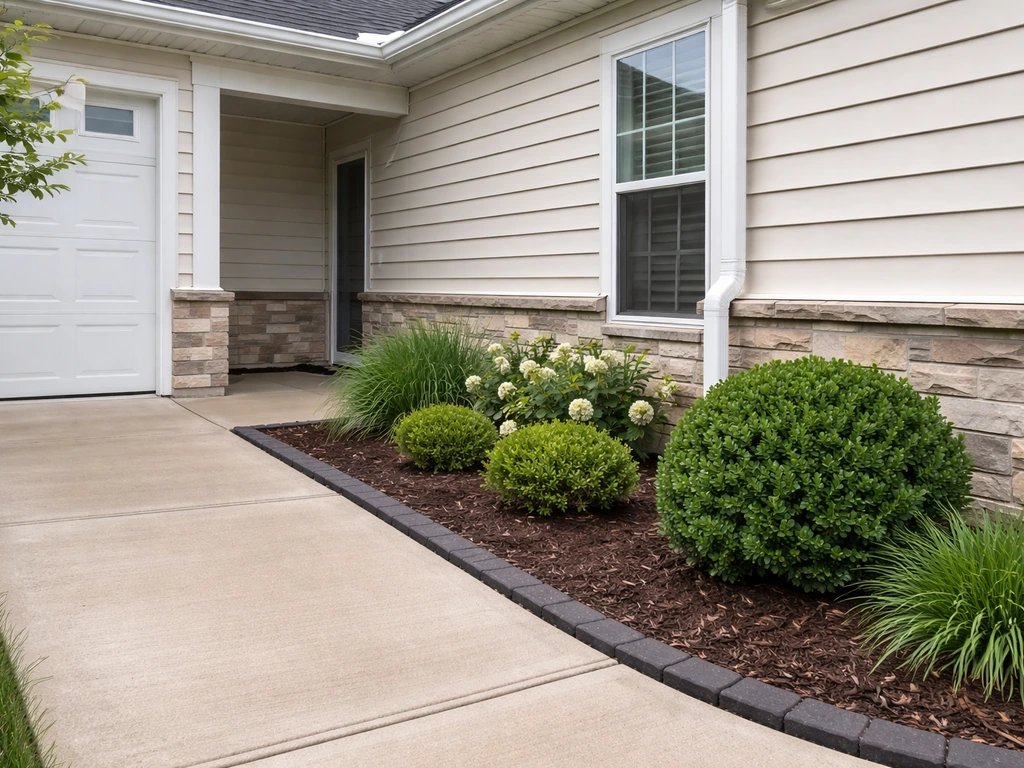
This is the biggest draw, and it is legitimate. In many patio-home communities, the HOA fee covers exterior maintenance, landscaping, snow removal, and sometimes roof replacement. You get a home you own without the full weekend commitment of a detached house with a large yard. For people coming out of a larger property, or anyone who travels frequently, that trade is worth a lot.
Single-floor accessibility
Because most patio homes are one story, they work well for people who want or need everything on one level: no stairs for aging knees, no hauling laundry up and down, no second floor to heat and cool. This is a practical, daily-quality-of-life advantage that does not get enough credit. It is one reason patio-home communities are frequently marketed toward active adults, though they are by no means age-restricted everywhere.
You own the land
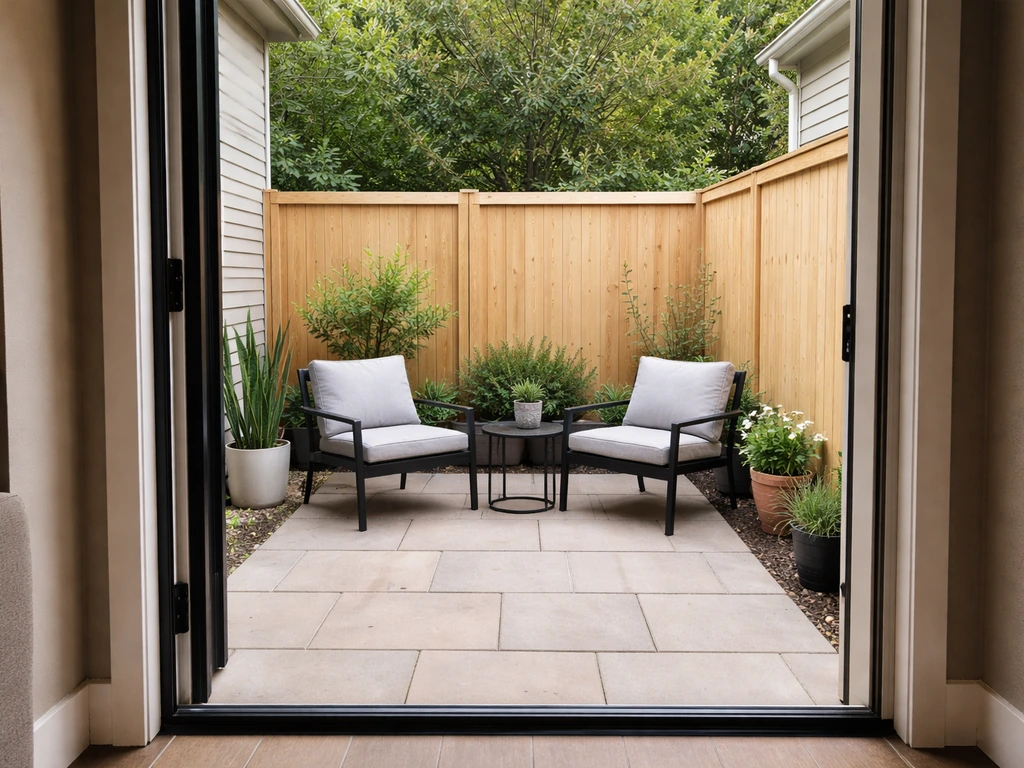
Unlike a condo, you typically own the lot your patio home sits on and the structures on it. That gives you a different kind of security and a different ownership experience. You are not buying a share of a building; you are buying a property with a deed and a parcel. In most cases your mortgage, taxes, and insurance reflect that. It also tends to simplify the financing process compared to condos, which can have additional lender requirements.
Private outdoor space
Patio homes almost always include some form of private outdoor space, whether a rear patio, a small fenced yard, or in some designs an interior courtyard. That courtyard or patio concept is actually built into some formal definitions of the housing type. It is not a balcony you share with neighbors above and below, and it is not a common green space you take turns using. It is yours, which matters if you want to sit outside with coffee in the morning without an audience.
Community amenities at a lower price point
Many patio-home developments include HOA-managed amenities like pools, walking paths, or clubhouses, similar to what you might find in a condo community. The difference is you get those benefits while still owning a ground-level home with your own lot. That combination can offer strong value compared to either a detached house in the same price range (smaller, less amenity-rich) or a condo (no land ownership, often higher HOA fees).
The trade-offs you need to know before committing
HOA fees and restrictions
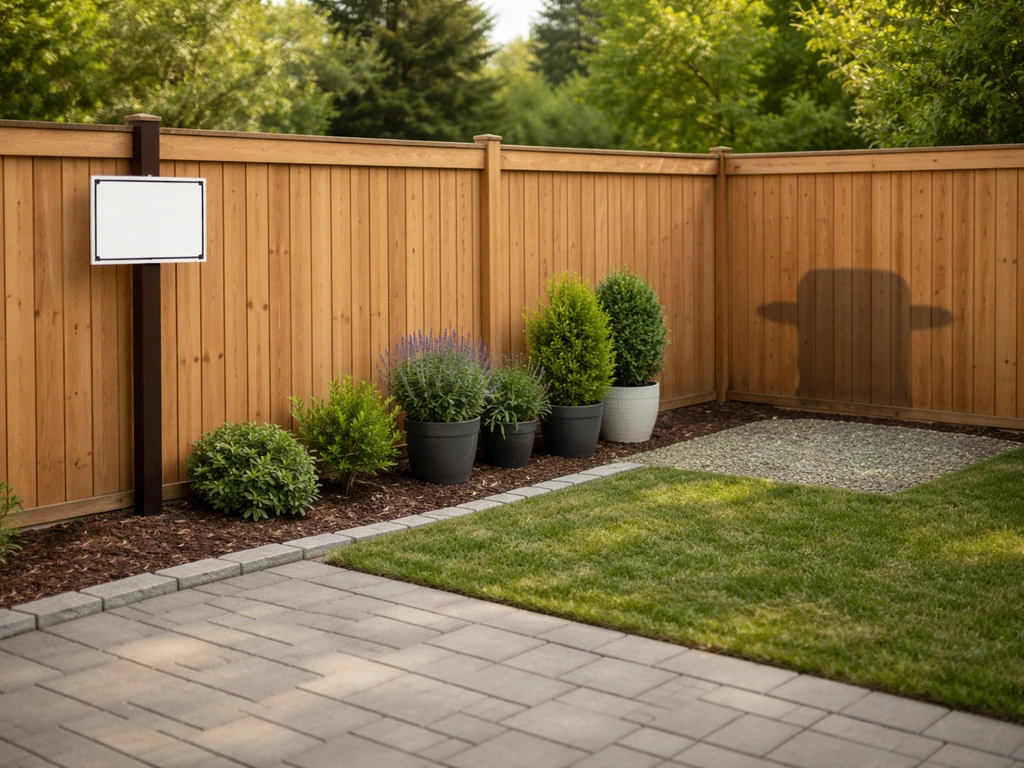
Most patio-home communities come with an HOA, and that HOA has teeth. In most U. S. states, an HOA can restrict exterior changes if those limits are written into the recorded governing documents.
That means no new paint color without approval, no adding a pergola without a change request, no planting a tree outside the approved species list. One example HOA document I reviewed explicitly prohibits any improvement or alteration to fencing, exterior lighting, or patio structures without prior permission.
That kind of “no improvement or alteration to… patio” restriction is also reflected in the Petrini Place HOA patio, balcony, and garage policy excerpt explicitly prohibits any improvement or alteration to fencing, exterior lighting, or patio structures without prior permission. .
That level of control bothers some owners more than they expected. If you like personalizing your home's exterior, read the CC&Rs carefully before you buy.
Privacy and shared-wall realities
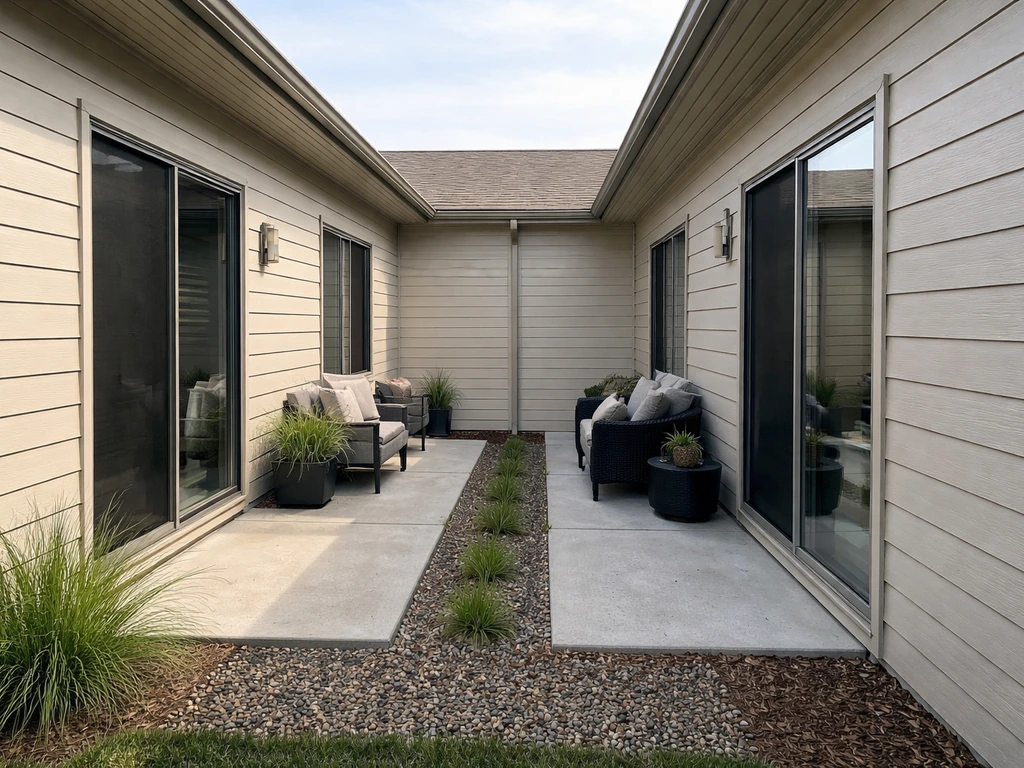
Shared walls mean you will hear your neighbors to some degree, and your private outdoor space often sits close to theirs. There is less buffer between you and the people next door than you get with a detached home. For some people, this is a non-issue, especially if the construction quality is high and the site is well-designed. For others, it becomes a persistent frustration. Walk through the unit at a busy time of day before you commit, and ask the current residents about noise.
Limited space to expand or customize
Patio homes sit on small lots by design, often zero-lot-line or very close to it. You do not have much room to add on. Combined with HOA restrictions on exterior changes, this means what you buy is largely what you are stuck with. If your needs change (a home office addition, a larger garage, a workshop out back), a patio home will likely not accommodate that easily or at all.
Resale and inventory challenges
Patio homes are less common in most markets than condos, townhomes, or detached single-family houses. That means fewer comparable sales to benchmark pricing against, and a smaller buyer pool when you decide to sell. HomeLight specifically flags market availability as a patio-home con: there are fewer of them, which cuts both ways. When you buy, your options may be limited. When you sell, your audience is narrower. In strong markets this matters less; in slower markets it can extend your days on market.
Basement and storage variability
Some patio homes have full basements, some have partial basements, and some have none at all. This varies by community, region, and builder. Some new-build active-adult patio-home communities market finished basements as a feature. Others are slab-on-grade with no below-grade space whatsoever. If storage matters to you, or if you want a basement for a hobby room or gym, you need to verify this per listing rather than assuming. It is not a given.
Patio homes vs similar housing types
Because 'patio home' is such a fluid label, it helps to compare it directly to the housing types people often confuse it with.
| Housing Type | Stories | Land Ownership | Shared Walls | HOA Typical? | Key Difference from Patio Home |
|---|---|---|---|---|---|
| Patio Home | 1 to 1½ | Yes, owner holds title to lot | Often yes (party wall) | Yes, frequently | The baseline for comparison |
| Townhouse | 2 to 3+ | Yes, owner holds title to lot | Yes, typically 1-2 shared walls | Yes, frequently | Multi-story; more square footage, more stairs |
| Condo | Varies | Unit interior only; building/land shared | Yes, typically above and below too | Yes, usually higher fees | No land ownership; HOA covers more, fees often higher |
| Duplex | 1 to 2 | Depends (owner or investor-held) | Yes, one shared wall | Rarely | Often investor-owned; less community structure |
| Courtyard Home | 1 to 2 | Yes, typically | Sometimes | Sometimes | Interior-facing courtyard is the defining feature; can overlap with patio home |
| Garden Home | 1 to 2 | Yes, typically | Sometimes | Yes, often | Very similar to patio home; terms used interchangeably in some markets |
The townhome comparison is one of the most common points of confusion. If you are weighing patio home vs townhouse, look closely at how many stories the townhouse has, and how ownership and HOA rules work for each option. Townhomes are almost always multi-story, which is the clearest distinction: if you need single-floor living, a townhome does not deliver that. Condos differ most on ownership structure: you are buying airspace and a share of a building, not a lot.
Patio homes sit closer to courtyard homes and garden homes than to either condos or townhomes, and in some markets those three terms are genuinely interchangeable. To compare further, it also helps to understand the difference between a garden home and a patio home in how they are marketed and how ownership is structured courtyard homes and garden homes. When in doubt, ask the listing agent to clarify what the title and plat actually show.
What to check before buying or renting

This is where a lot of buyers skip steps and regret it later. Patio homes have enough structural and legal variation that the listing description alone is not enough to make an informed decision. Here is what to verify before you commit. Some patio layouts are built on top of the house rather than at ground level, so confirm the structure and access before you assume it is a standard patio home outdoor area patio on top of house.
- Request and read the full governing documents: The CC&Rs, bylaws, and any HOA rules package will tell you exactly what you can and cannot do with your exterior, yard, and outdoor space. Do not assume the agent has summarized everything correctly.
- Confirm exactly what you own vs what the HOA controls: Ask for the plat or survey showing your lot boundaries. Understand whether you or the HOA is responsible for the roof, exterior walls, fencing, shared driveways, and landscaping. This varies by community and it matters for your insurance and your budget.
- Get the HOA financials and fee history: Request the current annual fee (one active-adult community in Colorado runs about $2,724/year as a benchmark), reserve fund balance, and any pending special assessments. A low fee with a depleted reserve fund is a red flag.
- Check for a basement and verify its condition: Do not assume there is one. If there is, find out if it is finished or unfinished, whether it has had water intrusion, and whether it adds to the heated square footage in the listing.
- Inspect the shared wall(s) carefully: Look for cracks, moisture, and sound insulation quality. Have a home inspector check the party wall for any shared infrastructure (pipes, electrical) that could create future disputes with the neighbor.
- Assess drainage and site orientation: Single-story homes on small lots can have drainage issues, especially if the grading directs water toward the foundation or the patio. Look at where water goes during rain and ask about any history of flooding.
- Walk the outdoor space at different times: Visit once in the morning and once in the late afternoon to assess sun exposure, privacy from neighbors, and noise from adjacent units or nearby roads.
- Understand parking and access: Confirm how many parking spots you have, whether they are deeded, and whether the driveway or garage is your responsibility or shared. Some patio-home communities have guest parking rules in the HOA docs.
- Ask about exterior-change approval processes: If you want to repaint, add a patio cover, change the landscaping, or install exterior lighting, find out the process and timeline. Some HOAs have a quick turnaround; others can take months or effectively say no to most requests.
- Verify resale restrictions if any: Some patio-home communities, particularly active-adult developments, have age or occupancy restrictions that limit your buyer pool when you eventually sell.
Who patio homes work best for (and who should think twice)
Patio homes are a strong fit if you...
- Want single-floor living without the full cost and upkeep of a detached ranch house
- Travel frequently or own a second property and want low-maintenance primary housing
- Are downsizing from a larger home and want your own outdoor space but less yard to manage
- Value community amenities (pool, walking paths, maintained common areas) without condo ownership structure
- Are comfortable with HOA governance and view the rules as a feature, not a burden
- Need accessibility features (no stairs, wider doorways) that are easier to find in one-story designs
- Want land ownership and a deeded lot, but a smaller overall footprint than a standard detached home
Think twice if you...
- Prioritize privacy and quiet above most other things: shared walls and small lots are real constraints
- Like to customize your home's exterior frequently or on your own schedule
- Need significant storage space and are in a market where patio homes rarely include basements
- Are buying primarily as an investment or plan to rent it out: HOA restrictions often limit rental activity, and the resale market is narrower
- Have a growing family that will need more space: a 1 to 1½ story attached home has real square-footage limits
- Are in a budget-stretched situation where an unexpected HOA special assessment could cause hardship
- Want to make significant structural additions or landscape changes without navigating an approval process
Patio homes occupy a genuinely useful niche in the housing market. They deliver real ownership, real outdoor space, and real maintenance relief that a lot of buyers are looking for. The key is going in clear-eyed: verify the documents, inspect the shared walls and drainage, understand the HOA rules before you fall in love with the listing, and match the lifestyle the property actually offers to the lifestyle you actually have. For a patio home with an HOA, request and review the governing documents and HOA disclosures to understand what the HOA controls and what shared amenities or restrictions apply verify the documents.
FAQ
Can I modify my patio home’s exterior or yard, like repainting, adding a pergola, or installing new fencing?
Yes, but you must confirm it in the recorded HOA documents. Many patio homes allow limited exterior work only after a written approval process, and some restrict changes like storm doors, exterior lighting color, window replacements, fencing height, and even patio covers. Before offering, ask for the specific CC&Rs section that lists “architectural review” items and the typical turnaround time for approvals.
If the HOA pays for exterior maintenance, does that also cover roof leaks or repairs caused by my unit?
A common gotcha is that the HOA may own and maintain certain exterior components, while you still pay for damage from your unit’s specific issues. For example, roof replacement might be HOA-covered in some communities, but interior leaks and repair responsibility can fall to the owner depending on what caused the problem and what the governing documents say about “exclusive use” areas.
How do shared walls work for repairs and noise, and what should I check before buying?
You should verify where the shared-wall construction ends and where your responsibility begins. Ask for the party wall agreement terms (if provided) and then inspect the wall for signs of prior moisture, cracks, or sound transfer. Also clarify who pays for repairs if the issue is inside one unit versus within the shared-wall assembly.
What drainage issues should I look for on patio homes with zero-lot-line layouts?
Most patio-home communities have small lots, so drainage is critical. During an inspection, check grading toward gutters, downspouts, and any sump or exterior drain systems, and verify that downspouts do not dump water onto your neighbor’s side. If you notice standing water during a site visit after rainfall, treat it as a red flag and ask the seller or HOA for any documented drainage remediation.
How can I confirm exactly what outdoor areas I own versus what the HOA controls?
Don’t assume the property you tour matches the legal description. Ask the listing agent to provide the plat and deed terminology (for example, what the title says you own, how the lot is described, and whether any outdoor areas are designated “limited common” or “exclusive use”). This is especially important if the listing photos show a courtyard or fenced area, because some areas can be governed by HOA rules even if they look private.
Are basements common in patio homes, and what storage questions should I ask for my specific listing?
If storage matters, verify basement type (none, partial, or full), storage locations, and whether any below-grade areas have water-management records. Also check whether the HOA has rules about keeping items in specific areas (like basements, crawlspaces, or exterior storage closets). Treat finished basements marketed as a feature as a must-verify item, not a typical default.
Can I install raised beds, add planters, or change landscaping in a way that fits my lifestyle?
Yes, but the answer depends on how your community is governed. Some HOAs include blanket landscaping and exterior standards that make even “normal” additions require approval, and some require that all plants match approved lists. Ask whether there are restrictions on garden beds, raised planters, artificial turf, and backyard structures like storage sheds or small play equipment.
Are patio homes always easier to finance than condos, and are there still lender or HOA approval steps?
Generally, financing is smoother than a condo, but it is not risk-free. Even for patio homes, lenders may still require HOA reviews, confirm that the HOA is financially stable, and verify that the governing documents do not conflict with lending requirements. If you are using an FHA, VA, or another specific program, ask your lender whether any HOA approval steps apply to the community.
What home changes are usually unrealistic or hard to get approved in patio-home communities?
You can, but you often need to manage expectations because lot size and HOA restrictions limit add-ons. Ask for community guidance on additions like garages, bump-outs, screened porches, or second-floor conversions, then confirm whether any architectural review approvals are required and whether setbacks make expansion impossible. If you need a home office or larger garage, confirm with a site plan before you commit.
How do I evaluate resale risk when patio homes are less common than condos or townhomes in my area?
Market scarcity can cut both ways, especially in slower markets. Ask your agent to identify recent closed sales that match your exact configuration (similar lot size, shared-wall setup, same bedroom count, and comparable basement presence). If comparables are thin, negotiate based on days on market risk, and consider whether you can handle longer listing timelines when you resell.
Why does the label “patio home” vary so much, and how do I avoid buying based only on the listing description?
Be careful with the term “patio home.” Before buying, require clarity on what the title, plat, and CC&Rs call the property, and whether it is attached by a party wall or described as detached on a zero-lot-line lot. Ask the agent to confirm story count, whether the outdoor area is ground-level or above-grade, and what portions are exclusive versus common use.
Next Article
Patio Home vs Townhouse: Differences, Costs, and HOA Rules
Patio home vs townhouse explained: layout, shared walls, outdoor space, HOA rules, costs, and privacy so you can choose