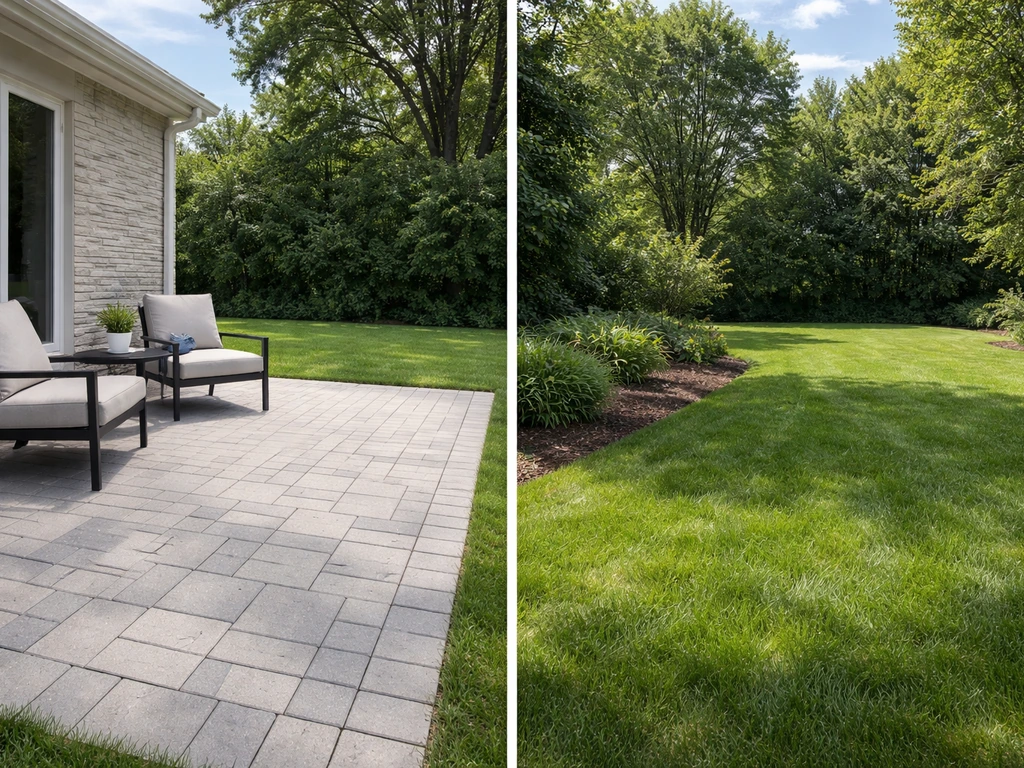
A patio is an open, ground-level outdoor area beside or behind a house, with no walls enclosing it. A courtyard is an outdoor space that is surrounded or substantially enclosed by walls, building wings, or a combination of both. The core difference is enclosure: patios open outward to the yard or garden, courtyards wrap inward and create a contained private space. Once you know that, most of the confusion dissolves instantly.
Patio vs Courtyard: Key Differences and How to Tell

Ada Hollis
15 May 2026
Quick definitions: patio and courtyard in plain language
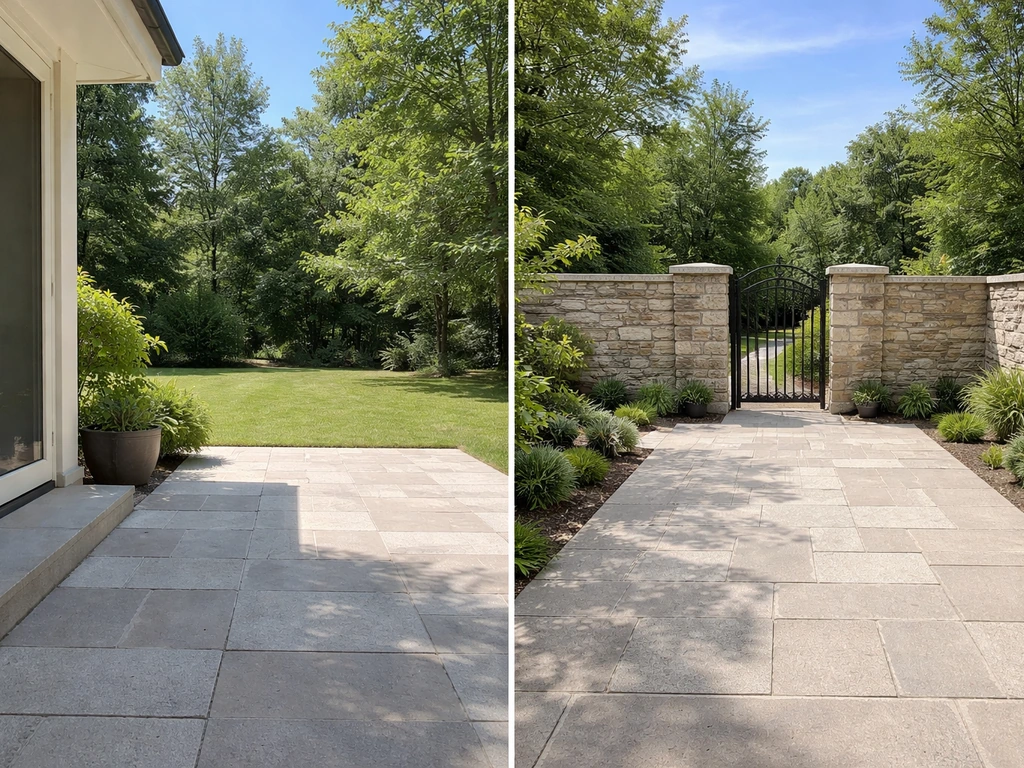
A patio, in modern residential use, is a paved or hard-surfaced outdoor living area at or near ground level, usually sitting right against the back or side of a house. It has no permanent roof and no walls. Zoning definitions are remarkably consistent on this: Kettering, Ohio's city standards describe it as an outdoor, unenclosed, uncovered level area at or within 6 inches of finished grade, intended for recreational use. Dictionary.com puts it simply as an outdoor space for sitting outside, usually paved, beside or behind a house. Dictionary.com defines “patio” as an outdoor space for sitting outside, usually paved, beside or behind a house.
A courtyard is an outdoor space enclosed by walls and/or portions of the main building. It's the space inside the structure, not bolted onto the outside of it. Paradise Valley, Arizona's municipal guidelines define a residential courtyard as a private landscaped outdoor living space adjoining the main house and enclosed by walls and/or portions of that house. Cambridge Dictionary adds the idea of a contained outdoor yard next to a building. Both definitions point to the same thing: there's enclosure happening on multiple sides.
Here's the one thing worth keeping in mind: historically, the word 'patio' actually comes from the Spanish word for courtyard. Dictionary.com notes this older meaning directly, defining patio in its secondary sense as a courtyard of a house enclosed by low buildings or walls. So the two words share a root, which is exactly why they get confused so often in modern listings and casual conversation.
Where each one sits on the property
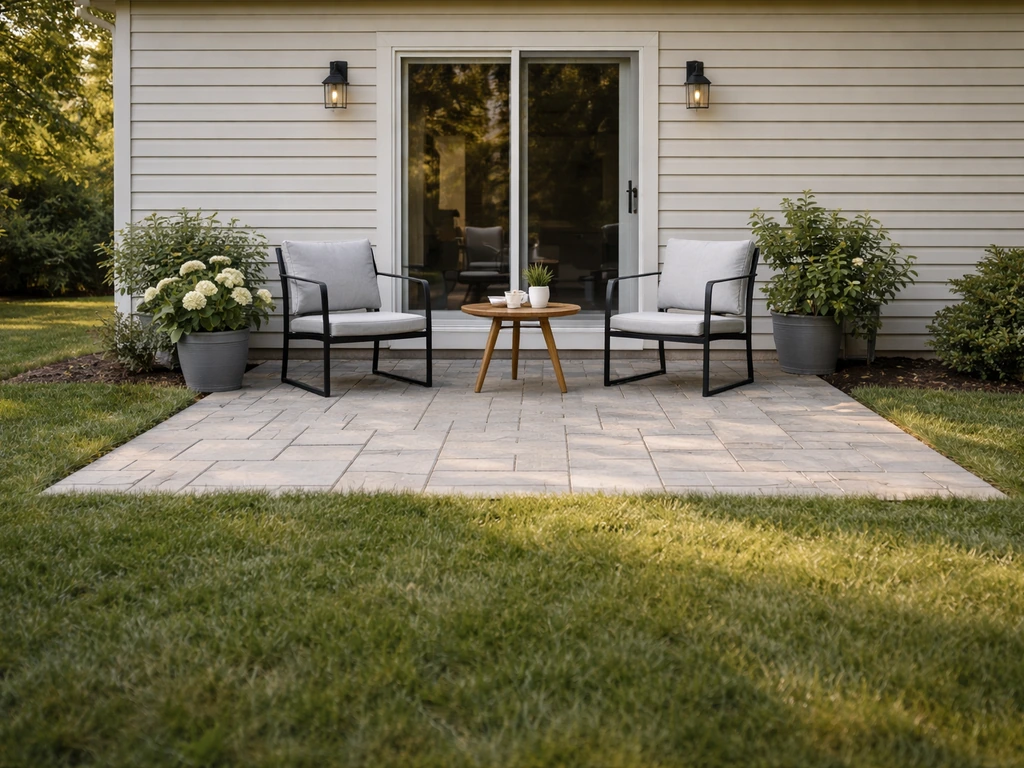
A patio almost always sits at the perimeter of a building. You walk out the back door and you're on it. It might be directly connected to the house on one side, perhaps two sides if it wraps a corner, but the other sides open freely into the yard or garden. There's no sense of being contained. The patio relates to the house the way a welcome mat relates to a front door: it's adjacent and attached, not enclosed by it.
A courtyard occupies space that is surrounded by the building or by walls that read as extensions of the building. In a classic U-shaped or H-shaped floor plan, the courtyard fills the interior void. In a smaller home or urban property, it might be a walled garden just inside the front entry or tucked between two wings. The key architectural test is whether the space is defined by what surrounds it, rather than simply touching the edge of it.
| Feature | Patio | Courtyard |
|---|---|---|
| Position on property | Perimeter, beside or behind the house | Interior or enclosed by walls/building wings |
| Enclosure | Open on most sides | Enclosed on 3 or 4 sides by walls or building |
| Relationship to building | Adjacent, attached to one face | Surrounded by or integrated into the structure |
| Typical access | Through a rear/side door, or side gate | Through main entry, interior hallway, or gate in enclosing wall |
| Typical coverage | No permanent roof | Often open-sky but walls create enclosure |
| Grade level | At or within 6 inches of finished grade | At grade level, sometimes slightly sunken or raised |
How people actually use each space
Patios are primarily outdoor living extensions. You put out a table and chairs, maybe a grill, and use it for dining, entertaining, or just relaxing in the open air. The openness is the point. You see the yard, you have a clear sightline to the garden or trees, and the space flows naturally between the inside of the house and the broader outdoor setting. It's a transitional zone that leans toward informal, everyday outdoor use.
Courtyards serve a different function. The enclosure does real work: it creates a microclimate that can be warmer, more sheltered, and noticeably quieter. A well-designed courtyard acts as an outdoor room, a central gathering space that feels intentional and self-contained. In Mediterranean and Spanish colonial architecture, the courtyard is the heart of the house: you walk through it to reach different rooms, you gather there in the evening, and the plants and fountain in the center provide light and air to the surrounding interior. It's used for gathering, passage, and quiet enjoyment rather than the more casual open-air barbecue vibe of a back patio.
In practical terms, courtyards also handle light and air circulation for surrounding rooms. Windows and doors facing the courtyard pull in natural light and cross-breezes that would otherwise be blocked in a dense urban setting. That dual function, as both living space and architectural utility, is something a standard patio simply doesn't do.
How to spot the difference in photos, listings, and floor plans
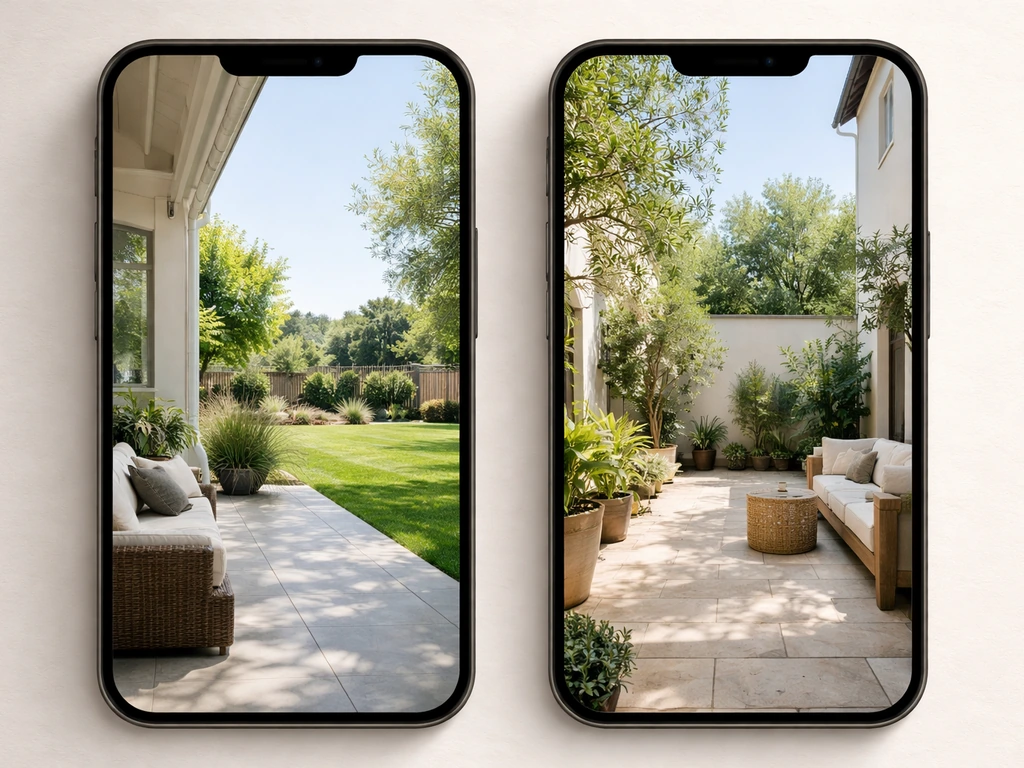
In listing photos, the easiest clue is what you see at the edges of the frame. A patio photo will typically show the house wall on one side and open yard, fencing, or landscaping on the other sides. When you do a patio vs courtyard comparison, the same edge-of-the-frame clue applies patio photo. You get a sense of exposure and openness. A courtyard photo, by contrast, will show walls or building faces on most or all sides. The space looks contained, like you're standing inside something rather than beside it.
On floor plans, look for where the outdoor space sits relative to the building outline. If it's outside the building footprint, touching only one or two walls, it's a patio (or at most a terrace). If the outdoor space is inside the building footprint, a void or cutout in the building plan surrounded by rooms on multiple sides, that's a courtyard. Some smaller properties show a walled garden adjacent to the building; if three or four sides have walls, call it a courtyard regardless of what the listing says.
- Patio in a listing photo: you can see the open yard or garden beyond the seating area on at least two sides
- Courtyard in a listing photo: walls or building faces appear on most or all sides of the outdoor space
- Patio on a floor plan: sits outside the building footprint, touches one or two exterior walls
- Courtyard on a floor plan: appears as an interior void, surrounded by rooms or enclosed walls on three or four sides
- Check the entry sequence: if you pass through the outdoor space to get inside the main house, it's almost certainly a courtyard
- Look for doors on multiple sides: multiple interior doors facing the space is a strong courtyard indicator
Why the names get mixed up: regional and language variations
The confusion between patio and courtyard isn't just sloppy naming. It has genuine historical and linguistic roots. 'Patio' comes from the Spanish word for a central enclosed yard in a house, so in Spanish architecture, your patio literally is what English speakers would call a courtyard. When Spanish colonial architecture spread through California, Texas, New Mexico, Arizona, and Florida, the word 'patio' came with it but gradually softened in meaning to describe any hard-surfaced outdoor sitting area, even open ones with no enclosure at all.
In the UK and Australia, 'courtyard' is used more loosely to describe any compact outdoor area, including what Americans would simply call a small patio. Real estate agents in dense urban markets often label any small hard-paved outdoor area as a 'courtyard' to make it sound more architectural and private, even if there's just a low fence on one side. In India, the traditional equivalent of a courtyard (the 'aangan' or inner open-air space surrounded by the house) is a deeply functional space that shares more with the classic courtyard definition than with a Western patio.
The practical takeaway: don't trust the label alone. Whether you're reading a listing in Arizona, a property ad in London, or a brochure for a new build in Brisbane, look at the photos and floor plans and apply the enclosure test yourself. If three or four sides have walls or building faces, it functions as a courtyard. For a quick check, if the patio is open on most sides, it functions like a patio even if the listing uses a different term. If it's open on most sides, it's a patio, whatever the agent calls it.
What the difference actually means for living there
Privacy
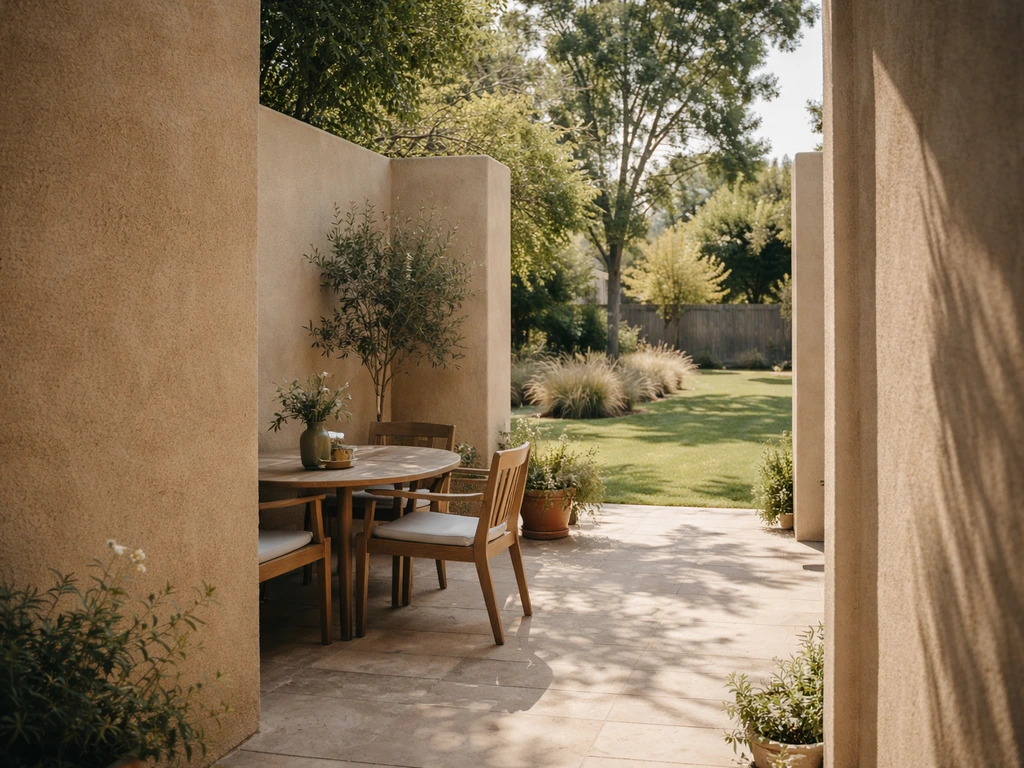
Courtyards win on privacy by a wide margin. The enclosing walls block sight lines from neighbors and the street. You can sit outside, have a conversation, or have a meal without anyone seeing you from the road. A patio, especially in a suburban backyard, offers much less inherent privacy unless you add fencing, trellises, or dense plantings yourself.
Access and security
A courtyard with a single gated entry is naturally more secure. Once you close the gate, you control who enters. A patio that opens to a shared yard or public alley has essentially no access control on its own. If security or restricted access matters to you, that's a meaningful practical difference, not just an aesthetic one.
Noise
Enclosing walls absorb and deflect ambient noise. A courtyard will typically feel quieter than an open patio on the same property, even on a busy street. The tradeoff is that sound generated inside a courtyard (music, conversation, children playing) can echo off the walls rather than dispersing outward. An open patio lets noise travel freely in all directions.
Maintenance
Patios are generally simpler to maintain. Sweep it, hose it down, seal the pavers every few years. Courtyards add the maintenance of walls (stucco, render, or masonry that needs attention over time) plus any internal planting beds, water features, or drainage channels that are typically part of a courtyard design. If the courtyard has a central fountain or formal planting, budget accordingly.
Drainage
This is where courtyards require more attention. On an open patio, rainwater disperses naturally into the surrounding yard. In an enclosed courtyard, water has to go somewhere, and that somewhere is usually a central drain or a carefully designed slope toward a drainage outlet. If the drainage is inadequate or blocked, a courtyard floods. When viewing a courtyard property, look for visible drains, check for water staining on the lower walls, and ask when the drainage was last serviced. It's a maintenance point that patios largely don't have.
Light and temperature
Courtyards can get significantly warmer than open patios in summer because the enclosing walls retain and radiate heat. In cooler climates that's an asset; in hot climates it can make the space uncomfortable midday. A patio with an open aspect gets consistent breezes and doesn't trap heat in the same way. Check which direction the courtyard faces and whether there's shade from the building before assuming it will be cool and pleasant year-round.
How to decide what you're looking at (or what you want)
If you're trying to label your own existing space, or compare two properties during a home search, run through these questions. They cut through the naming confusion fast.
- Count the enclosed sides: If three or more sides have a wall or building face at least 5 to 6 feet high, you have a courtyard. Two sides or fewer means patio.
- Check the access: Do you walk through the space to reach the front door or inner rooms? Courtyard. Do you walk out a back door onto it? Patio.
- Look at the floor plan: Is the outdoor space a void inside the building footprint? Courtyard. Outside the footprint? Patio.
- Ask about drainage: Is there a dedicated floor drain in the outdoor space? That's a courtyard feature. No drain and it slopes to grass? Likely a patio.
- Test the privacy: Can a neighbor or passerby see into the space without effort? Open patio. Can't see in at all without entering? Courtyard.
- Think about the feel: Does the space feel like a room without a roof? Courtyard. Does it feel like an extension of the backyard? Patio.
If you're deciding which you'd prefer for a new home or a renovation, the choice usually comes down to what you value more. Privacy, shelter, and an 'outdoor room' feeling point toward a courtyard. Open views, easy lawn access, and simpler maintenance point toward a patio. Neither is objectively better: they're built for different lifestyles and different architectural contexts.
If you're still shopping and a listing describes a space as a 'courtyard patio' or uses the terms interchangeably, that's a signal to look more carefully at the photos and floor plan before assuming anything. Those two words describe genuinely different spaces, and knowing which you're getting affects everything from how you'll furnish it to how you'll maintain it and how much privacy you'll actually have once you're living there.
For broader context on how patios compare to other outdoor spaces in residential architecture, the distinction between a patio and a verandah (which involves a roof and a very different relationship to the building) is worth understanding alongside this one. The same applies if you're trying to sort out where a patio ends and a general backyard begins, since those terms also get blurred in everyday use and in property listings.
FAQ
Can a space be both a patio and a courtyard?
Yes, especially with partial enclosure. If one side is attached to the house and other sides are open most of the time, it behaves like a patio even if there are low walls or planters. If three or more sides have true walls or building faces, it functions as a courtyard, and the enclosure effects (privacy, quieter feel, drainage needs) will matter more than the label.
What should I check for before buying if privacy is my main goal?
Don’t only rely on height, look at sightlines and entrances. A “courtyard” with an open front gate, a view corridor to the street, or tall windows across the way can lose much of its privacy advantage. In photos, also look for windows and second-story balconies that face inward toward the space.
How do I tell the difference using only a floor plan?
Trace what surrounds the outdoor void. If the outdoor area sits outside the building outline, touching only one or two edges, it’s patio or terrace. If it’s a cutout inside the building mass, surrounded by rooms on multiple sides, it’s a courtyard. Also note whether the building has dedicated doors opening onto that void, courtyards typically have multiple interior-facing openings for light and airflow.
Do courtyards always have better security than patios?
Not automatically. Courtyards are often naturally easier to control because a wall creates a boundary and there may be a single gate, but a ground-level courtyard with no solid gate or with obvious side access can be just as exposed. If security matters, check the number of access points, gate type, and whether the boundary wall is continuous.
Which one is usually better for drainage and flooding risk?
Courtyards have a higher flooding risk if drainage is poorly designed, because water cannot simply disperse into a surrounding yard. When viewing, look for slope gradients, visible drains at low points, and signs of recurring water staining on lower walls. Patios are often easier because runoff can disperse into landscaping or grass, though poorly installed patio grading can still cause puddling.
Are courtyards warmer even in mild climates?
They can be, especially if the courtyard has limited wind access and lots of wall mass, but the real driver is orientation and shade. A courtyard that faces the sun for most of the day, with minimal overhangs or trees, will feel warmer in summer than a comparable open patio. A courtyard with shade from adjacent building wings can feel surprisingly similar to an open terrace.
How does maintenance differ if the courtyard has a fountain or planter beds?
Expect more than wall upkeep. Water features can introduce recurring maintenance for pumps, filtration, and winterization, and planter beds usually mean additional irrigation, soil management, and weed control. Ask whether the fountain is tied to a dedicated plumbing line and what the last service date was for drainage and pumps.
What mistake do people commonly make when interpreting listing photos?
They assume the word “courtyard” means fully enclosed and private. Real-estate photos often use wide angles that hide open sides, gates, and neighboring windows. Take a careful look at the frame edges for wall continuity, and if possible, cross-check with any mention of “open-air,” “garden,” “fenced,” or “walled entry” in the listing details.
Which layout is easier to furnish and use for dining or grilling?
Patios are usually simpler for casual dining because the open aspect supports flexible seating and easy movement between house and yard. Courtyards can be great for dining too, but the enclosure affects wind, echo, and heat, so grill placement and seating clearances matter more. For courtyards, ensure you have a safe path for smoke ventilation and that utility access (water hookup, drain maintenance) is workable.
If I want to convert a patio into a more courtyard-like space, what’s the key first step?
Add controlled enclosure, not just decoration. Low planters or decorative trellises can improve privacy and wind comfort, but if you want the courtyard feel and noise reduction, you’ll likely need more substantial wall height or a combination of fencing panels, screens, and strategically placed vegetation. Also plan for drainage, since added barriers can redirect runoff and create new low spots.
Next Article
Patio vs Backyard: Key Differences and How to Decide
Patio vs backyard explained: definitions, layout differences, related outdoor terms, and tips to choose, price, and eval