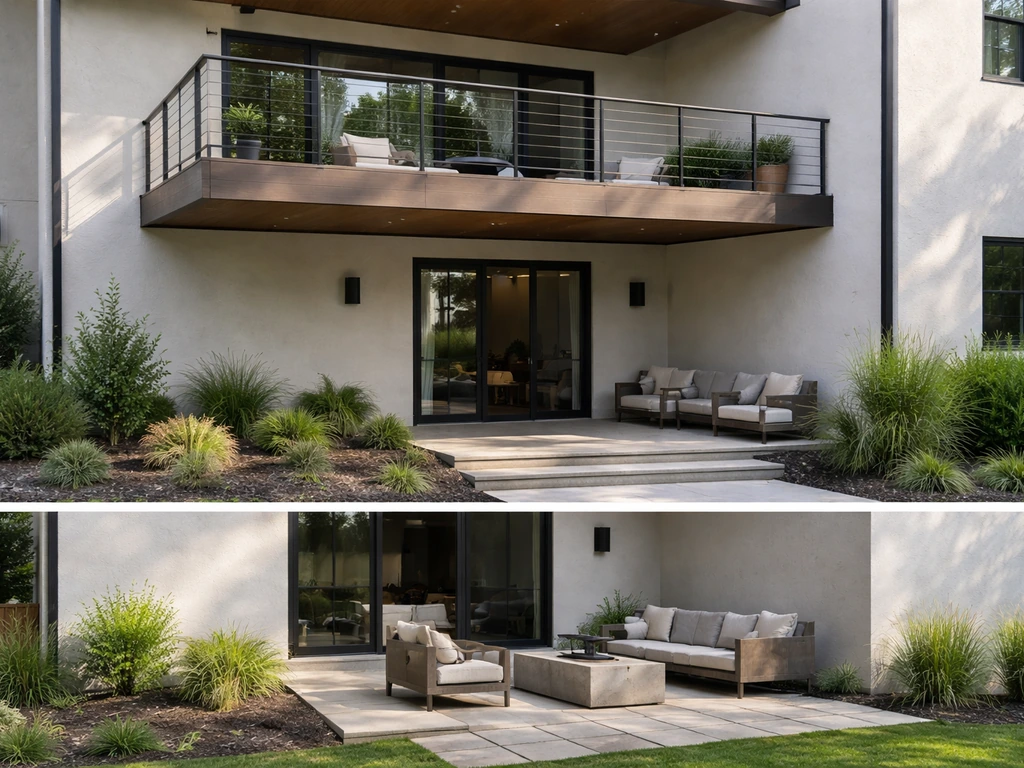
A porch is a covered, roofed structure attached to the entrance of a house. A patio is a ground-level hardscaped area, usually behind or beside the house, with no roof required. In other words, the patio or balcony meaning comes down to whether it is a ground-level outdoor area or an elevated alternative used for relaxing outside. The single biggest practical difference: a porch is always tied to a building's entry and almost always has a roof overhead, while a patio is an open outdoor surface used for relaxing and dining, not for passing through a doorway.
Porch Patio Difference: Definitions, Placement, and Examples

Ada Hollis
30 Apr 2026
Quick definitions: porch and patio in plain English
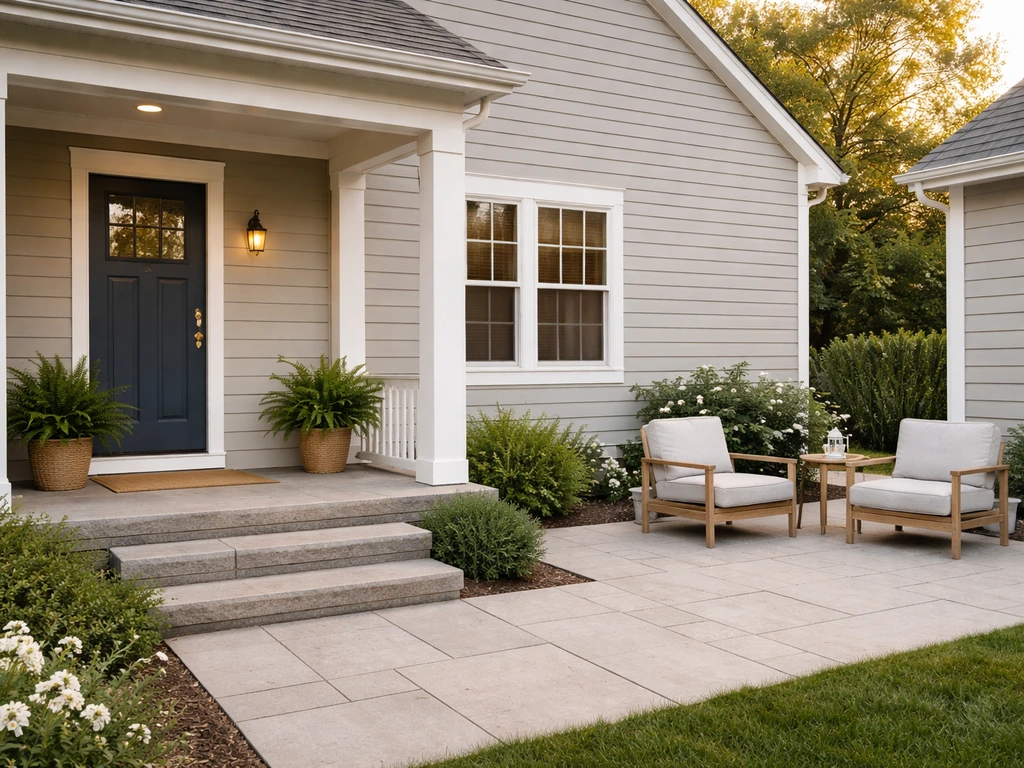
A porch is a covered area that adjoins an entrance to a building, usually with its own roof or a roof overhang extending from the main structure. Cambridge Dictionary puts it as "a raised, covered, sometimes partly closed area on the front or side of a building." Merriam-Webster adds that it typically has "a separate roof." Britannica frames it as a roofed structure that projects from the face of a building to shelter the entrance. The key words across every definition: covered, attached, entrance.
A patio is a flat, hardscaped surface at or near ground level, located beside or behind the house, used for sitting and relaxing outdoors. Britannica's dictionary defines it as "a flat area of ground covered with hard material (such as bricks or concrete), usually behind a house." Kettering, Ohio's zoning code is even more precise: a patio must be "outdoor, unenclosed, and uncovered" and sit "at or within 6 inches of the finished grade" with no permanent roof above it. When a roof gets added, the space officially crosses into a different category.
| Feature | Porch | Patio |
|---|---|---|
| Location | Front or side of the house, at an entry | Behind or beside the house, away from main entry |
| Roof | Always has a roof or overhang | Typically open to the sky; no permanent roof |
| Ground level | Often raised above grade; can have steps | At or within inches of grade (ground level) |
| Primary function | Sheltering the entrance; a transitional threshold | Outdoor lounging, dining, and entertaining |
| Attachment | Structurally attached to the house at the entry | Adjacent to the house but not entrance-related |
| Surface materials | Wood decking, composite, concrete | Pavers, concrete, stone, tile, brick |
| Enclosure | Partially or fully open on the sides; sometimes screened | Open on all sides; no walls |
Porch vs patio: the differences that actually matter in real homes
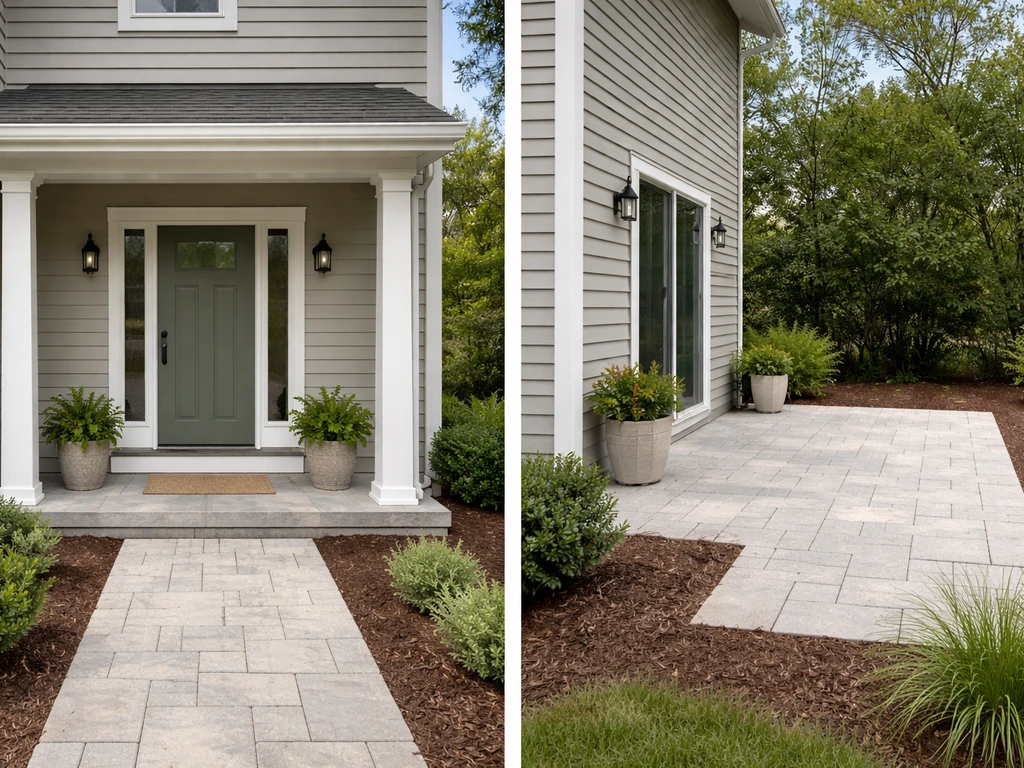
When you're standing outside a house and trying to name what you're looking at, three things will tell you almost immediately: whether there's a roof, whether it connects to a doorway, and where it sits in relation to the ground. A porch checks the first two boxes by definition. A patio usually checks neither.
Functionally, a porch serves an entrance. You walk across it to get inside. New York City's building regulations make this distinction explicit: the difference between a porch and a deck is that "a porch provides access to a building's primary entrance," while a deck does not. A patio has no such gatekeeping role. Nobody describes walking "across the patio" to get through the front door. People use patios to set up furniture, fire up a grill, or have dinner outside.
Structurally, porches are built-up, attached features. They tend to be raised off the ground, have posts or columns supporting their roofs, and are integrated with the home's facade. Patios are more earthbound. They're essentially a hardscaped extension of the ground, laid directly on (or very close to) grade. That's why patio installation often involves compacting crushed stone and laying a sand bed before setting pavers, while a porch involves framing, structural posts, and roofing materials.
Where they typically sit on a property
Porches are almost always front-facing or on the side of the house adjacent to an entry. The classic American front porch runs along the front facade and leads directly to the main door. A side porch might shelter a secondary entry. The connection to an entrance is the defining location logic, not just the fact that it wraps around the front.
Patios are overwhelmingly located in the backyard or along the side of the house away from the main entry. Dictionary.com specifically places them "beside or behind a house or apartment building." In practice, most patios you'll encounter are accessed through a rear sliding door or French doors off the kitchen or living room. They're designed as outdoor living extensions of the home's interior social spaces, not its entry.
This location pattern matters when you're reading a real estate listing. A listing that says "front porch" and "back patio" is describing two entirely different spaces in two entirely different spots on the property. If a listing only mentions a porch, don't assume there's a back patio too, and vice versa.
Cover, enclosure, and how each space connects to the house
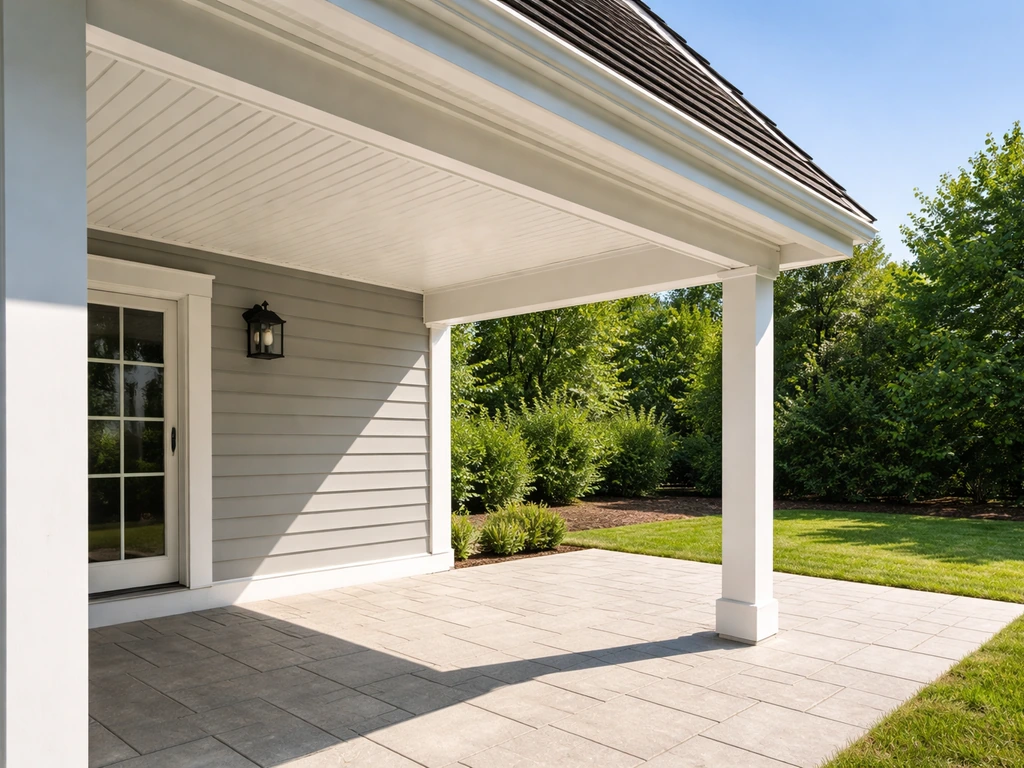
A porch always has a roof. That's non-negotiable in the definition. It might be fully open on the sides (a traditional wraparound porch), partially enclosed with railings, or screened in, but there is always something overhead protecting you from rain. This is what makes a porch useful as an entry shelter: you can stand at the front door in the rain without getting soaked.
A patio, by contrast, is typically open to the sky. Kettering's zoning definition requires it to be "not covered by a permanent roof." In everyday residential design, this is the norm: uncovered pavers or concrete with maybe an umbrella or a pergola for shade, but nothing that qualifies as a permanent roof structure. The moment a solid, permanent roof gets added over a patio, it may legally shift into a different category requiring different permits, which is worth knowing if you're planning a renovation.
Attachment to the house matters too. A porch is structurally part of the house's entrance zone. A patio is adjacent to the house but doesn't have to be physically attached to it. You can have a freestanding patio area 10 feet from the back door, accessed by stepping off a landing. That's still a patio. A porch, by definition, is always connected to the building at an entry point.
Materials and surfaces: what you'll walk on
Porch floors are most commonly wood decking (painted or stained), composite decking boards, or concrete. Because porches are raised structures, they're built with a framing system underneath, which means the surface is a finished floor rather than something laid directly on the ground. You'll often see tongue-and-groove pine on older Southern-style porches, or pressure-treated lumber on newer construction.
Patio surfaces are hardscape materials laid at ground level: concrete pavers, natural stone (flagstone, bluestone, slate), porcelain tile, brick, or poured concrete. Livingetc describes patio surfaces as "ground-level, hardscaped" using "stone paving, porcelain tile, or concrete pavers." These materials are chosen because they handle direct contact with the ground, drain water well, and don't need to be elevated on a frame. The installation process involves a compacted gravel or crushed-stone base and a sand-setting bed to handle drainage and keep pavers from shifting.
Porch roofs and posts also add architectural elements that patios don't have: columns, ceiling fans, overhead lighting wired into the structure, and sometimes tongue-and-groove wood ceilings painted the classic "haint blue." A patio might have string lights and an umbrella, but it won't have built-in overhead structure unless a pergola or cover has been added.
Gray areas: covered patios, screened porches, and raised decks
This is where most of the real confusion lives, and it's worth working through each case so you can make a confident call.
The covered patio
A covered patio is a ground-level hardscaped area with a permanent roof structure added over it. The surface and location match a patio (ground level, behind the house), but the roof creates ambiguity. Zoning regulations treat it differently: both the City of San Diego and Denver require separate permits for any covered structure added to an outdoor area, and Kettering's definition technically moves a covered patio out of the "patio" category entirely. For practical identification purposes: if it's at ground level and paved but has a solid attached roof, call it a covered patio, and know that it straddles the line in a real way.
The screened porch
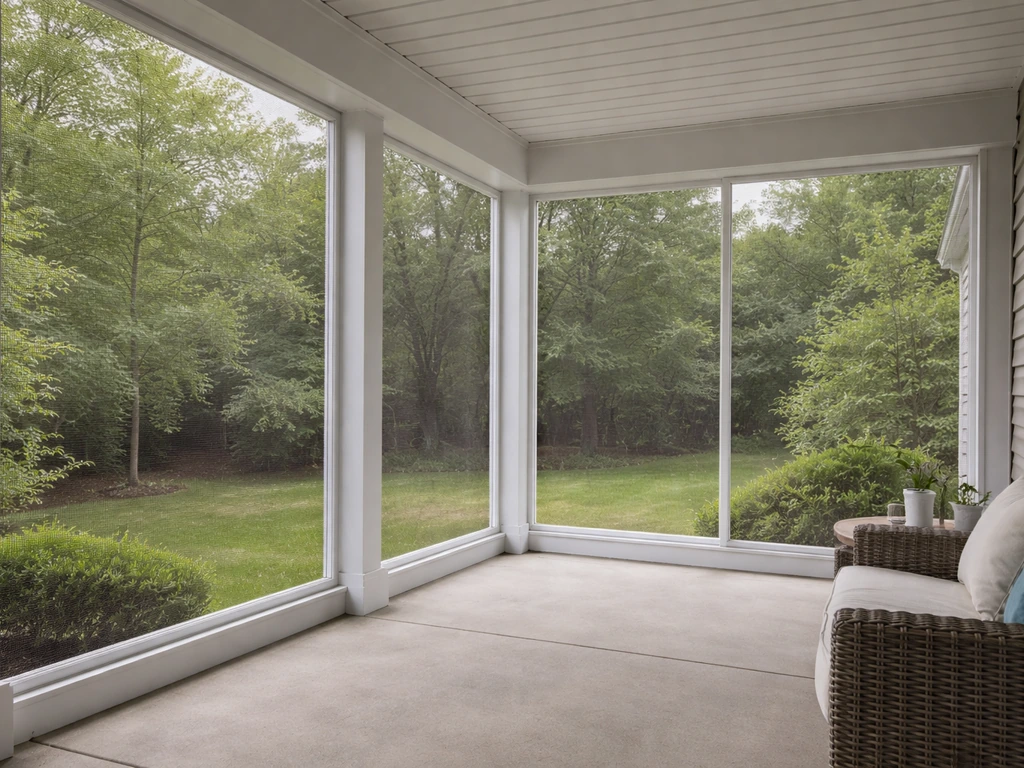
A screened porch is still a porch: it has a roof and structural posts, but the open sides have been enclosed with window screens to keep insects out. Wikipedia defines it as a structure "covered" and enclosed by "window screens." Montgomery County's permitting documents categorize screened porches separately from covered porches, because the enclosure level changes the regulatory treatment. The practical distinction from a sunroom: the walls aren't finished interior-grade surfaces; they're just screens. If you're looking at a screened space with a real roof and structural columns, that's a screened porch, not a patio.
The raised or elevated patio
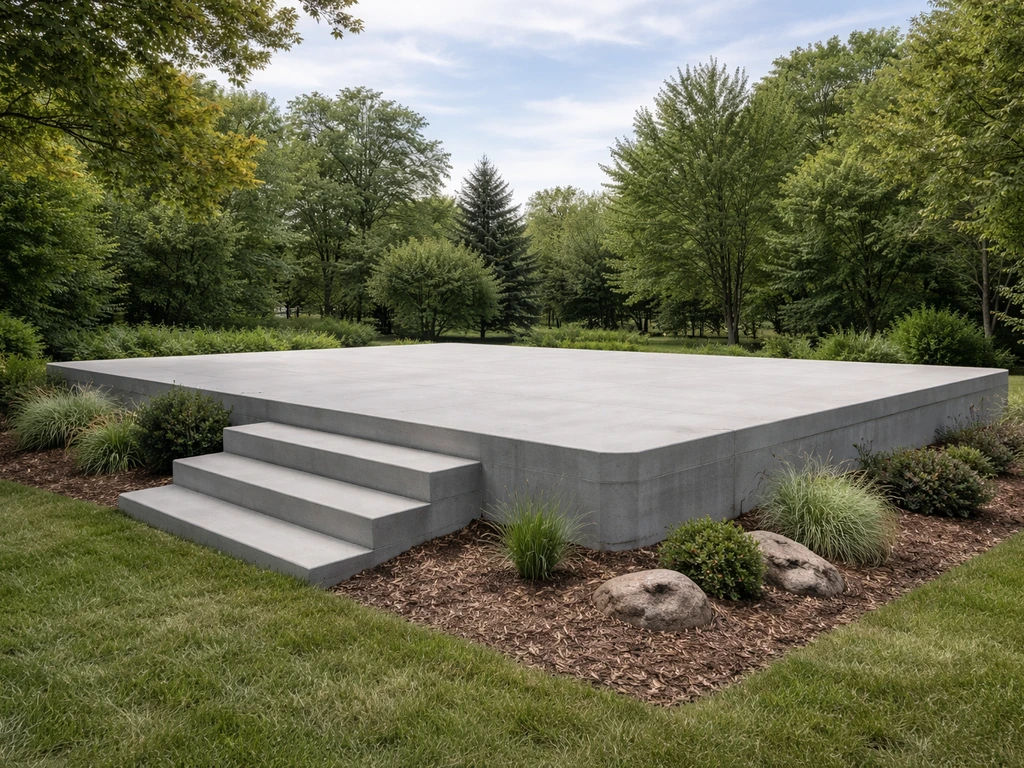
Some homes have outdoor hardscaped areas that are raised above grade due to sloping lots, accessed by a few steps, but are still paved and uncovered. People often call these "raised patios." They feel more like a patio in use (no roof, pavers or stone surface, outdoor living function) but sit higher than grade, which blurs the line with a deck. The key distinction: if it's a paved, hardscaped surface (not wood decking on a frame), it's closer to a patio even if it's slightly elevated. If it's wood or composite decking on a framed structure, it's more accurately a deck.
The back porch vs back patio confusion
In many parts of the American South and Midwest, people casually call any covered outdoor area at the back of the house a "back porch," even if it technically functions more like a covered patio. Similarly, real estate listings sometimes use "porch" and "patio" interchangeably when the space is in a gray zone. The best approach is to verify with the three-question test: Is there a roof? Is it connected to a doorway? Is the surface raised off the ground on a frame? Yes to all three points toward porch. No to all three points toward patio.
How to identify which one you're looking at during a walk-through
When you're physically at a property and want to know what to call the outdoor space, run through this checklist in order.
- Look for a roof overhead. If there's a permanent roof or substantial overhang directly above the space, you're likely looking at a porch (or a covered patio at minimum, which carries its own permit implications).
- Find the nearest door. Is this space directly in front of or beside a doorway that people use to enter the house? If yes, porch. If it's accessed by stepping out from a back door but the space itself isn't framed around that entry, patio.
- Check the surface. Wood or composite decking on a raised frame suggests a porch or deck. Stone, brick, concrete pavers, or poured concrete at or near ground level suggests a patio.
- Check the elevation. Is the surface at grade or within a few inches of it? Patio. Is it raised on posts or a framing system with steps leading up? Porch or deck.
- Ask about permits. If the space has a roof, a covering, or is significantly raised, ask the seller, landlord, or agent whether permits were pulled for it. Lebanon, NH explicitly requires a building permit for any porch. Many municipalities require permits for covered patios too.
- Ask how it appears on the appraisal or listing paperwork. Fannie Mae's Form 1004 has a specific field for "Porch/Patio/Deck" as separate amenities. If you can see the appraisal, it may already categorize the space for you.
Questions to ask a realtor, landlord, or contractor
- Is this space permitted, and if so, under what category (porch, patio, deck, covered patio)?
- Does the roof or cover have its own permit separate from the original house permit?
- Is the space included in the square footage on the appraisal, or is it listed as an exterior amenity?
- Has the screened or covered area been modified since the original permit, and if so, was a new permit pulled?
- What material is the base surface, and is it at grade or raised on a foundation/framing?
- If it's described as a porch in the listing, does it connect directly to the entry door, or is it accessed from another part of the house?
Why the terminology actually matters beyond definitions
This isn't just about knowing the right vocabulary. The label affects permitting, appraisals, and what you can legally do with the space. Under ANSI Z765-2021, the standard appraisers use to measure homes, screened porches, decks, and patios are generally not counted as gross living area (GLA). That means they don't add to the official square footage of the house the way finished interior rooms do, even if they're heavily used outdoor spaces. Knowing whether a space is a porch or patio won't change that, but it will help you understand why a large back patio doesn't inflate a home's listed square footage.
From a permitting angle, the stakes are real. Romulus, Michigan requires a building permit for all decks, porches, and patios. Denver requires permits for all covered outdoor structures. If you're buying a home with a large covered patio or a screened porch that was added by a previous owner, and no permit was ever pulled, that can become your problem at resale or during a refinance appraisal. Asking the permit question during a walk-through, before you're under contract, is always the right move.
If you're in the middle of deciding whether to add or renovate one of these spaces, the porch vs patio distinction also tells you where to start with your contractor and local building department. If you live in an apartment, the same porch vs patio thinking can help you decide between a patio and a balcony patio vs balcony apartment. Adding a roof to an existing patio is essentially converting it into a covered patio or a porch, which typically requires a new permit application. Building a ground-level paver patio from scratch may require only a basic permit or none at all, depending on your municipality. Always verify locally before starting work.
If you're curious how patios compare to other outdoor spaces, the same definitional logic applies to balconies (elevated, projecting off the building above ground level), lanais (Hawaii-specific covered outdoor rooms), and terraces (raised paved platforms, often at the back of the house in British usage). That balcony versus patio difference is mostly about elevation and whether the space projects from the building or sits at ground level. Balconies are different from patios because they are elevated and attached to the building rather than sitting at ground level as a hardscaped outdoor area difference between balcony and patio. Each has its own placement and structural rules, but the porch vs patio distinction is the foundational one to get clear first. Patios and balconies are not the same thing, since a balcony is typically an elevated, enclosed or semi-enclosed platform attached to upper levels.
FAQ
If a patio has a pergola, does it still count as a patio or does it become a porch/covered patio?
Usually it remains a patio if the pergola is open to the sky and not a solid, permanent roof (meaning no overhead covering that functions like a roof). If your local code treats the pergola as a covered structure, it can trigger a permit. The practical check is whether it creates a real overhead enclosure or just provides shade.
What about an umbrella or removable canopy over a patio? Does that change the classification?
Typically no, because the key issue is a permanent roof structure. A removable umbrella or seasonal canopy usually does not count as a permanent overhead covering, so the space generally stays a patio from both a practical and permitting perspective, though always confirm locally if the cover is built in a fixed way.
Can a porch be at the back of the house, or is it only front-facing?
It can be at the back or on the side if it connects to a doorway and has overhead coverage. Location (front versus back) is less important than the entrance connection and roof requirement. A rear door can have a covered porch just like a front door.
How do I identify a porch versus a deck when the surface is wood or composite?
Use the “frame and function” logic from the listing. A porch is entrance-connected and has overhead protection, often with posts/columns. A deck may be wood and elevated, but it usually is not tied to a specific entry as a covered entryway. If there is no doorway connection or no roof, it is often a deck.
What if the entrance is covered, but the structure is a small overhang instead of a full porch?
A small architectural overhang over the door is usually not described as a porch because a porch is typically a larger, usable area at the entry (often with a platform and supported roof). If it does not give a sheltered walking/standing area adjacent to the doorway, it may still be “entry overhang” rather than a porch.
Is a raised, paved patio with steps still a patio if it is higher than grade?
Often yes if it is still a hardscaped surface at grade-adjacent conditions (pavers or stone) and not a framed wood/composite platform. The fresh rule of thumb is material and build: paved hardscape points to patio, while framed decking points to deck, even if the patio area is slightly elevated.
Can a screened porch be considered a patio if the screens cover everything?
Usually no. If it has structural posts and a roof, it aligns with a porch category, even if the sides are screened. Screens change insect control and enclosure level, not the defining roof and entry-connected characteristics.
If a listing says “front porch” but I do not see a roof overhead, what should I assume?
Either the roof is present but partially obscured in the photo, or the listing language is being used loosely. Do a roof check in person. If there is truly no overhead coverage, it may be a deck-like space or a covered structure was removed. Verify rather than relying on label wording.
If a space is paved and ground-level but it is separated from the house by several feet, is it still a patio?
It can still be a patio. A patio does not necessarily have to be physically attached to the building, it just needs to be an exterior hardscaped outdoor area at or near ground level used for sitting/dining. If it is connected to a roofed entry at a doorway, then it shifts toward porch.
How does the porch versus patio distinction affect property taxes or appraisals?
The main impact is often whether the space is treated as finished living area versus exterior amenities. Appraisers commonly exclude many porches, decks, and patios from gross living area calculations, so square footage can stay the same even if the area is very usable. This can affect how the home value is discussed in listings and how comps are selected.
What permit question should I ask during a walk-through to avoid surprises?
Ask whether the current roofing, enclosure, and structural elements were permitted, specifically: (1) was there a permit for any covered roof added over a ground-level outdoor area, (2) was the framing for the porch or the pergola approved if it is considered a covered structure, and (3) were inspections completed. If the sellers cannot provide permits, ask whether you need to apply for corrective permitting before renovation or refinance.
If I convert an uncovered paver patio into a covered patio, where do most people go wrong?
The common mistake is assuming it is purely an aesthetic change. Adding a permanent overhead structure can trigger new permits, engineering needs, and setback or drainage rules. Before you buy materials, confirm with your local building department whether the new roof turns it into a different covered-category project.
Next Article
Difference Between Balcony and Patio: Quick Guide
Learn the difference between balcony and patio by location, access, railing, roof, and typical use, plus deck/terrace ov