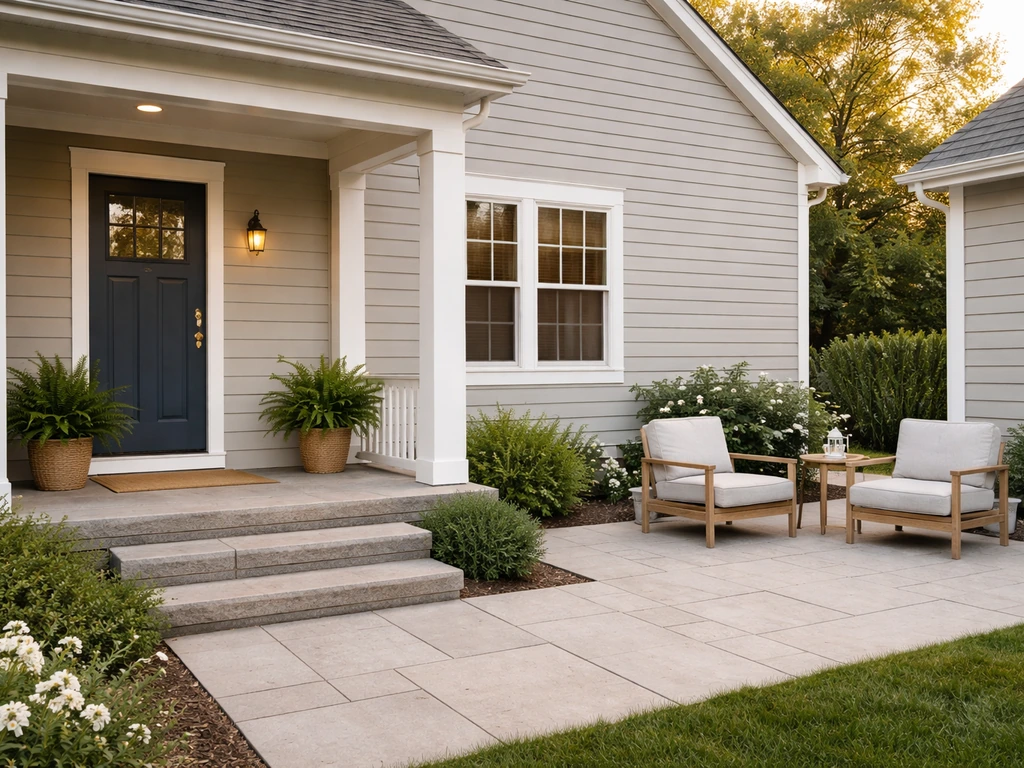
A patio is a paved outdoor area, usually in the backyard or side yard, designed for relaxing and entertaining. A porch is a covered structure attached to an entrance of the home, typically at the front, that serves as a sheltered transition between inside and outside. InterNACHI (National Association of Certified Home Inspectors) also notes that blank" rel="noopener noreferrer">porches are typically located at the front of the house. The simplest rule: if you're standing on it to wait at someone's front door, it's probably a porch. If you're out back grilling or having dinner on stone pavers, it's almost certainly a patio. That same backyard outdoor space is often referred to as a patio or balcony, even though “balcony” usually implies an elevated platform above ground patio or balcony meaning.
What Is the Difference Between a Patio and a Porch

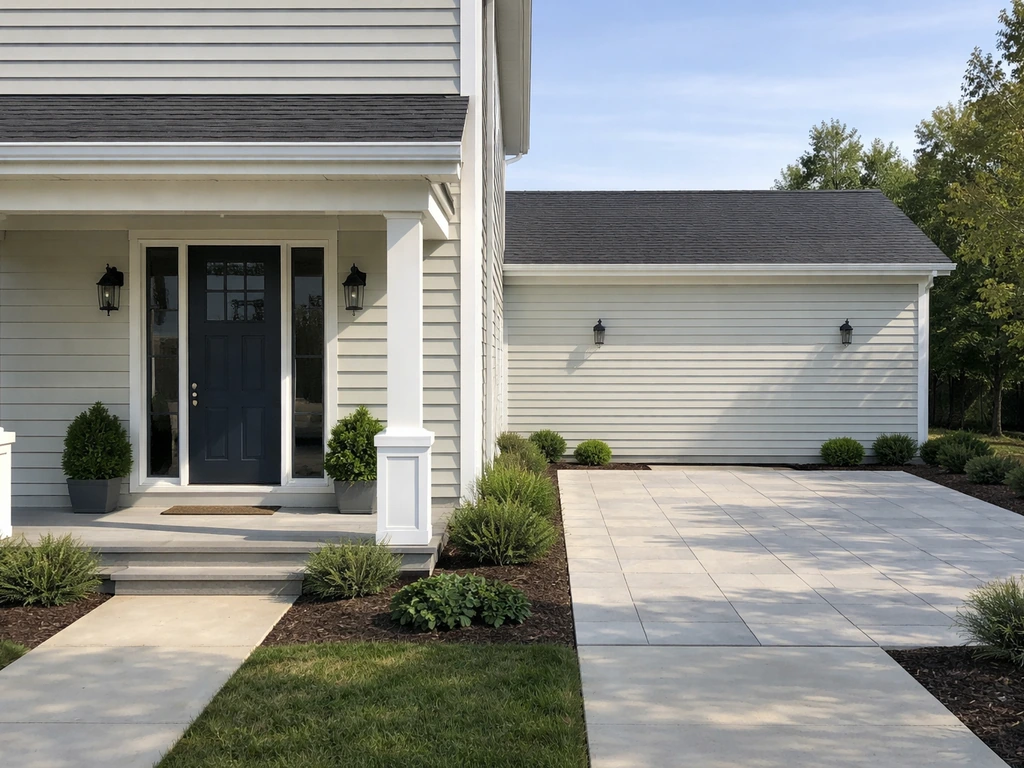
Quick definitions: patio vs porch
A porch is a covered area adjoining an entrance to a building, usually with its own separate roof structure. Merriam-Webster puts it plainly as a covered area adjoining a building's entrance, and Cambridge adds that it's often raised and can be partly enclosed. The National Association of Certified Home Inspectors (NACHI) describes it as a wooden structure forming a covered entrance at ground level, typically at the front of the house.
A patio, by contrast, is a paved or hard-surfaced outdoor area outside a building, designed for sitting, dining, and socializing. Oxford's definition calls it a paved outdoor area outside a building used for sitting and dining. Real estate MLS glossaries (such as NWAR's 2025 revision) define it as an outdoor area made of concrete, stone, brick, or other hard materials, intended for relaxation, dining, and social activities. No roof required, no entrance required.
Where each one sits on a home
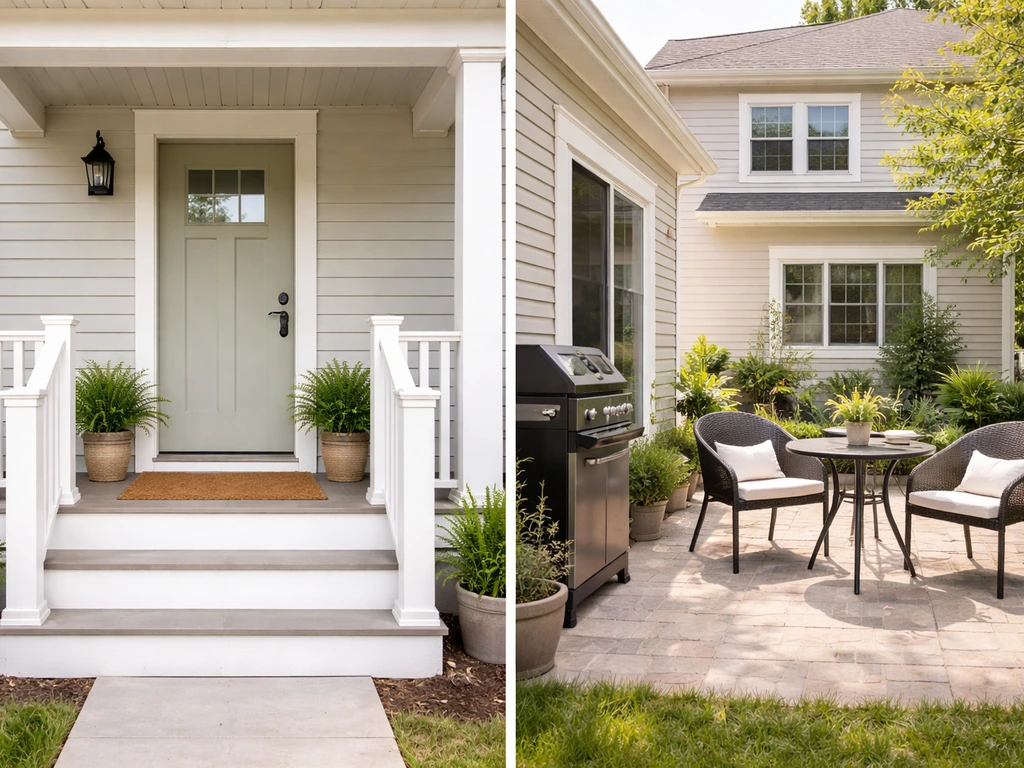
Placement is usually the fastest way to tell these two apart when you're looking at a property. A porch almost always sits at or near the main entrance of the home. That's front-door territory: the covered area you step onto before you walk inside. Some homes have a back porch too, but even then it's attached to a door and functions as an entry point into the house.
A patio typically lives in the backyard or side yard, set away from the main entrance. It's more of a destination space rather than a passageway. You walk out to it. In home design discussions, this front-vs-back distinction is one of the most consistent differences between the two terms, and it holds up whether you're looking at a suburban ranch or a two-story colonial.
Covered or open, and how high off the ground
A porch is almost always covered. That's not optional, it's part of the definition. The cover is usually a dedicated roof, an extension of the home's roofline, or its own standalone roof structure. That coverage is what makes a porch useful as a shelter point at the front door: you can wait out a rainstorm or receive a package without getting soaked.
A patio is almost always open to the sky. It can have a pergola, umbrella, or shade sail added on top, but those are accessories, not the defining feature. When a patio does get a permanent roof added, building codes (including those based on ICC guidelines) treat it as a separate category: a patio cover. That's a meaningful distinction in permits and assessments.
Both a patio and a porch are typically at or near ground level. This is what separates them from a balcony, which projects from an upper floor, or a terrace, which is often raised and accessed by stairs. A porch is described in NACHI guidelines as sitting at ground level at the entrance. Patios, per ICC building-envelope guidance, are defined specifically as ground-level or near-grade surfaces. If the space is elevated above the first floor, it's not a patio or a porch.
How people actually use them day-to-day
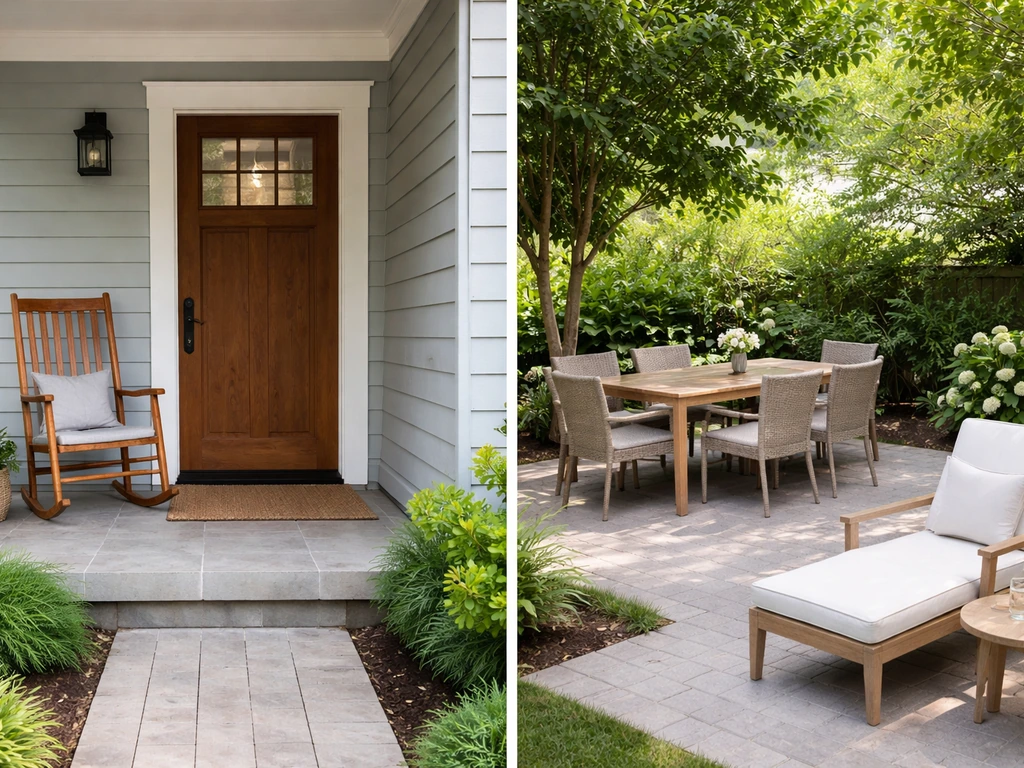
A porch is transitional space. You use it to greet visitors, grab delivered packages, shake off an umbrella, or sit in a rocking chair watching the neighborhood. It bridges the gap between public street and private home. NACHI notes that porches typically have outdoor furniture on them, which tells you they're meant for sitting, but the location at the entrance gives them that in-between, welcoming quality you don't usually associate with a backyard patio.
A patio is outdoor living space, full stop. If you're deciding between a patio vs balcony apartment setup, thinking about where the space sits and whether it's open to the sky can help you choose the right fit for your lifestyle. It's where you put the grill, the dining table, the fire pit, the lounge chairs. It's designed for extended time outside, not a quick stop on the way in or out. MLS definitions consistently frame it around relaxation, dining, and social activities. If you're hosting a summer barbecue or having coffee on a Sunday morning, you're doing that on the patio, not the porch. In real estate terms, a patio and a balcony are not the same thing, because a balcony is typically an elevated platform attached to an upper floor.
Design rules of thumb: when to call it a patio or a porch
If you're standing somewhere and trying to decide which word applies, run through these questions:
- Is it directly attached to a doorway? If yes, and it's covered with a roof, it's almost certainly a porch.
- Is it paved with concrete, stone, or brick and sitting in the yard with no roof? That's a patio.
- Is it at the front of the house near the main entrance? Lean toward porch.
- Is it in the backyard or side yard, away from an entrance? Lean toward patio.
- Does it have its own permanent roof that's part of the home's structure? Porch.
- Is the cover a pergola, sail shade, or umbrella added after the fact? Still a patio.
These aren't absolute laws. Regional language drifts, and some homeowners use the terms loosely. But these rules match the dictionary definitions, MLS glossary standards, and building-code conventions closely enough that they'll be right the vast majority of the time.
Related terms worth knowing so you don't get confused
Once you're clear on patios and porches, a few neighboring terms are worth a quick mention because they show up in listings and real-world conversations all the time.
| Term | Covered? | Ground level? | Main purpose | Typical location |
|---|---|---|---|---|
| Patio | No (usually open) | Yes | Outdoor living, dining, entertaining | Backyard or side yard |
| Porch | Yes (has a roof) | Yes | Entry transition, sheltered sitting | Front or back, near a door |
| Balcony | No (usually open) | No (upper floor) | Outdoor access from upper level | Above ground floor, projects from wall |
| Verandah | Yes (roofed) | Yes | Covered walkway around home | Front and/or sides of house |
| Terrace | No (usually open) | Raised or rooftop | Open-air sitting or roof access | Raised area, rooftop, or garden level |
| Lanai | Yes (roofed, open sides) | Yes (typically) | Outdoor living in warm climates | Attached to home, common in Hawaii/Florida |
A balcony projects from the building above the ground floor, has a balustrade, and is accessed from an interior door, which is fundamentally different from either a patio or a porch. A verandah (also spelled veranda) is a roofed, open-air structure that often wraps around the front and sides of a home. It's closer to a porch in spirit but typically much larger and more architectural. A lanai is a Hawaiian term for a roofed, open-sided outdoor room, usually at ground level, which can look like either a covered patio or a large porch depending on how it's set up. If you're browsing listings in Florida or Hawaii, you'll see lanai used where other regions would say covered patio or screened porch.
How to spot it in a listing or on a property walkthrough
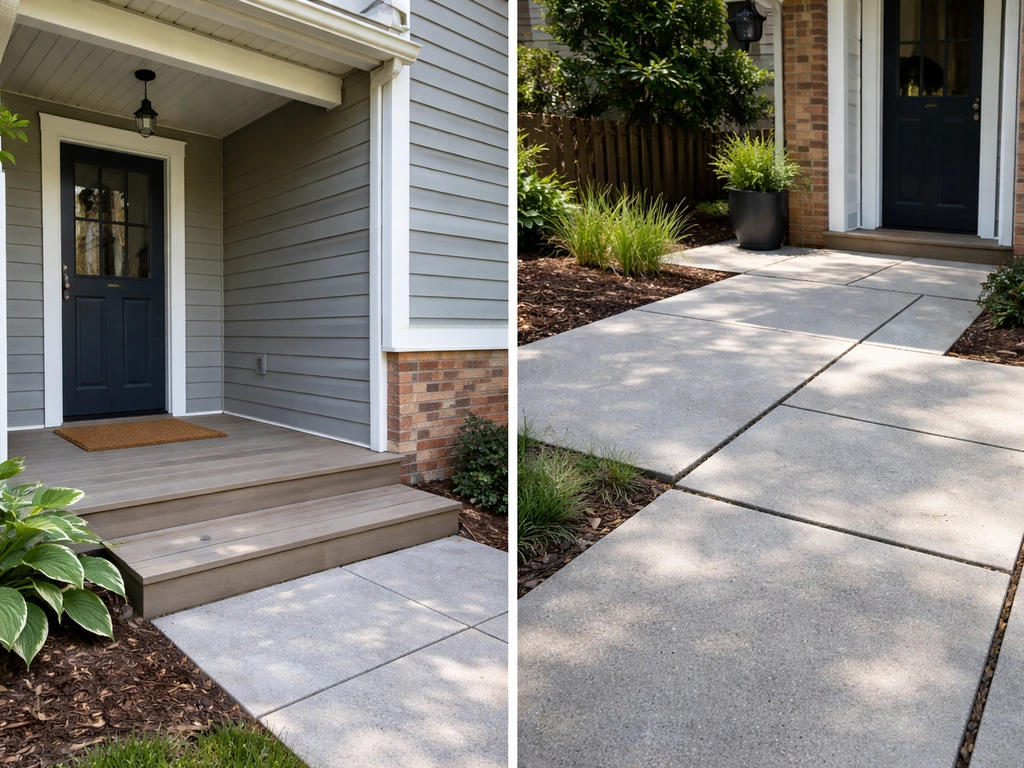
Real estate listings don't always use these terms consistently, so you need to verify what you're actually looking at. When a listing says porch, check whether it's at the entrance and covered. When it says patio, check whether it's a paved outdoor surface in the yard. Sometimes what's listed as a porch is actually a covered patio in the backyard, and vice versa. Appraisal and assessment documents often have their own standardized definitions (state-level glossaries vary), so the label in an appraisal report might not match what the listing agent wrote.
On a walkthrough, here's what to physically check:
- Look at where it sits: front of house near the entrance (likely porch) or backyard/side yard away from a main door (likely patio).
- Check for a permanent roof structure. A dedicated roof that matches or connects to the home's roofline points to porch.
- Look at the surface material. Concrete, pavers, brick, or natural stone at ground level with no roof overhead is your classic patio.
- Check whether it's directly connected to a doorway. A porch almost always sits right outside a door.
- Ask whether a permit was pulled for any cover or roof structure. A permitted patio cover is taxed and assessed differently than an open patio in many jurisdictions.
- If the listing says screened porch or covered patio, those terms tell you the feature has a roof, which changes expectations around year-round usability and privacy.
The practical stakes here are real. A home with a patio gives you outdoor entertaining space but no weather shelter at the door. A home with a porch gives you a sheltered entry but may have limited yard living space. If both are listed, you're getting two separate outdoor zones with distinct purposes, and that's genuinely worth confirming before you make decisions based on how you plan to use the space.
FAQ
If a covered outdoor area is in the backyard, is it still a porch or is it a patio?
Check whether the space is built directly off a main exterior door and has an actual roof covering the sitting area. If it is, it will usually be marketed as a porch even if the door is not on the front of the house, because the defining feature is the covered transition at an entrance.
What counts as “covered enough” for a patio to be called a porch?
A pergola, umbrella, or shade sail can make a patio feel shaded, but if the surface is open to the sky overall and not built like an entrance covering, it is still treated as a patio. If there is a permanent roof system over the patio area, listings may call it a patio cover, which matters for permits.
How do decks fit into the patio versus porch difference?
A deck can be used for grilling and dining like a patio, but it is not the same category. Patios are typically hard-surfaced ground-level areas, porches are covered entrance structures, and decks are usually elevated platforms accessed by stairs, so “deck” will often describe what you feel and what codes treat as a different structure.
What if the patio or porch is elevated or accessed by steps?
Verify elevation and access. If the area is reached from a raised landing or upper level, it is more likely a terrace or balcony-like space, not a patio or porch. Patios and porches are generally ground-level or near-grade surfaces, so height is a quick tiebreaker.
Can an attached outdoor area be both patio and porch at the same time?
Look at attachment and function, not just coverage. A porch is usually connected to the building at an entrance and used as a sheltered way to transition into the home, while a patio is an exterior destination space in the yard. If the space is intended for furniture and long stays but is not tied to an entry, it will usually be a patio.
How can the label affect insurance, permits, or property taxes?
For value and planning, confirm whether the cover is considered a roofed structure. A patio cover can have different permit or assessment implications than an uncovered patio, while a porch roof is typically part of the entry feature. Ask for the original building permit details if you are comparing homes.
What should I physically check during a home walkthrough to avoid relying on the listing wording?
If a listing says “porch,” inspect whether you can stand there under a roof immediately before entering, and whether it aligns with a door. If it says “patio,” look for a paved hard surface intended for dining and lounging, usually away from the primary door. Taking photos of rooflines and surface materials during a showing helps prevent label confusion.
How should I decide how to use the space if local terminology is inconsistent?
Terms vary by region, but your practical use case can guide you. If the space is mainly for weather protection at a doorway, treat it as a porch for how you will live day to day. If it is mainly for outdoor entertaining in the yard without true entrance shelter, treat it as a patio and plan shade or weather protection accordingly.
Do screened porches and screened patios follow the same rules?
A screened porch is still a porch if it is attached to an entrance and provides a covered transition into the home, but it adds enclosure. If the space is screened like a room in the yard, it is commonly described as a covered patio with screening or a screened patio, depending on how it is attached and roofed.
Porch Patio Difference: Definitions, Placement, and Examples
Porch vs patio difference explained with clear definitions, placement, features, uses, and how to identify and label you