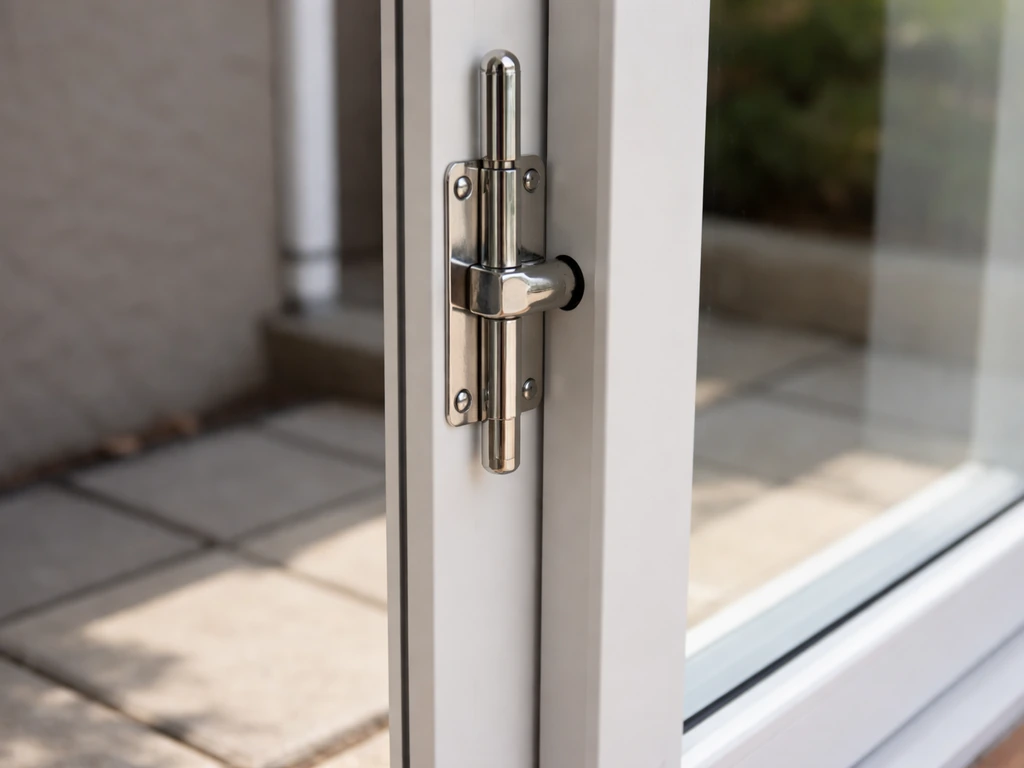
A patio bolt is a simple sliding or dropping metal bolt used to lock or secure an exterior door, gate, or patio access point. It works by moving a metal throw (the bolt itself) from the door or gate leaf into a matching strike or keeper on the frame, jamb, floor, or fence post, holding the door shut until you manually release it. Think of it as a no-frills deadlocking latch you operate by hand, with no key required from the secured side.
What Is a Patio Bolt? Types, Uses, and Installation

Ada Hollis
16 Jun 2026
What a patio bolt actually is
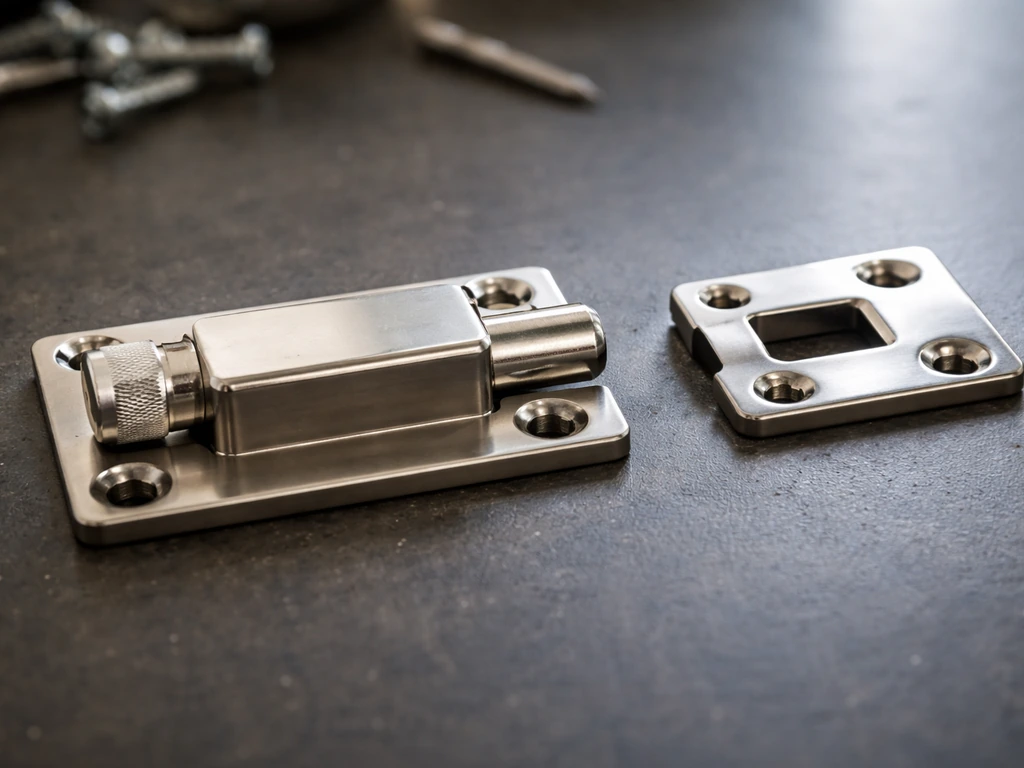
Strip away the product jargon and a patio bolt is about as straightforward as hardware gets. It is a deadlocking bolt assembly made up of two parts: the bolt mechanism itself, which mounts on the door or gate, and the strike or keeper, which mounts on the receiving surface (frame, floor, or post) and catches the bolt when you throw it. When the bolt is extended, the door or gate physically cannot swing open. When you retract it, it releases freely.
The word "patio" in the name tells you where these bolts are designed to live: on exterior-facing doors and gates that give access to or from a patio, garden, or outdoor area. Manufacturers like ASSA ABLOY Fenestration specifically design their patio bolt range for hinged, sliding, and bi-fold patio doors in aluminum, wood, and vinyl construction. These are not interior passage hardware or plumbing fittings (a common confusion with the word "bolt") and they have nothing to do with the patio space itself or concepts like porches, verandahs, or courtyards.
How patio bolts work on exterior doors and gates
The bolt throws into a strike plate or keeper that is recessed into or surface-mounted on the frame, floor, or gate post. On a standard hinged patio door, the bolt is mounted near the edge of the door stile and the strike is set into the door jamb directly opposite. On a sliding patio door, you'll often find the bolt throwing vertically into the track or floor to prevent the panel from being lifted or slid. On a garden gate, the keeper is usually bolted to the fence post or a gate latch plate.
The key function here is deadlocking: once the bolt is thrown, it cannot be pushed back without manually retracting it from the bolt side. That distinguishes a patio bolt from a simple spring latch, which a bump or push can release. Because you're operating it from the secure side (the patio or garden side), patio bolts are primarily a secondary or supplementary locking device rather than your main entry lock.
Common types and styles
The hardware market offers a handful of distinct patio bolt styles, and choosing the wrong one for your door type or gate material makes installation either impossible or ineffective. Here is how the main variants differ.
Slide bolts and barrel bolts
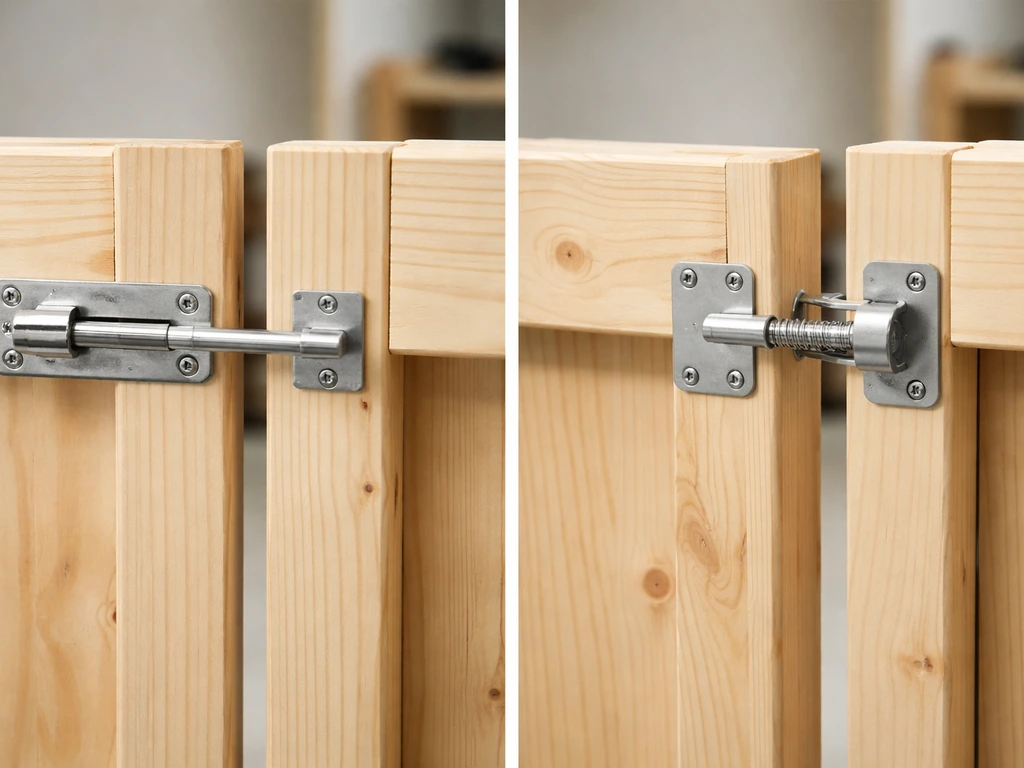
Slide bolts (also called barrel bolts) are the most common style you'll see on garden gates and patio enclosures. A cylindrical metal rod sits in a pair of guide loops on a mounting plate. You push the rod horizontally into a matching staple or catch on the post or frame. They are surface-mounted, inexpensive, and easy to replace. Barrel bolts come in lengths from about 2 inches up to 12 inches or more, so you can match throw depth to your security needs.
Spring-loaded bolts
A spring-loaded patio bolt auto-latches when the door or gate closes, which makes it convenient on gates you walk through frequently. The bolt retracts under spring tension as the gate closes and snaps into the keeper automatically. You still manually retract it to open. These are popular on pool fence gates where building codes often require self-latching hardware.
Surface-mounted vs. mortise bolts
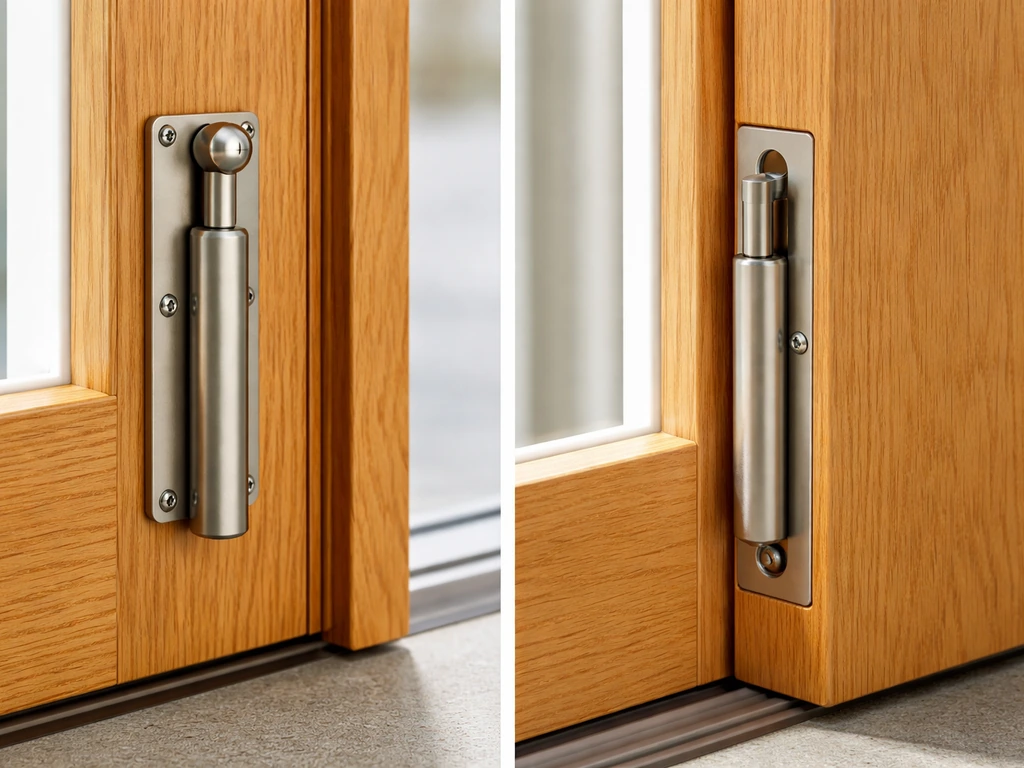
Surface-mounted bolts attach directly to the face of the door or gate with screws, making them visible and straightforward to fit without any cutting. Mortise bolts are recessed into a pocket (mortise) cut into the door edge, so only the knob or thumb-turn is visible from the face. Mortise-style patio bolts give a cleaner look and are common on higher-end timber and aluminum patio doors, but they require more precise cutting and are harder for a first-timer to install.
Flush bolts
Flush bolts sit in a shallow routed channel on the door edge and are operated by a small finger pull. When retracted, they sit flush with the door edge, invisible from the outside. You typically see these on the inactive leaf of a double French door or bi-fold patio system, where you want to lock the stationary panel without bulky hardware on the face.
| Type | Mounting | Best for | DIY difficulty |
|---|---|---|---|
| Barrel/slide bolt | Surface (face) | Garden gates, timber patio doors | Easy |
| Spring-loaded bolt | Surface (face) | Pool gates, self-closing gates | Easy |
| Mortise bolt | Recessed (door edge) | Aluminum/wood patio doors | Moderate |
| Flush bolt | Recessed (door edge) | French doors, bi-fold inactive leaf | Moderate |
Where you'll actually find patio bolts in real homes
Walk around any residential property and you'll encounter patio bolts in three main spots. First, on hinged or French patio doors leading from a living room or kitchen to the patio or deck. Here the bolt usually supplements the main lockset and is mounted at the top or bottom of the door for secondary security. Second, on sliding glass doors, where a drop bolt or floor bolt prevents the panel from being lifted off its track from outside. Third, on timber or metal garden gates in the fence line surrounding a patio, courtyard, or pool area.
You can also find smaller patio bolt hardware on outward-opening casement windows adjacent to a patio, or on folding panel systems where individual panels need to be pinned open or closed. In all these applications the bolt is doing the same job: physically blocking the door or gate from moving until you disengage it by hand.
How the mechanism works in practice
Understanding the three key components helps you buy, install, and troubleshoot correctly. The bolt (also called the throw) is the metal pin or rod that moves. The guide or housing is the casing that holds the bolt in alignment and mounts to the door. The strike or keeper is the receiving hole, plate, or staple on the opposite surface that catches the bolt when thrown.
When you push or drop the bolt, it travels a set distance called the throw distance, typically between half an inch and one inch on most residential hardware. The throw needs to fully seat inside the keeper for the bolt to be effective. A partially engaged bolt that only enters the keeper by 3mm or 4mm will pull out under lateral force. For exterior gates and patio doors, aim for at least 12mm (about half an inch) of throw engagement. On high-security applications, look for bolts rated to a deeper throw.
Choosing the right patio bolt for your setup
Getting the right bolt comes down to five things: door or gate material, mounting preference, throw direction, finish, and throw depth. Here is how to think through each.
- Material compatibility: Aluminum doors need bolts designed for thin stile sections; wood doors accommodate both mortise and surface styles easily; vinyl doors almost always need surface-mounted hardware because cutting a mortise into hollow PVC profiles is impractical.
- Mounting direction: Decide if the bolt throws horizontally (standard for hinged doors and gates), vertically downward (common on sliding doors and gate drop bolts), or vertically upward (top of gate or inactive door leaf).
- Hand (handing): Some mortise-style bolts are handed, meaning they are specific to left- or right-hand doors. Surface-mounted barrel bolts are generally not handed.
- Finish: Match your existing door hardware as closely as possible. Common finishes include satin stainless, polished brass, matte black, and powder-coated aluminum. For coastal or humid patio environments, stainless steel or marine-grade zinc hardware resists corrosion significantly better than standard zinc alloy.
- Throw depth: For a garden gate or exterior patio door where security matters, choose a bolt with at least a 1-inch throw and a solid metal housing rather than a lightweight die-cast unit.
If you're replacing an existing patio bolt, measure the old one before ordering. Key measurements are the backset (distance from the edge of the door to the bolt centerline), the overall plate length, and the bolt diameter. Getting these right means the new bolt covers any old screw holes and drops straight in.
Installing and troubleshooting your patio bolt
Basic installation steps
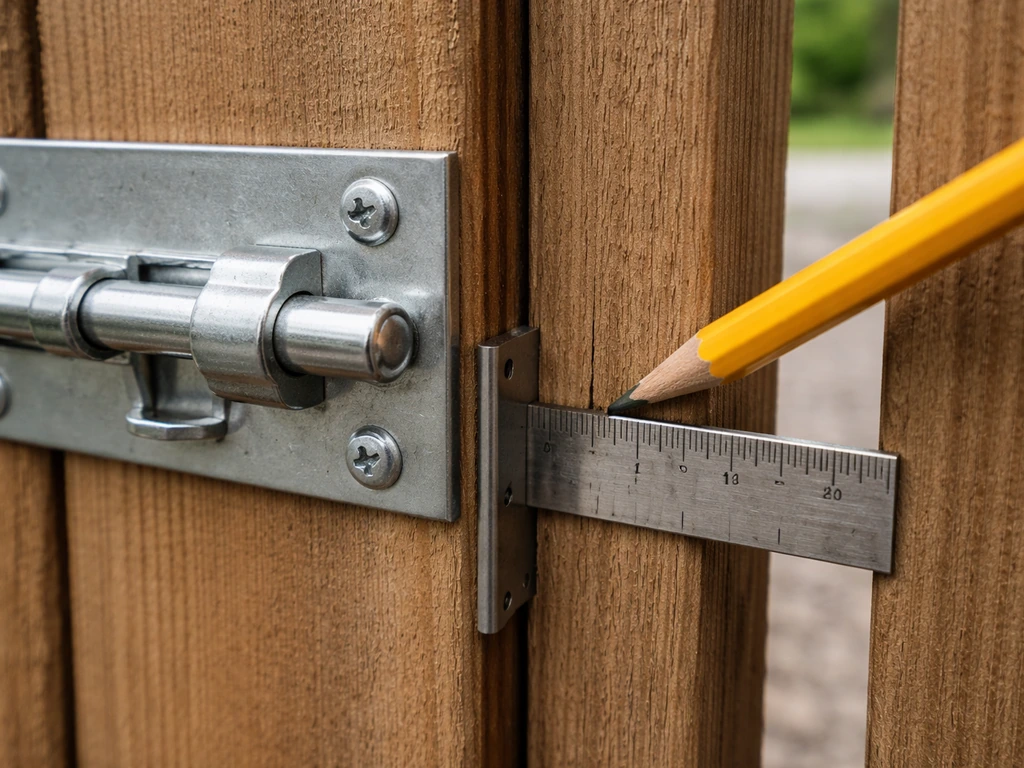
- Close the door or gate fully and mark the bolt position on both the door/gate and the receiving frame or post. Use a pencil and a square to get the marks aligned.
- Mount the bolt housing to the door or gate first, using the screws supplied. For timber, pre-drill pilot holes slightly smaller than the screw shank to prevent splitting.
- With the bolt housing in place and the door closed, throw the bolt to mark the exact strike position on the frame or post.
- Mount or chisel the strike/keeper at that marked position. For a surface-mounted staple, screw it directly. For a recessed strike, chisel a shallow pocket first.
- Test the throw several times with the door closed. The bolt should travel smoothly and seat fully in the strike without lifting, grinding, or sticking.
Common problems and how to fix them
Misalignment is the number one issue. If the bolt hits the face of the strike plate rather than entering the hole, the door has shifted or the strike was mounted in the wrong position. The fix is usually to unscrew and reposition the strike, or on wood frames to use a chisel to elongate the keeper slot slightly. Avoid the temptation to grind down the bolt itself, as this reduces throw engagement.
A sticky or hard-to-throw bolt is almost always a lubrication or alignment problem. Apply a dry PTFE spray or a small amount of silicone grease along the bolt rod and inside the guide. If the bolt housing has shifted and is now slightly out of square, loosen the mounting screws, realign, and re-tighten. Do not use oil-based lubricants on exterior hardware as they attract dirt and can cause the bolt to seize over time.
Loose mounting screws are a safety issue on an exterior bolt. If screws are pulling out of a timber post or door, the wood may be soft or deteriorated. Replace the screws with longer stainless hex-head screws that reach into solid timber, or use screw anchors in the existing holes before re-driving. On hollow aluminum or vinyl profiles, look for self-tapping hex screws designed for that material or use a backing plate on the inside face.
If the bolt is only partially engaging the strike (you can see daylight between bolt tip and keeper wall), you need either a longer bolt or you need to reposition the strike so the bolt travels fully home. Partial engagement is a common reason patio gates fail under pressure even though they appear locked.
A quick note on patio terminology
Patio bolts are hardware for access points to patio spaces, not a feature of the patio itself. If you meant a different patio-related topic, like what is a patio steak for grilling, that is covered separately as well. A patio tree is a type of landscaping tree chosen specifically for outdoor patios, so it is a different topic from patio bolt hardware.
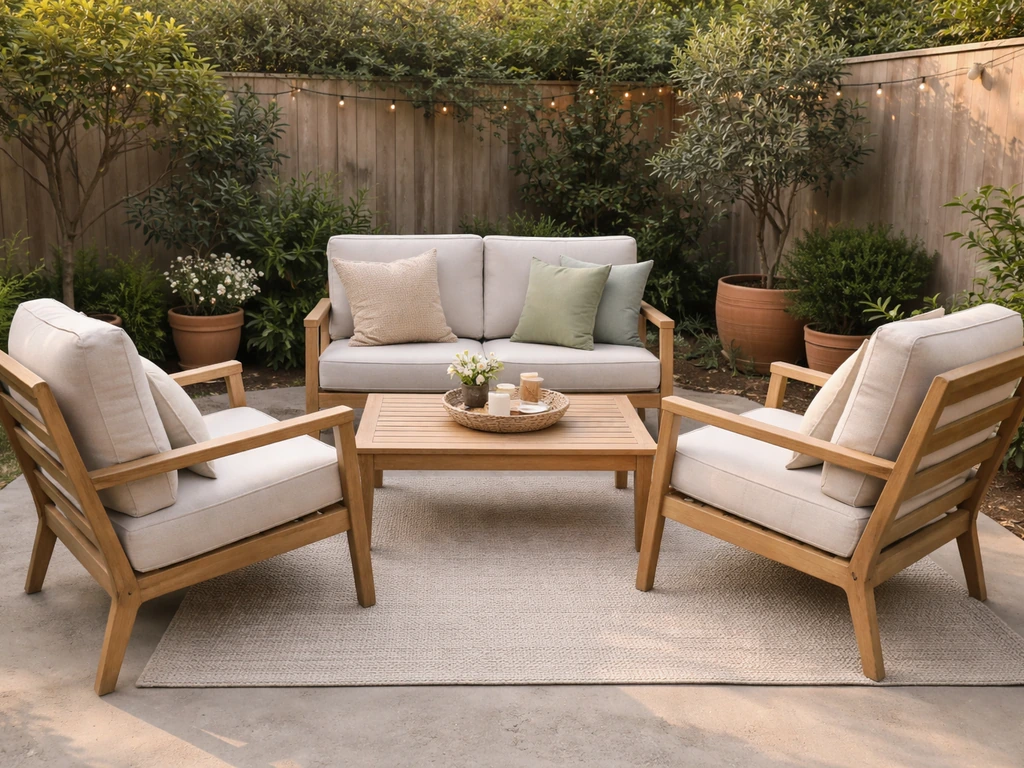
A patio is a ground-level outdoor surface area, distinct from a raised deck, a covered porch, or an upper-floor balcony. The bolt sits on the door or gate that leads to or borders that space. If you have searched for patio bolt and landed here while actually hunting for information about the patio area itself, or related outdoor furniture like a patio conversation set or a patio set, the hardware discussion above is a different subject entirely. A patio set typically means the outdoor furniture arrangement you use on a patio, like a table with chairs or a conversation set.
A patio conversation set is different from patio bolts, since it refers to outdoor seating grouped for relaxing and entertaining. The bolt is just the locking mechanism on the door or gate that separates your indoor space from that outdoor area.
FAQ
Is a patio bolt enough to secure an exterior door by itself?
Yes, but only as a secondary measure. A patio bolt is operated from the secured side and deadlocks the door or gate once thrown, but most local codes treat it as supplementary hardware. If you are securing an exterior entry that must meet an official standard, confirm requirements and pair it with the primary lockset (deadbolt or multipoint system) rather than relying on the patio bolt alone.
How do I know the correct throw direction (left/right or up/down) when buying a patio bolt?
It depends on the bolt type and how the door swings. For most hinged patio doors, the bolt must throw toward the strike in the jamb, and the strike must be positioned so the bolt seats fully when the door is closed. For sliding doors, common floor or track bolts need alignment so the vertical throw lines up with the keeper, otherwise the panel can still be lifted or levered.
What measurements matter most when replacing an existing patio bolt on a door?
For typical replacement, measure the backset (edge to bolt centerline), the plate length, and the bolt diameter, then compare the throw length and whether the keeper is surface-mounted or recessed. If your existing bolt uses a nonstandard mortise depth, reusing the same mortise pocket size is critical, otherwise you will end up with a misfit strike that cannot provide full engagement.
What should I do if my patio bolt only partially engages?
If the bolt does not drop fully into the keeper even when you close firmly, first check for misalignment and for an insufficient throw depth. Environmental factors matter too, swelling from humidity or warping can change the spacing between door and strike. If the bolt has enough throw but still only partially seats, repositioning the strike is usually the correct fix rather than forcing the bolt closed.
What lubricant should I use on a patio bolt, and what should I avoid?
Avoid oil-based lubricants on exterior patio hardware. They attract dust and grit, which can turn a smooth throw into a sticky one over time. A dry PTFE spray or a small amount of silicone grease on the bolt rod and inside the guide is typically the better maintenance choice for outdoor conditions.
My patio bolt hits the strike plate. How do I fix the alignment safely?
Usually, you can fix it by adjusting the strike or keeper, not the bolt. If the bolt hits the face of the strike instead of entering the hole, loosen the mounting screws and reposition the strike plate so the bolt lines up with the keeper. If you have wood framing, lightly elongating the keeper slot with a chisel may help, but grinding the bolt tip can reduce engagement and weaken security.
Can I switch bolt styles (like from surface-mounted to mortise) on the same door?
Yes, but confirm compatibility with the door type and material. For example, mortise and flush-style bolts require a recessed pocket or routed channel, and using them on the wrong door thickness can cause weak mounting or a bolt that never seats fully. If you cannot match the required recess depth and location, a surface-mounted bolt is often the safer alternative.
Why do patio bolt screws keep loosening, and what is the right repair?
A patio bolt can loosen over time if the mounting screws bite into soft or deteriorated wood, or if the hardware is installed into hollow profiles without proper backing. If you notice movement, replace with correctly sized stainless screws for solid timber, or use screw anchors/backing hardware for hollow aluminum or vinyl so the bolt assembly stays rigid under force.
How can I troubleshoot a spring-loaded patio bolt that sometimes fails to latch?
If your gate has spring-loaded latching, check that the bolt retracts and extends freely when operated by hand. Spring mechanisms are also sensitive to dirt buildup in the guide and can fail to latch when misaligned, even if the bolt still looks aligned at rest. Clean the guide area and verify full seating before concluding the spring is worn.
Are patio bolts the same for bi-fold and double French door setups?
Yes. If a patio bolt is mounted high or low on a double French or bi-fold system, it should still line up with the keeper so the inactive leaf cannot be pulled. For these setups, flush bolts are often used to avoid bulky hardware on the inactive panel, but they must sit in the correct routed depth and finger pull travel to retract reliably.
Next Article
What Is a Patio Conversation Set and How to Choose One
Learn what a patio conversation set means, how it differs from dining or bistro sets, and how to choose the right layout