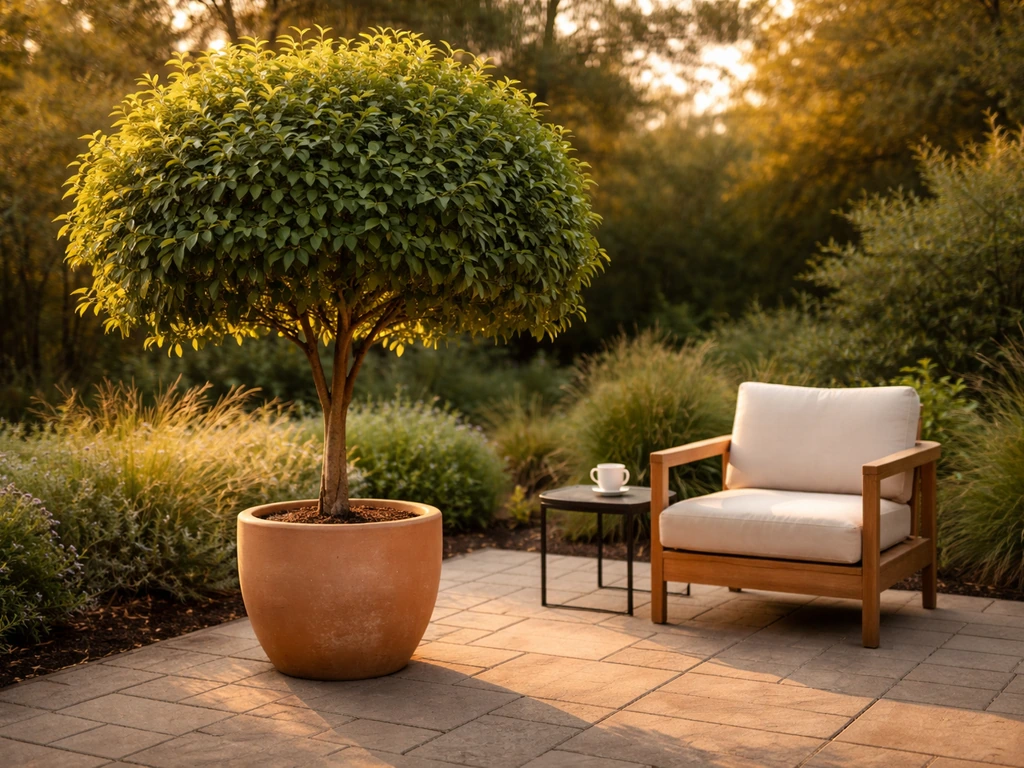
A patio tree is a small or dwarf tree, often trained from a naturally shrubby plant, that's used as a specimen near a patio, deck, or outdoor seating area. Nurseries and landscapers use the term two ways: as a description of where and how a tree is used (close to a patio, for shade or focal interest), and as a specific product category for compact, often formally shaped trees sold for tight spaces and large containers. Either way, you're talking about a small-scale tree that fits real residential outdoor living without overwhelming the space around it. If you are also planning what furniture will go beside your tree, a what is a patio conversation set guide can help you choose the right layout for comfortable seating.
What Is a Patio Tree? Types, Uses, and How to Choose

Ada Hollis
20 May 2026
What 'patio tree' actually means
The phrase doesn't have one locked-down definition, which is part of why it can confuse people. Boething Treeland Farms, a major California wholesale nursery, defines a patio tree as a small tree often created from plants that are naturally shrubs, trained to lend a formal accent to a landscape. That training part is key: a lot of what nurseries sell as patio trees started life as a shrub, then got pruned and staked into a single-stem, lollipop-shaped tree form. Think of a bay laurel (Laurus nobilis) shaped into a standard, or a lilac trained onto a single trunk. Plantroops UK sells Laurus nobilis as a patio tree, describing it as a wonderful evergreen shrub that grows into a small tree. The plant underneath is still technically a shrub, but the form makes it read as a small ornamental tree.
The other use of the term is simpler: any small tree that works well placed near a patio. Van Wilgen's Garden Center, for example, describes their Little Twist Flowering Cherry as a perfect small tree to use as a specimen near a deck or patio, or even in a large container. In this usage, 'patio tree' is less about the plant's biology and more about its scale and role in the design. If it fits, doesn't overwhelm the hardscape, and looks good from a patio chair, it qualifies.
Some nurseries also use 'patio tree' as a formal catalog category, the same way they'd categorize by height or use type. Boething Treeland Farms’ plant catalog lists a distinct “Patio Tree” category alongside other size and type categories Boething Treeland Farms’ “Patio Tree” category. So when you're shopping at a garden center and see a 'patio tree' tag, it's telling you about the form and intended use, not necessarily the species.
What kinds of plants count as patio trees
The common thread across all patio trees is size and scale. These are not shade trees. You're looking at plants that typically top out somewhere between 6 and 20 feet, with a canopy spread that doesn't swallow a small yard. Here's a breakdown of the main types you'll encounter:
- Trained shrub standards: Bay laurel, rosemary, boxwood, lavender, and lilac trained onto a single stem with a rounded head. Classic for formal gardens and Mediterranean-style patios.
- Dwarf ornamental flowering trees: Compact cherry, crabapple, redbud, and serviceberry varieties bred to stay small (often 8 to 15 feet). Great for seasonal interest and pollinator activity.
- Small evergreen trees: Dwarf Japanese cedar, columnar arborvitae, and dwarf magnolia varieties. Used for year-round structure and screening.
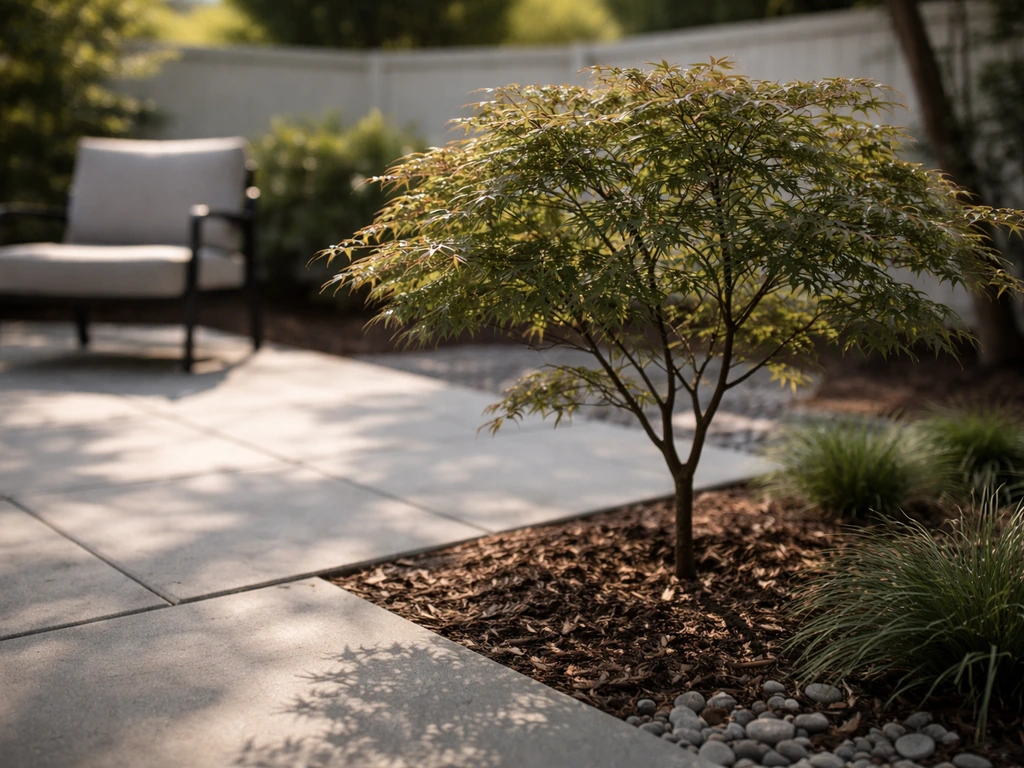
- Container-grown specimens: Japanese maple, olive, citrus (in warm climates), and standard-form topiary. These live in large pots and can be moved or overwintered indoors.
- Fruit trees on dwarfing rootstock: Dwarf apple, pear, fig, and lemon trees that stay under 10 feet and work beautifully near a patio in the right climate.
The size range matters practically. A tree under 10 feet with a 6-foot spread is manageable in a small patio garden or on a paved terrace. Once you're pushing 20 feet, you need more ground space, more root room, and more clearance from structures. Know the mature size before you buy, not the size it is when you bring it home.
How patio trees work in landscape design
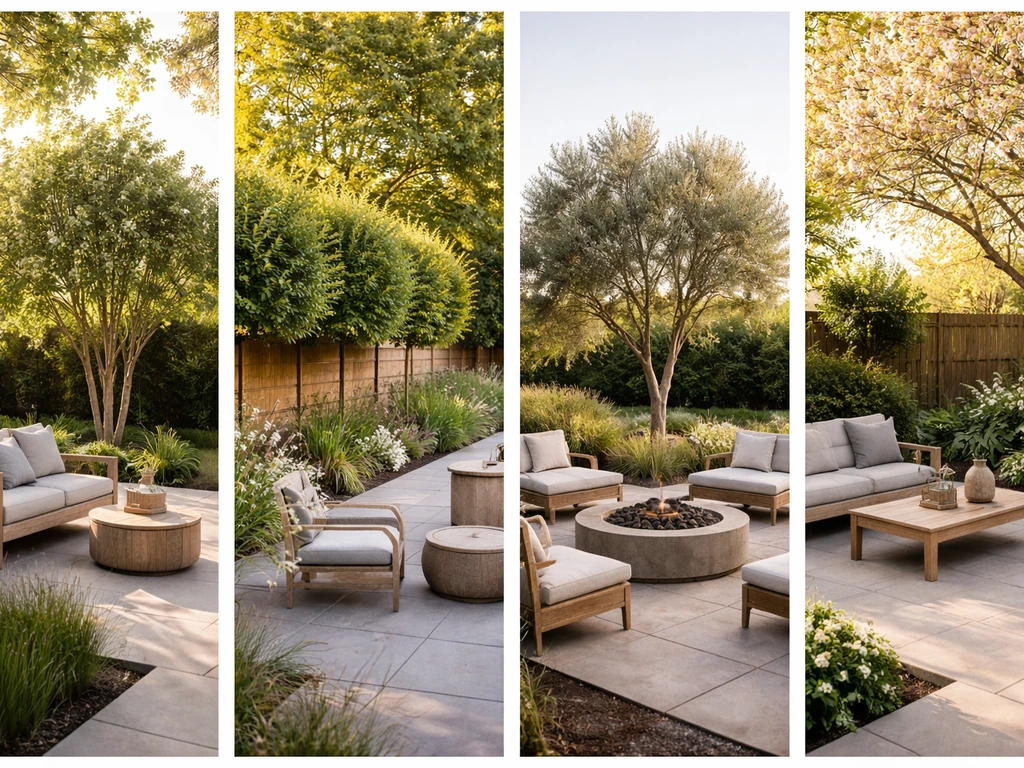
Patio trees pull a lot of design weight for their size. Landscapers use them for four main purposes: shade, screening, focal points, and seasonal interest. A well-placed small tree can make an exposed patio comfortable in summer, define a corner or boundary without a fence, anchor a planting bed with vertical structure, or deliver a season of bloom that you can see right from your outdoor seating.
Shade is the most practical function. Even a small tree with a 10-foot canopy can drop afternoon sun on a seating area and cut surface temperatures noticeably. If your patio faces west and bakes from about 3 p.m. onward, a single well-placed patio tree can fix that without the permanent commitment of a pergola or sail shade.
Screening is the second big use. Patio trees planted along a property line or fence create a softer, more natural visual barrier than a solid fence panel. They also add height above fence lines, which matters when neighbors or street traffic are at eye level with your seating area.
As focal points, patio trees work especially well when they're trained into a formal shape, like a standard bay laurel flanking a gate, or a weeping Japanese maple centered in a gravel courtyard. The symmetry and defined form give outdoor spaces the kind of structure that gardens can otherwise lack.
Patios, porches, balconies, and courtyards: where trees actually fit
The concept of a patio tree makes most sense in the context of a ground-level outdoor space, which is what a patio actually is. A patio is an outdoor area at ground level, usually paved or hard-surfaced, adjacent to a house and used for relaxing or dining. If you are wondering what is patio set, it helps to match the right outdoor furniture style and size to the way you plan to use your patio tree. Because it sits on the ground, it connects directly to soil, which is where in-ground patio trees live.
A porch is different: it's typically a covered structure attached to the front or side of a house, elevated slightly, with a roof overhead. You can certainly put a container tree on a wide porch, but you're limited to pots. There's no planting bed, and a large tree in a heavy pot needs a structurally sound floor to sit on.
A balcony introduces the same constraints as a porch, compounded by height and weight limits. Most residential balconies are not designed to support large containers with mature trees. A small dwarf tree in a lightweight container is possible on a well-built balcony, but anything with significant root mass or a large pot is a structural and safety question first.
A verandah (the covered wrap-around porch common in colonial and Victorian architecture) offers more space than a standard porch, but still operates like a porch: containers only, with attention to weight and clearance. A courtyard, on the other hand, is often fully enclosed by walls and sits at ground level, making it one of the best environments for patio trees. Courtyards in Spanish, Mediterranean, and Southwest-style homes frequently center on a single specimen tree, sometimes a mature olive or a trained citrus standard, as the main design anchor.
So the short version: in-ground patio trees belong on patios and in courtyards. Container patio trees can work on patios, wide porches, and verandahs. Balconies require structural caution and smaller, lighter specimens.
Choosing the right patio tree for your space
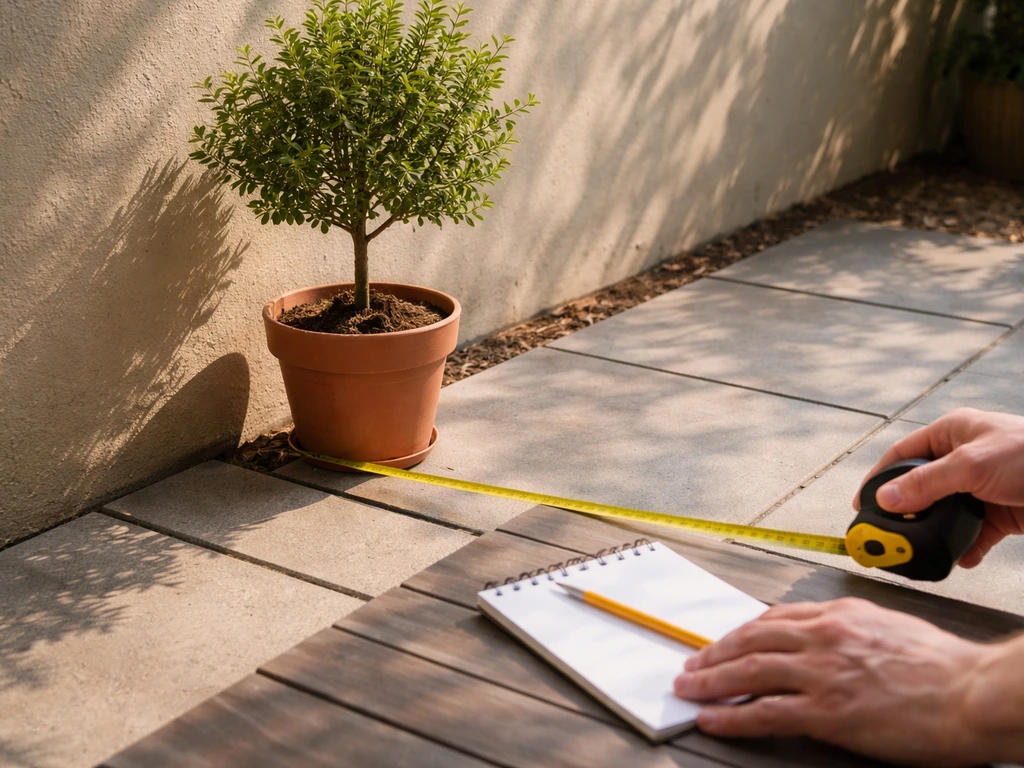
The biggest mistake people make is buying the tree they like and then figuring out where to put it. Go the other way. Assess your space first, then narrow down to what fits. Here are the variables that matter most:
Sun and climate
Check how much direct sun your patio gets per day and in which direction it faces. Most flowering patio trees want at least 6 hours of sun. Shade-tolerant options like Japanese maple, serviceberry, and some dogwood varieties handle dappled or part-shade conditions. Climate zone matters too: citrus and bay laurel work outdoors year-round in zones 8 and above, but need to come inside or go to a sheltered spot in colder climates.
Root behavior and surface damage
This is the one most homeowners underestimate. Aggressive surface roots can lift paving, crack concrete patios, and damage foundations over time. Keep in-ground trees at least 5 to 10 feet from paved surfaces and foundations, depending on the mature root spread of the species. Trees with known invasive or surface-seeking roots (silver maple, some willows, large-growing cherry species) are poor choices near hardscape. Dwarf varieties on dwarfing rootstocks are generally much safer here. If you're planting right next to pavers, a root barrier is worth installing at the time of planting, not after the damage shows up.
Container vs. in-ground
Container growing gives you flexibility: you can move the tree, overwinter it if needed, and avoid root-related hardscape damage entirely. The tradeoffs are more frequent watering (containers dry out fast), eventual root-binding if you don't repot, and a real weight and handling challenge once a tree is in a large pot. A 25-gallon container with a mature standard bay laurel can weigh 100 pounds or more. In-ground trees establish better, grow more vigorously, and need less watering once settled, but you're committing to the location permanently. For patios on slab foundations or where you rent rather than own, containers are usually the smarter choice.
A quick comparison to guide your decision
| Factor | Container Tree | In-Ground Tree |
|---|---|---|
| Flexibility | High — moveable, rentable | None once planted |
| Root damage risk | None | Moderate to high without planning |
| Watering needs | High — dries out quickly | Lower once established |
| Long-term growth | Limited by pot size | Full potential reached |
| Best for | Balconies, rented spaces, small patios | Owned homes, larger patio gardens |
| Maintenance effort | Higher (repotting, feeding) | Lower long-term |
Placement rules and care tips
Placement is where most patio tree projects succeed or fail. A few concrete guidelines to follow:
- Plant in-ground trees at least 6 to 8 feet from the edge of paved surfaces. For trees with spreads over 10 feet at maturity, push that to 10 feet.
- Keep trees a minimum of 10 feet from foundations. Some species, like larger ornamental cherries, need more clearance.
- Don't plant directly under overhead utility lines. Even a 15-foot tree can create a problem if lines run low.
- For container trees, choose a pot with drainage holes and use a well-draining mix. Waterlogged roots kill more container trees than drought does.
- Place containers on pot feet or stands to allow drainage and air circulation under the pot.
- Situate shade-purpose trees to the southwest or west of your seating area to intercept afternoon sun, which is typically the most intense.
For ongoing care, the basics are consistent across most patio trees: water deeply but infrequently once established (or more frequently in containers), fertilize lightly in spring, prune in late winter or after flowering to maintain the shape you want, and check annually for signs of pest pressure or disease. Trained standard-form trees need more regular pruning than natural-form trees to hold their shape, especially in the first few years after training.
One underrated tip: mulch around the base of in-ground patio trees. A 3-inch mulch ring keeps moisture in, suppresses weeds, and insulates roots without the tree competing with grass. Just keep mulch away from the trunk itself to prevent rot.
Common questions and things people get wrong
A few misconceptions come up regularly when people start researching patio trees, and it's worth clearing them up directly.
'Patio tree' is not a botanical classification. You won't find it in a plant taxonomy or a scientific reference. It's a trade and landscape term, used by nurseries to describe form and intended use, not species. When you see it on a plant label, it's telling you how to use the plant, not what it fundamentally is.
People also sometimes assume patio trees stay small forever because they were sold small. That's not always true. A dwarf variety will genuinely stay compact, but a standard ornamental cherry or crabapple can still reach 15 to 20 feet over a decade. Always look up the mature height and spread for the specific cultivar before you plant.
Another common one: thinking container growing solves all root problems indefinitely. It does prevent in-ground root damage, but container trees eventually become root-bound and need either repotting into a larger container or root pruning to stay healthy. A neglected container tree declines fast once the roots have nowhere to go.
Finally, people sometimes confuse 'patio tree' with a patio umbrella or a structural shade feature. They're completely different things. A patio bolt is a hardware fastener used to secure items and keep them stable on patios or decks. A patio tree is a living plant. If you're researching patio furniture arrangements and outdoor shade solutions, that's a different category entirely, closer to what you'd find when looking into a patio set or conversation set for your outdoor space.
FAQ
How do I tell if a “patio tree” will actually stay small in my yard?
Check the cultivar’s mature height and mature spread, not the plant’s current pot size. Also look for training details, because standard (single-stem) forms can grow taller over time and may need periodic re-staking or pruning to keep their shape.
Are patio trees meant to provide full shade like a typical yard tree?
No. Most patio trees are chosen for limited, usable shade over seating areas rather than deep, whole-patio coverage. If you need major shade, confirm the expected canopy width and where it will land relative to your chair or table height.
Can I plant a patio tree directly next to a patio wall, foundation, or walkway?
You usually should avoid it. Even “small” trees can widen their root zone and push toward hardscape. As a rule of thumb, leave separation based on mature root spread, and if placement is tight, use container growing or install a properly sized root barrier during planting.
What’s the best option if my patio is on a slab foundation?
Container growing is often the safer choice on slabs, especially if you cannot achieve meaningful root separation. If you plant in-ground anyway, you’ll want to be very selective about species and root behavior and be prepared for limited long-term placement flexibility.
How much sun do patio trees need if I have a mostly shaded patio?
Many will tolerate dappled light, but “shade-tolerant” is not the same as “low-light.” Verify the plant’s minimum sun recommendation, and expect slower growth and fewer blooms if your patio gets only a couple hours of direct sun daily.
How often should I water a patio tree in a container versus in the ground?
Containers typically need more frequent watering because they dry out faster and roots fill the pot volume. In-ground trees are usually watered deeply but less often once established. The practical check is soil moisture 1 to 2 inches down, watering only when that layer starts to dry.
Do I need to repot a container patio tree, and how will I know?
Yes, eventually. Repot when roots circle the pot or when drainage is poor, and consider stepping up only one container size to avoid excess water retention. If you have a mature size goal, you may need periodic root pruning instead of always increasing pot size.
Can patio trees be trained into a standard or formal shape if the plant was sold untrained?
Sometimes, but it’s not automatic for every nursery stock. Ask whether it’s already a trained standard, which trunk height it’s targeting, and whether it’s staked. Newly trained forms often require extra pruning and staking during the first couple of growing seasons.
What happens if I choose a patio tree that drops messy leaves or fruit near furniture?
You may end up with frequent sweeping and slippery residue, especially near chair legs or dining areas. Before buying, look up leaf-drop and fruit habits (and whether the tree is thorny) and position it so fallout lands in a less trafficked area.
How do I overwinter a container patio tree safely?
Plan for wind exposure and sudden temperature swings. Keep the root ball protected (for example, insulated wrap and sheltered placement) and manage watering during freeze-thaw cycles. In colder climates, you may need indoor or unheated garage protection depending on the plant’s hardiness.
Is mulch recommended for patio trees, and how close can it touch the trunk?
Mulch is helpful for moisture and weed control, but keep it away from the trunk to prevent rot. A common approach is a ring of mulch that stops a few inches short of the base, then replenishes as it settles.
What’s the fastest way to choose the right patio tree location and avoid regrets?
Do a simple placement trial: map your seating area, note sun direction for morning and afternoon, then check mature canopy size against clearances (railings, lights, windows). If the tree’s crown will grow into structures or power lines, switch species or plan for container use sooner.
Next Article
What Is a Patio Steak? Meaning, Uses, and Ordering Tips
Know what a patio steak means, how it’s grilled and served, and how to search and order it correctly.