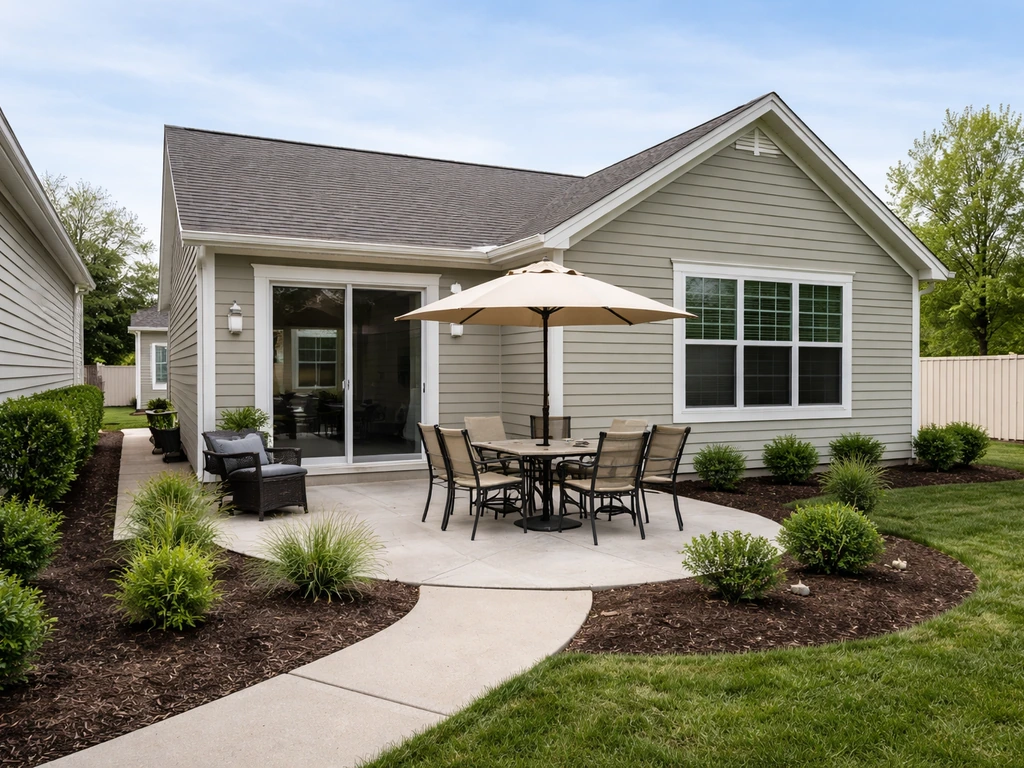
A patio home in Texas is a single-family attached or detached home built on a small lot, designed so that one exterior wall sits at or very near the property line, leaving a usable private patio space on the opposite side. It is not a condo, not a traditional townhouse, and not an apartment. You own the land beneath it (or a portion of it), you have a front door that opens to the outside, and the defining feature is that compact, private outdoor living space that gives the housing type its name. The catch is that in Texas, the label gets slapped on a wide range of housing styles depending on the builder and the market, so you always need to verify what you are actually buying.
What Is a Patio Home in Texas? Definition and How to Spot One

Ada Hollis
22 Jun 2026
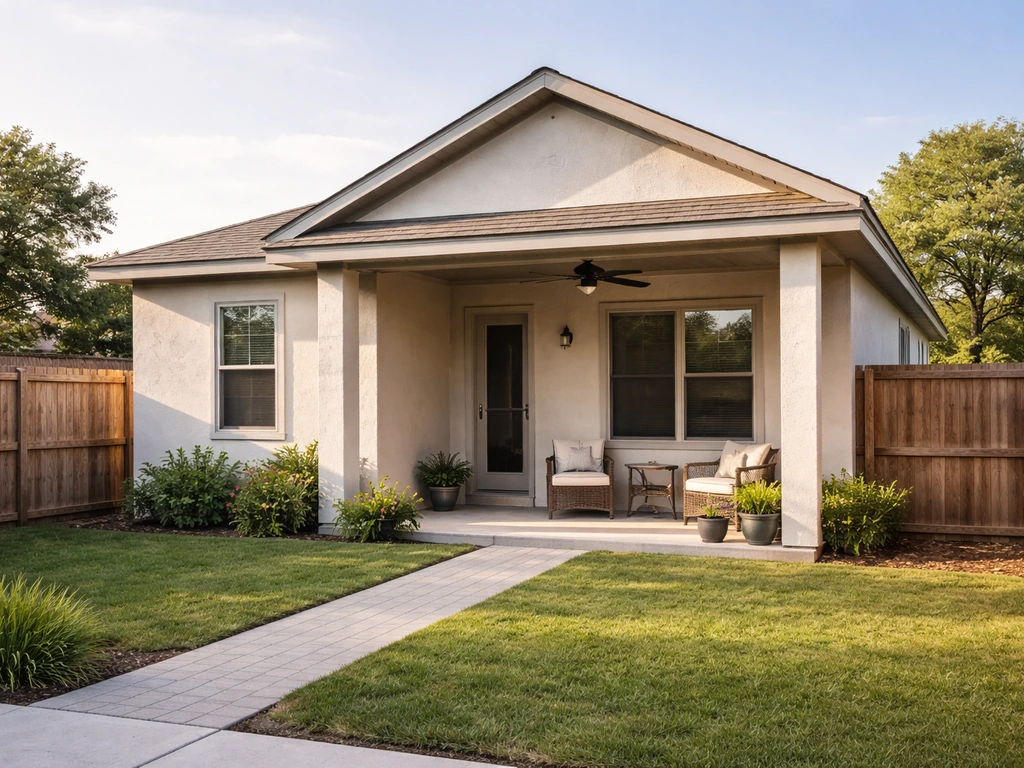
What a patio home actually looks like in Texas
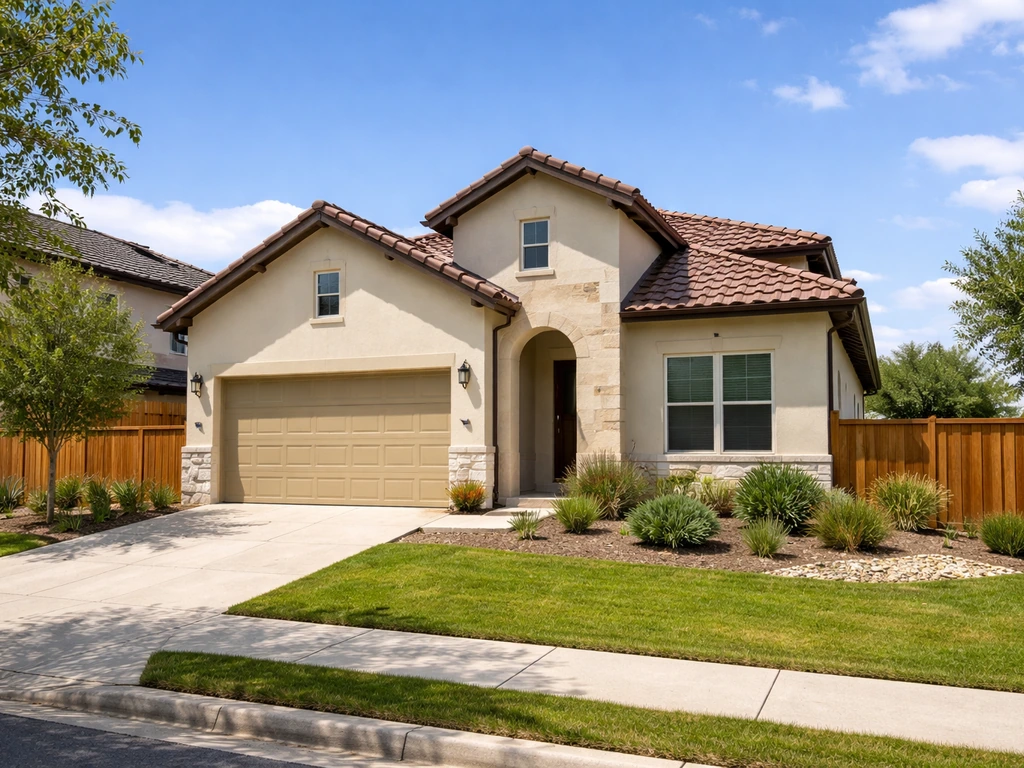
Most Texas patio homes are one or two stories, built on lots that run anywhere from about 2,000 to 5,000 square feet. The house itself takes up the majority of that lot, which is the whole point. Builders push the structure to one side of the property line (called a zero-lot-line design) so that the remaining outdoor space is concentrated in one usable zone rather than spread thin around all four sides. That concentrated outdoor area is the patio, and it is usually enclosed by a privacy wall, fence, or the home's own exterior wall.
In practice, here is what you typically see: a single-car or two-car attached garage facing the street or an alley, one shared wall with a neighbor (or occasionally two shared walls in a cluster design), no meaningful side yard on the zero-lot-line side, and a rear or side patio that feels genuinely private. Interiors tend to be open-plan to compensate for the smaller footprint, and many Texas patio homes are built with low-maintenance landscaping as a selling point, which often ties into HOA-managed common areas surrounding the cluster of homes.
Patio home vs townhouse vs condo vs duplex
This is where buyers get tangled up, and the confusion is understandable because the lines between these housing types blur in Texas marketing. Here is how they actually differ:
| Housing Type | Land Ownership | Shared Walls | Exterior Entry | Legal Regime | HOA Typical? |
|---|---|---|---|---|---|
| Patio Home | You own your lot (or a defined portion) | Usually one, sometimes two | Yes, private front/rear door | Standard deed + subdivision restrictions | Often yes |
| Townhouse | You own your lot, sometimes just the structure | Two (left and right neighbors) | Yes, private front door | Standard deed or condo regime | Almost always |
| Condo | You own the interior unit only (air space) | Shares walls, floors, ceilings | Yes, but common hallways common | Texas Property Code Ch. 82 | Always (condo association) |
| Duplex | Owner of whole structure owns full lot | One shared wall | Two separate entries | Standard deed | Rarely |
The biggest legal distinction is the condo regime. [Under Texas Property Code Chapter 82 (the Uniform Condominium Act)](https://statutes. capitol. texas.
gov/Docs/PR/pdf/PR. 82. pdf), a condominium is a specific legal form of real property where unit owners hold their individual unit and share common elements through a separate legal entity. [Texas Property Code Chapter 81 (Title 7) contains definitions used for condominium frameworks under the older statutory scheme](https://statutes.
capitol. texas. gov/Docs/PR/pdf/PR. 81.
pdf), including terms like “general common elements. ”. A patio home is generally not structured this way. You own your lot and structure under a standard deed, with a homeowners association (governed under Texas Property Code Chapter 209, the Residential Property Owners Protection Act) managing shared spaces and enforcing deed restrictions.
If the listing says 'condo,' pull the declaration and confirm which statutory chapter applies before assuming you are buying a patio home.
Townhouses in Texas are closer cousins to patio homes, and the two terms are sometimes used interchangeably. The practical difference is footprint and orientation. Townhouses tend to be taller (two to three stories) and narrower, with minimal private outdoor space. Patio homes prioritize that private patio and tend to feel more like a scaled-down single-family home. Duplexes differ because the entire building (both units) is typically owned by one person and rented out, not sold as individual units.
Clearing up the patio terminology confusion
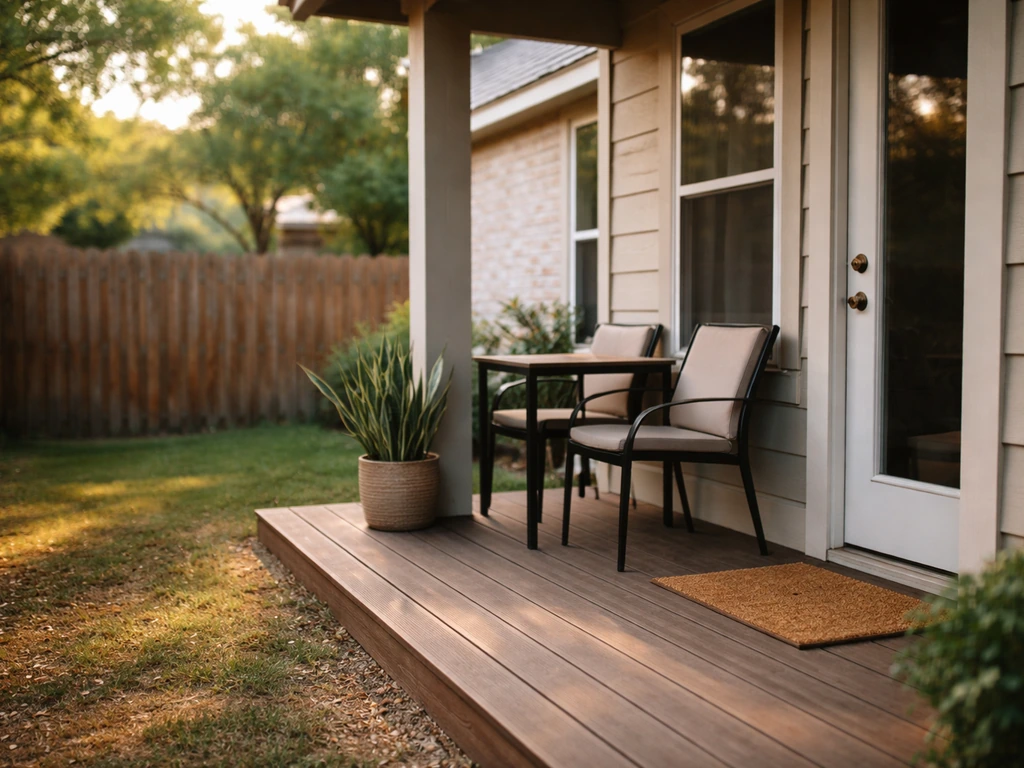
When people search 'patio home,' some are thinking about the housing type described above, and some are genuinely confused about what the word 'patio' means in a real estate context. Worth clearing up: a patio (the outdoor feature) is a ground-level hard-surfaced area, typically concrete, stone, or pavers, attached to or adjacent to a home. It does not have a roof unless a cover or pergola has been added. A porch is covered and attached to the house structure. A balcony is elevated, attached to an upper floor. A verandah is a large covered porch that often wraps around the house. A courtyard is an enclosed outdoor space surrounded on multiple sides by walls or structures.
In a Texas patio home, the 'patio' in the name refers to that private outdoor ground-level space, not necessarily to a covered porch or balcony. Some patio homes do include a covered patio or even a small courtyard feel, but the term 'patio home' as a housing type is about the lot configuration and zero-lot-line design, not a promise of any specific outdoor feature. Do not assume a patio home comes with a beautiful tiled courtyard or a wraparound verandah. Look at the listing photos and the plat to see exactly what outdoor space you are getting.
How to spot a real patio home in Texas listings
Because the label gets used loosely, use this checklist when evaluating any Texas listing marketed as a patio home:
- Check the plat or survey: A true patio home will show a small individual lot with the structure positioned at or near one property line. If there is no individual lot and the land is entirely common area, you may be looking at a condo.
- Read the deed restrictions and subdivision documents: Look for 'zero-lot-line' language, maintenance easements (allowing the neighbor access to the zero-lot-line wall for repairs), and any 'patio home' designation in the plat notes.
- Identify the governing legal chapter: Ask whether the property is governed under Texas Property Code Chapter 82 (condo) or Chapter 209 (standard HOA/POA). Chapter 209 typically applies to patio home communities; Chapter 82 applies to condos.
- Confirm land ownership in the deed: The deed should convey the lot to you. If you only receive an 'air space unit' or 'unit interest,' it is structured as a condo regardless of what the listing calls it.
- Look for the maintenance easement on the zero-lot-line wall: Legitimate patio home plats almost always include a recorded easement so the neighbor can access the shared wall side of your home for maintenance. Its presence is a good signal you are in a true patio home community.
- Check the HOA documents for what they maintain vs what you maintain: In patio home communities, exterior maintenance (roof, siding, landscaping of common areas) may be HOA-managed or owner-managed. Know which before you buy.
- Ask the listing agent directly: Is this a zero-lot-line/patio home, a townhome, or a condo regime property? A knowledgeable agent should know the answer and be able to point you to the right document.
- Review the HOA budget and reserve fund: Even in patio home communities with minimal common areas, HOA assessments can vary widely. A community with a pool, landscaping, and exterior maintenance contracts will cost more than one that only maintains a small greenway.
HOA, maintenance, and ownership: what to expect
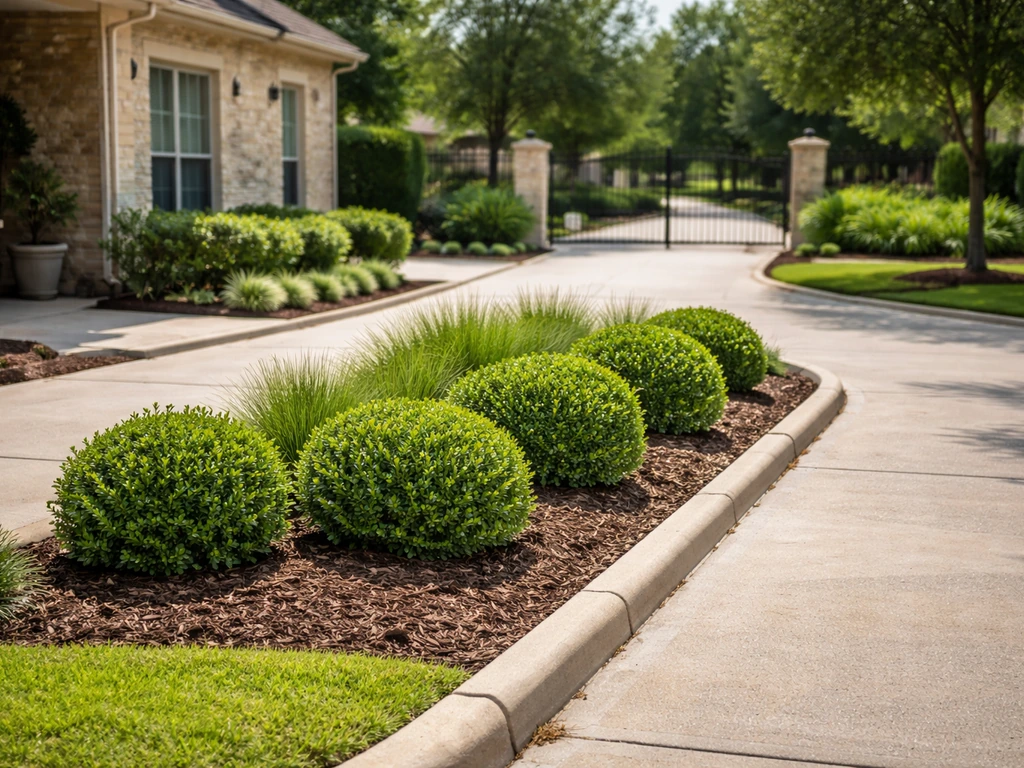
Most Texas patio home communities are governed by a Property Owners Association (POA) or HOA operating under Texas Property Code Chapter 209. This gives the association real authority: it can maintain common areas, adopt budgets, levy assessments, enforce deed restrictions, and adopt rules for the community. That is not a bad thing, but you need to know what you are signing up for before closing.
Ownership in a patio home is straightforward compared to a condo. That means it is usually not a condo under Texas condominium law. You own your lot and structure, which means you are responsible for your home's maintenance unless the HOA documents say otherwise. Some Texas patio home communities include exterior maintenance in the HOA fee (roof, paint, landscaping of your individual lot). Others leave all of that to you and only maintain common area greenbelts, entry features, and shared amenities. Neither setup is universally better, but the all-inclusive HOA model is popular with retirees and buyers who want low weekend maintenance obligations.
One ownership wrinkle specific to patio homes: the zero-lot-line wall. Your home's exterior wall on the zero-lot-line side sits on or right at the property boundary. The plat typically records a maintenance easement across that strip so your neighbor (or you) can access the wall for repairs, painting, or gutter cleaning without technically trespassing. This easement is normal and necessary, but you should read it carefully. It does not mean your neighbor can use that strip as their yard; it is a functional access right for maintenance only.
How the label changes across Texas communities
Texas is a large state with diverse real estate markets, and 'patio home' does not mean exactly the same thing in every city or subdivision. In Arizona, the term “patio home” is used similarly to describe a small-lot home built for low-maintenance living, but you should still verify the exact lot setup and ownership rules.
In Houston, patio homes are often clustered developments marketed heavily to empty nesters and retirees, with HOA-managed exterior maintenance and community amenities like pools and clubhouses. In Dallas-Fort Worth, you will find patio homes that look almost identical to standard single-family homes on small lots, with minimal HOA involvement and no shared exterior maintenance.
In San Antonio and Austin, the term sometimes gets applied to townhouse-style properties where the 'patio' is a small rear concrete pad rather than a meaningful private outdoor living area.
Some communities in Texas use 'garden home,' 'cluster home,' 'villa,' or 'cottage home' to describe essentially the same zero-lot-line product. Other communities use 'patio home' to describe a detached single-family home on a small lot with no shared walls at all, differentiating it from a townhouse purely on the basis of lot configuration rather than shared-wall construction. This is why the checklist above matters more than the label itself.
If you are comparing Texas patio homes to the same housing type in other states, the concept is largely consistent. Similar definitions apply in states like Colorado, Ohio, and Arizona, where zero-lot-line homes marketed as patio homes follow the same general logic: small lot, private patio space, reduced exterior maintenance, and often an HOA. The legal and community-level details vary by state, but the core design concept travels well.
Is a patio home right for you in Texas?
Patio homes make a strong case for buyers who want the ownership benefits of a single-family home (your own lot, your own deed, no shared hallways or elevators) without the maintenance burden of a large yard. They work especially well for people who travel frequently, retirees who want to age in place in a single-story layout, and buyers in urban Texas markets where large lots are simply not affordable. The tradeoffs are real: limited privacy from neighbors due to the shared wall, smaller outdoor space than a traditional single-family home, and HOA rules that may restrict what you can do with your property.
Before you commit, verify the exact structure using the checklist above, read the HOA documents carefully, and confirm which Texas Property Code chapter governs the community. If you are also wondering what is a patio home in colorado, apply the same checklist mindset, since the label can vary by market and community. The word 'patio' in the listing is a starting point, not a guarantee of any specific design, ownership structure, or lifestyle. Once you know what you are actually buying, patio homes in Texas can be an excellent fit for the right buyer.
FAQ
How can I confirm a Texas “patio home” is not actually a condo before I apply or tour?
Ask for the HOA and condominium documents up front, specifically the declaration and any exhibits that reference Texas Property Code Chapter 82 (condominium). If the listing uses HOA language but the documents still describe “units” and “common elements” under a condo declaration, you may be looking at a condo regime even if marketing says patio home.
Do patio homes in Texas have shared walls, and does that mean poor sound privacy?
Many zero-lot-line patio homes have one shared exterior wall, sometimes more in cluster designs. Sound impact varies by construction (insulation, wall assembly, and placement of windows), so review the shared-wall details on the plat and construction notes, and consider asking how the builder handled fire and sound ratings.
What does the maintenance easement on a zero-lot-line patio home actually allow?
Maintenance easements typically grant limited access to service the boundary wall (repair, painting, gutters), not rights to landscape, store items, or use the strip as a yard. Confirm the exact easement language and map location, because restrictions can affect fencing, gates, and where you can place planters or raised features.
If the HOA manages exterior upkeep, what is usually covered, and what surprises should I look for?
HOAs that handle exterior maintenance may cover items like roof, exterior paint, and landscaping on your defined lot area. The surprise is often scope limits, exclusions for owner-caused damage, or caps on assessment-driven improvements, so read for what is explicitly covered versus “common areas only.”
Can I install a fence, pergola, or enclosure on the patio area in a Texas patio home?
Often you can, but patio home HOAs frequently require pre-approval, specify materials, and limit height and visibility due to shared-wall and drainage concerns. Check the deed restrictions and HOA architectural review process for “patio” and “exterior alterations,” and request the fee and timeline for approvals.
Is a patio home’s lot always deeded to me the same way as a standard single-family home?
Generally yes, but not always as cleanly as buyers expect. Some properties use defined maintenance responsibilities or partially shared easement areas (for utilities or boundary access), so compare the plat, deed, and HOA exhibits to understand your boundaries and where utilities sit.
What should I inspect to make sure the patio is actually private and usable?
Look at the orientation of windows and patio doors, the height and placement of privacy walls, and whether neighbor yards face the patio directly. Photos can be misleading, so drive the area at different times if possible, and confirm the rear and side yard setbacks shown on the plat.
Do patio homes require less maintenance than single-family homes in practice?
They usually reduce yard and exterior workload, but “less maintenance” depends on HOA scope and your lot features. If the HOA does not maintain your lot’s landscaping or exterior finishes, you may still handle regular upkeep, especially for the zero-lot-line side where access may be limited.
Why do patio homes sometimes look like they have no yard, even when listings say there is outdoor space?
Marketing may highlight the patio while minimizing the fact that the usable outdoor area is concentrated on one side. Verify the exact usable zone on the plat and measure setbacks, because the boundary wall and nearby easements can leave little room for additional seating, pets, or storage.
Are patio homes guaranteed to be one story or single-floor living in Texas?
No. Many are one or two stories, but the “patio” label does not guarantee a single-story layout. If aging-in-place or mobility is a priority, check the floor plan for bedroom location, bathroom accessibility, and whether the second story includes stairs immediately at entry points.
What HOA costs besides monthly dues should I budget for with a Texas patio home?
Beyond monthly assessments, ask about annual or special assessments, reserve funding, and typical contribution levels for major repairs like roofs on common systems or exterior paint cycles. Also confirm whether your “all-in” fee includes exterior maintenance for your particular lot or only for certain elements.
If a patio home is detached, how do I tell it apart from a townhouse-style home?
Detached patio homes may still be marketed under the same umbrella, but townhouses usually have narrow lots, vertical stacking, and minimal private outdoor space. Check for shared walls on the plat, compare the footprint shape and number of floors, and verify whether you have meaningful patio frontage on the non-zero-lot-line side.
What common mistake do buyers make when they rely only on the words “patio home” in Texas listings?
Relying on the label instead of the legal structure and physical plat. Two homes can both be called patio homes but have different HOA authority, different exterior maintenance obligations, and different easement boundaries, so verify the governing documents and the zero-lot-line details before you decide.
Next Article
What Is a Patio Home in Ohio? Definition and Checklist
Know what a patio home in Ohio means, key traits, differences from patios or porches, and a checklist to verify listings