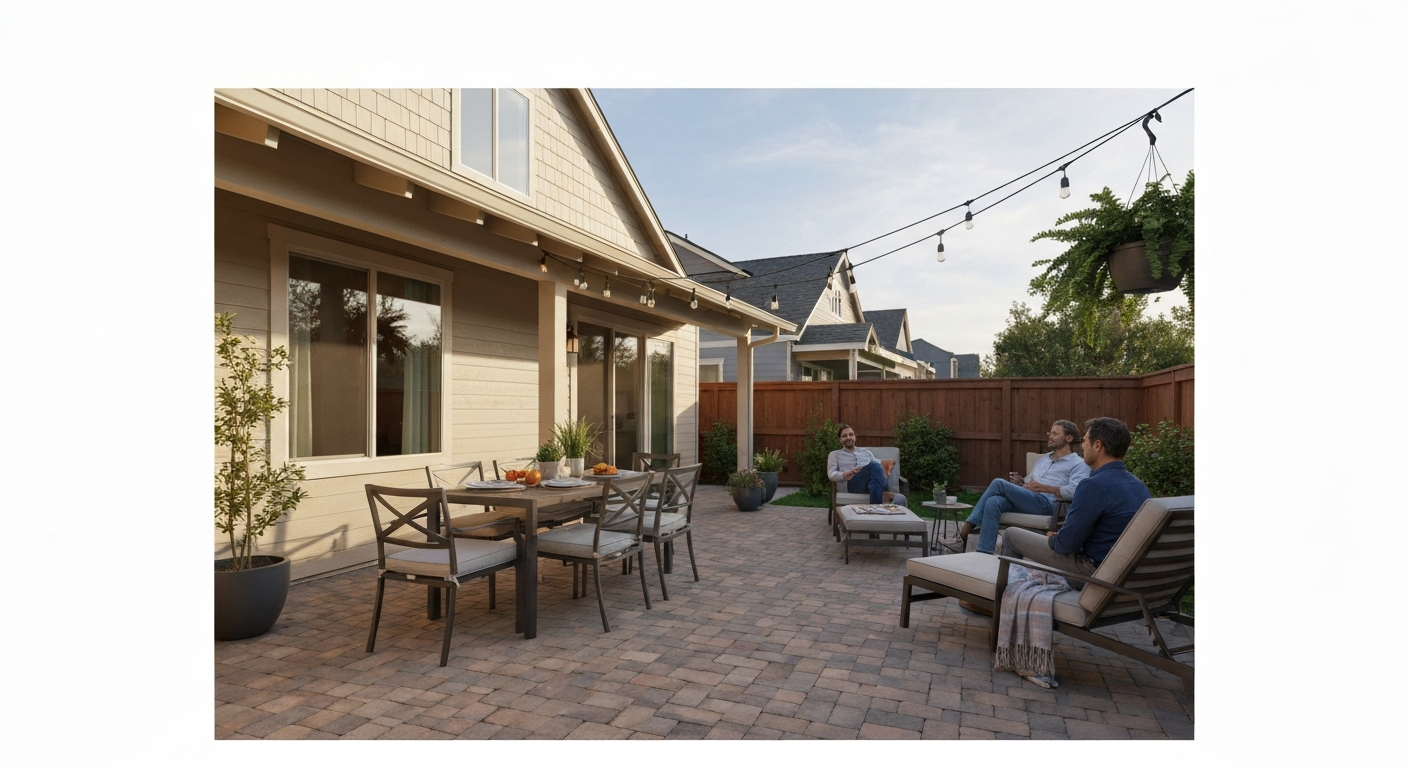
A patio home in Colorado is a low-rise attached or semi-detached house, almost always capped at one or two stories, that sits within a planned community where the HOA handles most exterior maintenance and landscaping. It is not simply a house that happens to have a patio out back. The 'patio' in the name refers to a housing style and a lifestyle concept, not a specific outdoor feature. You will see the term constantly in Colorado listings from Castle Pines to Fort Collins, and it reliably signals: low-maintenance living, shared community structure, limited height, and a specific kind of outdoor space arrangement that is worth understanding before you tour.
What Is a Patio Home in Colorado? Key Features and FAQs

Ada Hollis
12 Jun 2026
What a patio home actually is (plain English)
The Denver Metro Association of Realtors defines a patio home as a property with no more than two stories that functions similarly to a townhome in terms of attachment context. You will also hear patio homes called cluster homes or garden homes, and in Colorado those terms are effectively interchangeable. The defining idea is density with breathing room: homes are grouped together on a shared site, but each unit typically has its own private entry at ground level and some form of dedicated outdoor space, whether a small yard, courtyard, or yes, an actual patio slab.
One thing a Denver-area real estate agent makes clear is that a patio home does not have to include a patio. The name describes a category of housing, not a checklist of outdoor furniture spots. What it does consistently include is a compact footprint, a height limit (often just one and a half stories), and a community structure where the association takes responsibility for the outside of the building so the homeowner does not have to.
What separates a patio home from a regular house with a patio
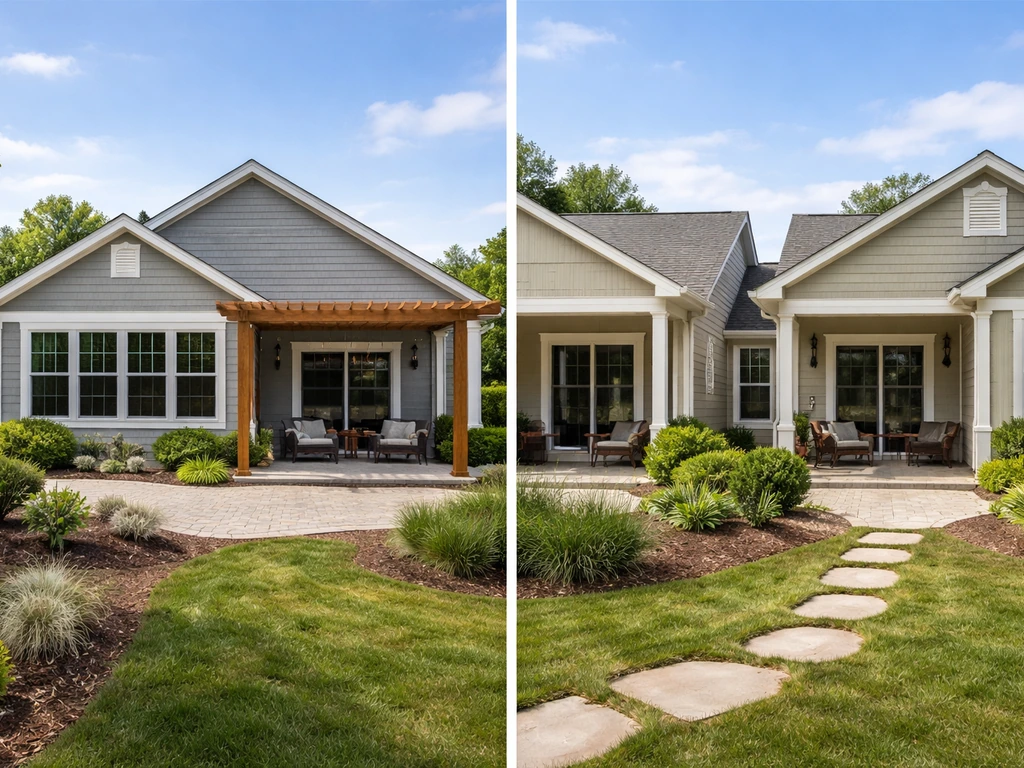
This is the question most people are really asking. A regular single-family house in Colorado might have a beautiful wraparound patio, a pergola, the works, and it is still just a house. The term 'patio home' only applies when the property sits inside a structured community with shared land, a homeowners association, and architectural rules that define maintenance responsibilities. Here are the features that actually mark the difference:
- Community or cluster layout: units are grouped on a shared parcel, not independent lots fully separated from neighbors
- HOA involvement: an association manages the exterior, roof, landscaping, and common areas, not the individual homeowner
- Height cap: almost always one to two stories, rarely taller
- Ground-level entry: you walk in from the ground, not from an elevator, shared lobby, or elevated corridor
- Private outdoor space: each unit typically gets a small dedicated outdoor area, but shared greenspace also exists on the property
- No yard work obligation (typically): mowing, snow removal, and exterior upkeep are covered by HOA dues
That last point is the practical draw for most Colorado buyers choosing patio homes. If you want to own real property, build equity, and not spend every weekend on landscaping, the patio home category is specifically designed for that trade-off.
How Colorado real estate listings use the term
In Colorado listings, 'patio home' is a marketing and classification term that agents use to signal a particular community type. You will often see it attached to a named neighborhood or sub-association. A real-world example: a Castle Rock listing on Redfin explicitly identifies the property as part of the 'Morning Star Patio Home Community,' which operates as a sub-association called 'Morning Star Sub Patio Home Association' under the larger 'Village at Castle Pines Master Association.' That layered structure is completely normal in Colorado and tells you immediately that you are dealing with two levels of HOA governance, two sets of rules, and probably two sets of dues.
Agents use the term to attract buyers specifically seeking low-maintenance living, which in Colorado often means retirees, people who travel frequently, or buyers who want to downsize without moving into a condo building. But the term is not regulated, so any seller or agent can apply it. That is why verifying the specifics of a given listing matters, which is covered in detail at the end of this article.
Patio home vs. the terms you will see nearby

Colorado listings throw a lot of related terms at buyers, and the distinctions are genuinely useful to understand before you start shopping.
| Term | Key Difference from Patio Home | Shared Walls? | HOA Common? |
|---|---|---|---|
| Townhome | Usually two to three stories tall; patio homes are capped lower and feel more horizontal | Yes, typically | Yes |
| Condo | You own interior air space only, not the structure or land underneath; patio homes usually include land ownership or a land lease with more control | Yes | Yes |
| Bungalow | A detached single-family style home, usually one story, but no community/HOA structure implied | No | Rare |
| Carriage house | A secondary unit added to a primary property, often above a garage; not a standalone community product | Possibly | Rare |
| Porch home / home with a porch | Porch is an architectural feature attached to the front of a house; does not imply community structure or HOA | No | No |
| Courtyard home | Organized around a central internal courtyard; can overlap with patio home but emphasizes the enclosed outdoor space design | Sometimes | Often |
| Verandah or balcony home | Verandahs and balconies are elevated or wrap-around features; patio homes are ground-level by definition | No | No |
The trickiest comparison is patio home versus condo. Is a patio home a condo? It helps to understand the ownership structure and what you do and do not actually own patio home versus condo. They can look nearly identical from the outside and both involve HOA fees, but the ownership structure is different. With a patio home, you typically own the structure and at least a portion of the land (or have a defined lot). With a condo, you own the interior space only. This matters for financing, insurance, and resale. If you are curious about where the condo and patio home definitions officially diverge, that distinction is explored in depth in the companion piece on whether a patio home is a condo.
The patio home category also comes up in Ohio, Texas, and Arizona real estate, where the term is used in the same general way but with slightly different community norms. In Texas, the term is also used to describe a low-rise, community-managed home type with simplified exterior maintenance, but the exact HOA rules vary by neighborhood Ohio, Texas, and Arizona. In Ohio, the term typically signals a low-rise, planned-community style home with HOA-managed exterior responsibilities similar to what you see in other states patio home category also comes up in Ohio. In all those markets, including Colorado, the core meaning stays consistent: low-rise, low-maintenance, community-managed exterior, ground-level entry.
What to expect for outdoor space, privacy, and property layout
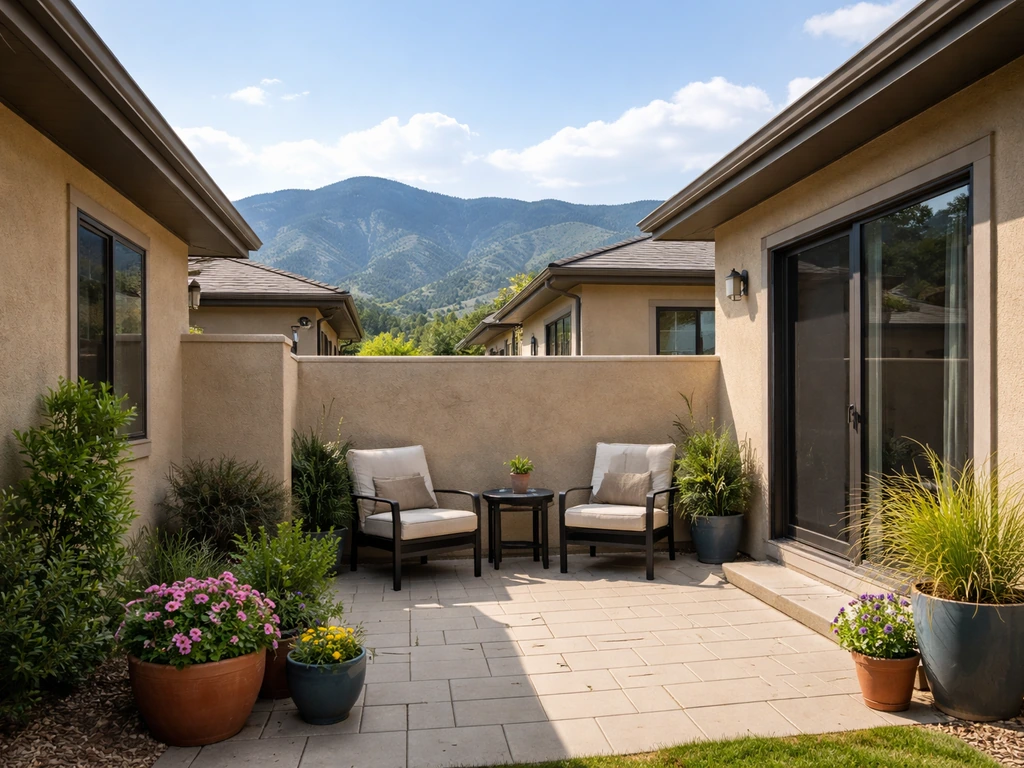
Most Colorado patio homes give each unit a private outdoor area, but it is smaller than what you would get with a traditional single-family home. Expect somewhere between a compact patio slab and a modest fenced yard area, usually at the rear or side of the unit. The front entry is typically shared visually with neighbors but privately accessed, meaning you have your own front door and walkway, but the landscaping in front is maintained by the HOA.
Privacy varies a lot by specific community. Some patio home developments are detached (no shared walls at all), which gives you the best acoustic privacy and the most traditional house feel. Others have one shared wall, which puts them functionally close to a townhome. The shared wall situation is more common in denser Colorado front-range communities where land is expensive. Always ask explicitly whether the unit is detached, semi-detached, or fully attached before touring.
Common areas in patio home communities often include greenbelts, shared walking paths, and sometimes amenity features like a clubhouse or pool. These shared spaces are what make the density feel less cramped, but they also mean you will see and interact with neighbors more than you would on a large single-family lot. If you value quiet and separation, look for communities with detached units and taller fencing or landscaping buffers between homes.
Ownership, maintenance, and HOA realities in Colorado

The HOA in a Colorado patio home community is not optional and not cosmetic. It is structural to what makes a patio home work. In most Colorado patio home communities, the HOA covers exterior building maintenance, roof repair or replacement, lawn care, snow removal from common areas, and sometimes even snow removal from individual driveways and walkways. That coverage is exactly why monthly dues can run meaningfully higher than what you might pay in a standard single-family neighborhood HOA.
The layered HOA structure is common in Colorado, as the Castle Rock example shows. A sub-association governs the immediate patio home cluster, while a master association governs the broader planned community. Both can levy dues and both have governing documents (CC&Rs, bylaws, rules and regulations) that you need to read before you close. Colorado law requires sellers to provide HOA disclosure documents, including the budget, reserve fund status, and any pending special assessments, before closing. Do not skip this step.
What you remain responsible for as an owner typically includes interior maintenance, appliances, HVAC systems, windows and doors (depending on the CC&Rs), and any alterations you make to the interior. Some Colorado patio home HOAs also hold you responsible for your private patio or yard area upkeep, while the common greenspace is their problem. Read the boundary line in the CC&Rs carefully because it is not always obvious which side of the fence is yours to maintain.
How to verify what a specific Colorado listing actually means
Since 'patio home' is a marketing term with no legal definition in Colorado, the only way to know exactly what you are buying is to ask direct questions and read the documents. Here is a practical checklist for touring or evaluating any Colorado listing that uses this term.
- Ask whether the unit is detached, semi-detached (one shared wall), or fully attached (two shared walls). This affects noise, privacy, and sometimes financing.
- Request the HOA's CC&Rs and rules before making an offer. Confirm exactly what the HOA covers (roof, exterior paint, landscaping, snow removal) and what it does not.
- Ask how many HOA layers exist. If there is a sub-association and a master association, get documents and dues for both.
- Request the HOA's most recent budget and reserve fund study. An underfunded reserve is a red flag that means a special assessment (an unplanned bill) could be coming.
- Ask for the HOA's pending litigation or known special assessments disclosure. Colorado law requires this, but asking directly ensures you get it.
- Confirm what outdoor space belongs exclusively to you (patio, yard, driveway) versus what is common area. Ask for a site plan that shows unit boundaries.
- Ask whether rental of the unit is permitted and whether there are short-term rental restrictions. Some Colorado HOAs prohibit Airbnb-style rentals entirely.
- Find out the parking situation: is there a garage, assigned parking, or only open lots? In snowy Colorado winters, this matters a lot.
- Ask specifically: does this community have age restrictions? Some Colorado patio home communities are 55-and-older designated, which limits who can purchase.
- If the listing uses 'cluster home' or 'garden home' interchangeably with 'patio home,' treat it the same way but confirm the HOA scope has not changed.
Red flags to watch for
- Seller cannot provide current HOA financial documents or delays producing them
- Monthly dues seem unusually low compared to the stated coverage: this often means the reserve fund is being neglected
- No clear answer on whether walls are shared: the listing says 'patio home' but the floor plan looks identical to a condo
- CC&Rs have heavy rental restrictions that were not mentioned upfront and conflict with your plans for the property
- The HOA has active litigation or unresolved disputes with the developer or unit owners
- The community description includes amenities that appear closed or in disrepair during your tour
A patio home in Colorado is genuinely a great option for a specific kind of buyer: someone who wants real property ownership, a ground-level private entrance, some outdoor space, and as little exterior maintenance as possible. The term is consistent enough in Colorado listings that you can trust its general meaning, but specific communities vary enough that the checklist above is not optional. Know what the HOA covers, know your boundary lines, and read the documents before you fall in love with the floor plan.
FAQ
Is a Colorado patio home always attached to other homes?
No. Some communities are fully detached, some share one wall, and others are fully attached in a few clusters. The only reliable way to know is to confirm the unit type in the listing details and ask the agent what walls are shared (and whether any are fire-rated).
How do I confirm exactly what the HOA covers for snow removal and landscaping?
Ask whether snow removal applies only to common sidewalks and drives, or if the HOA also clears the area around your unit (walkway, driveway apron, or patio entry). Then compare that to the HOA budget line items and the rules that define “maintenance responsibility boundaries.”
Do I own the land with a patio home in Colorado?
Often yes, but “patio home” is not a regulated legal category, so ownership varies by community. Request the plat or legal description from the listing agent and confirm whether your deed includes a defined lot (or only an area within an association plan).
What are the most common hidden-cost surprises in Colorado patio home HOAs?
Look for current or planned special assessments, reserve fund shortfalls, and frequent exterior-related projects like roof replacements or repainting. Also ask whether dues increase are capped and whether the HOA uses a sub-association fee in addition to the master association dues.
Are patio home HOA rules stricter than typical single-family HOAs?
They can be, especially if exterior paint colors, window types, and patio/yard modifications require approval. Ask for the Architectural Guidelines and find out what changes need written consent, including fences, doors, and screening on patios.
Will homeowners insurance cost more for a patio home than a single-family house?
It depends on what you actually insure (interior only versus more defined structural responsibility), plus whether roofs and exterior components are HOA-covered. Before you buy, request the CC&Rs or HOA “master policy” explanation and compare deductibles and coverage limits.
How can I tell whether a patio home listing is really closer to a condo?
Focus on ownership and boundaries. If you only own interior space (no defined lot and unclear exterior responsibility), it may function like a condo even if marketed as a patio home. Ask for the deed description and who is responsible for windows, exterior doors, and the roof.
What outdoor space am I typically responsible for in a Colorado patio home?
Even when you have a private patio or small yard, the HOA may control the landscaping in certain zones. Ask specifically which items you maintain, including patio surfaces, fences, gate hardware, and the strip between your unit and common greenspace.
How should I evaluate privacy in patio home communities?
Don’t assume based on photos. Ask whether units share a wall, what landscaping buffers exist at the side or rear, and whether fencing is allowed to a certain height. If noise matters, request information about wall construction and whether there are sound-dampening standards.
What questions should I ask about the “layered HOA” structure?
Confirm the exact names of the sub-association and master association, what each one covers, and whether dues are billed separately. Also ask how budgets are prepared, which board has final authority for exterior changes, and how disputes between layers are handled.
What documents should I request before making an offer?
At minimum, request the HOA disclosure package, the HOA budget, reserve fund status, current dues, any pending special assessments, and the governing documents (CC&Rs, bylaws, and rules). Then verify the answers to your specific maintenance questions against the CC&Rs boundary language.
Can patio home HOA fees change dramatically after I buy?
Yes, if reserves are thin or the community is planning major replacements like roofs, exterior stucco, or large common-area projects. Ask how much reserves cover estimated future capital costs and whether any projects are scheduled within the next 1 to 3 years.
Next Article
Patio Weather Meaning: What Patio, Area & View Mean
Clear patio definition: what a patio is, 'patio weather' meaning, and how it differs from decks or porches.