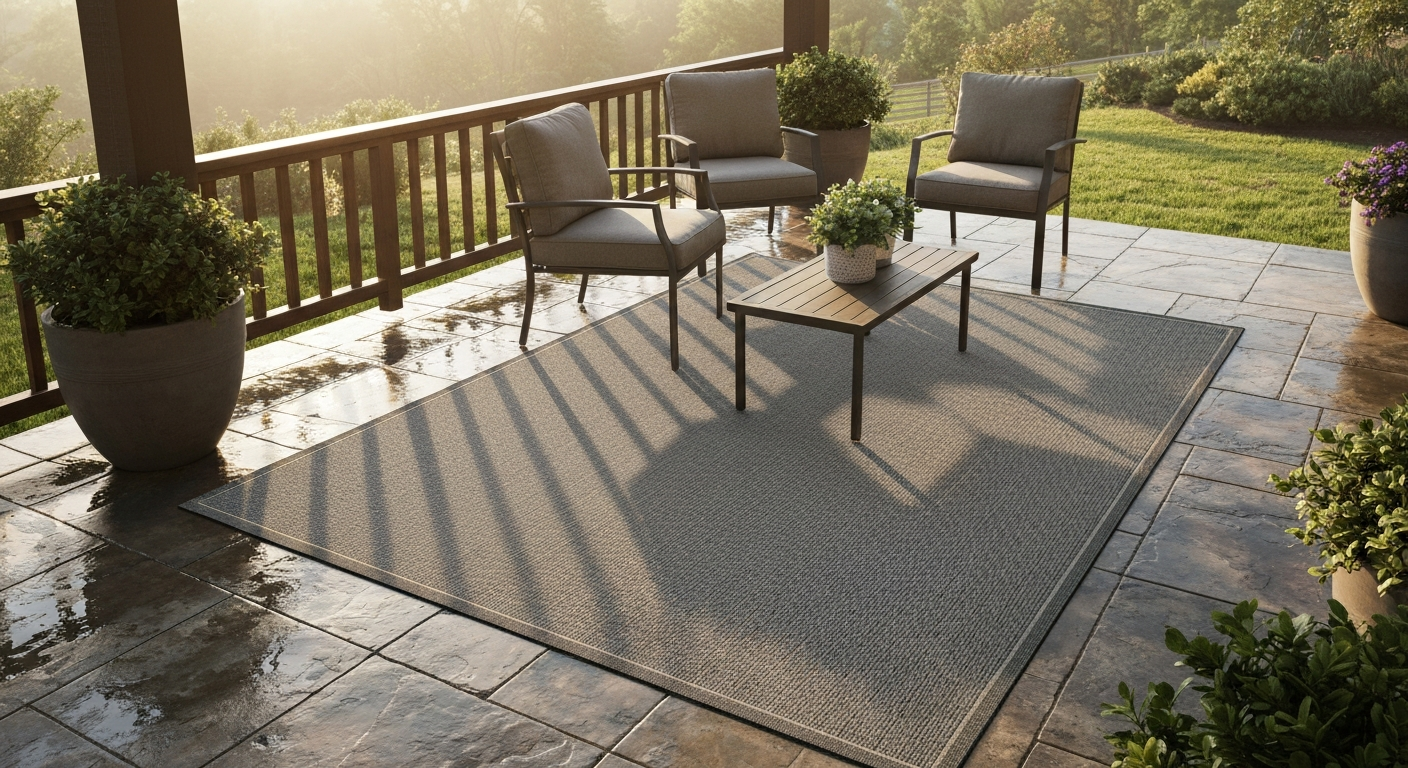
A patio mat is a low-profile outdoor floor covering designed specifically for exterior living spaces like patios, decks, and porches. Unlike indoor rugs, patio mats are built to handle sun exposure, rain, hose-downs, and foot traffic without deteriorating quickly. They serve four main jobs at once: keeping dirt from tracking indoors, adding comfort underfoot, defining a seating or dining zone visually, and improving safety with non-slip backings or surface protection under grills.
What Is a Patio Mat: Definition, Types, Uses & Buying Tips

Ada Hollis
13 Jul 2026
Quick definition: what a patio mat actually is
The term 'patio mat' gets used loosely, but at its core it describes any flat, weather-resistant floor covering placed on an outdoor living area to serve a functional or decorative purpose. What separates a patio mat from a standard indoor rug is engineering: patio mats use materials and construction methods chosen for UV resistance, moisture drainage, and easy cleaning. You can shake them, hose them off, and leave them in the rain without the mildew, color bleed, or warping that would ruin an indoor rug. They range from a small entry scraper near a back door to a large 9'x12' area rug anchoring a full outdoor dining set. For related information on patio plant varieties and care, see the article titled "what is patio rose.".
The category overlaps with outdoor rugs, and many retailers use the terms interchangeably. Where a distinction is made, 'patio mat' often refers to the more functional, simpler flat options (think woven polypropylene or rubber-backed mats), while 'outdoor rug' leans toward the more decorative, pattern-forward pieces. In practice, both belong to the same product family and the same core rules apply to both.
Who actually benefits from a patio mat
Homeowners get the most out of patio mats when they have an established outdoor seating or dining setup. A well-sized mat pulls furniture together into a cohesive zone, protects the patio surface underneath (especially composite decking and painted concrete), and cuts down on how much grit and debris gets walked back inside. If you have a grill on a wood or composite deck, a purpose-built grill mat also falls under this category and prevents ember damage and grease stains.
Renters benefit just as much, arguably more. A patio mat lets you personalize and improve an outdoor space without any permanent changes to the property. When you move, you take it with you. Many renters also use patio mats to cover cracked or stained concrete that they cannot repair themselves, instantly improving how a patio looks and feels underfoot.
Real estate shoppers often overlook patio mats when evaluating a home, but they are a useful signal. A patio mat in good condition suggests the owners have maintained and used the outdoor space actively. Shoppers checking a listing should look beneath any mat shown in photos: the surface condition underneath tells you how well the patio substrate has been protected (or neglected) over time.
Patio mat vs. doormat: different jobs, different builds
A doormat and a patio mat are related but not the same thing. Doormats, especially the classic coir (coconut husk fiber) style, are purpose-built for one task: scraping dried dirt and debris off the soles of shoes at a threshold. Their stiff, bristle-like surface does that job extremely well. Coir mats typically run 17 to 30 mm thick and are sized as small entry pieces, most commonly 18"x30" or 2'x3'. They are generally best placed in covered or semi-covered spots because untreated coir retains moisture in prolonged wet conditions, which can cause brittleness and fiber shedding over time.
A patio mat is something different in scale and intent. It is sized to cover a meaningful portion of a patio floor, typically 5'x8' and larger, and it is there to define a zone, add underfoot comfort, and contribute to the overall look of the space. It still needs to be weather-resistant, but scraping action is not its priority. If you want both, the practical answer is to use a coir doormat at the patio entry point and a larger patio mat or outdoor rug in the seating area beyond it.
Patio mat vs. outdoor rug: when each term applies
As noted, the boundary between 'patio mat' and 'outdoor rug' is mostly a retail labeling choice. That said, here is how I think about the distinction in practical terms. A patio mat tends to be the simpler, more utilitarian option: flat-weave or low-pile, often reversible, typically made from polypropylene or recycled plastic, and chosen primarily for durability and easy cleaning. An outdoor rug tends to be the version you choose when aesthetics are driving the decision: more elaborate patterns, softer pile, perhaps a bordered design that coordinates with patio furniture.
The choice comes down to your patio's exposure and how much wear the piece will take. For an uncovered patio that gets full sun and rain, a flat-weave polypropylene patio mat is the smarter pick because it drains fast and resists UV fading reliably. For a covered porch where you want something that looks like it belongs in a living room but happens to be outside, a plush outdoor rug in polyester or a treated nylon blend makes more sense. Both need weather-appropriate materials; the outdoor rug just asks you to think a little more carefully about coverage and cleaning.
Patio mat vs. grilling mat vs. anti-fatigue mat: keeping them straight
These three categories get confused because all of them can live on an outdoor surface, but they are engineered for completely different conditions. A standard patio mat or outdoor rug is not rated for direct heat exposure. If you place one under a charcoal grill, a falling ember can melt or damage it. Grill mats and deck protectors are a separate product line entirely: they use fiberglass with silicone coatings, heavy vinyl, or recycled rubber composites, and they are explicitly built for heat and grease resistance. Brands like Weber sell floor protection mats marketed as both heat-resistant and weather-resistant. If you have a grill on a wood or composite deck, this is the product you actually need under the grill, not a decorative patio mat.
Anti-fatigue mats are different again. They are ergonomically engineered with thick, resilient cores (usually nitrile rubber, vinyl, or closed-cell PVC) to reduce standing fatigue in kitchens, workshops, and industrial settings. Anti‑fatigue mats are ergonomically engineered with thicker, resilient cores (nitrile rubber, vinyl/PVC, or closed‑cell rubber) to reduce standing fatigue, and many manufacturers explicitly caution against using standard anti‑fatigue mats outdoors unless the product is rated for UV and exterior exposure Anti‑fatigue mats are ergonomically engineered with thicker, resilient cores (nitrile, vinyl/PVC, closed‑cell rubber). Most manufacturers specifically caution against using standard anti-fatigue mats outdoors unless the product is explicitly rated for UV and exterior exposure. They are not designed for decorative zone-defining on a patio, and their impermeable cores can trap moisture underneath when placed on outdoor surfaces.
| Mat Type | Primary Purpose | Key Materials | Heat/Ember Rated? | Decorative? |
|---|---|---|---|---|
| Patio mat / outdoor rug | Zone definition, comfort, décor | Polypropylene, recycled PET, polyester | No | Yes |
| Doormat (coir) | Dirt scraping at entry | Coconut husk fiber, rubber backing | No | Minimal |
| Grill / deck protector mat | Heat, ember, and grease protection | Fiberglass + silicone, heavy vinyl, rubber | Yes | No |
| Anti-fatigue mat | Ergonomic standing support | Nitrile rubber, PVC, closed-cell foam | No | No |
Common materials and what to expect from each
Material choice is the single most important decision when buying a patio mat because it determines how long the mat holds up, how it feels underfoot, and how much maintenance it needs. Here is a breakdown of what you will actually encounter on the market.
Polypropylene (olefin)
Polypropylene is the dominant material in outdoor rugs and patio mats, and for good reason. It resists UV fading, dries quickly, resists mildew, and cleans up with a hose. It is also relatively inexpensive. The trade-off is texture: thin flat-weave polypropylene can feel plasticky or scratchy underfoot, especially in low-pile versions that run just 2.5 to 6 mm. For uncovered patios in high-rain or high-sun climates, it is usually the most practical choice.
Recycled plastics (PET, HDPE)
Woven mats made from recycled PET or HDPE are 100% waterproof and among the easiest to clean. They drain well, handle full sun exposure reasonably well when UV-treated, and are a good eco-friendly option. These are common in RV and camping mats as well as patio use. Like polypropylene, they tend toward thin flat-weave profiles (2 to 6 mm) and can feel more plastic than textile.
Rubber (solid or recycled)
Rubber patio mats and rubber-backed mats are heavy, durable, and naturally non-slip. Solid or recycled rubber works well under high-traffic situations and resists grease staining in many formulations. The main caution with rubber is the backing: impermeable rubber backing on a mat placed on wood or composite decking can trap moisture underneath, potentially causing mold or staining over time. Thickness ranges widely from 1/8" to 3/4" or more depending on the application.
Coir (coconut husk fiber)
Coir is sustainable and has excellent mechanical scraping action, making it the gold standard for entry doormats. On a patio used as a general floor covering, it underperforms: it sheds fibers, can become brittle with prolonged moisture exposure, and is most comfortable in covered entry areas rather than open seating zones.
Polyester and nylon blends
UV-treated polyester and nylon blends feel softer than polypropylene and have good colorfastness when properly treated. Their weakness is mildew resistance, which is lower than polypropylene unless the fibers are specifically treated. These materials work best on covered patios or porches where they will not sit in pooled water or under direct sun for long stretches.
Jute and sisal (natural fibers)
Natural jute and sisal have genuine aesthetic appeal and an eco-friendly story, but they are poor performers when exposed to repeated wetting. Both can mildew and rot if they stay damp. They are only a sensible outdoor choice for fully covered porches in dry climates, or in indoor-adjacent transitional spaces that rarely see direct rain or standing moisture.
| Material | UV Resistance | Moisture/Mildew Resistance | Underfoot Feel | Best For |
|---|---|---|---|---|
| Polypropylene | Excellent | Excellent | Firm to moderate | Uncovered patios, full sun |
| Recycled PET/HDPE | Good (if UV-treated) | Excellent (waterproof) | Firm, plasticky | Eco-friendly, uncovered patios |
| Rubber | Moderate | Good (can trap moisture underneath) | Firm, grippy | Non-slip needs, heavy traffic |
| Coir | Good | Poor in prolonged wet | Coarse, scraping | Covered door entries only |
| Polyester/Nylon | Good (if treated) | Moderate | Soft | Covered patios, porches |
| Jute/Sisal | Poor | Poor | Textured, natural | Covered dry porches only |
Sizes, shapes, and design styles to know
Patio mats come in a wider range of sizes than most people expect. Small entry mats typically start at 18"x30" or 2'x3'. Step up to 3'x5' or 4'x6' for a small bistro area. Standard seating arrangements usually call for a 5'x8' or 6'x9'. Dining areas with a full table and chairs are best served by an 8'x10' or 9'x12', and custom or extra-large sizes exist for expansive patios. Retailers generally recommend leaving 12 to 18 inches of exposed floor around the rug edges for visual balance, and sizing a dining rug so that chairs remain on the mat even when pulled out from the table, which requires at least 24 to 36 inches of rug extending beyond the table's edge on all sides.
Shape choices include the familiar rectangle, plus runners (useful for narrow deck corridors or porch entries), round mats in 4' to 8' diameters (which work well with round conversation tables), and occasional square formats. Design styles run from simple geometric flat-weaves to boho-style tasseled rugs, coastal stripes, Moroccan patterns, and natural-texture mimics. For an uncovered patio, simpler patterns tend to hold their color better over multiple seasons because complex dye structures can fade unevenly under prolonged UV exposure.
The four main things a patio mat actually does
Dirt control
At entry points, a coir or rubber scraper mat captures dried dirt and debris mechanically before it gets tracked indoors. Further out in a seating area, a larger patio mat traps loose grit and pollen, meaning less of it ends up on your furniture and floors. This is especially useful on patios connected directly to kitchens or living rooms.
Comfort underfoot
Bare concrete, stone pavers, and even composite decking can feel hard and hot in summer. A patio mat adds a layer of cushioning and thermal insulation. Low-pile polypropylene provides modest softness; thicker-pile outdoor rugs paired with an outdoor rug pad underneath deliver noticeably more comfort, especially in barefoot zones around pool patios or outdoor showers.
Décor and zone definition
A well-chosen patio mat does for an outdoor space what an area rug does indoors: it anchors furniture, defines the boundaries of a seating or dining zone, and ties together the colors and materials of the surrounding space. This is particularly valuable on large, open patios where furniture can feel lost without a visual anchor. A mat also makes photographs of the space, including real estate listing photos, look considerably more polished.
Safety and surface protection
Non-slip rubber or latex backings reduce the risk of a mat shifting underfoot on smooth surfaces like glazed tile or sealed concrete. For decks near grills, a grill-rated mat protects the wood or composite surface from ember burns and grease drips. On painted or stained concrete, a patio mat also reduces wear at high-traffic points, extending the time before a surface needs resealing.
How patio mats work on different surfaces
The surface your patio mat sits on affects both performance and potential problems. On concrete (the most common patio surface), most mat materials perform well, but you should confirm the mat has adequate drainage or lift to prevent water pooling underneath. Rubber-backed mats on sealed concrete can trap moisture and promote mold growth if the area does not dry quickly.
On wood decking and composite decking, moisture trapped under an impermeable mat backing is a genuine concern because it can accelerate rot in wood or cause mold on composite. Opt for open-weave or slatted mats on these surfaces, or use a purpose-made outdoor rug pad with ventilation channels. For composite decking specifically, check whether the manufacturer's warranty has any exclusions around mat use, because some do.
On pavers and stone tile, mat placement is mostly straightforward, but uneven or slightly raised joints can cause mats to buckle or curl at the edges over time. Heavier mats or mats with rug tape around the perimeter solve this. On smooth tile, a non-slip backing is essential for safety.
Weather, UV, and drainage: what to check before buying
For any patio mat going on an uncovered or semi-exposed surface, UV resistance and drainage are non-negotiable features. UV-stabilized polypropylene and UV-treated recycled plastic hold their color meaningfully better than untreated synthetics or natural fibers. Look for products that explicitly state UV resistance in the product specs rather than assuming it is included.
Drainage matters both for the mat itself (so it dries fast and does not stay damp and mildewy) and for the surface beneath. Open-weave and flat-weave constructions drain far better than tightly tufted or backed mats. If your patio drains slowly or sits in a low spot that puddles after rain, drainage should be your first filter when shopping, ahead of pattern or color.
Seasonal care and storage
Most patio mats are low-maintenance, but a few habits will substantially extend their lifespan. Shake or sweep them regularly to prevent grit from embedding in the fibers and abrading the surface. Hose them down with clean water a few times per season and allow them to dry fully before repositioning, ideally standing them on edge or draping them over a railing so air reaches both sides.
For winter storage in cold climates, clean and fully dry the mat before rolling or folding. Store it indoors or in a dry shed rather than leaving it outside under snow and ice. Polypropylene and recycled plastic mats are relatively forgiving of being left out year-round in mild climates, but even these benefit from being brought in or covered during extended periods of ice and freeze-thaw cycling, which can weaken backing materials over multiple seasons. Natural fiber mats (coir, jute, sisal) should always be stored dry and should not be left outside over winter in wet climates.
Placement and installation tips
- Size the mat to your furniture layout before buying: for a dining table, the mat should extend at least 24 to 36 inches beyond each side of the table so chairs stay on the mat when pulled out.
- Leave 12 to 18 inches of exposed patio floor around the mat perimeter for visual balance.
- Use an outdoor rug pad beneath any flat-weave mat on a smooth surface (tile, sealed concrete) to prevent sliding and improve comfort.
- On wood or composite decking, choose an open-weave mat or a pad with ventilation channels to prevent moisture trapping.
- Anchor mat corners with rug tape or corner grippers on windy exposed patios; this prevents curling and tripping hazards.
- If using a mat near a grill, place a dedicated grill-rated deck protector mat directly under the grill and position the decorative patio mat at a safe distance from the heat source.
- For entry mats, position them so the full foot lands on the mat rather than stepping partially on and off the edge.
Buying guidance: what to look for and what to spend
Start with your exposure level. An uncovered patio in a sunny or rainy climate demands polypropylene or UV-treated recycled plastic. A covered porch gives you more material flexibility, including softer polyester options or even natural fiber accents. Then size the mat to your furniture before looking at patterns: buying the right size first, then narrowing by design, saves a lot of returns.
Price ranges vary widely. Small entry-style patio mats (2'x3' to 4'x6') typically run from around $15 to $80 depending on material and construction quality. Standard seating-area sizes (5'x8' to 8'x10') range from roughly $40 to $250 for solid polypropylene and recycled plastic options, and up to $400 or more for premium outdoor rugs in treated polyester or higher-end constructions. Grill mats and deck protectors are a separate purchase and generally cost $20 to $80 depending on size and heat-resistance rating.
For eco-friendly options, look for mats made from recycled PET (often labeled as made from recycled plastic bottles) or certified organic coir with natural rubber backing. Recycled PET flat-weave patio mats are currently the most widely available eco-friendly option across major retailers, offer genuinely good performance on uncovered patios, and cost comparably to virgin polypropylene mats of similar size.
A few features to check on every product listing: does it explicitly state UV resistance? Does it have a non-slip or open-weave backing appropriate for your surface? Is it listed as safe for the specific surface type you have (wood deck, concrete, tile)? These questions filter out the majority of poor choices before you even read the reviews.
Where patio mats fit into the bigger patio picture
A patio mat is a finishing layer, not a structural element, but it has a meaningful impact on how a patio functions day to day. It is one of the quickest and most affordable ways to transform a bare concrete slab or plain deck into a space that feels intentional and comfortable. Whether you are a homeowner furnishing a new outdoor room, a renter making the most of a shared patio, or a buyer evaluating a property's outdoor potential, understanding what a patio mat is and what it can do helps you make better decisions about the space. For a quick overview of related patio tools and apps, see what is patio app.
If you are still exploring the broader category of patios themselves, it is worth noting that the right mat choice often depends on the type of patio surface underneath. If you're curious about alternative patio bases, see what is patio on a pallet for a concise guide to building a simple patio using pallets. A raised patio, for example, raises different drainage and surface-material considerations than a ground-level concrete slab. Similarly, if you have encountered the term 'patio' used in other contexts, such as patio roses or patio hydrangeas, those are distinct uses of the word referring to compact plant varieties suited to outdoor container gardening rather than floor coverings or outdoor living spaces.
FAQ
What is a patio mat?
A patio mat is a low‑profile outdoor floor covering designed for exterior living areas (patio, deck, porch). It’s engineered to tolerate sun, moisture, and outdoor cleaning (hose/bench shake), and it prioritizes weather resistance, drainage, surface protection, and visual or zone definition. It differs from indoor rugs because it’s made for exposure to the elements.
How is a patio mat different from a doormat, outdoor rug, grilling mat, and anti‑fatigue mat?
Doormat: small, heavy‑scraping entrance mats (often coir) for removing debris at thresholds. Patio mat/outdoor rug: larger area coverings (commonly 3'x5' and up) to define seating or dining zones and add comfort and décor; usually weather‑rated. Grilling/deck protector: purpose‑built for heat, embers, and grease (fiberglass/silicone, heavy vinyl or rubber), not primarily decorative. Anti‑fatigue mat: thick, resilient mats made to reduce standing fatigue indoors; most are not UV/water rated and aren’t meant for long‑term outdoor exposure.
What materials are patio mats made from and what are their pros and cons?
Common materials: Polypropylene/olefin: UV and stain resistant, quick‑drying, mildew‑resistant, inexpensive; can feel plasticky and thin. Recycled PET/HDPE (woven plastics): waterproof, easy to hose off, UV‑treated options; less soft. Polyester/nylon blends: softer hand and colorfast if UV‑treated but less mildew resistance than polypropylene. Rubber (solid or recycled): durable, non‑slip, good for heavy traffic and under grills; some rubbers can stain certain floors and may trap moisture if impermeable. Coir and natural fibers (jute/sisal): good look and scraping for entries but degrade with repeated wetting; best for covered areas. Fiberglass or vinyl‑coated fabrics: used for grill mats (heat/grease resistant) rather than general décor.
What sizes and shapes do patio mats come in?
Sizes range from small entry mats (about 18"×30") and small patio rugs (3'×5', 4'×6') up to standard seating area sizes (5'×8', 6'×9') and large conversation or dining areas (8'×10', 9'×12' or custom). Shapes include rectangles, rounds (4'–8'+), and runners. As a visual guideline, leave 12–18" of exposed floor around a rug’s edges and about 24–36" of rug beyond a dining table edge so chairs stay on the rug when pulled out.
What are the main uses of a patio mat?
Typical uses: dirt control at entries (scraping and trapping debris), comfort underfoot for seating and walking, décor and zone definition to anchor furniture, surface protection under grills or furniture, and safety through non‑slip backing or textured surfaces.
How should I choose a patio mat for different patio surfaces (concrete, wood, pavers, composite decking)?
Concrete: most outdoor mats work fine; choose mats with non‑slip backing or use rug pads to prevent movement. Wood decks: choose breathable or quick‑drying materials (woven synthetics or rug pads that allow airflow) to avoid trapped moisture and staining. Pavers: flatweave synthetics and reversible rugs work well; ensure edges lie flat. Composite decking: use UV‑stable, non‑staining materials and test any backing on a small hidden area—avoid impermeable backings that can trap moisture and cause discoloration. For any surface, consider a breathable rug pad to protect the floor and improve slip resistance.
Next Article
What Is a Patio Hydrangea? Definition, Care, and Setup
Patio hydrangea means a compact hydrangea for containers; get identification, light, watering, pruning, and setup tips.