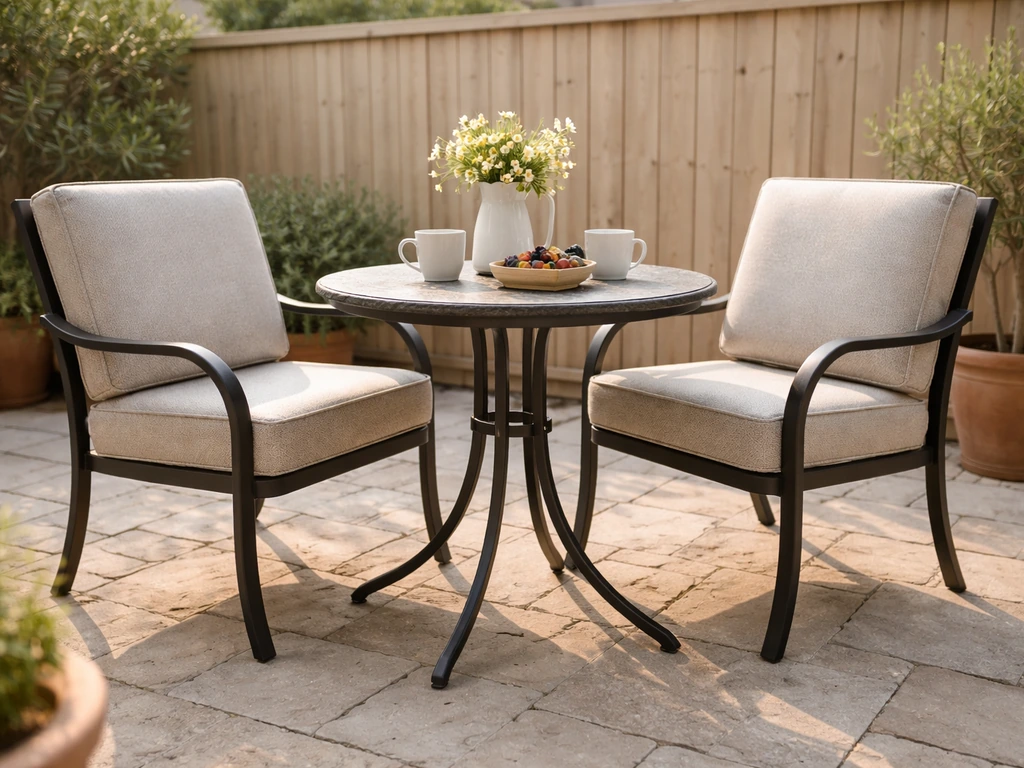
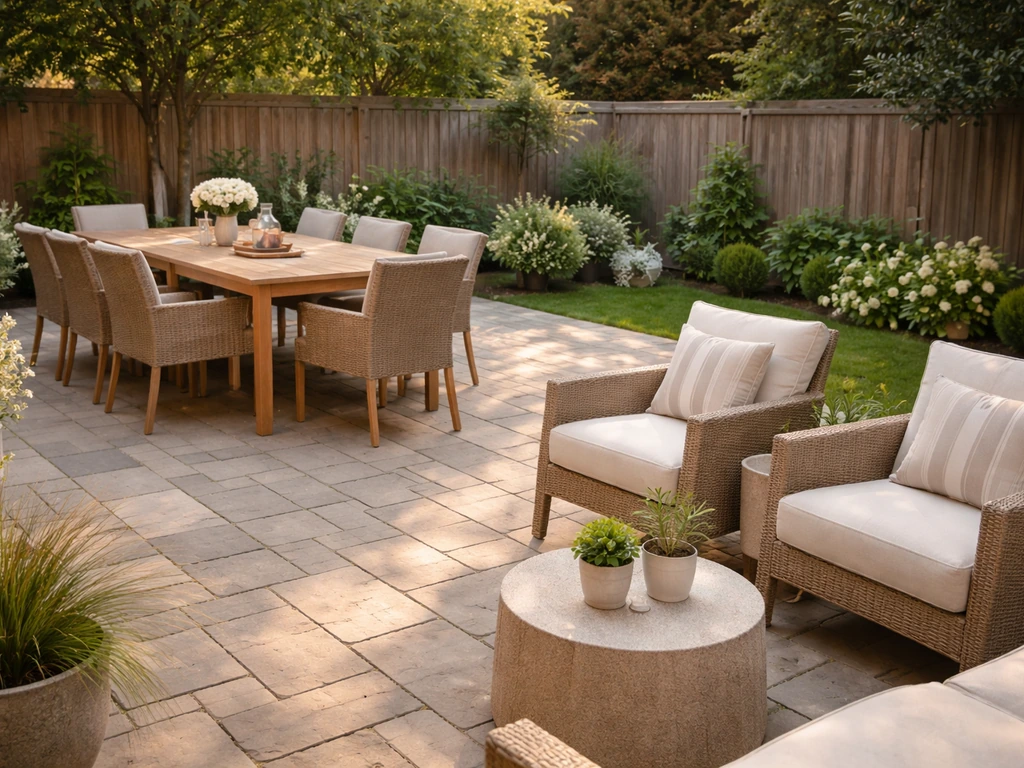
Patio seating is outdoor furniture arranged specifically for relaxing, dining, or entertaining on a residential patio. It includes chairs, sofas, benches, sectionals, and the tables that go with them, all built from weather-resistant materials designed to stay outside. The key word is "patio": patio seating lives on a ground-level outdoor surface attached to or near your home, not on a raised deck, an enclosed porch, or a second-floor balcony. That distinction matters more than it sounds, because the surface you're working with changes the layout options, the furniture weight limits, and even the style that looks right.
What Is Patio Seating Plus How to Choose Yours

Ada Hollis
9 Jul 2026
Patio seating vs. patio furniture: what's the difference?
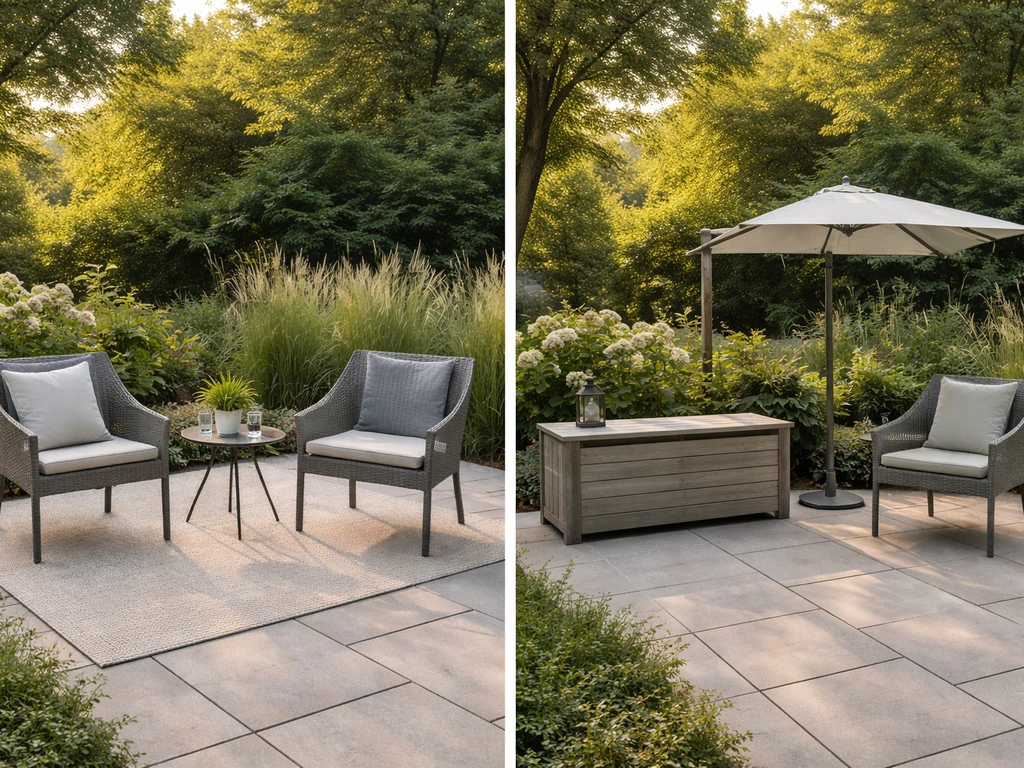
Patio furniture is the broad category. It covers everything you might put outside on a patio: tables, chairs, loungers, benches, ottomans, storage boxes, shade structures, and even outdoor rugs. Patio seating is a subset of that. A patio chair meaning is simply what patio chairs are used for, typically outdoor seating designed for relaxing or dining on a patio. It refers specifically to the pieces you sit on and the tables directly associated with them. blank" rel="noopener noreferrer">Retailers like Lowe's actually break this out as a distinct product category within patio furniture so you can filter down to just seating sets rather than browsing every umbrella and planter on the site.
In practice, when someone says "patio seating," they usually mean one of two things: a grouped arrangement of chairs and a table (a dining set or conversation set), or the act of sitting outdoors at a restaurant's patio. This article is focused on the home version, but it's worth knowing the term crosses both worlds. Cambridge Dictionary actually notes "patio" can describe outdoor seating areas at public buildings like restaurants too, which is why you'll sometimes see "patio seating" used that way in real-estate listings and restaurant reviews alike.
What actually counts as a patio (and why it matters for seating)
A patio is a paved or hard-surfaced area at ground level, usually right off the back or side of a house. Merriam-Webster defines it simply as a courtyard or outdoor area adjacent to a residence used for leisure and social activities. It's not elevated, it's not enclosed, and it's typically made of concrete, pavers, tile, brick, gravel, or stone. That ground-level, hard-surface reality is what shapes every seating decision you make: furniture legs won't sink the way they might on grass, heavier sets are fine because there's no structural load concern, and you have more layout flexibility than you would on a narrow balcony or a raised deck with railings.
Here's a quick comparison so you can see where your space lands, because a lot of people use these terms interchangeably and then buy the wrong seating for the space they actually have.
| Space | Level | Surface | Enclosed? | Seating Implication |
|---|---|---|---|---|
| Patio | Ground level | Hard surface (pavers, concrete, tile) | No | Most furniture types work; no weight limit concern |
| Deck | Elevated (wood/composite) | Planked surface | No | Check structural load; gaps can affect chair legs |
| Porch | Ground or elevated | Wood, concrete, or tile | Partially (roof/walls) | Can use less weather-hardy pieces; weather-protected |
| Balcony | Upper floor | Concrete or wood | No | Weight limits matter; space is usually compact |
| Verandah | Ground or elevated, wraps house | Wood or tile | Partially (roof) | Sheltered; wider layout options |
| Courtyard | Ground level, enclosed by walls | Paved or stone | Walls on sides | Intimate layouts; less wind exposure |
The practical upshot: if you have a true patio, you have the most freedom of any outdoor space when it comes to seating. You can go large, go heavy, and group multiple seating zones together without worrying about floor joists or tight railings.
The main types of patio seating
Patio seating broadly falls into five functional styles. If you also came across the phrase "was patio a real diet drink," it's helpful to separate that kind of name confusion from what patio seating actually means in everyday home and outdoor design. Knowing which one fits your goals before you shop saves a lot of back-and-forth.
Dining sets
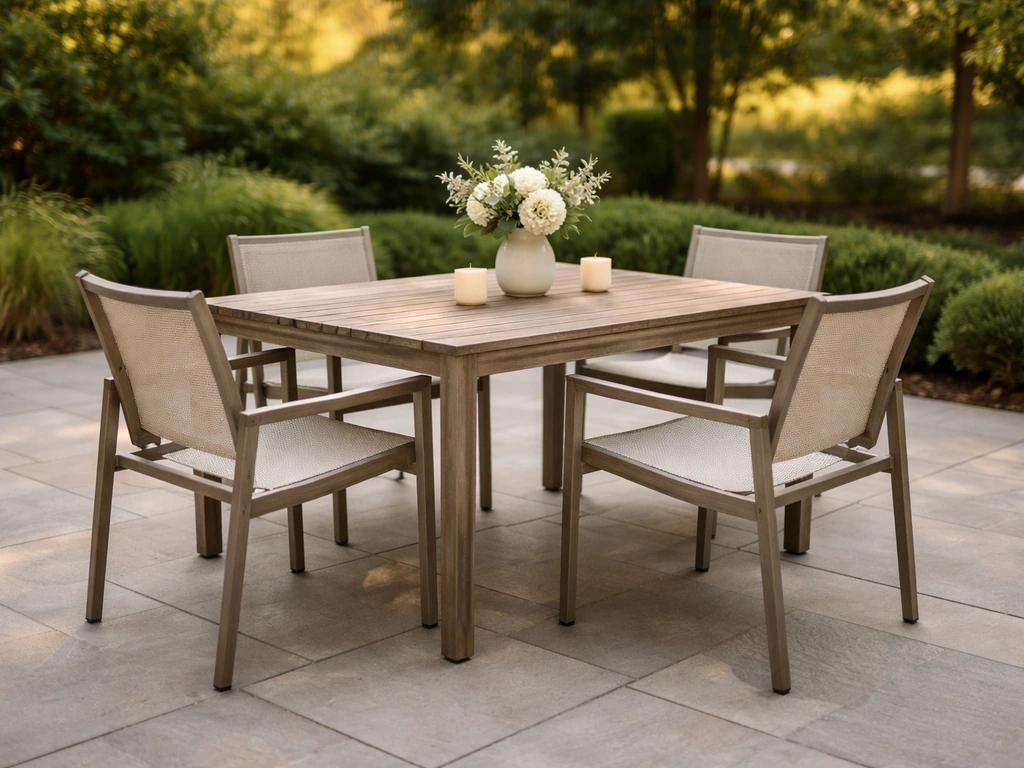
A dining set pairs a table with matching chairs, usually four to eight seats. This is the most common patio seating setup for families who want to eat outside regularly. Sizes range from compact bistro sets (two chairs and a small round table, good for 60 to 80 square feet of patio space) up to 8-person rectangular sets that need at least 120 to 160 square feet to feel comfortable. If you enjoy patio dining regularly, this is the seating type most aligned with that use.
Conversation sets
Conversation sets are built for lounging and talking rather than eating full meals. They typically include a loveseat or two-seat sofa, two club chairs, and a low coffee table. Cushioned seats sit lower than dining chairs, and the arrangement encourages face-to-face interaction. Costco's patio furniture buying guide specifically positions these as seating groupings for outdoor entertaining, which is exactly right. They're the go-to choice if your patio is more of a relaxing evening space than a dining area.
Lounge seating
Lounge chairs (also called chaise lounges) are for stretching out: sunbathing, reading, or just relaxing solo. A pair flanking a small side table is a classic patio setup near a pool or in a sunny corner. They don't work as a primary social seating option on their own but pair well alongside a conversation set on larger patios.
Sectionals
Outdoor sectionals bring the indoor sofa experience outside. They're modular, meaning you can rearrange corner pieces, ottomans, and middle units to fit your specific patio shape. They work best on larger patios (100 square feet or more) and are particularly popular for fire-pit seating arrangements where you want several people grouped around a central focal point.
Bench sets
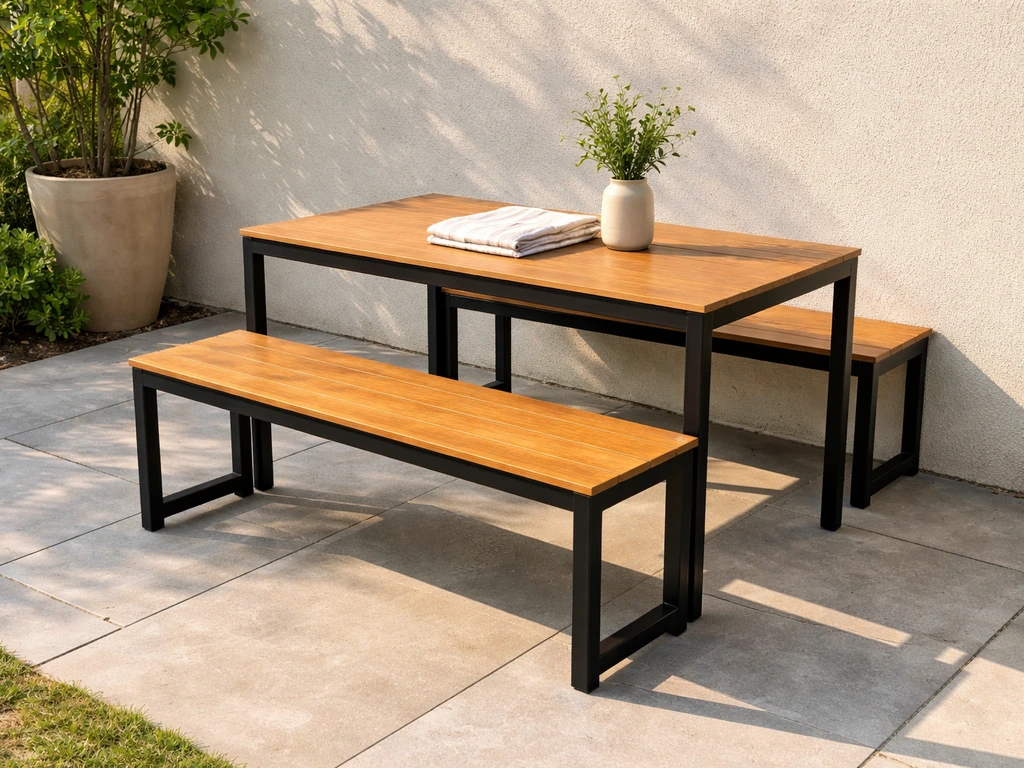
A picnic-style bench-and-table set or a freestanding bench paired with a table is the most space-efficient patio seating option. Benches slide in neatly and can seat more people per linear foot than individual chairs. They're common on smaller patios or for people who want seating that doubles as simple, low-maintenance outdoor furniture.
Materials and weather-readiness
Patio seating lives outdoors, so the material question isn't just about looks. It's about how much maintenance you're willing to do and how harsh your local weather gets. Here's how the main options stack up.
| Material | Durability | Maintenance | Best Climate | Weight |
|---|---|---|---|---|
| Aluminum | Excellent (rust-proof) | Very low | All climates | Light |
| Wrought iron / steel | Very good (can rust if coating chips) | Low to medium | Dry or mild climates | Heavy |
| Teak wood | Excellent (natural oils resist moisture) | Low (oil annually to maintain color) | All climates | Heavy |
| Eucalyptus wood | Very good | Low to medium | All climates | Medium-heavy |
| Pine / softwood | Fair (needs sealing) | Medium to high | Dry climates or covered patios | Medium |
| All-weather wicker / resin rattan | Good (UV-stabilized resin) | Very low | All climates | Light to medium |
| High-density polyethylene (HDPE) | Excellent | Very low (hose off) | All climates | Light to medium |
| Fabric cushions (polyester/Sunbrella) | Good with covers | Low (spot clean; store in winter) | All climates with covers | N/A |
A few practical notes: cushions are where most people underinvest. Outdoor cushions made with Sunbrella or similar solution-dyed acrylic fabrics resist fading and mildew far better than cheap polyester fills. For any climate with cold winters, covers and/or indoor storage extend the life of cushions by years. Aluminum frames with all-weather wicker panels are currently the most popular combination because they deliver the look of traditional rattan without the rot risk.
Sizing and layout: how to get it right before you buy
The single most common patio seating mistake is buying a set that's too large. Measure your patio before you do anything else. A simple rule: leave at least 3 feet (about 90 cm) of clearance around every seating group for walkways and to pull chairs out comfortably. That means a 6-person dining set with a table roughly 36 by 72 inches needs a patio at least 12 by 14 feet to feel comfortable, not cramped.
For conversation sets and sectionals, think about focal points. If you have a fire pit or a great view, orient the seating toward it. Chairs and sofas in a conversation group should be close enough that people don't have to raise their voices, typically no more than 8 to 10 feet apart. For patios large enough to support two seating zones (say, a dining area and a lounge area), use planters, a change in paving material, or an outdoor rug to visually separate the zones without building a wall.
Shade is worth planning around too. A seating area that gets full afternoon sun in July in Arizona is essentially unusable without a pergola or umbrella. Mark where the shade falls on your patio at noon and at 4 p.m. before committing to a layout. A dining table with a center umbrella hole gives you flexibility; a fixed pergola gives you more coverage but less flexibility.
Quick sizing reference by patio area
| Patio Size | Recommended Seating Type | Max Seats Comfortably |
|---|---|---|
| Under 60 sq ft | Bistro set (2 chairs + small table) | 2 |
| 60 to 100 sq ft | 4-person dining set or small conversation set | 4 |
| 100 to 160 sq ft | 6-person dining set or conversation set + loungers | 6 |
| 160 to 250 sq ft | 8-person dining set or sectional + dining area | 8 to 10 |
| 250+ sq ft | Multiple seating zones (dining + lounge + fire-pit seating) | 10+ |
What to check before you buy: a practical checklist
Once you know your patio size, your climate, and your primary use (dining vs. lounging vs. entertaining), use this checklist to evaluate any seating set before purchasing.
- Measure your patio and confirm the set fits with 3-foot walkway clearance on all sides
- Check the frame material against your climate (aluminum or teak for wet climates; wrought iron works well in dry climates with UV protection)
- Sit in the chairs if possible, or check seat height and depth specs: 17 to 19 inches high is standard dining height; 14 to 16 inches is typical for lounge/conversation chairs
- Look for cushion fill weight (higher fill weight = more comfort and durability) and fabric type (solution-dyed acrylic outlasts polyester by years)
- Check whether replacement cushions are sold separately, which matters after 3 to 5 years of use
- Confirm assembly requirements: some sectionals and dining sets need significant assembly and specialized tools
- Plan for storage: if you live in a climate with freezing winters, budget for furniture covers or indoor storage, especially for cushions
- Consider accessories that turn a basic set into a full outdoor room: outdoor rug, umbrella or pergola, side tables, and weather-resistant lighting
- Check the warranty: good aluminum or HDPE sets typically carry 3 to 5-year frame warranties; wicker weave warranties are usually shorter
One tip that saves money long-term: buy the best-quality frame you can afford and replace cushions as needed. Frames from quality manufacturers last a decade or more. Cushions wear out faster, but they're cheaper and easier to swap. A mid-range aluminum conversation set with quality Sunbrella cushions will outlast and outperform a "premium-looking" set with a cheap steel frame and thin polyester cushions.
If you're still figuring out the bigger picture, the type of patio you have shapes what seating works best, which connects directly to questions about patio furniture in general and more specific pieces like patio chairs. If you want to understand patio furniture meaning, it helps to know that it refers to the outdoor pieces used on a patio, not just the seating itself. And if you're drawn to the dining side of things, understanding what patio dining actually means as a use case can help you decide whether a full dining set or a more flexible conversation-plus-side-table setup makes more sense for how you actually live outdoors.
FAQ
Does patio seating only mean furniture for a ground-level patio?
If you have a raised deck, an enclosed porch, or a second-floor balcony, you can still use outdoor furniture, but it does not technically match the definition of patio seating used in most home design discussions. Deck and balcony layouts usually need lighter sets and different anchoring because of railing access and different floor support considerations.
What should I look for if I’m shopping for patio seating sets?
Yes. Many people search “patio seating” when they mean “patio furniture sets,” so check whether the product includes both seating and the matching table(s). If it does not specify a set, you may be looking at individual chairs or loungers that do not come with the dining surface.
How much space do I really need around a patio seating arrangement?
Start with the clearance rule, then test chair pull-out and door swings. A common mistake is allowing walkway clearance but not accounting for the extra space needed to sit down and slide chairs back without bumping a wall, planter, or nearby gate.
Why do some “comfortable” patio sets feel worse outdoors?
Cushions are only half the comfort equation. For damp climates, prioritize quick-dry cushions, breathable fabric, and frames that won’t rust. For very hot climates, look for lighter colors and cushions with UV-resistant fabric, otherwise softness can fade and buildup heat can make seating uncomfortable.
Are there any buying details I should confirm about delivery and setup?
Measure the heaviest item you plan to move frequently, like a sectional component or storage bench, and confirm the delivery method. Modular sectionals can arrive in multiple boxes, and some “free shipping” listings do not include carrying inside the home or down stairs.
Can I choose patio seating that works for both dining and lounging?
Often, yes. If you want to use the space for both dining and entertaining, consider a flexible setup like a conversation set plus an additional side table, or a bistro dining set paired with lounge chairs. A fixed large dining set can be hard to reconfigure if you host casually or move seating seasonally.
How do I choose patio seating for rainy or snowy weather?
If your patio gets frequent rain or snow, look for rust-resistant frames and cushions designed to tolerate moisture, then plan for covers and airflow. Covers help, but closed covers without ventilation can trap moisture, so choose breathable cover materials when possible.
Is it okay to mix patio dining chairs with lounge pieces or tables?
You can, but you should match the height and materials to the seating type. Dining tables need enough clearance for chair backs and armrests, while conversation tables are usually lower. If you mix heights without checking, you can end up with awkward reach distances for drinks and food.
What order should I decide things in, use case, shade, and layout?
A great starting point is aligning your seating with the “main use,” then adding shade and sightlines. If you often eat outdoors, prioritize dining shade first. If you entertain evenings, prioritize wind direction and warmth near heaters or a fire pit so guests stay comfortable.
What patio seating works best for small or oddly shaped patios?
Yes, for example, in very narrow patios, bench-and-table layouts can outperform multiple individual chairs because benches pack people more efficiently. If your patio is long and skinny, two smaller groupings along the length can work better than one oversized set that blocks circulation.
Next Article
Patio Chair Meaning: What It Is, How to Choose One
Get the real patio chair meaning, plus how to choose outdoor-safe styles, size for comfort, and match your patio layout.