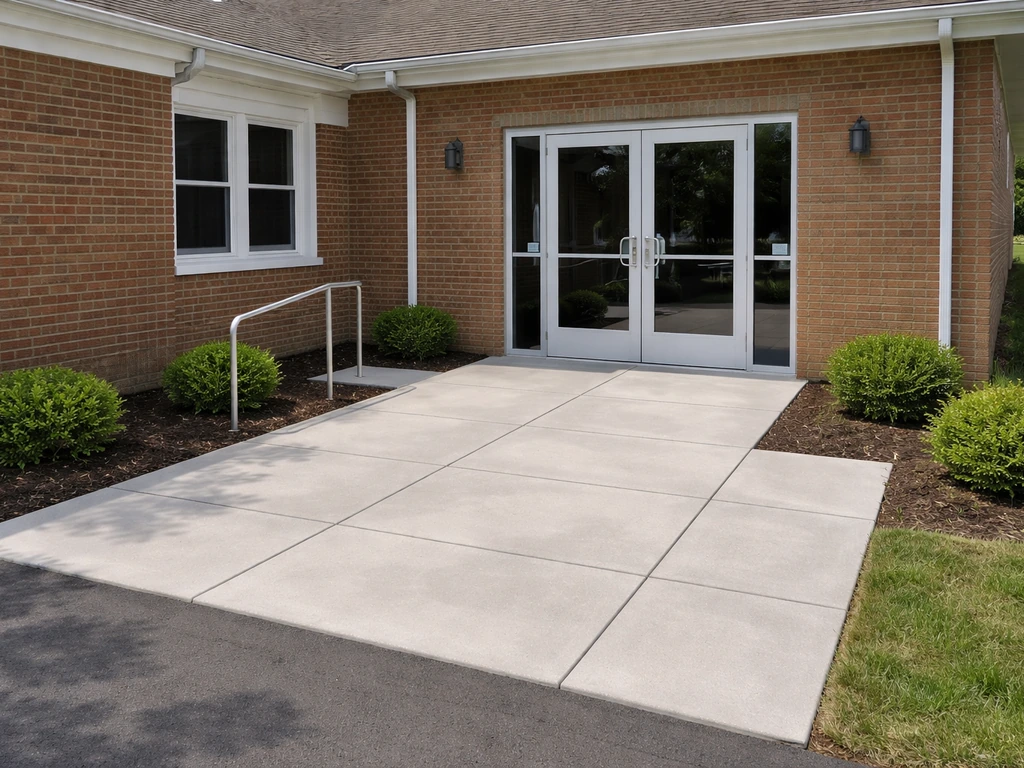
A back patio is a paved or hardscaped outdoor area located at the rear of a home, used for sitting, dining, and relaxing. It sits at ground level, connects directly to the house (usually through a back door or sliding glass door), and is typically made from concrete, pavers, brick, or stone. It is not covered by a roof by default, though many back patios have pergolas, awnings, or patio covers added on top. That is the core meaning, and it is pretty consistent whether you see the term in a real estate listing, a renovation forum, or a neighbor's backyard.
Back Patio Meaning: What It Is and What Listings Imply

Ada Hollis
2 Jul 2026
What actually makes something a patio
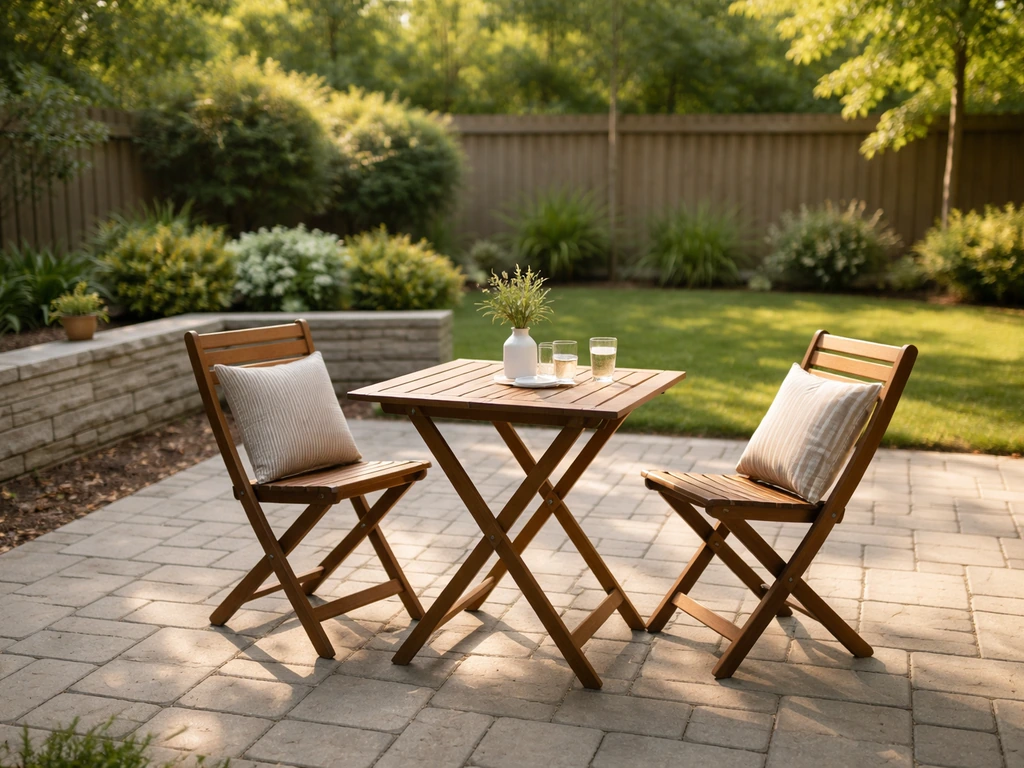
The word patio comes from Spanish, and in residential architecture it refers to an outdoor area that adjoins a structure and is typically paved with hard materials. Cambridge Dictionary defines it as an outdoor area connected to a house where people can sit and relax or eat. Collins is even more concrete: a flat area of blocks or concrete next to a house. So the two defining traits are a hard surface and a connection to the home.
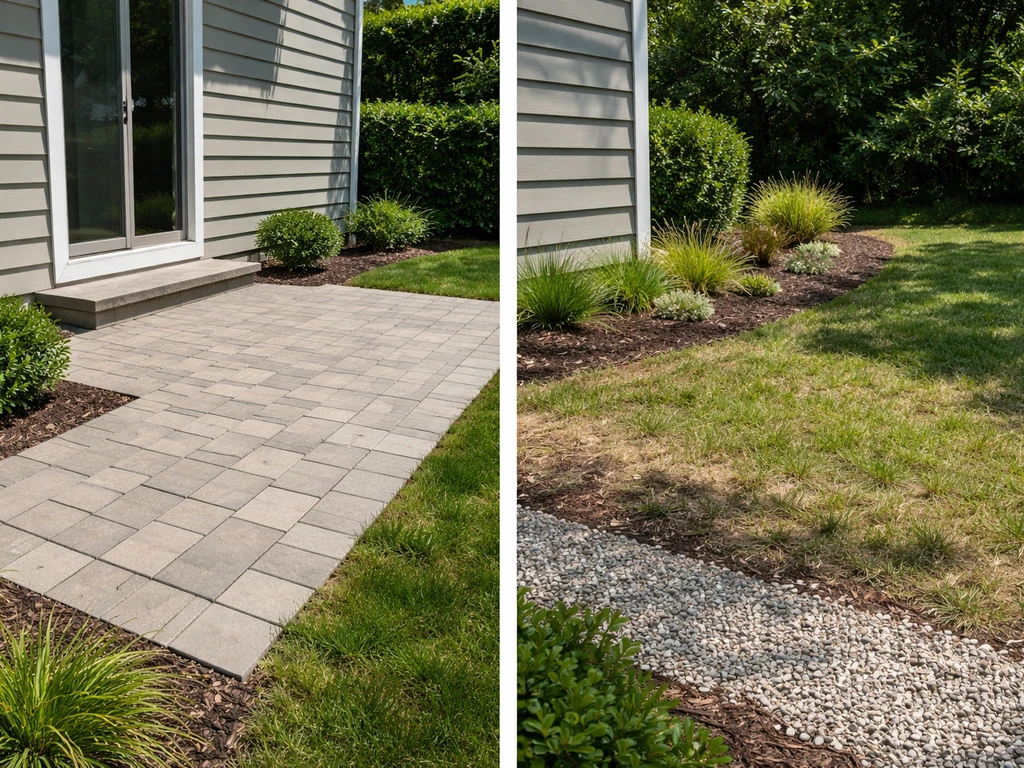
What a patio is not: it is not a lawn, a garden bed, or a loose gravel area. It is not elevated off the ground (that would make it a deck). It is not enclosed by a roof structure (that would push it toward porch or veranda territory). It can be freestanding or attached, covered or uncovered, but the ground-level hard surface is what makes it a patio rather than any of those other things.
The surface material matters more than most people think. Concrete slabs, clay pavers, natural stone, and brick are all patio materials. A wooden platform at ground level can blur the line with a deck, but if it uses masonry or concrete, almost everyone would call it a patio.
Back patio vs front patio vs side patio
The word back simply tells you where on the property the patio sits. A front patio faces the street, which makes it more of a social, curb-appeal feature than a private retreat. A side patio tucks along a side yard and often doubles as a utility corridor or secondary access. A back patio is the most common configuration because the rear of the home offers the most privacy from neighbors and passing traffic, and it typically has the most usable square footage.
Back patios are also where most homeowners invest more heavily in seating, outdoor kitchens, fire pits, and shade structures, because they are genuinely used for daily living rather than curb appeal. In rental listings you will often see phrasing like private back patio to signal that the outdoor space is screened from public view, which is a meaningful distinction if you are renting in a dense neighborhood. In real estate listings, a private patio meaning usually implies the space is screened or positioned to reduce visibility from neighbors or the street.
From a sun-exposure standpoint, a south-facing back patio (in the Northern Hemisphere) gets the most direct sun throughout the day, which is great in winter and potentially brutal in summer. A north-facing back patio stays shadier. This is worth checking when you look at listing photos or floor plans, because it affects usability at different times of day and year.
How a back patio compares to a porch, veranda, balcony, deck, courtyard, and lanai
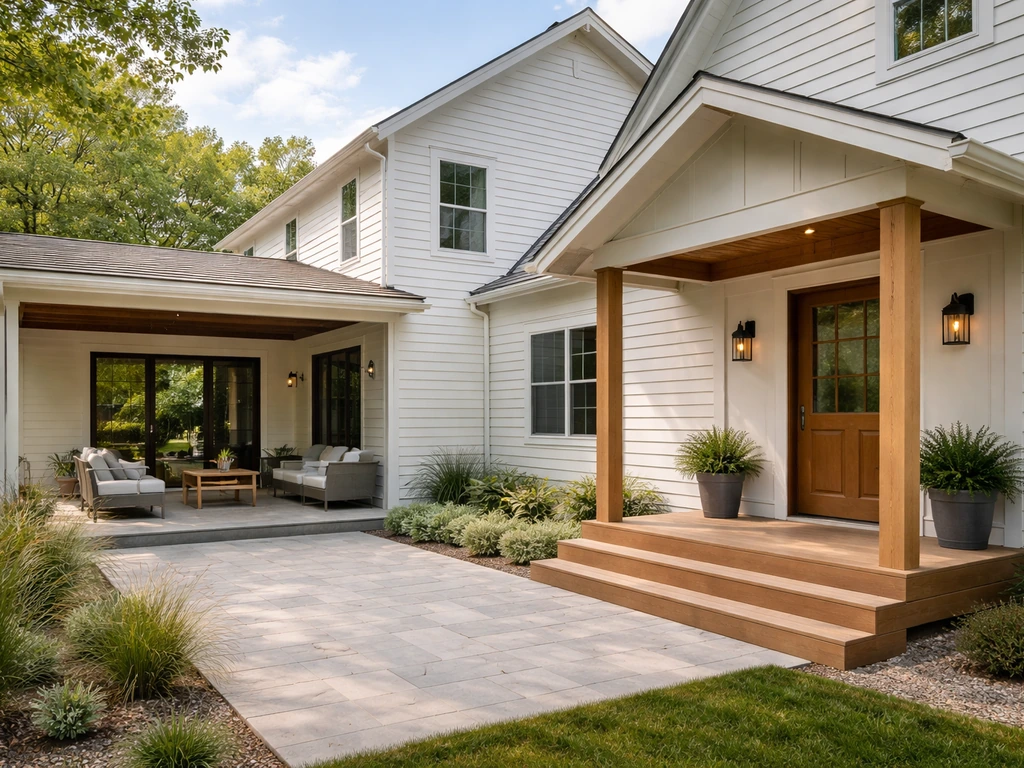
These terms get mixed up constantly, even in professional listings. Here is a clear side-by-side breakdown, followed by short explanations for each.
| Feature | Back Patio | Porch | Veranda | Balcony | Deck | Courtyard | Lanai |
|---|---|---|---|---|---|---|---|
| Level | Ground | Ground or raised | Ground | Elevated (upper floor) | Raised/elevated | Ground | Ground or slightly raised |
| Surface | Paved/masonry | Wood, concrete, or composite | Wood or masonry | Concrete, tile, or wood | Wood or composite | Paved/masonry | Concrete, tile, or screened |
| Roof/cover | Usually open, sometimes covered | Always covered | Always covered/roofed | Usually uncovered | Usually open | Open to sky | Always roofed, open-sided |
| Enclosed? | No | Partially (columns/railings) | Partially (columns) | Partially (railings) | Partially (railings) | Yes (walls/buildings) | Partially (screens or posts) |
| Location | Rear of home | Front/rear entrance | Perimeter of home | Exterior wall, upper floor | Attached to rear/side | Interior of building cluster | Common in Hawaii/Florida |
| Typical use | Dining, lounging, entertaining | Entry/transition space | Casual living, socializing | Small outdoor sitting area | Entertaining, grilling | Private enclosed retreat | Shaded outdoor living |
Porch
A porch is always covered and is attached to the house at an entrance point. It functions as a transitional space between indoors and outdoors. MLS glossary definitions describe a porch as a covered area attached to the front, back, or side of a house, usually at the entrance. If there is a roof over it, it is almost certainly a porch rather than a patio, regardless of what a listing calls it.
Veranda (or verandah)
A veranda is a roofed, open-air gallery or porch attached to the exterior of a building. Merriam-Webster defines it exactly that way. The key difference from a patio is the roof: a veranda always has one, and it typically wraps around more of the home's perimeter. You see verandas commonly on older homes, farmhouses, and properties in tropical climates. If a listing says veranda, expect a roofed structure with columns.
Balcony
A balcony is elevated, attached to an upper floor of the building, and surrounded by a railing. It is not at ground level. If a listing mentions both a back patio and a balcony, those are two separate outdoor spaces at different floors. Balconies are common in apartments and two-story homes. They are typically small and not suitable for large furniture or entertaining.
Deck
A deck is a raised outdoor platform, most commonly made from wood or composite material, attached to the rear or side of a house. It is elevated off the ground, often to match the height of a back door or first-floor level. Unlike a patio, a deck has structural underpinnings and requires different maintenance (sealing, staining, checking fasteners). If the listing photo shows a wood surface raised even a few steps above ground, that is almost certainly a deck, not a patio.
Courtyard
A courtyard is an outdoor space that is bounded by walls or buildings on multiple sides and is open to the sky. It is more enclosed than a typical back patio. Some outdoor living guides note that if a patio is surrounded by walls on all sides, it starts functioning as a courtyard. In real estate, courtyard usually signals more enclosure and privacy, often in Spanish-style or Mediterranean architecture.
Lanai
A lanai is a roofed, open-sided outdoor living space originating in Hawaii. Think of it as a covered patio or veranda, often screened to keep out insects, and common in Hawaii and Florida. If a listing uses the term lanai, it means there is a roof and the space is partially or fully screened. It differs from a standard back patio because of the overhead cover and the screening.
Rooftop patios are another variation worth knowing about, where the patio surface sits on top of a flat roof rather than at ground level. If you are wondering rooftop patio meaning, it usually refers to a patio built on top of a flat roof rather than at ground level Rooftop patios.
What "back patio" looks like in real estate listings
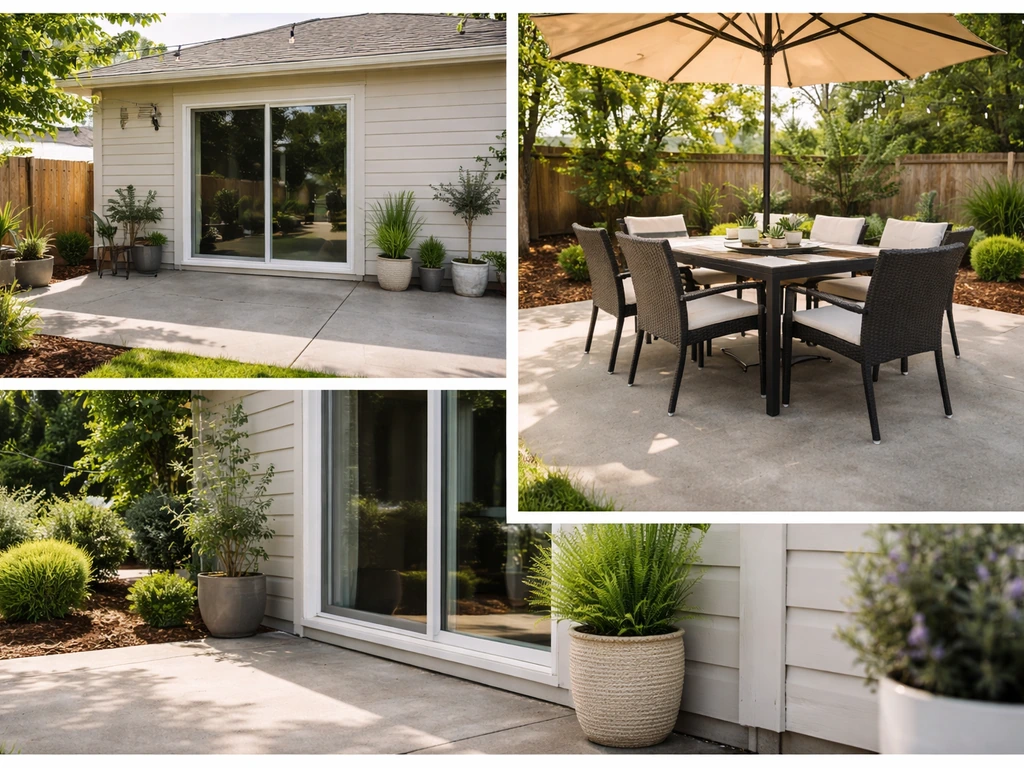
Back patio appears as both a searchable amenity filter on major platforms like Redfin and Zillow, and as descriptive copy in listing text. Common phrases you will see include private back patio, direct access to the back patio, and back patio ideal for relaxing or entertaining. These phrases do useful work: private signals the space is not shared or visible from the street; direct access usually means a sliding glass door or French doors open right onto it; and ideal for entertaining signals it is large enough for a table and chairs, not just a step-out pad.
When evaluating a listing, look at the photos and floor plan with these questions in mind: Is the surface paved or just grass? Is there a roof over it, or is it open to the sky? Does it connect to the living room, dining room, or kitchen (high-use access is better than a back bedroom)? How large is it, and does the listing give square footage? A patio described as private but shown as a narrow concrete strip between two fences is functionally very different from a 400-square-foot stone patio with a pergola.
Also watch for terminology inconsistency. Some listings use patio and deck interchangeably, and some use patio when they mean covered porch. If the photo shows wood planks raised off the ground, it is a deck. If it shows a roofed structure at the entrance, it is a porch. Do not rely on the label alone: look at the photo and, when in doubt, ask the agent for clarification or square footage.
Practical things to think about before you use or buy a back patio
Privacy
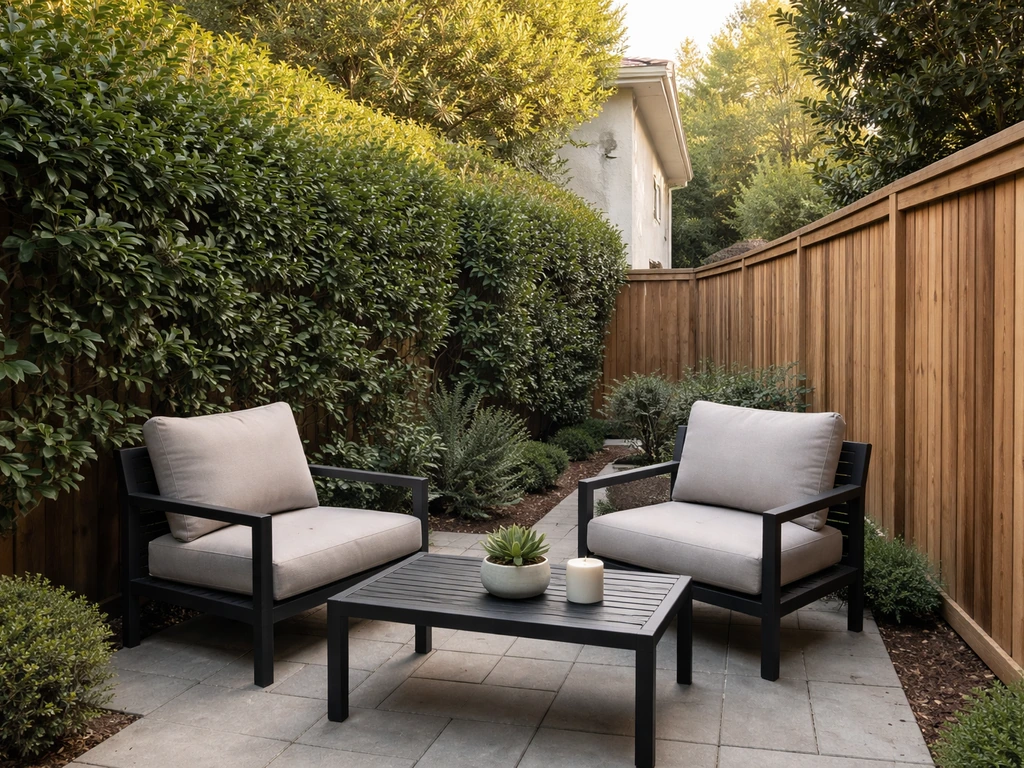
A back patio offers more natural privacy than a front patio simply because it faces away from the street, but that does not mean it is automatically private. If neighboring homes are close, two-story, or have elevated decks or balconies overlooking your yard, your back patio may still feel exposed. Check the listing photos carefully for fence height, surrounding structures, and the relationship of your patio to neighboring sightlines.
Sun exposure and shade
Orientation determines how usable a back patio is at different times of day. A west-facing patio gets afternoon and evening sun, which is pleasant in spring and fall but can be uncomfortably hot during summer afternoons. East-facing patios get morning sun and shade by afternoon. If the listing does not show clear orientation, use a mapping tool to check. Also look for whether there is a pergola, awning, or large tree providing shade, since an uncovered concrete slab with full afternoon sun in July can be practically unusable without some cover.
Access from the home
The most useful back patios connect directly to a kitchen, dining area, or main living space. That direct flow is what makes a patio feel like an extension of the home rather than a destination you walk through a back bedroom or utility room to reach. No contexto bíblico, o patio do tabernaculo também era um espaço externo usado para atividades ligadas ao culto. Listing copy that says something like the dining space provides direct access to the back patio is specifically calling this out as a feature because it genuinely affects daily use.
Drainage and grading
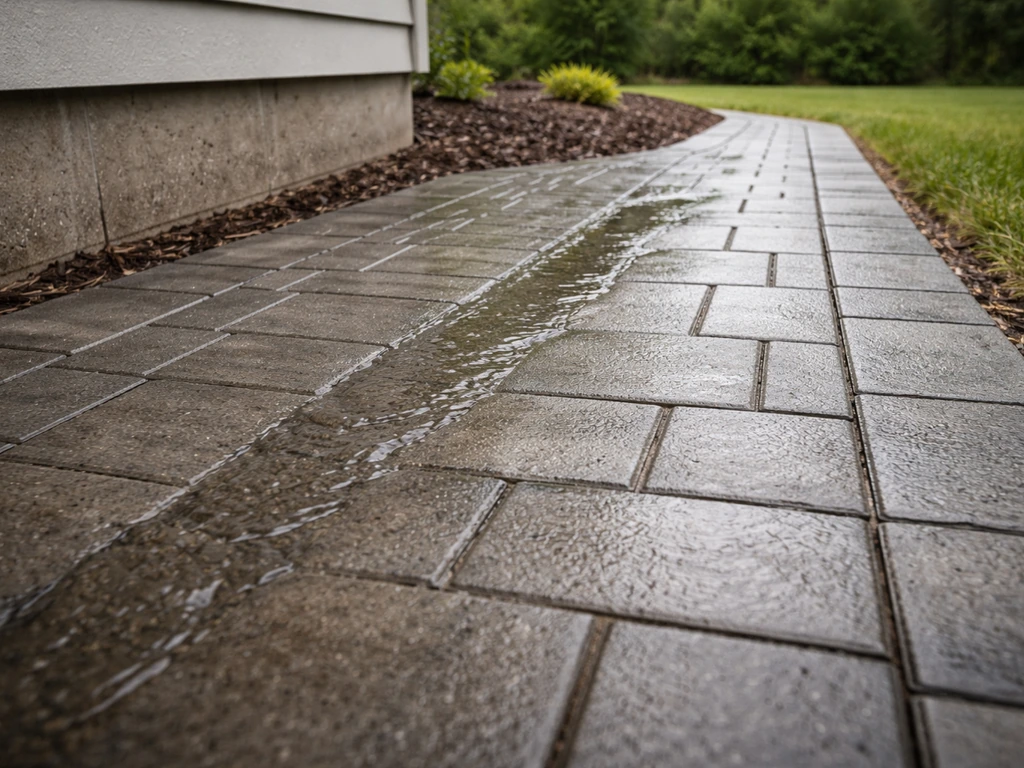
Drainage is one of the most overlooked practical concerns with patios. A properly installed patio should slope slightly away from the home, so rainwater runs toward the yard and not toward the foundation or back door. If a patio is flat or slopes toward the house, you can end up with pooling water near the foundation, which causes long-term problems.
During a showing or inspection, look for water staining near the back door threshold, low spots where water pools on the surface, or efflorescence (white mineral deposits) on the paver joints, all of which signal drainage issues. Covered patios add another variable: the roof or patio cover needs its own drainage design so water does not collect at the tie-in point with the house.
Maintenance
Compared to a deck, a paved patio is generally lower maintenance. There are no boards to sand, seal, or replace, and no structural fasteners to check. But patios still need attention. Concrete slabs can crack over time, especially in climates with freeze-thaw cycles.
Pavers can shift or sink if the base was not properly compacted. Joints between pavers can fill with weeds. Algae and moss build up on shaded surfaces, making them slippery. A quick inspection of the surface during a showing, looking for cracks, sunken sections, loose pavers, or staining, tells you a lot about how well the patio was installed and maintained.
If there is a patio cover or pergola, check the attachment point to the house wall and look for any signs of water intrusion around that junction.
If you are renting rather than buying, most of these structural concerns are the landlord's responsibility, but drainage and usability still affect your day-to-day experience. A patio that pools water after rain or sits in direct sun all afternoon is a real quality-of-life issue, not just a cosmetic one. It is worth walking the space at different times of day, or at least asking the right questions before signing a lease.
FAQ
Does “back patio” always mean it is private and not overlooked by neighbors?
Not necessarily. “Back patio” only indicates location and type (ground-level, hard surface, connected to the home). Privacy depends on fence height, neighboring windows and elevated decks, and whether the patio is screened or set back from sightlines, even if the listing uses the word “private.”
If a listing says “back patio,” can it be covered by a roof?
Yes. A patio can be uncovered or topped with a pergola, awning, or patio cover. The key is that the space remains ground-level and uses a hard outdoor surface, but if it is a fully roofed entrance space attached to a doorway, it is more often a porch.
Is a “patio” the same thing as a “courtyard” on a home listing?
They overlap, but they are not identical. A courtyard is typically more enclosed by walls or surrounding buildings on multiple sides, so it feels more sheltered than a typical back patio. If the space is bounded on most sides, the listing may be signaling “courtyard” level privacy.
How can I tell whether a “back patio” is actually a deck?
Look for elevation and surface construction. If the surface is raised off the ground with a visible structure or steps matching a door height, it is usually a deck. If it is at ground level and paved with concrete, pavers, brick, or stone, it is far more likely a patio, even if it is partially built up.
Can a back patio include a hot tub or outdoor kitchen, or is it only for casual seating?
Listings often imply capacity when they mention entertaining, but you should verify practical constraints. Check whether the patio has adequate electrical access, gas lines, and drainage near appliances, since adding these can require permits and specific placement for ventilation and water management.
What does “direct access to the back patio” mean in a listing?
It usually means you can step out immediately from an interior living space, most commonly from a kitchen, dining area, or main living room via a sliding glass door or French doors. It is less desirable if access is through a back bedroom, hallway dead-end, or utility area, because that changes traffic flow and daily convenience.
If the listing doesn’t mention square footage for the patio, how should I estimate its size?
Use the floor plan scale and the photo angles, and compare door locations to the patio edge. If the listing shows a yard diagram or provides measurements, request the patio dimensions directly from the agent, because marketing photos often understate or overstate the usable area.
What drainage problems should I look for during a showing?
Check for pooling after rain, staining near the back door threshold, low spots that hold water, and white mineral deposits on joints (efflorescence). Also look at the slope away from the house, since a flat or inward-sloping patio can push water toward the foundation.
Does patio orientation (east, west, north, south) really matter if there is a pergola?
It still matters, but shade can change the impact. A pergola or awning reduces direct sun, yet you should check if the cover blocks the harsh hours for your use times (morning coffee, evening dining). If shade is partial, a west-facing patio may still be hot in summer afternoons.
Are weeds and moss on a patio a red flag, or just cosmetic?
They can be both. Weeds in paver joints suggest weed growth is not being controlled, which can point to drainage or base issues if it keeps returning. Moss and algae often form on shaded, damp surfaces and can make the patio slippery, so treat it as both a safety and maintenance signal.
What questions should I ask the agent if I suspect the patio description is inconsistent with the photos?
Ask what the outdoor area is officially recorded as (patio, deck, porch, lanai), whether it is ground-level or elevated, whether it is included in any square footage, and who handled drainage or any patio cover tie-in details. Request clarification in writing if the photos show conflicting elements like a roofed entrance or raised boards.
If I’m renting, what patio issues should I still address before signing?
Even if maintenance is the landlord’s job, usability is your daily reality. Walk the patio at different times if possible, confirm responsibility for drainage and leaks (especially around patio covers), and document any standing water, unstable pavers, or persistent dampness near doors.
Next Article
Church Patio Meaning: What It Is, Where It Is, and How to Spot It
Understand church patio meaning: outdoor overflow area near entrances, how to spot it vs porches courtyards and more.