
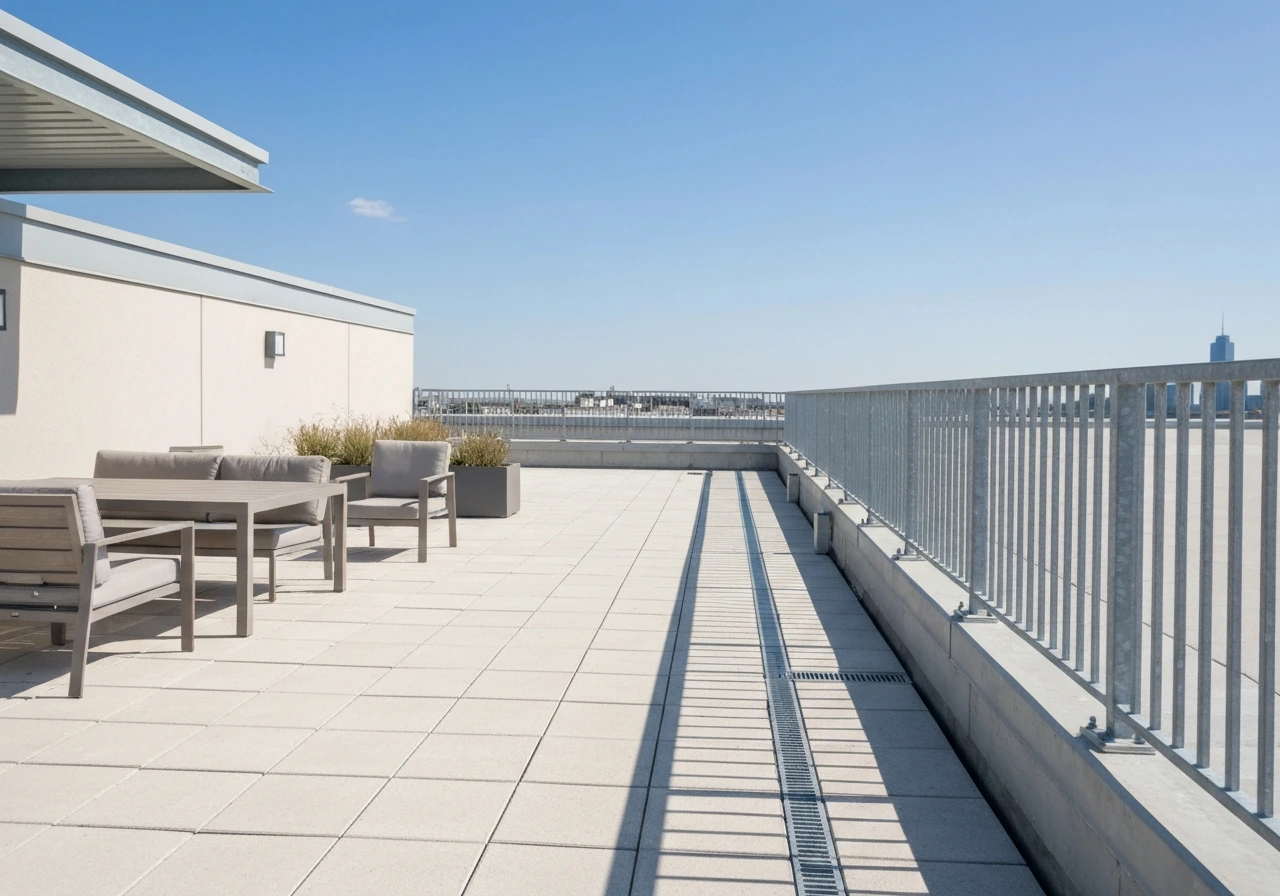
A rooftop patio is an outdoor living space built on top of a building's roof. It works exactly like a ground-level patio, just elevated: you go up there to sit, relax, entertain, or garden, but instead of standing on a slab at grade, you're standing on a finished surface laid over the roof structure. The 'patio' part tells you it's meant for living and lounging, not just walking across to fix an antenna.
Rooftop Patio Meaning: Definition, Types, and What to Check

Ada Hollis
2 Jul 2026
What 'rooftop patio' actually means
In residential architecture, a patio is a hard-surfaced outdoor area directly attached to (or part of) a home, intended for outdoor living. It has no overhead cover by definition, it sits at or near ground level in traditional use, and it's paved or finished rather than just raw ground. A blank" rel="noopener noreferrer">[rooftop patio](/back-patio-meaning) takes that same concept and relocates it to the roof. The roof becomes the floor, and the outdoor living space sits on top of it.
Collins English Dictionary specifically defines 'rooftop' as the outside part of the roof of a building, which is essentially the spatial definition at work here: a rooftop patio is a patio occupying that outside roof surface. It can sit atop a single-family home, a garage, a low-rise apartment building, or any flat or near-flat roof that's been made accessible and finished for human use.
Rooftop patio vs. roof deck vs. terrace: the naming confusion explained
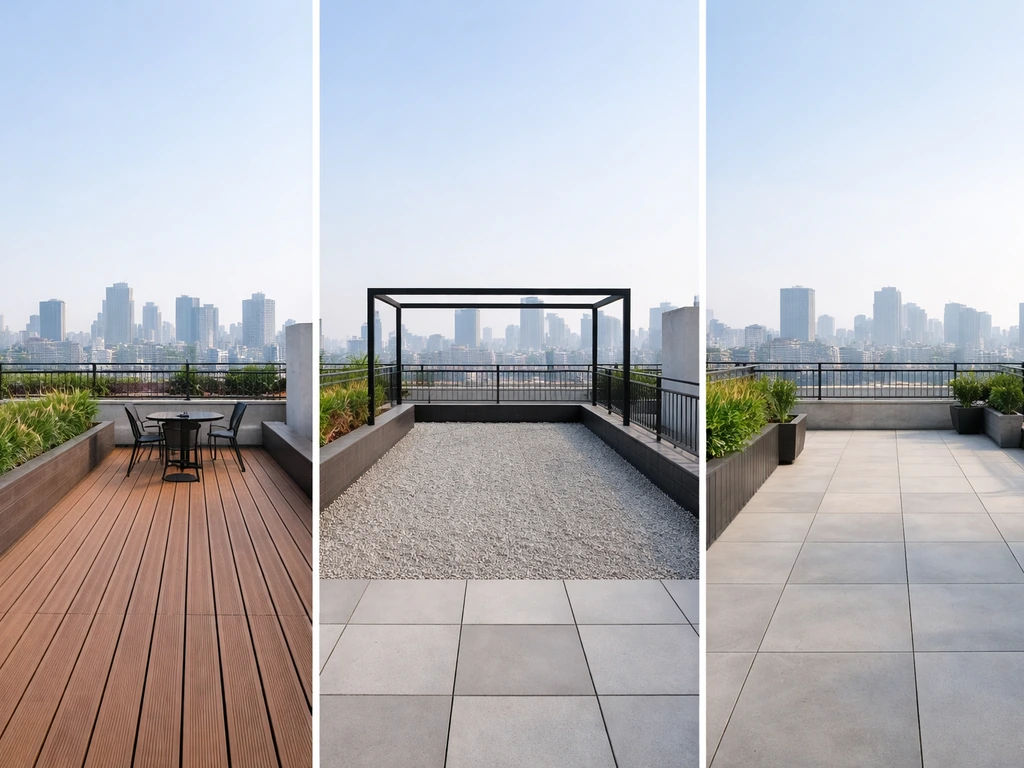
These three terms get mixed up constantly, and honestly, in casual conversation they often mean the same thing. But there are real distinctions worth knowing, especially when you're reading a listing or signing a lease.
A roof deck, per Merriam-Webster, is 'a flat portion of a roof used as a walk or terrace.' In construction, the term also refers to the structural layer of materials the roof is built on. In common real estate usage, 'roof deck' usually means a finished outdoor space on the roof with decking material (wood, composite, or tile) and railings. In line with the building definition of a blank" rel="noopener noreferrer">roof deck, it can refer to the structural layer of materials the roof is built on as well as a flat portion used as a walk or terrace. It leans toward a more built-out, designed space. A rooftop patio tends to connote a similar space but with more of a patio feel: furniture, planters, maybe a pergola, without necessarily using deck boards underfoot.
A roof terrace, according to Wikipedia's definition of terraces in buildings, is an external, raised, open, flat area specifically situated on a flat roof. 'Terrace' carries a slightly more formal or European-influenced tone and often appears in urban apartment listings. In practice, roof terrace and rooftop patio describe nearly the same thing. The difference is mostly stylistic: 'terrace' suggests a more polished, city-apartment vibe; 'patio' suggests a more relaxed, residential feel. Merriam-Webster defines “roof‑deck” as “a flat portion of a roof used as a walk or terrace,” which aligns with how roof terraces and rooftop patios are described ROOF-DECK Definition & Meaning - Merriam-Webster.
How a rooftop patio compares to a balcony, porch, verandah, and courtyard
Understanding what a rooftop patio is gets easier when you line it up against related spaces. If you are wondering what a church patio meaning is, it usually refers to an outdoor area at a church used for gatherings, events, and community activities. The differences mostly come down to location, structure, and how the space connects to the building.
| Space | Location | Overhead cover | Structure | Typical size |
|---|---|---|---|---|
| Rooftop patio | On top of the roof | None (open sky) | Sits on roof structure | Varies widely, often 200–1,000+ sq ft |
| Balcony | Projecting from an upper floor wall | None or partial | Cantilevered or bracket-supported | Small, often under 100 sq ft |
| Porch | Ground level, front or back of house | Covered (roof overhead) | Attached to home structure | Varies, usually covered |
| Verandah | Ground level, wraps the building | Covered (roof overhead) | Attached to home with columns | Large, often wraps around |
| Courtyard | Ground level, enclosed by walls | None (open sky) | Surrounded by building walls | Varies, often semi-enclosed |
| Roof deck | On top of the roof | None (open sky) | Sits on roof structure | Similar to rooftop patio |
The clearest distinction: a balcony projects out from the side of a building and is typically small, while a rooftop patio sits on top and tends to be much larger. A porch and verandah are at ground level and almost always covered. A courtyard is enclosed at grade. If you're comparing listings with different outdoor space types, a rooftop patio generally offers the most square footage and the most open sky of the bunch, but it also comes with the most structural responsibility.
For context, back patio spaces and private patio spaces described elsewhere on this site are ground-level equivalents. A rooftop patio shares the same 'patio' DNA, just raised to roof level with all the extra structural and safety considerations that come with that elevation. O pátio do tabernáculo é descrito na Bíblia como um espaço cerimonial associado às práticas religiosas do período do Antigo Testamento patio.
What a rooftop patio typically includes
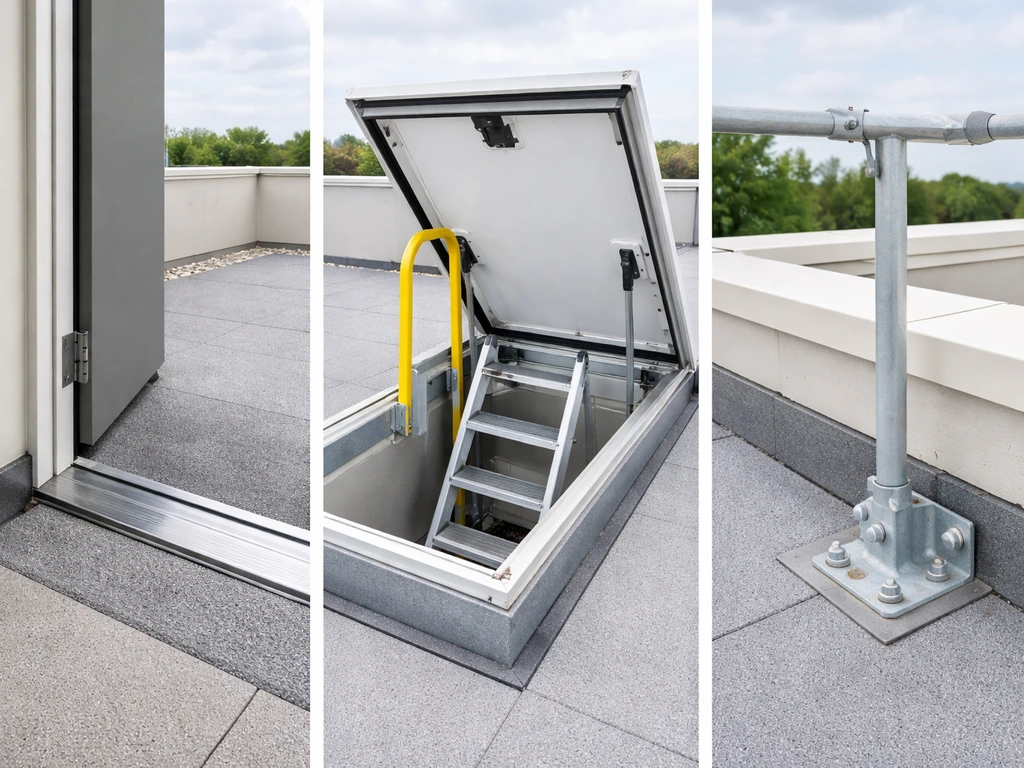
A properly finished rooftop patio isn't just exposed roof membrane with lawn chairs dropped on it. When it's done right, it has several components that make it safe and genuinely livable.
Access
There has to be a way up. This is usually a dedicated interior staircase, a hatch with a fixed ladder (less ideal and often not code-compliant for regular use), or an elevator in larger buildings. In apartment buildings, access may be from a shared hallway door or a locked roof door. Easy, safe access is non-negotiable for the space to be genuinely usable, and it's the first thing to confirm when evaluating one.
Railings and guardrails
Any rooftop space open to occupancy needs perimeter protection. Building codes in most jurisdictions require guardrails at least 36 to 42 inches high on elevated outdoor spaces. The railings need to be structurally anchored, not just decorative. A rooftop patio without proper railings isn't code-compliant and is a serious safety risk.
Flooring and surface material
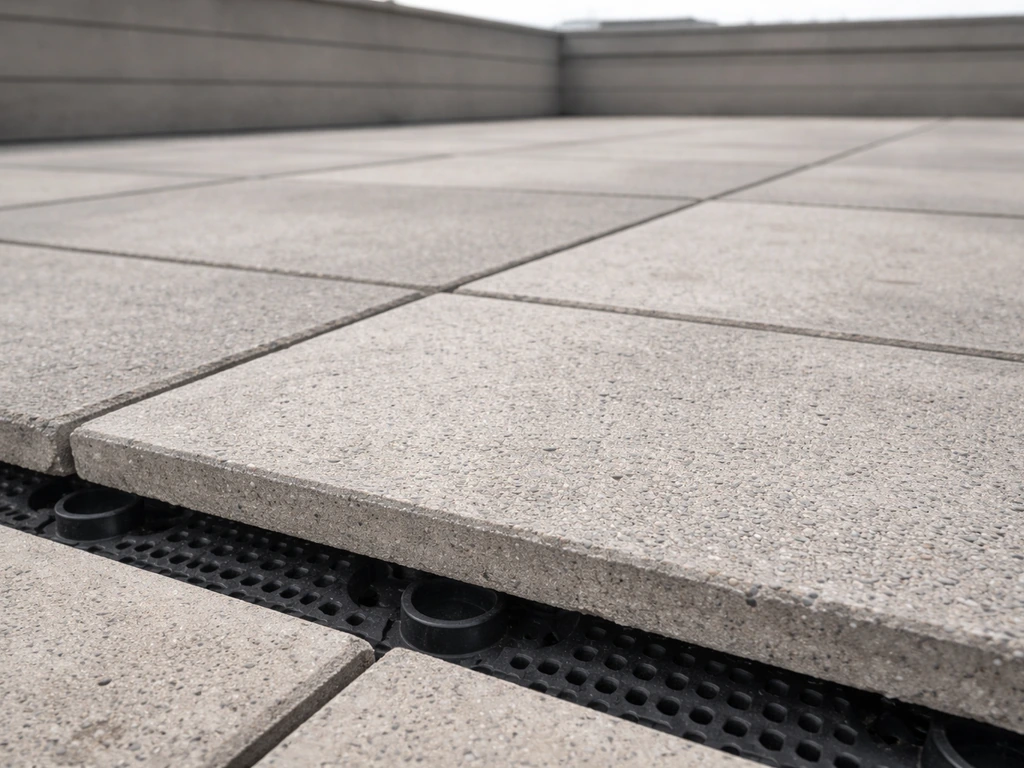
The finished floor on a rooftop patio is usually pavers (concrete or stone), porcelain tiles, composite decking, wood decking, or interlocking deck tiles laid over a drainage mat. These materials let water move beneath them, protect the membrane underneath, and give you a stable, comfortable surface to walk on. Bare concrete or exposed membrane is a sign the space hasn't been properly finished.
Drainage
Rooftop patios need to drain. Standing water damages roofing materials and eventually causes leaks. Properly built rooftop spaces have a slight slope toward drains, scuppers, or gutters built into the structure. If a rooftop patio has no visible drainage solution, that's a red flag worth investigating before you buy or rent.
Building and maintenance realities you need to know
A rooftop patio adds real value and enjoyment, but it carries maintenance obligations that a ground-level patio simply doesn't have. The roof beneath it is still a functioning roof, and the two systems have to work together.
Waterproofing and the roof membrane
The most important element under any rooftop patio is the waterproofing membrane. This is the layer that actually keeps water out of the building. It needs to be in good condition, properly flashed around any penetrations (drains, railings, door thresholds), and inspected periodically. When rooftop patios are poorly installed or maintained, the membrane fails and you get leaks into the floors below. If you're buying a home or condo with a rooftop patio, asking for documentation on the membrane age and condition is completely reasonable.
Structural load limits
Roofs are engineered for specific loads, and adding people, furniture, planters, a grill, and guests puts weight on a structure that was originally designed to hold only roof materials and snow. A rooftop patio should have been designed with these loads in mind. If you're converting an existing roof into a rooftop patio, or adding heavy features like a hot tub or extensive planters, a structural engineer needs to review the plans. Don't assume any flat roof can handle a party.
Ongoing upkeep

- Clear drains seasonally to prevent water pooling
- Inspect membrane flashings at railings and door thresholds annually
- Check for cracked or shifting pavers that could trap moisture
- Treat or refinish wood decking as the manufacturer recommends
- Inspect railing anchors for corrosion or loosening, especially after harsh winters
- Keep heavy planters on load-rated areas, not randomly placed
Permits, HOA rules, and who's responsible for what
This is where rooftop patios get legally complicated, especially in multi-unit buildings. 'Roof rights' are not automatically included with your unit. As Rooftopia notes, access to and use of a rooftop area is not a given and varies significantly by building, ownership type, and local rules. Just because you're on the top floor doesn't mean the roof is yours to use.
Permits and building approval
Converting a raw roof into a usable rooftop patio almost always requires a building permit. Permits cover structural review, fire egress, railing code compliance, and sometimes zoning (some areas restrict rooftop additions for height or aesthetic reasons). If the rooftop patio in a home you're considering was built without permits, that's a problem: unpermitted work can complicate home sales, insurance claims, and liability.
HOA and condo rules
In a condo or HOA-governed building, the roof itself is typically common property, even if one unit has exclusive use rights to a portion of it. Exclusive use easements or rooftop rights need to be spelled out in the condo documents or deed. The HOA may also have rules about what you can place on the rooftop patio, hours of use, noise, and who's responsible for repairs to the roof membrane beneath it. Read those documents carefully before assuming the rooftop patio functions like private property.
Maintenance responsibility in multi-unit buildings
In most condos, the building association is responsible for the roof structure and waterproofing, while the unit owner is responsible for the patio surface (the decking, furniture, planters). But this split isn't universal: some buildings put the membrane maintenance on the top-floor owner. Know exactly who pays for what before you close on a unit or sign a lease with rooftop access.
Reading real estate listings: what to look for and what to ask
When a listing says 'rooftop patio,' it's promising an outdoor living space on the roof. But listings vary wildly in what that actually delivers. Some rooftop patios are beautifully finished, code-compliant, and ready to host a dinner party. Others are technically accessible roof areas with a couple of deck tiles thrown down. Here's how to read between the lines.
Questions to ask before you get too excited
- Is the rooftop patio included in the unit's deeded or leased space, or is it common area with access rights?
- Was the rooftop patio built with permits? Can the seller or landlord provide documentation?
- What are the HOA or building rules about use, hours, and alterations?
- When was the roof membrane last inspected or replaced?
- What is the structural load rating for the space?
- How is it accessed: interior stairs, exterior stairs, or a hatch?
- Are the railings code-compliant and structurally anchored?
- Who is responsible for roof membrane maintenance and repairs?
- Are there any active leaks or water damage in the unit below the patio?
What 'rooftop patio' means for property value
A well-built, permitted rooftop patio genuinely adds value, especially in urban markets where outdoor space is scarce. It expands usable square footage, creates a unique selling point, and often commands a premium in condo listings. A poorly built or unpermitted one can actually be a liability: it may need to be brought up to code, repaired, or removed, all at significant cost. The word 'rooftop patio' in a listing description alone tells you nothing about quality; the questions above tell you everything.
If you're comparing a unit with a rooftop patio against one with a private patio or a back patio at ground level, factor in the added maintenance complexity of the rooftop version. A ground-level patio is lower-maintenance and has no structural risk to the floors below. The rooftop patio wins on views and urban-outdoor living, but it comes with more due diligence.
FAQ
Is a “rooftop patio” the same thing as a roof deck or roof terrace on a listing?
They’re often used interchangeably, but a listing that says “deck” typically implies decking boards or a more defined built-out surface, while “patio” usually suggests patio-style finishing and furniture. “Terrace” can sound more formal. The practical way to tell is to ask what the finished floor is, whether there are guardrails, and how access works (locked door, stairwell, elevator, shared roof rights).
Do I need a permit to add furniture or a grill to an existing rooftop patio?
Usually no for furniture, but grills and permanent gas lines can trigger permitting depending on fuel type and building rules. Also check whether the roof is allowed for open flame or how fire separation is handled near railings and penetrations. If the listing or HOA has a “no open flame” or “only electric grills” rule, follow that even if the space seems already finished.
What are the most important safety checks beyond rail height?
Confirm that guardrails are anchored to the structural system, not just attached to the surface. Look for continuous protection around all open sides, gates or doors that latch properly, and non-slip flooring where the walkway meets the door threshold. If a rooftop patio has uneven pavers or soft spots, treat it as a possible drainage or waterproofing issue.
If the listing shows pavers or tiles, does that automatically mean the membrane is protected?
Not automatically. The key is whether a drainage mat or comparable underlayment is installed to keep water from pooling on the membrane. You can sometimes infer this from how the system transitions at drains and the door threshold, but the safest approach is to ask for details on the waterproofing scope and when it was last inspected or replaced.
How can I tell whether the rooftop patio drains correctly?
Ask whether there are scuppers, roof drains, or drains embedded near low points, and whether the builder provided a slight slope for water movement. Also request proof of maintenance after storms, for example whether roof drains were cleared and whether any leaks were reported. Visible standing water after rain is a major red flag.
Who is responsible for leaks and repairs under a rooftop patio in condos or HOA buildings?
Often the HOA or association handles membrane and roof structure, while the unit owner handles the patio surface and non-structural items. But this varies, so confirm the allocation in the condo documents or property management agreement, including what happens if the patio surface causes damage to the waterproofing.
What does “roof rights” mean if I live on the top floor?
Roof rights are not guaranteed by default. You might have exclusive use of a defined area, shared access with neighbors, or no use rights beyond emergencies. The correct answer depends on the deed, easements, condo declaration, and any rooftop access policy, so verify your rights in writing before treating the space as private.
Is a rooftop patio always accessible by code-compliant stairs?
Not always. Some buildings use limited-access ladders or roof hatches, which may not meet requirements for routine occupancy depending on local code and the intended use. Ask how many exits are available, whether the access is locked and who holds keys, and whether the access path is included in any safety plan.
Can I convert an unbuilt flat roof into a rooftop patio myself?
Usually not without professional design and approvals. Conversions typically require structural assessment, waterproofing design, drainage planning, and permit review for guardrails and fire egress. If you plan heavy additions like a hot tub, raised planters, or outdoor kitchens, require a structural engineer to confirm load capacity.
What should I ask for to judge quality when a listing is vague?
Request the waterproofing membrane age and last inspection details, the type of underlayment or drainage layer under the floor, whether permits were issued for the rooftop patio, and who is responsible for ongoing roof repairs. Also ask for a site photo after rain or a maintenance log, because rooftop issues often show up only after heavy weather.
Next Article
Back Patio Meaning: What It Is and What Listings Imply
Back patio meaning: rear outdoor space for dining or relaxing, plus how listings use it and what to check in photos.