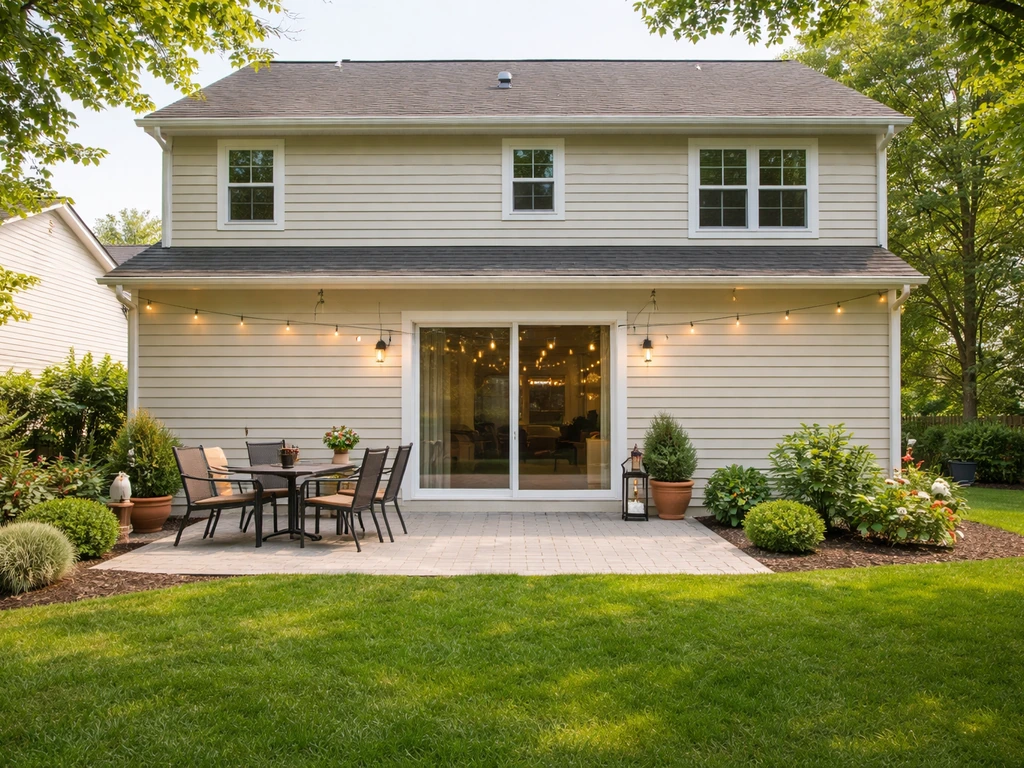
Yes, a patio can absolutely be in the front of the house. There is no universal rule against it. What determines whether yours is legal, practical, and worth building comes down to your local zoning setbacks, any HOA rules on the property, how you handle drainage and sightlines, and whether the design actually makes the space usable rather than just decorative.
Can a Patio Be in the Front of the House? Rules, Layout

Ada Hollis
3 Jul 2026
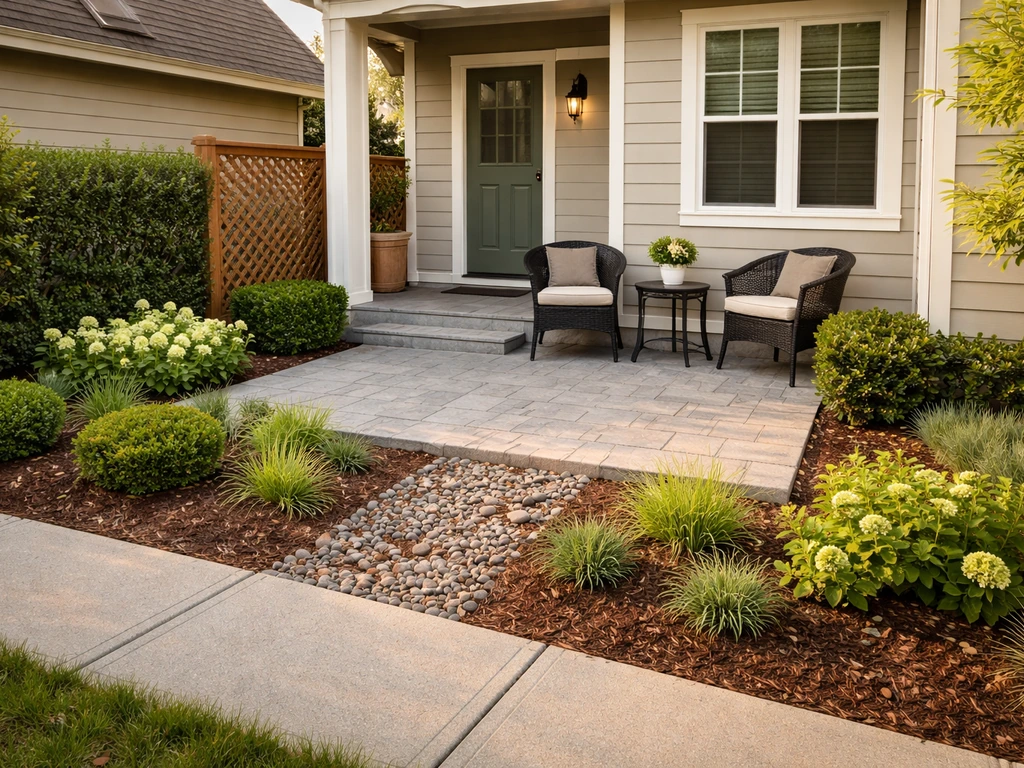
What a patio is (and what it isn't)
A patio is a ground-level outdoor space, typically paved with concrete, pavers, brick, or stone, that adjoins a residence and is used for dining, relaxing, or recreation. That definition is the key to everything that follows: ground-level and paved. It is not elevated, it does not require a roof, and it is not enclosed. The moment a surface is framed up off the ground, you are closer to a deck. The moment it gets a roof, it starts reading as a porch or veranda. The moment walls fully surround it, it becomes a courtyard.
This distinction matters practically. When you tell a contractor you want a front patio, they need to know you mean a ground-level hardscape slab or paver field, not a raised platform or a covered entry structure. When a real estate listing mentions a front patio, it should signal an open, paved ground-level outdoor area near the entry, not a screened porch or a landing with a roof. Getting the terminology right helps you pull the right permit, ask the right contractor questions, and understand what you are buying or building.
Front-of-house patio legality and layout basics
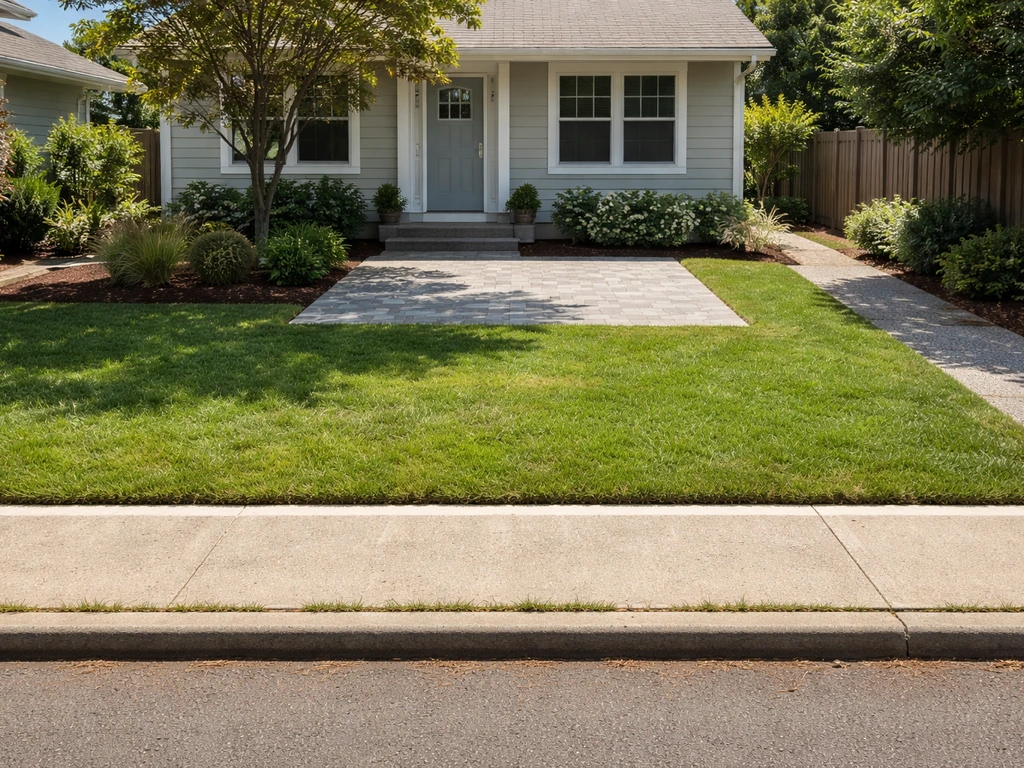
The biggest practical constraint on a front patio is not aesthetics, it is setbacks. Every municipality defines a front-yard setback: the required minimum distance between the street (or the property line, or the edge of an easement) and any structure or hardscape on your lot. “Frontage” is commonly defined in real estate as the land adjacent to a street, which is why it comes up in lot and setback discussions [front-yard setback](https://www. merriam-webster.
com/dictionary/frontage). In some jurisdictions a patio slab in the front yard is treated as an accessory structure with its own setback rules. Wheaton, Illinois, for example, ties deck and patio setbacks to the same front-yard requirement as the house itself. Austin's zoning code treats a patio cover as a structural element that factors into setback calculations.
Your city or county almost certainly has something similar.
Easements add another layer. If there is a utility easement running along the front of your property (which is common), your setback is typically measured from the interior edge of that easement, not the street or property line. That can shrink the buildable area significantly. Bellevue, Washington's setback guidance is explicit about this: the measurement starts from the inner edge of the easement. Check your property survey before you sketch out anything.
Permits are usually required for any paved surface over a certain square footage, especially if it involves grading, drainage modifications, or any kind of cover structure. The 2018 International Residential Code includes a specific appendix (Appendix H) for patio covers, treating them as distinct regulated elements. Even a simple open slab may require a grading or drainage permit depending on your municipality. When in doubt, call your local building department before you hire anyone.
Design rules: sightlines, privacy, and traffic flow
A front patio faces challenges that a backyard patio does not: street traffic, pedestrian sightlines, and the need to integrate with your main entry path. These are solvable, but they require deliberate design choices.
Sightlines to the street matter for safety, not just privacy. If your front patio sits near a driveway or corner lot, local codes may restrict how high any wall, fence, planter, or structure can be within a sight-distance triangle, the area where drivers and pedestrians need clear visibility at intersections and driveway approaches. Portland, Oregon requires clear sight triangles at every driveway-to-roadway intersection. Chattanooga's policy caps fence height at 36 inches within those zones. A low decorative planter or a hedge that seems like an obvious privacy screen could be a code violation if it sits inside a sight triangle. Check this before you build it.
Privacy on a street-facing patio usually comes from level changes (a patio even a few inches below grade feels more enclosed), strategic planting, low walls or half-walls within the permitted height, and orientation. Angling the seating area away from the street rather than facing directly at it makes a big difference in how the space feels to use. Pergolas and shade sails can provide overhead definition without triggering the full patio-cover permit pathway in many jurisdictions, though you should verify locally.
Traffic flow is the other major design factor. A front patio needs to coexist with your main entry walkway, any driveway approach, and public sidewalks. The patio should not force guests to cross your driveway to reach the front door, and it should not block accessible access to the entry. The ADA and most residential codes require a minimum 36-inch-wide accessible path to an entrance, with slopes no steeper than 1:12. If your front yard has grade changes, plan your patio layout around maintaining that accessible route.
Best locations and alternatives if the front yard won't work
The sweet spot for a front patio is typically set back from the street edge far enough to satisfy your setback requirements and to create a psychological buffer from traffic, while staying close enough to the front door to feel connected to the entry. A patio that wraps around the side of the house from a front-facing position (sometimes called an L-shaped or wrap patio) can give you front-of-house presence with side-yard privacy, and it often clears sightline and setback constraints more easily than a purely street-facing slab.
If your front yard is simply too shallow, the lot sits on a corner with heavy sight-distance restrictions, or your HOA prohibits visible hardscape in the front yard, you have a few workable alternatives. A side-entry patio near the front door gives most of the same arrival and socializing function. A covered front porch, if your house structure permits it, is a different product (roofed, and typically classified differently in code and listings) but solves the same use case.
A covered front porch, if your house structure permits it, is a different product (roofed, and typically classified differently in code and listings) but it is often a similar alternative to a what is a front patio called layout. A courtyard configuration, where walls enclose the front area entirely, is another option common in Spanish-influenced residential architecture, though it is classified differently than a patio.
How front patios differ from porches, balconies, verandahs, and courtyards
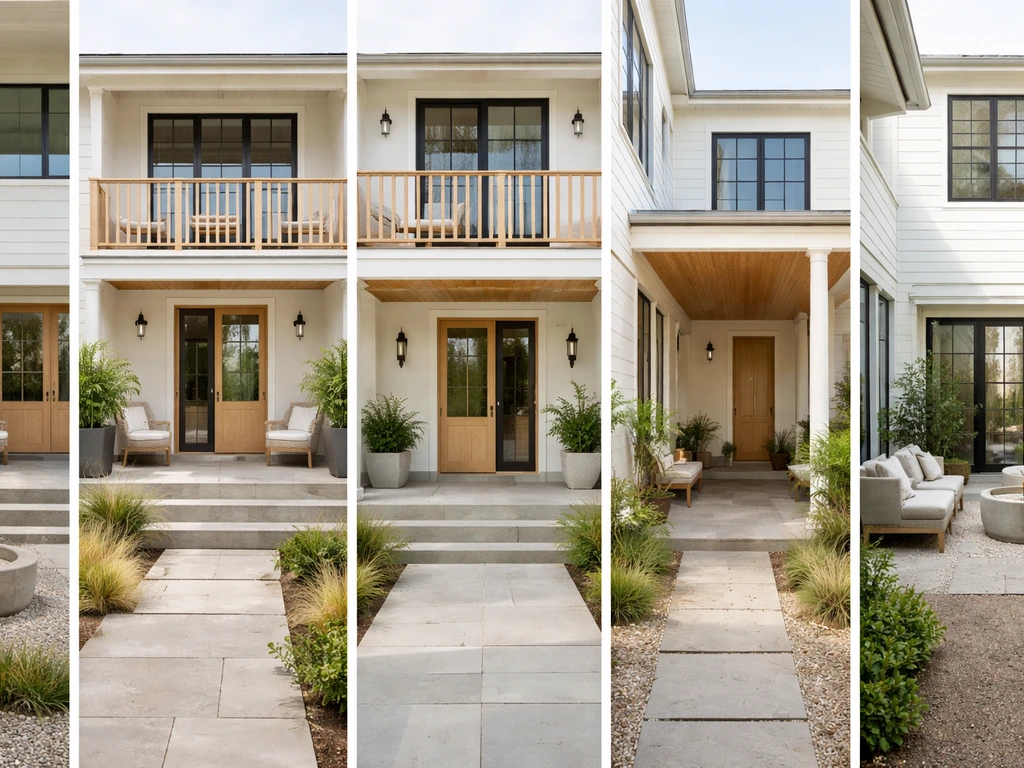
These terms come up in listings and contractor conversations constantly, and conflating them creates real confusion when you are trying to describe what you want or what a property has.
| Feature | Patio | Porch | Balcony | Verandah | Courtyard |
|---|---|---|---|---|---|
| Elevation | Ground level | Ground level or slightly raised | Elevated (second story or above) | Ground level or raised | Ground level |
| Roof/cover | Usually none | Always roofed | May have rail or overhang | Always roofed | Open sky or partial |
| Enclosure | Open | Open or screened | Open or glassed | Open or screened | Enclosed by walls |
| Attachment to house | Adjoins house | Attached, part of structure | Cantilevered or supported by structure | Attached, wraps house | Integrated into house layout |
| Typical location | Rear or front yard | Front entry primarily | Upper floor, any side | Front or wrap-around | Interior or front, enclosed |
| Permit category | Hardscape/slab or accessory | Structural addition | Structural addition | Structural addition | Structural addition |
The porch is the most common alternative to a front patio and the most frequent point of confusion. A porch has a roof, it is structurally attached, and it reads as part of the house's architectural shell. A patio is open hardscape. In real estate listings, a 'front patio' and a 'front porch' signal very different spaces and different build costs if you are adding one. If you are wondering what your front outdoor space should technically be called, the presence or absence of a roof is usually the deciding factor.
Balconies are elevated and attached to an upper story, so they are not relevant to front-of-ground-floor additions. Verandahs are roofed and often wrap around multiple sides of a house, a more substantial structure than a patio. Courtyards are enclosed by walls or the building itself, creating a semi-private outdoor room. If you are describing a fully enclosed front-yard space with walls and a gate, 'courtyard' is the more accurate term, not patio. This also comes up in floor plans and property listings, where these terms carry specific spatial meanings. what is patio in floor plan floor plans.
Practical considerations: surfaces, drainage, steps, and maintenance
Drainage and grading
Drainage is the most overlooked factor in front patio planning and the most likely to cause long-term problems. Any patio slab or paver field must slope away from the house foundation, not toward it. The IRC's drainage provisions (Section R401.3 in the 2021 code) reference grading expectations that include dropping grade around foundations, roughly six inches over the first ten feet as a general benchmark. Concrete Network guidance for exterior slabs confirms that any outdoor paved surface needs a positive slope to promote runoff and prevent ponding. For a front patio, this often means the surface needs to sheet drain toward the street or a designated drainage swale, not pool against the house or flow onto a neighbor's property.
Surface choices
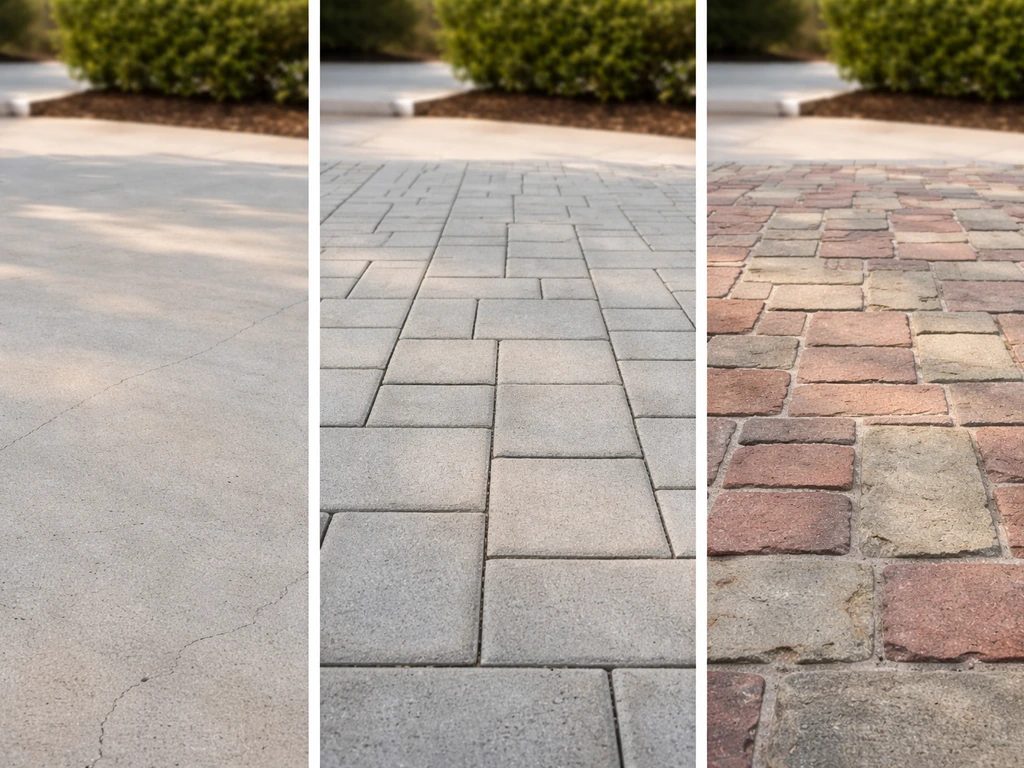
Concrete is the most common patio surface: durable, cost-effective, and easy to maintain, though it can crack over time in freeze-thaw climates. Concrete pavers give you more design flexibility and are easier to repair (replace individual units rather than resurface a slab), but they cost more upfront and require periodic re-sanding of joints. Natural stone like bluestone or travertine works well for front patios where curb appeal matters, but requires sealing and is expensive. Brick is durable and classic but can shift over time if the base is not properly compacted. For a front patio specifically, where first impressions and curb appeal are part of the point, pavers or stone often justify the premium over plain concrete.
Steps and accessible access
If your front patio involves any grade change, steps and ramps become critical. The 2010 ADA Standards set a maximum ramp running slope of 1:12 and cap the rise for any single ramp run at 30 inches. Exterior door landings under the IRC and IBC are permitted a maximum slope of 2 percent (1/4 unit vertical per 12 horizontal) for drainage, but must otherwise be essentially level for safe maneuvering. If your front door sits above grade and the patio is at grade, you need a ramp or steps, and ideally both, to maintain accessibility for all users. Plan for a minimum 36-inch clear path width on any accessible route to the entry.
Maintenance
Front patios face more weather exposure and more foot traffic than rear patios. Concrete should be sealed every few years to prevent staining and moisture penetration. Pavers need joint sand topped up and occasional re-leveling, especially in climates with frost heave. Any patio cover, pergola, or shade structure needs annual inspection for fastener corrosion and wood rot. Front-facing surfaces also collect more dirt, pollen, and street grime than rear patios, so plan for more frequent cleaning.
Questions to ask before you build or buy
Whether you are planning to build a front patio or you are buying a property that already has one, these are the checks that actually matter.
- What is the front-yard setback in my zoning district, and does it apply to patios and hardscape as well as structures? Ask your local planning or building department directly. Many municipalities now have zoning lookup tools online.
- Are there any easements on my property, and where are their interior edges? Pull your property survey or check with your county assessor. Setbacks are often measured from easement edges, not the street.
- Does my HOA have rules about front patios specifically? HOA rules on front patios can be substantially different from rules on rear patios, and some HOAs restrict furniture, materials, or any visible hardscape in the front yard. Get the specific language in writing.
- Do I need a permit for the slab, the grading, or a cover structure? Permits are typically required for new impervious surfaces over a certain size, any cover structure, and any grading that alters drainage. Call your building department before you start.
- How will the patio drain, and where will the water go? You need a grading plan that routes water away from the foundation and complies with local drainage rules. A landscape contractor or civil engineer can advise if the grade is complex.
- Does the design maintain required sight-distance triangles at my driveway and any nearby intersection? Check your city's sight-distance triangle requirements, especially on corner lots.
- Will a front patio add or hurt property value? In most markets a well-designed front patio with good materials and proper permitting adds usable square footage and curb appeal. An unpermitted slab or one with drainage problems can be a liability that shows up in inspection reports.
A front patio is one of the more underused outdoor design moves in residential architecture. Most homeowners default to putting all their outdoor living space at the rear, which makes sense for privacy, but a thoughtfully designed front patio can transform how a property feels to arrive at and how useful that front-yard space actually is day to day. The checks above are not obstacles, they are the information you need to do it right the first time.
FAQ
If my front patio is ground-level, do I still need to meet front-yard setback rules for walls, planters, or stairs?
Often, yes, but it depends on what the city classifies it as. Many places treat a ground-level paved front area as a patio or hardscape subject to the front-yard setback, but a bench, fire pit pad, or small retaining wall can trigger separate “structure” or “landscaping barrier” rules. If you plan any raised edge, border wall, or built-in seating, ask your building department how they measure setbacks for those elements.
Do I need a permit for an open front patio if I add a pergola or shade sail?
In most jurisdictions you can keep it open, but you still might need a permit if you add posts or a roofed element. A pergola with freestanding posts can be treated differently than a simple shade sail, and anything that creates a “cover” tied into setback calculations or structural requirements may require review. The safe move is to describe the exact footprint and whether there are posts, beams, or any roof material when you call for a pre-check.
Can my front patio be graded to drain toward the street automatically?
You usually should not plan to drain onto the street curb without checking. Some areas require onsite management of runoff, for example directing water to an approved swale, dry well, or designated drainage path, especially where grading affects neighboring properties or utilities. Ask whether your location has stormwater rules that restrict where paved-surface runoff can go.
If the accessible path to my front door crosses the patio, what design limits should I follow?
Not always. If any part of the patio forms part of the accessible route to the front door, you may need to keep it effectively firm, stable, and slip resistant, and maintain a continuous 36-inch-wide path without steep cross-slopes. Also confirm how curb ramps or transitions are handled if your patio is at a different elevation than the door landing.
What if my HOA allows landscaping but seems to restrict pavers or any patio in the front?
HOAs sometimes prohibit visible front-yard hardscape, or they restrict materials and finish, like requiring brick or limiting pavers, or disallowing patios in specific setback zones. Ask for the HOA’s definition of “front yard” and “impervious surface,” and request the style sheet or governing document language before you pick pavers or stone.
I already have a front patio, do I need to worry about current code if I only want to expand it?
If it is already there, check the permit history and whether it matches current code. Some older “front patios” were built before today’s setback, drainage, or sightline requirements, so you may inherit issues like ponding near the foundation or nonconforming placement. If you plan to expand, most jurisdictions will require the new work to meet current standards even if the existing slab remains.
How can I make a street-facing front patio feel private without violating sightline rules?
Yes, but avoid the common mistake of assuming “near the entry” means you can face it directly toward traffic. A safer layout is to angle seating away from the street, keep any barriers within permitted height limits, and confirm sight-distance triangles at driveways and corners. Even low elements like planters can fall into restricted zones, so map the triangle area before you plant or build.
My front door sits higher than the patio site. What is the most common accessibility planning mistake?
Start by looking for a grade change and door height differences, then build a transition plan, not just a level deck-like surface. If you need a ramp, keep in mind the max ramp slope and the requirement for a level landing at the door. For steps, consider how you will maintain safe traction in rain, since front patios see more street grime and moisture.
Which patio surface is easiest to maintain on a front patio in freeze-thaw weather?
Choose materials and edges with repair in mind. In freeze-thaw climates, concrete slabs crack and heave, which can create rocking edges where people step. Pavers are often easier to re-level and replace individual units, but they still require proper base compaction and periodic joint sand topping to prevent weeds and movement.
What is the key difference that determines whether my project is called a patio versus a porch?
Yes, but be clear about the product you want. If a structure has a roof or is attached to the house, it will likely be classified as a porch, veranda, or similar covered element, which can change permits, setbacks, and even how listings describe it. If you want “patio with overhead shade” be specific about whether there are posts and a roof, versus a temporary shade sail.
How do I spot drainage problems on an existing front patio before remodeling?
It depends on the municipality, but you can often reduce problems by documenting your drainage intent and keeping slopes away from the foundation line. If you see dark staining, recurring wet spots, or algae lines near the house, that can indicate water is not leaving correctly. Before remodeling, consider a simple evaluation of runoff paths and whether any surface currently directs water onto a foundation drain or neighboring grade.
Next Article
Where Is the Patio Located in a House? Common Spots
Find where a patio sits on a house: common back, front, or side spots plus patio vs porch or balcony differences.