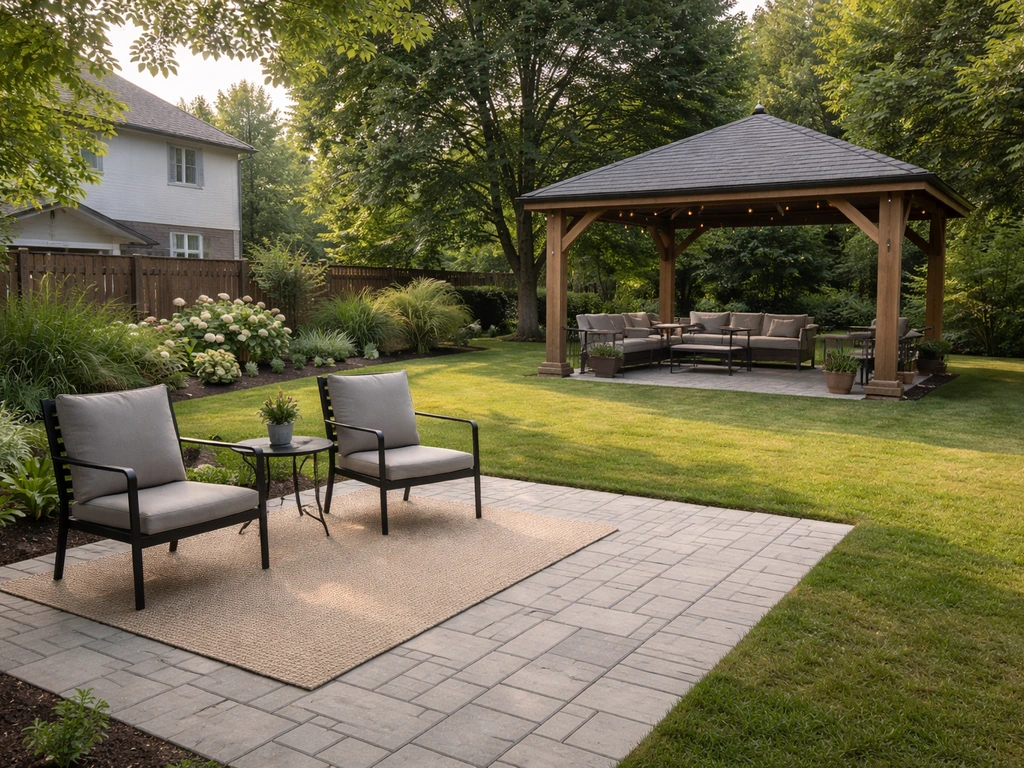
A patio is an open, ground-level paved area attached or immediately adjacent to a home, open to the sky on most or all sides. A courtyard is an outdoor space that is framed and enclosed on three or four sides by walls or building structures, giving it a more contained, room-like feel. The two often get confused because the words genuinely overlap in everyday marketing language, and because patios can sometimes be partially enclosed too. But the core difference is enclosure: a courtyard wraps around you, a patio sits beside you.
Difference Between Courtyard and Patio: Practical Guide

Ada Hollis
15 Jun 2026
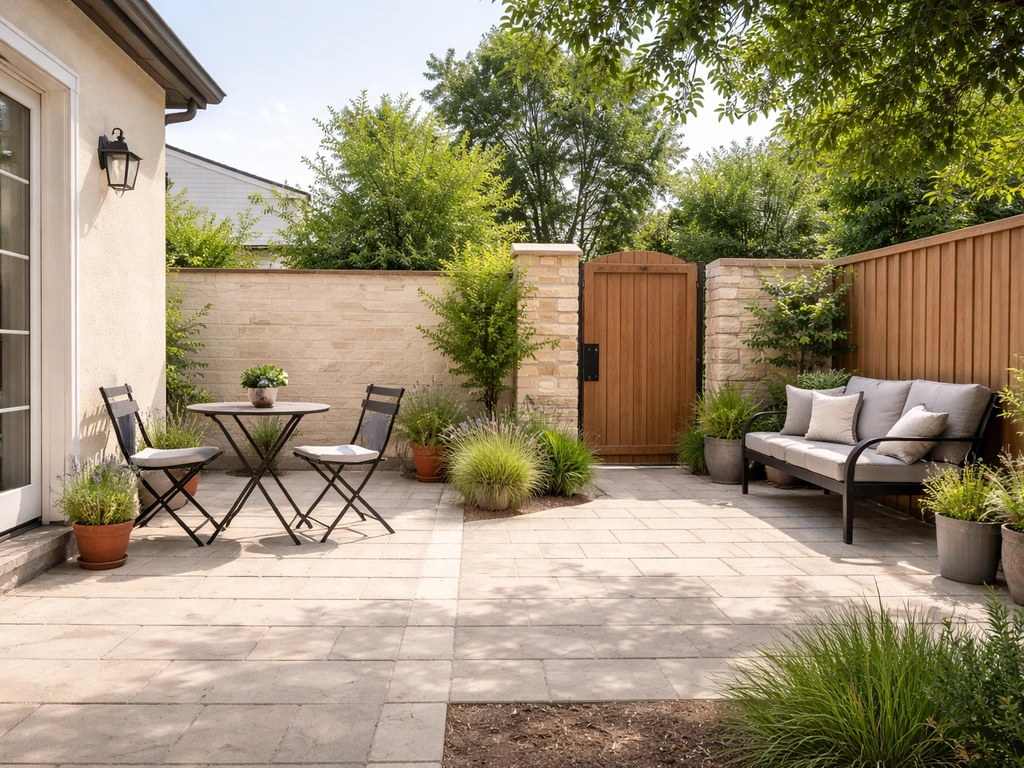
Quick definitions: patio and courtyard in plain English
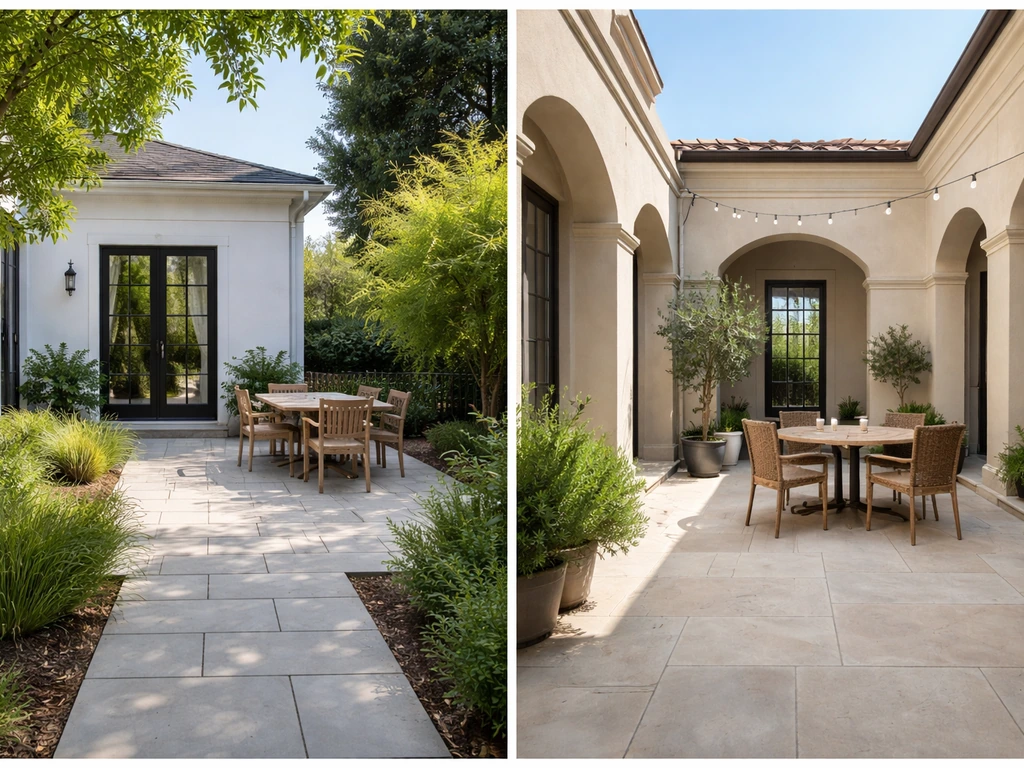
A patio is a hard-surfaced outdoor area, typically paved with concrete, pavers, stone, or tile, that sits directly on the ground and connects to a home's interior through a door, sliding glass panel, or open threshold. It has no required roof and no required walls. Its defining features are ground-level placement and direct adjacency to the house. You step out from the living room or kitchen and you're on it.
A courtyard is an outdoor space that is surrounded, at least partially, by the walls of a building or by freestanding walls and fencing that form a clear perimeter. The key word is enclosure. A true courtyard feels like an outdoor room because built form closes in around it on multiple sides. It can still be open to the sky, and often is, but the walls around it give it a sheltered, private quality that a standard patio simply doesn't have.
One small linguistic footnote worth knowing: the word "patio" actually comes from Spanish, where it originally referred to an inner courtyard attached to a house. That etymology is why the two terms still blur together in real-estate copy today. In modern U.S. residential usage, though, they've drifted apart in meaning, and understanding that drift saves you from misreading a listing.
The real difference: how open or enclosed each space is
Layout and enclosure are where patios and courtyards part ways most clearly. A patio is essentially an outdoor extension of the house floor plan. It's open to the surrounding yard, and you can usually walk off its edges in any direction without hitting a wall. There might be a pergola overhead or a low planter border, but nothing truly closes it in. It reads as an outdoor area next to a building, not inside one. If you're also comparing patio features to a gazebo, the key difference is that a gazebo is a freestanding, roofed outdoor structure designed for sitting and gathering difference between patio and gazebo.
A courtyard, by contrast, is enclosed on three or four sides. Those sides might be the exterior walls of the house itself, a combination of building walls and a garden fence, or a purpose-built perimeter wall. The enclosure can be full height or partial, solid masonry or open latticework, but it creates a distinct boundary that separates the courtyard from the wider yard or street. That boundary is what gives a courtyard its sense of being a protected outdoor room rather than just a surface underfoot.
Think of it this way: if you were standing in the space and spun 360 degrees, a patio would show you open views of the yard, fence line, or neighboring properties on most sides. A courtyard would show you walls or building faces on most sides. That visual test is the fastest way to tell them apart.
Where each one typically sits on the property
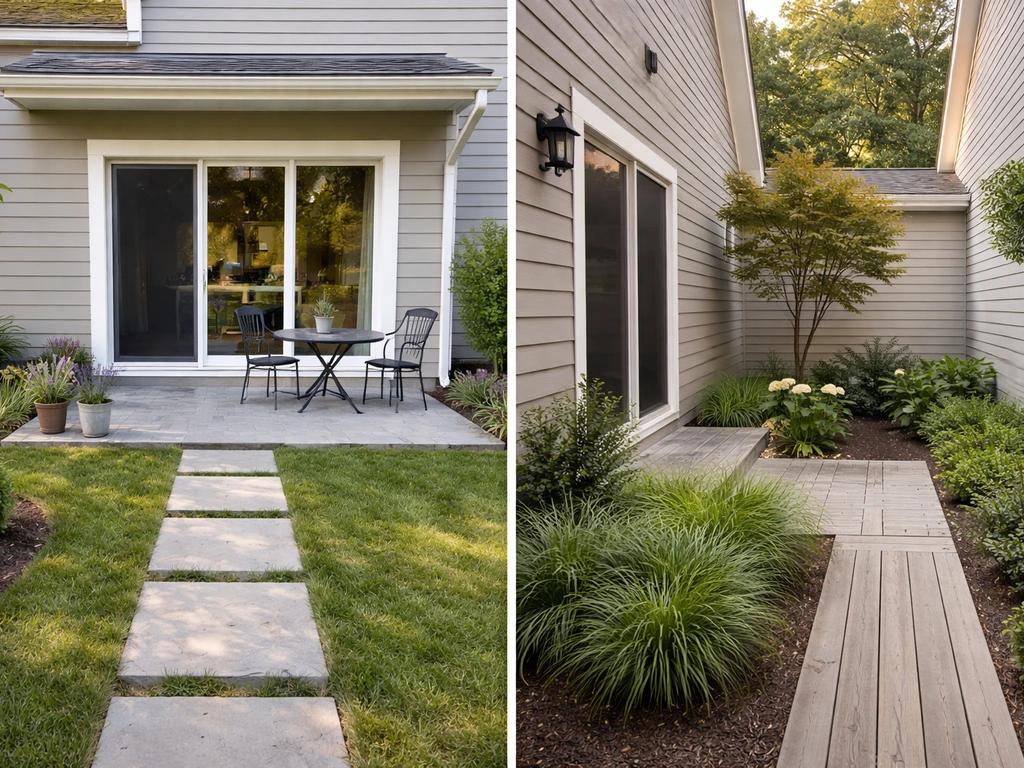
Patios are most commonly placed at the back of a house, just off the kitchen, dining room, or main living area, because that's where people want to step outside for meals, coffee, or lounging. You'll also find them on the side of a house, especially in narrower urban lots, or occasionally at the front as part of an entry design. The placement follows the indoor room it connects to rather than any structural logic about enclosure.
Courtyards tend to appear in more deliberate architectural arrangements. In U-shaped or L-shaped homes, the courtyard often sits in the interior angle of the building, naturally enclosed on two or three sides by the structure itself. In older Spanish, Mediterranean, or Southwestern-style homes, the courtyard may sit centrally, with rooms arranged around it. Front-entry courtyards are also common in these styles, creating a semi-private arrival space between the street and the front door. In denser urban or townhouse contexts, a rear courtyard can serve as the only true outdoor space the home has.
How people actually use each space day to day
Patios are workhorses. The typical patio setup handles outdoor dining, barbecue entertaining, kid play space, and casual lounging. Because a patio is open and accessible from the yard, it naturally accommodates larger gatherings, lawn games, and the kind of flow where people drift between indoors, the patio, and the rest of the garden. It's convenient and social, but it doesn't offer much inherent privacy.
Courtyards serve a different mood. The enclosure creates a sense of seclusion that invites quieter, more deliberate use: morning coffee without neighbors watching, private evening dining, a place to sit and read that feels genuinely removed from the street. Because the walls block sightlines from outside, a courtyard tends to feel intimate even when it's relatively large. Many courtyard designs also include a garden or water feature at the center, reinforcing the idea of it as a destination rather than a pass-through.
In homes where the courtyard is at the front, it often controls the arrival experience, acting as a buffer between the public street and the private home. Guests pass through a gate, cross the courtyard, and arrive at the door with a clear sense of transition from public to private. A front patio doesn't do that nearly as well because it lacks the enclosing walls to define where the public world ends.
How to tell them apart from a listing photo or floor plan
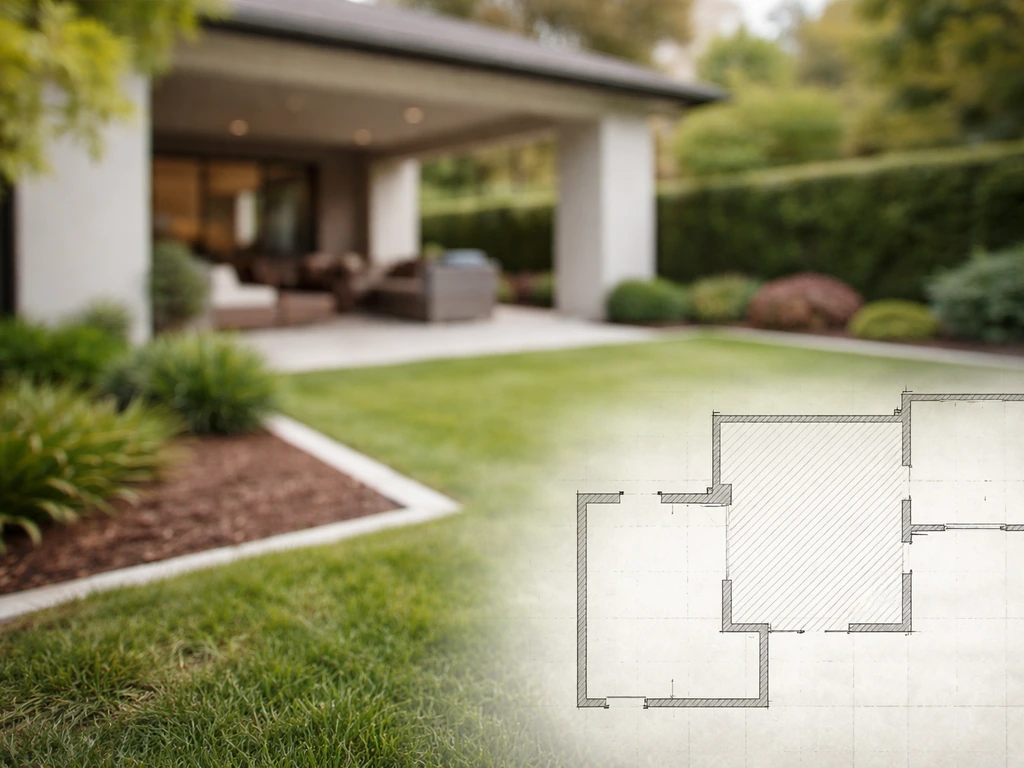
When you're scrolling through listing photos, look at the surrounding context of the outdoor space. If the outdoor area is shown with open sides, bordered by grass or garden beds, and clearly attached to the back or side of a house with no significant wall enclosure, it's a patio. If the outdoor space is shown ringed by walls on most sides, whether those are the exterior walls of the house itself or added perimeter walls, and it has a more contained or courtyard-like feel, it's a courtyard.
On a floor plan, a patio often appears as a labeled hatched area directly outside a main room, with no walls drawn around its perimeter. A courtyard will usually show wall lines on multiple sides forming an enclosure, even if one side is open. If the home has a U-shape or C-shape footprint, the space in the middle is almost certainly a courtyard, not a patio.
One important caution: listing copy is not reliable. Sellers and agents routinely call courtyards "patios" and vice versa, especially in Spanish-style or Mediterranean homes where the word "courtyard" is used loosely to signal charm rather than a specific architectural feature. If you're buying and the outdoor space matters to you, look at the photos and the floor plan rather than trusting the label in the description.
| Feature | Patio | Courtyard |
|---|---|---|
| Enclosure | Open on most or all sides | Enclosed on 3 or 4 sides by walls or building |
| Typical placement | Rear or side of house | Interior angle of building, front entry, or central |
| Roof | Usually none (open sky) | Usually open sky, but walls define the space |
| Privacy level | Low to moderate | Moderate to high |
| Primary mood/use | Social, entertaining, casual outdoor living | Private retreat, quiet dining, indoor-outdoor flow |
| How it reads in photos | Outdoor area beside the house | Outdoor room surrounded by walls or building faces |
| Common in which home styles | Most residential styles | Spanish, Mediterranean, Southwestern, urban townhouses |
Sorting out the full family: patio, courtyard, porch, verandah, and balcony
These terms get mixed up constantly, and it's worth having a single mental map to untangle them. A porch is a roofed structure attached to the front (or occasionally rear) of a house. Its defining trait is the roof, not the paving. A verandah (or veranda) is essentially a roofed, open-air walkway or extended porch that wraps around part of the building, still attached and still roofed. If you are comparing a patio and a verandah, the biggest difference is that a verandah is typically roofed and wraps around the building, while a patio is usually ground-level and open to the sky. A balcony is an elevated, railed platform that projects from an upper floor. None of these three are ground-level open spaces, which is what separates them from both patios and courtyards.
A courtyard and a patio are both ground-level and typically open to the sky, which is why they get confused with each other more than with the roofed or elevated alternatives. The split between them is purely about enclosure by walls or building faces. You may also see the word "alfresco" in listings; that term just means eating or spending time outdoors and is not a physical structure at all, so it can describe a meal on a patio, in a courtyard, or on a verandah equally. If you are trying to figure out the difference between alfresco and patio, remember that alfresco describes outdoor living, while patio is a specific ground-level space.
- Porch: roofed, attached, at ground level, usually at the front of the house
- Verandah: roofed, attached, wraps around the building, open-sided
- Balcony: elevated, railed, projecting from an upper floor
- Patio: ground-level, open-sky, paved, adjacent to the house, no required walls
- Courtyard: ground-level, open-sky, enclosed on multiple sides by walls or building structure
- Alfresco: a style of dining or living outdoors, not a physical space type
What each space means for privacy, maintenance, drainage, and property value
Privacy
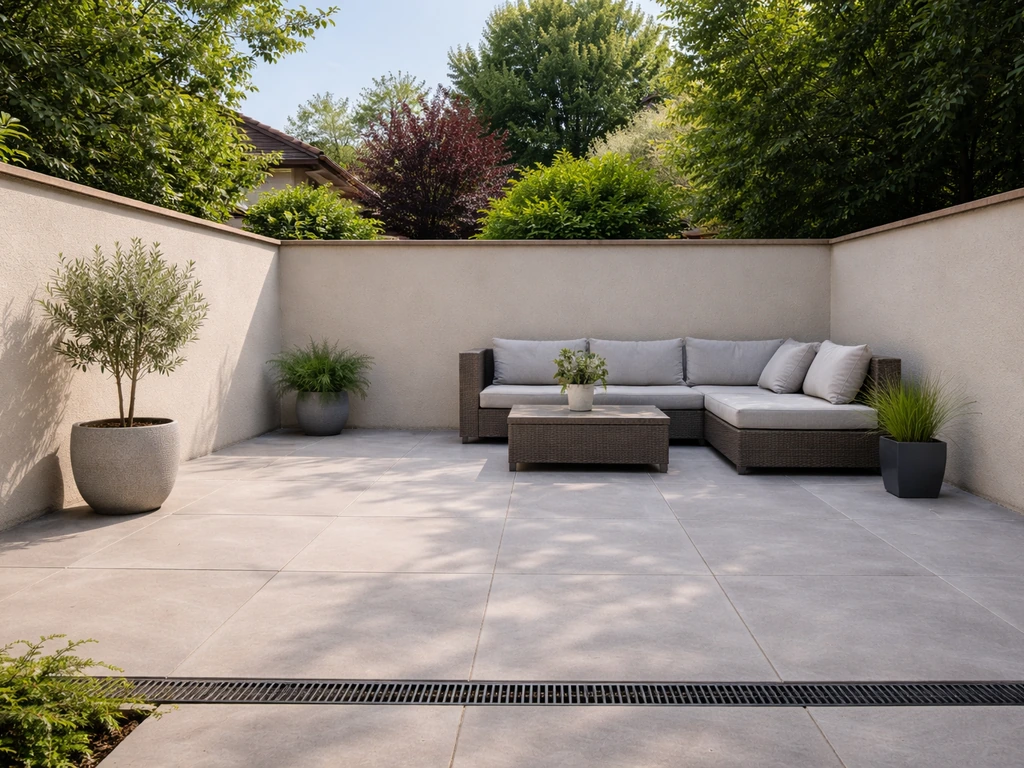
Courtyards win on privacy by design. The enclosing walls block sightlines from neighbors, passersby, and the street without requiring you to add fencing later. A patio in a typical backyard gives you whatever privacy the existing fence or landscaping provides, which may be substantial or almost none depending on the property. A patio in a typical backyard gives you whatever privacy the existing fence or landscaping provides, which may be substantial or almost none depending on the property difference between patio and backyard. If privacy is important to you, a home with a true walled courtyard delivers it structurally rather than as an afterthought.
Drainage and maintenance
Drainage is more complicated in a courtyard than on a typical patio, and this is worth knowing before you buy or build. A standard patio can be graded to slope water away from the house toward the open yard. A courtyard enclosed by walls on multiple sides has nowhere to shed water except through a drain or a purposely designed outlet. For residential drainage, low spots and improper grading can cause standing water after rain, and the fix may involve re-grading or adding solutions like a channel or French drain end up with standing water in the middle of an enclosed space. If the courtyard drainage is poorly installed or has settled over time, you can end up with standing water in the middle of an enclosed space, which is harder to remediate than a drainage problem on an open patio. Ask directly about drainage infrastructure in any enclosed courtyard you're considering.
Patios have their own drainage responsibility: they need to slope away from the house foundation at a meaningful grade to prevent water intrusion at the base of the exterior walls. But because a patio is open, you usually have more options for redirecting water, whether through regrading, adding a channel drain, or installing a French drain along the perimeter.
Safety, gates, and access
Courtyards with perimeter walls and gates introduce an extra layer of access control, which can be an advantage (security, keeping children or pets contained) or an inconvenience depending on your situation. HOA communities and local design guidelines sometimes impose specific rules about gate hardware, fence heights, and screened enclosures for courtyard-style spaces. If you're buying in a community with design guidelines, check whether the courtyard's existing enclosure meets current standards or whether you'd be inheriting a compliance issue.
Property value
Both patios and courtyards add usable outdoor living area, and both can positively affect how a property is perceived and priced. A well-designed courtyard in a Mediterranean or Southwestern-style home can be a significant selling point because it's architecturally integrated and offers a quality that's hard to replicate by just adding a patio later. A patio, on the other hand, is more universal: buyers across all home styles recognize and appreciate a well-built patio. The honest answer is that quality of construction and design matters more than the label. A cracked, poorly drained courtyard is worth less than a thoughtfully built patio, and vice versa.
FAQ
Can a patio become a courtyard if I add walls or lattice around it?
Yes. If the added elements create an enclosure on three or four sides that blocks most sightlines and changes the feeling from “open yard” to “outdoor room,” it starts behaving like a courtyard. The key check is whether you can still walk away in multiple directions without visually meeting a boundary, not just whether you added a few planters or partial screening.
What should I look for on the site plan to tell which one it is?
On many floor plans, a patio area is shown as a surface outside the building with no perimeter walls drawn around it, while a courtyard is represented by surrounding wall lines forming a defined boundary. Also look for gates or fence annotations, since courtyard perimeters are often detailed more like an interior space boundary than a simple terrace.
Are courtyards usually more private than patios even if both have fences?
Generally, yes, because privacy comes from enclosure from multiple sides, not only from one back fence. A fenced patio can still feel exposed on the street or from neighboring lots if the sides are open. For a true privacy upgrade, prioritize a courtyard perimeter (and consider the height and opacity of any openings like gates or lattice).
How do drainage and standing water risk differ if the courtyard is partially open to the yard?
If the courtyard has at least one side open, you may get better natural runoff than a fully boxed-in courtyard, but it still depends on how grading directs water toward that opening. A common mistake is assuming “some openness” automatically fixes drainage, so confirm the slope pattern and where the drain outlets connect, especially near low corners.
Do courtyards or patios require less maintenance?
Courtyards often need more attention because enclosed areas trap debris, hold moisture longer, and can concentrate algae on shaded paving. Patios can also grow algae, but they dry out more quickly due to open exposure. Ask what the current drainage and cleaning access is like, such as whether there is a clear path for hose washing or professional cleaning.
Are there code or HOA issues specific to courtyard enclosures?
There can be. Courtyards with gates, taller walls, or screened areas may need to meet fence height limits, setback requirements, and community screening rules. Even if the original build was compliant, renovated or replaced enclosure elements can trigger updated standards, so verify what rules apply to modifications.
If a listing calls it a patio but photos show walls, what’s the best way to confirm?
Use three checks: (1) do the surrounding photos show walls or building faces on most sides, (2) does the floor plan show perimeter wall lines around the outdoor space, and (3) does the seller explain access points like gates or doors to a contained “room.” If any two of these point to enclosure, treat it as a courtyard regardless of the marketing label.
What’s the most practical seating or use difference between them?
Patios typically work as flexible, social zones that connect to multiple directions from the yard. Courtyards are better for “destination” seating because enclosure makes a defined center for dining, a water feature, or a quiet reading nook. If you want a pass-through flow for guests, lean patio, if you want a private focal space, lean courtyard.
Can landscaping change the classification from patio to courtyard in practice?
Landscaping can affect how enclosed a space feels, but it usually cannot fully replicate the functional enclosure of walls, especially for drainage and sightline blocking. If key sides remain open to the yard and neighboring views, it’s still effectively a patio. For classification, prioritize whether there is a physical boundary made by walls or building faces, not just shrubs or planters.
Next Article
Difference Between Patio and Gazebo: Key Features and Uses
Know the difference between patio and gazebo: covered vs open, typical uses, placement, materials, and real estate facto