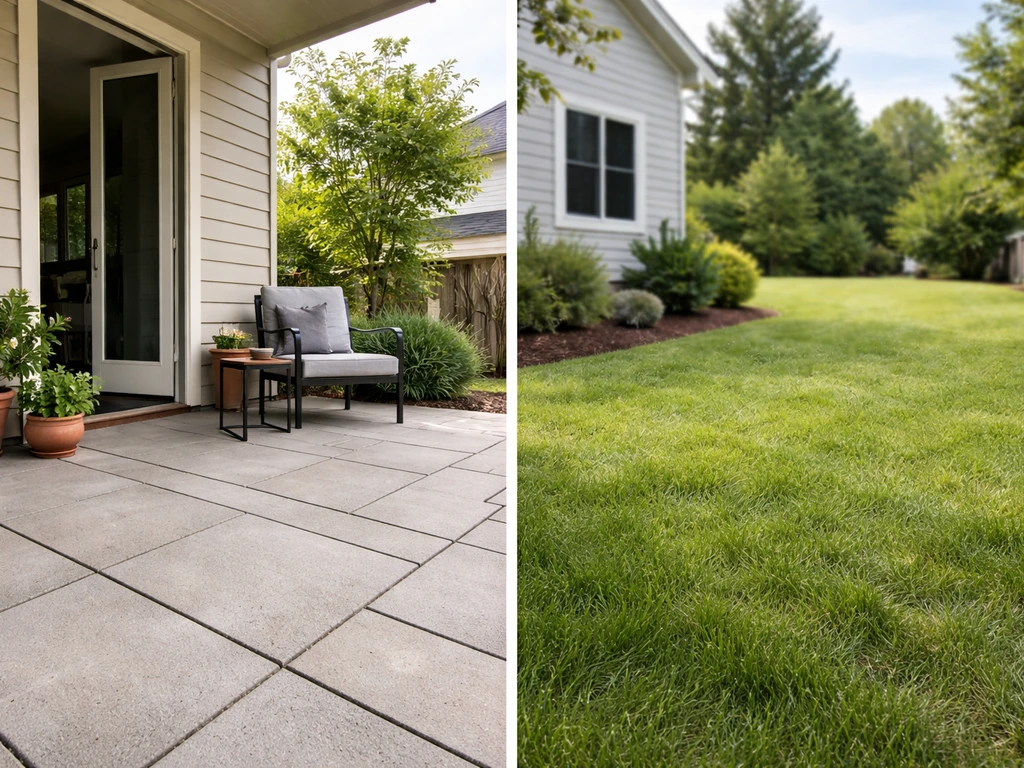
A patio is a flat, paved outdoor surface attached to (or directly beside) the house, with no roof and no walls. A gazebo is a freestanding, roofed structure with open sides that sits out in the yard, away from the house. That single structural difference, roof versus no roof, attached versus freestanding, explains almost everything else about how these two outdoor spaces look, function, and show up in property listings.
Difference Between Patio and Gazebo: Key Features and Uses

Ada Hollis
12 Jun 2026
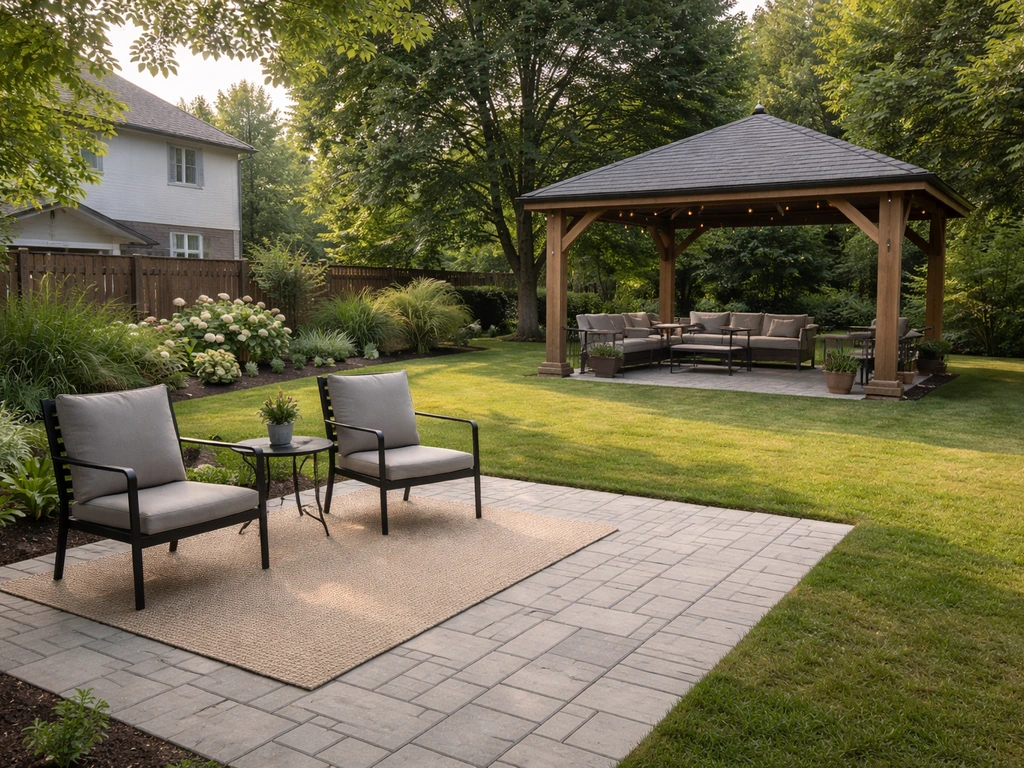
Patio and gazebo: plain-English definitions
A patio, by both common usage and most zoning definitions, is a flat, hard-surfaced area that adjoins a dwelling. It's typically paved with concrete, pavers, stone, or tile. It sits at or very close to ground level (usually no more than 12 inches of elevation change), has no walls, and has no roof. Its whole identity is about being an open-air extension of the house, right next to a back or side door, used primarily for outdoor dining and lounging.
A gazebo is a small, freestanding outdoor structure with a solid, pitched roof supported by columns or posts, and open sides. It's almost always positioned somewhere in the garden or yard rather than directly against the house wall. Oxford's definition puts it well: a small building with open sides in a garden, especially one with a view. Gazebos are a destination within the property, not an extension of the house itself.
The structural differences: roof, walls, columns, and shape
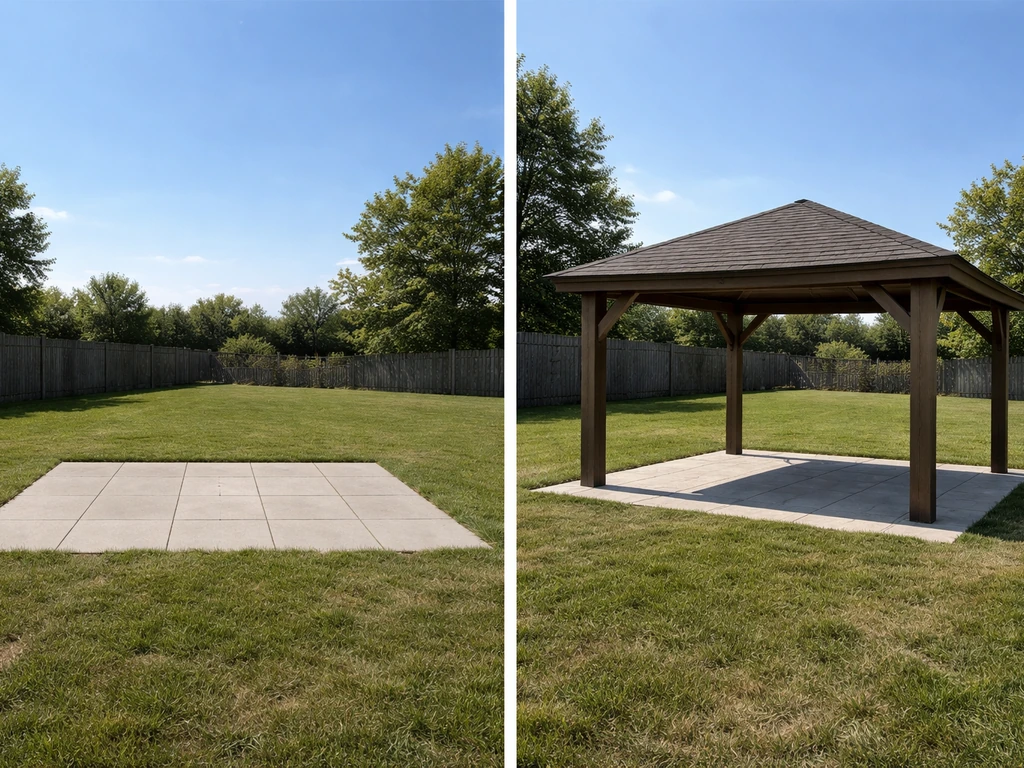
The roof is the single biggest structural dividing line. A patio has none. A gazebo always has one, and it's typically a solid, continuous, pitched roof rather than an open lattice. That roof is supported by posts or columns set at the perimeter of the structure, which is what gives a gazebo its recognizable silhouette.
Walls are another clear separator. A patio is entirely open, no walls, no enclosure, just a flat surface under the sky. A gazebo's sides are open too (that's what distinguishes it from a shed or summerhouse), but the columns and roof frame create a defined, enclosed feeling even without solid walls. Some gazebos have screens or partial lattice panels between the columns, but the defining feature is still that overhead roof.
Shape and footprint differ noticeably as well. Patios are typically rectangular or irregular, shaped to fit the back of the house and the available outdoor space. Gazebos are almost always polygonal, most commonly hexagonal or octagonal, occasionally round. That geometric shape is partly functional (it distributes roof load evenly across the columns) and partly aesthetic. It gives a gazebo that classic, almost decorative look that patios simply don't have.
| Feature | Patio | Gazebo |
|---|---|---|
| Roof | None (fully open to sky) | Solid, pitched roof (always) |
| Walls | None | None, but columns frame the perimeter |
| Floor/surface | Paved: concrete, pavers, stone, tile | Concrete slab, deck boards, or piers/footings |
| Shape | Rectangular or freeform | Polygonal: hexagonal, octagonal, round |
| Attachment to house | Adjoins the dwelling directly | Freestanding, set away from the house |
| Elevation | At or near ground level (typically under 12 inches) | Sits on footings or slab, may have steps |
| Enclosure feeling | Completely open | Defined space, open-sided but sheltered above |
How each space actually gets used day to day
Patios are workhorse outdoor spaces. They're where you put the dining table, the BBQ, the outdoor sectional, and the potted plants. Because they're right outside the back door, they get daily use: morning coffee, afternoon meals, evening drinks. The open-air setup means full sun exposure unless you add an umbrella or shade sail, which is fine for most people most of the time.
Gazebos serve a different function. The roofed, open-sided structure creates real shelter from sun and light rain without making you feel shut indoors. That makes a gazebo genuinely useful for sitting out during a drizzle, hosting a party in hot weather, or simply having a shaded retreat at the end of the garden. Because they're freestanding and often positioned to capture a view, they feel more like a destination than a convenience. You go to a gazebo; a patio is just where you land when you step outside.
In practice, a property with both features uses them differently. The patio handles daily outdoor living right next to the house. The gazebo becomes a spot for longer, more relaxed gatherings, a reading corner, or outdoor entertaining with better shade and shelter. Neither is better, they just do different jobs.
Where they sit on a property
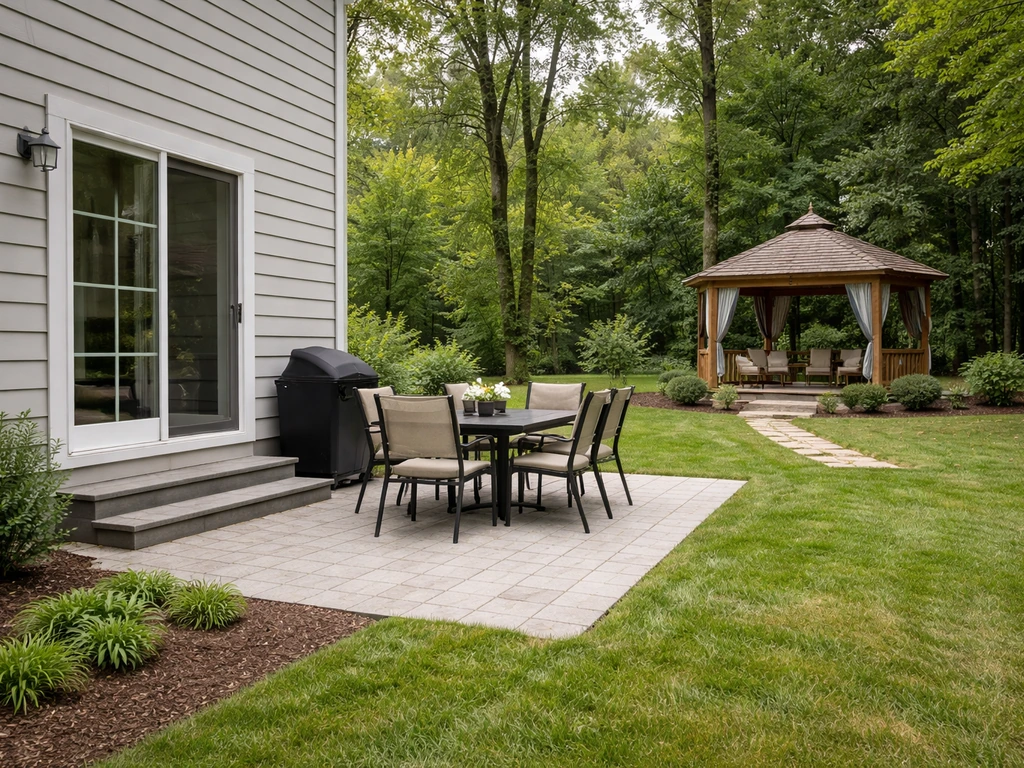
Patios are almost always immediately adjacent to the house. You walk out the back door and you're on the patio. This placement is definitional, not just conventional. Both Merriam-Webster and standard zoning language describe a patio as something that adjoins a dwelling. Oxford Learner’s Dictionaries defines a patio as a “flat hard area outside,” usually “behind or beside a house,” where people can sit adjoins a dwelling. It's the transition zone between interior and exterior living. Most patios sit directly off the kitchen, living room, or main bedroom, which reinforces the dining-and-lounging use.
Gazebos are freestanding and typically sited further into the yard or garden. They might be tucked into a corner, placed at the end of a garden path, positioned to overlook a pond or garden bed, or placed centrally in a large backyard. The location is chosen for view, shade, or garden aesthetics rather than proximity to the house. Some gazebos are attached to a garden wall, but even then they feel like a separate garden feature rather than an extension of the house footprint.
How they're built: materials and site requirements
Patio construction
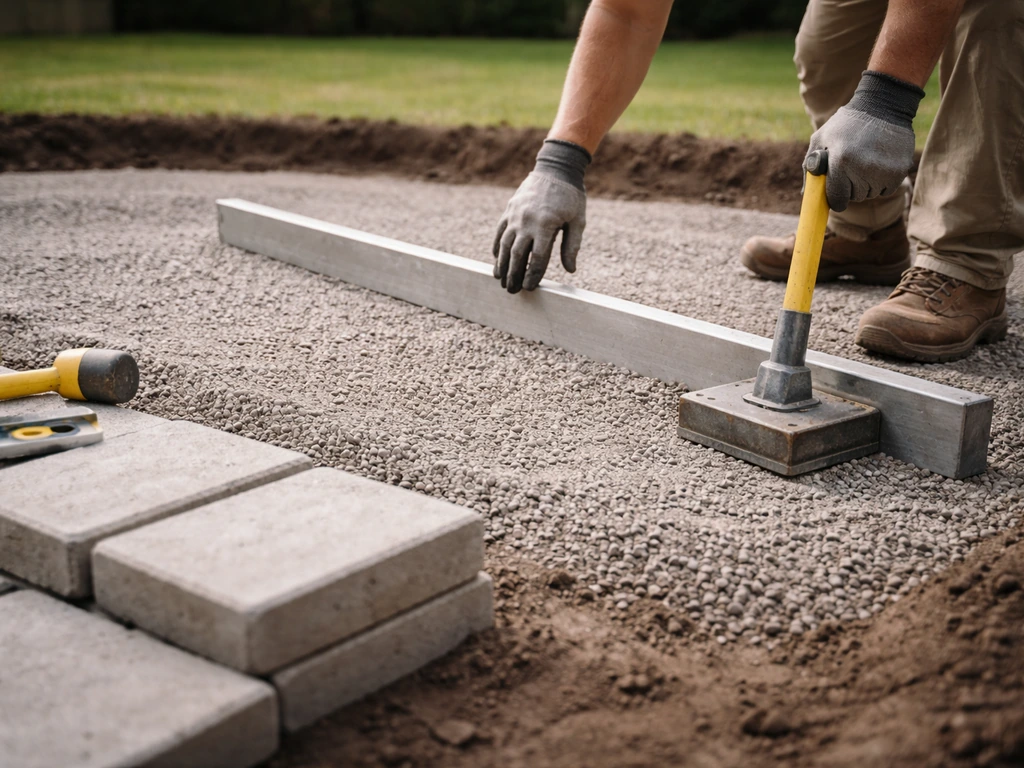
Building a patio is essentially a hardscaping job. The ground is excavated and leveled, a base layer (usually compacted gravel or sand) is laid, and then the surface material goes on top. Common patio surfaces include concrete (poured or stamped), clay or concrete pavers, natural stone such as bluestone or flagstone, and porcelain tile. There's no structural frame, no roof load, and no columns to anchor. A patio's main site requirements are proper drainage, a stable base, and proximity to the house. Permits are often not required for a simple ground-level patio, though rules vary by municipality.
Gazebo construction
A gazebo is a more involved structural build. Posts or columns must be set into concrete footings or anchored to a concrete slab to handle roof loads and wind forces. The roof itself is framed with rafters, sheathed, and finished with shingles, metal, or another weatherproof covering. Materials range from pressure-treated timber and cedar to aluminum, steel, and composite decking for the floor. Pre-built kit gazebos are widely available and can be assembled in a weekend, but permanent gazebos built from scratch typically require a building permit because they're classified as accessory structures. Footing requirements depend on local frost depth and soil conditions.
What this means when you're buying, renting, or reading a listing
In real estate listings, patios and gazebos are treated as separate amenities, and a well-written listing will name both if the property has them. You might see something like 'covered patio plus a gazebo in the backyard.' That phrasing is meaningful: the covered patio is typically an attached outdoor area with some form of overhead cover adjacent to the house, and the gazebo is that separate freestanding structure further into the yard.
blank" rel="noopener noreferrer">Neither a standard open patio nor a gazebo counts toward a home's gross living area (GLA) for appraisal purposes. Finished, above-grade, habitable indoor space is what GLA measures, and open-air outdoor features don't qualify. That said, both features add real buyer-perceived value and can meaningfully affect how quickly a home sells and at what price, especially in markets where outdoor living space matters.
When reading listings, watch for mislabeling. Some sellers call any outdoor paved area a 'patio' even when it's technically a terrace, courtyard, or alfresco area. As with a terrace or courtyard, an alfresco setup is an outdoor dining area, but it may not include the structural cues of a traditional patio alfresco area. Similarly, a 'gazebo' might just be a pergola (open-lattice roof, no solid cover) dressed up with a fancier name. If the listing says gazebo, check the listing photos: does it have a solid, continuous roof? If the roof is open lattice, it's a pergola, not a gazebo, and that distinction affects how much weather protection it actually provides.
Questions worth asking before you commit
- For a patio: What surface material is it? Pavers, concrete, and stone all have different maintenance profiles and lifespans.
- For a gazebo: Is it on proper footings? A poorly anchored gazebo is a wind hazard and may not meet permit requirements.
- Does the gazebo have a permit on file? Unpermitted accessory structures can complicate sale closings.
- Is what's called a 'patio' actually covered? A covered patio is closer in function to an alfresco or verandah and offers very different daily use.
- What condition is the gazebo roof in? Shingles, metal panels, and thatch all age differently and replacement costs vary significantly.
The confusion worth clearing up
The most common mix-up is conflating a gazebo with a pergola. A pergola has an open, slatted or lattice roof that provides filtered shade but zero rain protection. A gazebo has a solid, closed roof that gives genuine shelter. Both are freestanding and open-sided, which is why people use the names interchangeably, but they're functionally quite different. If weather protection matters to you, only a true gazebo delivers it.
There's also frequent confusion between a patio and other adjacent outdoor spaces. A patio is specifically flat, ground-level, paved, open-air, and attached to the house. If you are comparing the difference between patio and backyard, the key is that a patio is typically attached to the house while a backyard is the broader outdoor area.
If the outdoor area has a roof attached to the house, it's more accurately a verandah or covered patio (and those are worth comparing separately). A verandah is typically a roofed, attached outdoor space built as part of the house, so it changes the patio comparison. If it's enclosed by walls on multiple sides, it's closer to a courtyard. And if it's an open outdoor area that's part of the property but not immediately beside the house, you might actually be looking at a backyard or yard rather than a patio in the strict sense.
The bottom line is simple: a patio is a flat, open, paved surface glued to the side of the house, and a gazebo is a roofed, freestanding shelter sitting out in the garden. Knowing that distinction saves real confusion when you're shopping listings, planning a backyard, or just trying to understand what a property actually offers.
FAQ
Can a patio have a roof and still be called a patio?
Yes, but the term usually shifts to “covered patio” or “verandah,” because adding a roof or overhead cover changes the defining “no-roof” characteristic. If the structure is roofed but still attached to the house and open-sided, it is typically categorized as a covered patio rather than a gazebo.
What’s the practical difference if my outdoor space has screens or partial panels?
Screens or half-height panels do not necessarily change the label from gazebo, as long as there is a solid, continuous roof. If the overhead is open lattice and you mostly get shade but no real rain protection, it’s generally a pergola even if someone adds decorative slats or curtains.
How can I tell whether a listing calls it a gazebo but it’s actually something else?
Look for a solid, weatherproof roof (shingles or metal panels) that closes the top. If the “roof” is slatted or open-lattice, it’s not a true gazebo. Also check if the structure has substantial columns/posts and a defined perimeter rather than a simple overhead frame.
Are patios and gazebos treated the same way for permits and inspections?
Not usually. A simple ground-level patio is often handled like hardscaping and may not require a permit, but a permanent gazebo usually triggers building-permit requirements because it needs footings and must be engineered for wind and roof loads. Rules vary by municipality, especially for attachments to fences or retaining walls.
Do both features typically require HOA approval?
Often yes if you have an HOA or design review rules, because both can affect exterior appearance, setbacks, and height. Gazebos are more likely to be reviewed for roof and structural elements, while patios might be reviewed for surface materials and drainage.
Which one is better if I get heavy rain where I live?
A true gazebo is the safer choice because the solid roof provides meaningful protection. A patio without overhead cover will still be usable for seating if you add an umbrella or shade sail, but it will not keep dining areas dry during steady rain.
Which one is better for sun-heavy climates?
Gazebos give consistent shade from sun and allow you to sit comfortably for longer periods. For patios, you can mitigate heat with umbrellas, shade sails, pergola-style covers, or planting, but those are add-ons rather than part of the patio’s original definition.
If a gazebo is close to the house, does it still count as a gazebo?
Usually yes if it remains freestanding with its own roofed structure and open sides, rather than being an attached outdoor extension. The defining factor is still the roofed, freestanding shelter, not distance, though closeness can sometimes blur marketing language in listings.
Can a “patio” be elevated or multi-level?
It can, but if it’s more than a typical ground-level extension or if elevation creates a terrace system, listings may call it a terrace or courtyard instead. In practice, strict definitions often assume a near-ground, flat, hard-surfaced area directly adjoining the dwelling.
Do patios or gazebos add to a home’s gross living area (GLA)?
Typically neither does, because both are open-air features. The roofed nature of a gazebo does not automatically make it “habitable indoor space” for appraisal purposes, since it generally lacks enclosed, finished walls and heat/air conditioning.
What should I check for drainage when choosing between a patio and a gazebo?
For a patio, verify site drainage, slope, and how water runs away from the foundation. For a gazebo, pay attention to footing locations and whether the floor is elevated or properly flashed so water does not pool under or around the structure.
If I’m comparing two homes, how do I value a gazebo versus an attached covered area?
Treat them as different categories. A covered patio attached to the house supports daily use and convenience, while a gazebo is a destination that may enhance the yard experience and entertaining. Even if square footage is similar, the buyer-perceived value and practical usage patterns often differ.
Next Article
Difference Between Patio and Backyard: Key Facts
Clear definitions of patio vs backyard, overlap, how to tell in listings, plus comparisons to deck, porch, balcony, cour