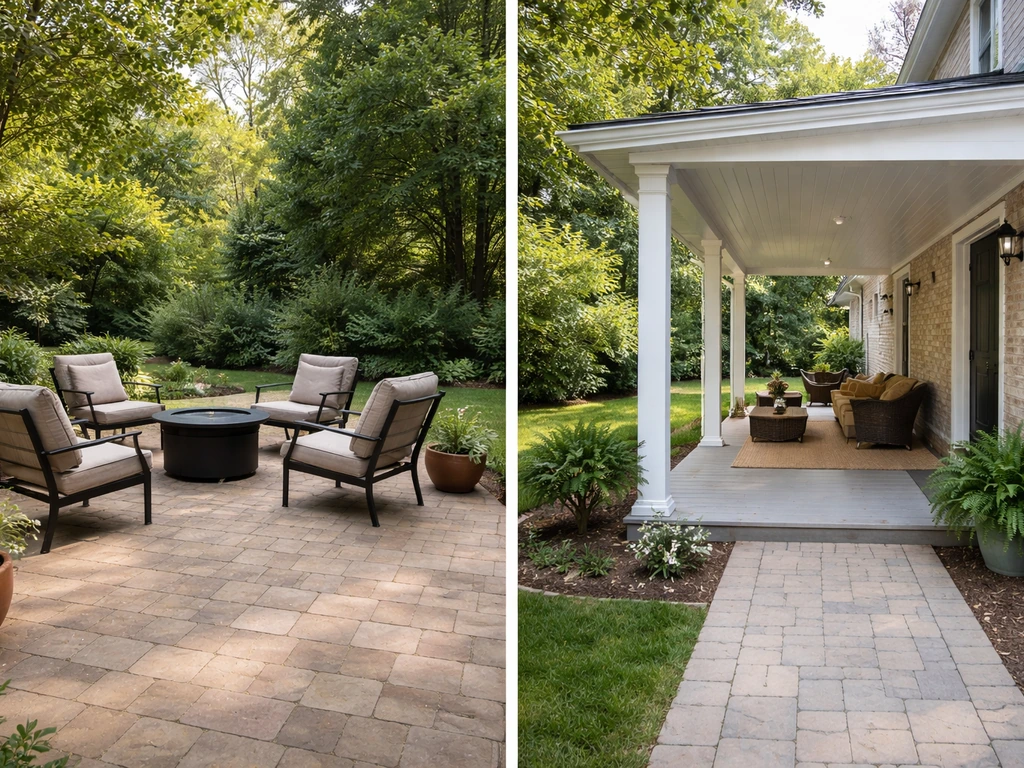
A backyard is the entire land area behind your house. A patio is a specific hard-surfaced spot within that area, usually right next to the house, built for sitting, dining, or relaxing. They are not the same thing, but they overlap constantly because most patios happen to live inside a backyard. Think of it this way: your backyard is the whole canvas, and a patio is one element painted onto it.
Difference Between Patio and Backyard: Key Facts

Ada Hollis
1 Jun 2026
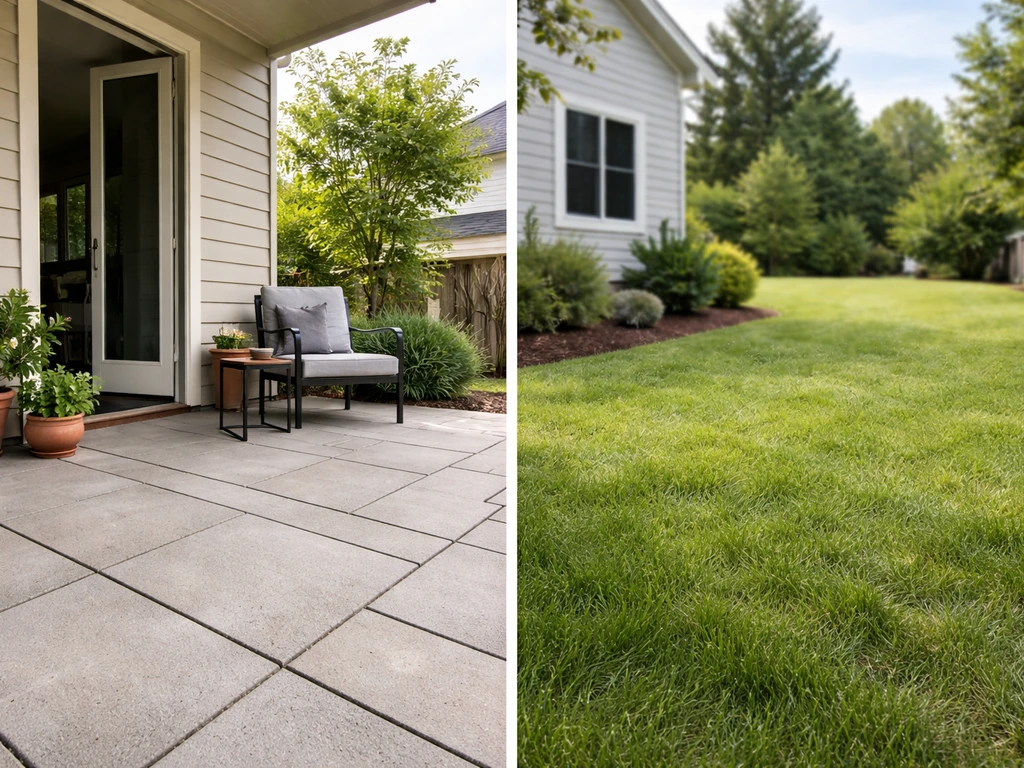
Patio vs backyard: plain definitions
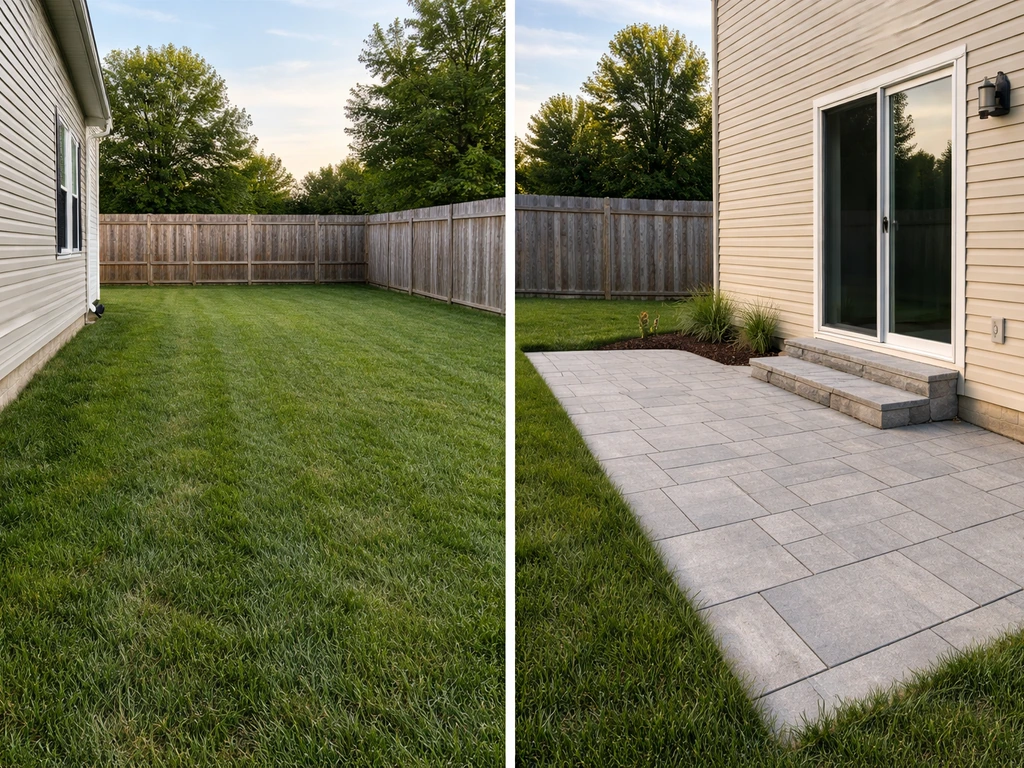
A backyard, by every major dictionary's definition, is the full parcel of land at the rear of a house. Cambridge Dictionary specifically describes it as a space at the back of a house that is usually surrounded by a fence and commonly covered with grass. Oxford adds that it includes any garden, lawn, or open area belonging to the home. It is a property boundary concept, not a surface or structure.
A patio, on the other hand, is a constructed outdoor surface that adjoins a dwelling, is typically paved or otherwise hardscaped, and is intended for outdoor lounging or dining. Merriam-Webster stresses the word "adjoins": a patio is not the whole yard, it is a specific surface that sits right up against (or very close to) the home.
Merriam-Webster also defines a courtyard as an outdoor space adjacent to a building that is enclosed by walls or structures Merriam-Webster stresses the word "adjoins". Zoning codes reinforce this with even more precision.
The City of Oshkosh, for example, defines a patio as an open, level-surfaced area that is impervious (meaning water does not soak through it), sits no more than 12 inches above grade, and has no walls or roof.
So one is a land area defined by property lines, and the other is a built feature defined by its surface material, elevation, and relationship to the house. That is the core distinction, and everything else follows from it.
How they relate: where a patio fits inside a yard
Most patios are installed inside the backyard, usually directly behind the house where a back door or sliding glass door opens out. That adjacency is almost always what makes a patio feel so connected to the home. You step out of the kitchen or living room and land on it. The backyard then extends beyond the patio: grass, garden beds, a lawn, or whatever the rest of the property contains.
Occasionally a patio is the only feature in a small backyard, so the terms can feel interchangeable in conversation. But they still mean different things structurally. If someone asks you the square footage of your backyard, you give them the total land area. If they ask about your patio, you give them only the paved section. Permitting checklists in many jurisdictions reflect this clearly: local deck and patio applications often ask separately for the "length of back yard from back of house to rear property line" and then for the patio's own dimensions, treating them as two distinct measurements.
A patio can also appear outside the backyard. Front patios exist, side-yard patios exist, and some homes in planned communities have shared patios with no traditional backyard at all. The City of Papillion's zoning documents describe patios as constructed at grade for outdoor living use and specify how far they may project into various yard setbacks, which confirms that patios are considered separate constructed features within (or adjacent to) the yard, not synonyms for it.
Key differences to look for on a walkthrough or listing
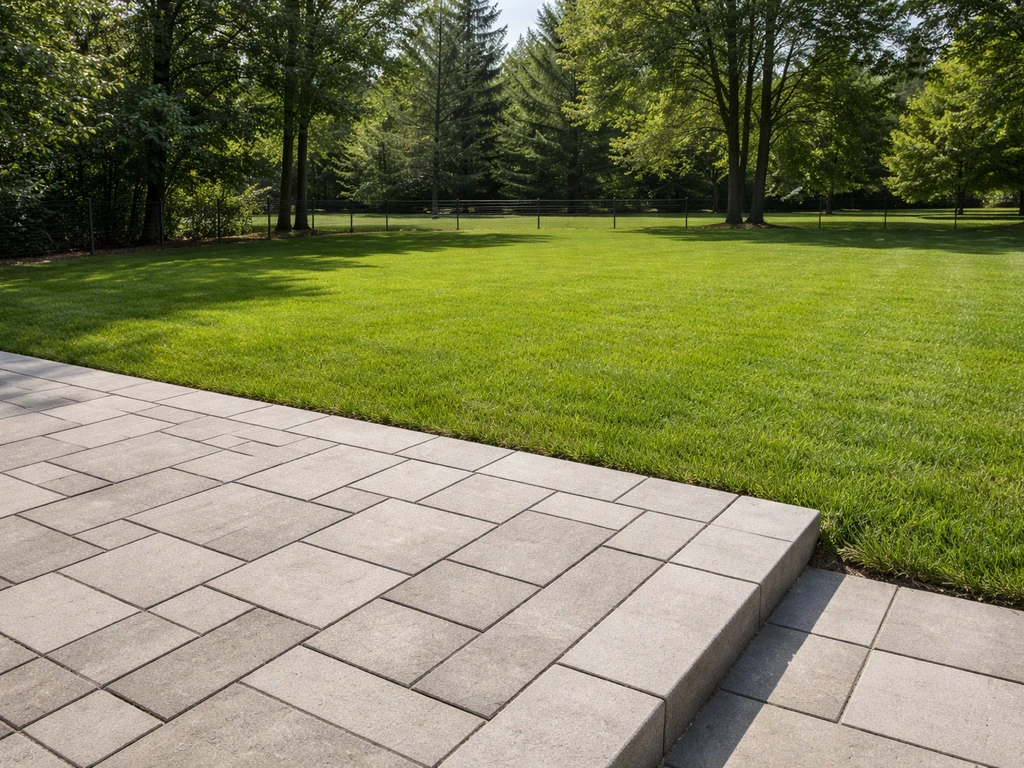
When you are reading a real estate listing or walking a property, you can almost always distinguish the two by asking three quick questions: What surface is it? How high is it? Where does it sit relative to the house?
| Feature | Backyard | Patio |
|---|---|---|
| What it is | Total land area behind the house | A specific built surface for outdoor living |
| Surface material | Typically grass, soil, or mixed landscaping | Concrete, pavers, stone, brick, or tile |
| Elevation | Ground level (whatever the terrain is) | At grade or up to 12 inches above grade |
| Roof or walls | None (open sky) | None (open by definition; adding a roof changes the name) |
| Defined by | Property lines and fencing | Construction and surface material |
| Relation to the house | The broader land parcel behind it | Directly adjoins the home, usually at a door |
| In a listing | Usually described in terms of lot size or yard size | Called out as an amenity ("large paver patio") |
In practice: if you walk out the back door and immediately step onto concrete, pavers, or stone tiles, that section is the patio. When the hard surface ends and the grass or garden begins, you have crossed into the broader backyard. If the entire rear area is paved, then the patio and the functional backyard overlap almost entirely, but technically the backyard still refers to the land parcel and the patio to the surface installed on it.
Patios vs other confusing outdoor spaces
The patio is one of several outdoor space terms that get mixed up in listings and everyday conversation. Here is how to keep them straight.
Porch
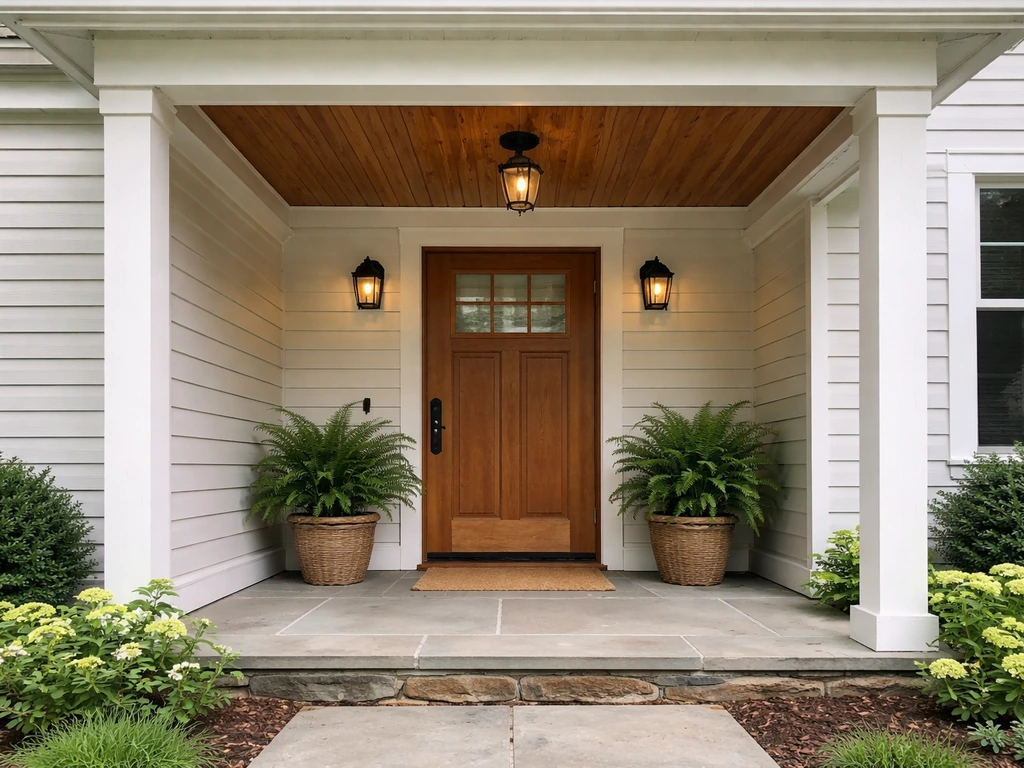
A porch is a covered structure attached to the exterior of a house, usually at the entrance. The roof is the defining feature. Some porches are fully enclosed with screens or windows; others are open on the sides but still roofed. Once you add a roof to a patio-style surface, it typically becomes a porch (or pergola, or covered patio, depending on the roof type). A patio, by contrast, is open to the sky.
Veranda or verandah
A veranda is a roofed, open-sided platform that runs along one or more sides of a house, usually at the front or wrapping around. It is always covered and always attached to the structure. A patio sits on the ground and has no roof. If you are comparing the difference between patio and verandah, remember that a patio sits on the ground and has no roof, while a verandah is roofed and open-sided. The comparison between verandas and patios comes up often enough that it is worth its own detailed treatment if you are trying to describe an older or heritage-style home accurately.
Balcony
Balconies are elevated platforms attached to an upper floor of a building, enclosed by a railing. A patio is always at or very near ground level. If you are on the second floor and stepping outside onto a platform, that is a balcony. If you are stepping out from a ground-floor door onto a paved surface, that is a patio.
Courtyard
A courtyard is defined by enclosure. Merriam-Webster describes it as an outdoor space enclosed by walls or buildings. Oxford emphasizes that it is partly or completely surrounded by structures. The Town of Paradise Valley's zoning code defines a courtyard specifically as a private landscaped outdoor living space enclosed by walls and/or parts of the house.
A patio, even if it is tucked into a corner, is not enclosed by definition. Understanding the difference between courtyards and patios helps you describe the space accurately in listings and permits. If walls on three sides surround the space, you are looking at a courtyard. The distinction between courtyards and patios is one worth examining closely if you are considering a Mediterranean-style or Southwest-style home.
Deck
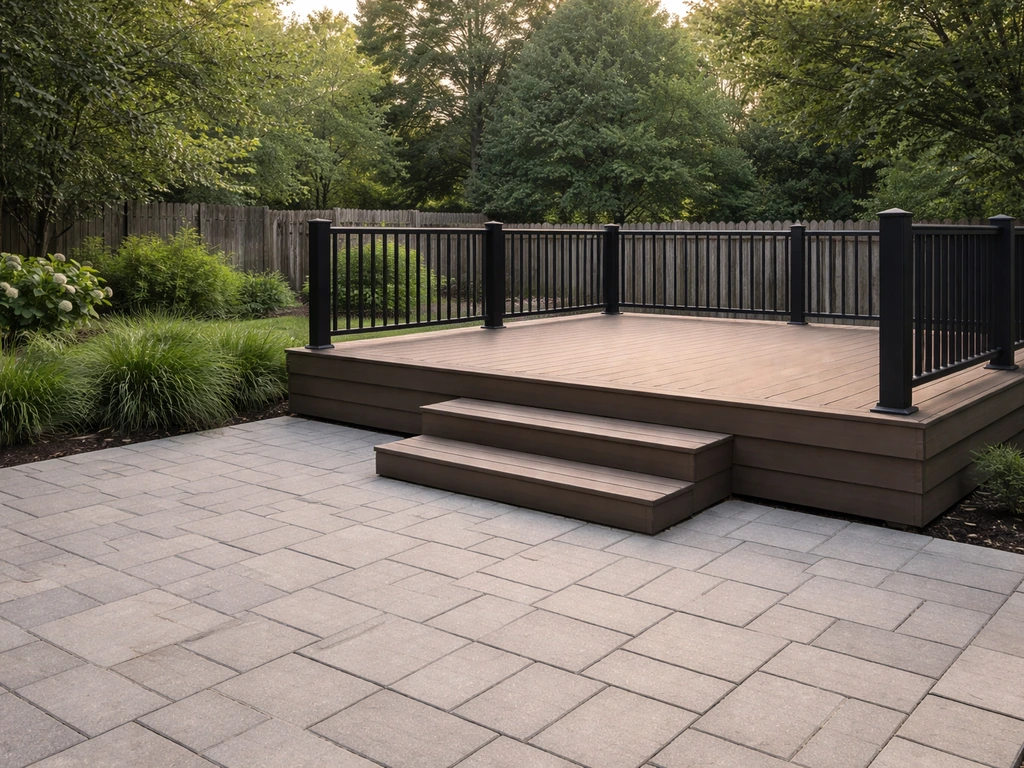
Elevation separates a deck from a patio. Angi summarizes it well: patios are closer to the ground and often sit in fenced yards, while decks are elevated. A deck is typically a wood or composite platform raised above grade, attached to or freestanding near the house. A patio is at ground level and made from hardscape materials like concrete or pavers. Both serve the same purpose (outdoor living) but are built differently and carry different maintenance and permitting requirements.
Alfresco area
"Alfresco" is common in Australian real estate and refers to an outdoor entertaining area, which may or may not have a roof. It is more of a lifestyle descriptor than a structural term, and it can describe what Americans would call a covered patio or an open patio. The comparison between alfresco areas and patios comes up frequently for anyone reading Australian property listings.
Regional and cultural naming differences
The word "patio" comes from Spanish, where it originally meant an inner courtyard or central open area of a house. In Spanish-speaking countries, a patio is often enclosed by the home's own walls on multiple sides, much closer to what English speakers would call a courtyard. When the term traveled into North American English, it shifted to mean a backyard or side-yard hardscape surface, which is how most people in the US, Canada, and the UK use it today.
In Australia and New Zealand, the covered outdoor entertaining area attached to the back of a house is often called an "alfresco" or a "verandah," not a patio. In the UK, you will hear "terrace" used for what Americans would call a patio, particularly in urban settings or row houses. In South Asian English (India, Pakistan), outdoor spaces are often described using the term "sit-out" or "sit-out area" rather than patio. These differences matter when you are reading international property listings or designing a home with input from contractors trained in different markets.
In North American real estate specifically, "patio home" is a term with its own distinct meaning. Redfin notes that patio homes are typically planned or clustered housing with smaller lots and more limited outdoor space. Angi points out that in many patio home communities, front and backyards blend into shared space without room for a traditional private patio. The name is more of a marketing term than a literal guarantee that the home comes with a patio.
Practical implications for homeowners, renters, and buyers
For buyers
When a listing says "large backyard," that tells you about land area, not about what is done with it. It might be all grass, or it might have a patio, a deck, a garden, and a shed. When a listing says "paver patio," that tells you specifically about a hardscaped outdoor living area but tells you nothing about how much overall yard space there is. A small backyard can have an impressive patio, and a large backyard can have no patio at all. Always ask for both: total yard size and patio dimensions (if any). These are two separate amenity questions.
Patios add measurable value in terms of usability and outdoor entertaining potential, but they also replace lawn area. A fully paved backyard with a large patio means less grass to mow but also less room for kids to play or gardens to grow. Make sure the balance fits your lifestyle before buying.
For renters
Rental listings often say "private backyard" when they mean a small paved area or a shared lawn. Before you sign, ask specifically: Is the patio or yard space private to your unit? Is it shared with other tenants? Is it enclosed by a fence? What maintenance is your responsibility (weeding between pavers, clearing leaves, etc.)? These are different questions, and the answers depend on which feature you are actually getting.
For homeowners planning renovations
If you are thinking about adding or expanding a patio, check your local zoning rules before you do anything else. Most municipalities treat a patio as a constructed impervious surface and regulate how close it can sit to property lines (setbacks), how high it can be elevated, and in some cases what percentage of your yard it can cover. The City of Oshkosh's definition, for instance, limits patios to no more than 12 inches above grade. Exceeding that threshold may reclassify your project as a deck, which carries different permitting requirements. Papillion's zoning amendment also details how far patios can project into various yard setbacks. Getting the terminology right when you apply for permits matters.
How to identify and describe the space correctly
Use this checklist when walking a property or writing a listing description:
- Step outside the rear or side door. What is immediately underfoot? Hard surface (concrete, pavers, stone, brick) means patio. Grass or bare soil means yard/backyard.
- How high is the surface above the surrounding ground? At or near grade (less than 12 inches) points to patio. Elevated platform with posts or structure beneath points to deck.
- Is there a roof overhead? No roof: patio or yard. Attached roof structure: porch, verandah, or covered patio.
- Are walls surrounding you on multiple sides? Enclosed by walls or building wings: courtyard. Open on most sides: patio.
- Where is this feature relative to the house? Directly adjoining the home (at a door or window): patio. General land area extending away from the home: backyard.
- What are the rough dimensions? Measure the paved surface separately from the total yard depth (back of house to rear property line). Both numbers matter and they describe different things.
- Is the space private, shared, or semi-shared? A fenced backyard is private. A patio in a multi-unit building may be shared. A courtyard in a condo complex is almost always shared.
Questions to ask before buying, renting, or renovating
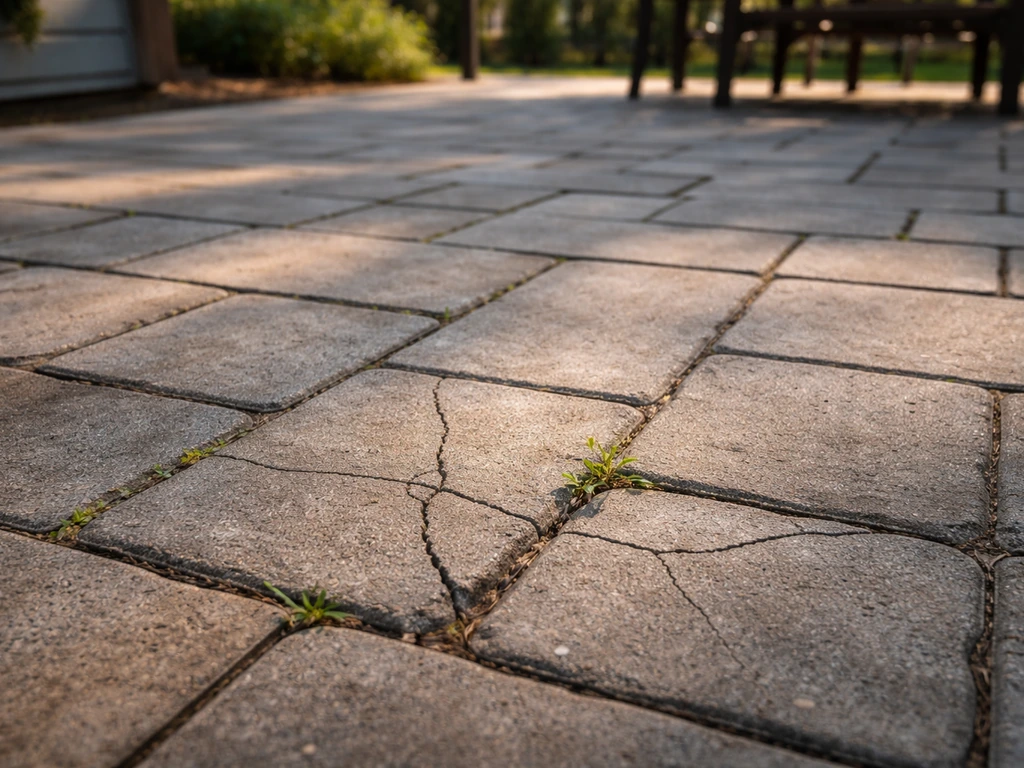
- What is the total lot size, and how much of it is the usable yard versus the built patio or deck?
- Is the patio surface in good condition, or are there cracked pavers, sunken concrete, or drainage issues?
- Does the patio require a permit to expand, and what are the local setback rules?
- If renting, is the outdoor space exclusive to this unit or shared with neighbors?
- Is there fencing around the backyard, and if so, who owns and maintains the fence?
- Does the listing call it a patio but it looks more like a courtyard or a covered porch? If so, what are the actual features (roof, walls, elevation)?
- For patio homes specifically: is the outdoor space private, and what does the HOA allow you to do with it?
Getting clear on these terms before you commit saves real headaches. A "backyard" that turns out to be 8 feet of concrete and no grass is not wrong, but it is a very different lifestyle than the word "backyard" typically suggests. And a "patio" that is actually a covered, screened-in porch is a different maintenance and renovation situation entirely. Use the definitions as a filter, ask direct questions when terms seem vague, and you will know exactly what you are getting.
FAQ
When a listing gives “patio size” or “patio sq ft,” what exactly is usually included?
In most jurisdictions and listings, patio square footage refers only to the hard-surfaced area, even if you can see grass immediately beyond it. If the patio is part of a broader paving zone, ask whether the measurement includes only the “impervious” surface or also any transition strips (like stepping stones or gravel).
If my patio gets a roof, does it still count as a patio?
It depends on whether the surface is considered impervious and how it relates to your dwelling. If a roof is added, many places treat it as a porch or covered patio rather than a standard open patio, which can change permit requirements and setback rules.
How should I confirm the patio area versus backyard area when zoning or permits ask for both?
Ask for the setback language or the dimensions from the back of the house to the rear property line, then separate the patio’s own footprint. Even if the entire backyard is paved, permits usually still classify the patio as the constructed surface and the backyard as the land parcel.
Does adding a patio change drainage and water flow around my home?
Because patios are impervious, they can affect drainage. If the patio slopes or has pooling, water may run toward foundations or neighboring yards, even though it is “only patio.” Ask whether there is a drainage plan, downspout routing, or a permitted grading plan before you assume it is low-risk.
What if the “patio” looks raised or elevated, could it be considered a deck instead?
If the “patio” is actually raised above grade, it may be reclassified as a deck or other platform depending on height and construction. Don’t rely on what the seller calls it, use the measurements and check the local height threshold before assuming it is a patio.
How can I tell whether a walled outdoor space is a courtyard or a patio?
Courtyards and patios can be confused when walls create partial enclosure. A practical test is whether the space is meaningfully enclosed by walls or parts of the house on multiple sides. If most sides are blocked and it is intended as an enclosed private outdoor room, it may be described as a courtyard for listing and permit purposes.
If a rental says “private backyard,” what questions should I ask to know whether the patio/yard is truly mine?
For renters, the key is responsibility, not just privacy. Ask who maintains the hardscape (weeding joints, clearing leaves, sealing pavers if applicable) and whether any portion is shared or common-area owned by the landlord or HOA.
Why does “large backyard” not always mean there is more outdoor space for kids or gardening?
If the listing says “large backyard” but the photos show limited greenery, treat it as land area, not usable lawn. Ask for both total lot backyard area and the patio footprint, then decide whether you want mowing-free hardscape or open play/garden space.
What material details should I ask about if I’m evaluating a property’s patio?
Patios can be paved with different materials, and that changes maintenance and longevity. Ask whether it is concrete, pavers, stone, or brick, and whether any leveling, polymeric sand, or sealing was used, since repairs and re-sanding are different across materials.
How do I interpret patio-related terms in international listings, like “alfresco” or “terrace”?
Language like “alfresco,” “terrace,” or “sit-out area” can describe an outdoor entertaining space that may or may not be an open patio by North American standards. If you see an unfamiliar term, verify surface type, roof presence, and elevation rather than trusting the name alone.
Next Article
Difference Between Patio and Verandah: Key Features
Patio vs verandah difference explained: patio is usually paved and open; verandah is roofed and often attached to a home