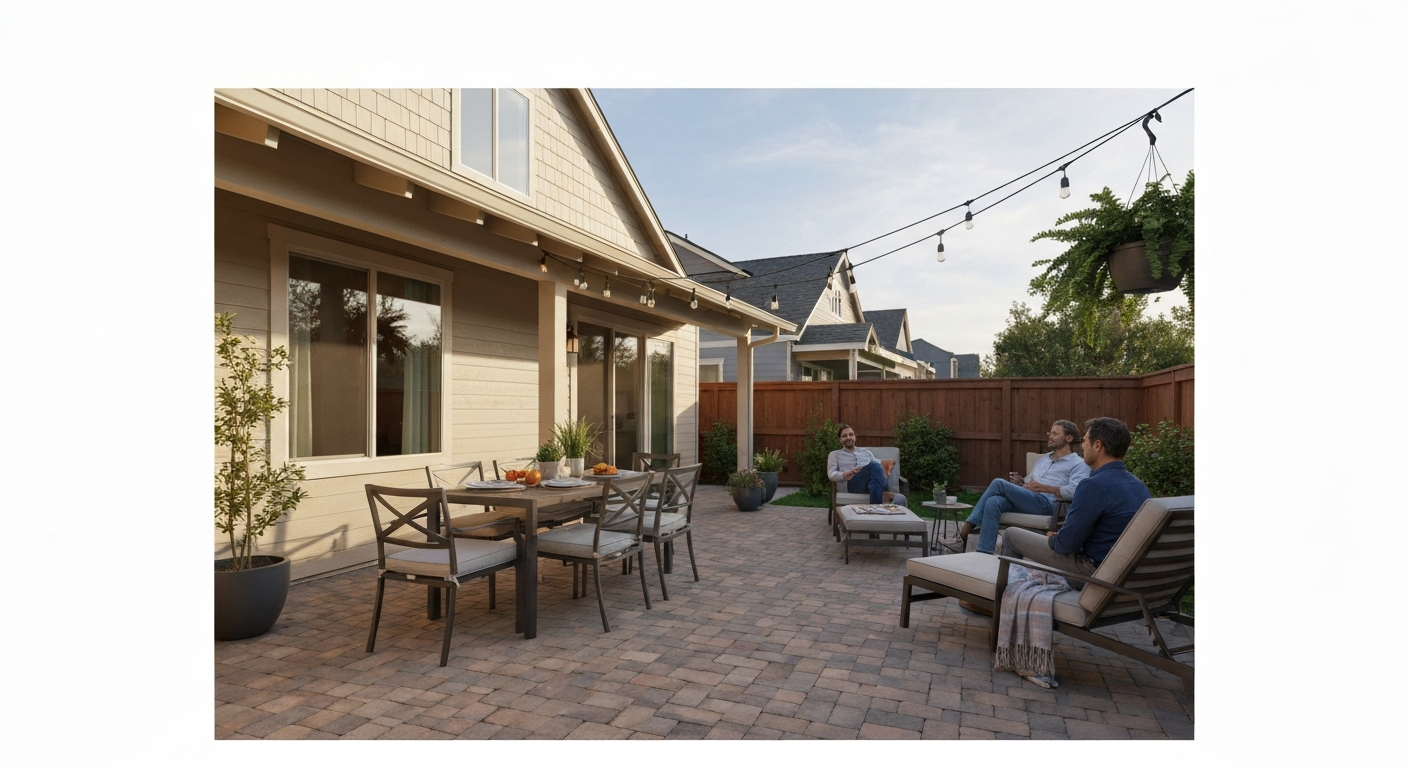
Patio dining means eating a meal outdoors on a patio: a ground-level paved or surfaced area directly adjoining a home or building, open to the sky above. It covers everything from a quick weekday breakfast at a bistro table outside your back door to a full weekend barbecue spread for a dozen guests. The patio itself is not roofed and not elevated, which is what separates it from a porch or balcony, and those differences matter more than most people expect when you are shopping for a home, reading a lease, or planning a renovation.
Patio Dining Meaning: Clear Definition, Examples & Tips

Ada Hollis
24 Jul 2026
What 'Patio Dining' Means
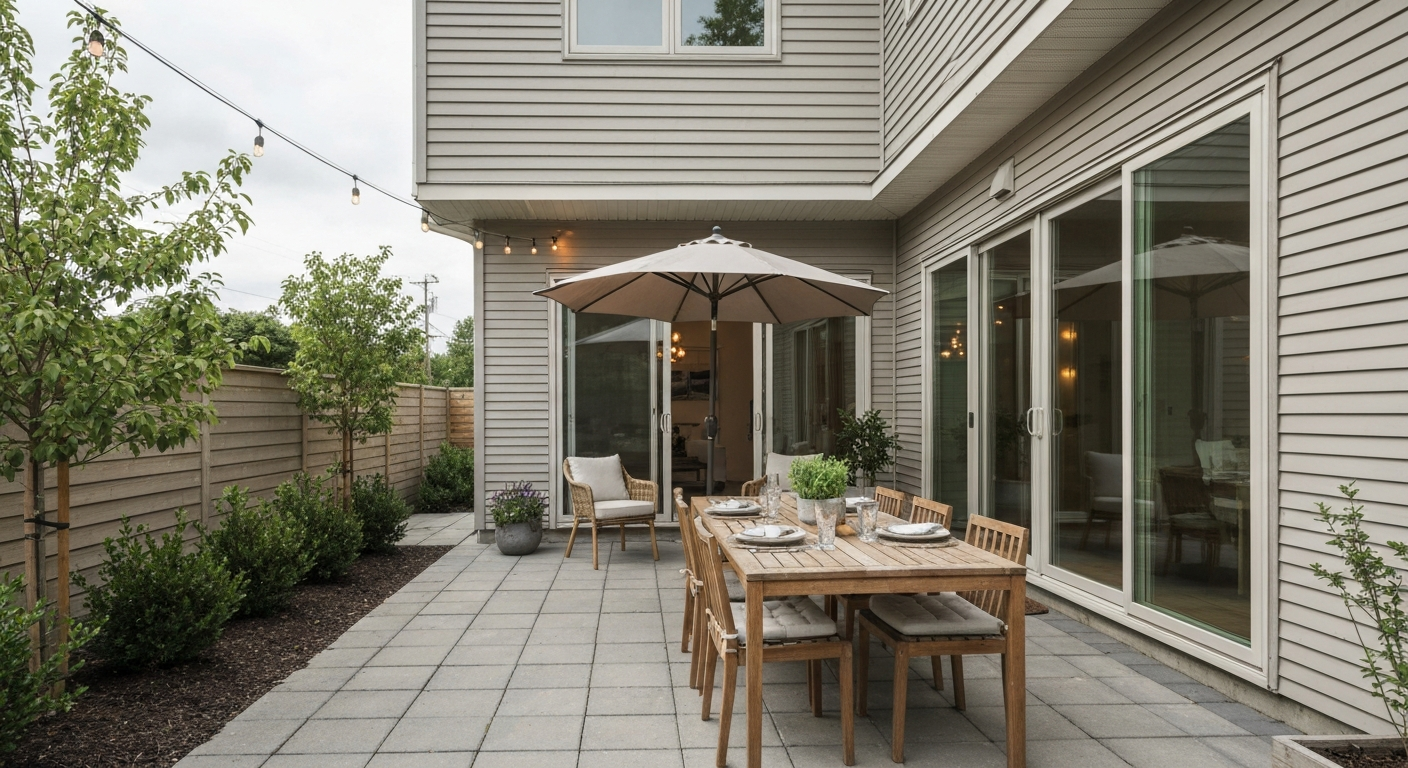
Merriam-Webster defines a patio as an outdoor area adjoining a residence, often paved, used for dining or recreation. Cambridge Dictionary sharpens that slightly: an area next to a house, without a roof, used for sitting and eating outdoors. Put those two definitions together and you have everything you need: patio dining is the act of sharing a meal in that open-air, ground-level space attached to (or immediately beside) a home or commercial building.
In everyday language the phrase has two clear uses. At home, patio dining describes any meal taken outside on your own paved or hardscaped surface, coffee in the morning, a grilled dinner at night, or a Sunday brunch with friends. In the restaurant industry, 'patio seating' or 'dining on the patio' refers to outdoor tables set up on a ground-level terrace or courtyard section of the venue. Both uses share the same core idea: open-air, ground-level, intentional eating space.
The word itself comes from Spanish, where 'patio' originally described the inner courtyard of a house. As the term traveled into North American English it shifted meaning slightly, shedding the enclosed courtyard sense and landing on any paved outdoor extension of a living space. That etymological history is worth keeping in mind when comparing patios to courtyards, which are a distinct concept even today.
What Counts as Dining on a Patio: Common Scenarios
Not every outdoor eating moment counts as patio dining in the architectural sense. A picnic blanket in the yard is not patio dining; eating at a table on a concrete or paver slab off the back of your house is. Here are the most common setups you will encounter.
- Attached ground-level patio: The most common residential type. A paved slab (concrete, pavers, or tile) runs directly off the back door or sliding glass door at the same level as the interior floor. This is what most real-estate listings mean when they advertise a 'patio.'
- Freestanding or detached patio: A paved area set slightly away from the main structure, sometimes anchored by a pergola or shade sail. Still counts as patio dining even though it is not wall-connected.
- Rooftop patio: An increasingly popular urban version where a flat roof is converted into a usable outdoor surface with pavers, decking tiles, or poured concrete. Open to the sky and at a raised level, but architecturally classified as a patio rather than a balcony because it sits over the building footprint rather than projecting from a wall.
- Restaurant patio seating: Tables set on a ground-level outdoor section of a commercial property. Local zoning and fire codes treat this as a distinct use category with permit requirements.
- Shared patio in multifamily housing: Condo buildings and townhome communities often include a private ground-floor patio area outlined in the lease or HOA documents as an exclusive-use common area. Renters and owners both encounter this, and the HOA usually specifies what furniture, grills, and structures are allowed.
From a zoning standpoint, patios are treated differently from porches or balconies. The City of Los Angeles zoning code, for example, explicitly distinguishes patios, porches, and projecting balconies for setback and footprint calculations, a patio does not project from a wall and generally sits at grade, which is why municipalities often treat it as a landscape feature rather than a structural addition.
Patio vs. Porch vs. Balcony vs. Verandah vs. Courtyard
These five terms get mixed up constantly, especially in real-estate listings and property descriptions. Here is a plain-language breakdown of each one.
Patio
Ground-level, open to the sky, paved or hardscaped, adjacent to a building. No roof, no elevation. It can be at the back, side, or front of a property. This is the baseline definition against which all the others are measured.
Porch
An attached structure at or near the entrance of a building, almost always with a roof and often with a partial enclosure (railings, screens, or walls). It is transitional space: between the outdoors and the front door. You can eat on a porch, but its primary function is entry and shelter, not dedicated outdoor living. A screened porch takes this further, becoming a semi-interior space.
Balcony
A platform that projects outward from an upper-floor wall. It has no connection to ground level, relies on structural cantilever or brackets, and typically has a railing. Balcony dining is common in urban apartments, but the space is usually much smaller than a patio and subject to stricter load limits.
Verandah (or Veranda)
A roofed, open-air gallery or porch that wraps around one or more sides of a building at ground level (or occasionally the first floor). Common in colonial-era architecture, Australian homes, and Southern US houses. It is distinguished from a patio by its roof and from a porch by its wrapping, gallery-like configuration. Think of the wide, covered wrap-around of a plantation house or a classic Queensland Queenslander home.
Courtyard
An enclosed or semi-enclosed outdoor space that is typically surrounded by walls or wings of a building on multiple sides. As ArchDaily's architectural analysis notes, the courtyard organizes the rooms of a house around a central open-air core, it is inward-facing rather than outward-facing. A Spanish-colonial hacienda or a Mediterranean townhouse with a central garden is the classic example. Many restaurant 'patios' are technically courtyards because they are enclosed by walls on three or four sides.
Quick Comparison: Patio, Porch, Balcony, Verandah, and Courtyard
| Feature | Patio | Porch | Balcony | Verandah | Courtyard |
|---|---|---|---|---|---|
| Level | Ground | Ground (entry) | Upper floor | Ground (wraps building) | Ground (enclosed) |
| Roof | None | Yes | Usually none | Yes | None (open sky) |
| Attachment | Adjacent to building | Attached at entrance | Projects from wall | Attached, wraps exterior | Surrounded by building |
| Primary use | Dining, recreation | Entry, relaxing | Outdoor access, seating | Relaxing, circulation | Central living, dining |
| Typical surface | Paver, concrete, tile | Wood, composite, concrete | Concrete, tile | Wood, tile | Stone, paver, gravel |
| Zoning treatment | Often landscape feature | Structural addition | Structural addition | Structural addition | Structural/site feature |
| Roofed version name | Patio cover / pergola | Porch (already roofed) | Covered balcony | Verandah (already roofed) | Covered courtyard |
Common Patio Dining Setups and Layout Options
The size and shape of your patio almost always determines which dining setup makes sense. Here are the three setups you will encounter most often, from smallest to most expansive.
Bistro Setup (Small Patio, 60–80 sq ft or less)
A bistro table, typically 24 to 30 inches in diameter, paired with two matching chairs. This is the workhorse of small patios, apartment terraces, and rooftop spaces. It comfortably seats two people for coffee, breakfast, or a light meal. The compact footprint means you can still move around the table freely and keep a clear path to the door. Folding versions are worth considering if you also need to store bikes or garden equipment in the same space.
Family Dining Setup (Mid-Size Patio, 120–200 sq ft)
A rectangular or oval dining table seating four to six people is the standard for this range. Allow at least 36 inches from the table edge to any wall or railing so chairs can pull out and people can walk past. An umbrella centered through the table (or a freestanding offset umbrella) handles midday sun. This is the most searched-for configuration and what most patio dining furniture sets are designed around.
Lounge-Style Dining (Larger Patio, 200+ sq ft)
This setup blends a dining zone with a seating or lounge zone in the same outdoor space. Deep-seat sofas or sectionals anchor one area while a full dining table anchors another. It works well for hosts who entertain regularly and want the flexibility to transition from dinner to after-dinner drinks without asking guests to move. You will often see an outdoor rug defining each zone and a fire pit as a focal point for the lounge section.
Patio Furniture Explained
Patio furniture terminology can be confusing when you are browsing listings or reading a lease that specifies what can be left outside. Here is what the key terms actually mean in practice.
Patio Table
A patio table is any table designed and rated for permanent or semi-permanent outdoor use. It typically has a weather-resistant frame (powder-coated aluminum, teak, or HDPE) and a surface (tempered glass, slatted aluminum, tile, or solid composite) that handles rain, UV, and temperature swings. Sizes range from the small bistro table (24 inches) up to large rectangular tables seating eight or ten. Many include a center hole for a standard 1.5-inch umbrella pole.
Patio Lounger
A patio lounger (sometimes called a sun lounger or chaise lounge) is a reclining chair or flat bed designed for relaxing outdoors rather than for upright dining. It is a staple around pools and on larger patios where the lounge-style setup blends dining and relaxation zones. Loungers are not typically part of a dining set but are worth understanding as a distinct furniture category when planning a multi-zone patio layout.
Dining Chairs and Armchairs
Standard patio dining chairs are designed for upright seated use at a table height of about 29 to 30 inches. They come in stacking versions (space-efficient for smaller patios) and non-stacking armchair versions (more comfortable for extended meals). Outdoor armchairs used in lounge zones are deeper and lower than dining chairs, visually similar but not interchangeable.
Umbrellas and Shade Structures
A market umbrella (the standard center-pole type) typically comes in 9-foot or 11-foot diameters and fits through a hole in the dining table. An offset (cantilever) umbrella mounts on a side pole, allowing shade over the table without a center pole interfering with table use. Pergolas and shade sails are permanent or semi-permanent shade structures that define the overhead plane of a patio without fully enclosing it. Adding a solid roof converts the patio into a 'patio cover,' which usually requires a building permit under codes like the 2021 IRC Appendix AH.
Choosing Furniture and Flooring for Dining Use
Furniture Materials: What Holds Up and What Does Not
Buyer guides from major retailers and product testing consistently identify the same shortlist of materials worth buying for outdoor dining. The Patio Dining Sets – Wayfair category and buying guides list common materials, powder‑coated aluminum, HDPE/polywood, teak/ipe, resin/rattan, and tempered glass, and note their weather resistance, cleaning, and lifecycle considerations. Powder-coated aluminum is the most popular because it is light, rust-free, and available in every price range. HDPE lumber (often sold as Polywood) is a recycled-plastic product that never needs sealing, handles rain and sun well, and has a typical lifespan of 20+ years. Teak and ipe are premium hardwoods that weather beautifully but require annual oiling if you want to keep the warm honey color. Resin wicker over an aluminum frame is comfortable and looks good but can fade and crack in intense UV climates after three to five years without protective covers. Tempered glass tabletops are clean and attractive but add weight and can shatter under a hard impact.
| Material | Weather Resistance | Maintenance | Typical Lifespan | Best For |
|---|---|---|---|---|
| Powder-coated aluminum | Excellent | Wipe clean | 15–25 years | Any climate, any budget |
| HDPE / Polywood | Excellent | Soap and water only | 20+ years | High-humidity, coastal areas |
| Teak / ipe hardwood | Very good (treated) | Annual oiling | 20–30 years | Traditional or premium look |
| Resin wicker over aluminum | Good | Cover or store in winter | 5–10 years | Comfort, lounge zones |
| Tempered glass tabletop | Good (surface only) | Wipe clean | Depends on frame | Clean, modern aesthetic |
| Steel (powder-coated) | Good if coated | Touch up chips quickly | 10–15 years | Budget dining sets |
Cushion Fabrics: Why Sunbrella Matters
Outdoor cushion fabric is the part that fails fastest on cheaper patio sets. Solution-dyed acrylic (Sunbrella is the best-known brand) is the standard for quality outdoor cushions: it is UV-stable, mildew-resistant, and the manufacturer recommends routine cleaning with mild soap and water. For mildew, a diluted bleach solution is approved by the manufacturer without damaging the fabric. Generic polyester cushions will fade visibly within a single season in sun-exposed climates.
Flooring and Paving for Dining Patios
The surface under your dining table matters more than most people realize. Interlocking concrete pavers installed to Interlocking Concrete Pavement Institute (ICPI) standards require a compacted gravel subbase of four to six inches (depending on load and soil conditions), a one-inch bedding sand layer, edge restraints, and pavers typically one to two inches thick. Skipping the proper subbase is the single most common reason patios settle unevenly and chairs wobble. Poured concrete is simpler to DIY-level but cracks over time without proper control joints. Porcelain tile over a concrete slab is durable and easy to clean, important for a dining surface, but can become slippery when wet unless you choose a textured, slip-rated tile. Composite decking tiles (the snap-together kind used on rooftop patios) are convenient but require ventilation underneath and correct fastener systems to avoid moisture trapping.
Safety: Grills, Electricity, and Fire
If you cook on your patio, a few hard rules apply. The U.S. Consumer Product Safety Commission is explicit: gas and charcoal grills must be used outdoors and kept at least 10 feet from structures, siding, and overhangs. Charcoal grills produce carbon monoxide and cannot be moved indoors after use, even to a covered porch or garage. For outdoor electrical outlets, the 2023 NEC (Section 210.8(F)) requires GFCI protection on all outdoor receptacles in dwelling units, including those added for outdoor kitchens and cooking areas. Fire pits are regulated separately: NFPA 1 and most local fire codes classify small backyard fires as 'recreational fires' with their own size, clearance, and permit requirements. Check your municipality before you light up.
Serving Drinks and Hosting on a Patio
A well-planned patio dining setup is the backbone of any successful outdoor gathering, whether it is a casual weeknight dinner for four or a larger patio party. The difference between an enjoyable event and a chaotic one usually comes down to a few practical decisions made before guests arrive.
Setting Up for Patio Drinks
Drinks on a patio have their own set of practical challenges: no fridge nearby, limited counter space, and the constant risk of knocking a glass off an uneven surface. For a concise explanation of 'patio drinks' and how the term is used in hosting and service contexts, see patio drinks meaning. A dedicated drinks station solves most of this. A bar cart, a small side table, or a built-in outdoor bar counter with a cooler underneath keeps beverages centralized and off the dining table. If you are serving wine or cocktails outdoors in warm weather, a insulated cooler or a small beverage fridge rated for outdoor temperatures is worth the investment. Use acrylic or melamine drinkware for casual gatherings on hard-surfaced patios, especially if children are involved.
Hosting Checklist for a Patio Party
- Check the patio surface for loose pavers, uneven slabs, or tripping hazards before guests arrive.
- Confirm your shade solution (umbrella, pergola, or shade sail) is secure and positioned for afternoon sun angles.
- Set up a dedicated drinks station away from the main dining table to reduce congestion.
- Ensure all outdoor electrical outlets are GFCI-protected before plugging in lights, speakers, or a portable fan.
- Position the grill or cooking area at least 10 feet from the house, furniture, and any overhead structure.
- Place a rubbish bin or recycling container near (but not at) the dining table to manage waste during the meal.
- Have a plan for the patio at the end of the night: bring in cushions if rain is forecast, stack or fold chairs if needed, and dispose of food waste properly to avoid a littered patio the next morning.
- Check your HOA rules or lease terms if you are in a multifamily property — many specify noise curfews, approved grill types, and whether structures like gazebos or string lights require prior approval.
Keeping the Patio Clean and Guest-Ready
A cluttered or littered patio sends a bad first impression and can create genuine hazards: broken glass underfoot, food waste attracting pests, or slippery wet leaves on a tile surface. Routine maintenance is straightforward: sweep regularly, rinse the surface with a garden hose, and treat any mold or mildew on grout lines or cushion fabric promptly. For a dining patio specifically, washing the surface after grilling events prevents grease buildup that becomes a slip hazard. If you are renting and your patio is classified as an exclusive-use common area under your lease, the maintenance obligations are usually split between tenant and landlord, check your agreement so there are no disputes at move-out.
Patio Etiquette in Shared or Multifamily Settings
In townhomes, condos, and apartment complexes, patio dining etiquette matters more than in a standalone house. Keep noise at a reasonable level after 9 or 10 pm (or whatever your HOA or local ordinance specifies). Avoid cooking with charcoal if your patio is directly adjacent to a neighbor's window or shared wall, the smoke and carbon monoxide risk is real and inconsiderate. Store furniture that blows over in high winds, and keep the visual appearance of your patio consistent with community standards if your HOA documents require it. These are not just courtesy guidelines: violating HOA or lease terms about outdoor space use can result in fines or lease termination.
Patio Dining and Property Value
From a real-estate perspective, a well-maintained dining patio adds usable square footage to the functional living space of a home even though it is not counted in the interior square footage. Realtor.com notes that patio homes often command attention specifically because of that private outdoor living area. A poured concrete slab is generally considered a landscape feature and rarely requires a building permit in most jurisdictions, but a patio cover, pergola with a solid roof, or outdoor kitchen built on the patio will typically require permits under residential building codes and will be assessed differently for property tax purposes. If you are buying, ask specifically whether any patio structure has a permit on file, unpermitted structures can complicate financing and future sales.
FAQ
What is 'patio dining' — a clear, reader-friendly definition with concrete examples?
Patio dining means eating meals outdoors on a patio: a ground-level, usually paved or hard‑surfaced area adjacent to a home used for sitting, cooking, and socializing. Concrete examples: breakfast on a table next to a sliding glass door, a backyard dinner at a dining set on a paved pad, or takeout eaten at an apartment ground‑floor paved courtyard. It usually implies casual meals or entertaining rather than formal indoor dining.
What counts as a patio versus a porch, balcony, verandah/veranda, or courtyard? (quick comparison)
Patio: ground‑level paved/outdoor area next to a building, usually open to the sky. Porch: attached, roofed entry platform (transitional). Balcony: elevated platform projecting from an upper floor. Verandah/Veranda: roofed open gallery running along a building (often wraparound). Courtyard: an interior or semi‑enclosed open space surrounded by building walls. Key differences: level (ground vs. upper), roof (roofed vs. open), enclosure (enclosed vs. open), and architectural role (entry/transition vs. outdoor living).
What practical patio‑dining examples help readers picture it?
Examples: 1) A paved back patio with a 6‑person dining set and a gas grill for weekend dinners. 2) An apartment building’s ground‑floor paved courtyard used by residents for pizza nights. 3) A small paved patio outside a condo where a bistro table and two chairs are used for morning coffee. 4) Restaurant patio seating on a paved sidewalk or fenced outdoor area.
Which authoritative questions and source categories should be researched to accurately cover the topic?
Research topics and source types to consult: - Definitions and usage: reputable dictionaries (Merriam‑Webster, Cambridge), architectural references (ArchDaily, Wikipedia). - Real‑estate context: Realtor.com, municipal zoning codes and real‑estate listings. - Building and safety codes: IRC/IBC, local zoning/building code PDFs, NEC/NEC 2023 updates for outdoor GFCI rules. - Fire and grill safety: CPSC and NFPA guidance. - Materials and construction: ICPI paver guides, decking manufacturer tech notes (Simpson Strong‑Tie), hardscape contractor resources. - Furniture and fabrics: manufacturer care guides (Sunbrella), major retailers/buyer guides (Wayfair, Forbes). - HOA/lease/municipal rules: sample HOA covenants and city zoning definitions. - Maintenance and cleaning: fabric and hardscape care instructions, industry best practices. These categories ensure accuracy for furniture, uses (meals/parties), litter/cleanliness, materials/layouts, safety/maintenance, etiquette, and property/lease/HOA/value implications.
What does 'patio furniture' mean and what are common patio dining pieces?
Patio furniture refers to outdoor‑rated seating and tables designed to resist weather. Common dining pieces: patio dining table (round, rectangular, extendable), dining chairs (stackable, sling, woven/resin), patio lounger (reclining chaise for relaxation, not primary dining use), benches, and outdoor side/bar carts. Materials often include powder‑coated aluminum, teak or hardwoods, resin/rattan, HDPE/polywood, tempered glass tabletops, and cushions with outdoor fabrics (e.g., Sunbrella).
How do you set up a patio for hosting drinks or a patio party (quick checklist)?
Quick setup/hosting checklist: - Clean surface and sweep debris. - Arrange a stable dining table and enough seating. - Provide shade (umbrella or temporary canopy) if daytime. - Set up a drink station or bar cart with nonbreakable serveware. - Ensure lighting for evening (string lights, lanterns). - Place trash/recycling bins and small cleanup supplies. - Keep a safe distance between grill/fire sources and structures (follow CPSC/NFPA guidance). - Have insect control (citronella, traps) and a small first‑aid kit. - Check electrical outlets/GFCI if using outdoor appliances; use rated extension cords.
Next Article
Patio Weather Meaning: What Patio, Area & View Mean
Clear patio definition: what a patio is, 'patio weather' meaning, and how it differs from decks or porches.