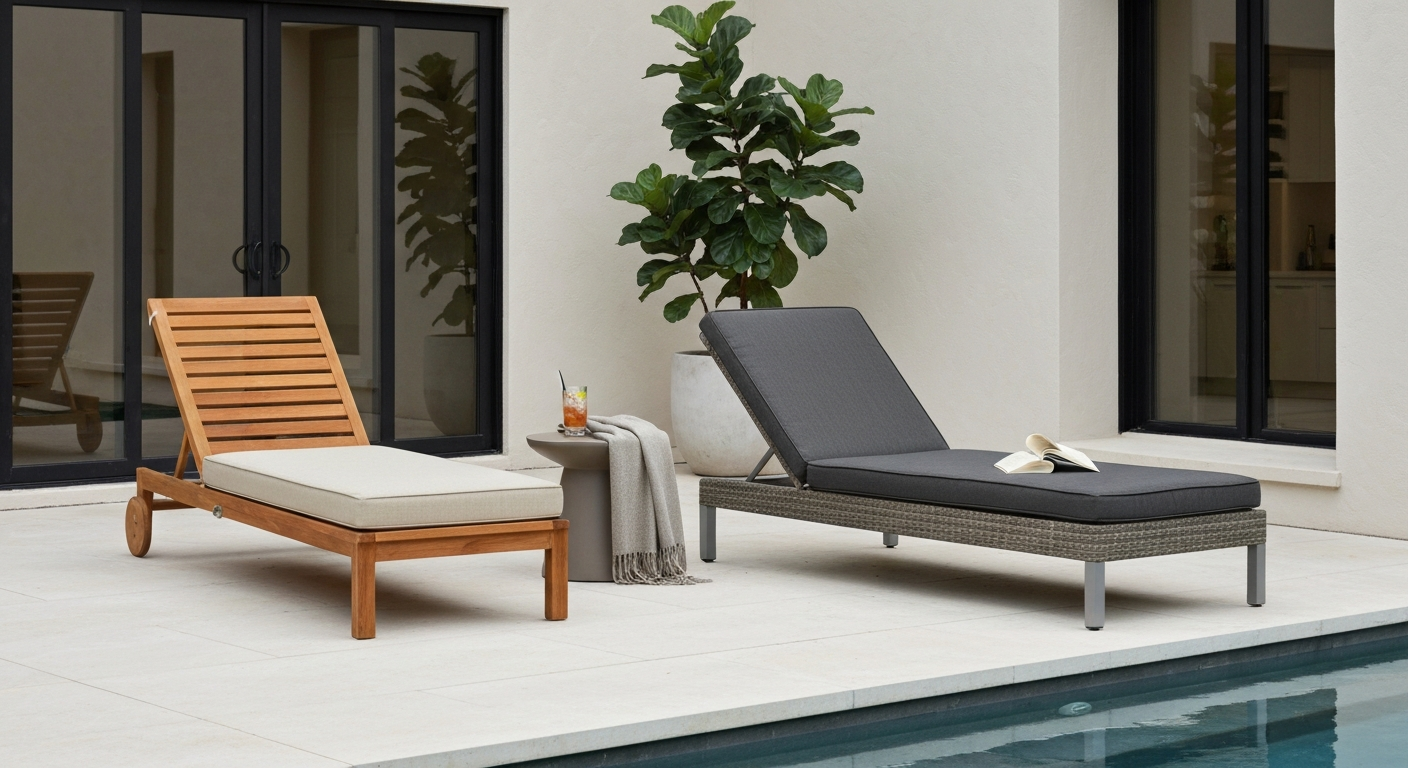
A patio lounger is a long, reclining outdoor chair designed for leisure, relaxation, and sunbathing on a patio, deck, or poolside. It typically has an adjustable or fixed-recline backrest, an extended seat that supports the full length of the legs, and is built from weather-resistant materials. In the US you will most often see it sold as an 'outdoor chaise lounge' or 'outdoor chaise'; in the UK and Australia the standard term is 'sun lounger' or 'sunlounger'. All three phrases mean the same thing: a piece of outdoor furniture built for lying back rather than sitting upright.
Patio Lounger Meaning: Definition, Uses, Styles, Care & Staging

Ada Hollis
28 Jul 2026
Why this term matters when you're buying, renting, or listing a home
When a real estate listing mentions 'patio loungers included' or a rental ad describes 'a furnished patio with loungers,' it is signaling a leisure-oriented outdoor space, not a dining setup. That distinction matters. A patio styled with loungers communicates that the outdoor area is meant for relaxing, sunbathing, or casual socializing, which tells you something about how the space is sized and oriented. Buyers in particular should note that loungers require more linear floor space than upright chairs and are poorly matched to standard dining tables, so a patio dominated by loungers is typically a relaxation zone, not a primary outdoor dining room.
For renters, understanding the term helps you decode furnished-property listings accurately. For homeowners and sellers, the choice to stage a patio with loungers versus dining chairs sends a clear lifestyle message to prospective buyers. According to the National Association of REALTORS' 2023 Profile of Home Staging, the vast majority of buyers' agents say staging helps buyers visualize a property, and outdoor spaces including patios and pools are part of that staged presentation. A pair of well-chosen loungers beside a small side table can make an unused patio feel instantly aspirational.
Synonyms and regional terms for patio lounger
The vocabulary around this piece of furniture is genuinely inconsistent depending on where you are, so knowing the synonyms saves time when shopping or searching listings. The table below maps the most common terms across regions and contexts.
| Term | Region / Context | Notes |
|---|---|---|
| Patio lounger | US (general consumer) | Broad, everyday term used by homeowners and listings |
| Outdoor chaise lounge | US (retail / trade) | Standard product-category name at major US retailers |
| Chaise lounge | US (common usage) | Anglicized form of the French 'chaise longue' |
| Chaise longue | UK, formal / historical | Original French term, literally 'long chair' |
| Sun lounger / sunlounger | UK, Australia, Ireland | Standard consumer term for the same product |
| Patio recliner | US (informal) | Emphasizes the reclining function; used in smaller retailers |
| Outdoor daybed | US / UK (design press) | Larger, wider version with mattress-like cushion |
| Pool lounger / pool chaise | US (pool-adjacent use) | Same form factor, marketed specifically for poolside use |
Merriam-Webster lists 'chaise lounge' as the accepted English form of the French 'chaise longue' and defines 'lounger' broadly as an article of furniture for comfort and leisure. Merriam‑Webster explains that the historical French term is chaise longue (literally “long chair”) and that the anglicized form chaise lounge arose in English usage Merriam‑Webster explains that the historical French term is chaise longue (literally “long chair”) and that the anglicized form chaise lounge arose in English usage.. Both the anglicized spelling and the French original are considered correct in modern English, so you will encounter both in product descriptions and property listings.
Patio lounger vs. chaise longue, sun lounger, patio chair, and daybed
These terms overlap enough to cause real confusion, especially when comparing furniture online or reading a listing description. Here is how the pieces actually differ in form and function.
| Piece | Seat Length | Recline | Primary Use | Typical Setting |
|---|---|---|---|---|
| Patio lounger / chaise lounge | Full leg length (approx. 60–75 in) | Adjustable or fixed recline | Relaxing, sunbathing, reading | Patio, deck, poolside |
| Chaise longue (strict) | Full leg length | Fixed low recline or flat | Indoor lounging, leisure | Indoor living room or patio |
| Sun lounger | Full leg length (same product) | Adjustable multi-position back | Sunbathing, outdoor relaxation | Patio, pool, beach deck |
| Patio chair | Standard seat depth (~18–20 in) | Upright or slight recline | Dining, conversation | Patio dining sets, seating areas |
| Outdoor daybed | Bed-width (wider than a lounger) | Flat or minimal recline | Lounging, napping, socializing | Covered patios, poolside, pergolas |
The most practical distinction for a homeowner or renter is the one between a patio lounger and a patio chair. A patio lounger has a seat height typically in the range of 14 to 17 inches and a long extended leg rest, making it incompatible with a standard dining table (which sits at 28 to 30 inches). A patio chair has a seat height of around 18 to 19 inches and an upright backrest, specifically designed to pair with a dining table. The two pieces serve fundamentally different purposes and are not interchangeable in a dining setup.
An outdoor daybed is essentially a wider, more generously cushioned version of a patio lounger. Where a lounger is a single-person reclining chair, a daybed is more like a low platform bed with sides, often wide enough for two people to sit side by side. Daybeds are common on covered patios and pergola-shaded areas where they serve as a social lounging surface rather than pure sunbathing furniture.
Common styles and forms you will see
Patio loungers come in several distinct design categories, and knowing the differences helps when you're shopping or evaluating what's already on a property.
- Reclining chaise-style lounger: The most common form. Features a multi-position adjustable backrest (typically 3 to 5 positions), a continuous seat extending to a leg rest, and sometimes a built-in pillow. This is what most US retailers show when you search 'outdoor chaise lounge.'
- Sling or mesh lounger: Uses a fabric sling stretched over a metal frame instead of a solid seat platform. Lighter, breathable, and often stackable. Popular in pool-adjacent settings where water drainage is useful.
- Resin wicker (rattan-style) lounger: A woven synthetic-wicker shell over an aluminum subframe. Heavier visual weight, suitable for more decorative patio setups. More furniture-like in appearance than a sling lounger.
- Folding or portable lounger: A lightweight frame that collapses for storage or transport. Common in beach contexts but also used on smaller patios where space is a consideration.
- Double lounger or loveseat lounger: Wide enough for two, bridging the gap between a lounger and a daybed. Often comes with a shared side table or umbrella hole in the center.
- Modular lounger: Sectional-style pieces that can be reconfigured. A modular set might include a flat lounger section, a backrest unit, and an ottoman that combine to form a daybed or separate into individual seats.
Materials: what patio loungers are made from and what that means for you
Material choice is the single biggest factor in how much maintenance a patio lounger requires and how long it will last. Here is a straightforward breakdown of the most common options.
| Material | Durability | Maintenance | Weight | Best For |
|---|---|---|---|---|
| Teak (hardwood) | Excellent, rot-resistant | Medium: needs oiling to hold color | Heavy | Classic look, long-term investment |
| Powder-coated aluminum | Very good, corrosion-resistant | Low: wipe clean | Light | Ease of movement, low-effort ownership |
| Steel / wrought iron | Good, but can rust if finish chips | Medium: inspect finish annually | Heavy | Traditional or ornate styles |
| HDPE / POLYWOOD | Excellent, fade-resistant | Very low: soap and water | Moderate | Coastal or high-humidity environments |
| Synthetic / resin wicker over aluminum | Good, UV-stable weaves | Low: hose down | Moderate | Decorative look with low maintenance |
| Plastic (standard resin) | Fair, can fade and crack | Very low | Light | Budget sets, seasonal use |
Cushion fabric is equally important. Performance outdoor fabrics like solution-dyed acrylics (Sunbrella is the most recognized brand name) resist UV fading, mildew, and moisture because the color is baked into the fiber rather than applied to the surface. For everyday care, they need only mild soap and water, and for stubborn mildew a diluted bleach solution is safe to use without damaging the fabric. If a listing or product description mentions 'Sunbrella cushions' or 'solution-dyed fabric,' that is a genuine quality signal worth noting.
Features and add-ons to look for when buying
Most mid-range to premium patio loungers share a core set of features. Knowing the terminology helps you compare products fairly.
- Adjustable multi-position backrest: Most quality loungers offer 3 to 5 reclining positions locked in with a ratchet, pin, or strap system. A fully flat position is useful if you want to use the lounger as a sun bed.
- Wheels or glides: Rear wheels allow repositioning without lifting the full weight of the frame. A small but genuinely useful feature on heavier aluminum or resin wicker models.
- Folding frame: Lets the lounger collapse flat for off-season storage in a shed or garage. Critical for smaller patios or climates with hard winters.
- Removable and reversible cushions: Cushions with zip-off covers are far easier to clean. Reversible cushions double the usable life of the fabric.
- Integrated side table or tray: Some models include an attached or sliding side table for a drink or book. Where there is no dedicated side table, this add-on is a practical substitute.
- Cup holder: A built-in cup holder in the armrest is a small convenience feature common on sling loungers and casual pool styles.
- Umbrellas and canopy attachments: Certain models include a hole in the frame for a parasol pole, or an attachable canopy for shade. Particularly relevant for sun-exposed patios without overhead cover.
- Rust-resistant or marine-grade hardware: Stainless-steel or galvanized bolts and fasteners at the joints are a durability indicator, especially in humid or coastal settings.
How patio loungers actually get used: dining, drinks, and parties
The practical use cases for patio loungers overlap with several other aspects of outdoor living, and placement choices can make or break how well a patio functions for each scenario.
Patio dining
Patio loungers are a poor fit for formal patio dining. The seat height of a lounger (typically 14 to 17 inches) sits well below the clearance needed to use a standard 28 to 30-inch dining table comfortably, and the reclined geometry makes leaning forward to eat awkward. If a patio is primarily a dining space, upright dining chairs paired with a patio table are the right choice. That said, a lounger placed to the side of a dining area, away from the table itself, works well as overflow seating or as a spot for guests to relax before or after a meal. The key is keeping the lounger out of the primary dining footprint, which typically needs about 36 inches of clearance behind chairs for comfortable movement.
Patio drinks and casual socializing
This is where patio loungers genuinely shine. A pair of loungers angled toward each other, with a low side table or outdoor coffee table in between, creates a relaxed social arrangement that is ideal for drinks and conversation. For more on what 'patio drinks' means and how it shapes seating layouts, see patio drinks meaning. The low profile encourages a casual atmosphere that upright dining chairs simply do not. For this setup, make sure the side table height matches the lounger arm height (around 22 to 25 inches for most lounger arm heights) so glasses and bottles are within easy reach. A small drinks-oriented table or a double lounger with a center console handles this elegantly.
Patio parties and larger gatherings
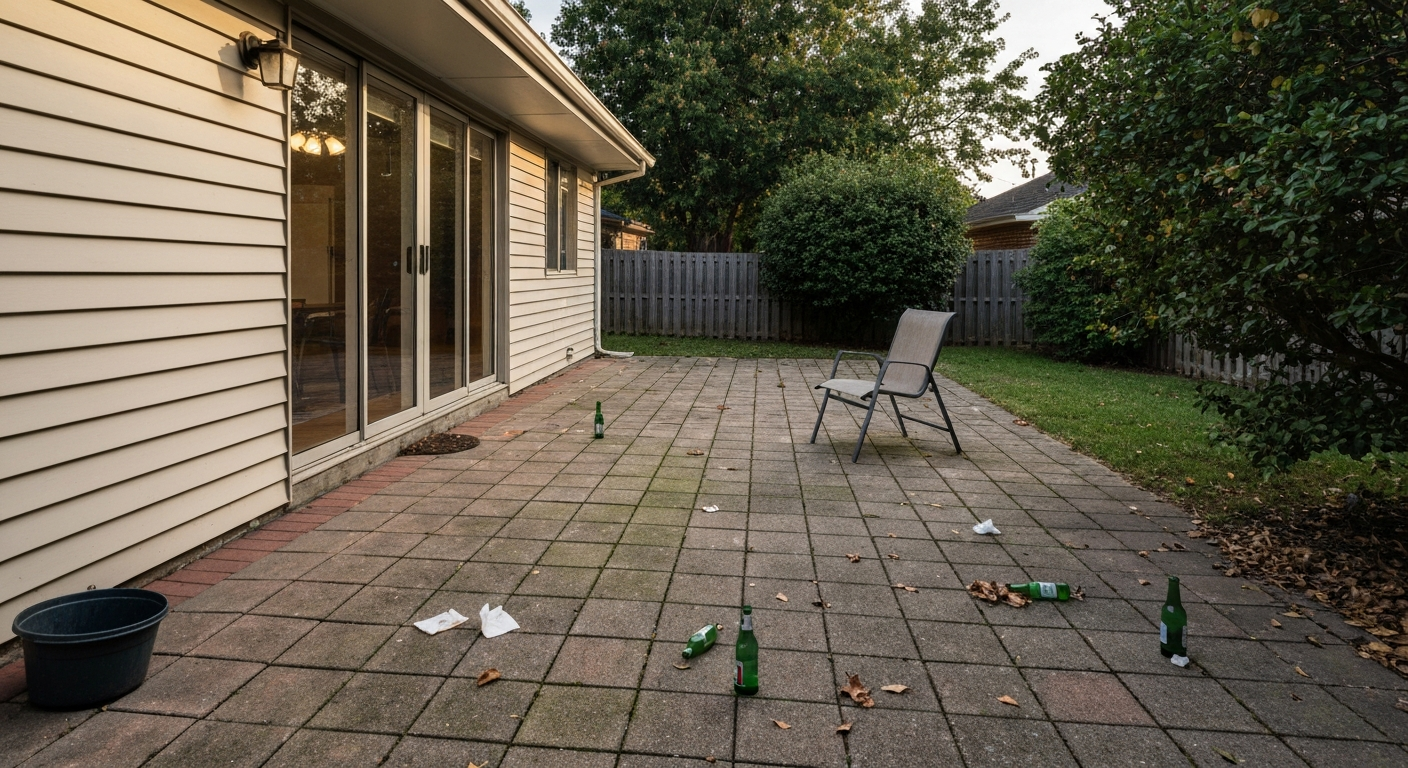
Patio loungers take up significantly more floor space per person than chairs: a typical lounger runs 60 to 75 inches long and 24 to 28 inches wide. If you need clarification, patio party meaning refers to a casual outdoor gathering on a patio, which helps when planning seating and traffic flow. For a larger patio party, a mix of one or two loungers and several upright chairs or a sectional sofa usually balances comfort with capacity better than an all-lounger arrangement. Staging-wise, designers recommend treating loungers as anchor pieces rather than filling the patio with them. Two loungers near a focal point like a fire pit or pool edge, combined with a few side chairs, gives the space a layered, intentional look. A clean, well-arranged patio matters in this context: a disorganized or cluttered outdoor space undercuts the effect whether you are entertaining guests or presenting a property to potential buyers. If a listing describes a littered patio, check the littered patio meaning, that the area is cluttered or poorly maintained, so you know whether the outdoor space will need cleanup or staging.
Placement, spacing, and staging tips
A few practical rules of thumb keep a patio with loungers functional and visually appealing. Leave at least 36 inches (3 feet) on any main walking path across the patio. Between two loungers placed side by side, a gap of 18 to 24 inches is comfortable for stepping between them and for a side table to sit without crowding either piece. Avoid positioning loungers in line with exterior doors, where they will obstruct traffic every time someone steps outside.
For property listings and staging, a pair of loungers with a small side table, a folded throw, and a potted plant nearby photographs and shows extremely well. The combination signals leisure and lifestyle without requiring a large or expensive patio setup. If the existing patio is small, a single folding lounger takes up less permanent floor space and can be tucked away for showings, which keeps the space feeling open.
Seasonal care and storage
The longevity of a patio lounger depends almost entirely on how cushions and frames are handled during wet seasons or winter. Frame maintenance is minimal for aluminum, HDPE, or synthetic wicker: a wipe-down with soapy water a few times per season is sufficient. Teak requires an annual application of teak oil if you want to preserve its warm honey color; left untreated, it grays to a silver patina that is harmless but permanent unless sanded back.
Cushions need more attention. Store them in a dry location, a deck box, storage bench, or indoor shed, whenever the loungers are not in active use for more than a few days in wet weather. For mildew on Sunbrella or similar performance fabrics, a solution of one cup of bleach and a quarter cup of mild dish soap per gallon of water, applied and rinsed after 15 minutes, removes almost all biological staining without damaging the fiber. Breathable storage bags rated for outdoor use are a better long-term choice than plastic covers, which trap moisture and encourage exactly the mildew growth you are trying to prevent.
A quick reference glossary
| Term | Plain-language meaning |
|---|---|
| Patio lounger | A long reclining outdoor chair for leisure; the standard US consumer term |
| Chaise longue | French origin term, literally 'long chair'; used in formal and UK English |
| Chaise lounge | Anglicized US spelling of chaise longue; accepted by Merriam-Webster |
| Sun lounger / sunlounger | Standard British and Australian term for the same product |
| Outdoor daybed | Wider, bed-like lounger with substantial cushioning; suits covered patios |
| Sling lounger | Lounger with a fabric sling instead of a solid seat; lightweight and stackable |
| Solution-dyed acrylic | Outdoor fabric type where color penetrates the fiber; highly UV and mildew resistant |
| HDPE / POLYWOOD | High-density polyethylene lumber made from recycled plastic; very low maintenance |
| Powder-coated aluminum | Aluminum frame with a baked-on finish; corrosion-resistant and lightweight |
| Adjustable backrest | Multi-position reclining mechanism that locks the back at different angles |
FAQ
What is a one-line definition of 'patio lounger' for homeowners, renters, and real estate shoppers?
A patio lounger is a long, reclining outdoor chair—also called a chaise lounge or sun lounger—designed primarily for sitting or reclining on a patio, deck, or poolside for relaxation and leisure.
Which authoritative sources back that definition?
Use Merriam‑Webster for the lounger/chaise lounge definition, Wikipedia/UK retail pages for 'sun lounger' usage, and major US retailers (e.g., Home Depot) for the consumer product framing and common feature expectations.
What common synonyms and regional terms should I explain?
Common synonyms: chaise lounge, chaise longue (historical French), outdoor chaise, sun lounger (UK: sunlounger). Note US retail use favors 'chaise lounge'/'outdoor chaise' while UK retailers use 'sun lounger'.
How does a patio lounger differ from a chaise longue, sun lounger, patio chair, and daybed?
Practical distinctions: a patio lounger/chaise lounge and sun lounger are long, adjustable chairs for reclining; 'chaise longue' is the original French term (same idea). A patio chair is upright seating intended for dining/conversation; a daybed is larger and bed‑like (may have a mattress) and is meant for lounging/sleeping rather than single‑seat reclining.
What typical styles and form factors should the article list?
List adjustable/ reclining-back chaises (pool lounger), sling/mesh loungers, synthetic wicker/resin-woven loungers, teak/wood loungers, folding/portable loungers, and double loungers/daybed styles — with a short photo example recommendation for each style.
Which materials and finishes are important to cover, and what are their pros/cons?
Cover teak and hardwoods (durable, weathers to gray), powder‑coated aluminum (lightweight, low maintenance), steel/wrought iron (heavy, can rust), HDPE/POLYWOOD/recycled plastic (very low maintenance), and synthetic wicker over metal frames (looks like rattan). Also cover performance fabrics (e.g., Sunbrella) for cushions: UV‑resistant, mildew‑resistant, easy to clean.
Next Article
Littered Patio Meaning: Definition, Risks, Cleanup Guide 101
Define a “littered patio”: causes, risks, legal issues and quick cleaning, staging and maintenance tips for homeowners,